Maxime Du Camp

Light, Stone, and the Ancient World
Artist Spotlight · The Collection Editorial
“I was the first to introduce photography into the Orient for a scientific purpose.”
Maxime Du Camp, preface to Égypte, Nubie, Palestine et Syrie, 1852
In the grand narrative of photography's earliest decades, few figures cast as long a shadow as Maxime Du Camp. The French writer and image maker who carried a wax paper negative camera through the dust of Upper Egypt in 1849 was not simply documenting ruins. He was inventing a new way of seeing the ancient world, one silver print at a time. When the Bibliothèque nationale de France and institutions such as the Metropolitan Museum of Art and the Getty Museum have displayed prints from his landmark album, visitors consistently pause before them with a kind of reverence that transcends mere historical curiosity.
Maxime Du Camp
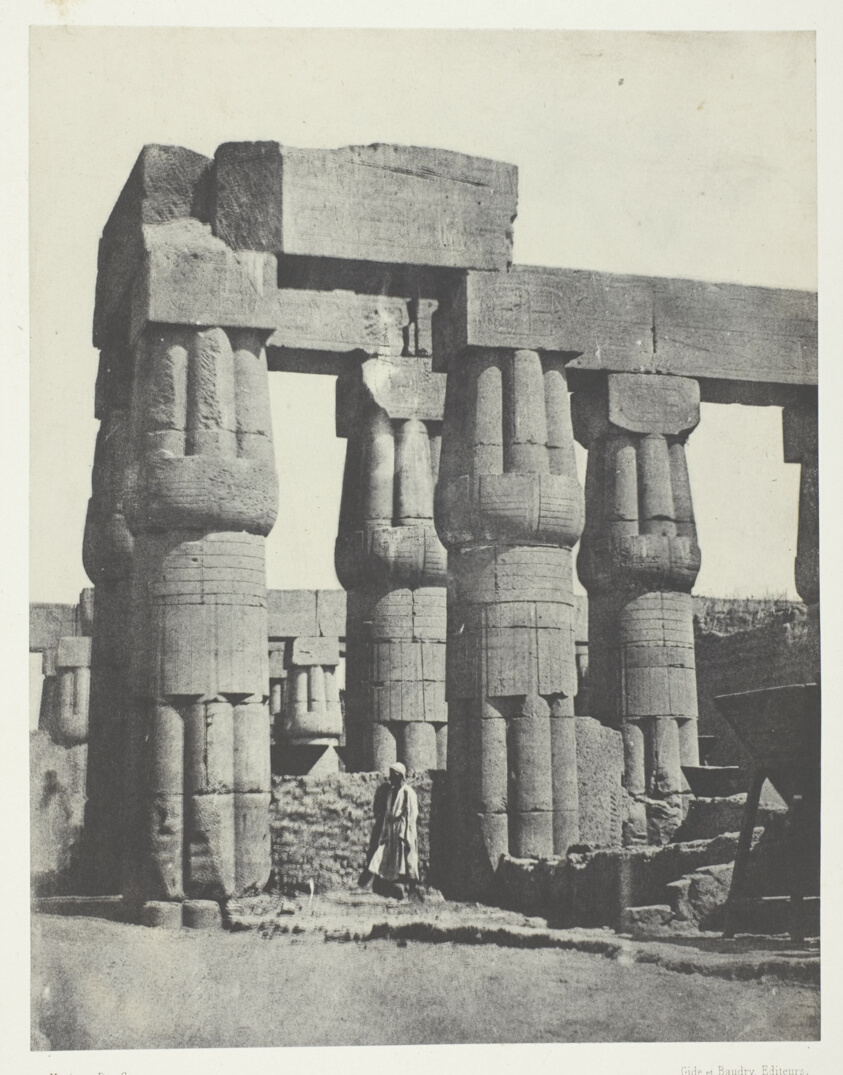
Louqsor, Groupe de Colonnes dans le Palais; Thèbes, plate 26 from the album "Egypte, Nubie, Palestine et Syrie" (1852), 1849
These are not artifacts of early technology. They are photographs of profound beauty and compositional intelligence. Maxime Du Camp was born in Paris in 1822 into a prosperous bourgeois family, and the comfort of his upbringing afforded him the freedom to pursue an unusually adventurous intellectual life. He lost his parents early, which left him with both financial independence and a restless, searching temperament.
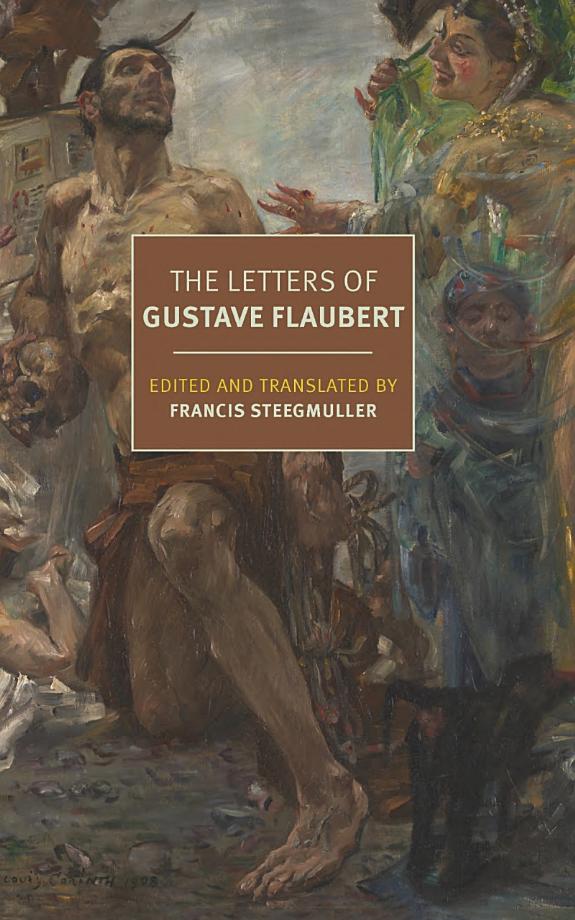
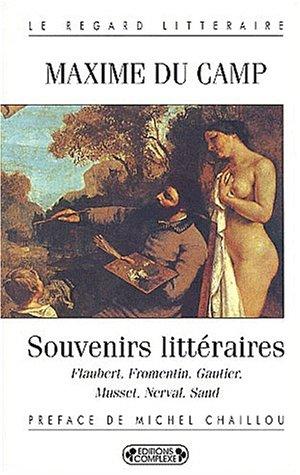
He moved through the literary and social circles of mid century Paris with ease, developing friendships that would define his career and his art. Chief among those friendships was the bond he forged with Gustave Flaubert, whom he met in the 1840s and with whom he shared a sensibility equal parts romantic and rigorous. The two men were drawn to the idea of travel not as leisure but as total immersion, a way of testing the self against the world's oldest and most astonishing monuments. Du Camp had already traveled to the Middle East once before his great Egyptian expedition, and he returned to Paris convinced that photography, still a startlingly new medium, was the proper instrument for serious documentary work.
Maxime Du Camp
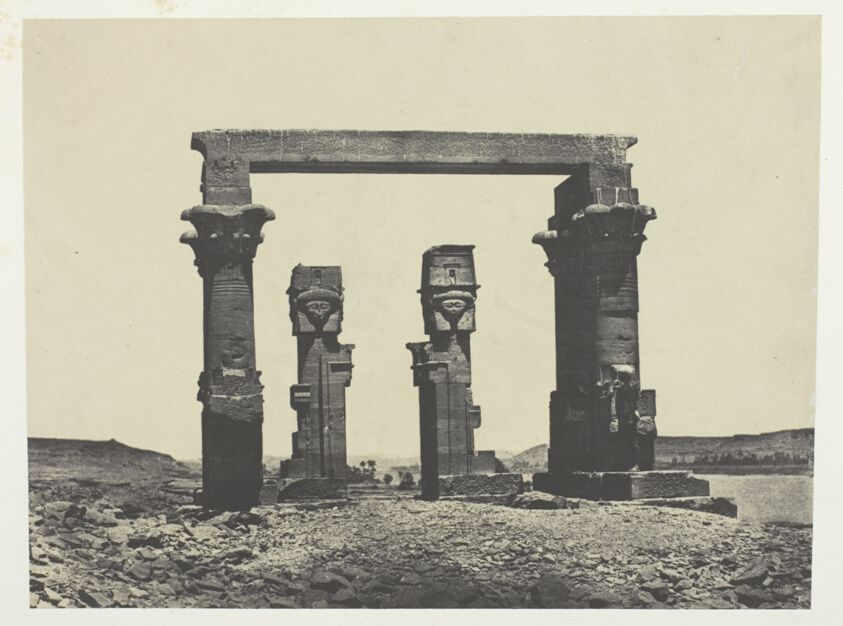
Temple de Kardassy, Nubie, plate 87 from the album "Egypte, Nubie, Palestine et Syrie" (1852), 1849
He studied the calotype process with the Orientalist painter and photographer Gustave Le Gray, one of the most technically sophisticated image makers of the era. This training proved transformative. When Du Camp departed for Egypt, Nubia, Palestine, and Syria alongside Flaubert in 1849, he carried not only a camera but a genuine visual education. The expedition lasted nearly two years, and during that time Du Camp exposed over two hundred paper negatives, producing images of temples, tombs, colossal statues, and carved facades that no European audience had ever seen rendered with such fidelity and scale.
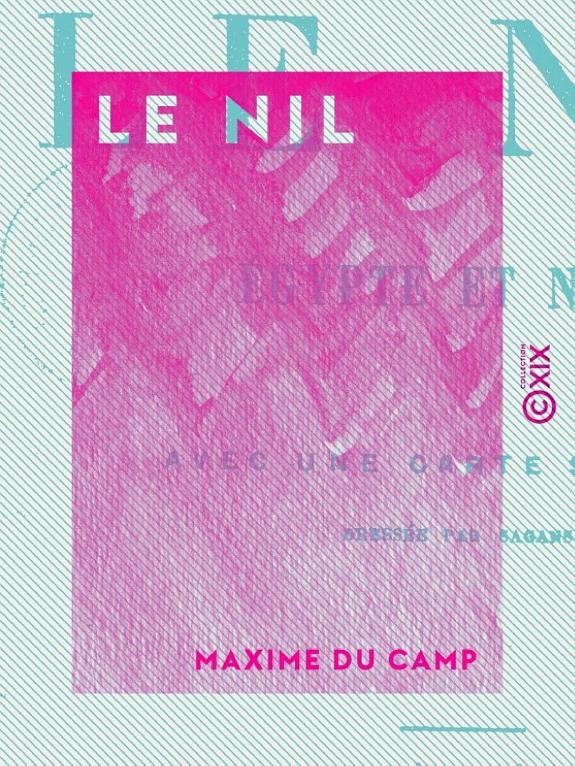
The resulting publication, Égypte, Nubie, Palestine et Syrie, issued by Gide et Baudry in Paris in 1852, was a landmark in the history of the book and of photography alike. It contained 125 original salted paper prints tipped by hand onto the pages, making it one of the first major photographically illustrated books ever produced. Each plate was printed by the atelier of Louis Désiré Blanquart Evrard in Lille, whose industrial approach to printing photographs enabled a consistent quality across the edition. The book was issued in limited numbers and sent to subscribers including institutions and learned societies across Europe, and its reception established Du Camp as a figure of serious cultural and scientific standing.
Maxime Du Camp
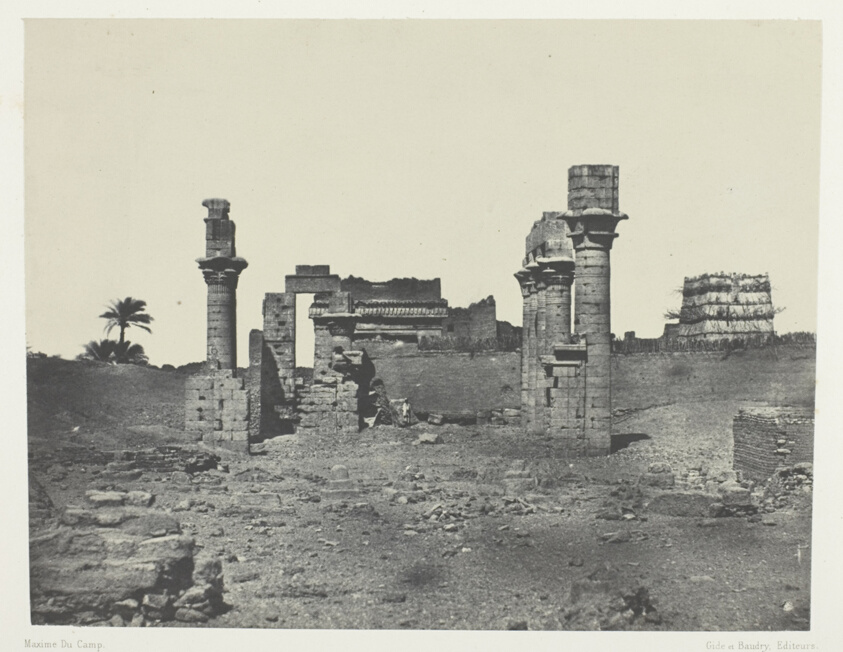
Temple d'Hermontis, Haute-Egypte, plate 63 from the album "Egypte, Nubie, Palestine et Syrie" (1852), 1849
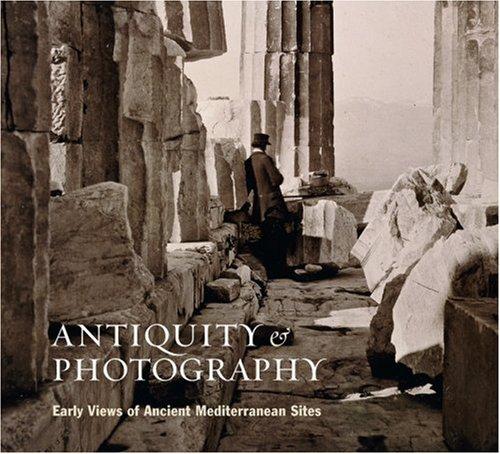
The Académie française awarded him the Prix de Poésie in 1880, though it is his photographs, not his verse, that have proven the more enduring achievement. The prints themselves reward close attention in ways that continue to astonish collectors and scholars. Works such as Louqsor, Vue Générale des Ruines and Palais de Karnak, Vue Générale des Ruines reveal Du Camp's instinctive understanding of scale, framing, and the dramatic relationship between massive architecture and empty sky. He frequently placed a single figure, most often his servant Hadji Ismaïl, within the frame of a doorway or colonnade not for picturesque effect but to give the viewer a bodily sense of proportion, a way of measuring the sublime against the human.
The salted paper print process, with its warm sienna tones and slightly soft detail, gives these images an almost painterly quality that aligns them visually with the Orientalist canvases being produced in Paris at the same time by figures such as Eugène Fromentin and Jean Léon Gérôme, yet Du Camp's photographs carry an evidential weight that painting cannot claim. For collectors, Du Camp's work occupies a compelling position at the intersection of art history and photographic history. Individual prints from the Égypte album appear at major auction houses with some regularity, and they attract buyers from both the photography market and the broader 19th century works on paper market. Prices at auction houses including Christie's, Sotheby's, and Swann Galleries have reflected consistent demand, with fine examples in good condition and with clear provenance drawing serious competition.
Maxime Du Camp
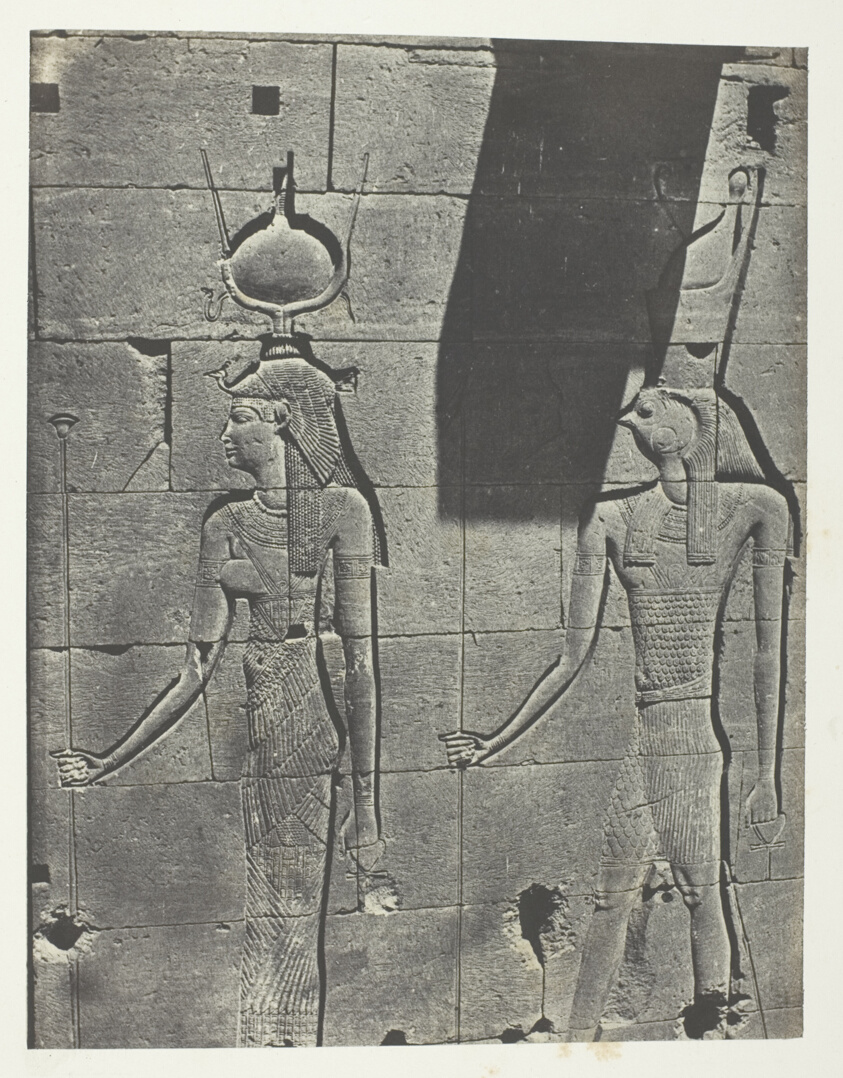
Kalabscheh, Sculptures De La Façade Postérieure Du Temple; Nubie, plate 92 from the album "Egypte, Nubie, Palestine et Syrie" (1852), 1849
Collectors are drawn to the combination of historical significance, genuine rarity, and outright visual beauty. The salted paper process is fragile and sensitive to light, so condition varies considerably across surviving prints, and well preserved examples with rich tonal range command the strongest interest. Plates depicting the most celebrated monuments, including the temple complexes at Karnak, Philae, and Luxor, tend to generate the most sustained collector attention, though the less frequently reproduced plates from Nubia and Syria offer equally compelling images for the discerning eye. Within the broader history of 19th century photography, Du Camp belongs to a remarkable generation of image makers who understood almost immediately that the medium could serve purposes simultaneously scientific, aesthetic, and literary.
His contemporaries include Francis Frith, who photographed Egypt and the Holy Land in the late 1850s using a wet collodion process that produced sharper and more technically consistent results, and John B. Greene, the American born photographer who made haunting calotype views in Egypt and North Africa in the early 1850s. Félix Teynard, whose own Egyptian photographs were published in 1858, provides perhaps the closest parallel to Du Camp in terms of sensibility and ambition. Together these figures constitute a founding school of travel and documentary photography whose influence runs directly forward to the photographic surveys of the 20th century and to contemporary documentary practice.
Maxime Du Camp died in Baden Baden in 1894, having spent his later decades as a celebrated man of letters in Paris, a member of the Académie française since 1880, and a prolific author of memoirs, criticism, and social observation. Yet the work for which posterity has returned to him again and again is those two years of travel, those two hundred negatives, and the 125 prints that appeared between the covers of a single extraordinary book. In an age when photography is ubiquitous beyond imagining, there is something deeply moving about encountering an image Du Camp made in the shadow of a temple at Karnak in 1849, the morning light falling across stones carved three thousand years before, the whole world silent except for the scratch of a stylus in a notebook and the click of a lens opening to receive the light. That is where the story of photography as art truly begins, and Du Camp stands at the threshold, looking into the ancient world with clear and wondering eyes.
Explore books about Maxime Du Camp