Mary Heilmann
Mary Heilmann Makes Joy Look Easy
Artist Spotlight · The Collection Editorial
“I wanted to make paintings that were like songs, that you could carry around in your head.”
Mary Heilmann, interview with David Salle
When the New Museum mounted a major survey of Mary Heilmann's work, the galleries felt less like a conventional retrospective and more like a gathering of old friends. Color spilled from canvas to canvas. Painted furniture invited you to sit down. The mood was generous, irreverent, and deeply alive.
Mary Heilmann
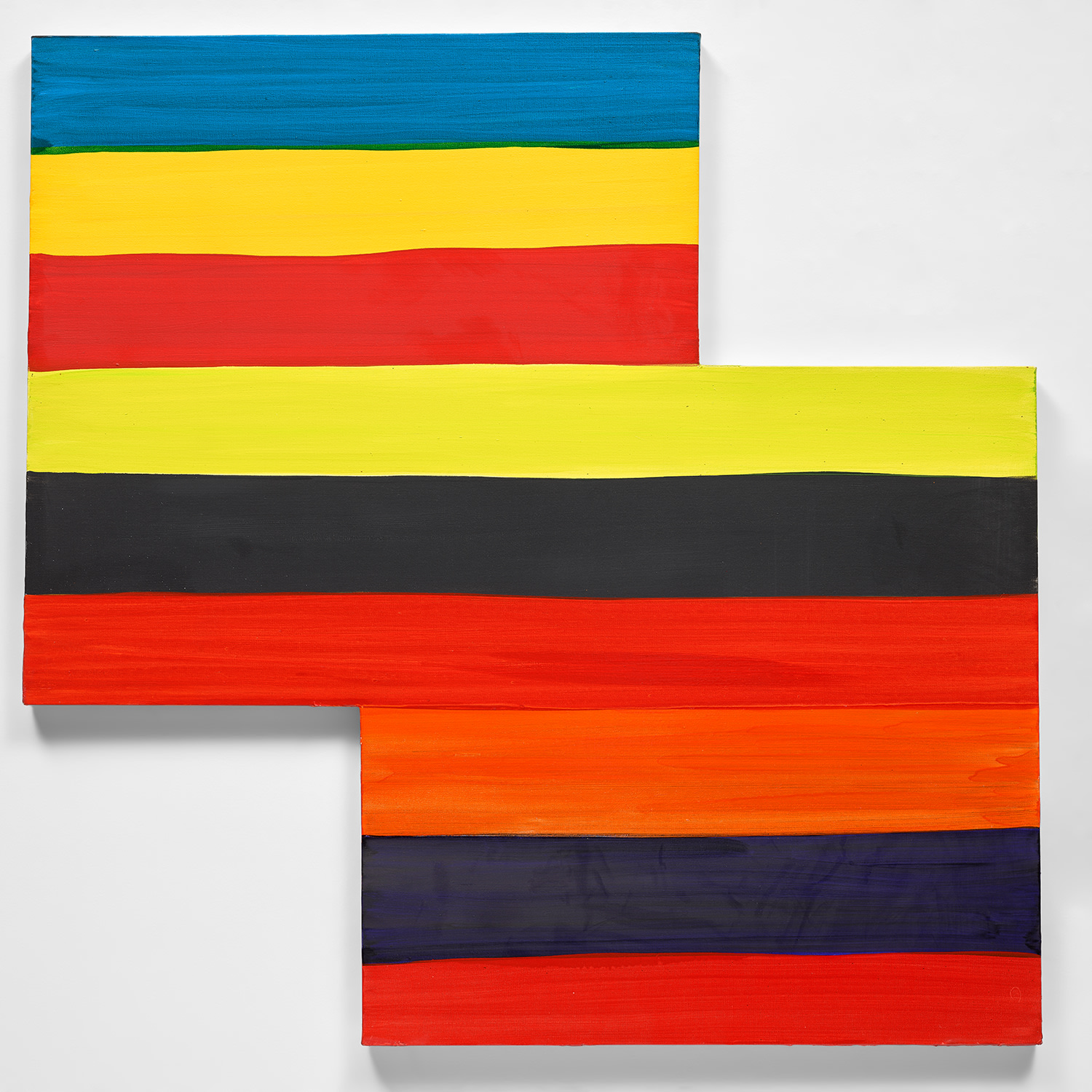
Shaped Serape, 1991
For an artist who has spent more than five decades refusing to separate pleasure from seriousness, the exhibition felt like a vindication of everything she had always believed painting could be. Heilmann was born in San Francisco in 1940 and came of age in the long, sun saturated shadow of California's postwar culture. She studied ceramics and literature before earning her MFA from the University of California, Santa Barbara in 1967, and the combination of those disciplines shaped her sensibility in ways that are still visible in her work today. Pottery gave her a feel for material and form that resists pure abstraction.
Literature gave her a taste for narrative, memory, and the personal. When she arrived in New York in the late 1960s, she carried both with her. The New York art world she entered was dominated by Minimalism and its austere insistence on objectivity, industrial process, and the erasure of the artist's hand. Heilmann absorbed those lessons and then, with characteristic wit, began to dismantle them from within.
Mary Heilmann
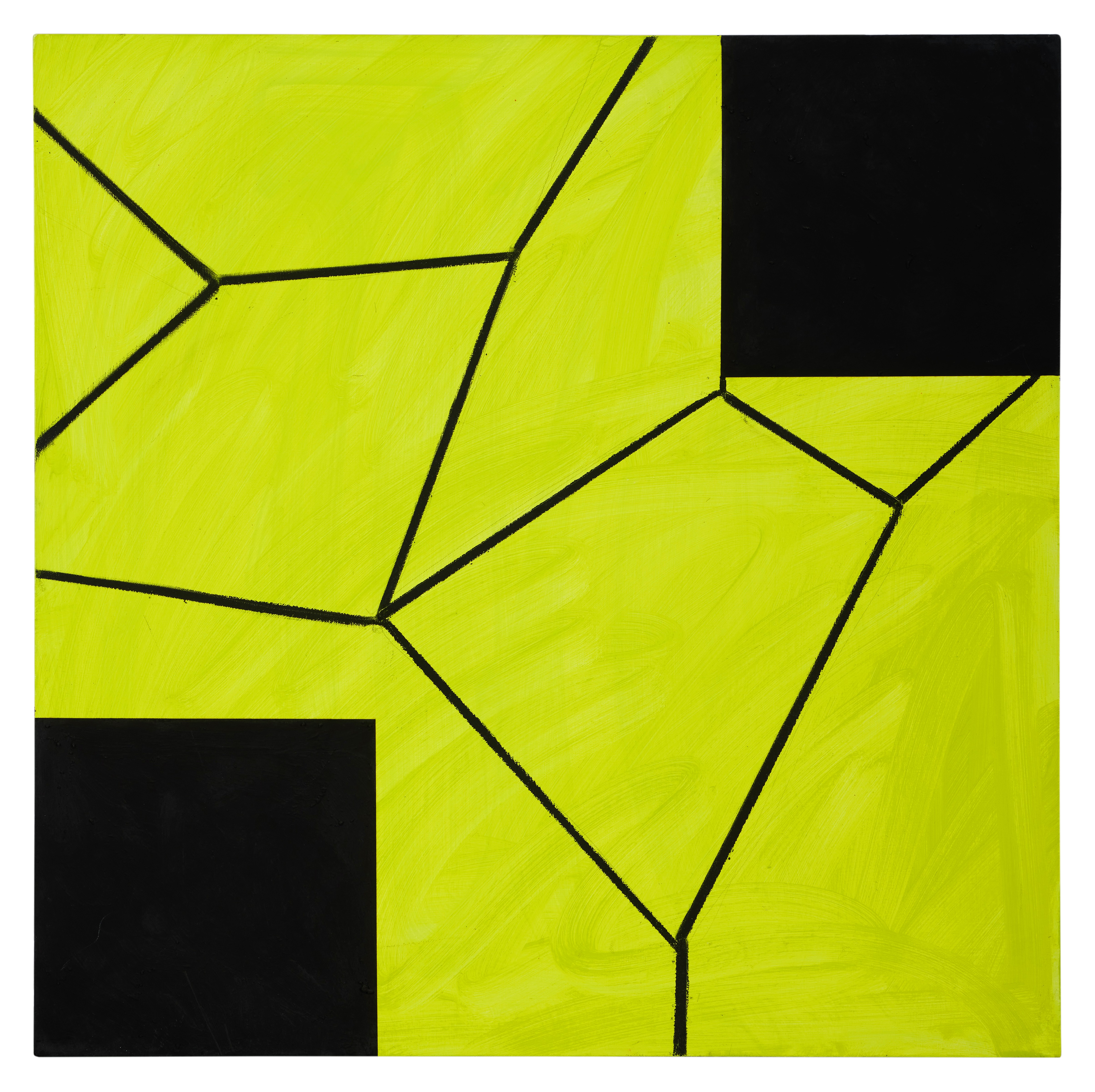
Black Velvet and Chartreuse, 1992
She kept the grid. She kept geometric structure. But she filled both with feeling, with memory, with the specific warmth of a California afternoon or the rhythm of a surf break she had watched as a child. Her early works on paper, including pieces such as the 1976 acrylic "Yellow, Red + Blue Drawing," show how early she had found this balance: rigorous in structure, loose and alive in execution.
“Painting is a way of thinking. It is also a way of feeling. I don't want to separate those things.”
Mary Heilmann
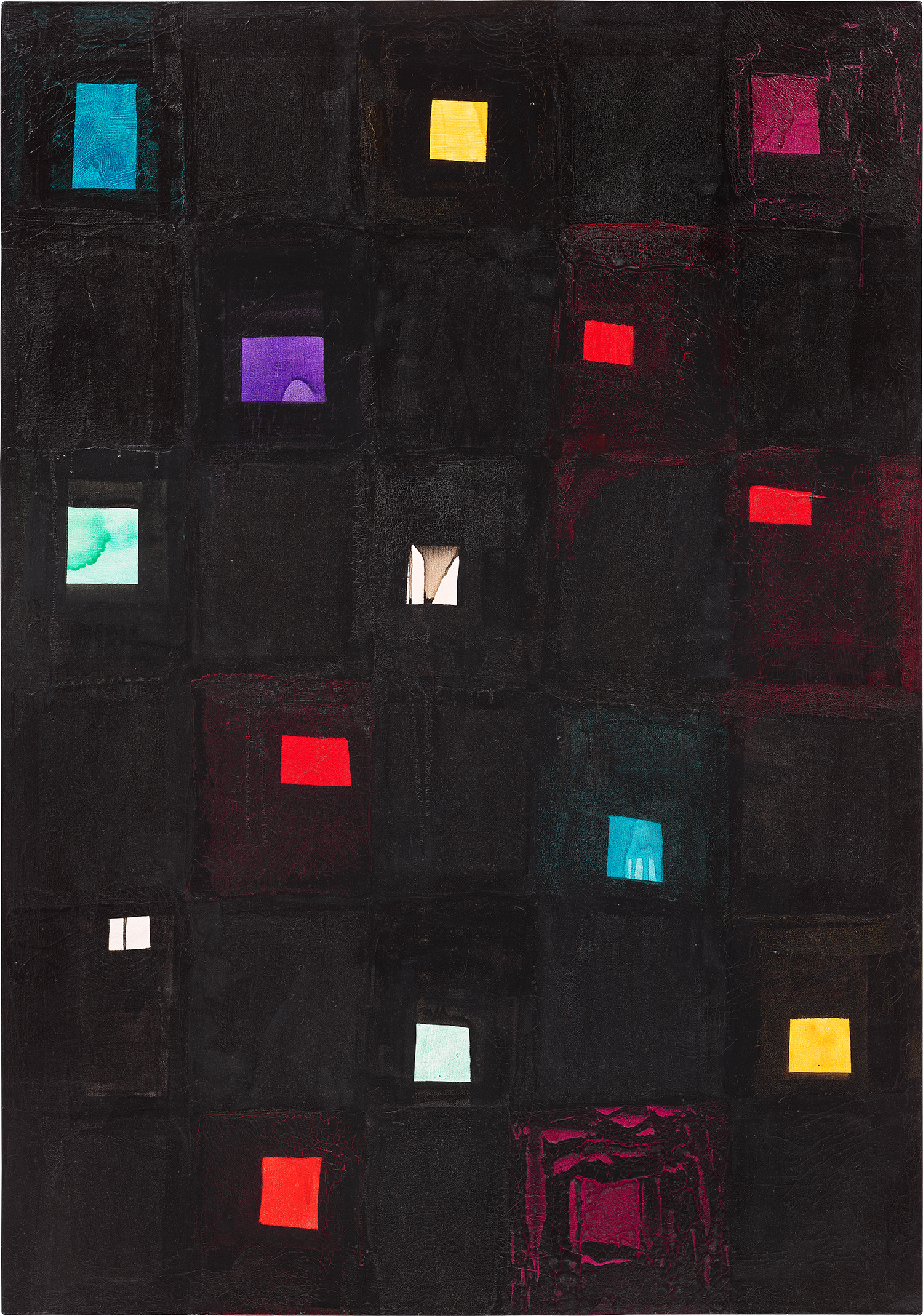
Through the 1980s and 1990s her painting deepened into something unmistakably her own. Works like "Gaiété Parisienne" from 1983 and "Shaped Serape" from 1991 demonstrate her ability to fold cultural reference into pure visual pleasure. The shaped canvas of "Shaped Serape" borrows its form from the textile tradition it names, letting the object itself carry meaning without burdening the paint with explanation. "Black Velvet and Chartreuse" from 1992 is a meditation on color contrast so confident it borders on theatrical.
Mary Heilmann
Gaiété Parisienne, 1983
These are paintings that announce themselves boldly, then reward patient looking with layers of allusion and care. Her palette throughout this period was unlike anyone else working in New York: it drew from neon signage and Pacific light in equal measure. Heilmann also never let go of the ceramic practice she developed in California. Sculptures and functional objects, including painted furniture and ceramic works, appear throughout her career as both standalone statements and as elements that transform the experience of her paintings.
The 2004 work "5 works: (i)," a table made from painted wood, ceramic, and metal wheels, is characteristic of her determination to collapse the boundary between art object and lived environment. Her painted chairs, which have appeared in numerous installations and exhibitions, invite a physical relationship with the work that most abstract painting carefully avoids. Sitting in a Heilmann chair is part of understanding a Heilmann exhibition. More recent works such as "Go Ask Alice" from 2006 and "Lil Totem" from 1997 show an artist who has earned the right to a kind of painterly freedom that younger artists can only aspire to.
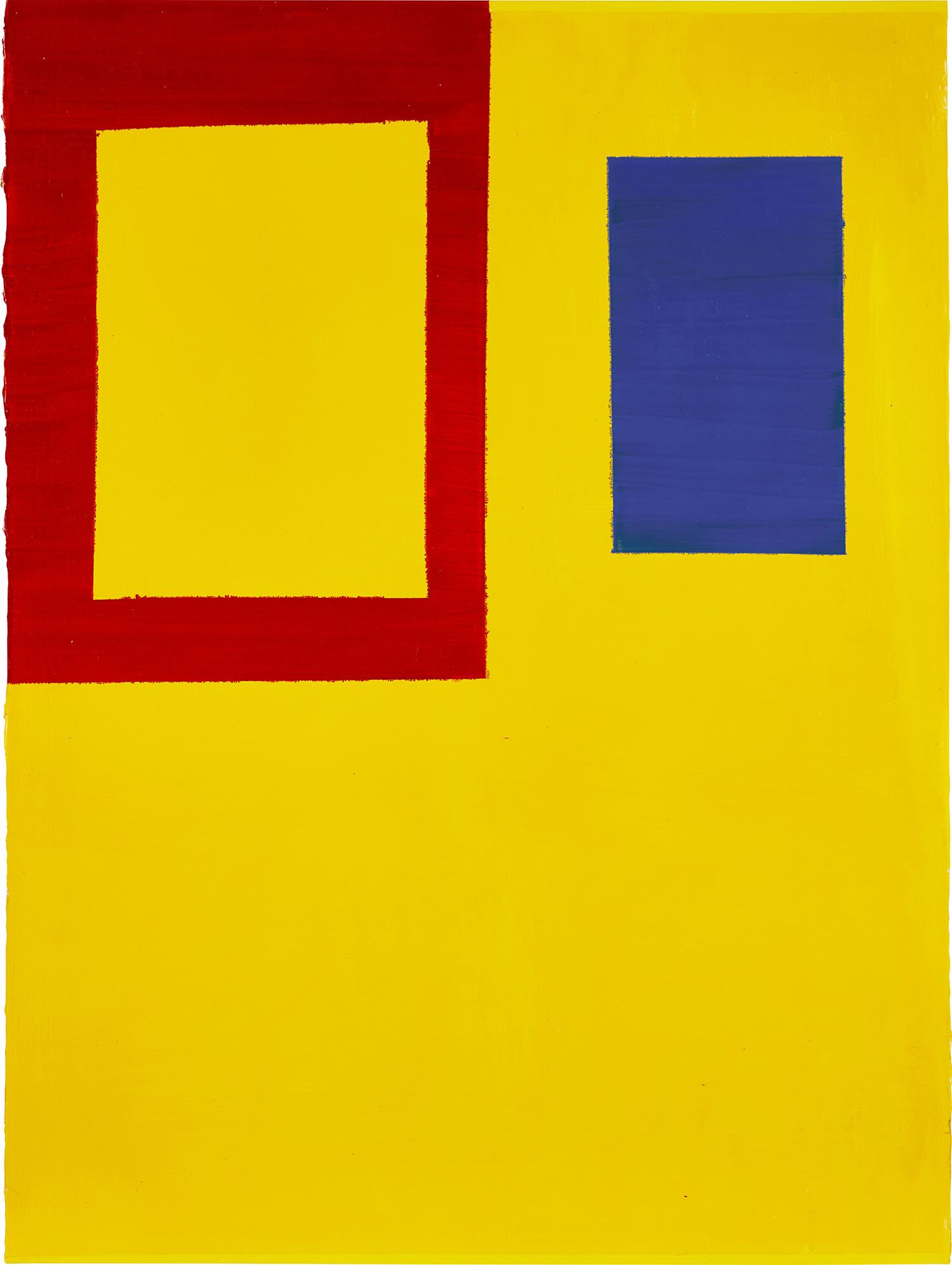
Mary Heilmann
Yellow, Red + Blue Drawing, 1976
The references in "Go Ask Alice" to the counterculture, to music, and to the specific texture of California in the 1960s feel neither nostalgic nor illustrative. They feel present tense, the way a song you love from childhood feels present when it comes on unexpectedly. Heilmann's capacity to make personal memory into shared experience is one of the things that distinguishes her from painters who work in a broadly similar register. For collectors, Heilmann's work occupies a position that is both historically significant and still genuinely available in ways that comparable figures are not.
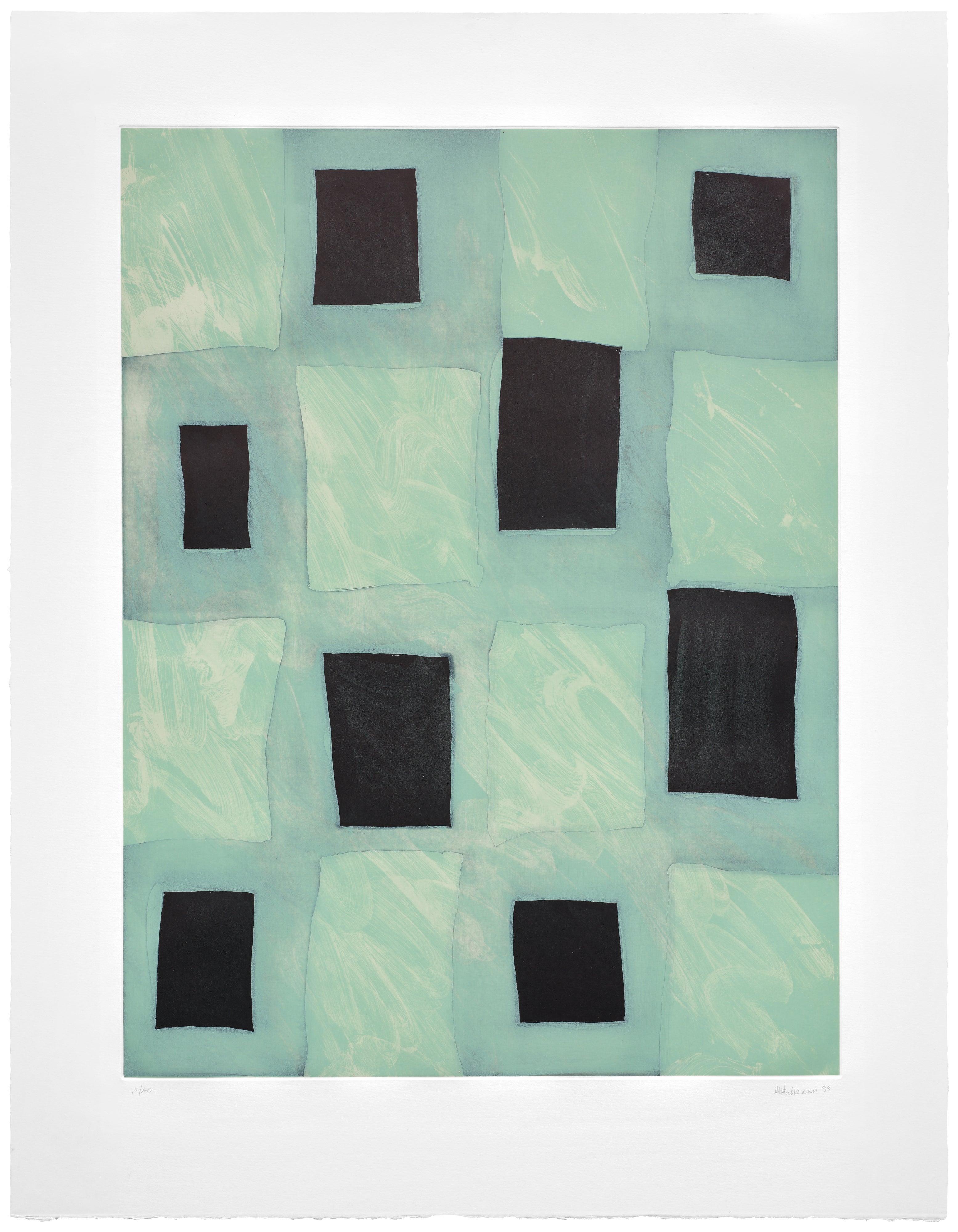
Her prints, including the etching and aquatint "Mint Boy" on Hahnemühle Copperplate paper and the archival pigment print "Catalina," offer entry points that carry the full weight of her sensibility at a range accessible to collectors building serious collections. Her paintings on canvas, particularly those from the late 1980s through the 2000s, have attracted sustained institutional and private interest, with works entering major museum collections in the United States and Europe. Collectors drawn to the legacy of postwar American abstraction, and to painters who responded to Minimalism with warmth rather than severity, find in Heilmann a figure whose importance is still being fully reckoned with. In art historical terms, Heilmann belongs to a generation that also includes artists such as Elizabeth Murray and Joan Mitchell, painters who insisted on the emotional and autobiographical dimensions of abstraction at a moment when critical opinion ran in the opposite direction.
Her work anticipates much of what younger painters have come to celebrate about process, humor, and the integration of craft traditions into fine art practice. Artists working today who engage with pattern, decoration, and the politics of pleasure owe Heilmann a significant debt, whether or not they always acknowledge it. She was doing this work when it was neither fashionable nor particularly rewarded, and she kept doing it with remarkable consistency. Heilmann's legacy is not the legacy of a single iconic image or a single defining period.
It is the legacy of a sustained, joyful, intellectually serious commitment to painting as a way of being in the world. The Whitechapel Gallery in London and the Orange County Museum of Art have both given her work the institutional recognition it deserves, and critical opinion has continued to catch up with what collectors and fellow artists have known for a long time. At a moment when the art world is reconsidering which voices it has undervalued, Heilmann stands as one of the most rewarding rediscoveries available, an artist whose work gives back generously to everyone who spends time with it.
Explore books about Mary Heilmann