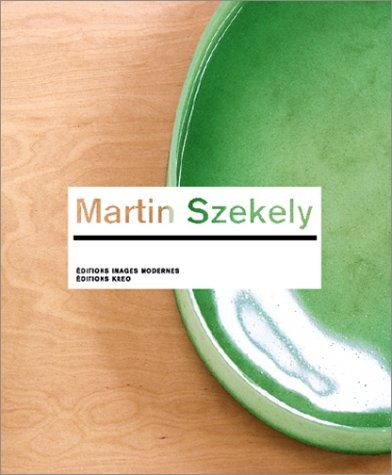
Martin Szekely
Martin Szekely: Design Elevated to Pure Thought
Artist Spotlight · The Collection Editorial
There is a particular kind of silence that settles over the objects Martin Szekely makes. It is not the silence of emptiness but of absolute resolution, the feeling that nothing could be added or removed without the entire proposition collapsing. That quality has earned his work a permanent place in the collections of the Centre Pompidou in Paris and the Museum of Modern Art in New York, two institutions not in the habit of collecting furniture unless furniture has crossed into something more consequential. For collectors who have spent years looking at painting and sculpture, encountering a Szekely piece for the first time tends to reorder their assumptions about where design ends and art begins.
Martin Szekely
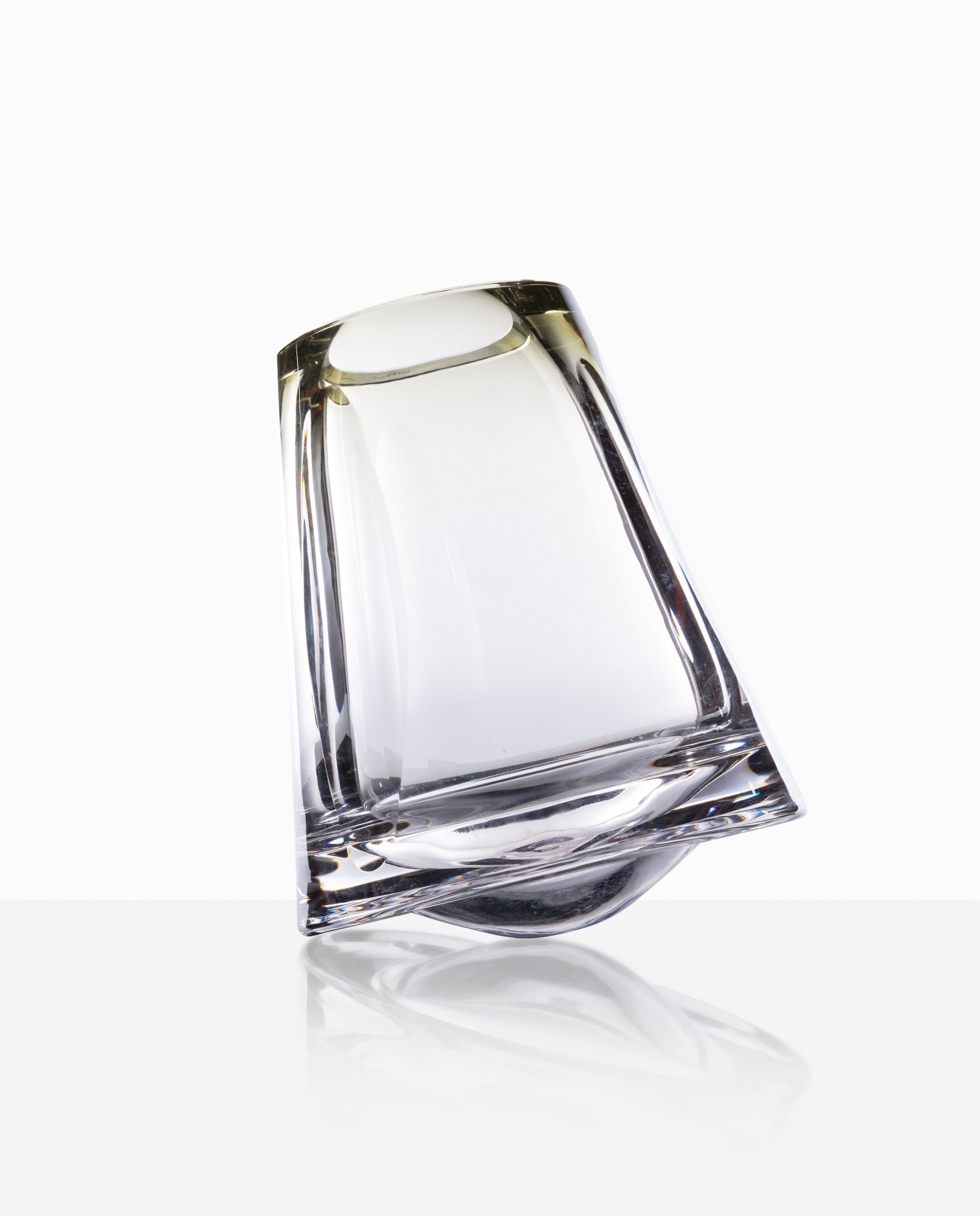
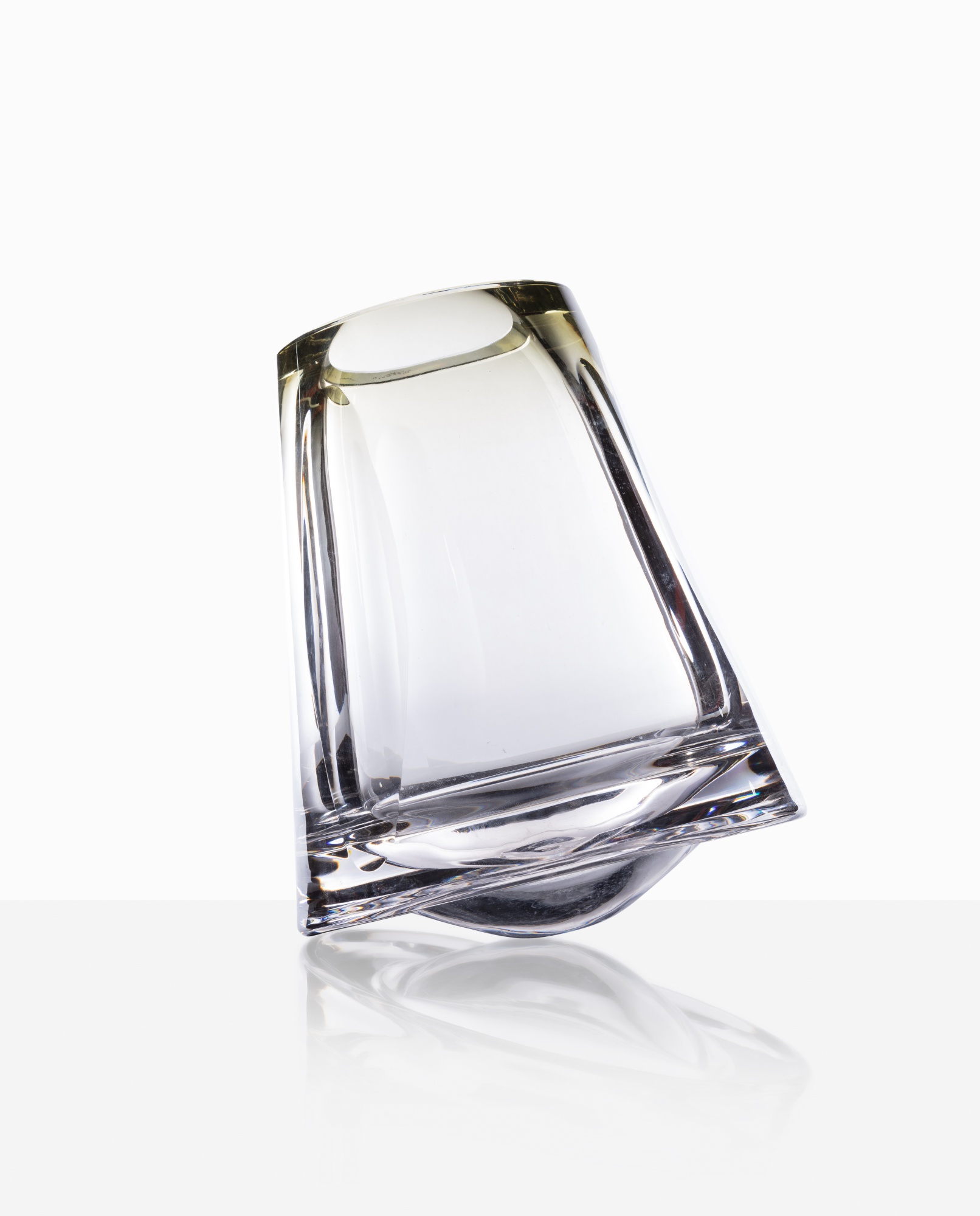
Vase Nord
Szekely was born in Paris in 1956, the son of the Hungarian sculptor Pierre Szekely, a figure whose own practice was deeply concerned with the relationship between form, material, and space. Growing up in proximity to that kind of rigorous thinking left its mark. Martin went on to study at the École Nationale Supérieure des Arts Décoratifs in Paris, one of France's most demanding and historically significant schools for the applied arts, where the tradition of treating the decorative object as a serious intellectual proposition was well established. The formation he received there gave him both technical fluency and a conceptual seriousness that would become the twin pillars of everything he made.
His rise to public attention came swiftly and with some force. In 1983, Szekely presented the Pi chaise longue, a work that announced his sensibility with remarkable clarity. Low, horizontal, and constructed from lacquered steel and aluminum with a leather surface, Pi carried the aesthetic temperature of minimalist sculpture while remaining, without apology, a functional object intended to be used. The piece was acquired by major collections and exhibited widely, and it remains one of the most cited works in the history of French design from that decade.
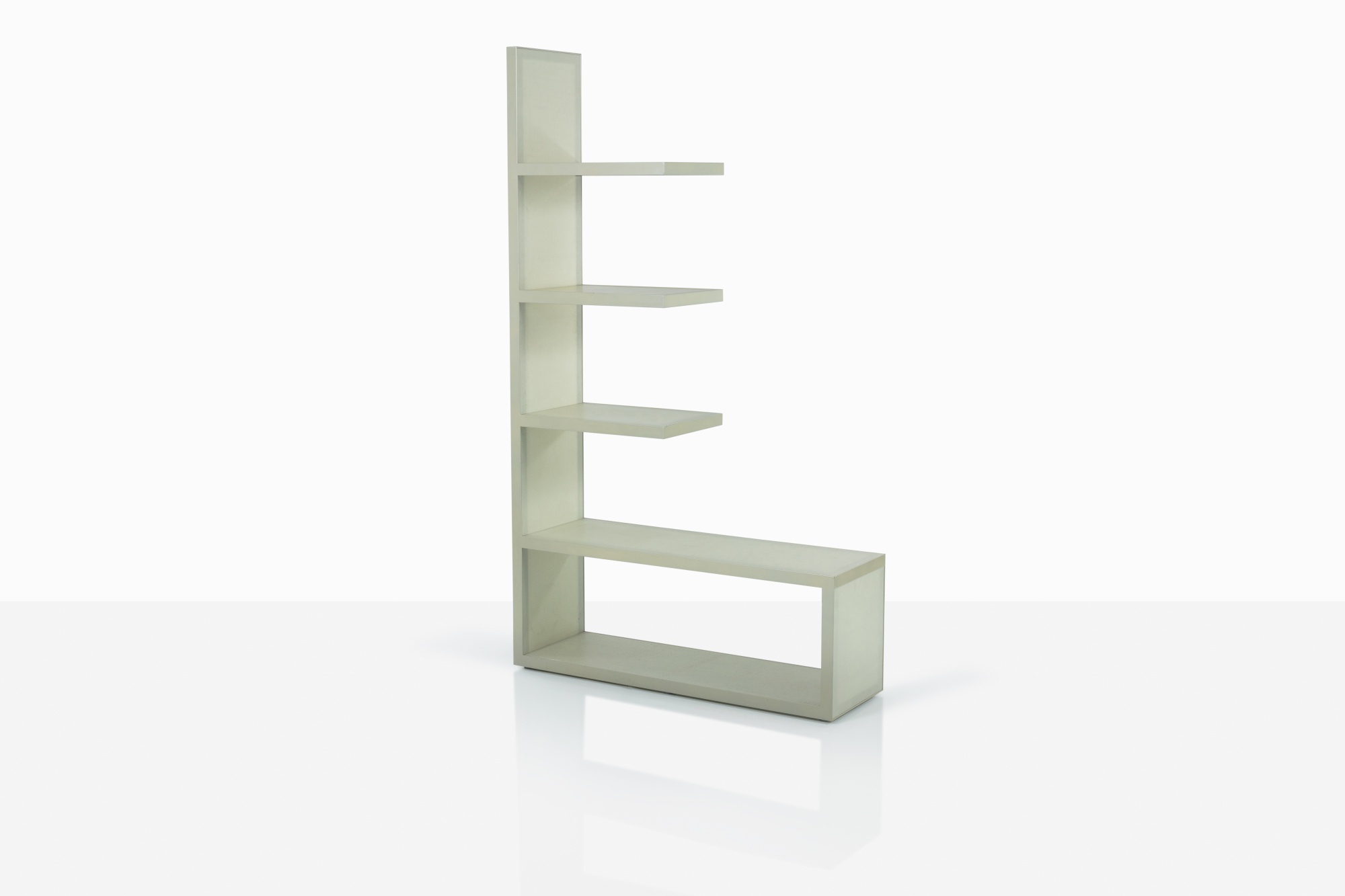
Martin Szekely
Échelle, série Six Constructions
What it established, and what Szekely has never abandoned, is the idea that a designer's deepest obligation is not to style but to thought. Through the 1990s and into the 2000s, Szekely's practice deepened and in certain respects became more austere. He became increasingly interested in the structural and expressive possibilities of industrial materials, working extensively with anodized aluminum, stainless steel, passivated steel, stone, fiberglass, and cork, among others. Works like the Console M.
B. in anodized aluminum and the Table R.N.L.
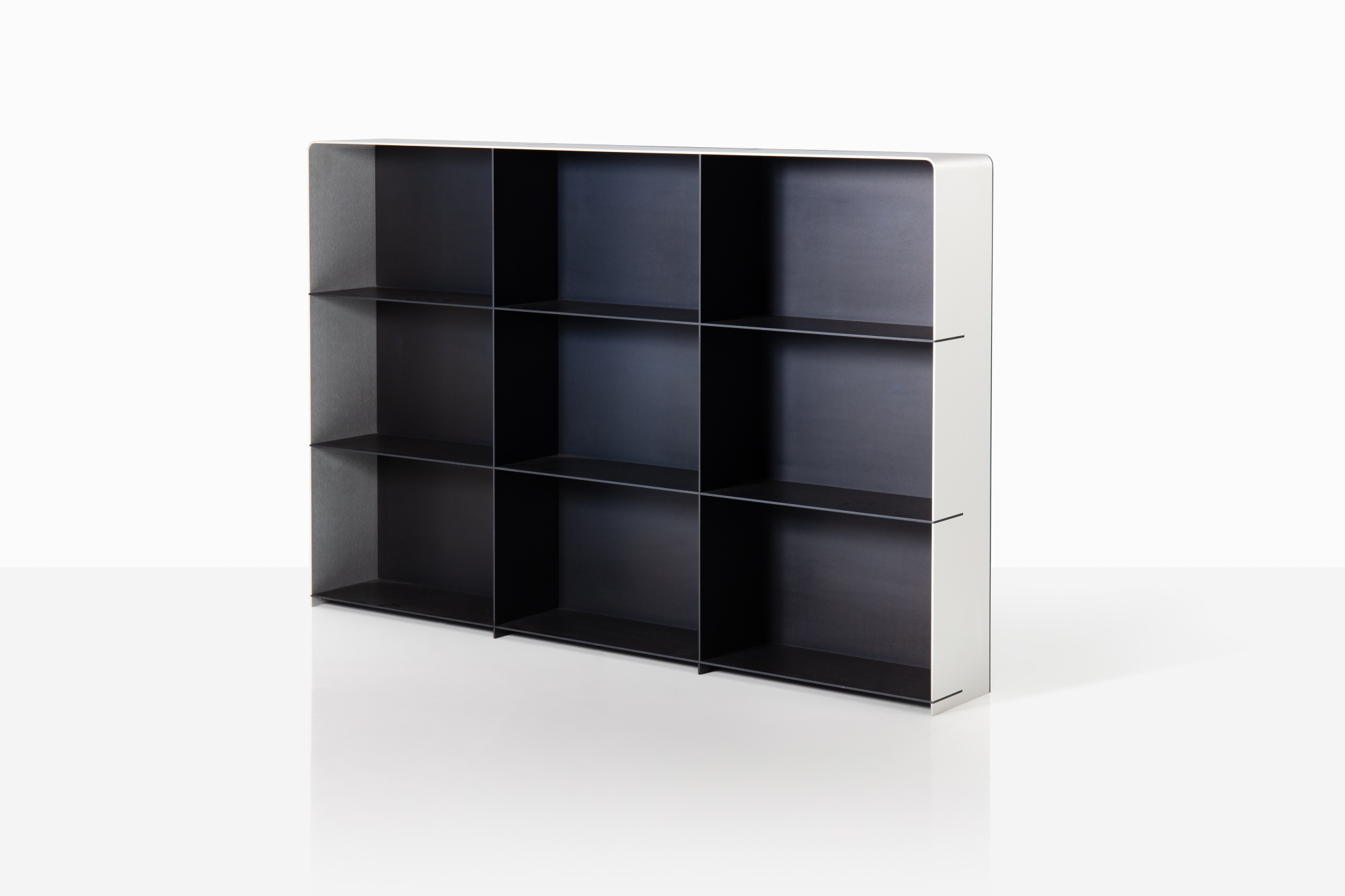
Martin Szekely
Console M.B.
in stone and stainless steel demonstrate a designer who approaches material not as a surface to be decorated but as a primary argument. The choice of material in a Szekely piece is never incidental. It is, in many cases, the entire subject of the work. His Échelle from the series Six Constructions, realized in lacquered steel, honeycomb aluminum, and fiberglass, reads as an investigation into structural logic as much as it does as furniture, and that double reading is precisely what gives his objects their particular staying power.
The range of works Szekely has produced over four decades is striking in its material diversity and its conceptual consistency. The Set of 10 Cork Chairs, made from cork and birch plywood, demonstrates that his minimalism is not attached to any single industrial aesthetic but is instead a discipline of reduction that he applies regardless of the material in question. Cork, an organic and ancient substance, submits to his thinking just as steel does. The Vase Nord, deceptively simple in its silhouette, belongs to a long tradition of the vessel as a conceptual object, and Szekely brings to it the same economy of means that characterizes his larger architectural pieces.
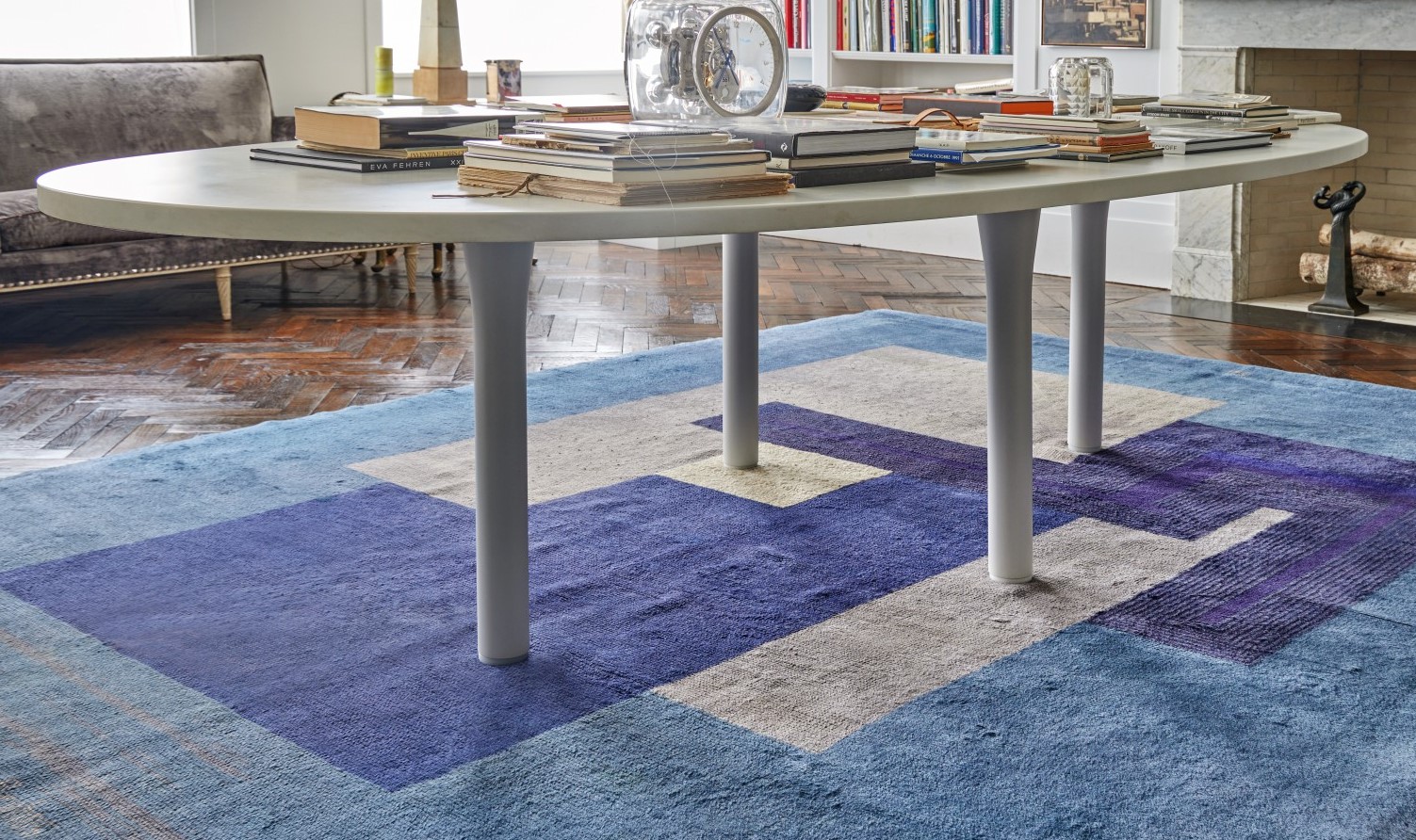
Martin Szekely
"Concrete" Table
The Table basse passif, in passivated and varnished steel, and the Table P.P.C. in stainless steel and Corian each present surfaces and structures that reward extended looking, the way that good painting does.
For collectors, Szekely represents one of the more compelling opportunities at the intersection of design and contemporary art. His works appear at auction at the major Parisian houses as well as at Christie's and Phillips in their dedicated design sales, and they hold their value with the confidence of objects that belong to art history as much as to design history. What collectors consistently report is that a Szekely piece transforms the room it occupies without dominating it, which is a rare and sophisticated achievement. He is not making statement furniture in the decorative sense.
He is making propositions about how we inhabit space, and those propositions reveal new dimensions over time. Collectors who acquire a first piece almost invariably return for another. Within the broader landscape of postwar and contemporary design, Szekely occupies a position comparable in spirit to designers such as Donald Judd, whose furniture practice was explicitly indebted to his sculptural thinking, and to figures like Konstantin Grcic and Ronan and Erwan Bouroullec, who share his commitment to reduction and structural honesty. He is also productively understood alongside the Arte Povera tradition in fine art, given his sustained interest in the expressive and philosophical weight of raw or elemental materials.
What distinguishes Szekely within this company is the particular Parisian intellectual seriousness he brings to the enterprise, a quality rooted in the French tradition of treating the applied arts as genuine cultural production rather than as a subsidiary of fine art. Szekely's legacy is still very much in the process of being written, which is part of what makes this moment so interesting for collectors. His work has been validated by the museum world and the critical establishment for decades, yet it retains the vitality of a practice that continues to evolve. The objects he has made ask their owners to think, to look carefully, and to sit with the productive discomfort of encountering something that refuses easy categorization.
In an art market that increasingly values work that crosses disciplinary boundaries, Szekely was doing exactly that long before the conversation caught up with him. To collect his work now is to participate in one of the more quietly radical projects in contemporary visual culture, and to do so with the confidence that the institution of design history has already made its judgment.
Explore books about Martin Szekely