Markus Lüpertz
Markus Lüpertz: Painting as a Force of Nature
Artist Spotlight · The Collection Editorial
“Painting is culture, and who says culture says substance of the world. Painting provides the vocabulary to make the world visible.”
Markus Lüpertz
In the autumn of 2023, the Kunsthalle Bremen mounted a sweeping survey of Markus Lüpertz's painted bronzes, drawing a new generation of museum visitors face to face with sculptures that feel simultaneously ancient and urgently alive. The exhibition confirmed what collectors and curators across Europe have long known: Lüpertz is not merely a survivor of twentieth century German painting's great upheavals but one of its most generative and restlessly original voices. Now in his ninth decade, he paints with a ferocity that would exhaust artists half his age, and the market for his work continues to reflect both the depth of his output and the breadth of his ambitions. Markus Lüpertz was born in 1941 in Liberec, in what was then the German occupied Sudetenland, a fact that carries its own weight of historical irony for a man who would go on to become one of Germany's most celebrated and occasionally controversial cultural figures.
Markus Lüpertz
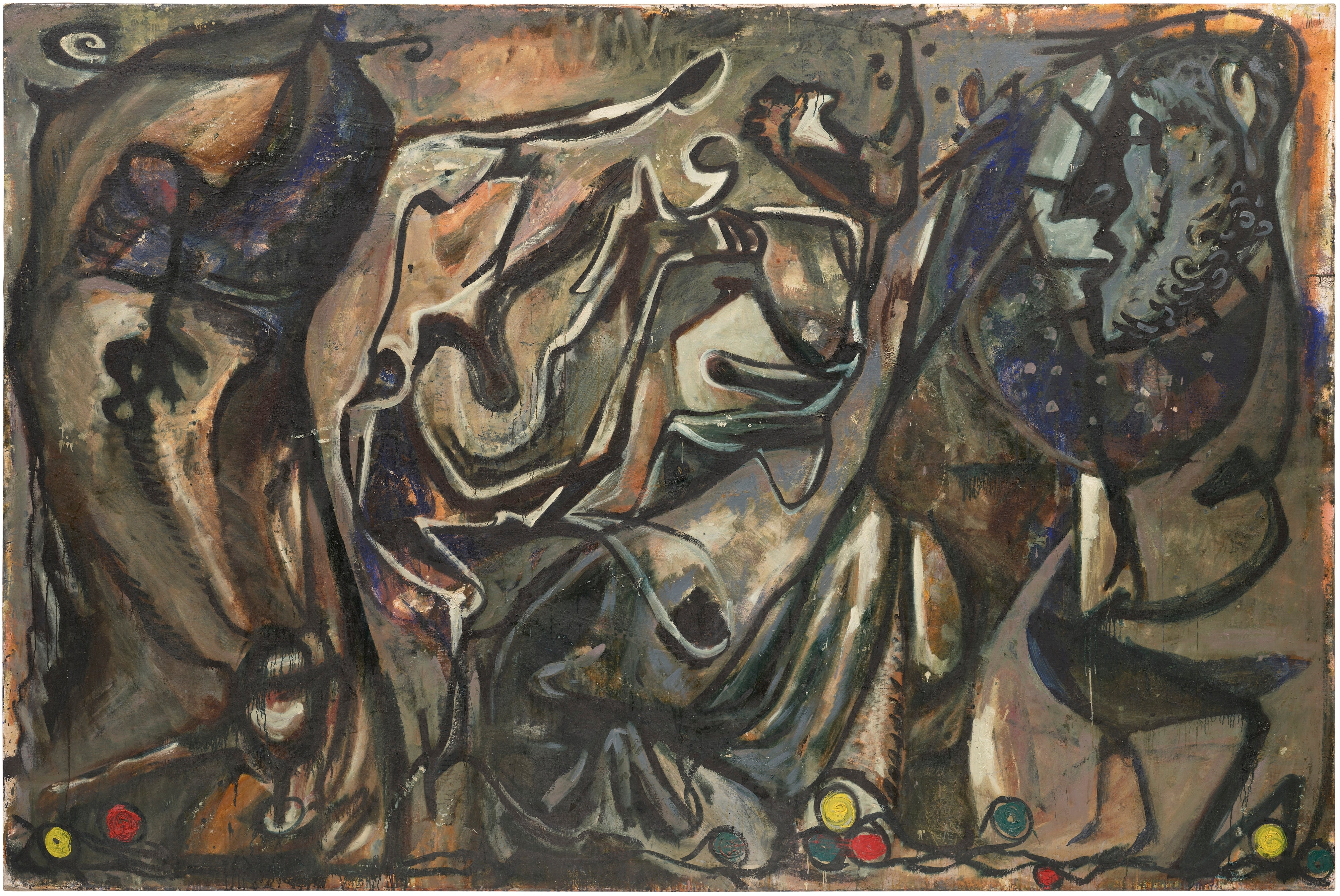
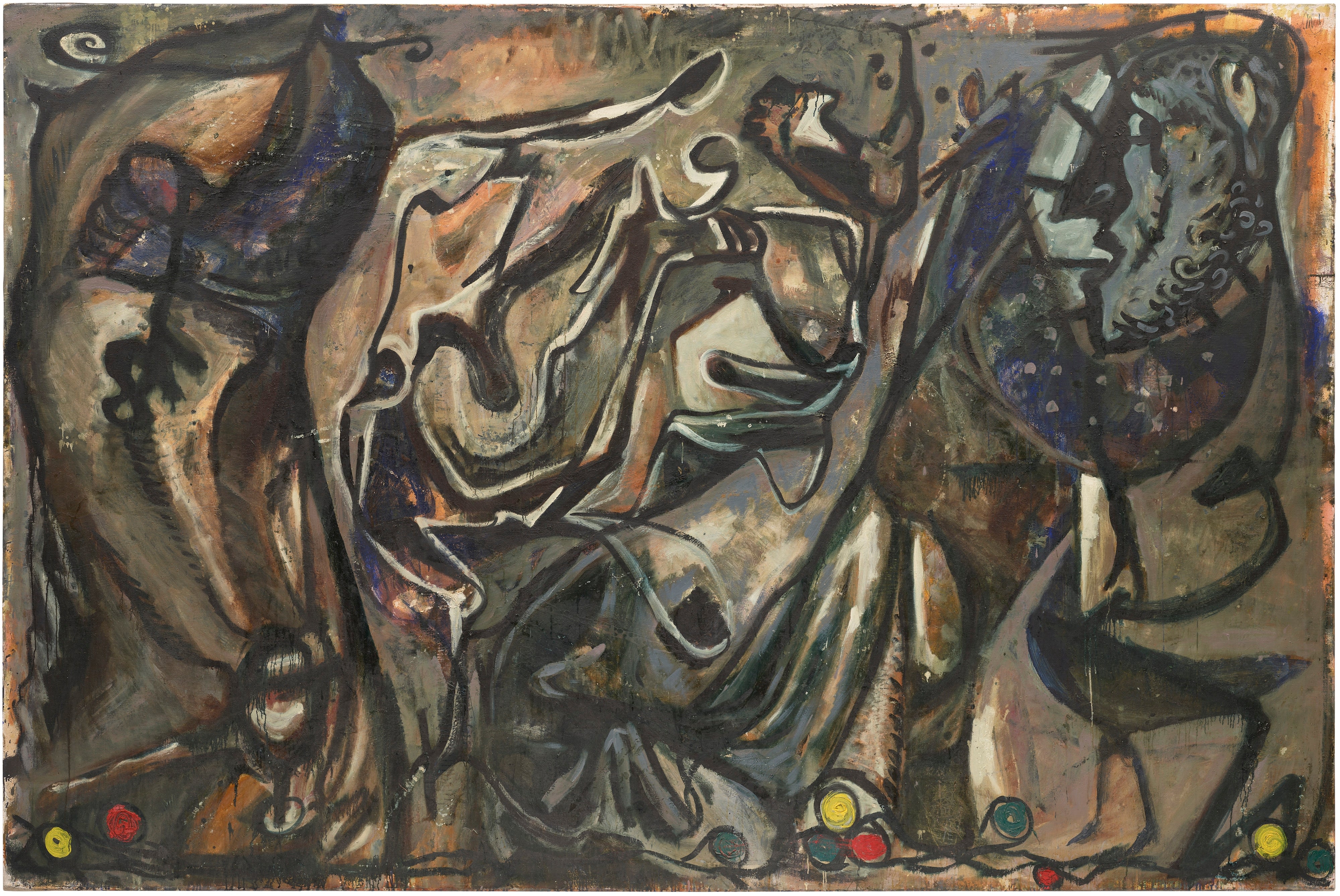
Der Bauer warnt die Hühner (The Farmer Warns the Chicken), 1982
His family relocated to West Germany after the war, and he spent formative years in the Rhineland, where he studied at the Werkkunstschule in Krefeld before moving to Düsseldorf. He later spent time in Paris, absorbing the lessons of the European modernist tradition with the appetite of someone who understood, perhaps instinctively, that great painting requires a reckoning with the full sweep of art history. By the early 1960s he had settled in West Berlin, a city then crackling with postwar tension and creative possibility, and it was there that his singular voice began to crystallize. The defining move of Lüpertz's early career came with what he called his Dithyrambic paintings, a series begun in the mid 1960s that announced an ambition almost shocking in its confidence.
The word dithyrambic refers to ancient Greek hymns of ecstatic praise, and Lüpertz used it to signal that he was reaching past the cautious abstraction dominant in postwar German art toward something louder, more mythic, more physically overwhelming. These large scale canvases incorporated recognizable but strange imagery, military helmets, ears of corn, abstract passages of painterly bravura, all colliding on the picture plane in ways that refused easy resolution. They were simultaneously celebrations of painting's power and provocations aimed at a culture still uncertain about how to handle grand gestures after the catastrophe of National Socialism. Lüpertz embraced the contradiction head on, insisting that German painting could and must reclaim the vocabulary of ambition.
Markus Lüpertz
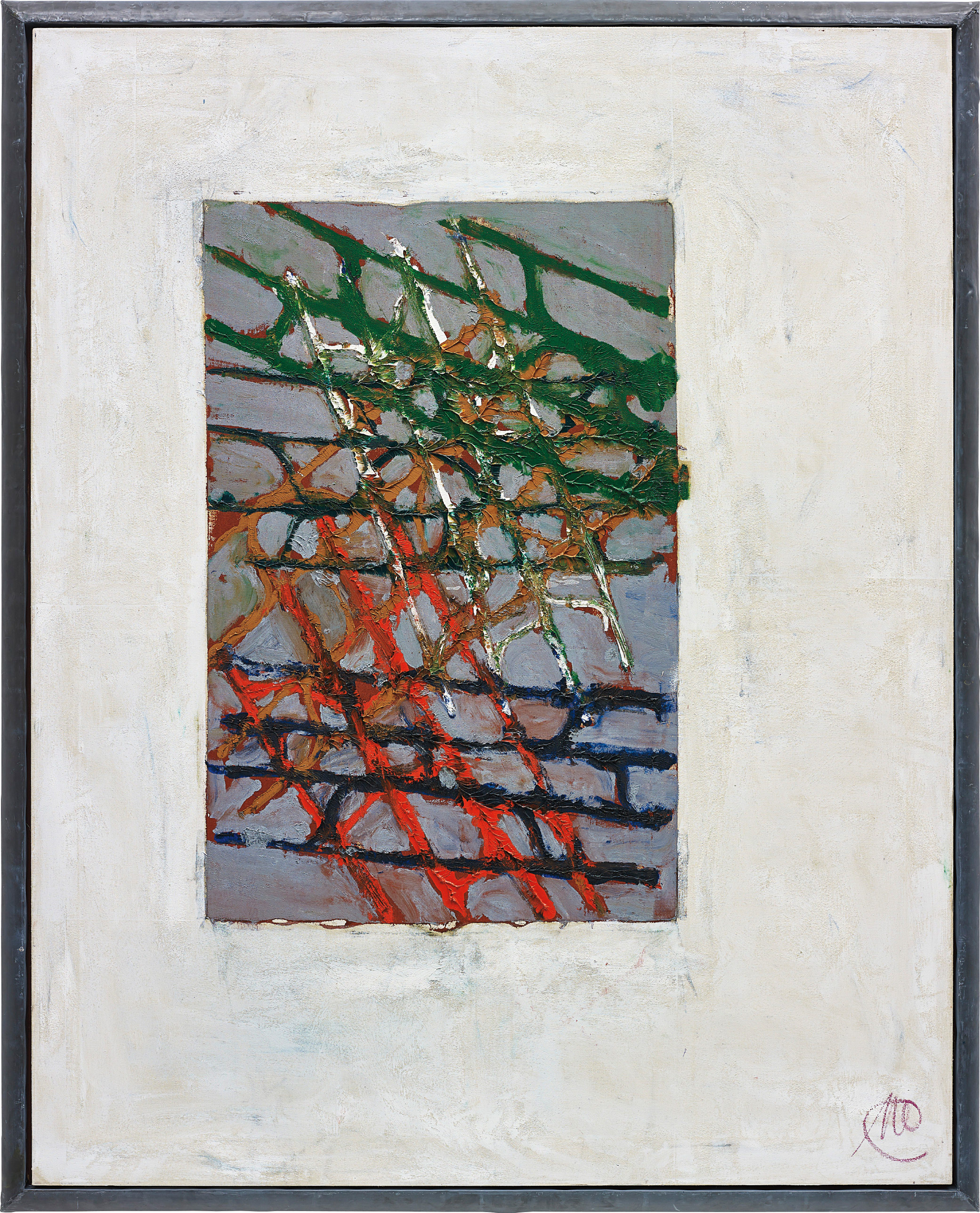
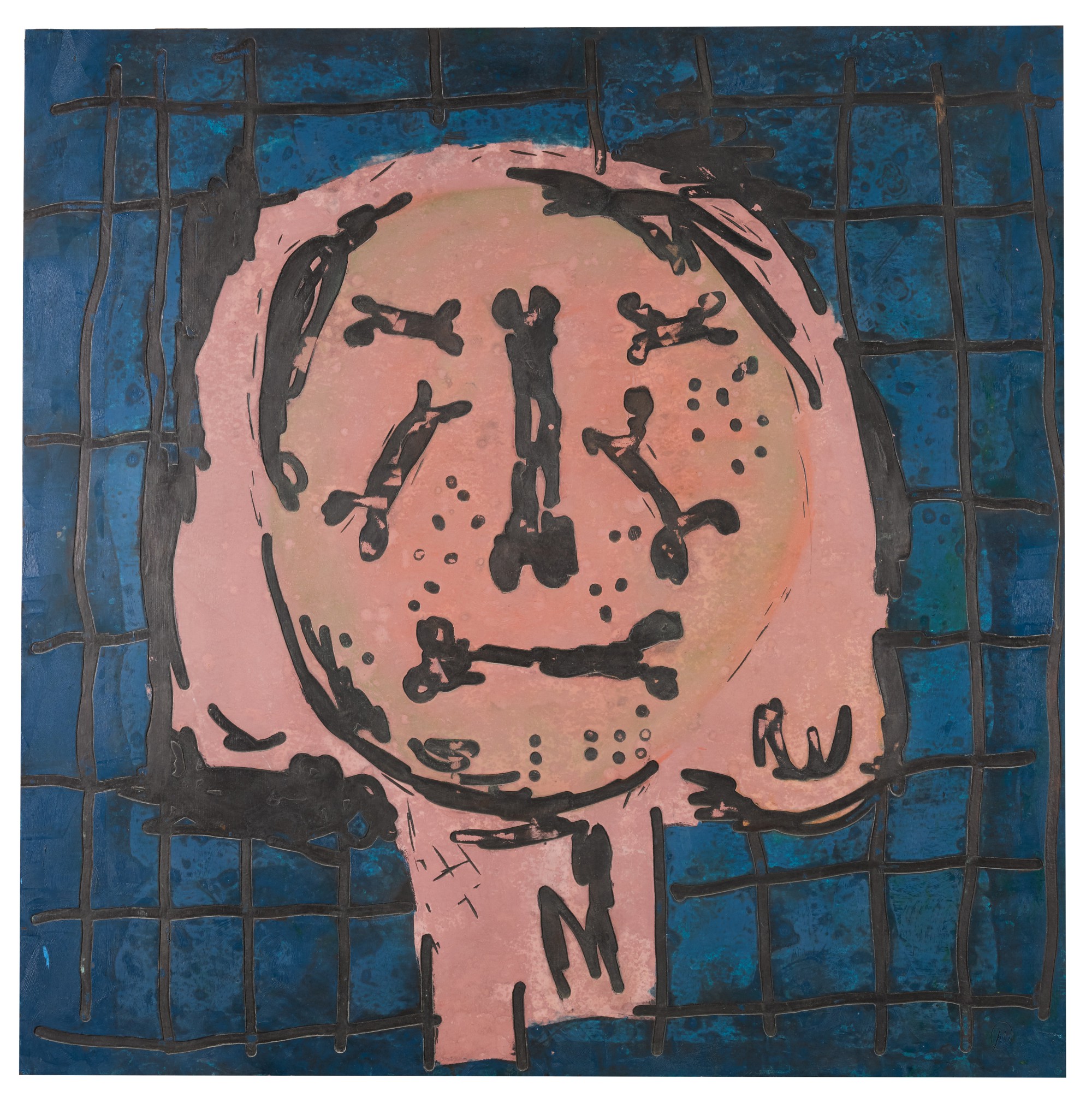
Gitterbild, 1999
Over the following decades Lüpertz developed an approach that moved fluidly between figuration and abstraction, always anchored by an almost physical conviction about paint's capacity to carry meaning. His engagement with mythological and operatic subjects deepened throughout the 1980s and 1990s, producing cycles dedicated to figures from Parsifal, Othello, and other canonical works of Western culture. The Männer ohne Frauen Parsifal series from 1994, which appears among the works available on The Collection, exemplifies this period with particular clarity. In these paintings Wagnerian themes are not illustrated so much as metabolized, translated into densely layered surfaces where color and form do the work that narrative ordinarily would.
“I am the greatest German painter of my time. I say this without arrogance, simply as a fact.”
Markus Lüpertz, interview
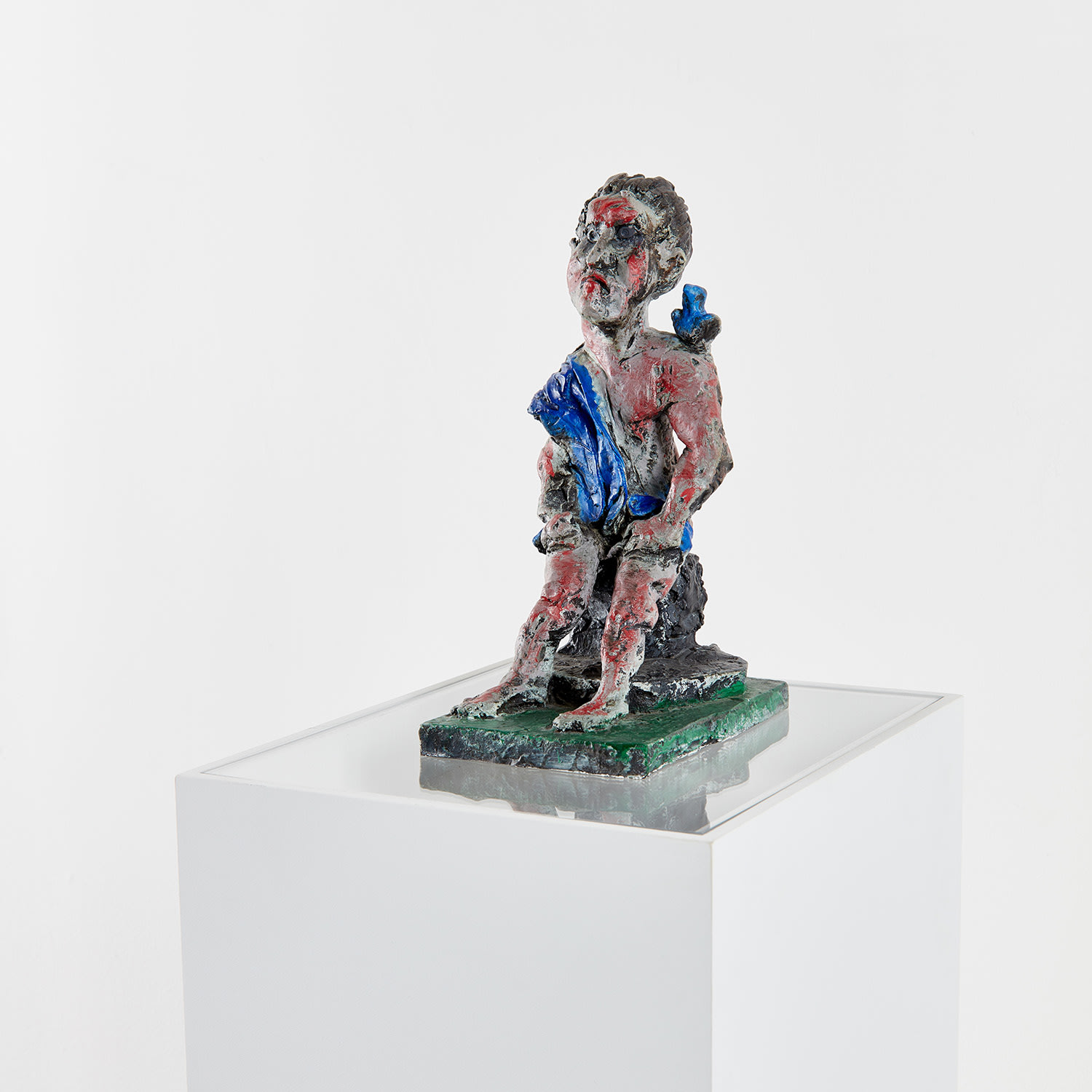
Similarly, the Otello canvases from 1996, including Otello Desdemona and Otello Selbdritt 2., present Verdi's tragedy as a turbulent field of paint rather than a staged drama, locating the emotional core of Shakespeare's story in the sheer physical energy of the brushwork itself. Lüpertz has also pursued sculpture with a commitment equal to his dedication to painting, and his bronzes represent one of the most distinctive bodies of three dimensional work produced by any painter of his generation. The Beethoven from 2011, available on The Collection as a painted bronze, is a striking example of how Lüpertz approaches portraiture in three dimensions: the great composer's features are simultaneously recognizable and reimagined, pushed toward something archetypal rather than documentary.
Markus Lüpertz
Beethoven, 2011
Lüpertz applies paint to his bronzes with the same freedom he brings to canvas, treating the sculptures as objects that exist in a space between painting and sculpture, defying the conventions of both. The Untitled painted bronze relief from 2003 similarly occupies this productive middle territory, demonstrating his ability to find monumental presence in a relatively intimate format. The work from 1982, Der Bauer warnt die Hühner (The Farmer Warns the Chicken), oil and paper collage on canvas, reveals a different register entirely: something wry, even theatrical, in its subject matter, with Lüpertz finding in the mundane rural scene an opportunity for pictorial invention of considerable wit. Collage elements introduce a material rupture into the painted surface that keeps the eye alert and questioning.
This work belongs to a moment in the early 1980s when Neo Expressionism was consolidating its international reputation, and Lüpertz was rightly recognized, alongside peers such as Georg Baselitz, Anselm Kiefer, A. R. Penck, and Jörg Immendorff, as one of the movement's central figures. His inclusion in the landmark 1982 exhibition Zeitgeist at the Martin Gropius Bau in Berlin marked a moment of international recognition that reoriented the global art world's understanding of where serious painting was happening.
Markus Lüpertz
Untitled, 2003
For collectors, Lüpertz offers a rare combination of historical significance and aesthetic immediacy. His works span an enormous range of scale, medium, and emotional register, from the quietly meditative to the outright thunderous, and the best examples reward sustained attention across years of living with them. The painted bronzes have attracted particular enthusiasm in recent years, as collectors have come to appreciate how they defy category in productive ways. The large canvases from the mythological cycles of the 1990s represent some of his most sustained thinking and tend to be the works that define serious Lüpertz collections.
His most recent painting, Jason Abschied (Jason's Farewell) from 2020, demonstrates that his engagement with classical myth remains as vital as ever, the oil and charcoal on canvas carrying the energy of an artist still genuinely in dialogue with the ancient sources he has been reimagining for more than six decades. Lüpertz spent nearly two decades as the director of the Kunstakademie Düsseldorf, one of the most storied art schools in the world, a role that placed him at the center of German art education and gave him direct influence over a generation of practitioners. His presence in that institution was never merely administrative: he taught, he argued, he insisted on the primacy of painting at a moment when many theorists were announcing its death. His legacy is visible not only in his own extraordinary body of work but in the culture of seriousness and ambition he helped sustain.
To collect Lüpertz is to place oneself in proximity to one of the great, uncompromising commitments to the act of painting that the twentieth and twenty first centuries have produced.
Explore books about Markus Lüpertz
Markus Lüpertz: Werkverzeichnis der Gemälde
Various contributors
Markus Lüpertz: Retrospektive
Various authors
Lüpertz
Michael Brenson
Markus Lüpertz: Paintings and Sculptures
Dieter Koepplin
Markus Lüpertz: Works on Paper
Various contributors