Marcel Dyf
Marcel Dyf: Painting Light Into Pure Joy
Artist Spotlight · The Collection Editorial
There is a particular quality of afternoon light in Provence, the kind that turns limestone walls golden and makes lavender fields shimmer as though they are about to dissolve into the sky. Marcel Dyf spent the better part of his life chasing that light, and catching it, again and again, on canvas after canvas that now hang in private collections across Europe, North America, and beyond. As his works continue to appear with admirable regularity at Christie's, Sotheby's, and Bonhams, drawing sustained competitive bidding from discerning collectors, it is clear that Dyf's reputation is not merely holding steady. It is deepening, finding new admirers with every season and every sale.
Marcel Dyf
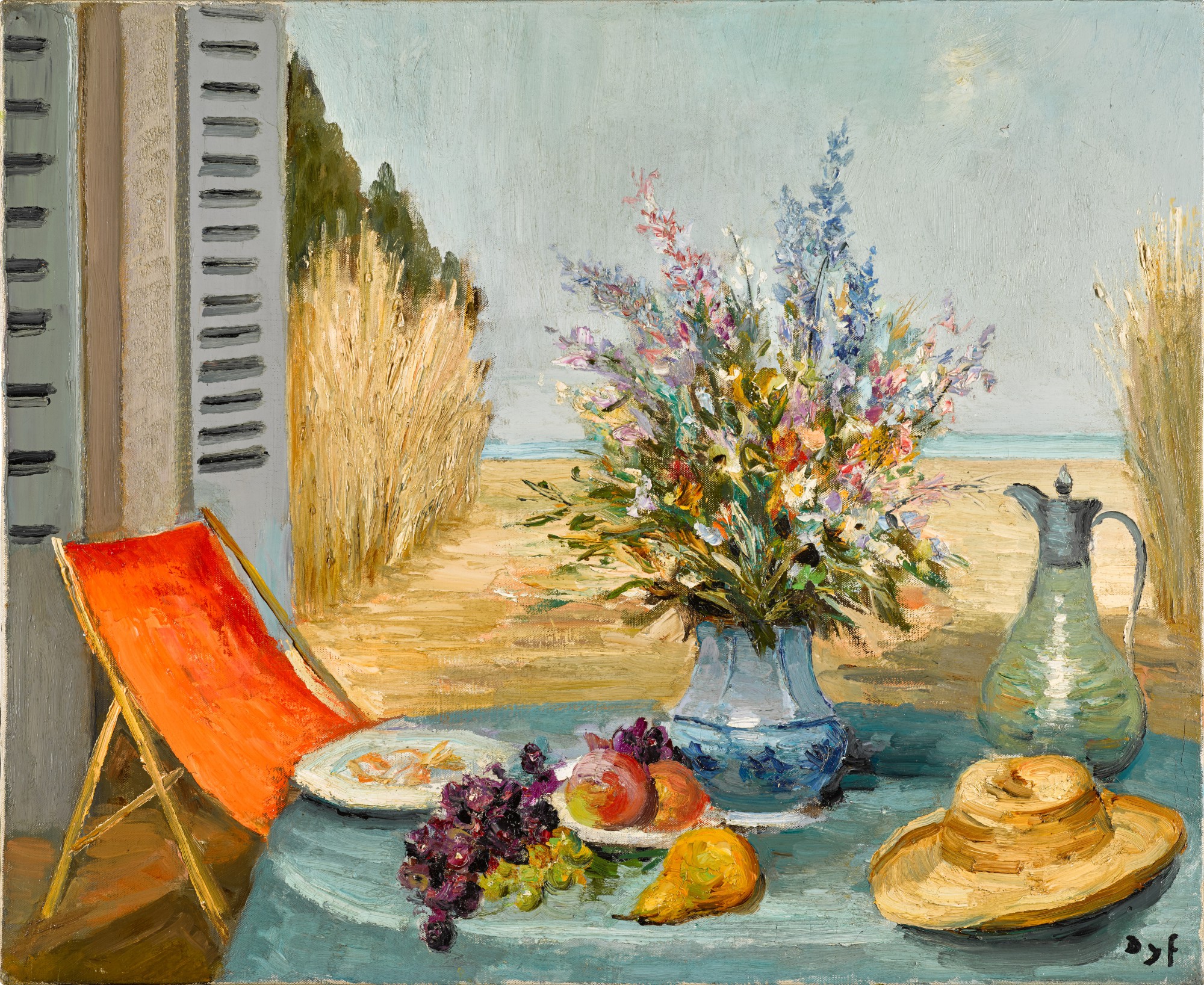
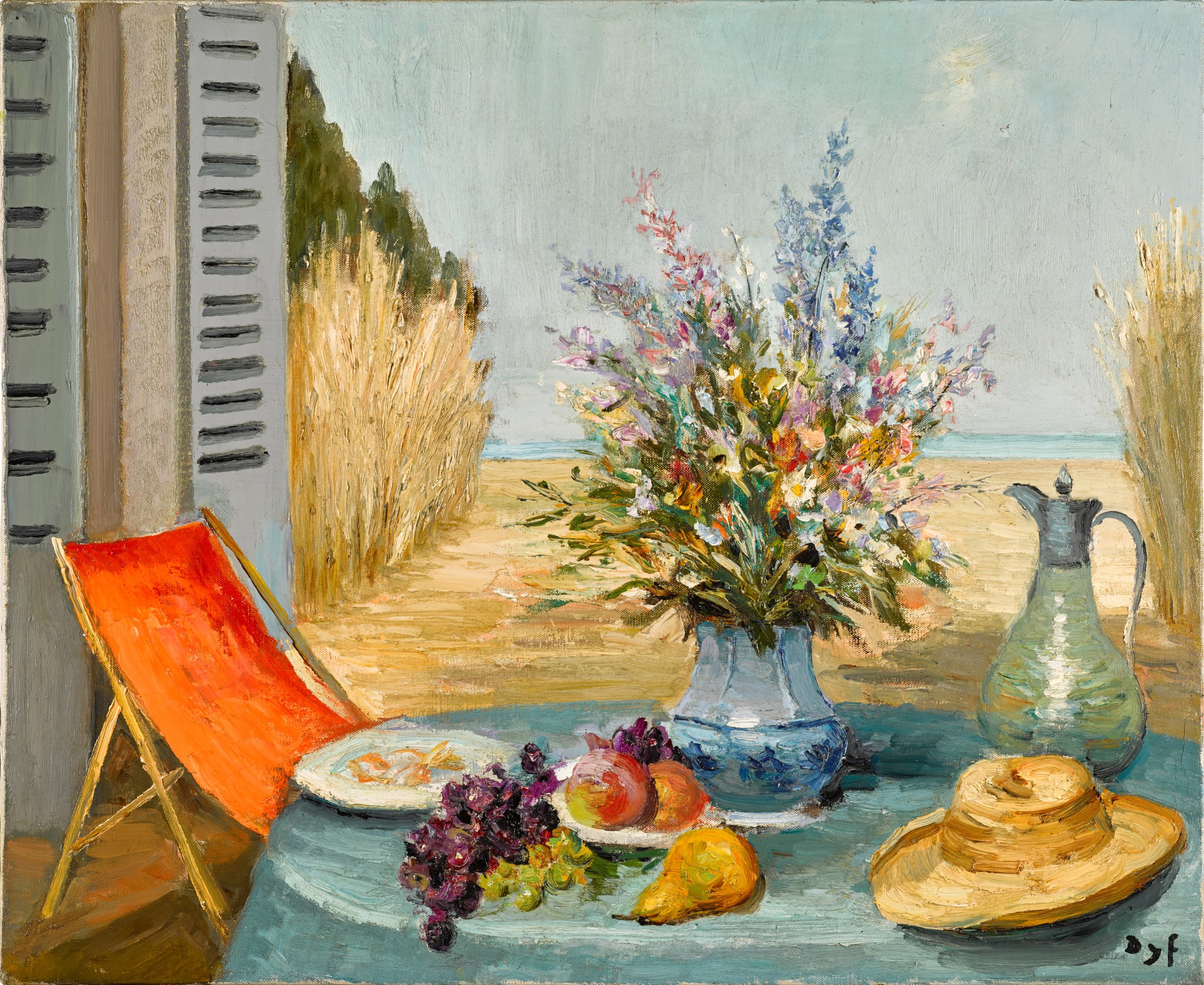
Fenêtre ouverte sur la mer (Provence), 1960
Dyf was born in Paris in 1899, and his early years unfolded against the backdrop of a city still intoxicated by the legacy of Impressionism. The great generation of Monet, Renoir, and Pissarro had already transformed the way the Western eye understood color and light, and that revolution was woven into the very atmosphere of Parisian artistic culture by the time Dyf came of age. He was largely self taught, a fact that distinguished him from many of his peers and gave his development an organic, unhurried quality. Rather than conforming to the doctrines of any single school or atelier, he absorbed influences broadly and synthesized them into something unmistakably personal.
The comparison to Pierre Auguste Renoir is one that follows Dyf through virtually every serious discussion of his work, and it is not casually earned. Like Renoir, Dyf possessed an almost instinctive gift for rendering the warmth of skin, the softness of petals, and the dappled generosity of Mediterranean sunlight with a tenderness that feels both technically accomplished and emotionally open. His handling of paint has that same confident looseness, a willingness to let the brushstroke breathe and suggest rather than belabor and define. Yet Dyf was never simply an imitator.
Marcel Dyf
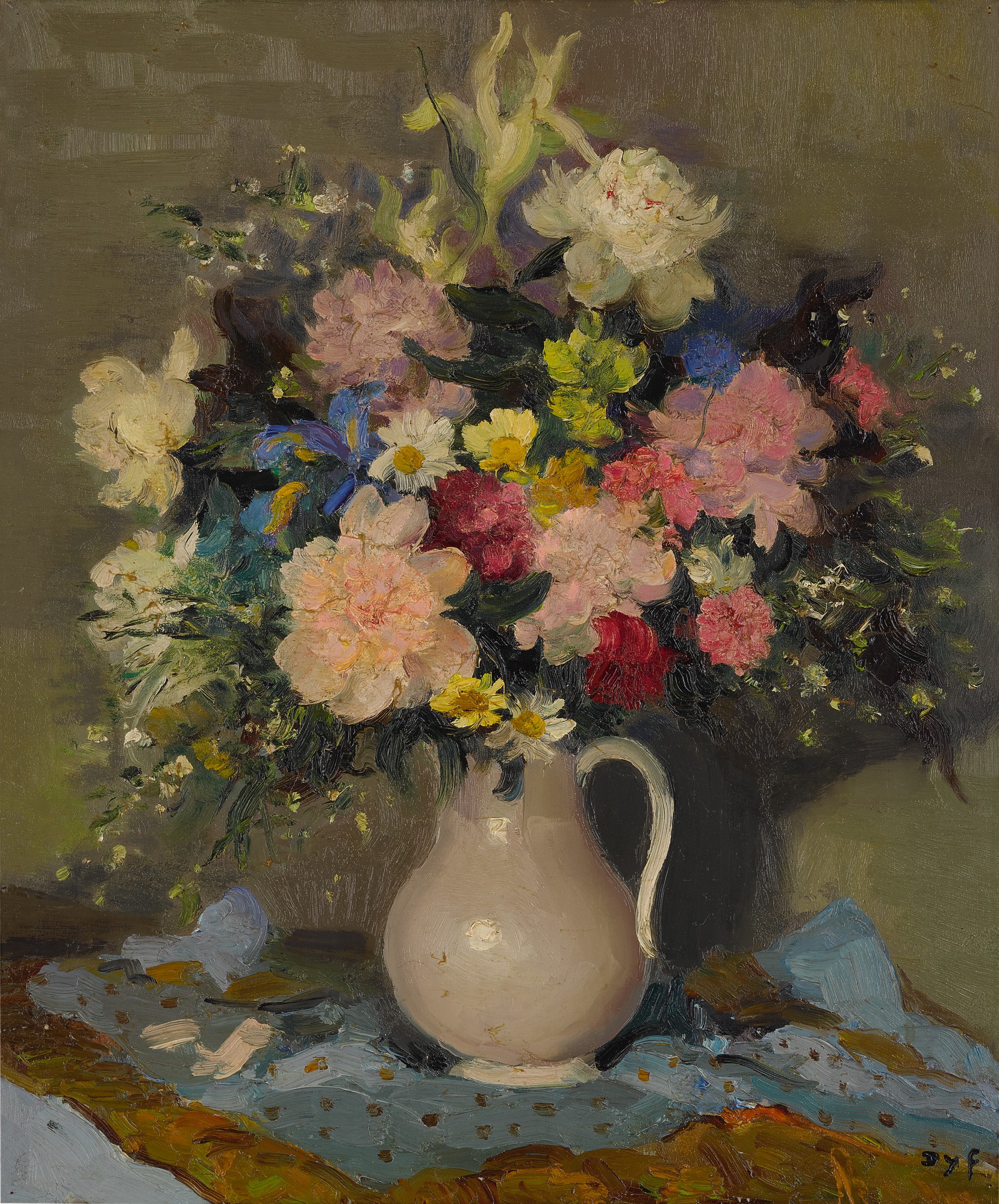
Pivoines et iris, 1965
He belonged to a generation that inherited Post Impressionism and pressed it forward into something more personally expressive, more rooted in specific geography and personal feeling. Dyf's mature practice centered on three great loves: the landscapes of Provence and the French Riviera, floral still lifes of extraordinary richness, and figures rendered in domestic or sun lit outdoor settings. Works such as Fenêtre ouverte sur la mer (Provence), painted in 1960, exemplify his ability to frame an entire sensory world within a single composition. The open window becomes a threshold between interior intimacy and the vast, light flooded exterior, a device that speaks equally to the Impressionist tradition and to something more quietly philosophical about the relationship between shelter and freedom.
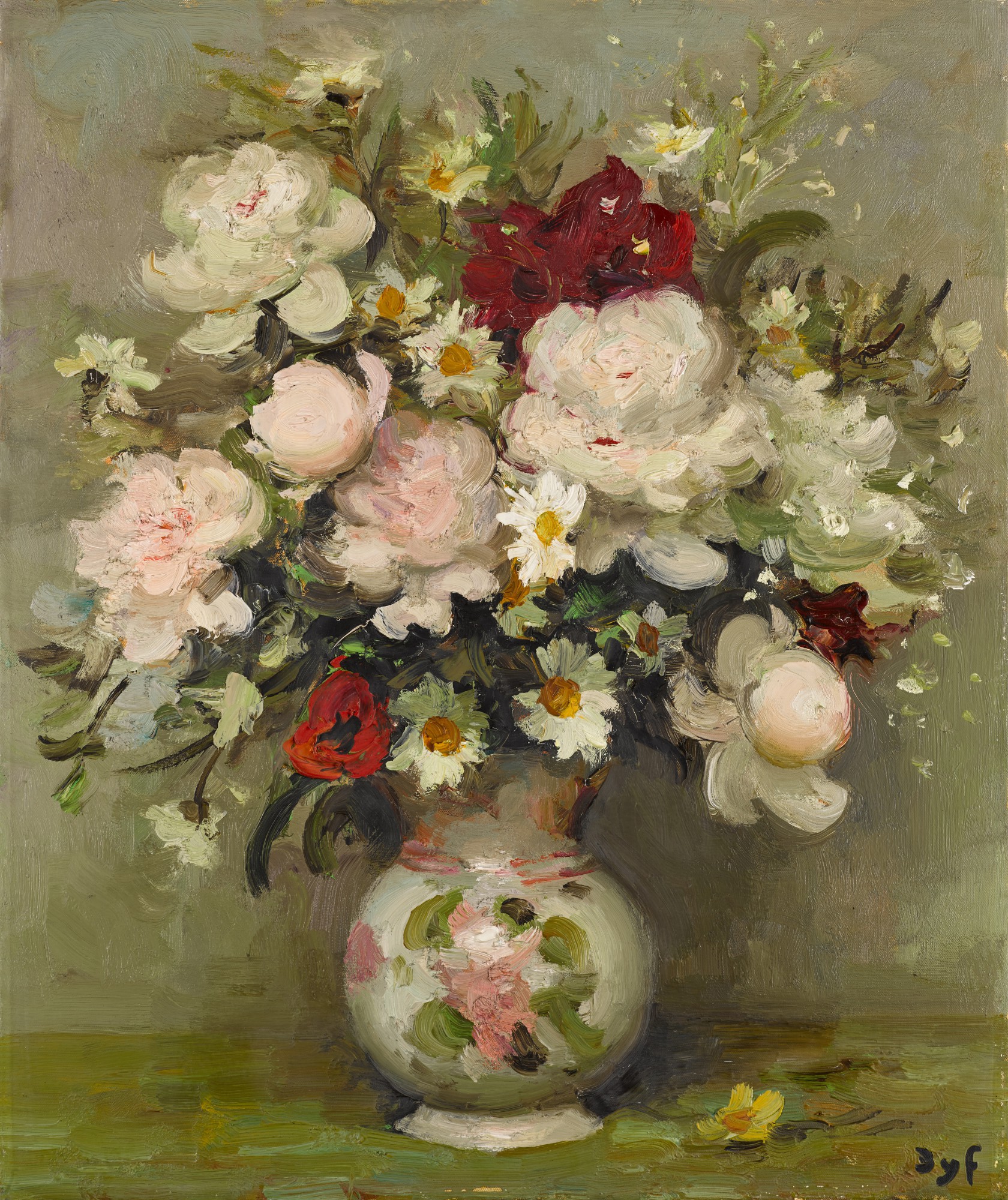
His 1957 canvas Marché aux fleurs captures the social warmth of a French market scene with the same luminous palette, giving everyday life the quality of a cherished memory even as it unfolds in the present tense. His floral paintings deserve particular attention from collectors, as they represent some of his most concentrated and technically dazzling achievements. Pivoines et iris and Pivoines et fleurs variées au vase rose, both from 1965, demonstrate his command of the still life as a vehicle for pure chromatic celebration. These are not merely decorative arrangements.
Marcel Dyf
Pivoines et fleurs variées au vase rose, 1965
They are meditations on abundance, on the generosity of the natural world, on the way certain colors, deep rose, ivory white, bruised violet, seem to generate their own inner light when placed in conversation with one another. His later canvas Roses, painted in 1981 when the artist was well into his eighties, shows no diminishment of this gift. If anything, the late floral works carry an extra charge of feeling, as though Dyf understood that beauty observed with full attention is its own form of gratitude. The range of subjects Dyf explored across his long career also reveals a painter of genuine curiosity and range.
Femmes Marocaines (Femmes lavant dans un oued) stands somewhat apart from his Provençal work, offering a glimpse of North African life rendered with the same warmth and respect for light that characterizes everything he touched. Claudine devant les volets, from 1967, places a figure against the geometry of shuttered windows in a composition that balances intimacy with formal elegance. Moisson en Bretagne, painted in 1970, takes his luminous sensibility north, into the cooler greens and grays of Brittany, proving that his gift was not merely dependent on Mediterranean sunshine but was something he carried within him as a fundamental orientation toward the world. For collectors, Dyf represents a compelling proposition at several levels.
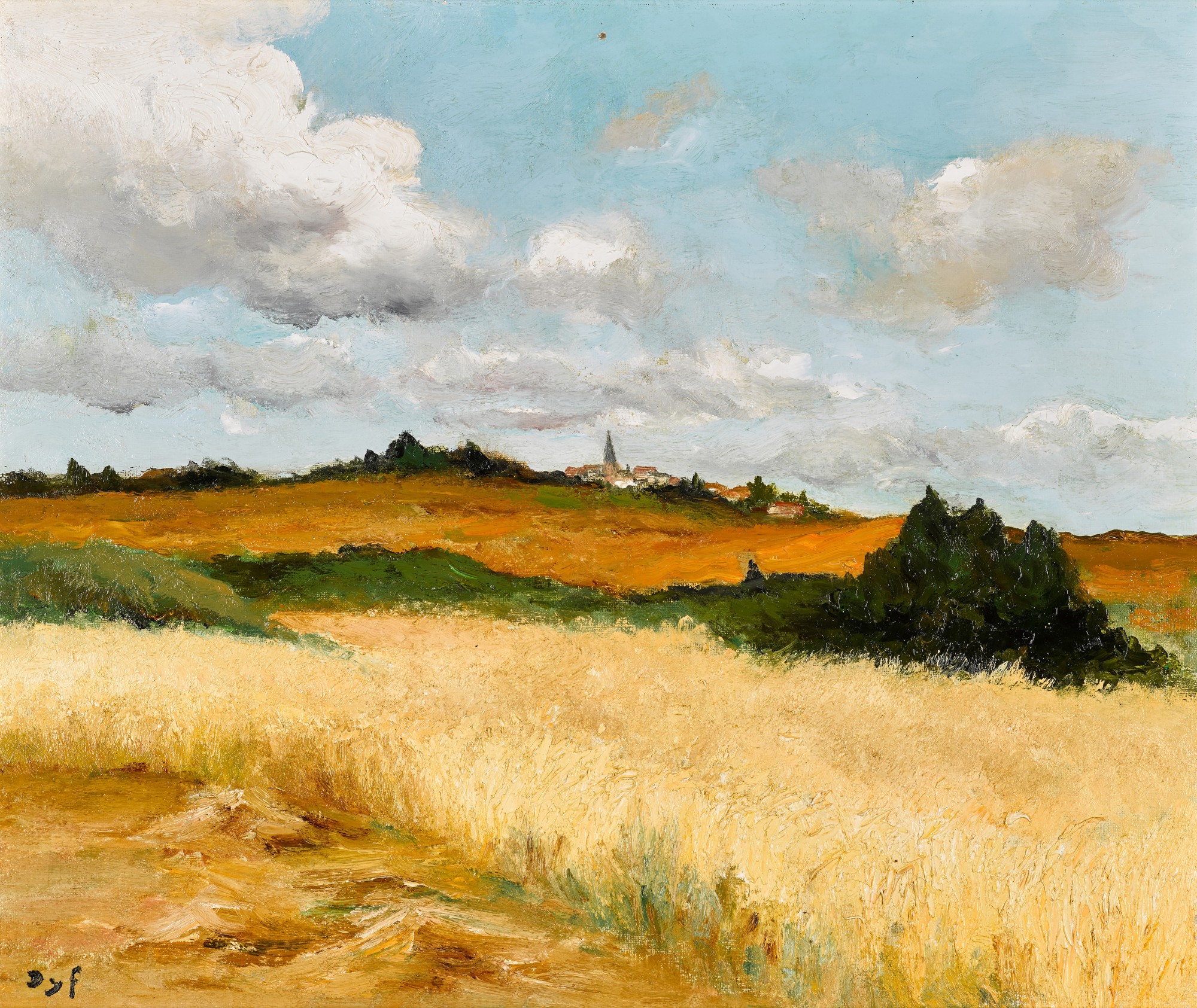
Marcel Dyf
Moisson en Bretagne, 1970
His works appear frequently enough at major international auction houses to provide genuine market transparency, yet demand consistently outpaces supply at the upper end of his price range, particularly for large, well documented oils from his Provençal and floral periods. Works dated between the mid 1950s and the mid 1970s are generally considered to represent the fullest expression of his mature style, and pieces with clear provenance and exhibition history command predictable premiums. Collectors new to Dyf are often advised to look closely at condition and at the intensity of the palette. His best canvases have a warmth that almost seems to emanate heat, a quality that reproduces poorly and must be experienced in person to be fully understood.
Within the broader context of twentieth century French painting, Dyf occupies a position that rewards careful consideration. He stands in a tradition that runs from the late Impressionists through artists such as Henri Lebasque, André Brasilier, and the Intimists who found poetry in domestic light and provincial beauty. Like those painters, he understood that joy is not a lesser subject than tragedy, that the afternoon sun on a bowl of peonies is as worthy of sustained artistic attention as any grand historical or political theme. This is a conviction that resonates perhaps more urgently now than at any previous moment, in a cultural climate that increasingly recognizes the radical potential of beauty chosen deliberately and painted with full commitment.
Marcel Dyf died in 1985, leaving behind a body of work that continues to grow in critical and commercial estimation with the passage of time. His life spanned nearly the entire twentieth century, and his paintings offer a sustained, luminous argument for the value of sensory pleasure, careful observation, and the kind of quiet mastery that does not announce itself but simply, persistently, gives joy. To encounter a Dyf canvas in a well lit room is to understand immediately why collectors return to him again and again, and why, more than four decades after his death, the light he captured still feels so unmistakably, irreplaceably alive.
Explore books about Marcel Dyf