Marcel Duchamp
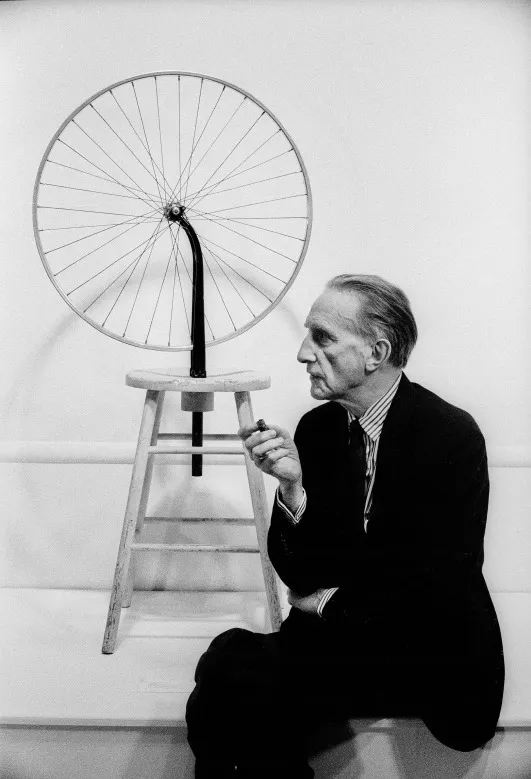
Marcel Duchamp: The Mind That Freed Art
Artist Spotlight · The Collection Editorial
“I have forced myself to contradict myself in order to avoid conforming to my own taste.”
Marcel Duchamp
Picture New York in February 1913, the old 69th Regiment Armory on Lexington Avenue buzzing with a crowd that had never quite seen anything like it. Among the paintings that stopped visitors cold was a canvas by a relatively unknown French artist: 'Nude Descending a Staircase, No. 2,' a cascading, fractured sequence of motion that seemed to dissolve the human figure into pure energy and time. Critics reached for mockery, one famously calling it an explosion in a shingle factory, but the work sold and the artist's name lodged itself permanently in the American imagination.
Marcel Duchamp
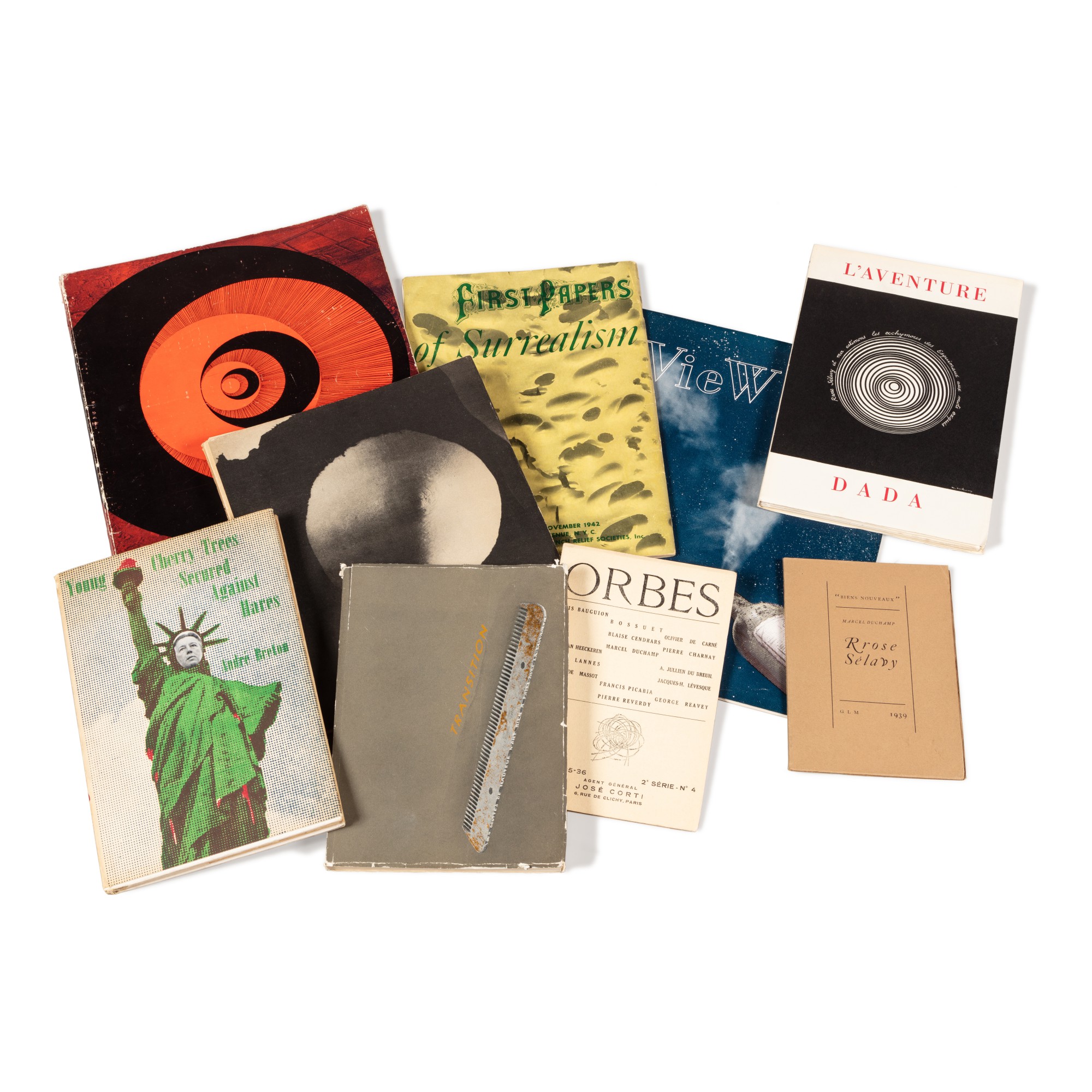
Lifetime Duchamp books & covers from 1934 to 1957 (9 books), 1934
That artist was Marcel Duchamp, and what followed that electric debut was a career so radical, so tenderly subversive, that it effectively rewrote the terms on which all subsequent art would be made. Duchamp was born on July 28, 1887, in Blainville Crevon, a small town in Normandy, into a family with an unusually rich appetite for culture. His grandfather was a noted engraver, and two of his elder brothers, Jacques Villon and Raymond Duchamp Villon, were already established figures in the Parisian avant garde when Marcel came of age. Growing up surrounded by art making as a natural condition of daily life gave him both fluency and a certain fearless detachment from the pieties of the profession.
He moved to Paris as a young man, studied briefly at the Académie Julian, and began producing work that showed genuine facility within the conventions of Post Impressionism and early Cubism. The formation was thorough, which made his eventual departure from it all the more deliberate and resonant. The years between 1912 and 1923 represent one of the most concentrated periods of creative disruption in modern art history. After the Armory Show triumph, Duchamp grew restless with what he called retinal art, painting intended only to please the eye.
Marcel Duchamp
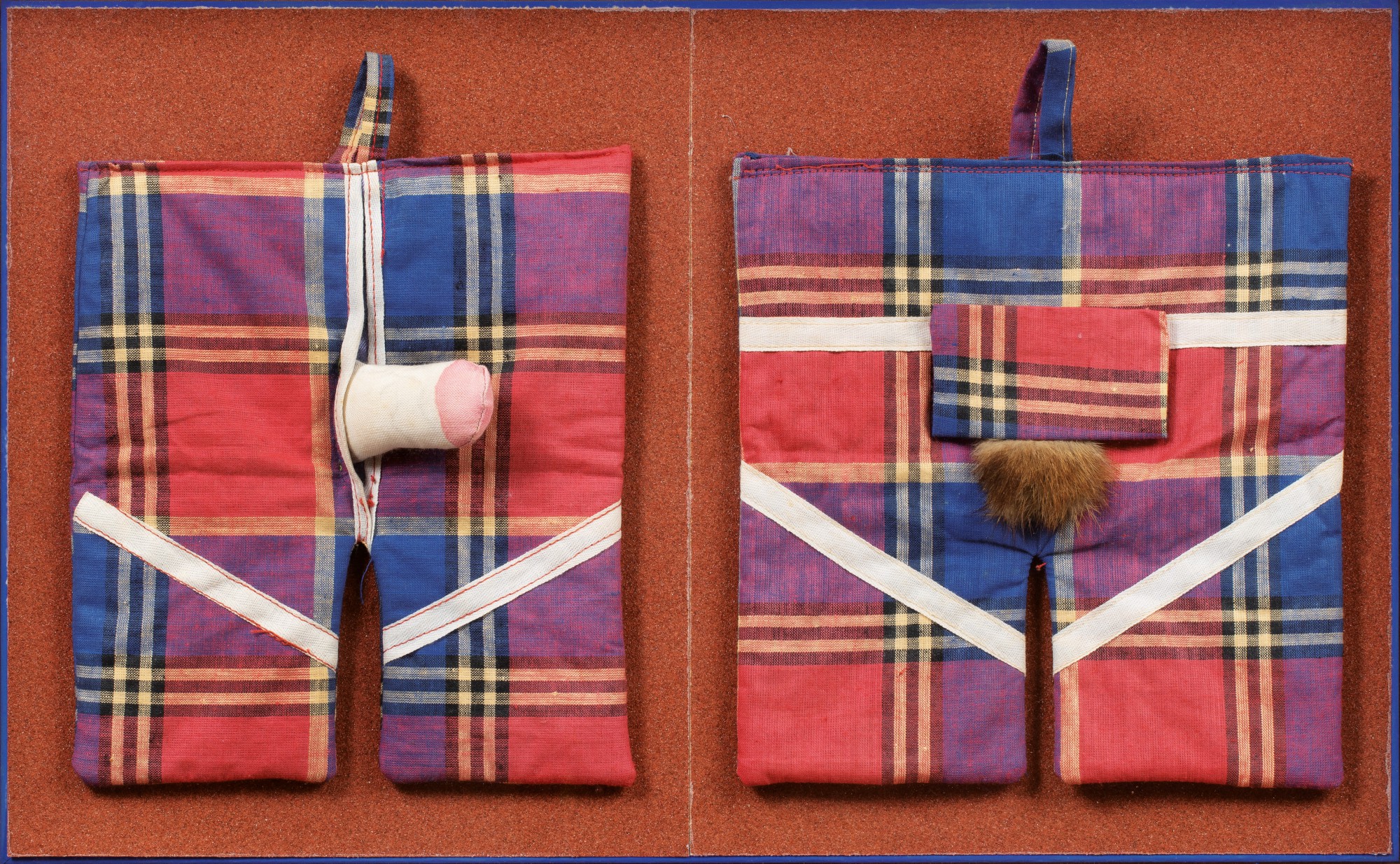
Couple de tabliers, 1959
He was after something that engaged the mind, that carried philosophical weight. The readymades emerged from this restlessness: ordinary manufactured objects, a bottle rack, a bicycle wheel mounted on a stool, and most famously a porcelain urinal titled 'Fountain' and submitted under the pseudonym R. Mutt to the Society of Independent Artists exhibition in New York in 1917. Rejected by the selection committee, 'Fountain' was documented by Alfred Stieglitz and instantly became the defining provocation of the twentieth century, a single gesture that asked whether the act of choosing and naming could itself constitute art.
“The creative act is not performed by the artist alone; the spectator brings the work in contact with the external world.”
The Creative Act, lecture, 1957
The question has never stopped reverberating. Alongside the readymades, Duchamp devoted years to his monumental and genuinely mysterious large glass work known as 'The Large Glass' or 'La Mariée mise à nu par ses célibataires, même' (The Bride Stripped Bare by Her Bachelors, Even), labored over from 1915 to 1923 and famously declared unfinished. The work lives at the Philadelphia Museum of Art, which holds the most significant collection of his work in any public institution, assembled in large part through the passionate advocacy of collector Walter Arensberg. Duchamp's relationship with Arensberg and his circle in New York during the late 1910s was central to the formation of American avant garde culture, placing him at the intersection of Dada, early Surrealism, and the intellectual life of a city just beginning to understand itself as a world capital of art.
Marcel Duchamp
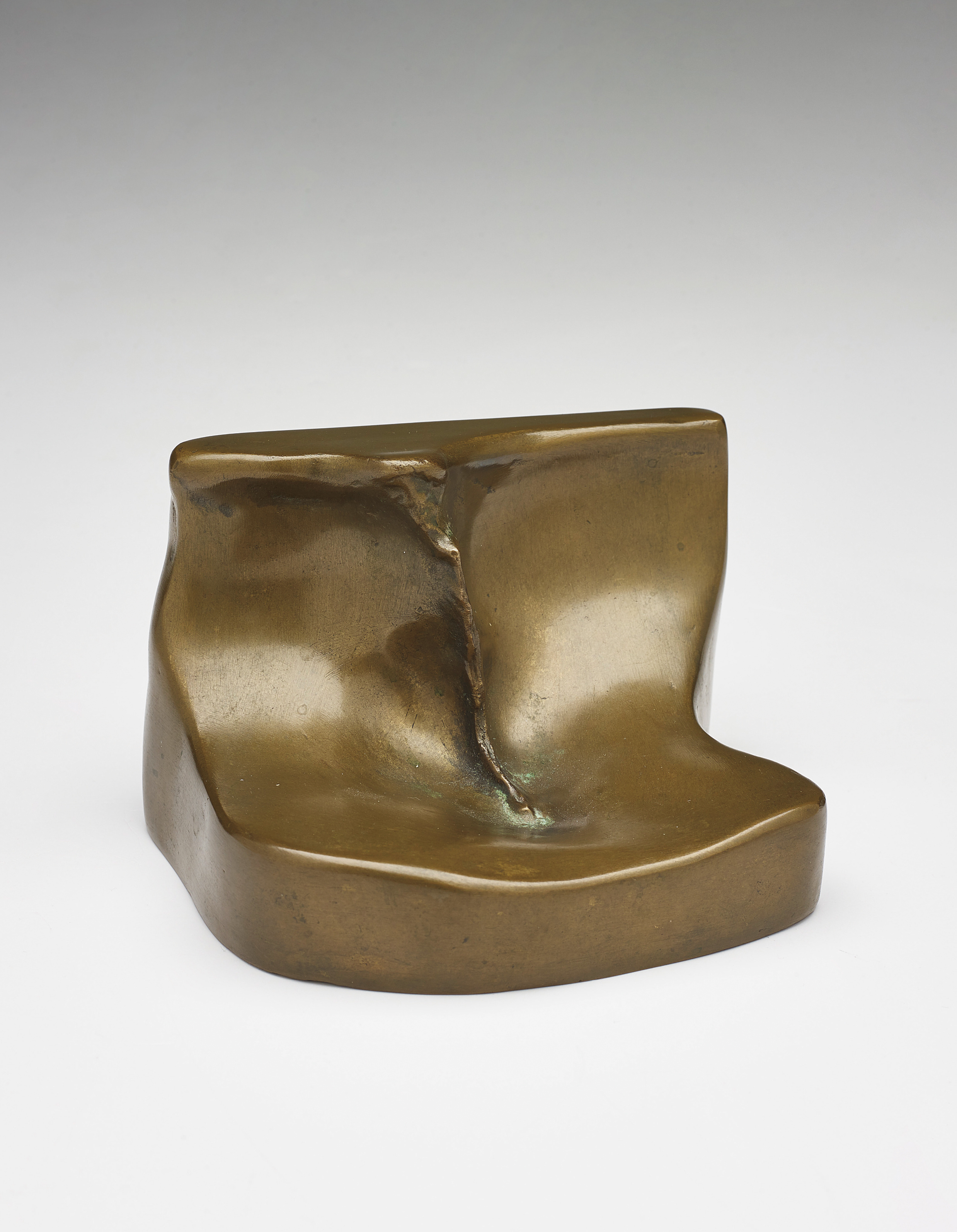
Feuille de vigne femelle, 1951
His later work, including the Rotoreliefs of the 1930s, optical spinning discs that create three dimensional illusions, and the enigmatic final installation 'Étant donnés,' revealed only after his death in 1968, confirmed that his imagination had never once settled into comfort. For collectors, Duchamp presents one of the most intellectually rewarding and carefully considered fields in the entire market. His editions, multiples, and works on paper carry the distinctive quality of his thinking in concentrated form. The Rotoreliefs, produced in various editions including those assembled by Duchamp and his wife Alexina in New York, offer tactile and conceptual intimacy with an artist for whom the idea and the object were always in conversation.
“I am interested in ideas, not merely in visual products.”
Interview with James Johnson Sweeney, 1946
His aquatints and etchings, including variations on the Bride imagery, are works of considerable beauty as well as historical weight. The remarkable collection of books produced during his lifetime, from the Green Box of 1934 onward, are not merely documents but artworks in their own right, designed to distribute his ideas as objects of aesthetic experience. Works bearing his signature carry extraordinary provenance weight, and pieces confirmed by the Association Marcel Duchamp, which provides certificates of authenticity, offer collectors a level of assurance commensurate with the significance of the work. To understand Duchamp fully is to understand the artists who orbited him and followed in his wake.
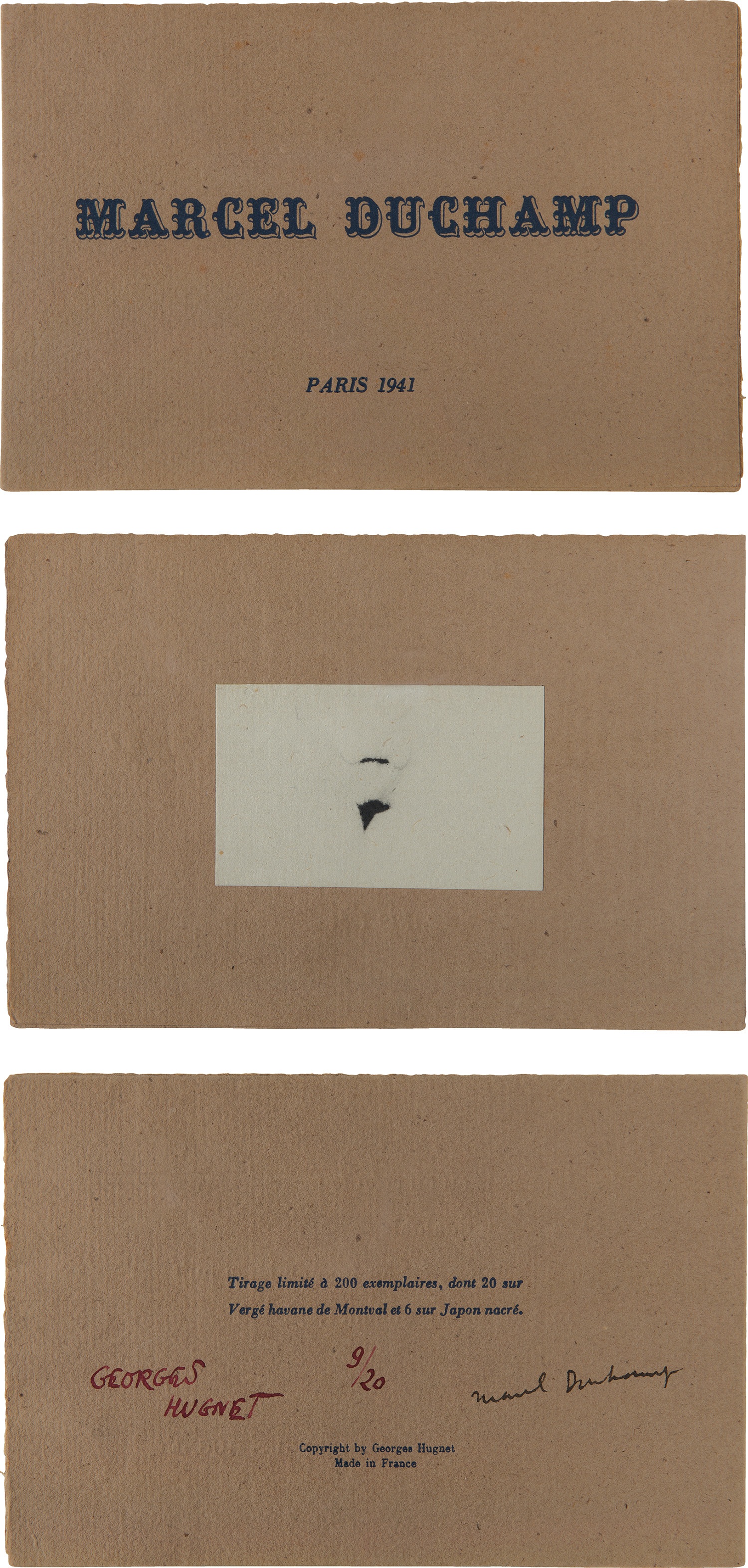
Marcel Duchamp
Mustache and Beard of L.H.O.O.Q.
Man Ray, his close friend and collaborator, shared his conviction that the artist's role was as much conceptual as technical. Francis Picabia brought a similarly iconoclastic energy to the Dada circle Duchamp helped animate on both sides of the Atlantic. Among the Surrealists, whose movement he participated in without ever being fully claimed by it, his influence shaped the logic of the uncanny object. Later, and perhaps most consequentially, the entire tradition of Conceptual Art from the 1960s onward treats Duchamp as its founding ancestor.
Joseph Kosuth, John Cage, Bruce Nauman, and Andy Warhol each acknowledged debts to his thinking. Collecting Duchamp is, in this sense, collecting the root of a vast and still growing tree. What makes Duchamp so vital to any serious engagement with art history and the art market today is precisely his refusal to be contained by any single movement, medium, or moment. He was a painter, a sculptor, an installation artist, a chess champion of genuine ability, a publisher, a provocateur, and above all a philosopher of the art object and its relationship to the world.
His ideas arrive as freshly now as they did at the Armory Show more than a century ago, because the questions he raised about authorship, intention, and the nature of beauty remain genuinely open. Museums from the Centre Pompidou in Paris to the Museum of Modern Art in New York have devoted major retrospective attention to his legacy, and each new generation of curators finds new depths to illuminate. To have Duchamp's work in a collection is to hold a piece of the argument that made contemporary art possible, and that is a privilege without parallel.
Explore books about Marcel Duchamp
Marcel Duchamp
Michel Sanouillet
The Bride Stripped Bare by Her Bachelors, Even
Michel Sanouillet
Marcel Duchamp: The Making of the Bride Stripped Bare
Jennifer Gough-Cooper and Jacques Caumont
Duchamp: A Biography
Jennifer Gough-Cooper and Jacques Caumont
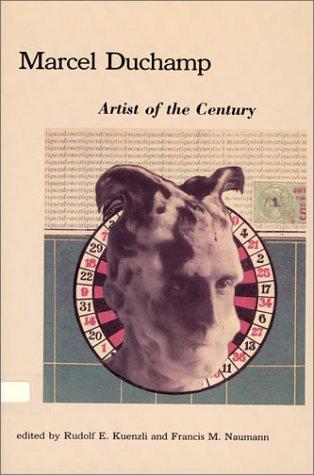
Marcel Duchamp: Artist of the Century
Rudolf E. Kuenzli and Francis M. Naumann
The Essential Writings of Marcel Duchamp
Michel Sanouillet and Elmer Peterson
Marcel Duchamp: Interviews and Statements
Serge Stauffer
Duchamp: A Retrospective
Anne d'Harnoncourt and Kynaston McShine