Lisette Model
Lisette Model: The City Laid Bare
Artist Spotlight · The Collection Editorial
“Photography is the easiest medium in which to be merely competent. Almost anybody can be competent.”
Lisette Model, teaching notes, New School for Social Research
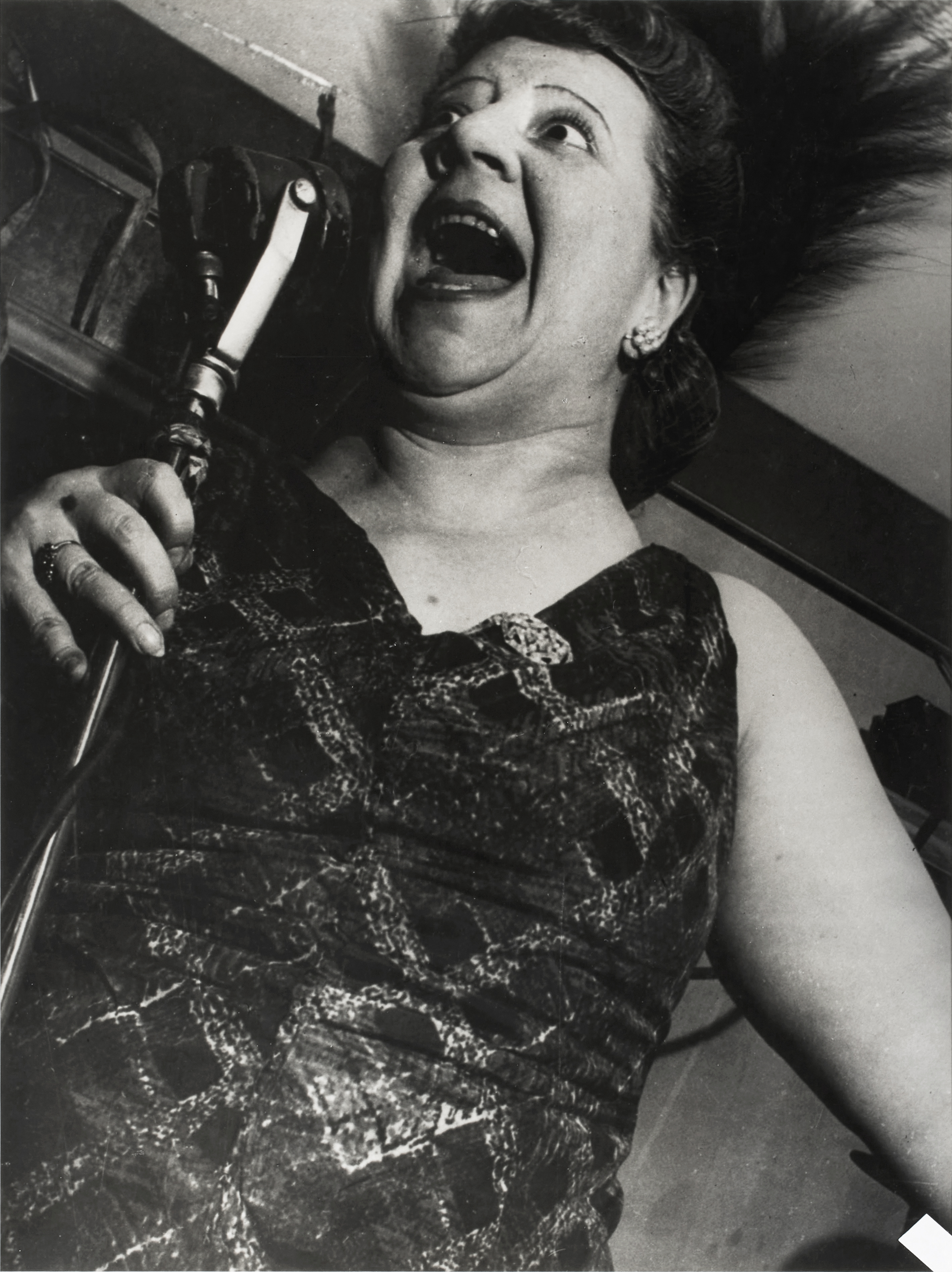
There is a photograph that stops you cold. A heavyset woman sits on the Promenade des Anglais in Nice, her body spilling magnificently across a beach chair, her gaze confronting the camera with absolute indifference to your judgment. Made in the early 1940s, this image from Lisette Model's celebrated Promenade des Anglais series has become one of the most electrifying portraits in the history of photography. It announces, without apology, an artist who saw the world with surgical clarity and radical compassion in equal measure.
Lisette Model
Café Metropole
Lisette Model was born Elise Amelie Felicie Stern in Vienna in 1901, the daughter of an affluent Jewish family. Her early education was steeped in high culture: she studied music theory and composition under none other than Arnold Schoenberg, one of the towering figures of the European avant garde. That musical training, with its attention to rhythm, tension, and resolution, would leave a permanent mark on how she thought about images. When her father died and the family's financial circumstances shifted, she moved to Paris in the 1930s, initially pursuing painting and voice studies before a decisive turn toward photography that would change the medium forever.
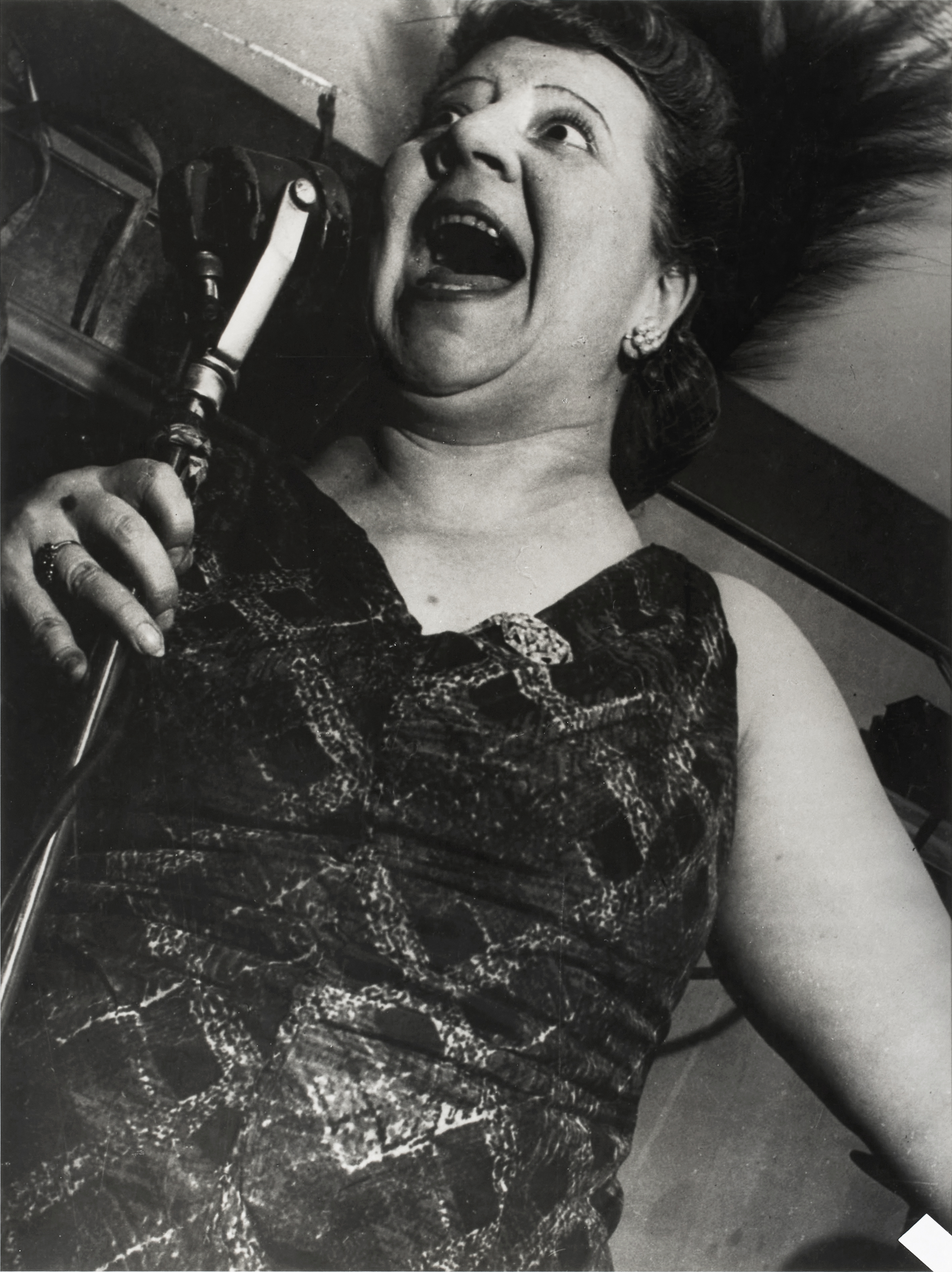
It was in Paris and then along the French Riviera that Model first picked up a camera with serious intent. She was largely self taught, and that freedom from academic convention proved to be one of her greatest assets. Working with a Rolleiflex and printing her images large, she developed a technique that brought her physically and psychologically close to her subjects. The resulting photographs from Nice, depicting wealthy casino patrons and vacationers caught in unguarded moments of vanity or vacancy, were not flattering in any conventional sense.
Lisette Model
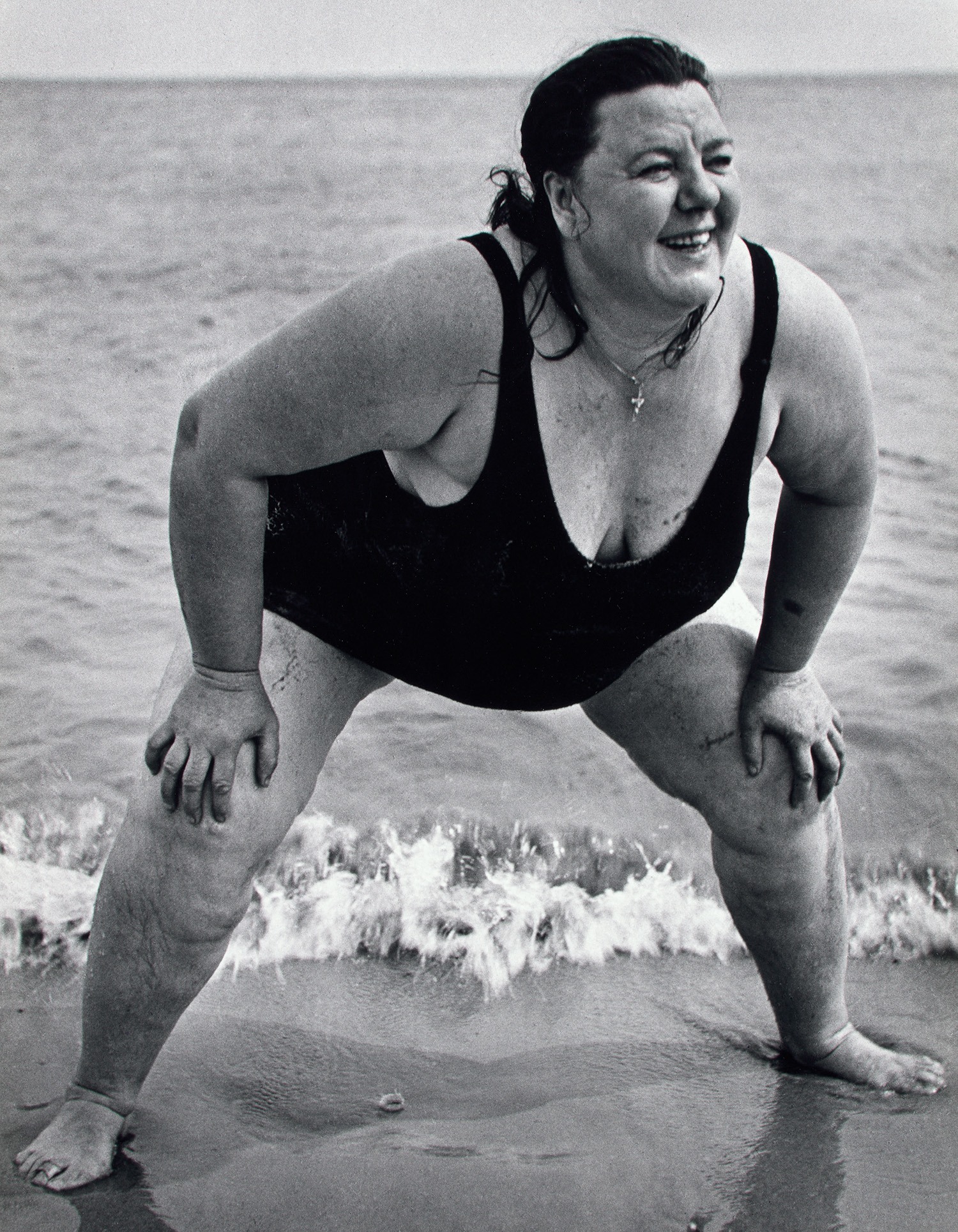
Coney Island Bather, New York
They were something far more valuable: completely honest. When these images were published in the American magazine PM in 1941, they caused an immediate sensation and established her reputation on arrival in the United States. Model and her husband, the painter Evsa Model, emigrated to New York in 1938, and the city became her second great subject. She turned her lens on the streets of Manhattan with the same unflinching attention she had brought to the Riviera.
“Don't shoot until the subject hits you in the pit of the stomach.”
Lisette Model, quoted in photography lectures
Her Coney Island Bathers series captured sunbathers in states of physical abandon and unconscious dignity that challenged every polite convention of portraiture at the time. Her Running Legs series, made on 42nd Street, abstracted the body into a rhythmic procession of anonymous motion, presaging the formal experiments of later decades. Works like Reflections, New York used shop window glass to layer and fracture the urban scene into something hallucinatory and modern. Each series demonstrated an artist who was simultaneously a documentarian and a formalist, never allowing social observation to overwhelm visual intelligence.
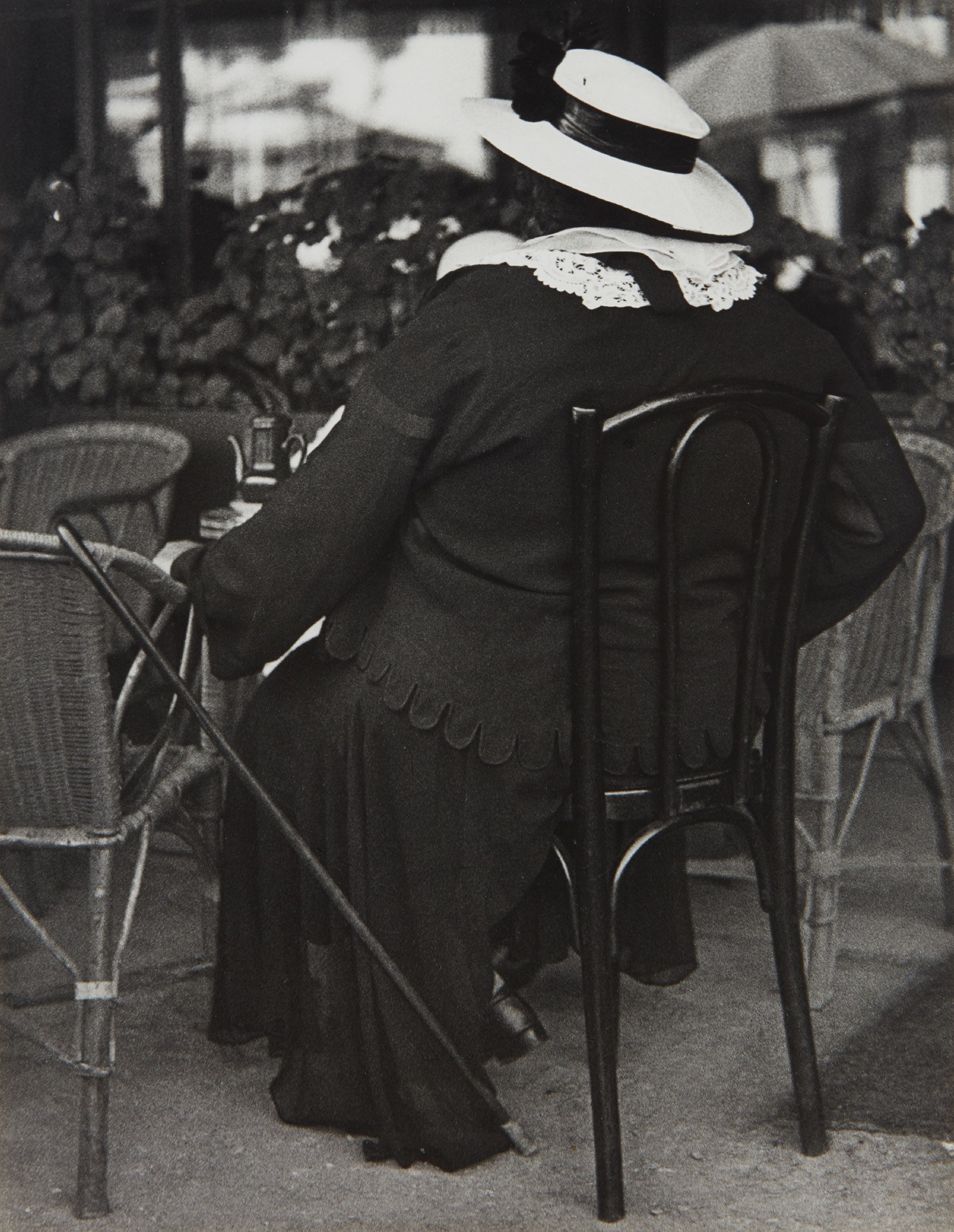
Lisette Model
Famous Gambler, French Riviera
Her photographs appeared regularly in Harper's Bazaar through the 1940s and 1950s, where the legendary art director Alexey Brodovitch recognized in her work an emotional intensity that suited the magazine's ambitions. Alongside contemporaries such as Weegee, Helen Levitt, and Walker Evans, she helped define what American street photography could be at its most uncompromising. Yet Model always occupied a singular position within that company. Where Evans sought a certain democratic coolness and Levitt pursued the tender poetry of children at play, Model went straight for the psychological jugular.
Her portraits, whether of a gambler on the Riviera or a café habitué in New York, treated every subject as carrying the full weight of their inner life visibly on the surface. Model began teaching at the New School for Social Research in New York in 1951, and her influence as an educator proved to be as consequential as her own practice. Among her students was Diane Arbus, who has spoken extensively about how Model's approach to photography as an act of confrontation and intimacy rather than observation from a safe distance fundamentally altered her understanding of the medium. The lineage from Model to Arbus and outward into subsequent generations of photographers represents one of the most important pedagogical threads in postwar American photography.
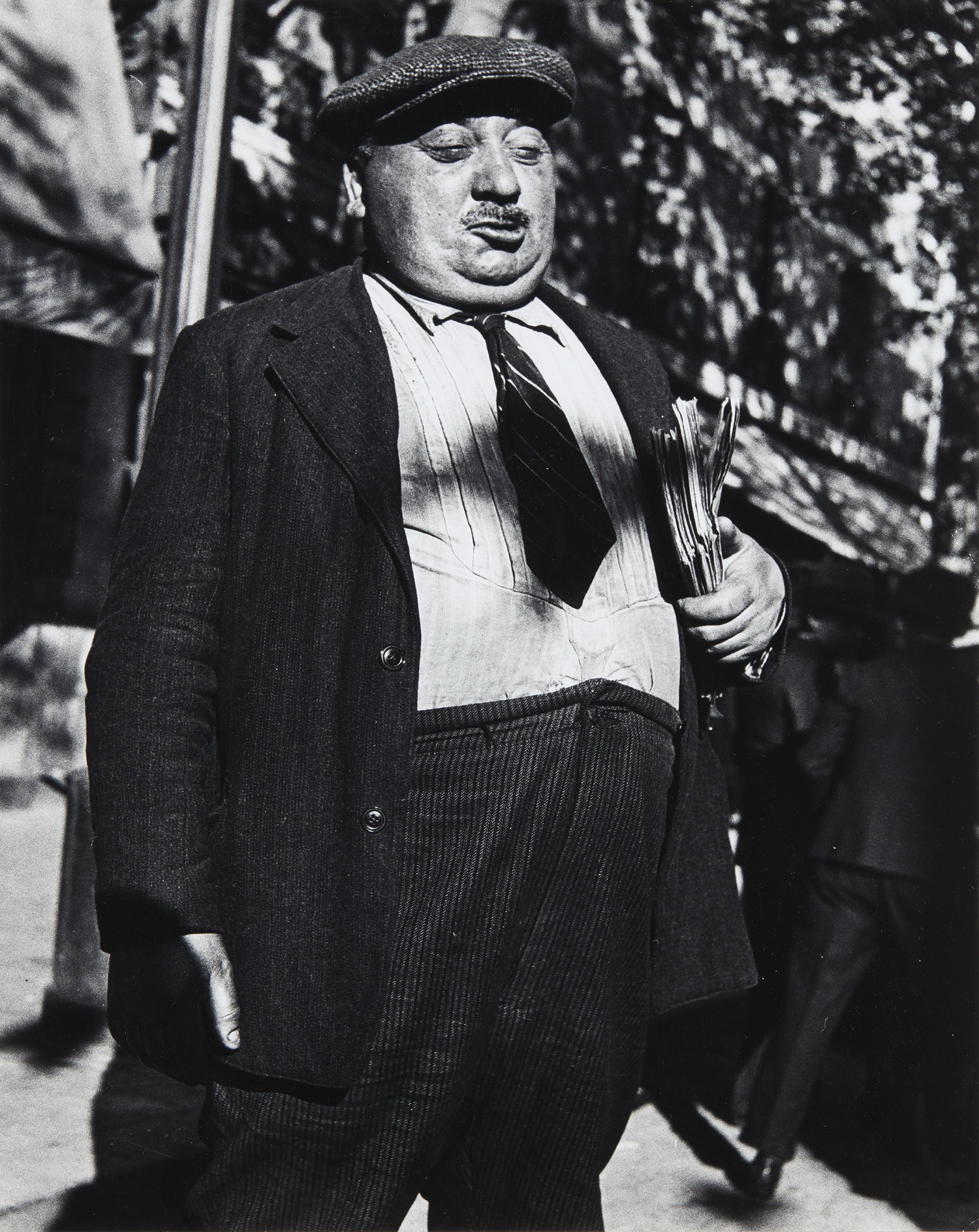
Lisette Model
Newspaperman, Paris
To collect Model is to hold a work that sits at the very headwaters of that tradition. For collectors, Model's gelatin silver prints represent some of the most compelling photographic material available on the market today. Her prints appear across major auction houses and specialist photography dealers, with strong results reflecting consistent institutional interest and a growing appreciation among serious collectors who prize psychological depth alongside formal rigor. Works from the Promenade des Anglais and Coney Island Bather series command the greatest attention, though her New York street work and the quieter studies of café and urban life offer exceptional entry points.
Later prints made under her own supervision carry the authority of her direct hand in the darkroom, while earlier prints and those mounted to period materials carry additional documentary significance. The portfolio Lisette Model: Twelve Photographs is particularly prized as a definitive statement of her range. The arc of Model's recognition has only continued to rise since her death in 1983. The National Gallery of Canada, which holds her archive, mounted a landmark retrospective that cemented her canonical status.
Major institutions including the Museum of Modern Art in New York and the San Francisco Museum of Modern Art hold significant bodies of her work, and her photographs appear regularly in survey exhibitions of twentieth century photography. Critics and curators who once placed her in the supporting cast of the New York photography scene have increasingly recognized her as one of its principal authors. Her combination of humanist urgency, formal invention, and sheer psychological force places her in the company of the medium's absolute masters. What makes Model so vital today, beyond the formal brilliance of her images, is the quality of attention she brought to the people in front of her lens.
She photographed the wealthy with as much unsentimental scrutiny as she brought to the poor. She saw the body as a site of meaning and the face as a document of lived experience. In an era when photography is abundant to the point of meaninglessness, Model's images insist on the irreducible presence of the individual human being. To live with one of her prints is to have a permanent reminder of what it looks like when a photographer truly sees.
Explore books about Lisette Model
Lisette Model
Aperture
Lisette Model
Anne Tucker
Lisette Model: A Life
Priscilla Rattazzi
Lisette Model: New York
National Geographic
Lisette Model: The Swiss Years
Association Lisette Model
Lisette Model: Prostitutes
Aperture