Li Yuan-Chia
Li Yuan-Chia: Cosmos Found in Quiet Dots
Artist Spotlight · The Collection Editorial
There is a moment, standing before one of Li Yuan Chia's small, spare canvases, when the room seems to fall away. A single dot, placed with absolute conviction against a field of silence, somehow holds the weight of the universe. It is a feeling that audiences at the Tate Britain retrospective survey of Arte Povera and British avant garde connections have described more than once, and it is why curators, scholars, and collectors across Europe and Asia are returning to this artist with fresh urgency. In the decades since his death in 1994, Li has moved from the margins of art history toward something closer to his rightful place at its center.

Li Yuan-Chia
Senza Titolo 無題
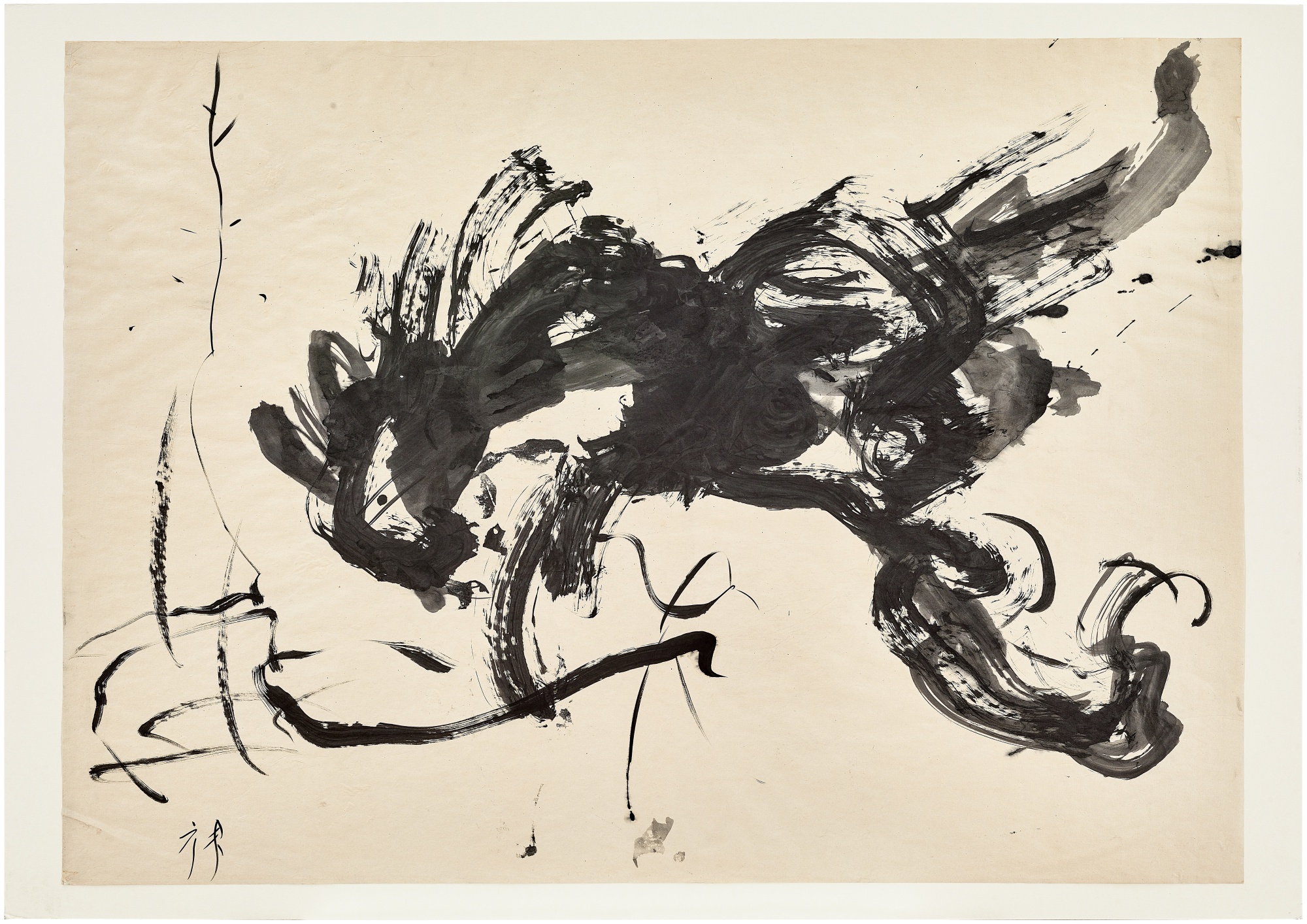
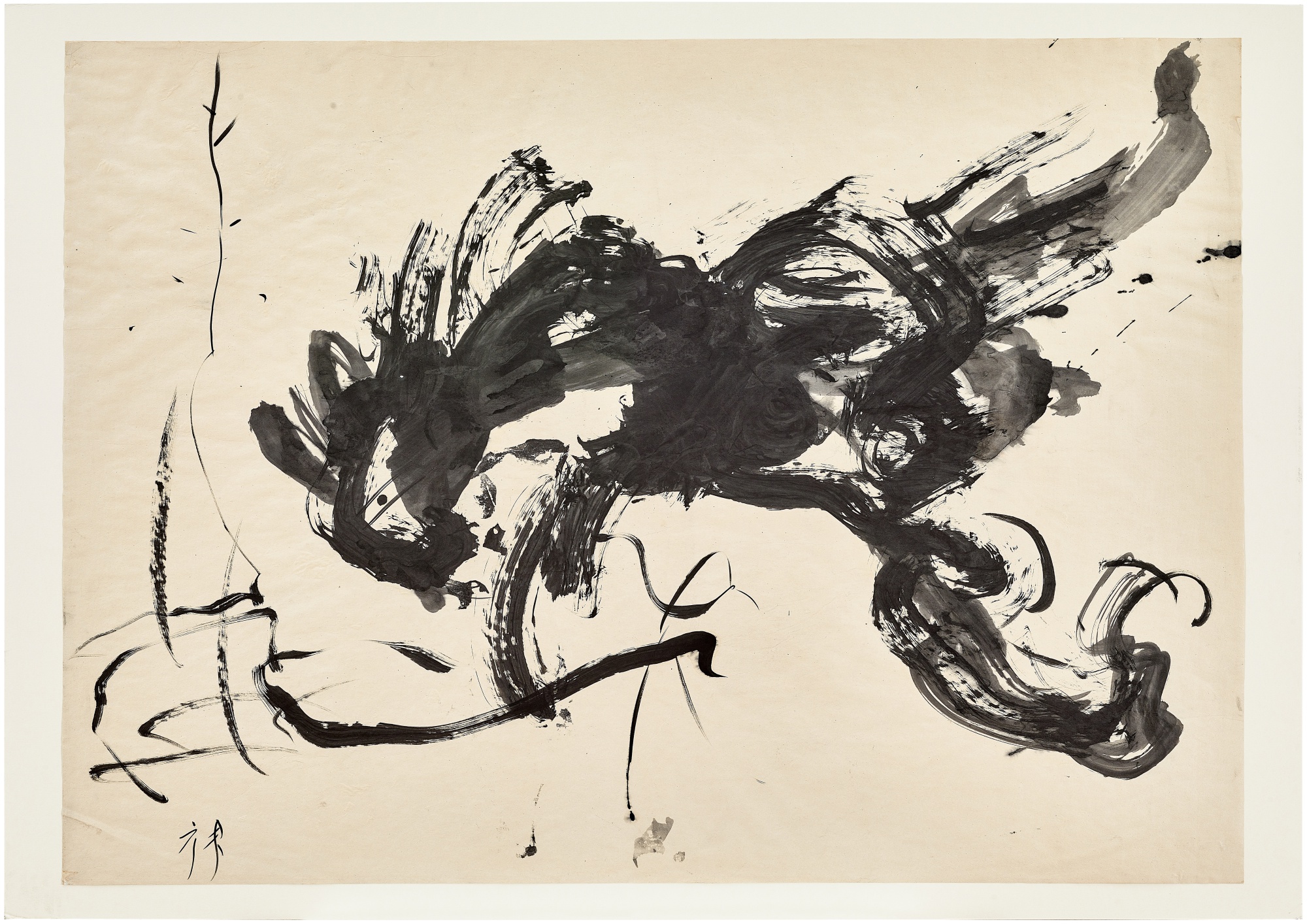
Li Yuan Chia was born in Guangxi province, China, in 1929, a time of profound social and political upheaval. He studied at the Taipei Fine Arts School in Taiwan during the late 1940s and early 1950s, absorbing both classical Chinese ink traditions and the modernist currents beginning to circulate through East Asian art communities. Taiwan in the postwar years was a crucible for artists caught between heritage and international modernism, and Li was among a generation determined to synthesize both. His early ink works on paper, such as the luminous Untitled of 1958 held on The Collection, show a mind already drawn toward reduction, toward finding the essential gesture that could carry enormous meaning with almost nothing at all.
In 1956, Li made the decisive move to Europe, eventually settling in Rome and then Turin, where he embedded himself in the experimental art communities that would define the European avant garde of the 1960s. It was here that he became a founding member of the Punto movement, an international collective of artists united by their belief in the point, the dot, the smallest unit of visual experience, as a philosophical and artistic foundation. The movement attracted artists from across the globe, including Gianni Bertini and Antonio Calderara, and its publications and exhibitions circulated widely through galleries in Europe and Latin America. For Li, the punto was not merely a formal device.
Li Yuan-Chia
Untitled 無題, 1958
It was a cosmological statement, a mark that stood for origin, for singularity, for the place where matter and energy meet. The years in Italy produced some of Li's most radical and beautiful work. His minimalist paintings stripped the canvas to near nothingness, placing a single element within a vast, breathing ground. These were not works of emptiness but of extraordinary presence, compositions in which negative space became as charged as any gestural mark.
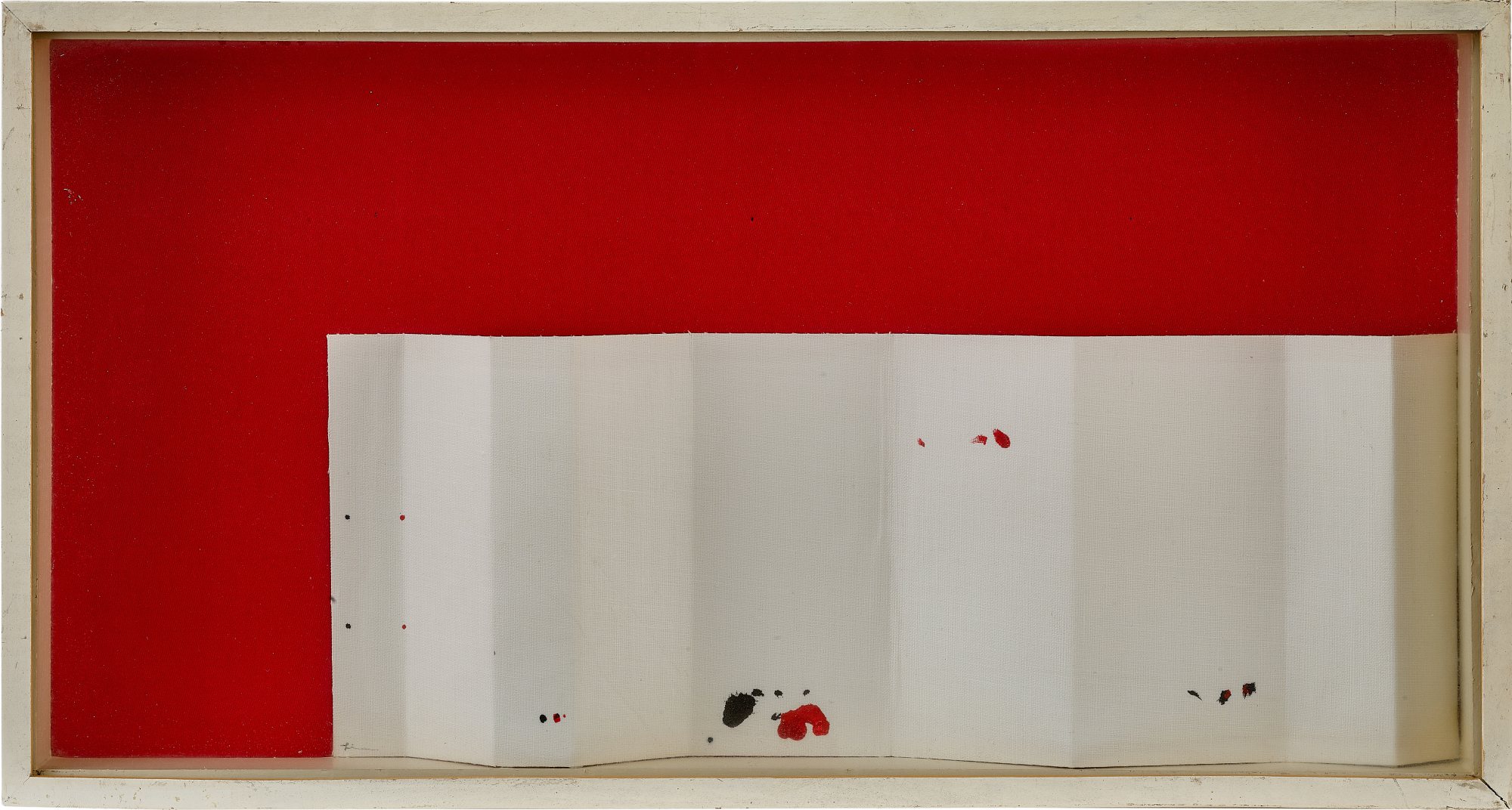
Theatre, an ink and color on canvas work mounted on red board and held on The Collection, demonstrates the theatrical quality his titles sometimes invoke: the sense that what we are watching is not merely a painting but a stage for something cosmic and slow. The red board beneath the canvas layers cultural and emotional resonance into what might otherwise seem austere, connecting the visual language of Chinese ceremonial color to the cool rigors of European conceptualism. In 1968, Li made another transformative decision, relocating to Banks, a remote village in Cumbria in the north of England. There, in a converted farmhouse, he established the LYC Museum and Gallery, one of the most remarkable artist run spaces Britain has ever produced.
Li Yuan-Chia
Theatre 劇場
The LYC became a magnet for artists, thinkers, poets, and travelers from across the world. Li showed work by contemporaries including Richard Long, Hamish Fulton, and Alan Davie, alongside his own evolving practice. He also created installations, gardens, and environments that dissolved the boundary between art object and lived experience. The LYC operated from 1972 until 1983, supported almost entirely by Li's own resources and energy, and its legacy has grown considerably in the years since its closure as the art world has come to understand what an extraordinary experiment it represented.
Senza Titolo, the oil on canvas held on The Collection, belongs to the mature phase of Li's practice and rewards close looking. The title, given in both Italian and Chinese characters, is itself a statement about the space Li occupied: between languages, between cultures, between East and West, yet fully committed to none of these as a fixed identity. The work feels definitive without being declarative, a quality that distinguishes the finest examples of his output from more illustrative or programmatic abstraction. Collectors who acquire works in this vein are bringing home not just an art object but a proposition about how attention itself can be transformed.
Within the broader sweep of art history, Li Yuan Chia sits in productive dialogue with a remarkable range of figures. His cosmic minimalism connects naturally to the work of Yves Klein, whose immaterial zones and monochrome canvases pursued similar questions of infinite space. The meditative quality of his dot works invites comparison with Agnes Martin, while his role as an institution builder and community animator parallels the legacy of artists such as Josef Albers at Black Mountain College. In the context of Asian modernism, he is a crucial bridge between the East Asian ink tradition and the international conceptual avant garde, a bridge that figures like Zao Wou Ki and Tsuyoshi Maekawa were also building from different vantage points.
Understanding Li is to understand how global modernism actually worked in practice: through individual artists crossing borders, carrying ideas, and making connections that institutions were slow to recognize. The market for Li Yuan Chia has been building steadily, driven by a combination of institutional rehabilitation and genuine collector passion. Works on paper from his Italian period are considered particularly strong entry points, combining historical significance with the intimacy that ink on paper always carries. His canvases command serious attention when they come to market, and private collections in both Europe and Taiwan hold important examples that rarely circulate.
For collectors at The Collection, the opportunity to engage with his work is also an opportunity to participate in an ongoing reappraisal that feels genuinely exciting. Li Yuan Chia was an artist who believed that a single point could contain everything. The collectors who have understood this have been rewarded not just aesthetically but historically, as the world catches up to what he always knew.