Lee Bae
Lee Bae: Fire, Form, and Infinite Depth
Artist Spotlight · The Collection Editorial
There is a particular quality of attention that descends on a room when Lee Bae's work is present. Visitors slow down. They lean in. They find themselves standing before what appears, at first glance, to be a field of pure darkness, and then something opens: depth, texture, luminosity, a whole cosmos conjured from a material most people associate with the most elementary acts of mark making.
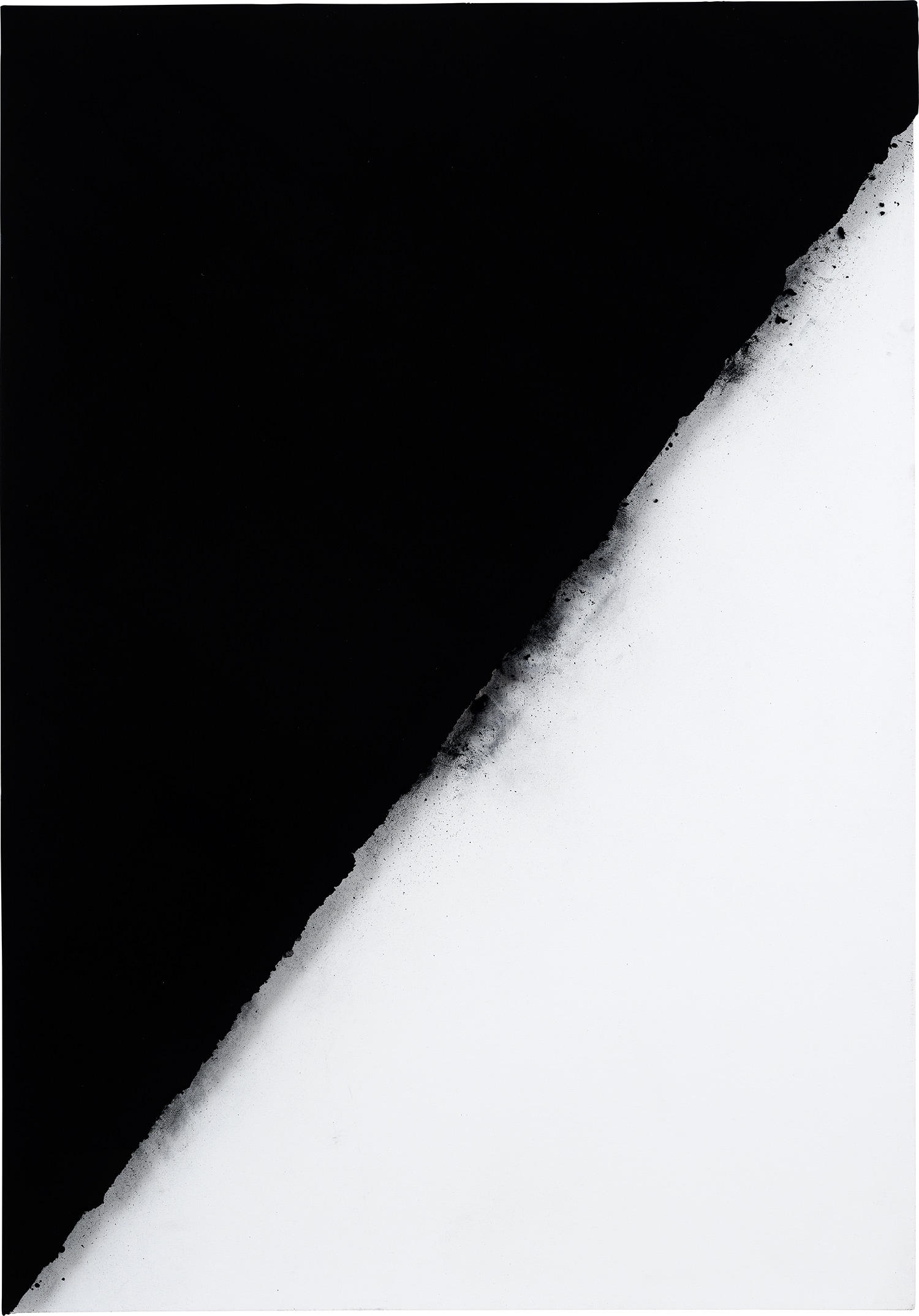
Lee Bae
Landscape ch3-33, 2003
That experience has been replicated in museum galleries and international biennales across decades, and it shows no sign of diminishing. If anything, the global appetite for Lee's singular vision of charcoal as a philosophical medium has grown more urgent, as collectors and institutions seek out artists whose practices carry genuine conceptual weight alongside undeniable visual presence. Lee Bae was born in 1956 in South Korea, a country still reconstructing its identity in the aftermath of the Korean War and the sweeping cultural dislocations of the twentieth century. He came of age during a period of intense artistic questioning in Korea, when a generation of painters was grappling with how to make work that was both rooted in Korean thought and sensibility and fully engaged with the international contemporary art world.
Lee eventually moved to Paris, where he has been based since 1990, and that dual positioning, between Seoul and Paris, between Eastern philosophical tradition and Western conceptual rigour, has been the generative tension at the heart of everything he makes. The move was not an escape but an expansion: a way of holding two worlds in the same breath. The material that defines Lee's practice is charcoal, ibul in Korean, a substance that carries within it the memory of fire and transformation. Charcoal is wood that has passed through burning and emerged on the other side, changed utterly and yet retaining the structural logic of its origins.
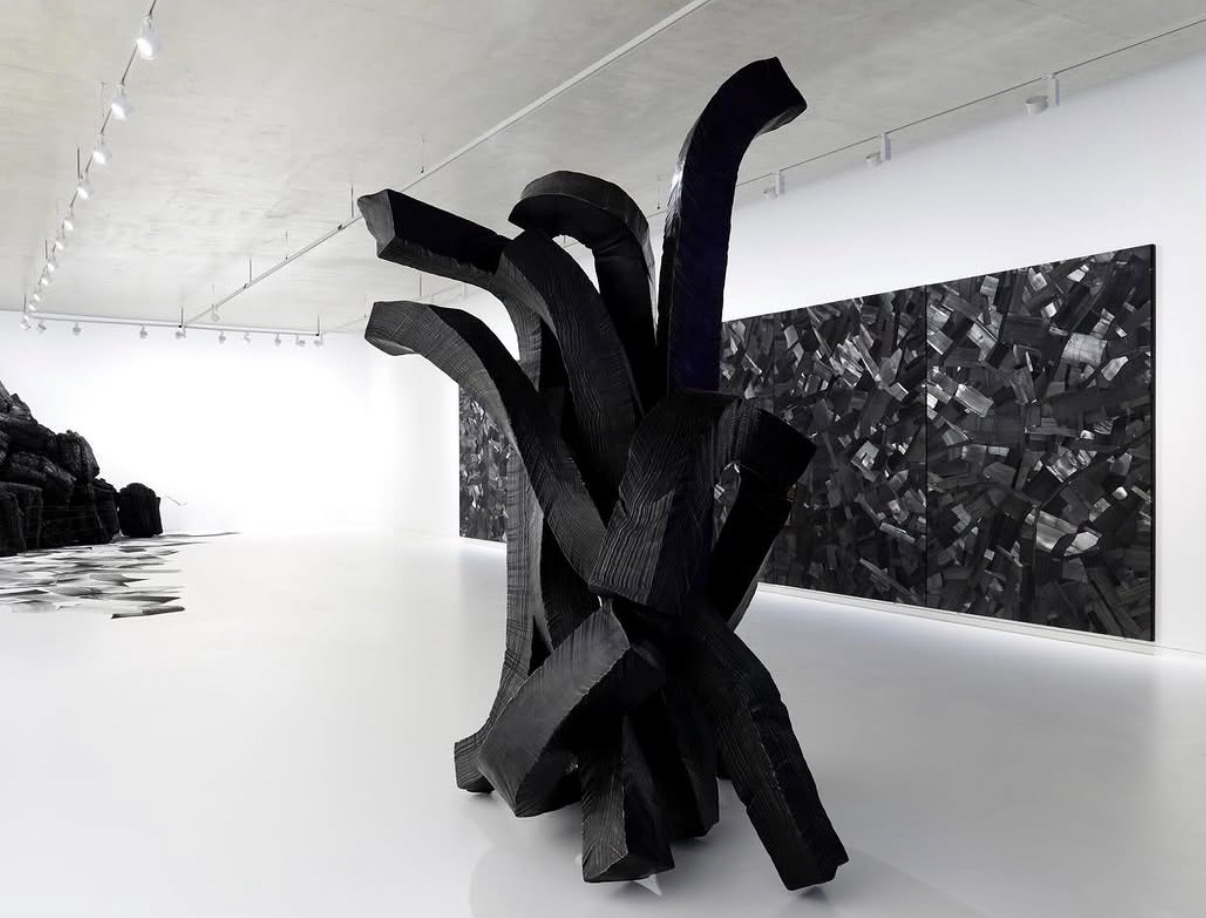
Lee Bae
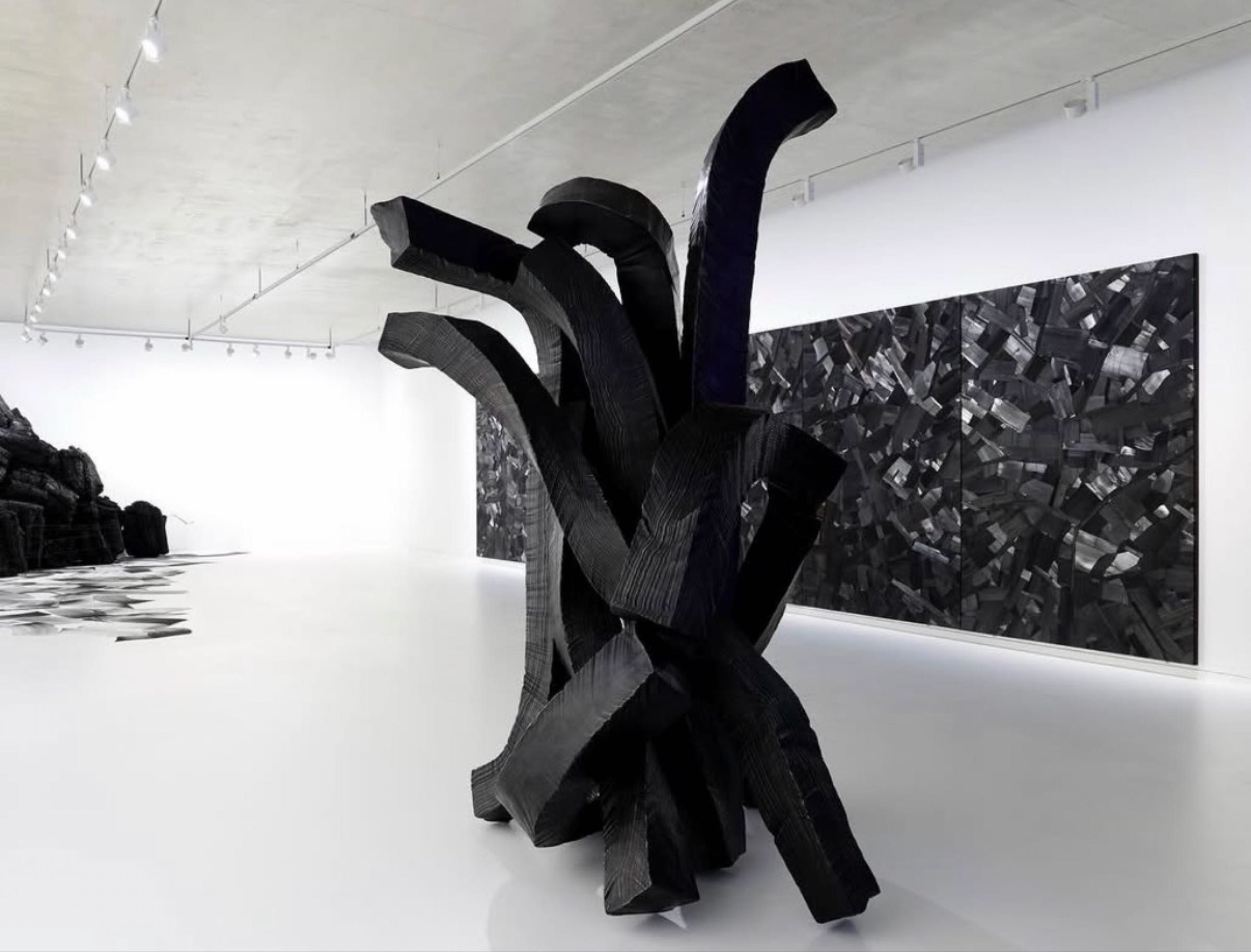
En attendant, 2026
For Lee, this process of transformation through fire resonates deeply with Buddhist ideas about impermanence, purification, and the nature of matter itself. He does not simply use charcoal as a pigment or a drawing tool. He grinds it, layers it, builds it into sculptural masses, and treats its surfaces with a patience and devotion that recalls both the meditative disciplines of East Asian ink painting and the rigorous materialism of Arte Povera. The result is work that is simultaneously ancient and absolutely contemporary.
Lee's paintings, including works such as the 2003 canvas Landscape ch3 33, demonstrate his extraordinary command of monochromatic space. Working with charcoal on canvas, he builds surfaces that absorb and reflect light in ways that feel almost alive. These are not simply black paintings in the tradition of Ad Reinhardt or Pierre Soulages, though the dialogue with both is worth acknowledging. Lee's surfaces carry a warmth and an organic irregularity that speak to the material's origins as living wood.
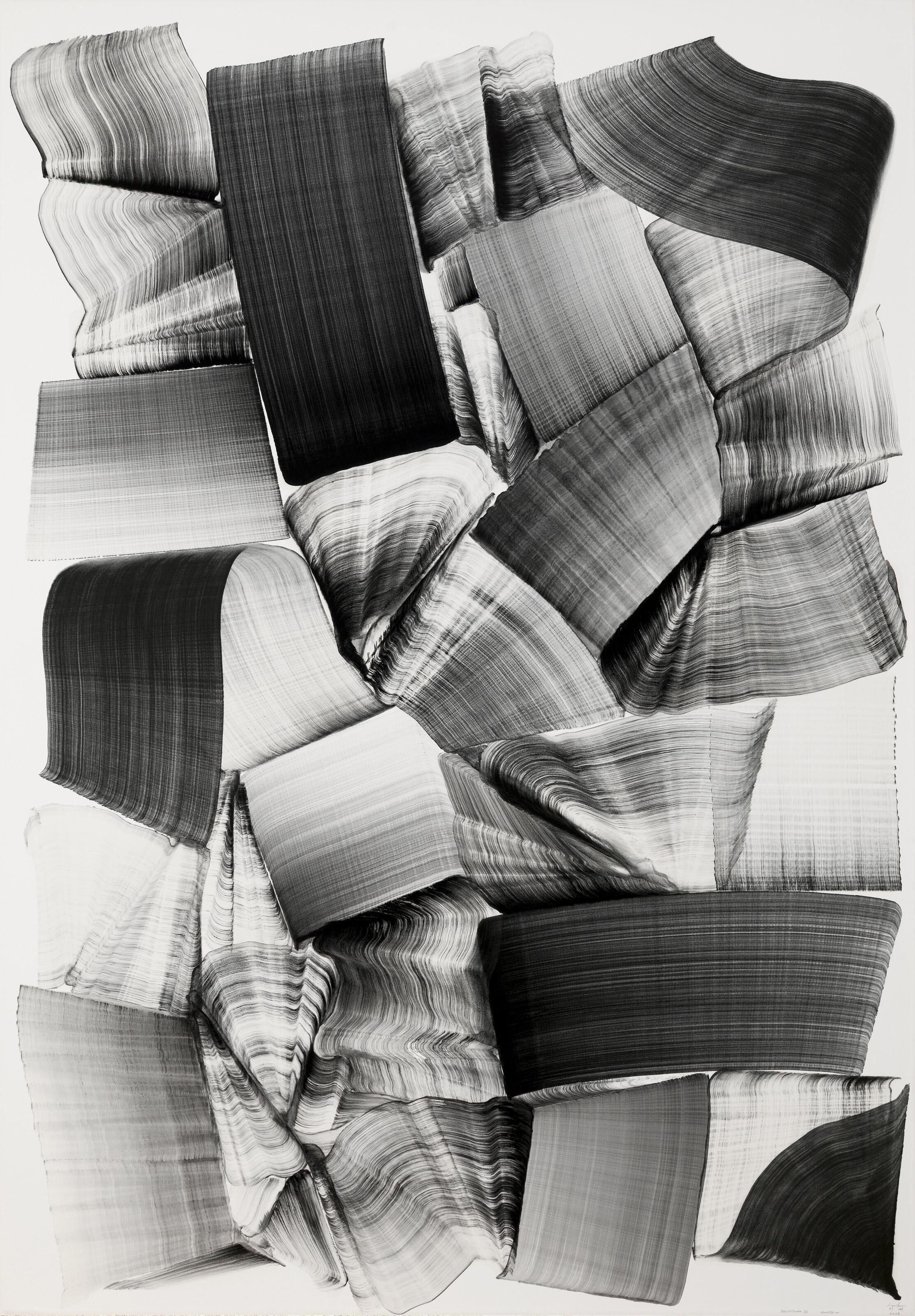
Lee Bae
Brushstroke-9F
The works reward extended looking: what reads as flat darkness from across a room reveals itself, up close, to be a landscape of subtle gradients, fine particles, and accumulated gesture. His sculptural works, including the striking En attendant created in 2026, extend this material intelligence into three dimensions, giving charcoal a monumental physical presence that challenges any assumption about the medium's fragility or limits. Lee Bae's work is often discussed in relation to Dansaekhwa, the Korean monochromatic painting movement that emerged in the 1970s and whose major figures include Park Seo Bo, Ha Chong Hyun, and Yun Hyong Keun. That connection is real and important: like the Dansaekhwa painters, Lee is deeply invested in the materiality of his medium, in process as meaning, and in a kind of disciplined reduction that opens onto infinite complexity rather than closing it down.
But Lee arrived at his practice independently and has always maintained a distinct voice within that broader conversation. His engagement with charcoal is more elemental, more tied to transformation and the philosophy of fire, than the textile inflected surfaces of Park or the oil soaked linens of Ha. He is a peer of that generation in spirit while carving his own unmistakable path. The institutional recognition of Lee's work has been substantial and well earned.
His participation in the Venice Biennale placed him within the most visible stage of international contemporary art, and his work is held in the permanent collection of the National Museum of Modern and Contemporary Art in Korea, one of the most important repositories of Korean art in the world. His Paris base has also given him deep roots in the European gallery system, and his exhibitions have been received with consistent critical enthusiasm across France, Germany, and beyond. For collectors, Lee's work represents a rare convergence of qualities: critical credibility, institutional presence, genuine material innovation, and a visual identity so strong that a Lee Bae work is unmistakable at any scale. From a collecting perspective, Lee Bae occupies a position that serious advisors increasingly describe as essential rather than optional.
His work connects to multiple powerful currents in the contemporary market: the ongoing critical and commercial reassessment of Dansaekhwa and Korean abstraction, the sustained collector interest in monochromatic and material driven painting, and the broader recognition that the most important story in contemporary art over the past three decades has involved the full integration of Asian artistic traditions into the global canon on their own terms, not as footnotes to Western movements but as independent contributions of the highest order. Works on paper and smaller canvases offer accessible entry points for new collectors, while his larger paintings and sculptures represent the kind of museum quality acquisitions that define serious collections. Lee Bae's legacy is still being written, and that is part of what makes engagement with his work so alive and rewarding right now. He is a living artist, continuing to push his practice into new formal territory, as the 2026 sculpture En attendant makes clear.
His work asks something of the viewer: patience, attentiveness, a willingness to sit with darkness until it reveals its light. In an art world that too often rewards the immediately legible, Lee Bae offers something rarer and more lasting. He offers depth. For collectors who understand that the greatest works grow more meaningful over time, his practice represents not just an acquisition but a genuine enrichment of how one sees the world.
Explore books about Lee Bae