Lebadang
Lebadang: Where East Meets Luminous West
Artist Spotlight · The Collection Editorial
In the grand reading room of the Bibliothèque nationale de France, where Lebadang's monumental artist's book "Mystic Rivers" was unveiled to an audience of curators and collectors in the early 1990s, something remarkable became unmistakably clear. Here was a Vietnamese artist working in Paris who had not simply absorbed the lessons of Western modernism but had transformed them utterly, pouring into the French avant garde tradition the poetic weight of a culture thousands of years old. The work stopped people in their tracks. It still does.
Lebadang
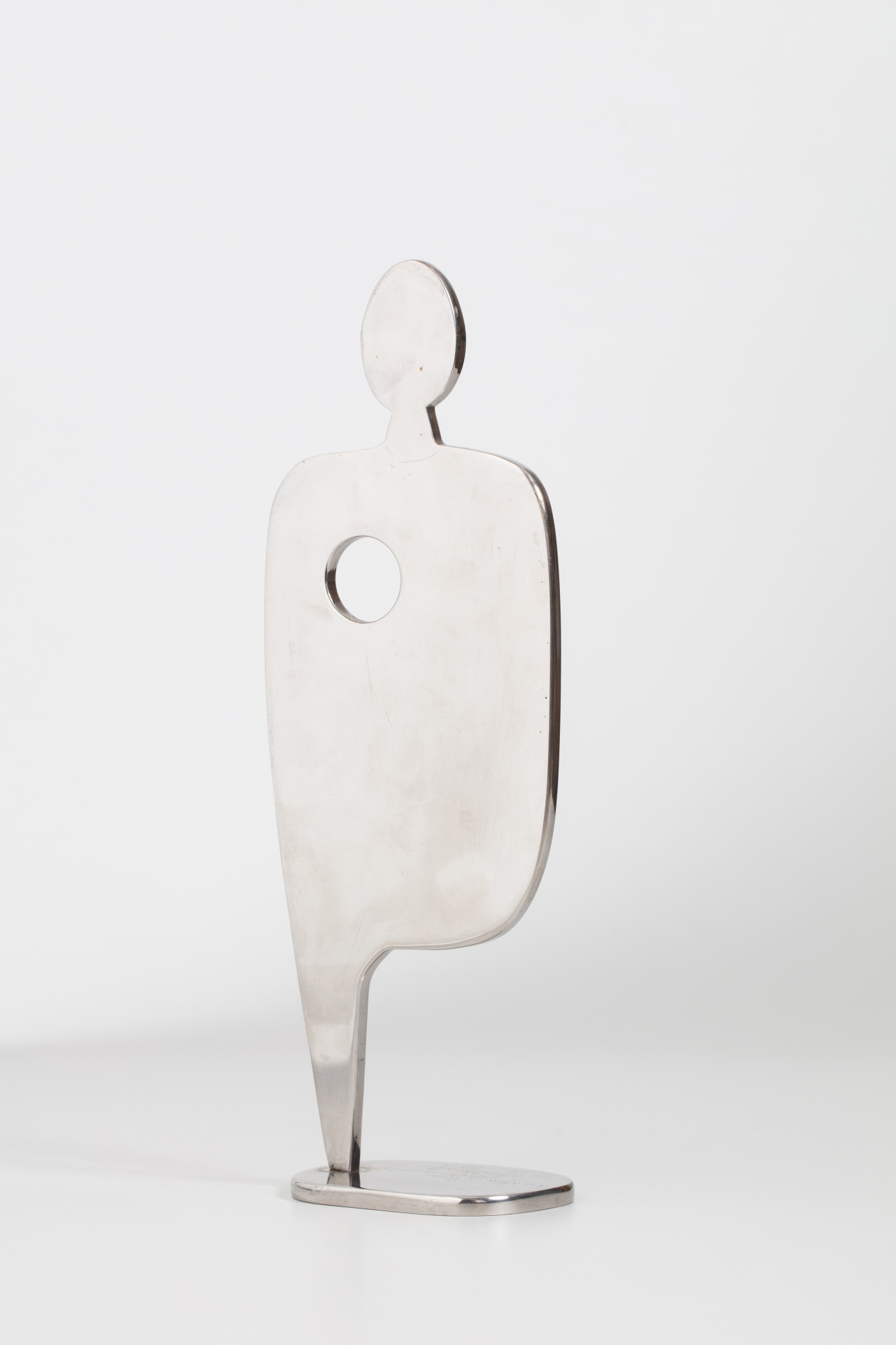
黎白璗 (1921-2015), 人像, 1980
Lebadang was born in 1922 in the village of Bich La in the Quang Tri province of central Vietnam, then part of French Indochina. His given name was Hoi, and the landscape of his childhood, marked by the soft light of the Mekong basin, the rhythms of rural life, and the visual richness of Vietnamese folk tradition, would never truly leave him. He arrived in France in 1948, settling eventually in Paris, where he immersed himself in the electric atmosphere of the postwar art world. He studied, he looked, he absorbed.
But unlike many artists who came to Paris and were swallowed by its prevailing fashions, Lebadang maintained an interior compass that was entirely his own. The formation of his artistic identity was shaped by a productive tension between two worlds. In Paris he encountered the gestural freedoms of Art Informel and the color sensibilities of the School of Paris, movements that prized emotional directness and the raw expressiveness of materials. At the same time, he carried within him a deep familiarity with Buddhist philosophy, Vietnamese calligraphic tradition, and an Eastern understanding of nature as something living, breathing, and morally instructive.
Lebadang
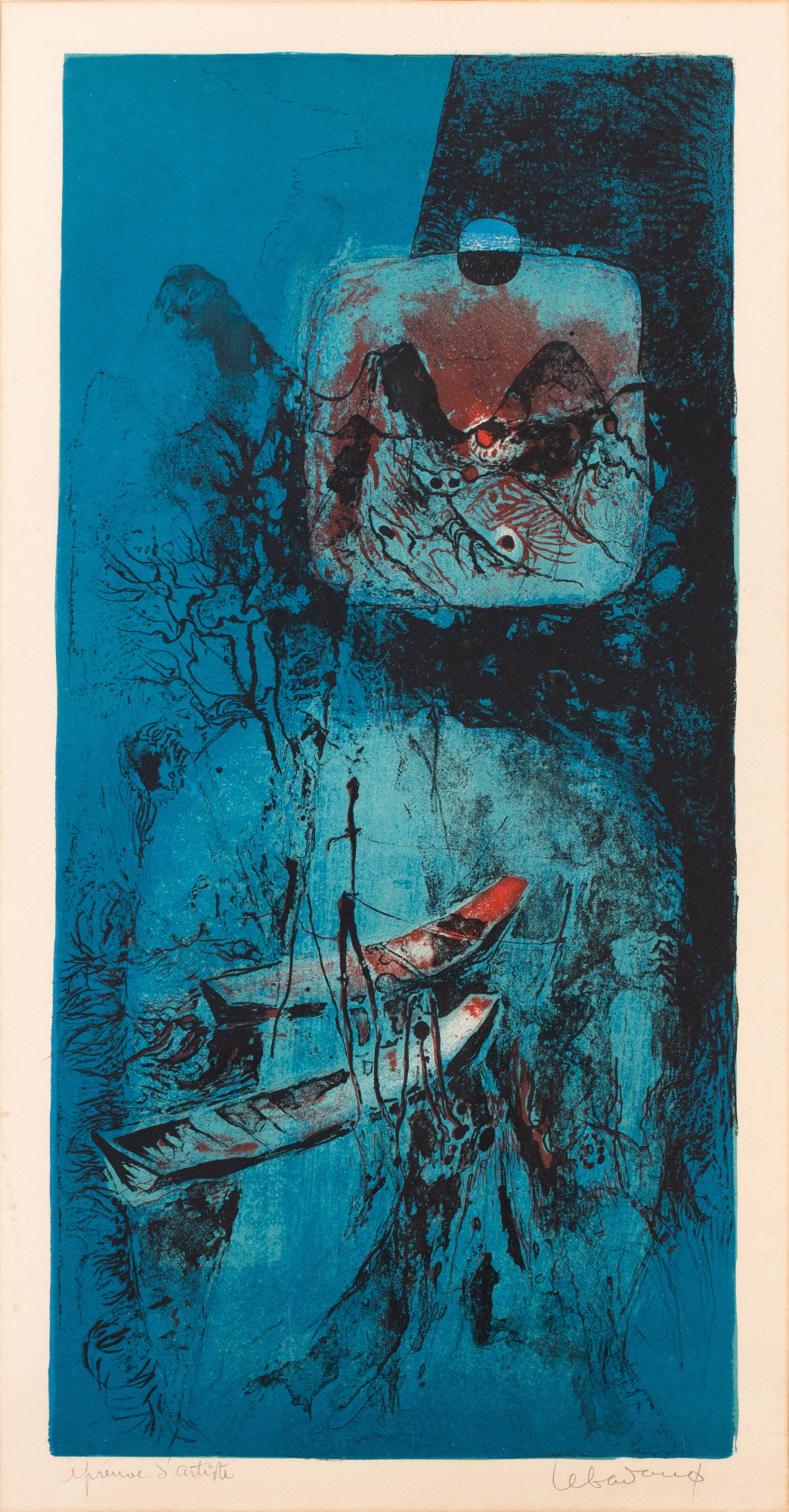
黎白璗 (1921-2015), 艇, 1960
Rather than resolving this tension, Lebadang made it the engine of his entire practice. His work is neither Eastern nor Western. It is something rarer and more singular than either category allows. Across the 1950s and 1960s, Lebadang developed a reputation as a printmaker of exceptional gifts.
His colour lithographs from this period are among the most collectible works in his output, and titles such as "夕陽帆影" (Boats at Dusk) and "艇" (Boat), both from 1960, demonstrate the elegant economy that would become his signature. A single vessel moves across a field of luminous colour. The horizon is implied rather than stated. The atmosphere is one of contemplative stillness crossed with forward momentum, a quality that feels simultaneously ancient and urgently modern.
Lebadang
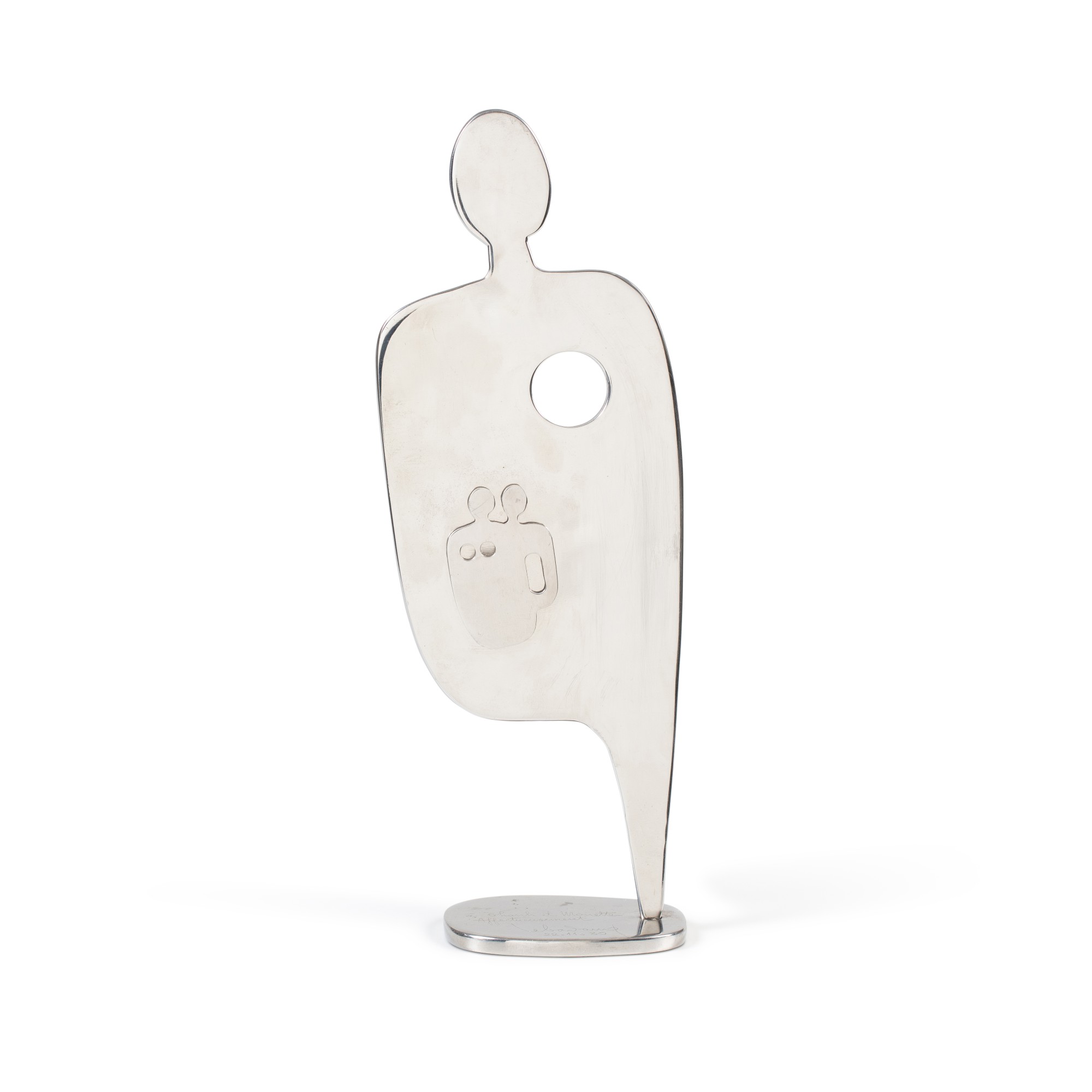
黎白璗 (1921-2015), 人像, 1980
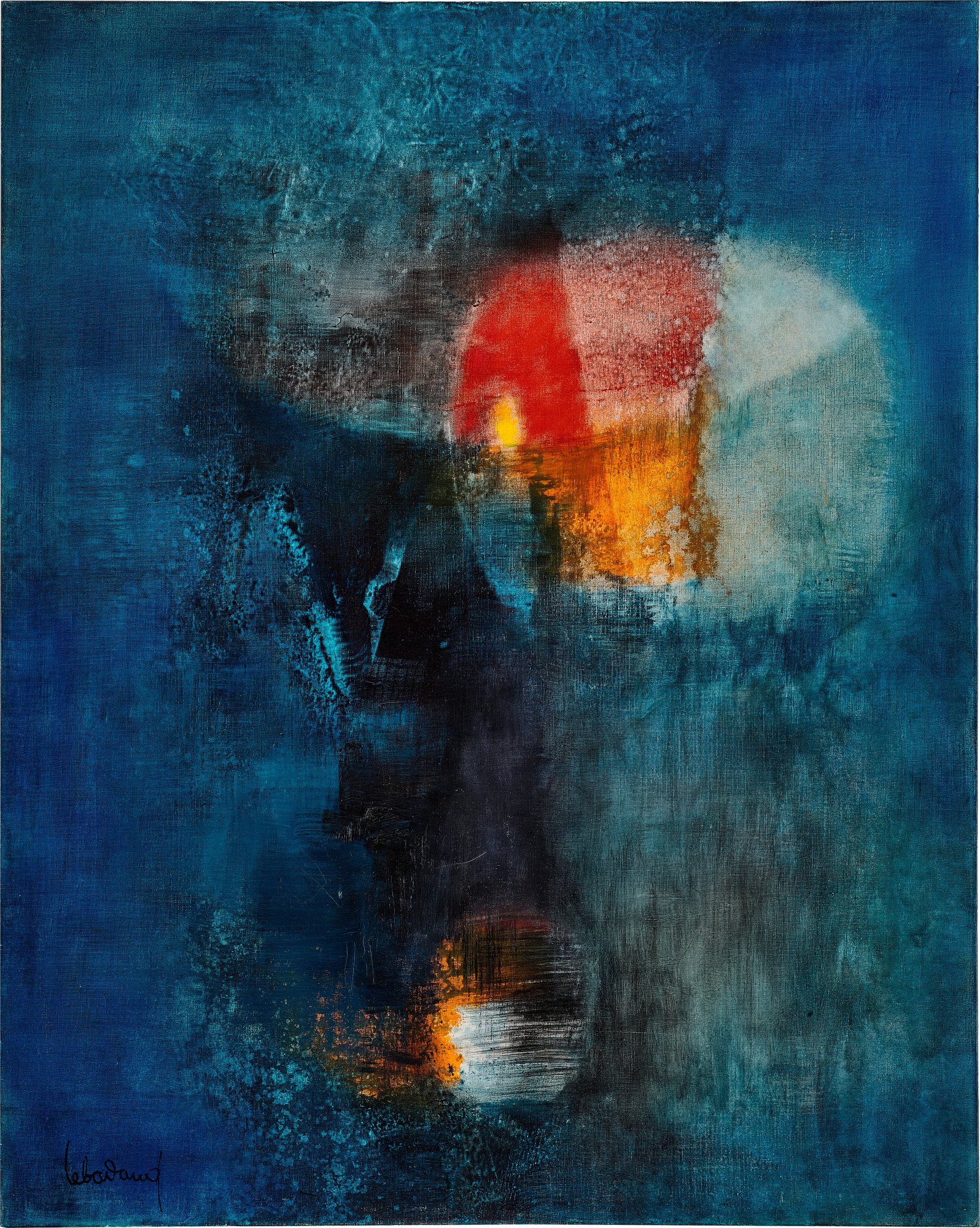
These early lithographs circulated widely, finding their way into collections across Europe and North America, and they established Lebadang as a printmaker in the lineage of Matisse and Miró while sounding a note that was wholly his own. His painting practice ran alongside his printmaking throughout his career, with oil on canvas works such as "Le soleil dans l'eau" (The Sun in the Water) and "Abstract composition" of 1971 showcasing his command of colour as a spiritual and emotional medium. Lebadang was not a painter who used colour decoratively. Colour, for him, carried metaphysical freight.
The warm golds and burning oranges in his canvases read as references to the spiritual luminosity found in Vietnamese lacquer painting and Buddhist iconography, translated into the language of Western abstraction. His brushwork is confident and gestural without ever becoming gratuitous. Every mark feels considered, even when it also feels spontaneous. This is a difficult balance to achieve, and Lebadang achieved it consistently across decades.
Lebadang
Le soleil dans l’eau 水面上的太陽
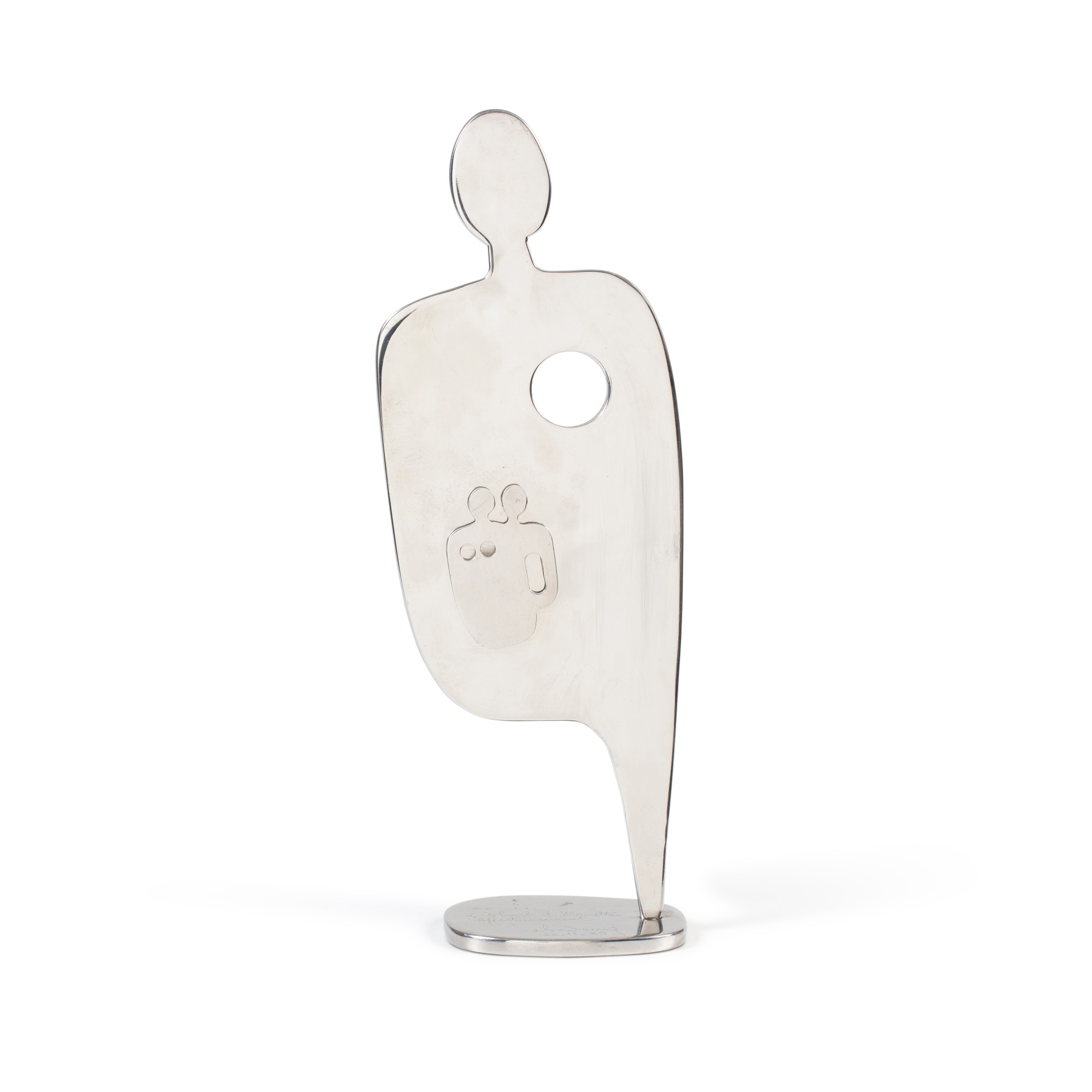
His sculptural works in steel from around 1980, including the two figurative pieces known simply as "人像" (Portrait or Figure), reveal yet another dimension of his practice. Steel, a material associated with industrial modernity, becomes in his hands something almost calligraphic. The figures are abstracted, distilled to their essential energy rather than their literal form. They suggest the human presence without illustrating it, which is a fundamentally Eastern aesthetic approach applied through a Western sculptural tradition.
For collectors who know his work on paper and canvas, these sculptures offer a three dimensional encounter with the same philosophical sensibility, and they are among the more striking examples of his versatility. Lebadang's work was recognised during his lifetime by some of the world's most prestigious collecting institutions. The Smithsonian Institution in Washington holds examples of his work, a testament to the esteem in which he was held by curators and scholars who understood his importance not merely as a Vietnamese artist working abroad but as a genuinely international figure in twentieth century art. He was the subject of exhibitions in France, the United States, and beyond, and his work entered both public museum collections and distinguished private hands.
For collectors approaching his work today, the combination of institutional validation and relative accessibility makes his prints and paintings an area of considerable interest. Within art historical terms, Lebadang occupies a position comparable in some ways to that of Zao Wou Ki, the Chinese French painter who similarly navigated between Eastern philosophy and Western abstraction, or to the work of Le Pho, another Vietnamese artist who built a distinguished career in Paris during the twentieth century. Like these figures, Lebadang demonstrates that abstraction was never a purely Western achievement. The interrogation of form, spirit, and the space between things is a concern as old as Zen painting, as old as the Vietnamese literary tradition.
What Lebadang did was make that conversation legible to audiences who had perhaps never considered it in those terms. He passed away in 2015, leaving behind a body of work that spans printmaking, painting, sculpture, and tapestry, and that rewards sustained attention at every level. For a new generation of collectors encountering his work through platforms like The Collection, the invitation is to approach these works not as historical curiosities but as living propositions. A Lebadang lithograph from 1960 does not feel dated.
It feels precise, even urgent, in its evocation of light, motion, and the quiet drama of existence. That is the mark of an artist who was working from something deeper than style or market, and whose work will continue to resonate long into the century ahead.
Explore books about Lebadang
Lebadang: A Retrospective
François Marquet
Lebadang: Painter and Sculptor
Jean-Luc Chalumeau
The Art of Lebadang
Pierre Restany
Lebadang: The Complete Works
Michel Tapié
Lebadang and Abstract Expression
Serge Fauchereau