Larry Poons
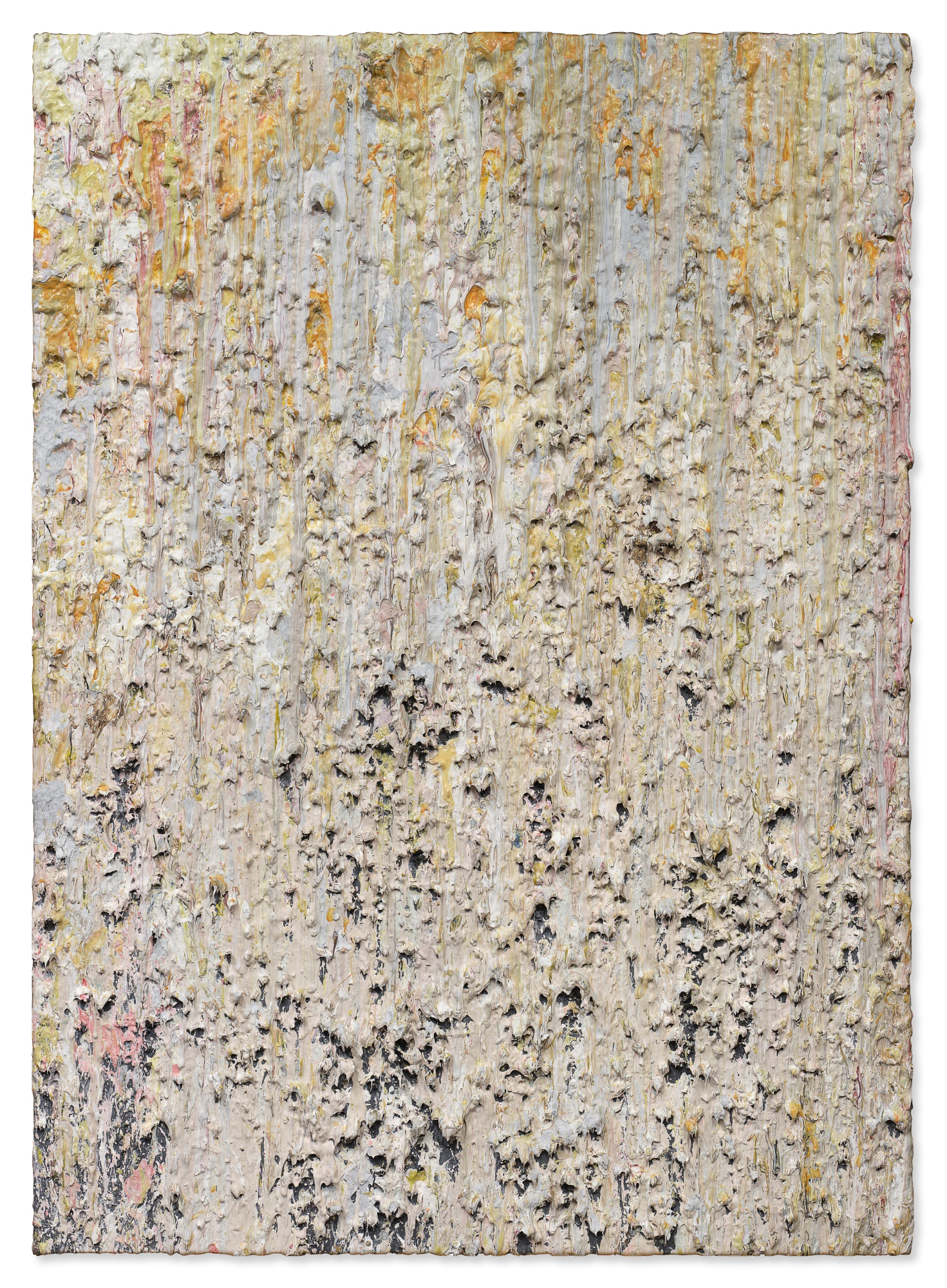
Larry Poons: A Life in Pure Paint
Artist Spotlight · The Collection Editorial
There is a moment in the career of certain artists when the work simply takes over, when accumulated knowledge and instinct fuse into something that feels less like making and more like discovering. For Larry Poons, that moment has been arriving continuously since the early 1960s, and the paintings he has made across six decades stand as one of the most restless and rewarding bodies of work in American art. The Whitney Museum of American Art holds his paintings in its permanent collection, as does the Museum of Modern Art, and yet Poons remains something of a connoisseur's secret, an artist whose reputation among serious collectors has only deepened with time. In recent years, a renewed critical appetite for the full sweep of postwar American abstraction has brought his work back into sharp focus, and new generations of collectors are discovering what the inner circle has long understood.
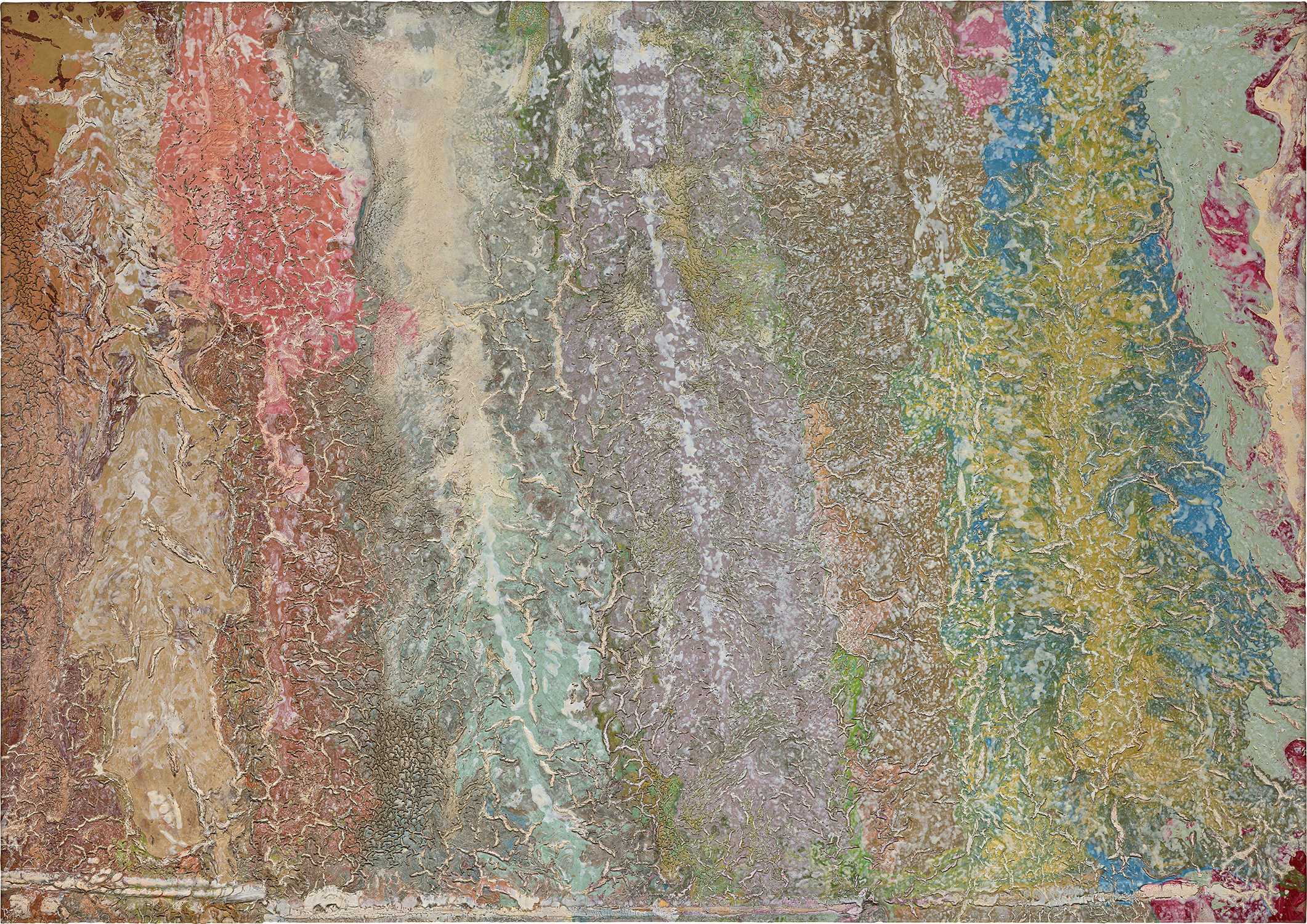
Larry Poons
Dangerous B, 1969
Larry Poons was born in 1937, and his early formation was shaped as much by music as by visual art. He studied at the New England Conservatory of Music before turning decisively toward painting, a biographical detail that is not merely interesting but essential to understanding his work. The rhythmic, pulsating quality of his early canvases, the sense that each painting operates according to its own internal tempo, reflects a sensibility trained in composition and counterpoint. He arrived in New York at a moment of extraordinary creative ferment, when the legacy of Abstract Expressionism was being both absorbed and challenged, and when younger painters were searching for new ways to think about color, surface, and perception.
Poons came to wider attention in the early 1960s through his association with Leo Castelli Gallery, one of the defining institutions of the New York art world. His so called dot paintings, large canvases populated by elliptical forms arranged according to careful optical logic, placed him squarely within the conversation around Color Field painting and Op Art, though his work resisted easy categorization from the start. Critics including Clement Greenberg took notice, and Poons was included in pivotal exhibitions that mapped the terrain of postwar American abstraction. The paintings from this period have a hypnotic, almost musical quality, the dots appearing to float and vibrate against fields of saturated color, creating an experience of looking that felt genuinely new.
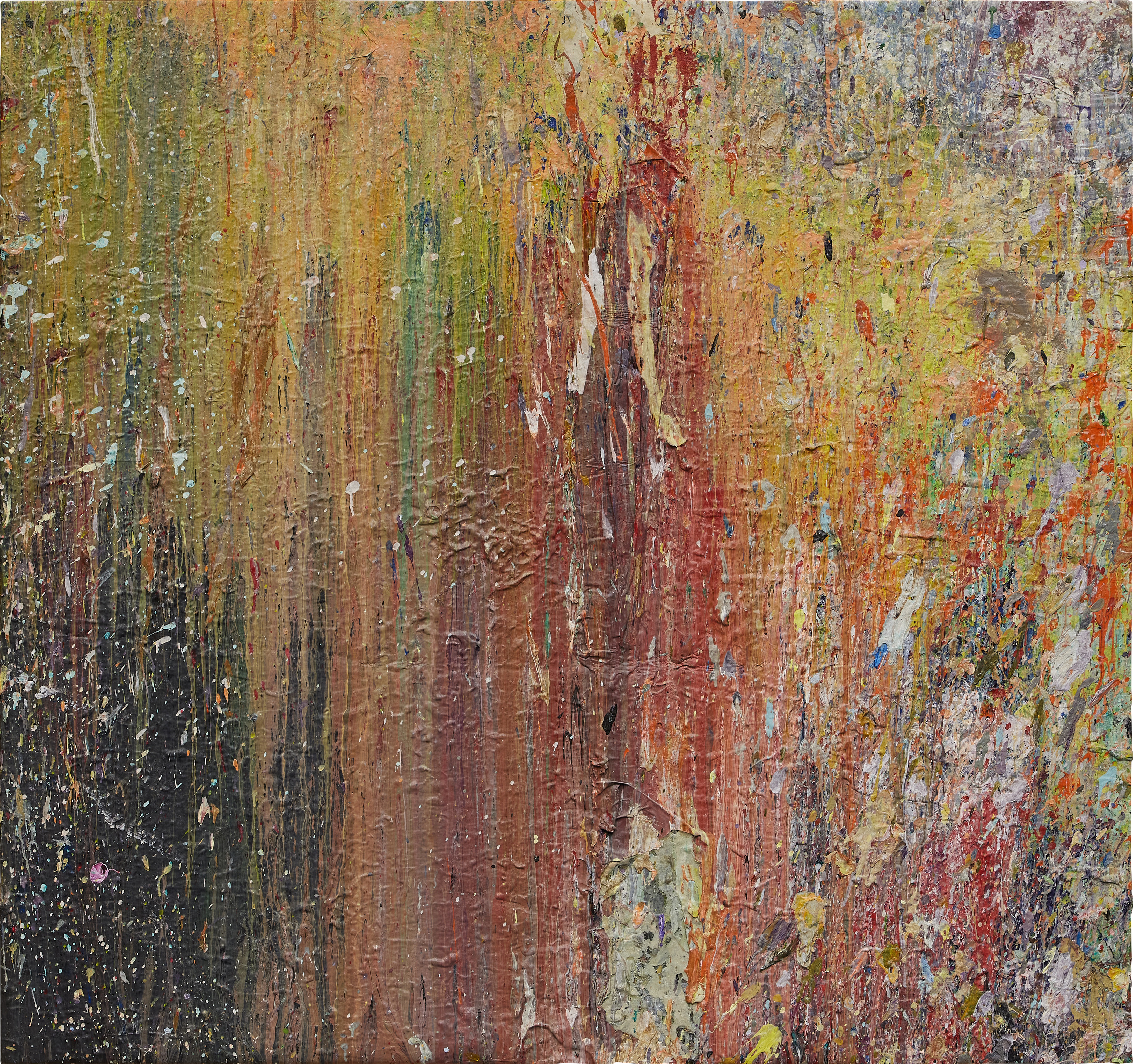
Larry Poons
Boohba, 1977
What distinguishes Poons from many of his contemporaries is the sheer scope of his evolution. By the late 1960s and into the 1970s, he had abandoned the precision of the dot paintings entirely, embarking on an extended exploration of poured and gestural abstraction that would take his work in dramatically new directions. Works such as Clearboy from 1975 and the powerful Dangerous B from 1969 mark pivotal moments in this transition, surfaces becoming increasingly physical and atmospheric. By the late 1970s and through the 1980s, as seen in paintings like Boohba from 1977, Hama 1981, and Panamar from 1984, his canvases had become densely impastoed, layered with acrylic, foam, and mixed media into topographies of extraordinary tactile richness.
These are paintings that reward prolonged looking, surfaces that shift and reveal themselves differently depending on light and angle. The works from the 1980s and into the 1990s represent perhaps the fullest expression of Poons's mature vision. Paintings such as Corrine from 1983, Andover Sirius 86A 1 from 1986, Retrieval from 1989, and Imperial Abstract from 1994 demonstrate a painter in complete command of a highly personal language, one in which the physical act of making and the resulting visual experience are inseparable. The surfaces of these canvases feel almost geological, built up through processes of accumulation and excavation that leave traces of time and decision embedded in the paint itself.
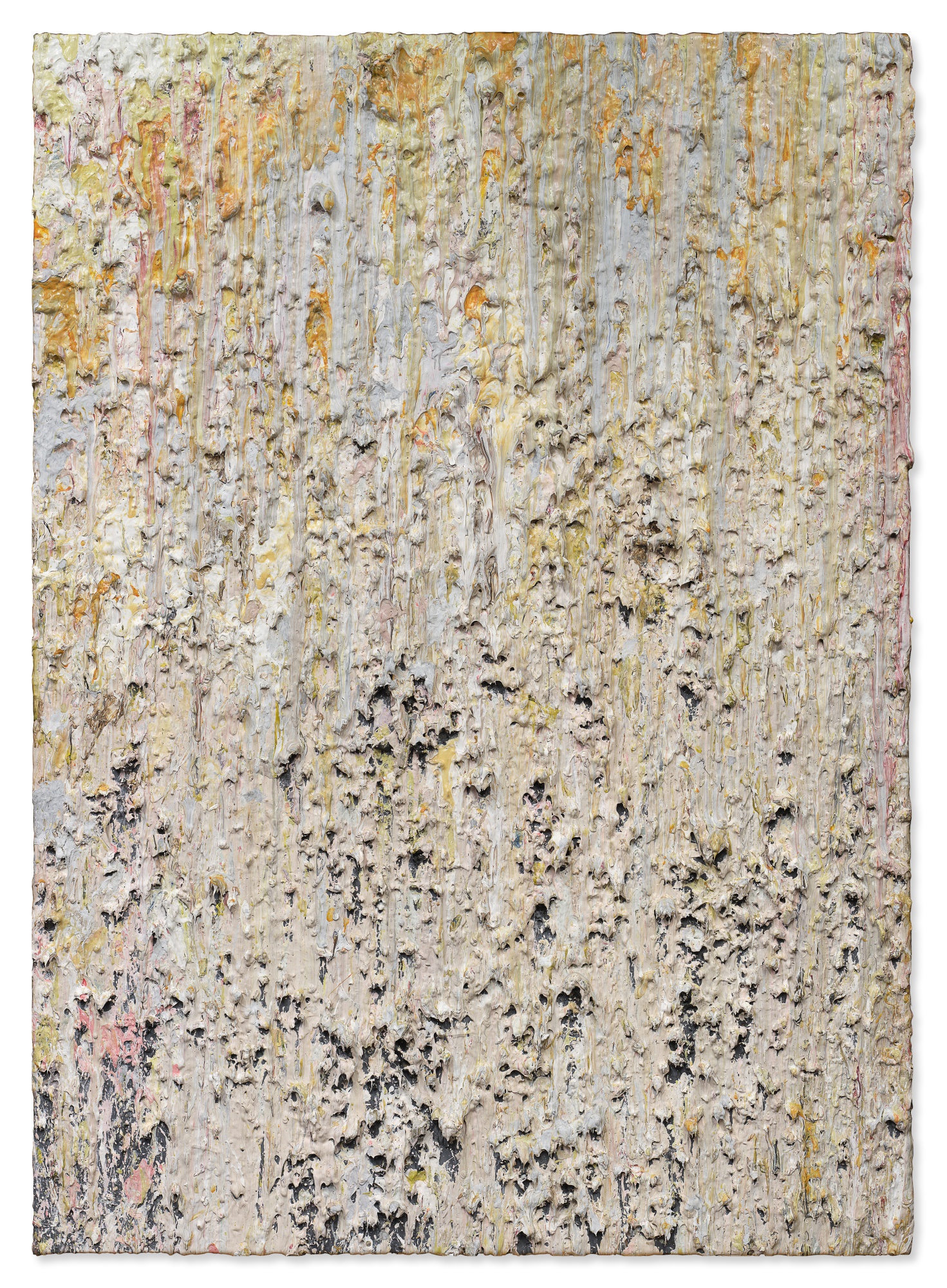
Larry Poons
Corrine , 1983
There is nothing decorative about them. They are demanding objects that ask to be lived with, and collectors who have done so consistently report that the experience of ownership deepens rather than diminishes over the years. For collectors approaching Poons's work, the range of periods available offers genuinely different kinds of engagement. The early works command strong institutional and auction interest and are increasingly rare in private hands.
The transitional works of the late 1960s and early 1970s, bridging the precise optical paintings and the gestural explosions to come, offer a fascinating window into an artist in the midst of radical self reinvention. The heavily worked canvases of the 1980s and 1990s represent the work at its most physically ambitious and are particularly sought after by collectors who prioritize painterly substance and presence. Across all periods, the work holds exceptionally well in lived environments, possessing the rare quality of paintings that animate a room without overwhelming it. To understand where Poons sits within art history is to appreciate the full complexity of the postwar American moment.
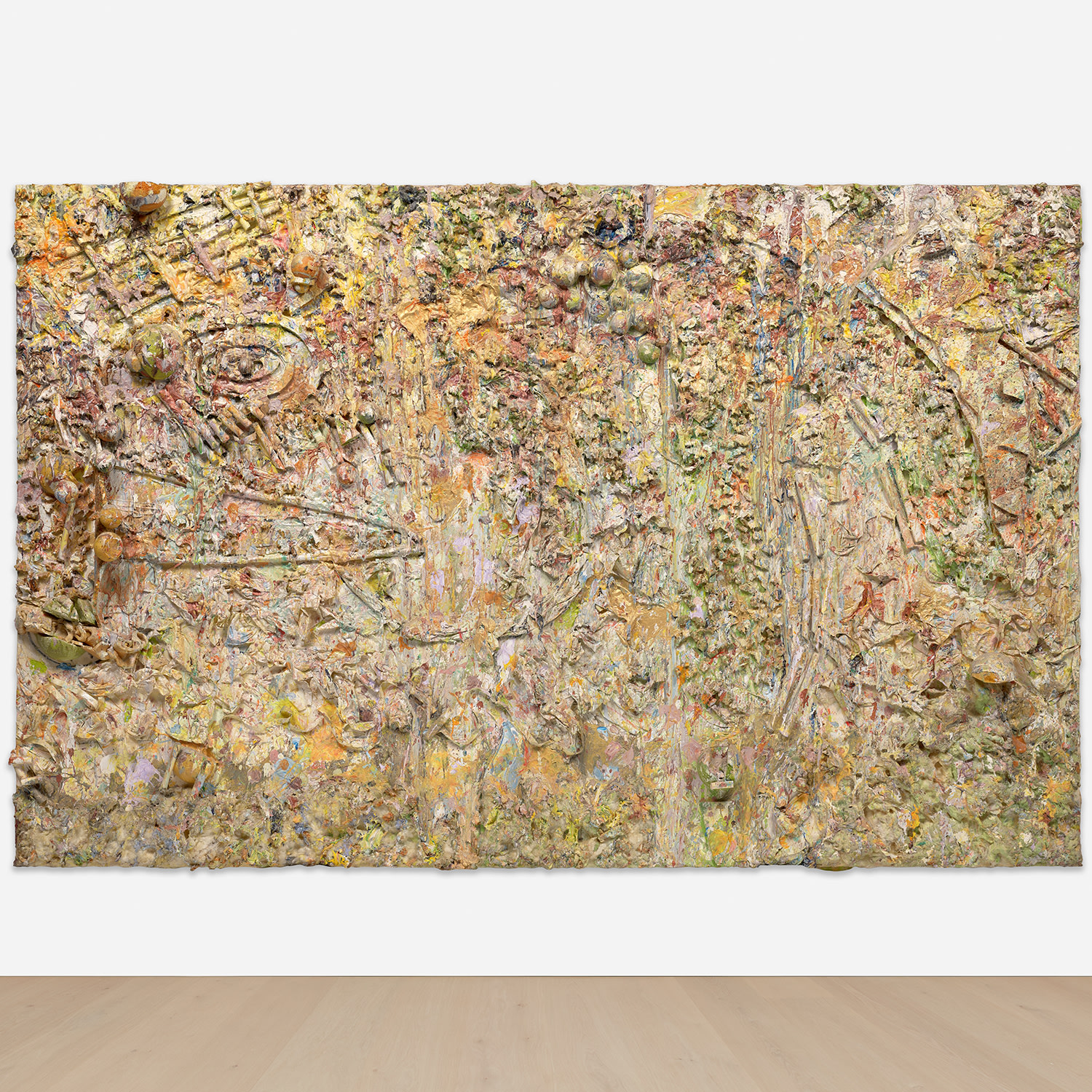
Larry Poons
Retrieval, 1989
He belongs to a generation that includes Frank Stella, Helen Frankenthaler, Jules Olitski, and Kenneth Noland, painters who each found their own path through and beyond the legacy of Abstract Expressionism. Like Frankenthaler and Olitski, Poons was deeply invested in the possibilities of color as a structural force rather than a decorative one. Like Stella, he was willing to dismantle his own achievements in pursuit of new problems. What sets him apart is perhaps the sheer physicality of the later work, a commitment to paint as matter that brings him into conversation with European Arte Povera and the painterly traditions of Germany and Italy as much as with his American contemporaries.
The legacy of Larry Poons is still being written, and that is part of what makes engaging with his work so alive. He has continued to paint with remarkable energy, and the consistency of his long career argues for a reconsideration that feels overdue and inevitable at once. For collectors, for institutions, and for anyone genuinely interested in what American painting at its most ambitious can accomplish, the paintings of Larry Poons offer a body of work that repays every hour spent in front of it. These are not paintings that announce themselves.
They are paintings that grow on you, that accumulate meaning and presence, and that ultimately ask nothing less than full attention in return.