Kudzanai-Violet Hwami
Kudzanai-Violet Hwami Paints the World Anew
Artist Spotlight · The Collection Editorial
In the winter of 2022, the art world found itself returning again and again to the work of Kudzanai Violet Hwami, a painter whose canvases seem to operate at a frequency all their own. Her inclusion in major institutional surveys across Europe and the United States confirmed what her most devoted collectors had long suspected: that Hwami is among the most vital figurative painters working today, a generational talent whose layered, luminous surfaces demand sustained attention and reward it generously. Born in 1993, she arrived on the international stage with a maturity and conceptual clarity that belied her years, and the conversation around her practice has only deepened with time. Hwami was born in Zimbabwe and grew up shaped by the visual textures, spiritual intensities, and social realities of that landscape before relocating to the United Kingdom, where she completed her fine art education.
Kudzanai-Violet Hwami
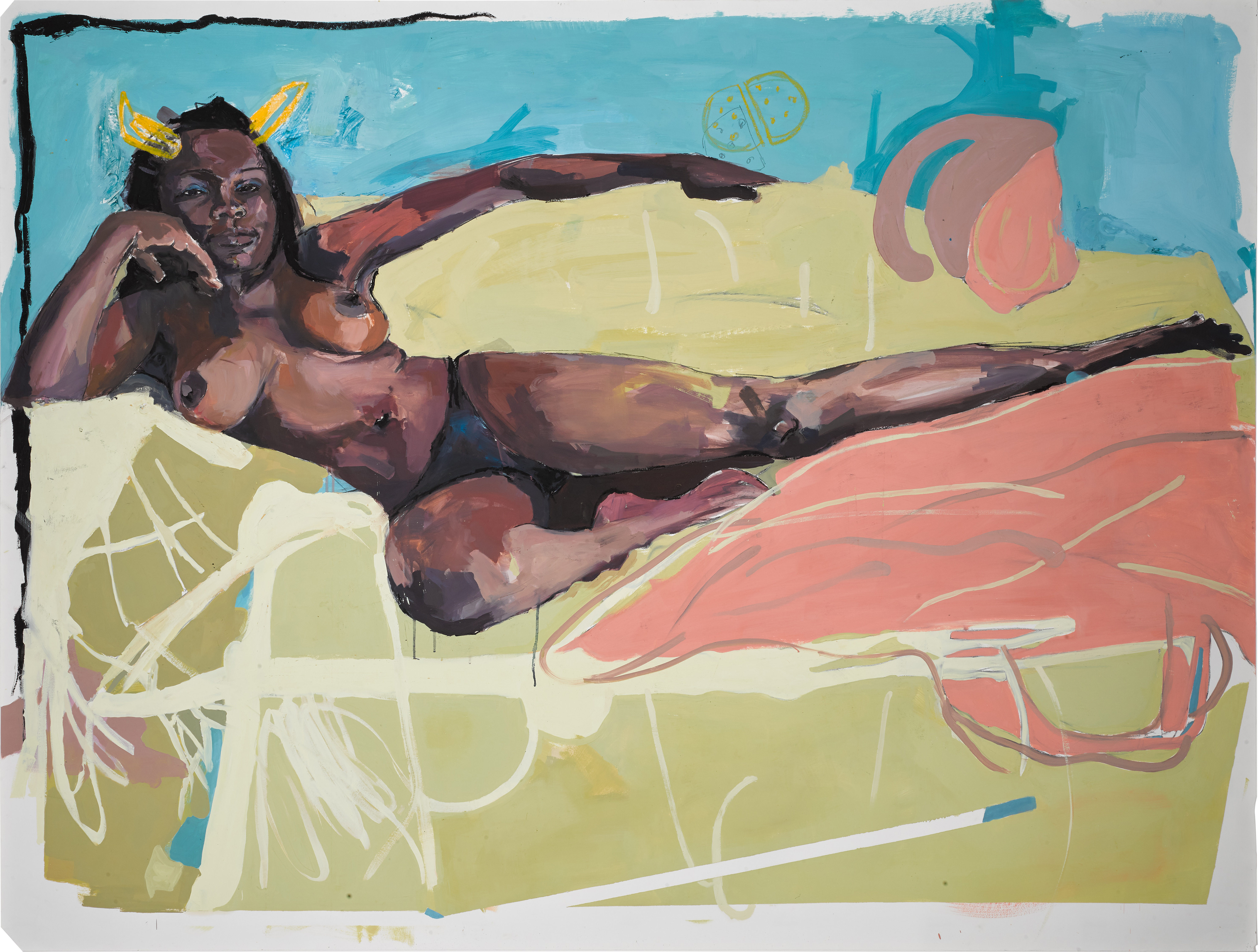
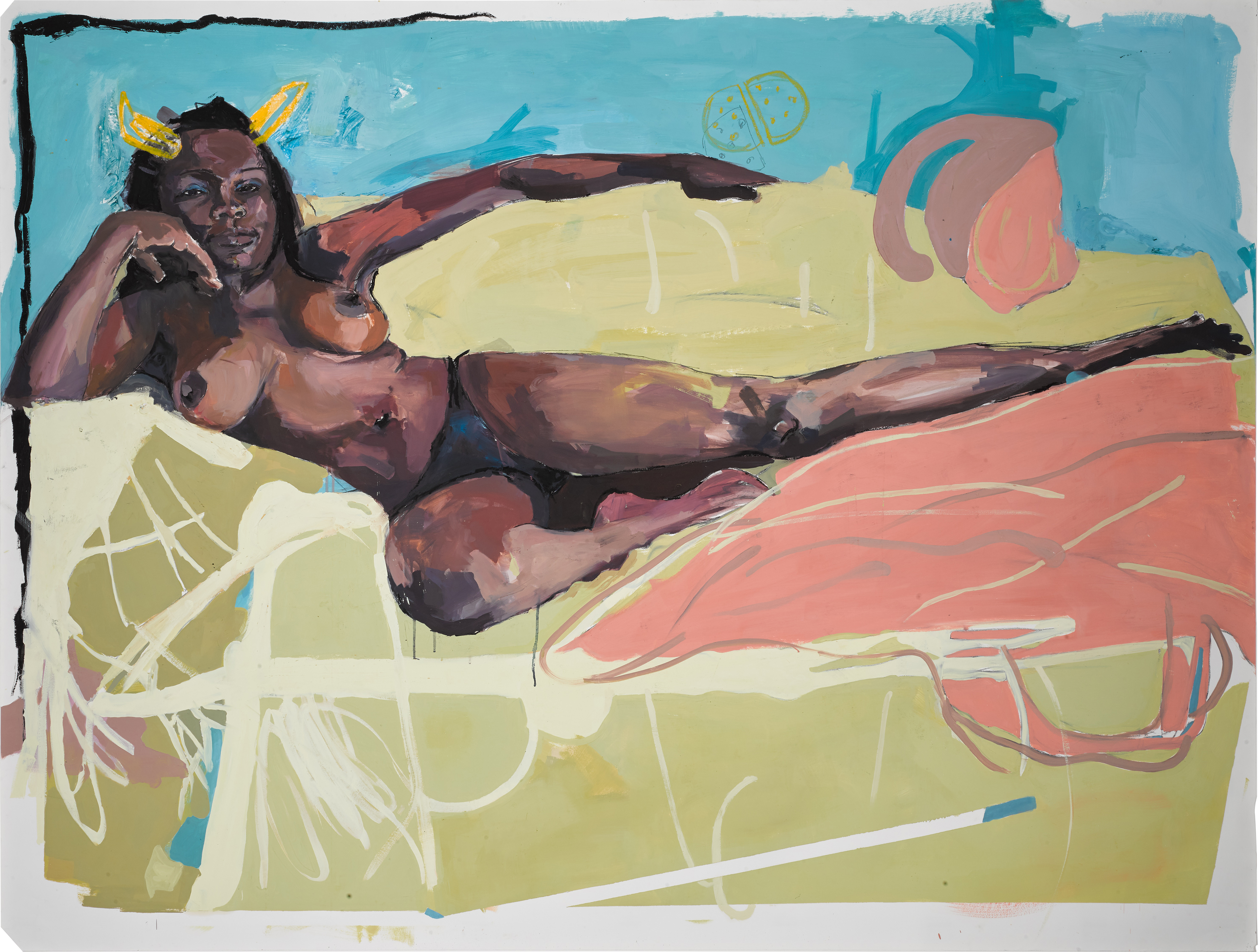
Study Sisi Themba’s Post Surgery, Harare General Hospital, 2050, 2016
This particular biographical arc, moving between Harare and the British institutional art world, is not merely biographical backdrop. It is the engine of her entire practice. The experience of existing between two cultures, of carrying memory across geographies, of negotiating identity in spaces that were not designed with you in mind, all of this becomes raw material that Hwami transmutes into something genuinely alive on the picture plane. Her formation was rigorous and her hunger for synthesis was apparent from the beginning.
Her artistic development has been marked by an unusually confident willingness to work across mediums and registers simultaneously. Oil paint, acrylic, charcoal, oil stick, silkscreen, and lithography all appear across her body of work, and she approaches each with the same restless intelligence. What links these varied materials is her deep engagement with the logic of digital collage and fragmented image making, an aesthetic sensibility drawn from the way contemporary visual culture actually functions, where photographs, memes, archival images, and personal snapshots coexist in an endless compressed feed. Hwami absorbs this visual grammar and translates it into the slow, deliberate, entirely physical act of painting, creating a productive tension between immediacy and duration that gives her canvases their particular charge.
Kudzanai-Violet Hwami
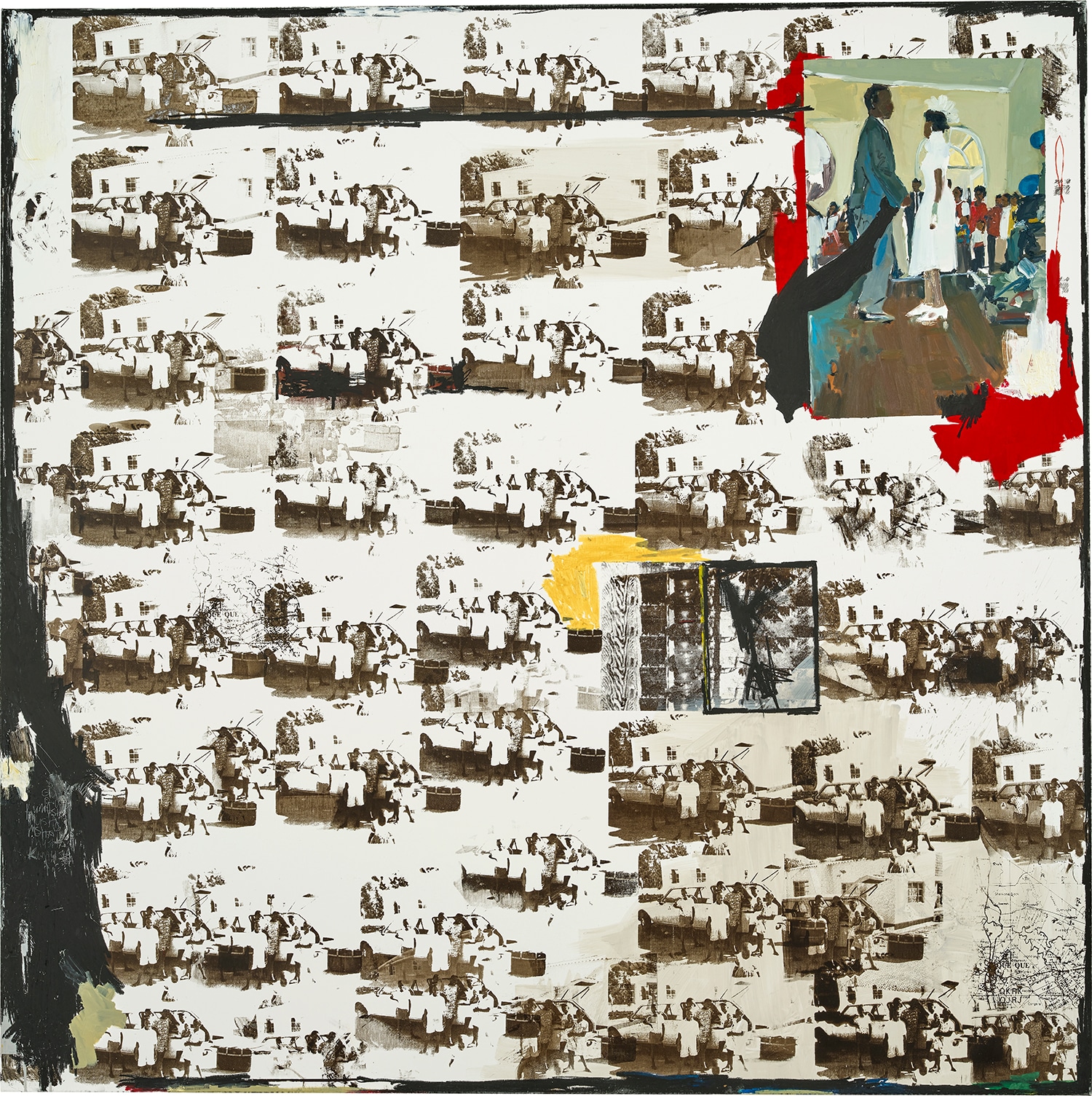
Let Us Now Praise the Children (Zwizwai Family), 2017
The works that first brought Hwami to serious collector attention reward close study for what they reveal about her evolving thematic concerns. A work such as "Study Sisi Themba's Post Surgery, Harare General Hospital, 2050," created in 2016 using oil, charcoal, and oil stick on paper, announces its ambitions in its very title, projecting a future timestamp onto a scene rooted in the specific and the personal. The speculative date transforms a moment of bodily vulnerability into something more expansive, a meditation on Black futurity and what it means to imagine care and survival extending forward through time. Her 2017 canvas "Let Us Now Praise the Children (Zwizwai Family)," executed in silkscreen, acrylic, and oil, deploys a title that echoes James Agee and Walker Evans while insisting on its own distinct lineage and subject matter, a gesture typical of Hwami's ability to hold multiple cultural reference points in productive dialogue without subordinating any of them.
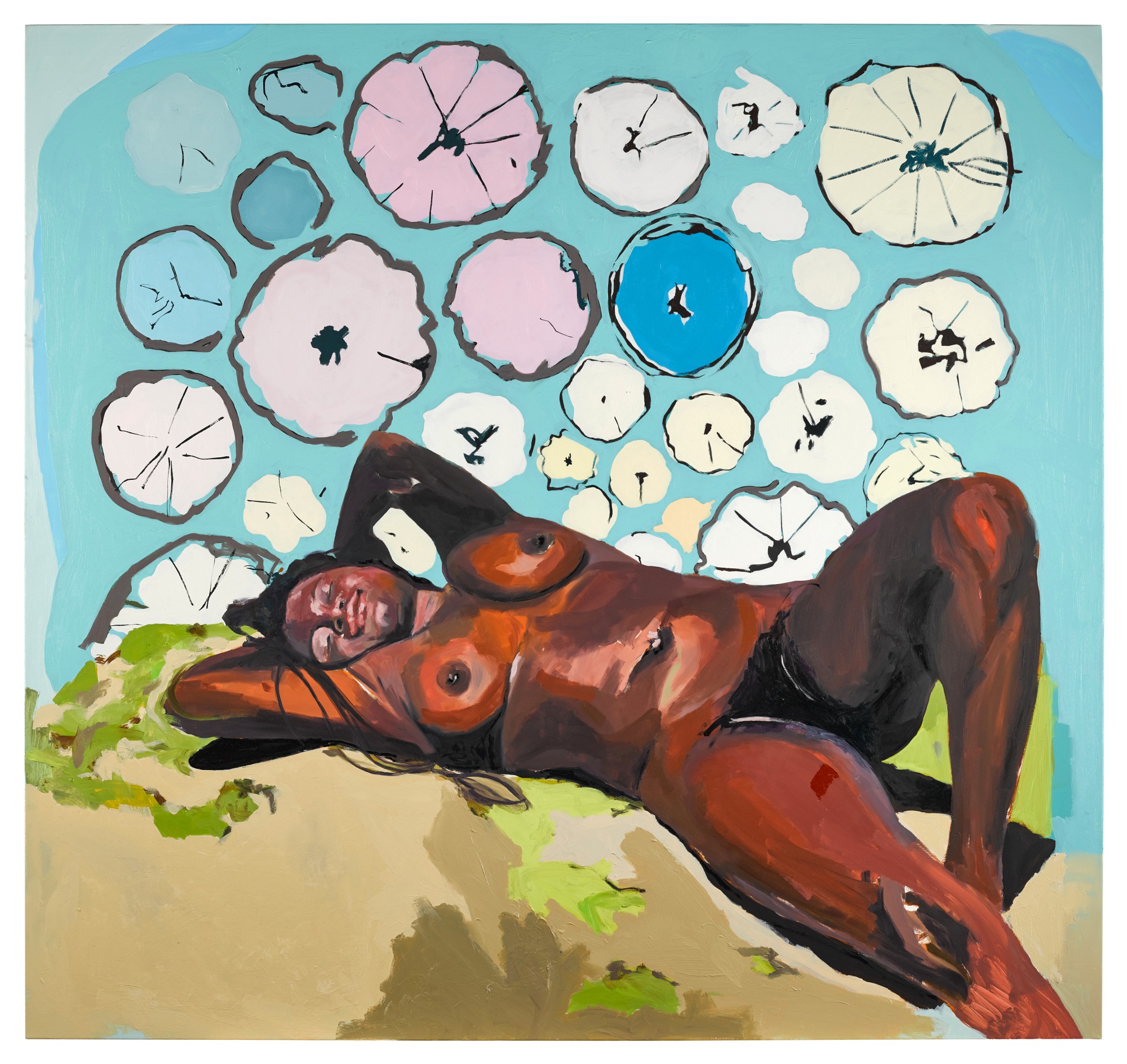
"Eve on Psilocybin" from 2018 extends her ongoing interest in altered states of perception, botanical mythology, and the reimagining of archetypal feminine figures through a distinctly contemporary lens. For collectors, the appeal of Hwami's work rests on several converging qualities that are rare to find in a single practice. There is the sheer visual force of her color, saturated and purposeful without ever becoming decorative or facile. There is the conceptual density of her imagery, which draws from West and Southern African visual traditions, queer theory, family portraiture, internet vernacular, and art historical citation all at once.
Kudzanai-Violet Hwami
Eve on Psilocybin, 2018
And there is a quality that is harder to name but immediately felt, a sense that these paintings are genuinely necessary, that they are doing something the broader culture requires of them. Works such as "hure ra st. peterson (st. peterson's whore)" from 2017 demonstrate her willingness to engage with language and title as an active formal element, reclaiming and complicating loaded terminology with characteristic precision.
Her prints, including the 2019 lithograph "Nzombe ne Karwe," show that her command of composition and tonal intelligence translates powerfully beyond the painted canvas, making works on paper an important entry point for collectors building serious positions in her practice. Within art historical context, Hwami occupies a genuinely distinctive position while remaining in productive conversation with a number of significant predecessors and contemporaries. Her layered approach to figuration recalls the complex surface strategies of Chris Ofili, while her interest in diaspora experience and the political life of the Black body connects her to a lineage that includes Lynette Yiadom Boakye and Kerry James Marshall. Her engagement with digital visual culture as a formal influence places her alongside younger painters such as Flora Yukhnovich and Jadé Fadojutimi, artists who are collectively redefining what ambitious painting can look like in the current moment.
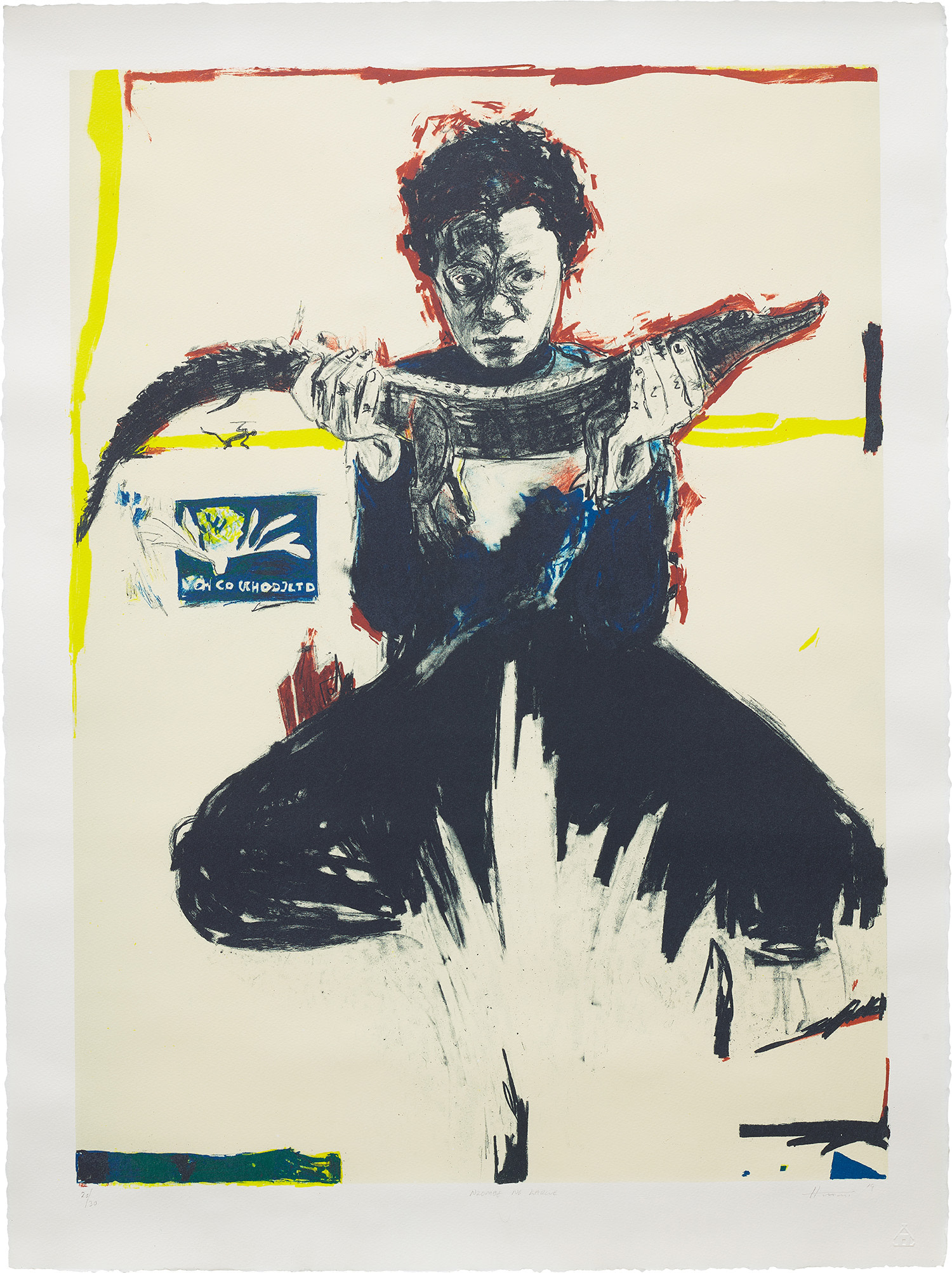
Kudzanai-Violet Hwami
Nzombe ne Karwe, 2019
What distinguishes Hwami from all of these is the specificity of her Zimbabwean frame of reference, a richness of cultural memory and political history that gives her imagery a grounded particularity that resists easy universalizing. The question of legacy is always premature to raise about an artist in their early thirties, and yet the architecture of a significant legacy is already visible in Hwami's work. She has demonstrated an ability to grow in scale and ambition without losing intimacy, and her willingness to engage with the most pressing questions of identity, queerness, belonging, and futurity ensures that her work remains urgently relevant rather than merely fashionable. Galleries and institutions that have committed to her practice early have been validated repeatedly as her international profile has expanded.
For collectors considering positions in living painting, Hwami represents something genuinely precious: an artist whose best work is almost certainly still ahead of her, and whose existing body of work already constitutes a meaningful contribution to the art of this century.