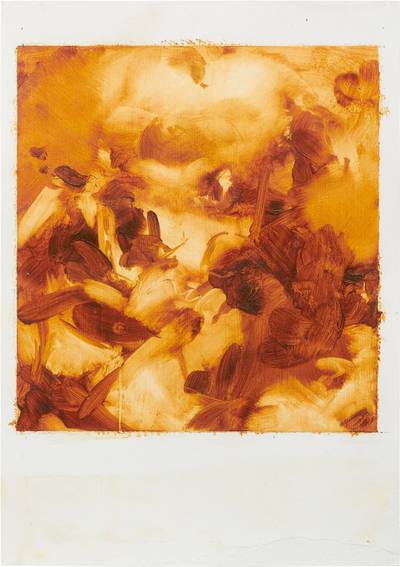
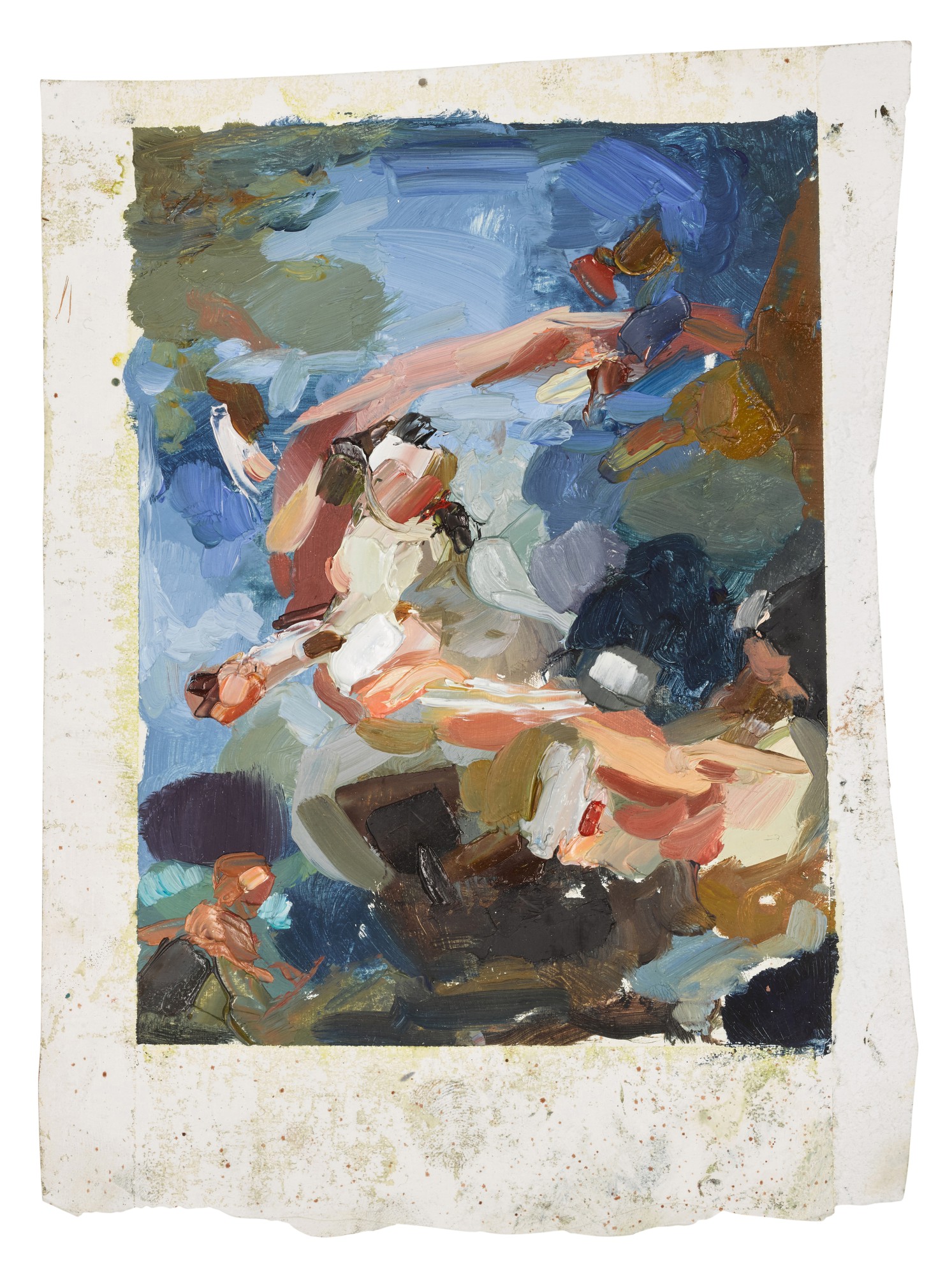
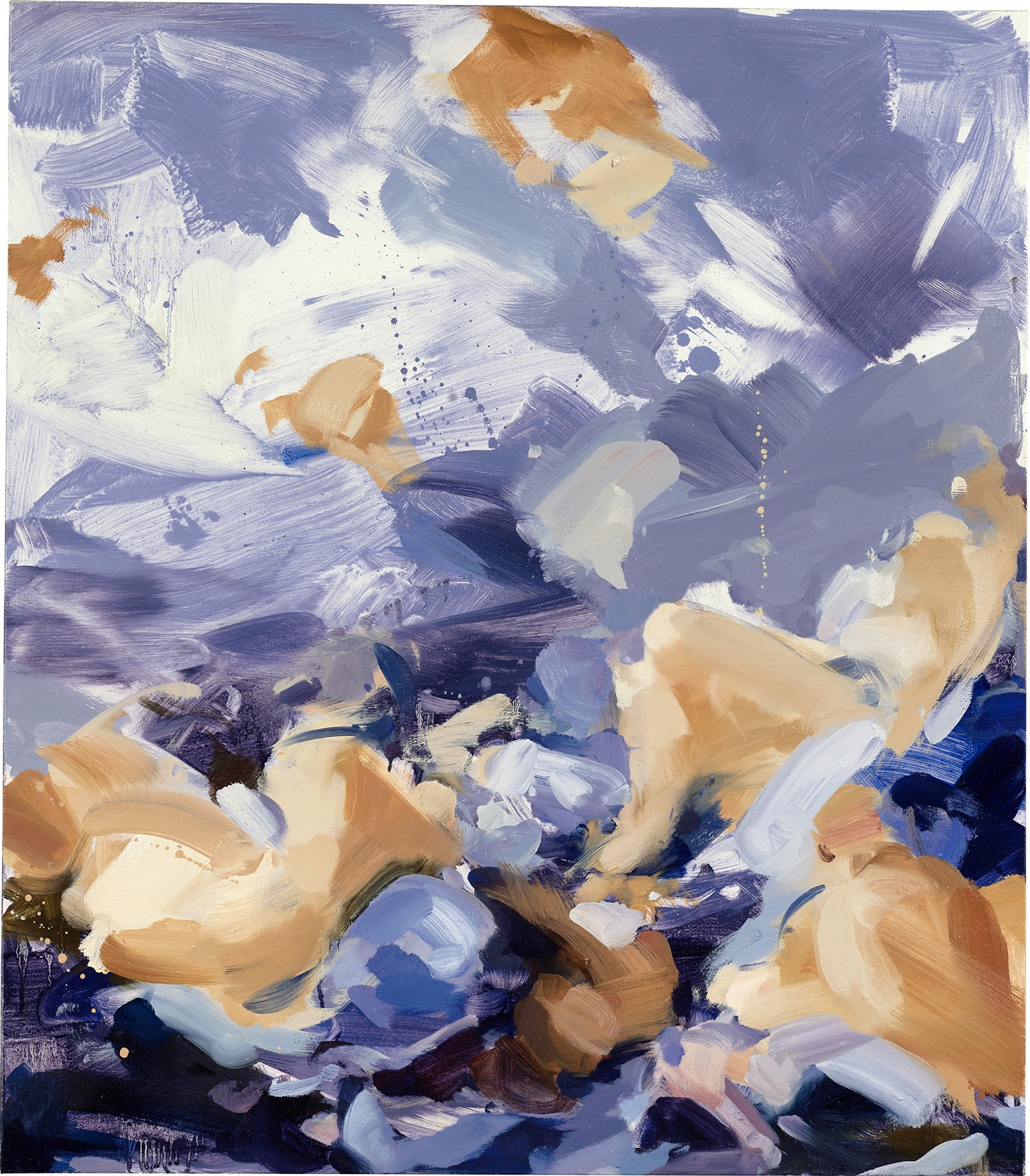
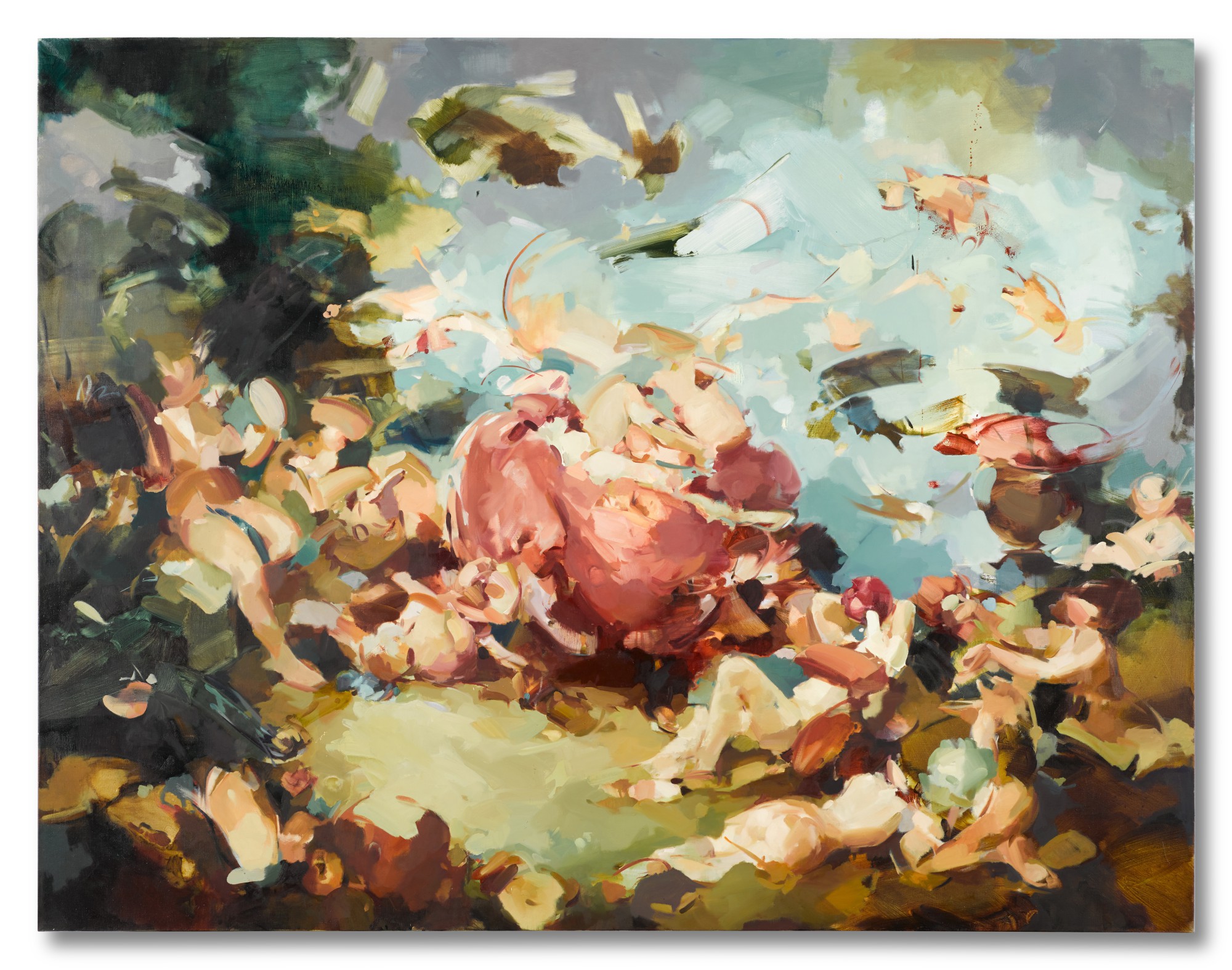
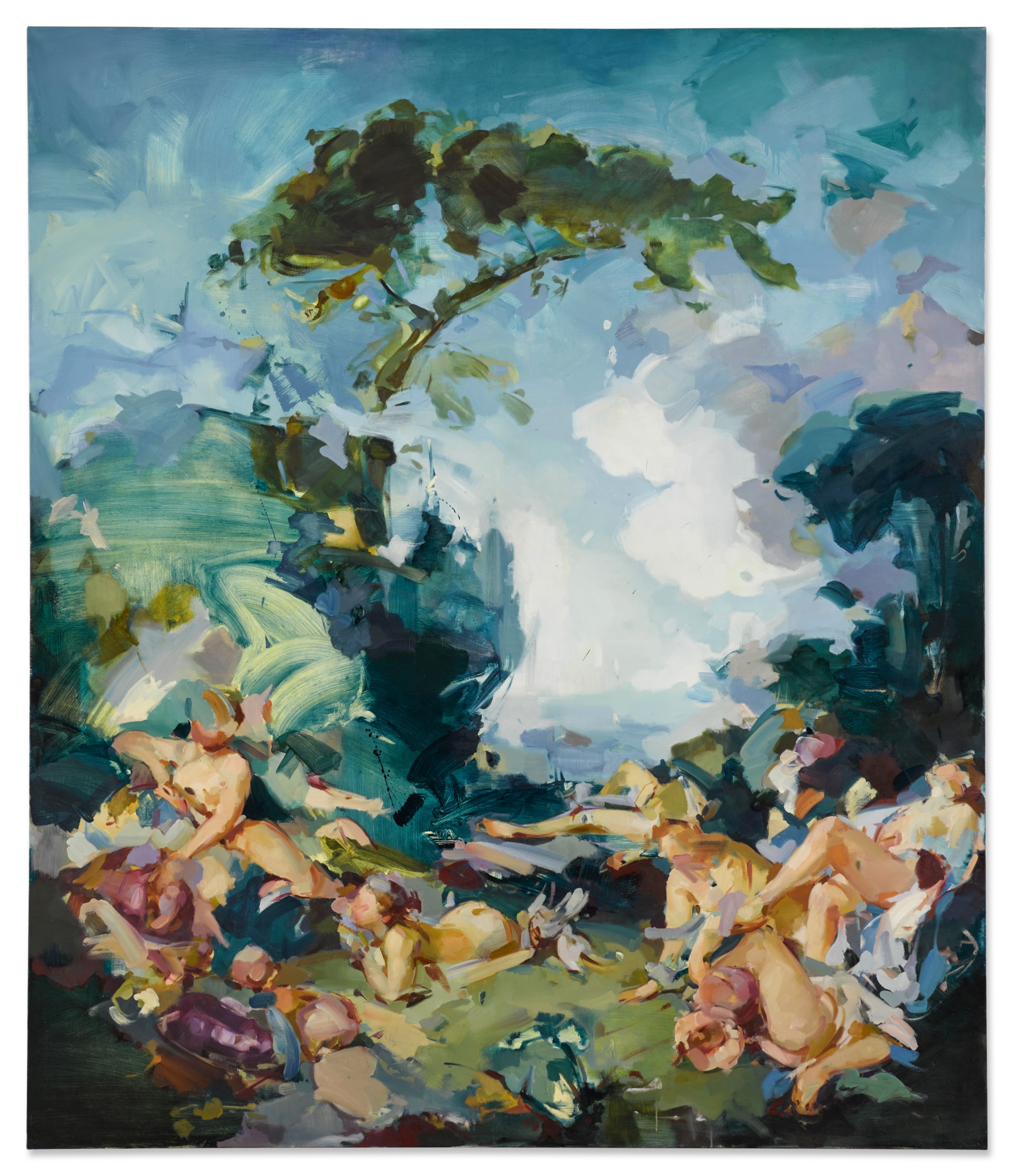
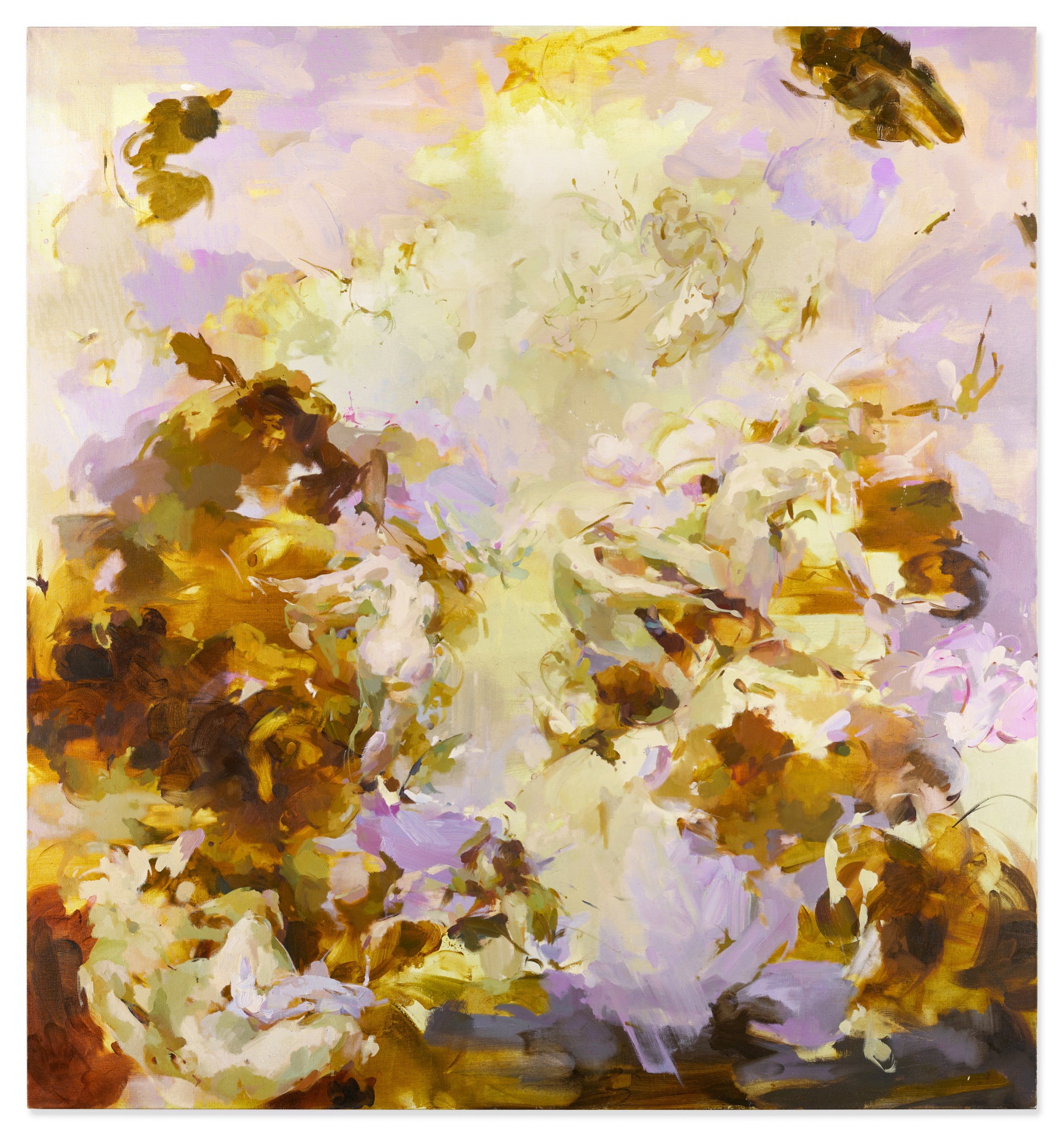
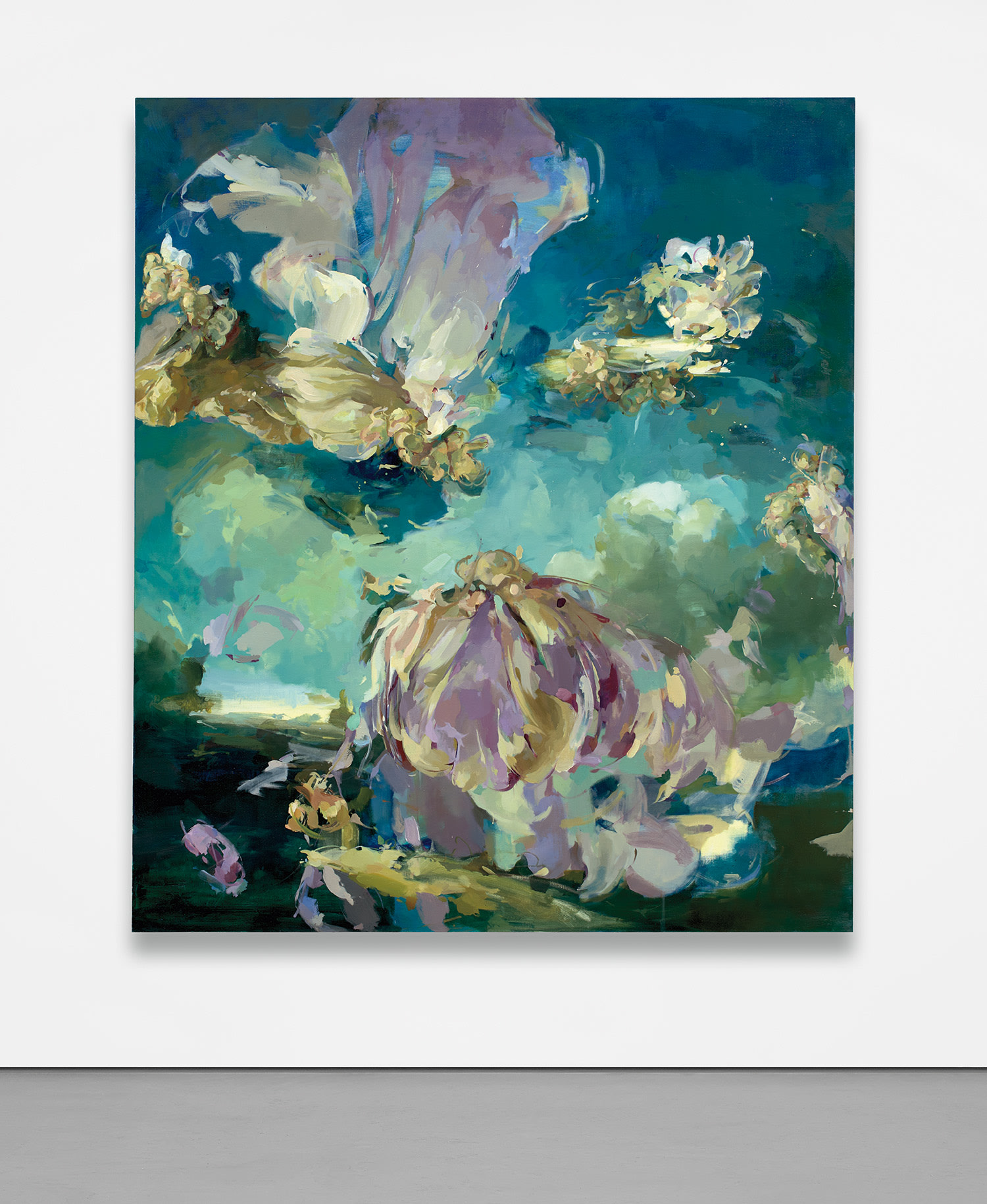
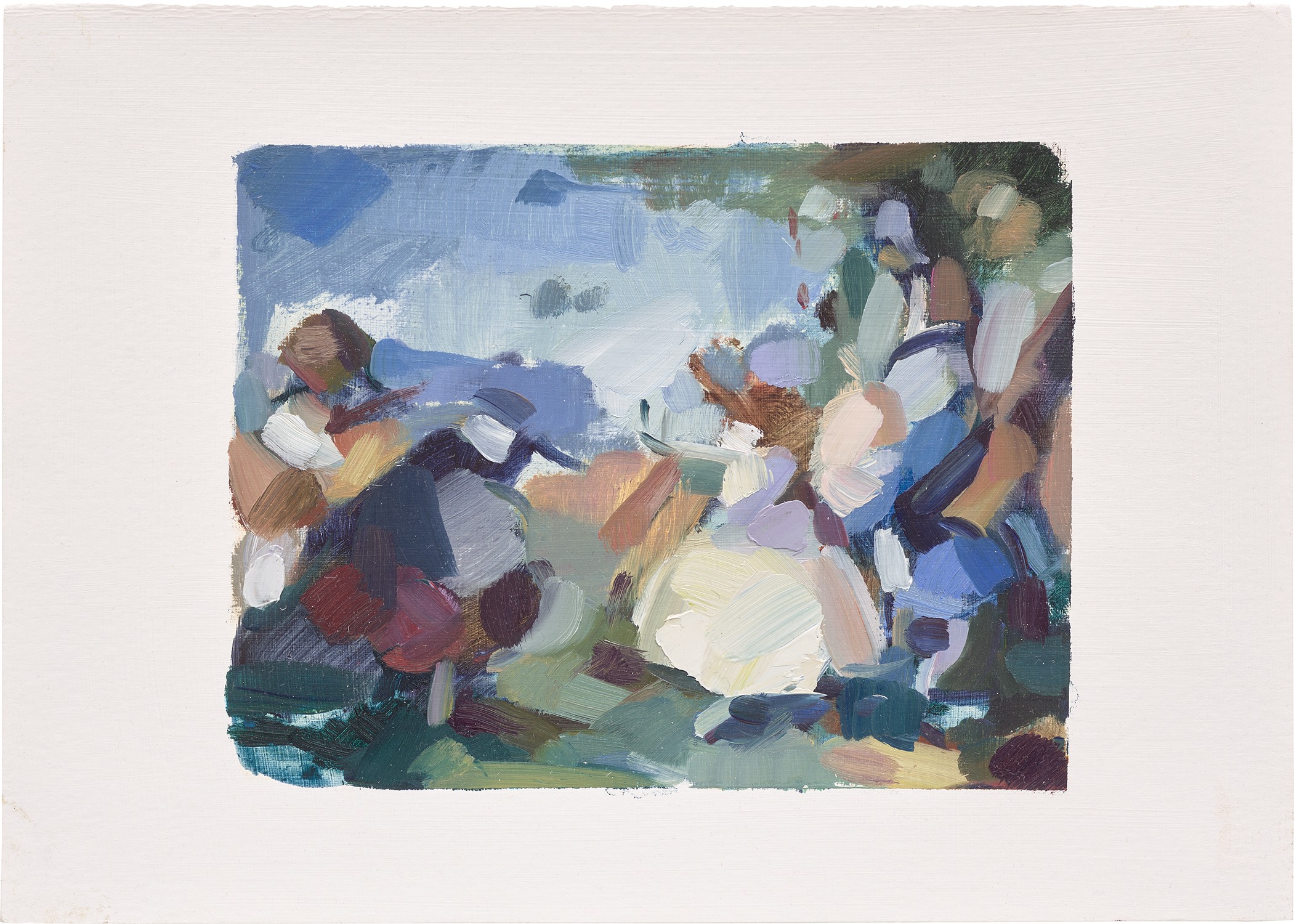
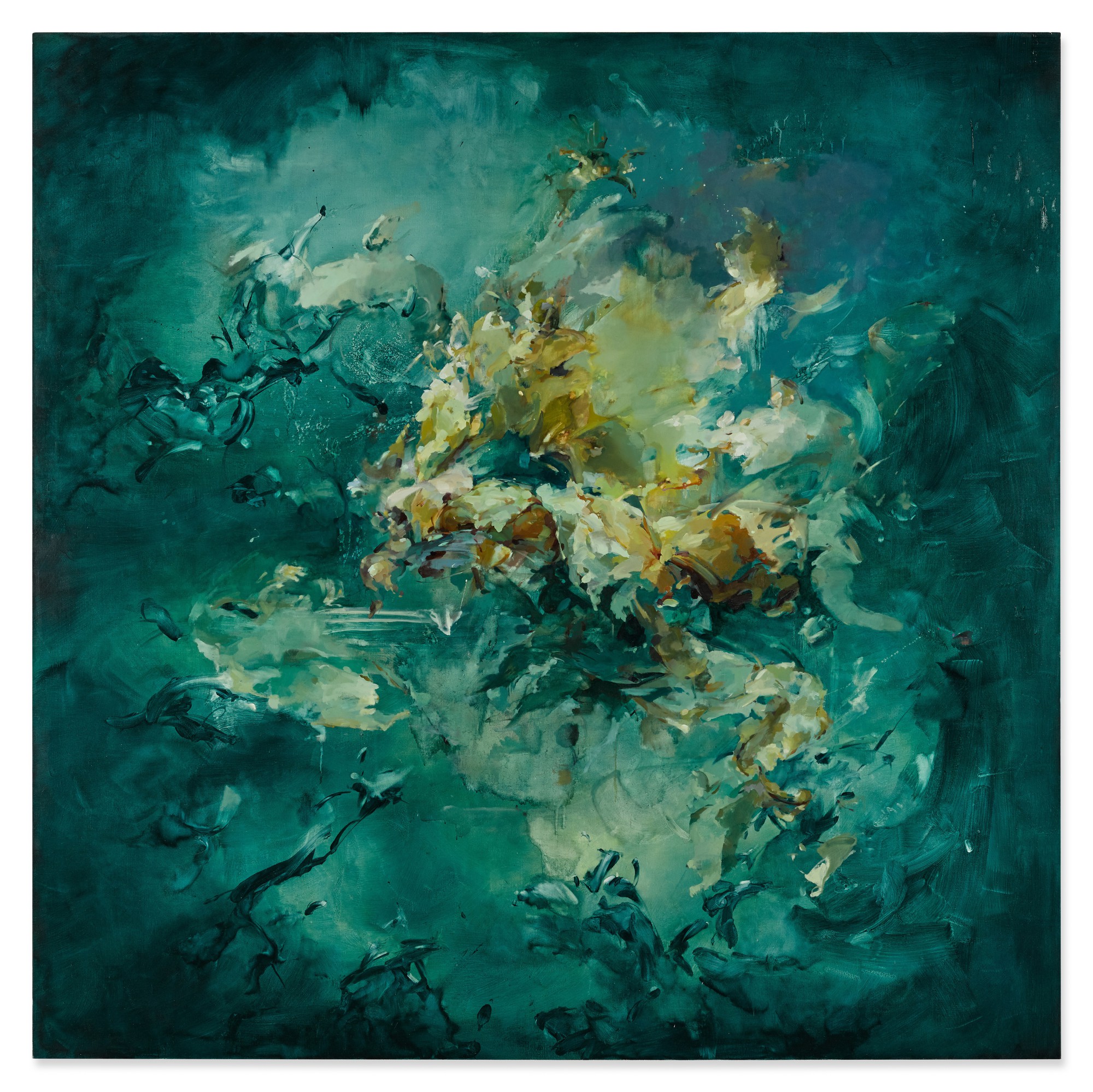
When Flora Yukhnovich's paintings arrived at Victoria Miro in London, the conversation around British painting shifted perceptibly. Here was a young artist doing something genuinely surprising: taking the most dismissed, most ornamental corner of Western art history, the powdered and perfumed world of eighteenth century Rococo, and transforming it into painting that felt urgently, unmistakably contemporary. The critical response was swift and warm, and collectors followed with equal enthusiasm. By the early 2020s, Yukhnovich had become one of the most talked about painters of her generation, her canvases appearing at auction with results that underscored what many in the gallery world had sensed for some time: that her work occupies a rare position, at once historically literate and formally alive. Born in 1990, Yukhnovich grew up in Britain and came of age as a painter through a rigorous academic formation. She studied at City and Guilds of London Art School before completing her MFA at the Royal College of Art in 2017, an institution that has produced a remarkable thread of influential British painters across the decades. The RCA years proved formative in the deepest sense. It was there that Yukhnovich developed the conceptual and technical framework that would define her practice: a sustained, serious engagement with art history not as a source of quotation but as a living material to be pushed, dissolved, and reimagined on the surface of a canvas. The Rococo painters who animate her references, Jean Honoré Fragonard and François Boucher above all, were themselves accused in their own time of prioritizing surface over substance, sensation over meaning. Yukhnovich understands this accusation and turns it inside out. She recognizes that pleasure is itself a subject worthy of serious pictorial investigation, and that the gauzy, rose tinted atmospheres of the French eighteenth century contain within them a visual grammar of desire, leisure, and the body that remains startlingly modern. Her project is to distill that grammar to its most essential, most gestural form, letting recognizable imagery dissolve into passages of pure chromatic sensation. Her development as a painter can be traced beautifully through the studies and larger canvases that mark each phase of her practice. The works on paper from 2017 and 2018, including pieces such as Study (26) and Study VII, function as laboratories of sensation. On a modest scale, she works out the internal logic of a palette built around soft pinks, warm creams, lilac, and the occasional shock of deeper tone. These are not preparatory sketches in any traditional sense. They are complete acts of looking and feeling, each one testing how much a painted surface can suggest without declaring. The economy of mark making in these works is remarkable, a single gestural stroke carrying the weight of a figure, a cloud, a billowing skirt. The larger canvases amplify this language to commanding effect. Nobody Puts Baby in the Corner from 2018 announces its sense of humor in its title, drawing from the popular culture vernacular with the same confidence that Yukhnovich draws from the Louvre. The painting itself is a feast of layered, translucent passages, forms that hover just at the threshold of recognition before retreating back into abstraction. I'll Have What She's Having from 2020 continues this conversation, its title again winking at the pleasure economy that runs through all of her work. The surface is radiant, almost confectionery in its sweetness, yet the painting holds together with a structural intelligence that reveals itself slowly. Pretty Little Thing, completed in 2019, similarly walks this line between the decorative and the deeply felt, its title perhaps gently ironic, its execution anything but superficial. Earlier works such as Moi aussi je déborde and My Body Knows Un Heard of Songs, both from 2017, carry a particular significance as documents of the artist finding her fullest voice. The French title of the former, which might be rendered as I too overflow, reads almost as a manifesto. There is an overflowing quality to Yukhnovich's canvases, a sense of abundance and sensory generosity that feels genuinely earned rather than merely decorative. It's Better Down Where It's Wetter from 2018 brings another borrowed cultural phrase into contact with the painted surface, and the result is characteristic: playful in its referencing, serious in its execution. For collectors, Yukhnovich represents a particularly compelling proposition. Her market trajectory has been steep and sustained, with secondary market interest emerging rapidly following her primary gallery success. Works that entered collections in the late 2010s have been treated with the seriousness they deserve, and the artist's relative youth means that the full arc of her practice remains ahead. What to look for, when approaching her work, is the quality of the light held within the paint itself. Yukhnovich builds her surfaces through layering and glazing, techniques with deep roots in both Baroque and Rococo practice, and the best canvases have an internal luminosity that photographs cannot fully capture. The studies on paper offer a point of entry for collectors drawn to the intimacy of works on a smaller scale, while the larger linen canvases make the strongest case for her ambition as a painter. Within a broader art historical context, Yukhnovich belongs to a generation of painters who have approached the question of appropriation and historical reference with renewed seriousness. Her conversation with Fragonard and Boucher is one that artists like Cecily Brown have approached from adjacent angles, while her commitment to abstraction as the final destination of figurative suggestion connects her to a longer lineage running from late Monet through Helen Frankenthaler and the atmospheric colorists of the twentieth century. She is also in genuine dialogue with the history of women painting pleasure, a history that has often been marginalized, and her willingness to inhabit that territory with intelligence and ambition feels culturally significant. What makes Flora Yukhnovich genuinely important, beyond the auction results and the critical recognition, is the quality of attention she brings to questions that painting has always asked. What can a surface hold. How much can be suggested rather than stated. Where does decoration end and feeling begin. Her answers are painted in colors that seem to remember sunlight, in marks that seem to remember the human body, in a practice that takes the lightest and most pleasurable traditions of Western painting and finds within them something that feels, finally, like the truth.