Karl Benjamin
Karl Benjamin, Where Color Becomes Pure Joy
Artist Spotlight · The Collection Editorial
In the permanent collection galleries at the Los Angeles County Museum of Art, something remarkable happens when visitors turn a corner and encounter a Karl Benjamin canvas. The room seems to shift. Color stops being a property of objects and becomes its own living presence, its own argument. Benjamin's hard edged geometric fields do not demand interpretation so much as they invite surrender, a willingness to let vibrating bands of cadmium, cerulean, and ochre rearrange the way you see the world around you.
Karl Benjamin
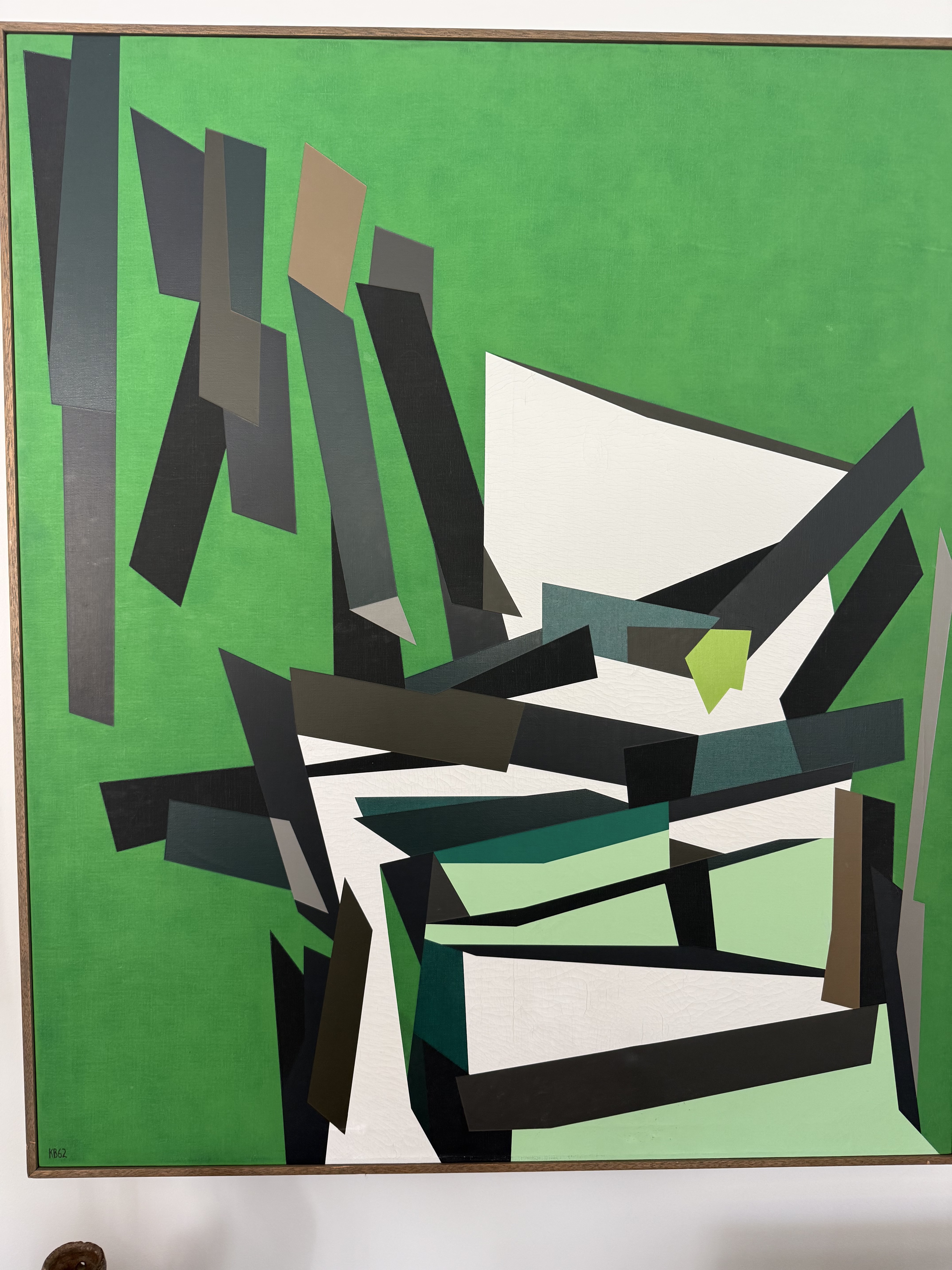
FS 8, 1962
Decades after they were made, these paintings feel not like artifacts of a past movement but like propositions about beauty that remain stubbornly, joyfully open. Karl Benjamin was born in Chicago in 1925 and came of age during a period when American painting was being reinvented almost season by season. He moved to California, settling in Claremont, a quiet college town east of Los Angeles that would become the unlikely capital of his lifelong practice. He studied at the University of Redlands and later at Claremont Graduate University, and though he worked for many years as a schoolteacher in the Claremont Unified School District, painting was never secondary to him.
The discipline of teaching and the discipline of making art reinforced each other, giving his practice a rigor and an ethical seriousness that colleagues in the New York art world sometimes found surprising in a West Coast painter. What shaped Benjamin most profoundly was not any single mentor or movement but a sustained, almost philosophical commitment to color as structure. While Abstract Expressionism dominated the national conversation in the late 1940s and 1950s, Benjamin was moving in a different direction. He was less interested in gesture, in the evidence of the hand's emotional urgency, than in the question of what happens when color meets color with precision and intention.
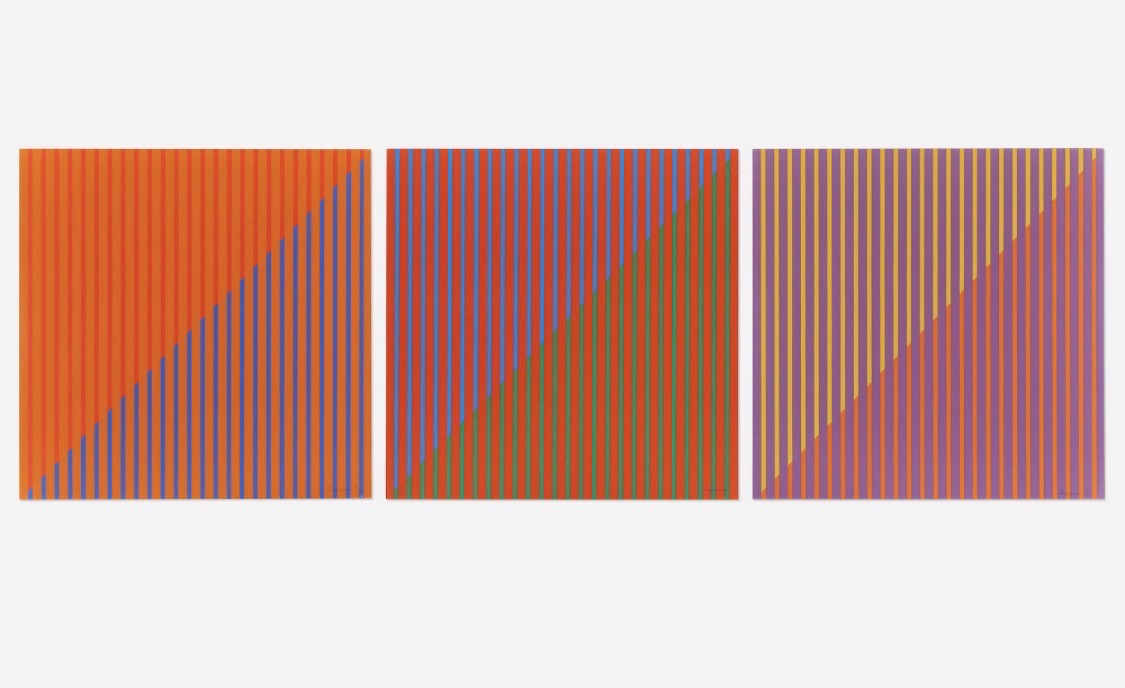
Karl Benjamin
Untitled (three works), 1976
He wanted to know what relationships were possible, what tensions and harmonies could be built not from feeling alone but from systematic thought. This made him an outlier in one context and a pioneer in another. The pivotal moment in Benjamin's public recognition came in 1959, when the Los Angeles County Museum of History, Science and Art mounted an exhibition titled Four Abstract Classicists, organized by curator Jules Langsner. Alongside Lorser Feitelson, Frederick Hammersley, and John McLaughlin, Benjamin was presented as part of a distinctly Californian sensibility in abstraction, one that prized clarity, restraint, and intellectual rigor over the expressive turbulence then fashionable in New York.
Langsner coined the term Abstract Classicism for the occasion, and the show traveled to San Francisco and then to London's Institute of Contemporary Arts, introducing European audiences to a West Coast modernism that was entirely its own. Benjamin was thirty four years old, and the exhibition announced him as a significant voice in postwar American art. His practice across the 1960s and 1970s deepened into one of the most coherent bodies of work produced in California during that era. A painting like FS 8 from 1962, oil on canvas, shows Benjamin at a moment of compressed brilliance.
Karl Benjamin
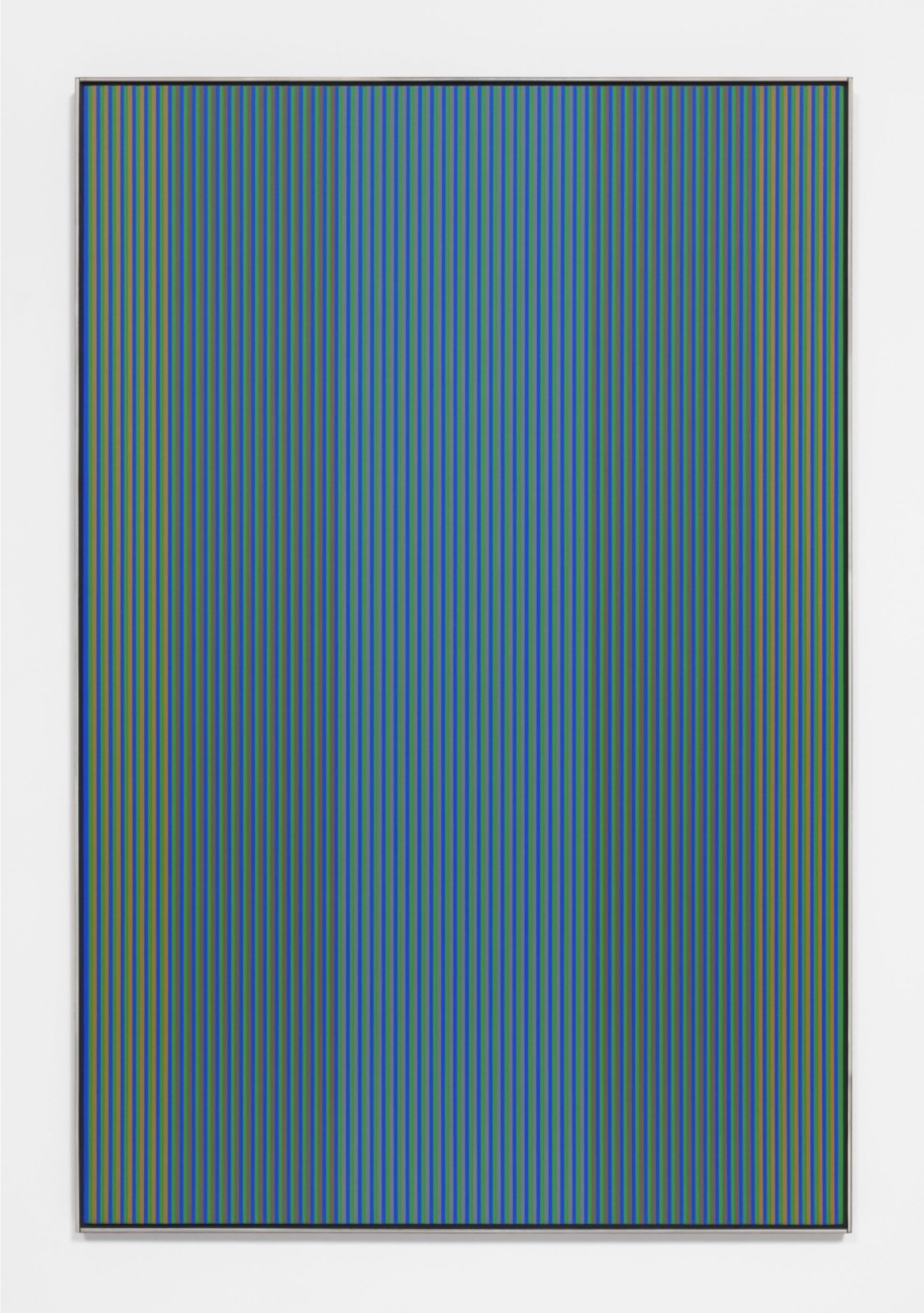
#1, 1980
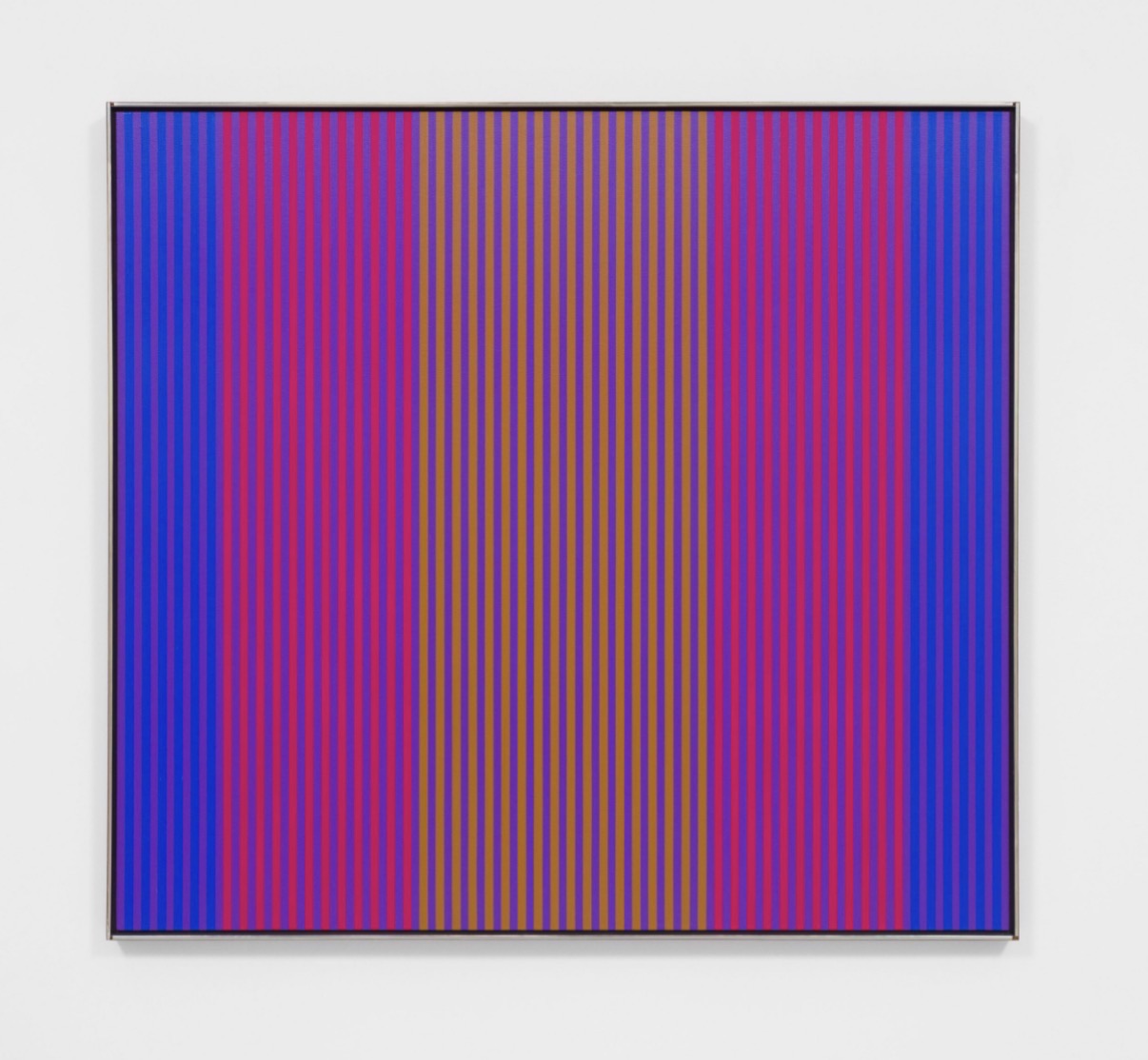
The composition is built from interlocking geometric forms in colors that should not coexist so peacefully but somehow do, each zone amplifying and complicating its neighbor. The work from 1965, titled simply 14, and the canvases numbered through the 1970s and 1980s, including 23 from 1977 and 1 from 1980, reveal an artist who treated the serial numbering of his paintings not as a bureaucratic convenience but as a statement of commitment to an ongoing investigation. Each canvas is a new experiment within the same laboratory. The 1976 screenprint series demonstrates that his sensibility translated beautifully into the print medium, the layered colors gaining a particular luminosity through that process.
For collectors, Benjamin represents something genuinely valuable: a blue chip historical figure whose market has grown steadily as West Coast art history receives the serious institutional attention it deserves. His works appear regularly at major auction houses and in specialized California art sales, where they attract both seasoned collectors of postwar American abstraction and younger buyers discovering the Abstract Classicist movement for the first time. What distinguishes a strong Benjamin from a very good one is the complexity of his color relationships. The most compelling examples create a sense of visual electricity, a subtle instability in which the eye cannot quite settle on a hierarchy among the competing fields.
Karl Benjamin
#23, 1977
Works from the early 1960s and then again from the late 1970s are particularly sought after. His paintings are held in the permanent collections of the Solomon R. Guggenheim Museum in New York and LACMA, a institutional pedigree that provides both validation and confidence for the market. To understand Benjamin fully, it helps to place him in conversation with his contemporaries.
Josef Albers, whose Homage to the Square series explored color interaction with a comparable systematic intelligence, was a significant presence in the American art discourse that Benjamin inhabited. Ellsworth Kelly, whose shaped canvases and bold color fields transformed what painting could be, shares with Benjamin a commitment to the idea that abstraction could be rigorous without being cold. Among his fellow Californians, John McLaughlin's serene geometries and Lorser Feitelson's lyrical biomorphic forms offer useful counterpoints, each exploring a different facet of the clarity that the Abstract Classicists collectively championed. Benjamin's particular contribution was warmth.
His color is never austere. Karl Benjamin died in 2012, having spent nearly six decades in devoted, productive engagement with the questions that interested him most. His legacy is not simply the canvases themselves, though they are extraordinary, but the demonstration that a painter working outside the recognized centers of the art world, working with discipline and joy and intellectual honesty, could produce something of lasting consequence. California is still learning how central Benjamin was to its cultural identity.
Museums are still catching up, and the scholarship around the Abstract Classicists continues to expand. For collectors and for anyone who cares about the history of American art, engaging with Benjamin now feels less like looking backward than like finally seeing something clearly that was always there, asking only for attention and an open eye.