JR Makes the Whole World His Canvas
Artist Spotlight · The Collection Editorial
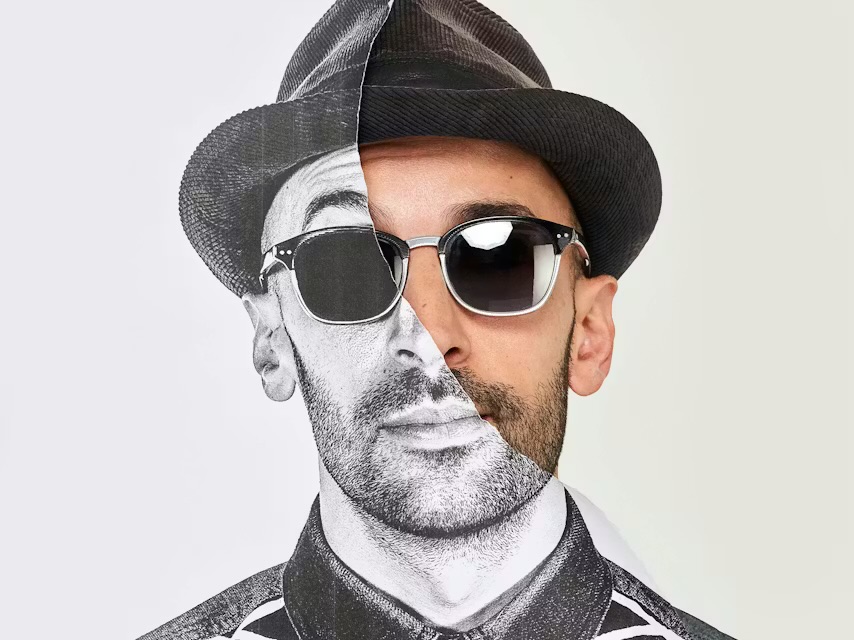
“I call myself a photograffeur. I am a street artist who uses photography.”
TED Prize Wish Speech, 2011
In the spring of 2019, something extraordinary happened at one of the most visited cultural institutions on earth. On March 29, the artist known simply as JR unveiled a monumental trompe l'oeil installation in the Cour Napoléon of the Louvre, making it appear as though the iconic glass pyramid was rising from a vast, crumbling excavation site. The image, printed across thousands of individual pieces of paper and assembled by volunteers over a single night, dissolved by afternoon as rain softened its edges and wind carried its fragments across the courtyard. That fleeting, communal, breathtaking moment was JR in total command of his vision: art at a scale that stops the world, made with and for ordinary people, and surrendered willingly to time.
JR
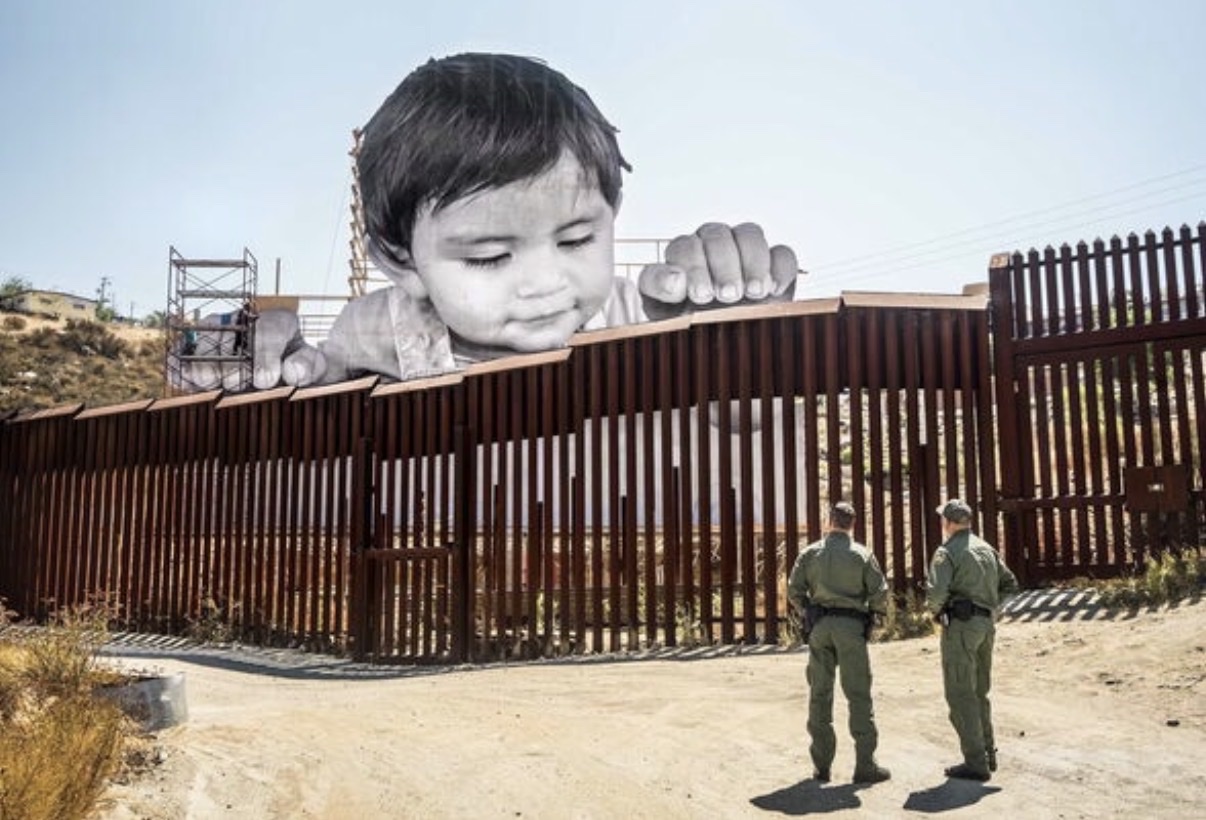
Giants, Kikito and the Border Patrol, Tecate, Mexico – USA, 2017, 2017
JR was born in France in 1983 and grew up in the banlieues surrounding Paris, the dense suburban communities that ring the capital and that have long occupied an uneasy place in the French imagination. It was in those neighborhoods, particularly Montfermeil in the Seine Saint Denis department, that he first encountered graffiti culture as a teenager. He found a camera on the Paris Métro and began photographing the people and places around him with an instinctive, documentary eye. What distinguished JR from the beginning was not simply a talent for image making but an understanding that a photograph gains its fullest power when it is returned to the community it came from, printed large and placed where everyone can see it without buying a ticket.
His earliest major project grew directly from those roots. In 2006, following the civil unrest that swept through the French banlieues the previous year, JR created Portrait d'une Génération, pasting enormous black and white portraits of young men from Montfermeil across the walls of their own neighborhood and then, provocatively, across the wealthy arrondissements of central Paris. The work asked viewers in the city center to look directly at faces they had been encouraged by media coverage to fear. It was confrontational, deeply humanist, and already entirely JR: the street as gallery, the portrait as argument, the city as a democratic exhibition space that no institution could gatekeep.
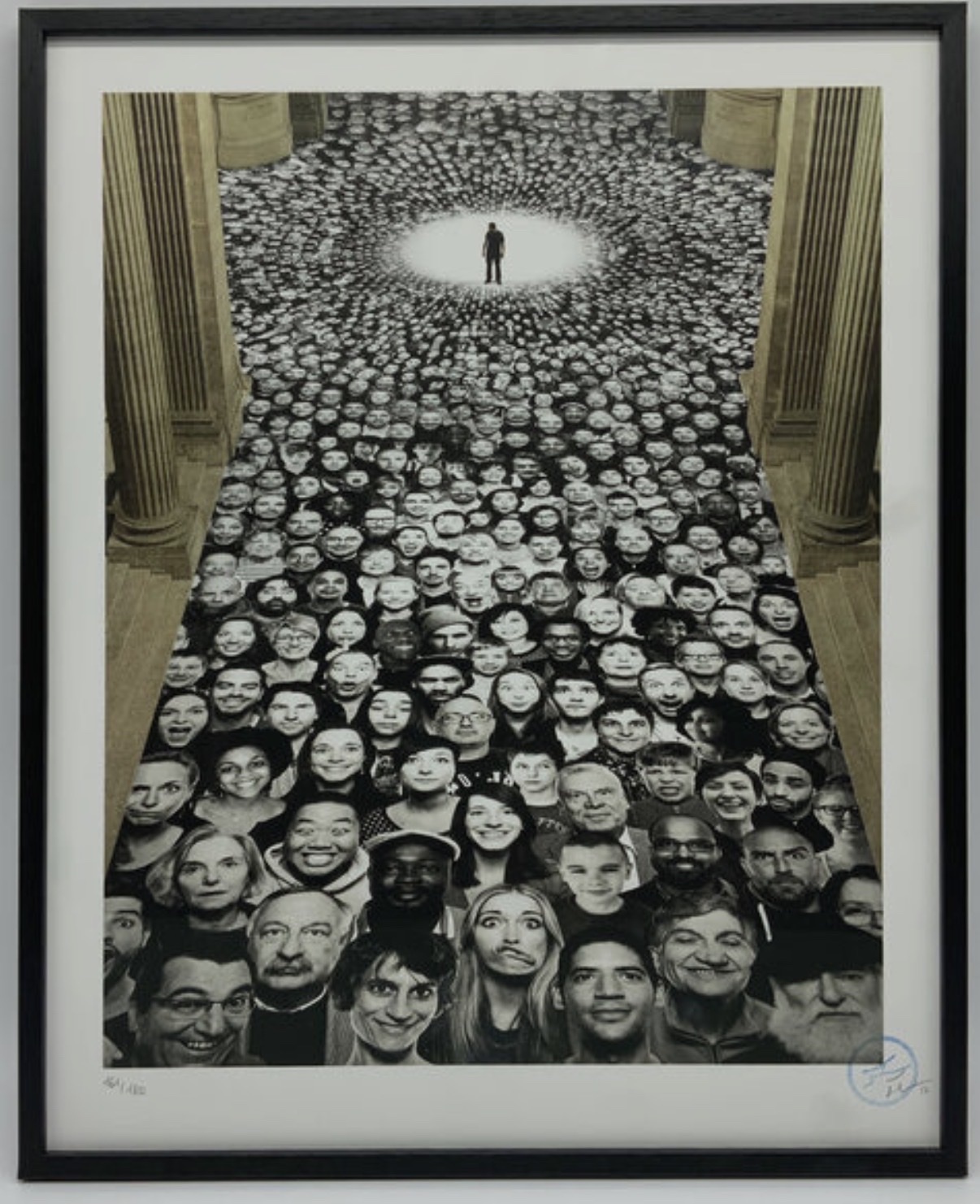
JR
Panthéon, Paris, 2017
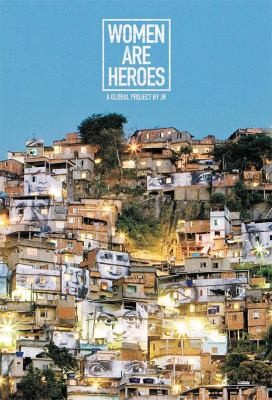
From that foundation, his practice expanded with remarkable momentum. Women Are Heroes, realized between 2008 and 2010, brought his large format portraiture to communities of women in Brazil, India, Cambodia, Liberia, Kenya, and Sierra Leone, pasting their faces onto rooftops, trains, and bridges. The project acknowledged women living through violence, displacement, and systemic neglect while insisting on their visibility and dignity with an almost defiant grandeur. His 2011 TED Prize and its accompanying wish, to use art to turn the world inside out, gave birth to the Inside Out project, a participatory initiative through which more than 400,000 people in over 130 countries have since contributed their own portraits to collective actions on the ground.
“Art is not supposed to change the world, to change practical things, but to change perceptions.”
TED Prize Wish Speech, 2011
Inside Out remains one of the most ambitious experiments in participatory public art ever conceived. Among the individual works that have come to define JR's place in art history, Giants, Kikito and the Border Patrol from 2017 stands as perhaps his most politically charged single image. Executed at Tecate on the border between Mexico and the United States, it showed the enormous face of a Mexican toddler peering over the border fence at the American side, where bewildered Border Patrol agents stood in the shadow of the child's gaze. The image circulated globally and became an immediate landmark in the visual conversation around immigration policy and human movement.
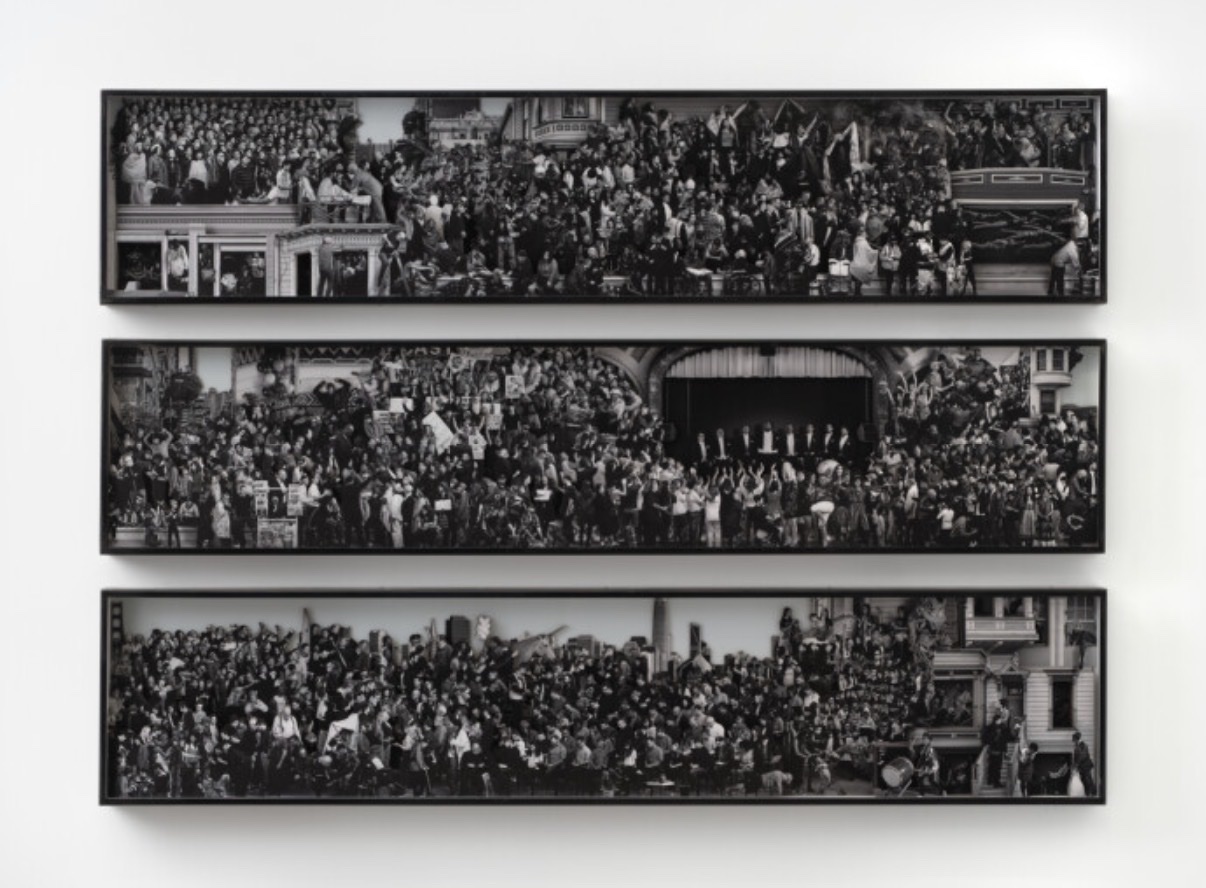
JR
The Chronicles of San Francisco, Triptych, Work in progress, USA, 2018
As a lithograph in colors on BFK Rives paper, it has become one of the most sought after works in his published editions, uniting the documentary urgency of the original installation with the intimacy and permanence that collectors rightly prize in a fine print. For collectors, JR presents a genuinely compelling and layered opportunity. His editions are produced with meticulous care and include lithographs, photography on Plexiglas, and complex mixed media works that incorporate laser cut cardboard, vinyl, and printed Duraclear, as in The Chronicles of San Francisco triptych from 2018. These are not simple reproductions but distinct objects that carry the conceptual weight of the original projects in a form suited to private contemplation.
Works like Self Portrait in a Woman's Eye from the Women Are Heroes series, signed and numbered from an edition of 150, connect the collector directly to a project with genuine historical significance. His Louvre edition, JR au Louvre, 29 Mars 2019, 18h08, documents that extraordinary morning in the Cour Napoléon with the specificity of both a photograph and a lithograph, a record of an event that those who witnessed it speak about years later. The market for JR has grown steadily as institutions have recognized that his work belongs firmly within the lineage of socially engaged art, and as collectors have understood that scarcity and cultural resonance travel together in his printed editions. Placing JR within art history illuminates just how seriously his practice should be regarded.
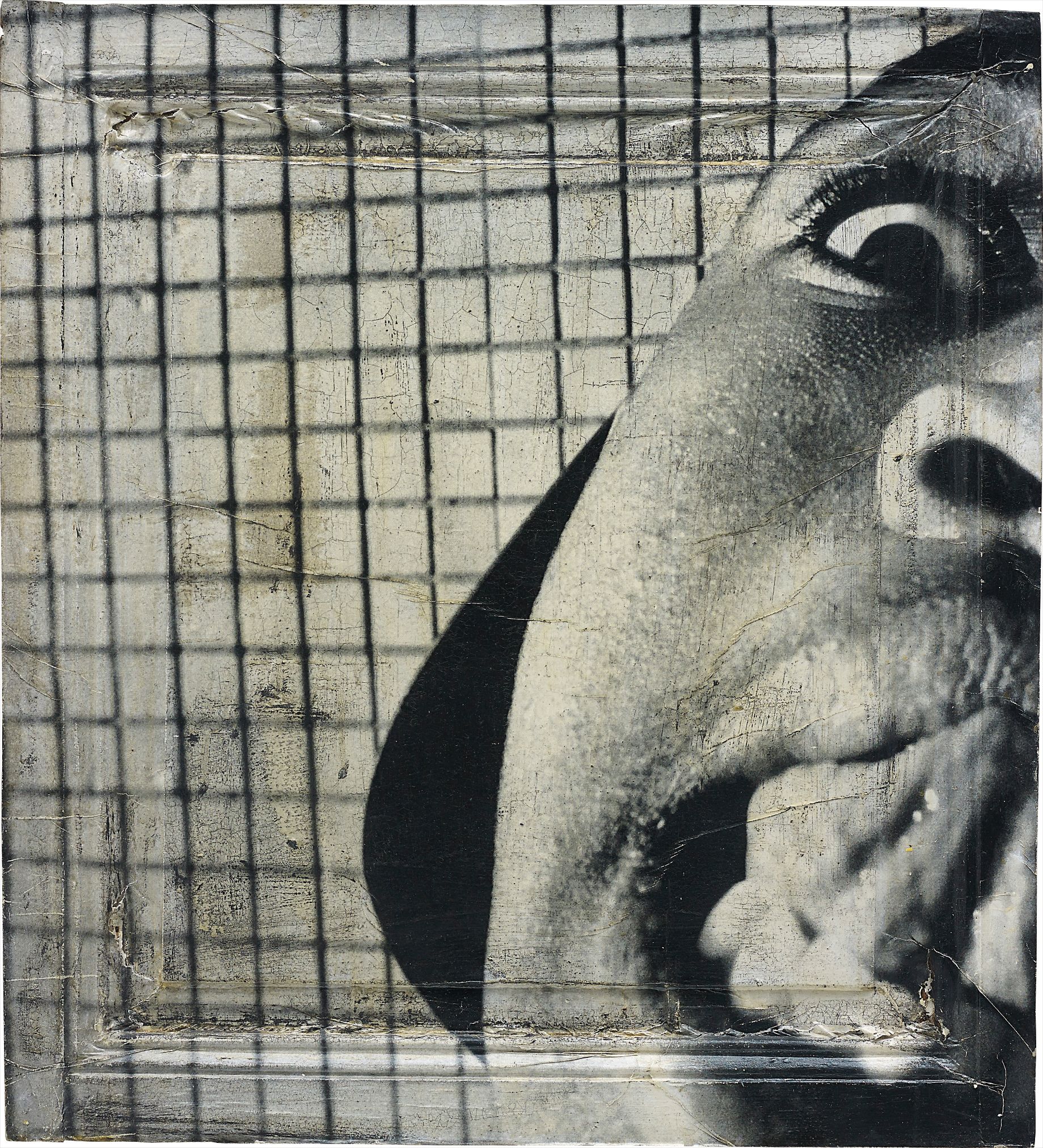
JR
Adama, Montfermeil, Portrait d'une Generation, 2006
He stands in a tradition that runs from the political photomontages of John Heartfield through the community based installations of Krzysztof Wodiczko and the urban interventions of Shepard Fairey. Like Banksy, he emerged from street culture and has navigated the relationship between public gesture and gallery legitimacy with intelligence and integrity. But where Banksy leans into anonymity and irony, JR has built his entire practice around revealing faces, insisting that visibility itself is a form of justice. His relationship to photography also connects him to the humanist documentary tradition of Henri Cartier Bresson and Sebastião Salgado, artists who understood that the camera is a moral instrument as much as an aesthetic one.
What makes JR matter today, urgently and without qualification, is that the questions his work raises have not become less pressing. Migration, inequality, institutional power, the dignity of communities overlooked by mainstream culture: these are the coordinates of his practice and they are the coordinates of our moment. He has shown his work at the Louvre, yes, but he has also shown it on the walls of favelas in Rio, on the trains of Nairobi, on the shores of Lesbos. The breadth of that ambition and the consistency with which he has pursued it across nearly two decades mark JR as one of the essential artists of his generation.
To collect his work is to participate, however quietly, in a project of radical empathy that stretches across borders and across time.
Explore books about JR