Joseph Yaeger
Joseph Yaeger Finds Beauty Beyond the Visible
Artist Spotlight · The Collection Editorial
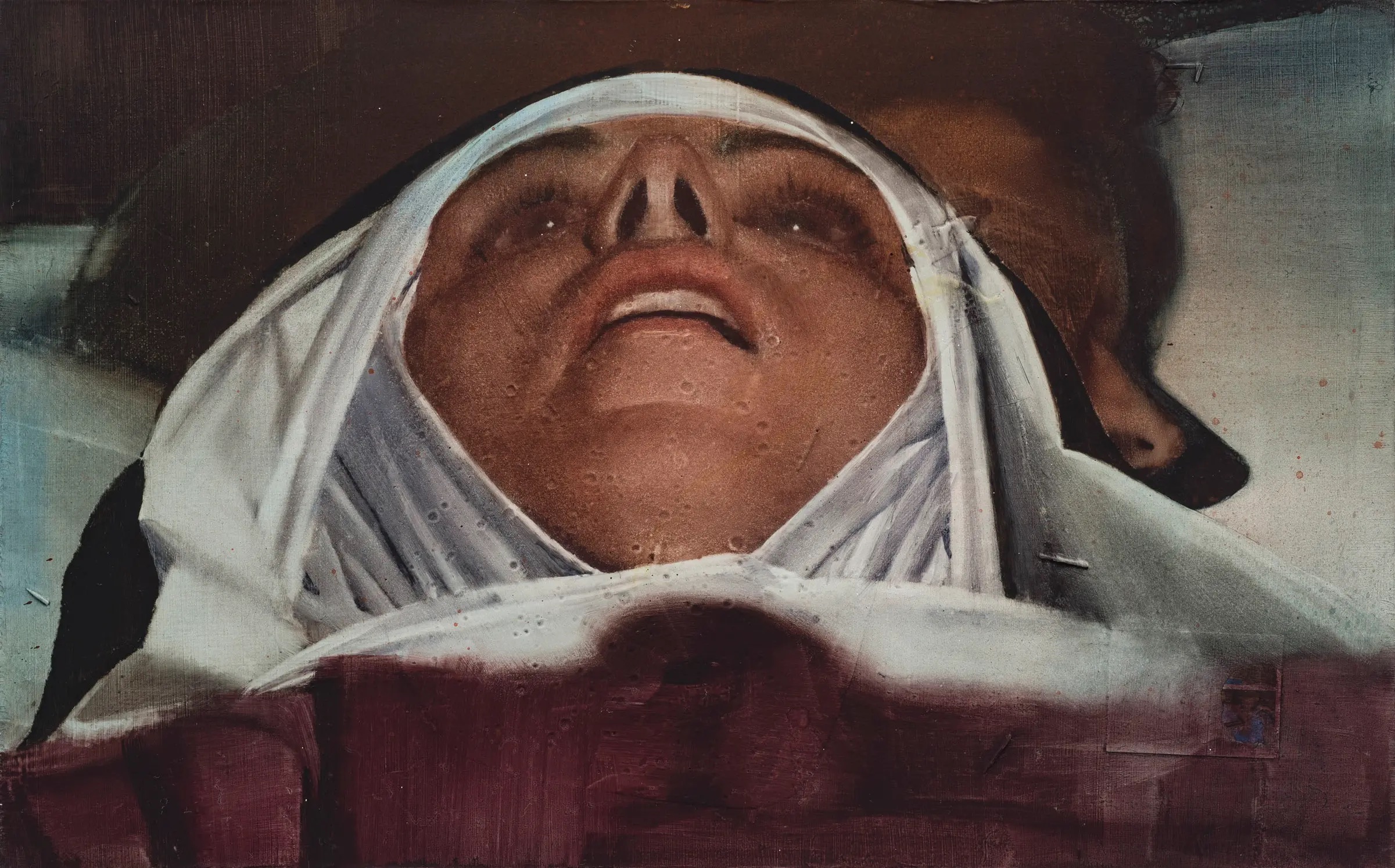
Something quietly extraordinary is happening on the canvases of Joseph Yaeger. In 2025, the American painter completed "Existence is a life sentence," a work executed in watercolor and studio debris on gessoed linen that feels less like a painting and more like a philosophical event. The title alone announces a sensibility at full stretch, one that insists on confronting the weight of being alive while simultaneously discovering in that weight something luminous, even liberating. At 74 years old, Yaeger is producing some of the most charged and emotionally intelligent work of his long career, and collectors who have followed his practice closely are taking notice with considerable enthusiasm.
Joseph Yaeger
Existence is a life sentence, 2025
Born in 1951, Yaeger came of age during one of the most fertile and contested periods in American art. The post war generation had already detonated the old certainties of representation, and the New York School had established gestural abstraction as the dominant language of serious painting. For a young American artist absorbing those lessons while also feeling the persistent pull of the natural world, the challenge was not simply to choose between abstraction and landscape but to find a third way, a pictorial space where both could coexist and generate something neither could produce alone. That search became the animating force of Yaeger's practice and remains so today.
Yaeger's development as a painter reflects a deep and patient engagement with the traditions he inherited. Working primarily in oil and mixed media before arriving at his current signature use of watercolor on gessoed linen, he cultivated a vocabulary rooted in gestural brushwork and atmospheric color fields. The gessoed linen support is itself a significant choice, offering a surface that is at once absorbent and resistant, that takes the watercolor with an immediacy and unpredictability impossible to achieve on paper or stretched canvas. This material intelligence gives his paintings their distinctive quality, a sense of the image arriving from somewhere just beyond conscious intention, shaped as much by the logic of the surface as by the will of the artist.
Joseph Yaeger
Sanctimony as a pastime!, 2022
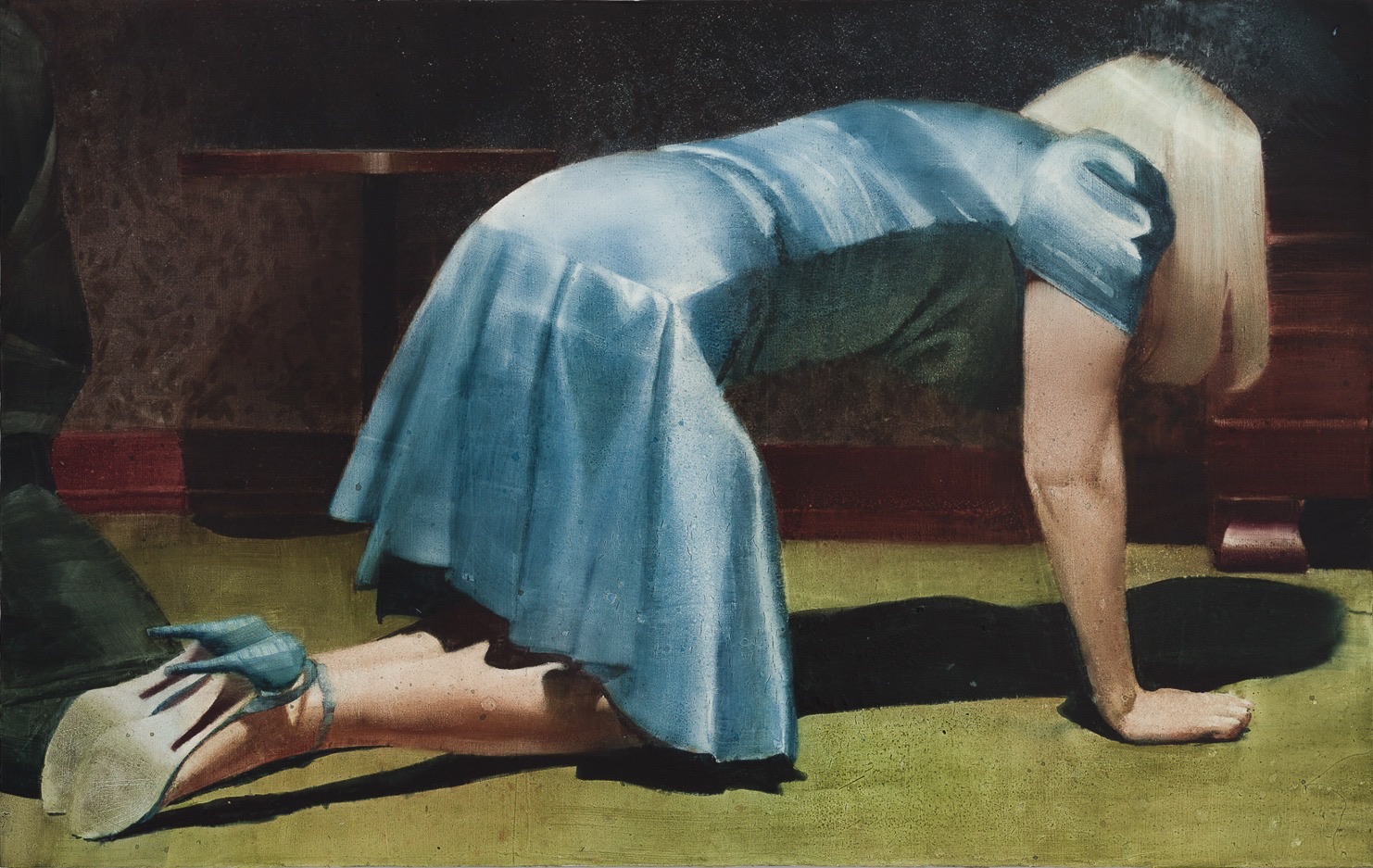
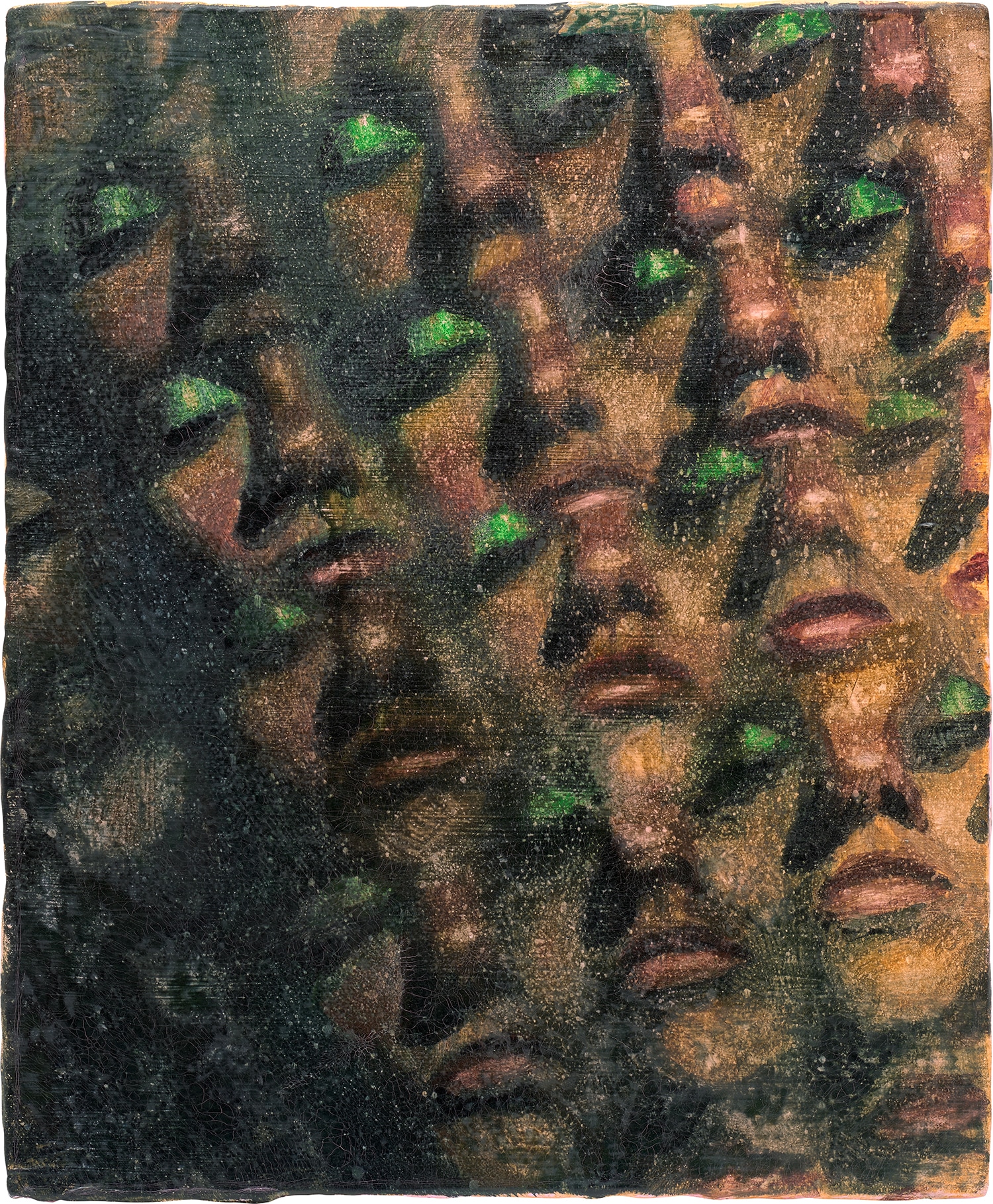
The body of work Yaeger has produced in the years since 2020 represents a particularly concentrated and assured phase of his career. Titles such as "In helpless longing to get close you must destroy what's close," completed in 2020, and "Unexpress the expressible" from 2021, signal an artist willing to use language not as description but as provocation, as a kind of counterweight to the visual experience rather than a guide to it. "Beyond beyond beyond," also from 2021, has the quality of a mantra, a rhythmic insistence that the painting will not stop at the obvious. These works sit comfortably in conversation with the great tradition of American gestural painting while refusing any simple genealogy.
They are too interior, too laced with psychological complexity, to be mistaken for exercises in style. "Sanctimony as a pastime" from 2022 and "Exhuming the Hatchet" from the same year show Yaeger at his most pointed, wielding irony and emotional candor in equal measure. The 2023 works, including "Interlocutor," "Tyranny of the rational," and "Silent Treatment," demonstrate a sustained momentum that belies any notion of late career consolidation. Instead, they suggest an artist in genuine dialogue with his own practice, questioning what painting can do, what it owes to the person standing in front of it.
Joseph Yaeger
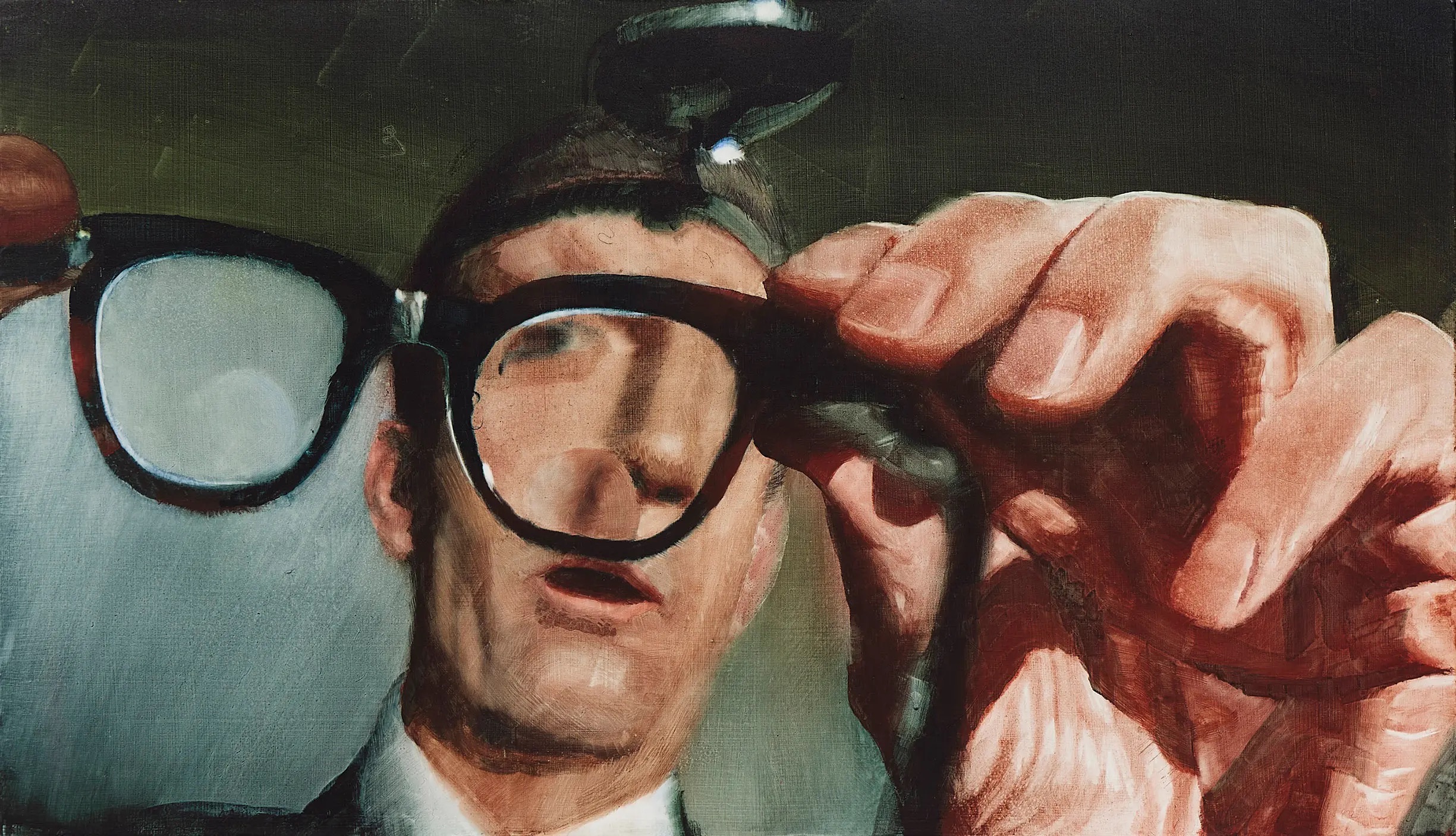
Beneath the between, 2024
"Beneath the between" from 2024 and the most recent "Existence is a life sentence" extend this inquiry with a confidence that feels hard won and entirely earned. For collectors, Yaeger's work offers a rare combination of intellectual seriousness and sensory pleasure. The paintings reward sustained looking, revealing layers of gesture, texture, and chromatic decision making that are not immediately apparent. The use of studio debris incorporated directly into the surface, as in "Existence is a life sentence," introduces an element of process autobiography, a record of the making that gives each work an additional dimension of meaning.
Collectors drawn to artists who occupy the fertile middle ground between Richard Diebenkorn and Cy Twombly, or who admire the atmospheric intensity of painters like Joan Mitchell, will find in Yaeger a practice that belongs fully to that distinguished company while remaining unmistakably its own. His work sits naturally alongside the legacy of the California School of abstract landscape and the broader tradition of American post war gestural painting. Within the broader sweep of contemporary American painting, Yaeger occupies a position that is both historically grounded and genuinely forward looking. His engagement with landscape as a psychological rather than merely topographical subject connects him to a lineage that runs from the Luminists through the Abstract Expressionists and into the present.
Joseph Yaeger
Unexpress the expressible, 2021
What distinguishes his contribution is the particular quality of interiority he brings to that tradition, a sense that the landscape being mapped is as much a landscape of memory, desire, and unresolved feeling as it is a landscape of hills, light, and weather. This dual register gives the work its lasting resonance and ensures that it continues to expand in the imagination long after the first encounter. Joseph Yaeger is an artist who has spent decades building a practice of uncommon depth and integrity, and the paintings he is making now suggest that the most significant chapters of his story are still being written. For those with the discernment to look closely at what is happening in his studio, this is a moment of genuine opportunity.
The work is serious, it is beautiful, and it is alive in the way that only painting made with total commitment can be. To collect Yaeger is to invest not only in remarkable objects but in a continuing conversation about what it means to see, to remember, and to be present in the world.