José Bedia
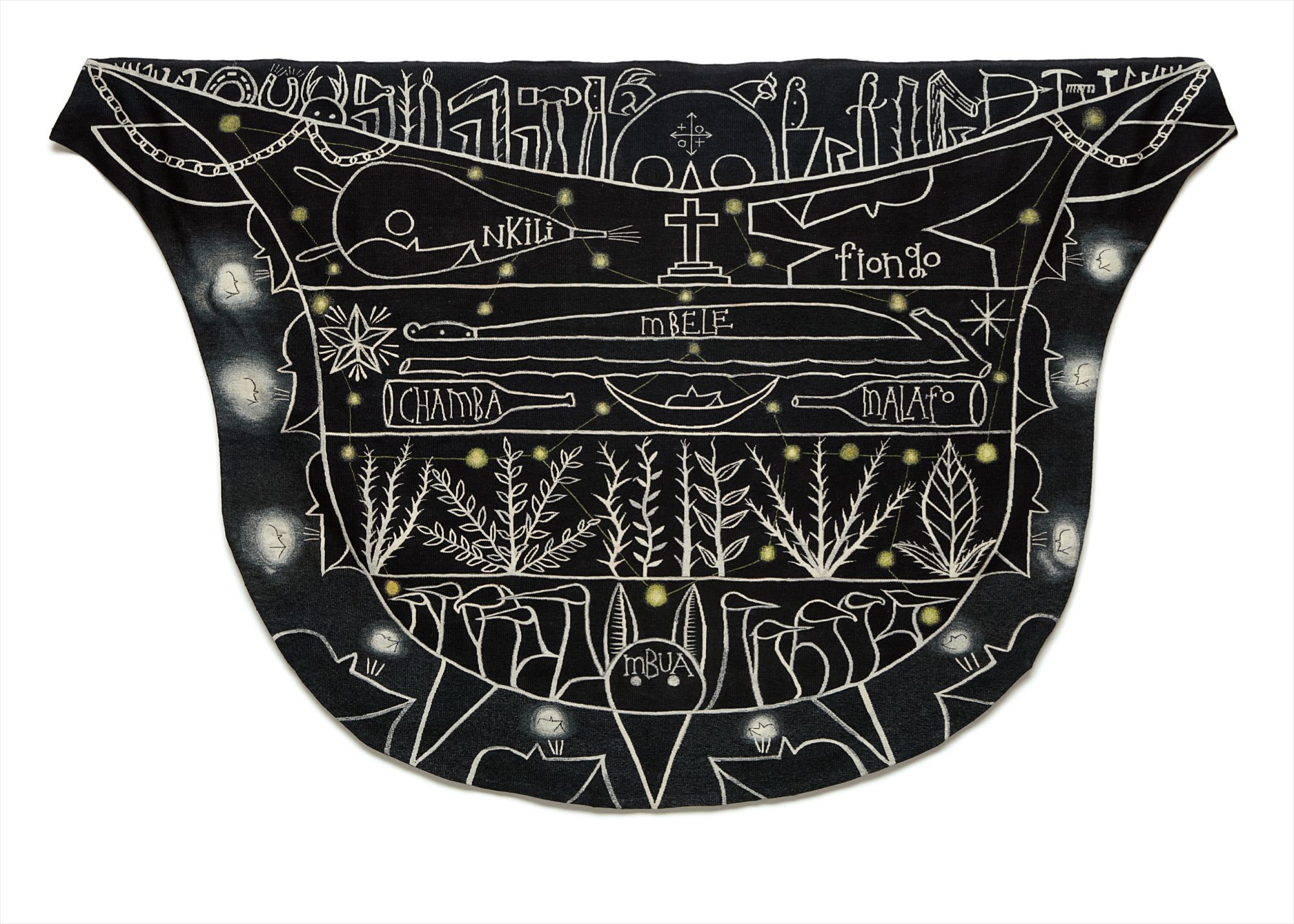
José Bedia Bridges Worlds With Sacred Power
Artist Spotlight · The Collection Editorial
“I am not illustrating religion. I am making art from the inside of a belief system, not from the outside looking in.”
José Bedia, interview with Gerardo Mosquera
In the spring of 2024, the art world turned its attention once again to José Bedia when major institutional collections across the Americas reaffirmed his standing as one of the most consequential painters and draftsmen working in the Western Hemisphere. His presence in permanent collections at the Museum of Modern Art in New York, the Smithsonian Institution, and the Museo Nacional Centro de Arte Reina Sofía in Madrid speaks to a career that has only deepened in resonance over four decades. Bedia occupies a singular position: an artist who came of age under the Cuban state and went on to reshape how the global art world thinks about spirituality, diaspora, and the sacred dimensions of everyday life. Born in Havana in 1959, Bedia showed early promise and enrolled at the Escuela Nacional de Artes, one of the revolutionary government's most ambitious cultural projects, before continuing his studies at the Instituto Superior de Arte.
José Bedia
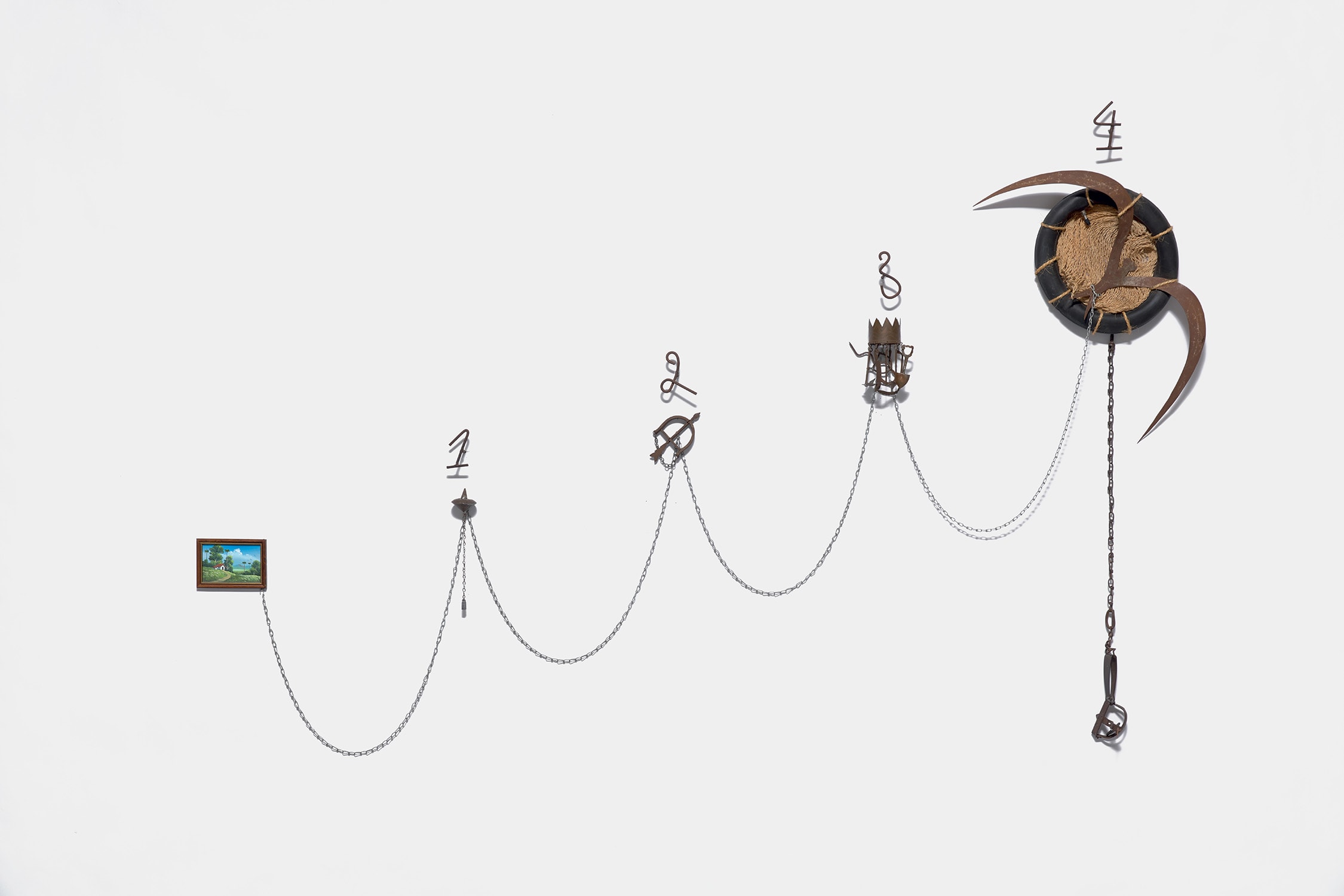
El Amor de Mi Bohio, 1992
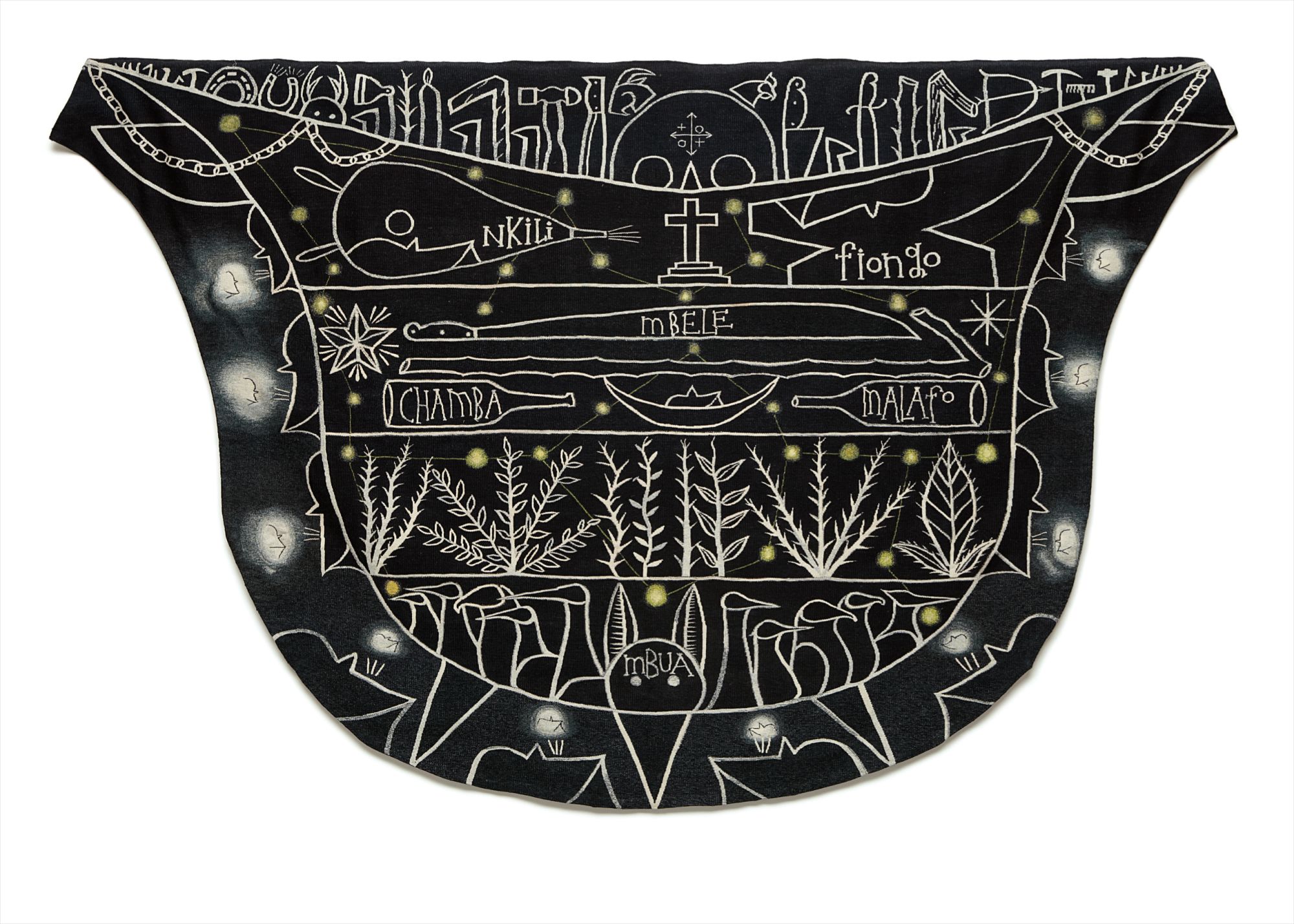
The ISA, as it became known, was a crucible for Cuban visual culture in the late 1970s and early 1980s, gathering a generation of artists who would push back against socialist realism and reach for something more primal, more personal, and more philosophically daring. It was during these years that Bedia first encountered Palo Monte, the Afro Cuban spiritual tradition rooted in Congolese cosmology, and his initiation into this practice was not peripheral to his art. It was the art's very foundation. Palo Monte gave Bedia a visual and conceptual vocabulary unlike anything being taught in the academies of Europe or North America.
The tradition is rich with mpungos, or divine forces associated with natural elements, and with the fierce protective energy of the Nkisi, sacred objects imbued with spiritual power. Bedia absorbed these teachings with a seriousness that went far beyond aesthetic borrowing. He was and remains an initiated practitioner, and his work carries the weight of that commitment. Alongside his immersion in Afro Cuban religion, he developed a parallel fascination with Native American cultures, traveling extensively across North America and later across the Pacific to engage with indigenous communities whose relationships with land, animal, and spirit mirrored the cosmological seriousness he had found in Palo Monte.
José Bedia
José Bedia
Bedia rose to international visibility as a central figure in Nueva Figuración Cuba, the movement that electrified the international art world when it burst into view in the mid 1980s. Alongside peers including Flavio Garciandía and Ricardo Rodríguez Brey, Bedia demonstrated that Cuban artists were not merely responding to local political circumstances but were producing work of global philosophical ambition. His participation in the landmark 1981 exhibition Volumen I at the Centro de Arte Internacional in Havana is widely regarded as a generational turning point. That exhibition announced a new Cuban art that was critical, hybrid, and unapologetically complex.
Bedia's contribution, already marked by the bold graphic linearity and symbolic density that would define his mature work, announced an artist who had found his voice early and completely. His signature works reward sustained attention. "Madre de Guerra (Mother of War)," made in 1989 in charcoal on paper, is a commanding example of how Bedia transforms the elemental simplicity of line into an experience that feels both ancient and urgent. The figure at the center radiates a protective ferocity drawn directly from Afro Cuban spiritual iconography, rendered with a draftsmanship that is spare and powerful rather than decorative.
José Bedia
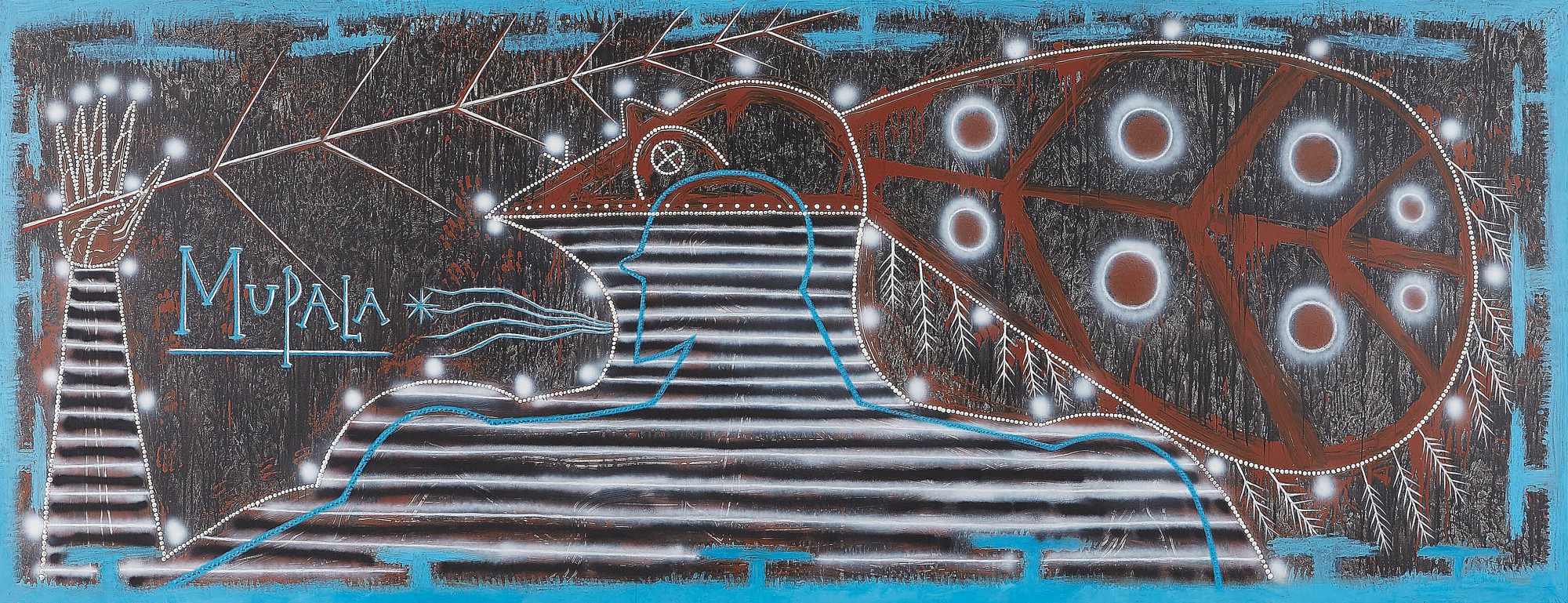
Mupala, 2007
"El Amor de Mi Bohío" from 1992 is something altogether more sculptural, an installation work incorporating aluminum, copper, rubber, rope, steel, chalk, and found objects, demonstrating that Bedia's practice resists the comfort of a single medium. The bohío, the traditional thatched dwelling of Cuba's original Taíno inhabitants, becomes in his hands a meditation on shelter, memory, and belonging that carries tremendous emotional force. "El Precio" from 1993, executed in gouache and ink on paper, is among the most sought after works from his most critically celebrated period, a work in which the cost of survival, migration, and transformation is rendered with a moral seriousness that never tips into didacticism. For collectors, Bedia's work represents one of the more compelling opportunities in Latin American art for several reasons.
His market has grown steadily rather than speculatively, which means that works acquired now are entering collections at a moment of institutional validation rather than hype. His output across drawing, painting, and mixed media installation is genuinely varied, offering entry points at different scales and price levels. The works on paper, particularly those from the late 1980s and early 1990s, are especially prized for their historical importance and their intimacy. His larger canvas works, including pieces such as "Mupala" from 2007 with its vivid acrylic and spray paint on canvas, demonstrate how Bedia evolved without abandoning the graphic clarity that is his most recognizable attribute.
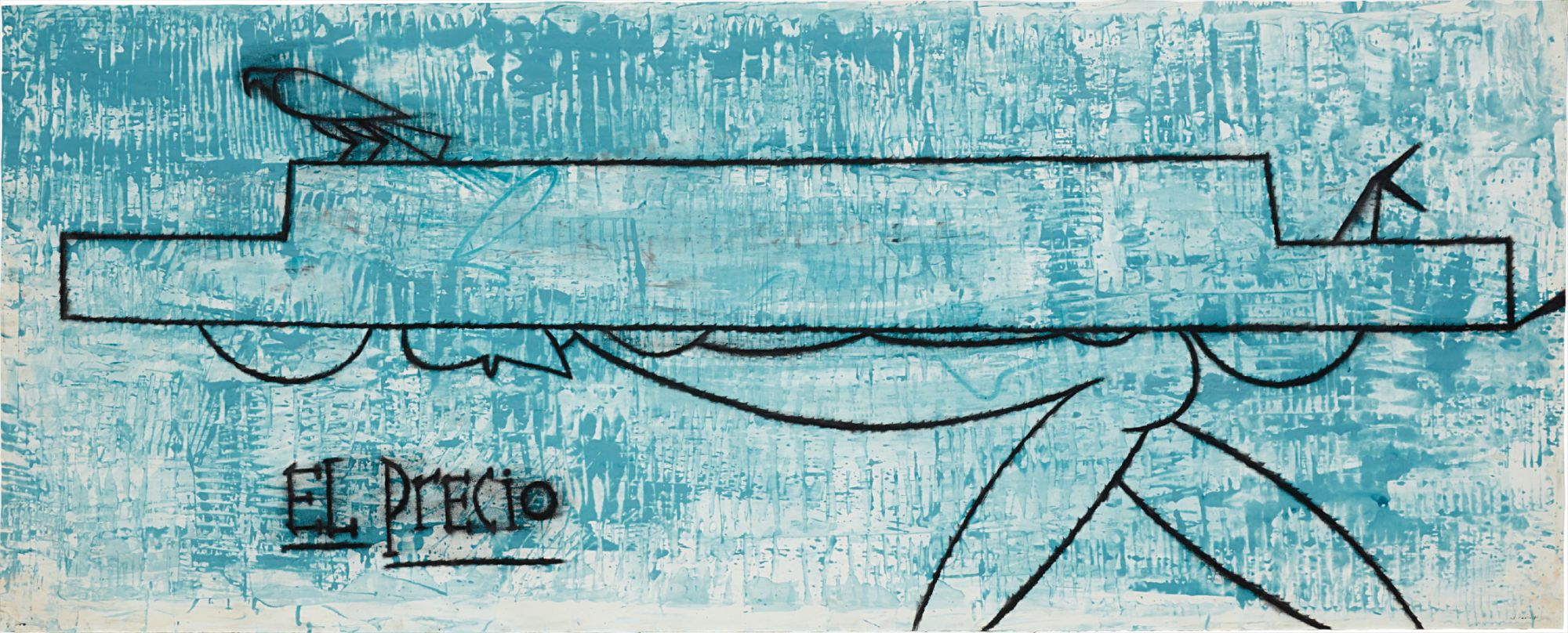
José Bedia
El precio, 1993
Works on amate paper, including the luminous "Enseñanzas de la Roca" with its oil stick, white chalk, and pastel, reflect his ongoing dialogue with indigenous Mexican material culture and carry a warmth and tactile richness that photographs barely suggest. Collectors who engage seriously with this body of work consistently remark that the works hold their presence differently in person, that there is something in them that functions almost as the sacred objects they reference. Within the broader arc of Latin American art history, Bedia belongs in conversation with artists such as Ana Mendieta, whose work similarly drew on Santería and Afro Cuban spiritual traditions to forge a deeply personal and politically resonant practice. His relationship to magical realism in the visual arts also connects him to the Colombian master Alejandro Obregón and to the tradition of myth laden figuration that runs through so much of the hemisphere's most vital art.
In the global context, his dialogue with non Western cosmologies places him alongside artists like David Hammons and Jimmie Durham, figures who refused to treat indigenous and diasporic knowledge as raw material and insisted instead on its philosophical centrality. What Bedia has built over more than four decades is a body of work that honors its sources without being imprisoned by them. He left Cuba in 1990, living first in Mexico City before eventually settling in Miami, and that journey of migration gave his work a new layer of meaning that he has never stopped mining. The experience of displacement, of carrying a spiritual practice and a visual tradition across borders, of finding the sacred in the provisional, informs every line he draws.
Institutions, curators, and collectors who have followed his career closely share a sense that his work is still revealing itself, that each new series adds dimension to what came before. That quality, the sense that a body of work is a living conversation rather than a closed archive, is among the rarest and most precious things an artist can offer. Bedia offers it generously and with extraordinary skill.
Explore books about José Bedia
José Bedia: Prints
Lowery Stokes Sarbanes
José Bedia
Gerardo Mosquera
Exiles, Diasporas, and Detours: Latin American Conceptualism Today
Coco Fusco
José Bedia: Santa Barbara
Holly Block
Cuba: Art and History, 1868-Present
Juan A. Martínez