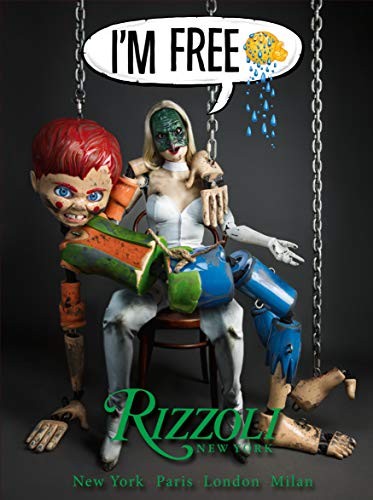
Jordan Wolfson
Jordan Wolfson Makes the Uncomfortable Utterly Irresistible
Artist Spotlight · The Collection Editorial
When Jordan Wolfson's animatronic sculpture 'Female Figure' was installed at David Zwirner Gallery in New York in 2014, it stopped the art world in its tracks. The work, a lifelike female figure suspended by chains and capable of making direct, unsettling eye contact with viewers through facial recognition technology, became one of the most discussed and debated works of the decade. Critics scrambled for language adequate to describe it. Collectors fought for access.
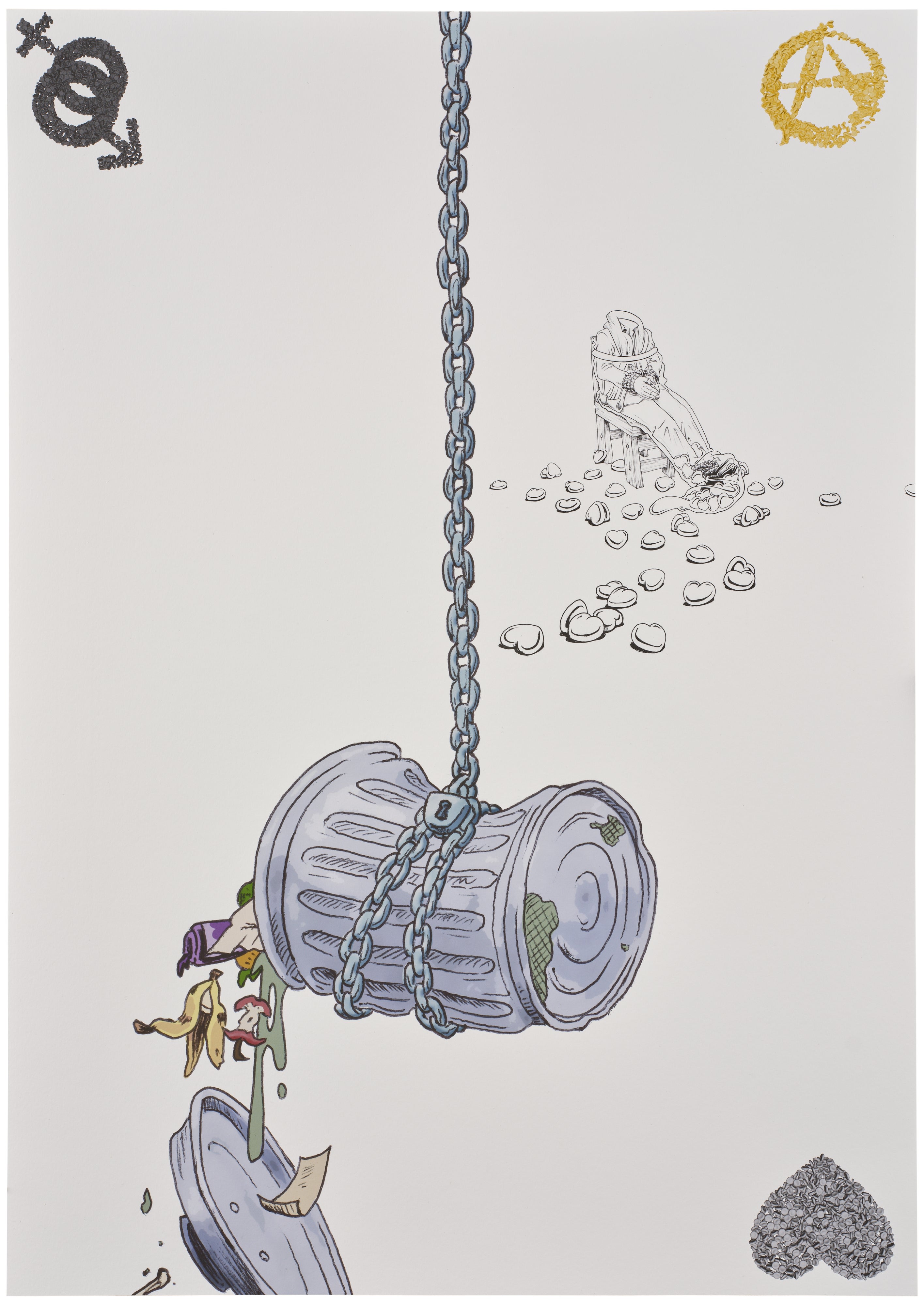
Jordan Wolfson
inkjet on canvas board, 2014
And Wolfson, then in his early thirties, was confirmed as one of the most vital and fearless artists working anywhere in the world. Born in New York in 1980, Wolfson grew up immersed in the visual and cultural noise of American life at the end of the twentieth century. He studied at the School of Visual Arts in New York before completing his MFA at the Städelschule in Frankfurt, Germany, a crucible of contemporary European thought and artistic experimentation. That transatlantic formation proved formative, giving Wolfson both the pop cultural fluency of his American upbringing and the rigorous conceptual grounding of the European art academy.
He returned to New York carrying a unique synthesis of influences, from the seductive surfaces of advertising and entertainment to the more demanding traditions of institutional critique and postmodern theory. His early works announced a singular sensibility. The video pieces he made in the late 2000s and early 2010s, including inkjet works and video installations, showed an artist deeply preoccupied with the mechanics of desire and the way images move through culture. Works on paper and vellum from this period, including pieces from 2010 and 2011, already demonstrated his instinct for finding tension between beauty and unease, between the alluring surface of an image and the disturbing undercurrents beneath it.

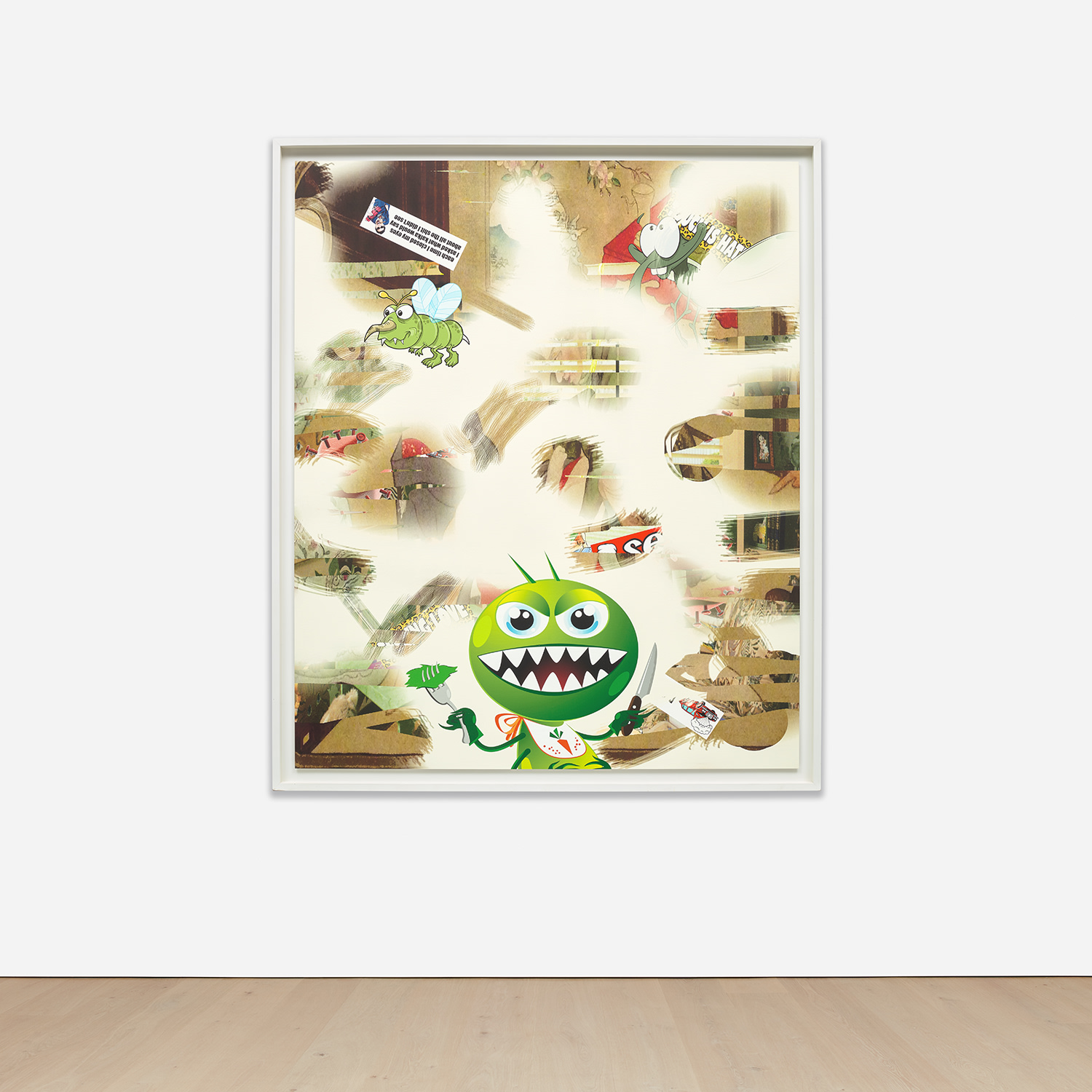
Jordan Wolfson
inkjet print, in artist's frame, 2014
'Neverland,' a four minute video work, captures this duality with particular elegance, drawing on the mythology of Michael Jackson to explore innocence, corruption, and the American imagination. These early works are now recognized as essential documents of his developing practice and are sought after by collectors who appreciate the arc of an important career. By 2013, with works like 'Fresh, Love, Tea Bag,' Wolfson was operating with full confidence, deploying text, image, and material in combinations that felt both immediately accessible and deeply strange. His command of scale, surface, and provocation distinguished him sharply from peers who might use shock as an end in itself.
For Wolfson, discomfort is never gratuitous. It is the mechanism by which he forces genuine attention, insisting that viewers stay present with images and ideas they might otherwise scroll past or dismiss. This commitment to engagement over comfort is precisely what has made his work so enduring and so relevant to a culture increasingly numbed by the velocity of media. The arrival of 'Real Violence' at the Whitney Biennial in 2017 marked another threshold moment.
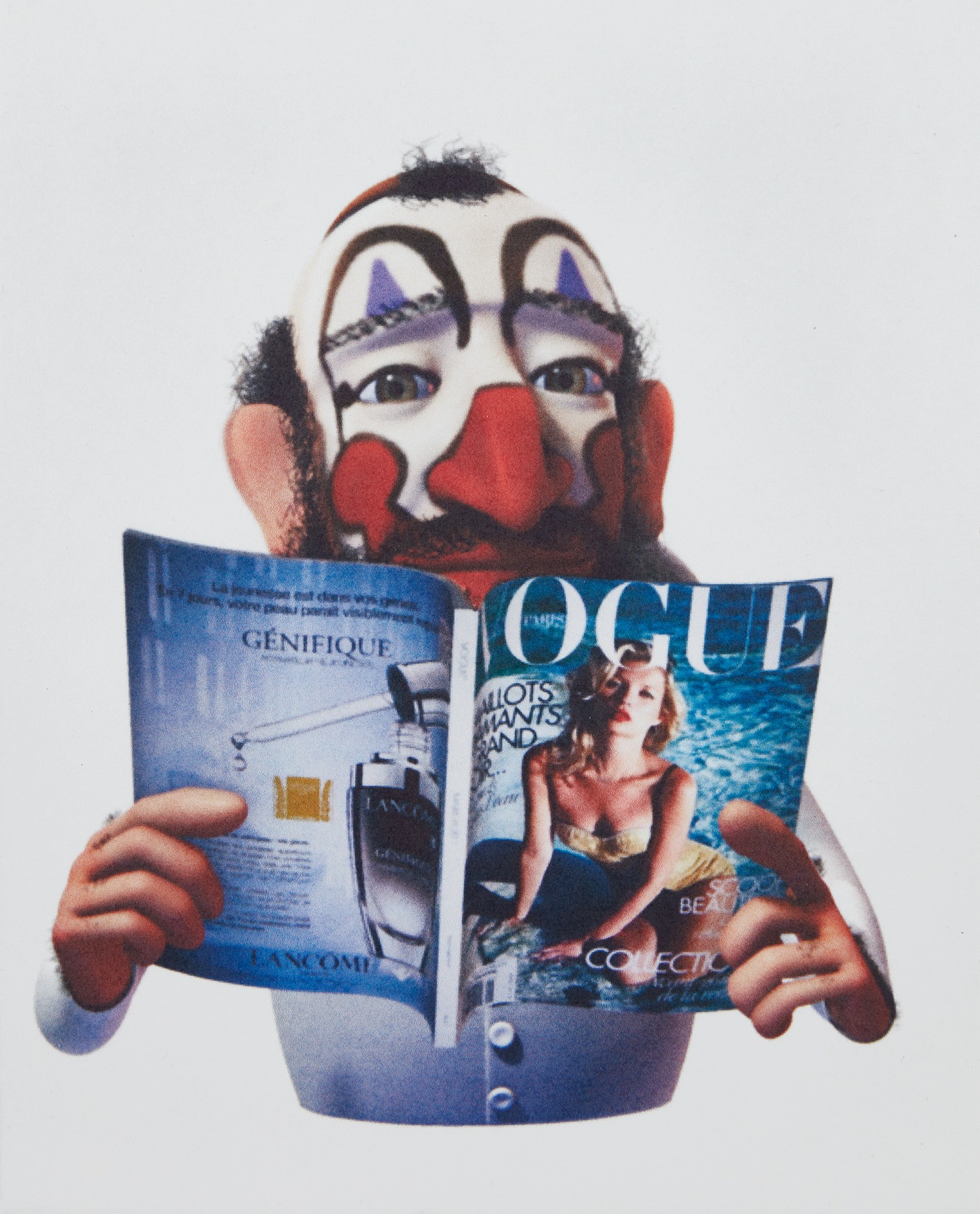
Jordan Wolfson
Jordan Wolfson
The virtual reality work placed viewers inside a scene of extreme physical violence, making them witnesses in a way that flat screens and gallery walls had never quite achieved. The work generated fierce debate about ethics, empathy, and the responsibilities of art. But it also confirmed Wolfson's position at the forefront of artists exploring how emerging technologies could be turned toward the most urgent and difficult questions of human experience. His willingness to work at the outer edge of what audiences and institutions can tolerate, while remaining anchored to genuine artistic intelligence, is what separates him from the merely provocative.
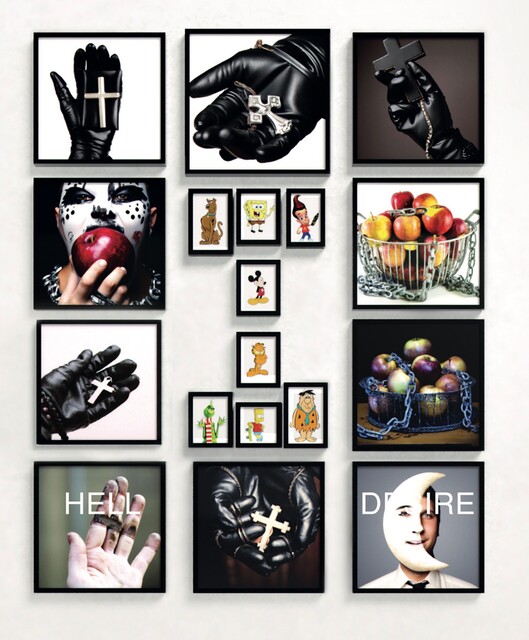
His 2023 inkjet works, an 'Untitled' set of eighteen fine art prints on Epson glossy paper, show an artist continuing to evolve, bringing the same intensity of vision to intimate printed works as to large scale technological installations. For collectors, Wolfson represents a compelling proposition. His works exist across a range of media and scales, from works on paper and inkjet prints to major sculptural and video installations, meaning that entry points exist for collectors at many levels of engagement. The early works on vellum and paper, including pieces from 2010 through 2014, offer a chance to hold a piece of the foundational chapter of a career that is still very much in motion.
Jordan Wolfson
Untitled, 2023
Wolfson is represented by David Zwirner, one of the most respected and strategically astute galleries in the world, which has consistently supported and amplified the reach of his practice. His work has entered major museum collections and been shown at institutions including the Stedelijk Museum in Amsterdam and the Kunsthalle Basel, lending institutional weight to what is also a very active and liquid market. In the context of art history, Wolfson sits at a fascinating intersection. He shares with Paul McCarthy a taste for the abject and the carnivalesque, and with Cindy Sherman an interest in constructed identity and the performance of the body.
His use of technology to explore desire and violence recalls the concerns of artists like Tony Oursler and Nam June Paik, while his engagement with American pop culture and its darker implications connects him to a lineage running from Andy Warhol through Richard Prince. Yet Wolfson is entirely his own phenomenon. No other artist of his generation has so consistently found ways to make the digital and the physical, the seductive and the horrifying, speak to each other with such force and precision. What makes Wolfson matter today, in the mid 2020s, is precisely his refusal to look away.
In a cultural moment defined by the saturation of images, by algorithmic desire and the spectacle of violence rendered ambient, Wolfson's insistence on making viewers feel something real, even something unwanted, is an act of profound artistic courage. His practice asks us to examine our own appetites and our own complicity in the images we consume. That is not a comfortable invitation, but it is an essential one. For collectors, institutions, and audiences alike, Jordan Wolfson is an artist whose work will only deepen in resonance as the world he diagnoses continues to unfold around us.
Featured Works
Explore books about Jordan Wolfson