John Ruskin
1
Works
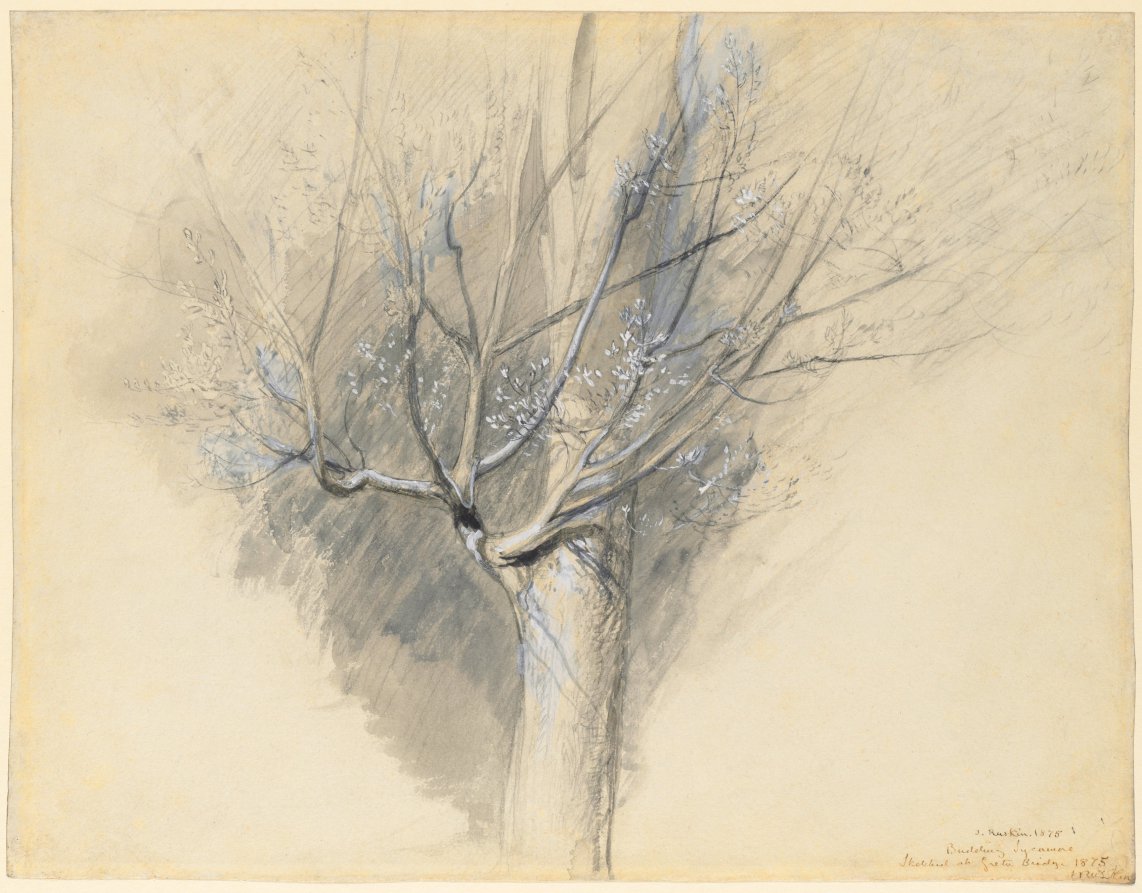
John Ruskin was a British art critic, watercolorist, and social thinker who became one of the most influential voices in Victorian art and architecture. Though primarily known for his groundbreaking art criticism and writings on aesthetics, Ruskin was also an accomplished visual artist who produced thousands of delicate watercolors, detailed architectural drawings, and meticulous studies of natural forms. His artistic practice was inseparable from his critical philosophy, which emphasized truth to nature, careful observation, and the moral dimensions of art-making. His watercolors of Alpine landscapes, Venetian architecture, and botanical specimens demonstrate remarkable technical skill and an almost scientific precision in rendering light, atmosphere, and geological detail. Ruskin's artistic output served both as personal exploration and as teaching tools for his theories about art and perception. His drawings of Gothic architecture, particularly his studies of Venice documented in works supporting his seminal text "The Stones of Venice" (1851-53), combined artistic sensitivity with archaeological precision. He championed the Pre-Raphaelite Brotherhood and J.M.W. Turner, whose work he defended in "Modern Painters" (1843-60), arguing for their faithful observation of nature against academic conventions. His own watercolors of clouds, rock formations, and architectural details reflected his belief that great art emerged from patient, loving study of the natural world. Beyond his artistic practice, Ruskin's influence on the visual arts was profound and far-reaching. He served as the first Slade Professor of Fine Art at Oxford University and his writings shaped aesthetic discourse for generations. His advocacy for craft, honest labor, and the integration of art with daily life influenced the Arts and Crafts Movement and figures like William Morris. Major collections of his artwork are held at the Ashmolean Museum, Oxford, and the Ruskin Library at Lancaster University. His legacy extends beyond art criticism to encompass social reform, environmental thought, and educational theory, making him one of the Victorian era's most polymathic figures.
Spotted by
Artists in conversation