John Chiara
Light, Place, and the Luminous Singular Moment
Artist Spotlight · The Collection Editorial
There is a particular kind of attention that John Chiara brings to a city street, one that most of us would walk down without a second thought. He arrives not with a handheld camera or a digital sensor, but with an entire vehicle, a flatbed truck retrofitted into a room sized camera obscura, its lens pointed at the world with the patience of someone who understands that the best images are never hurried. In recent years, Chiara's work has drawn sustained attention from institutions and serious collectors alike, appearing in gallery exhibitions across the United States and earning a devoted following among those who understand that what he makes is not a photograph in any conventional sense, but something closer to a painting produced by light itself. John Chiara was born in 1971 and has spent much of his adult life rooted in San Francisco, a city that has shaped his sensibility as profoundly as any formal training.
John Chiara
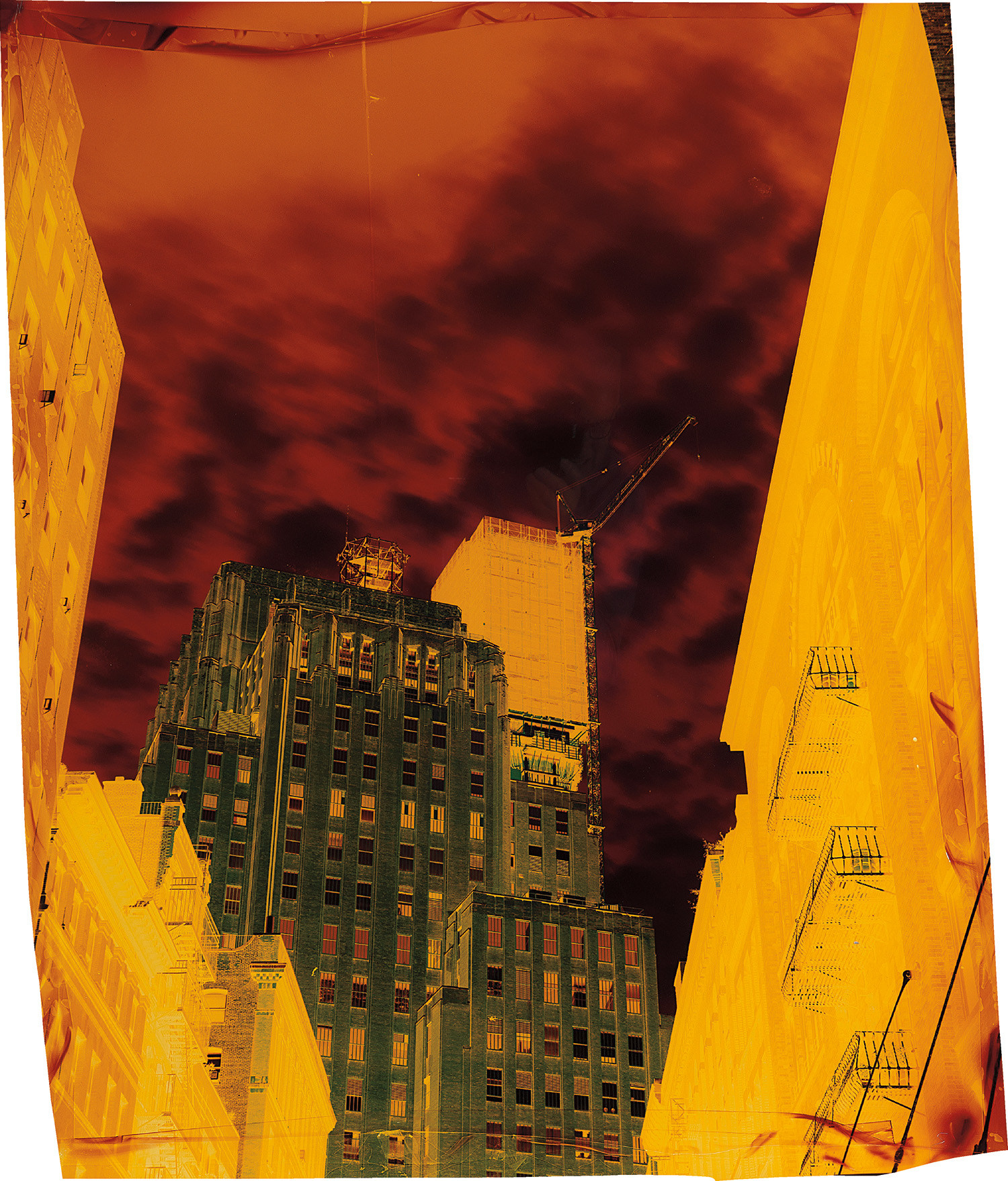
Greenwich at Jay
The Bay Area's particular quality of light, its maritime fog, its steep hills and layered neighborhoods, its tension between the natural and the built, all of this has seeped into his practice in ways that feel both deliberate and inevitable. Chiara studied photography with the seriousness of someone who wanted to understand the medium from the inside out, and it was that deep engagement with photographic history and chemistry that eventually led him away from the camera's conventional form and toward something altogether more radical. The breakthrough in Chiara's practice came when he began constructing his own cameras, not small or portable ones, but massive devices built onto the beds of trucks, capable of receiving photosensitive paper large enough to fill a wall. The logic is straightforward but the execution is extraordinary.
He drives these mobile darkrooms to a chosen location, positions the vehicle, opens the lens, and allows light to fall directly onto the photosensitive paper inside. There is no negative. There is no enlargement. The image that emerges is the image, singular and unrepeatable, a direct trace of one specific place at one specific moment in time.
John Chiara
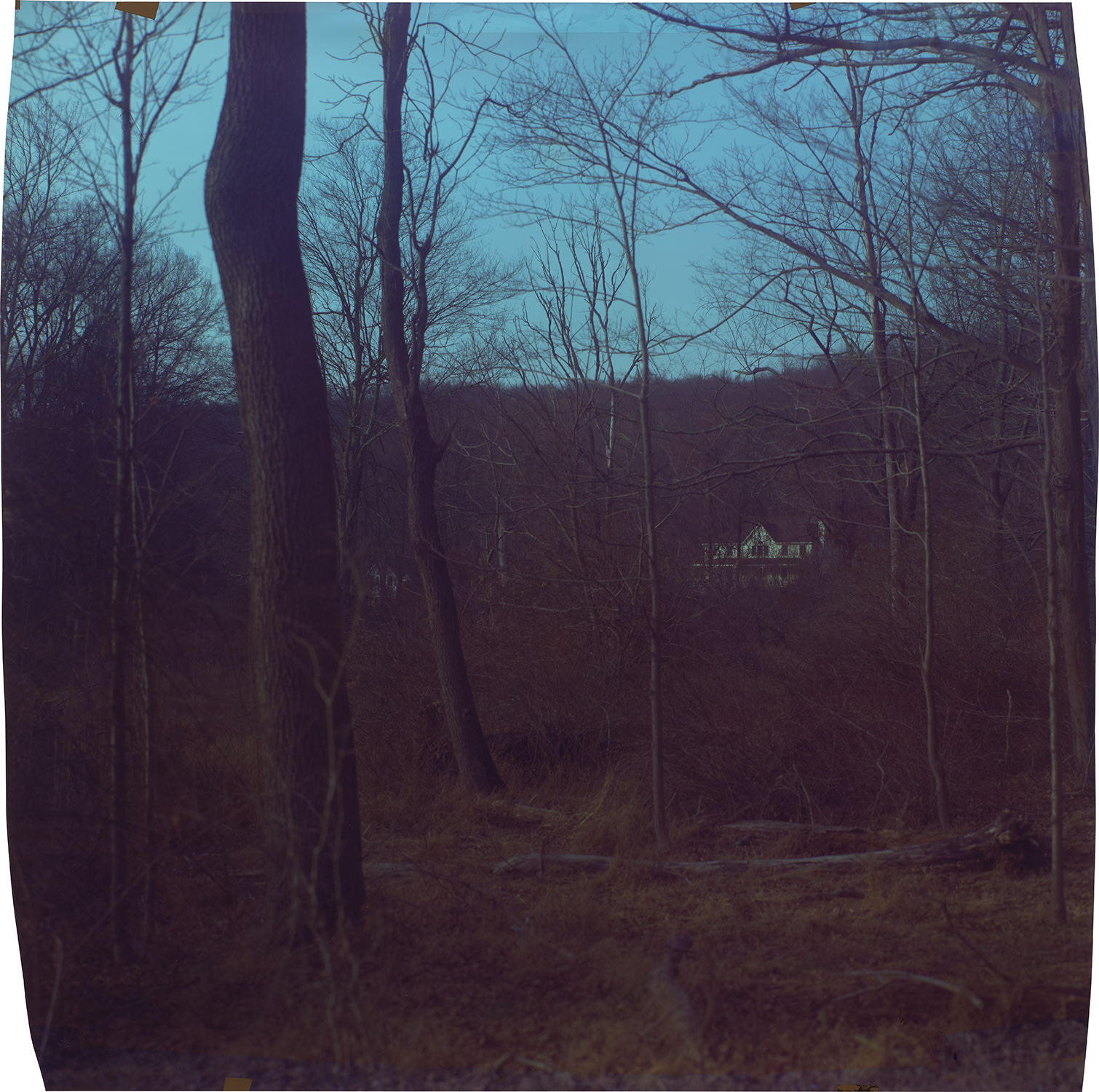
Hunterbrook at Baptist
It is a process that collapses the distance between the photograph and the world it records, and the results carry an emotional weight that purely technical photographs rarely achieve. The works themselves are dye destruction prints, a process associated with materials like Cibachrome and Ilfochrome that produces images of extraordinary color saturation and archival longevity. But Chiara's prints bear little resemblance to the glossy precision that those materials typically suggest. His images are atmospheric and strange, suffused with color shifts that range from the subtly unexpected to the genuinely otherworldly.
Blues deepen toward violet. Greens push toward gold. Edges soften in ways that suggest memory rather than documentation. Because the paper curves slightly inside the camera, the resulting image is never perfectly flat, introducing a gentle distortion that gives his streetscapes and landscapes a quality somewhere between the photographic and the painterly.
John Chiara
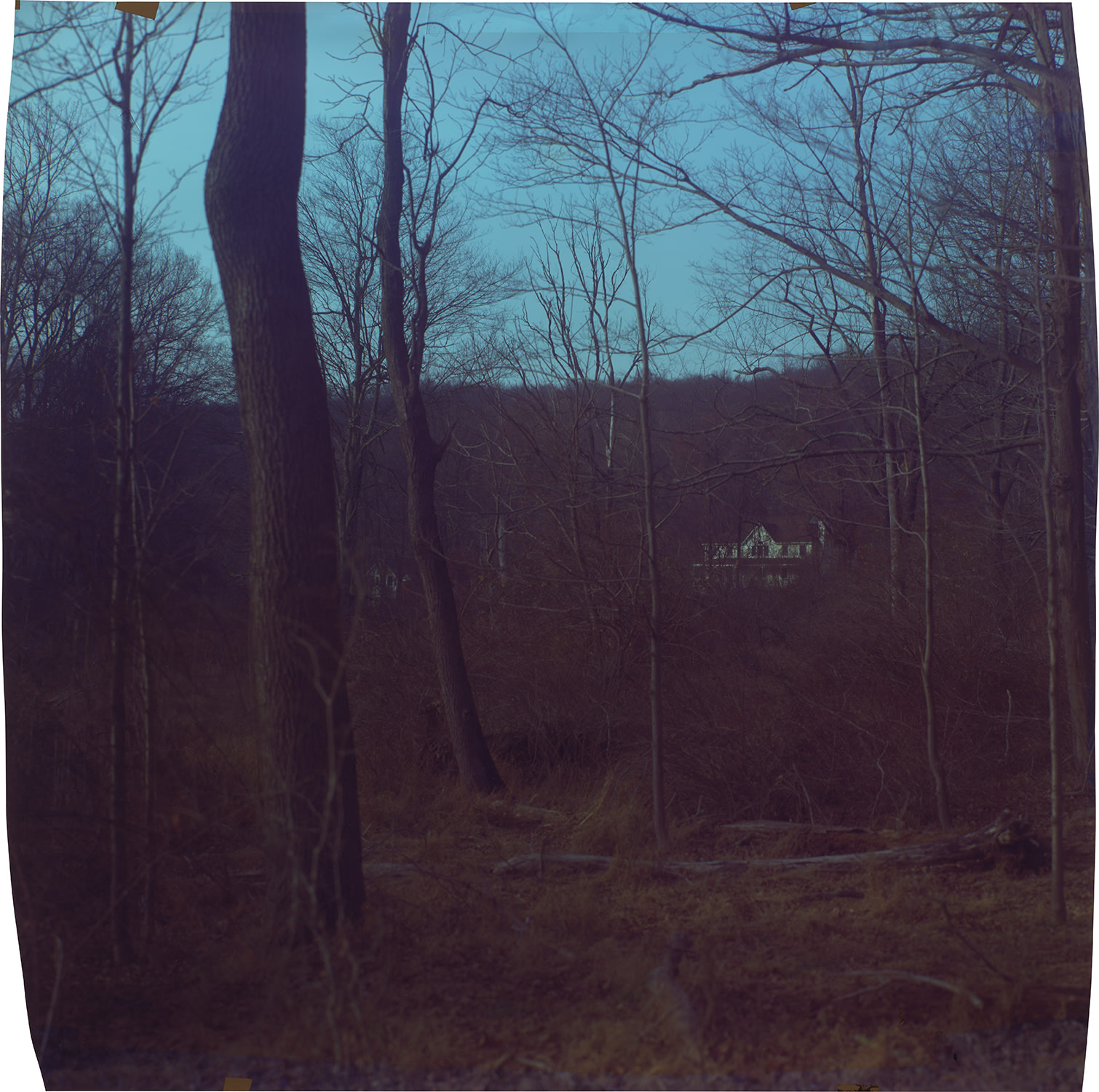
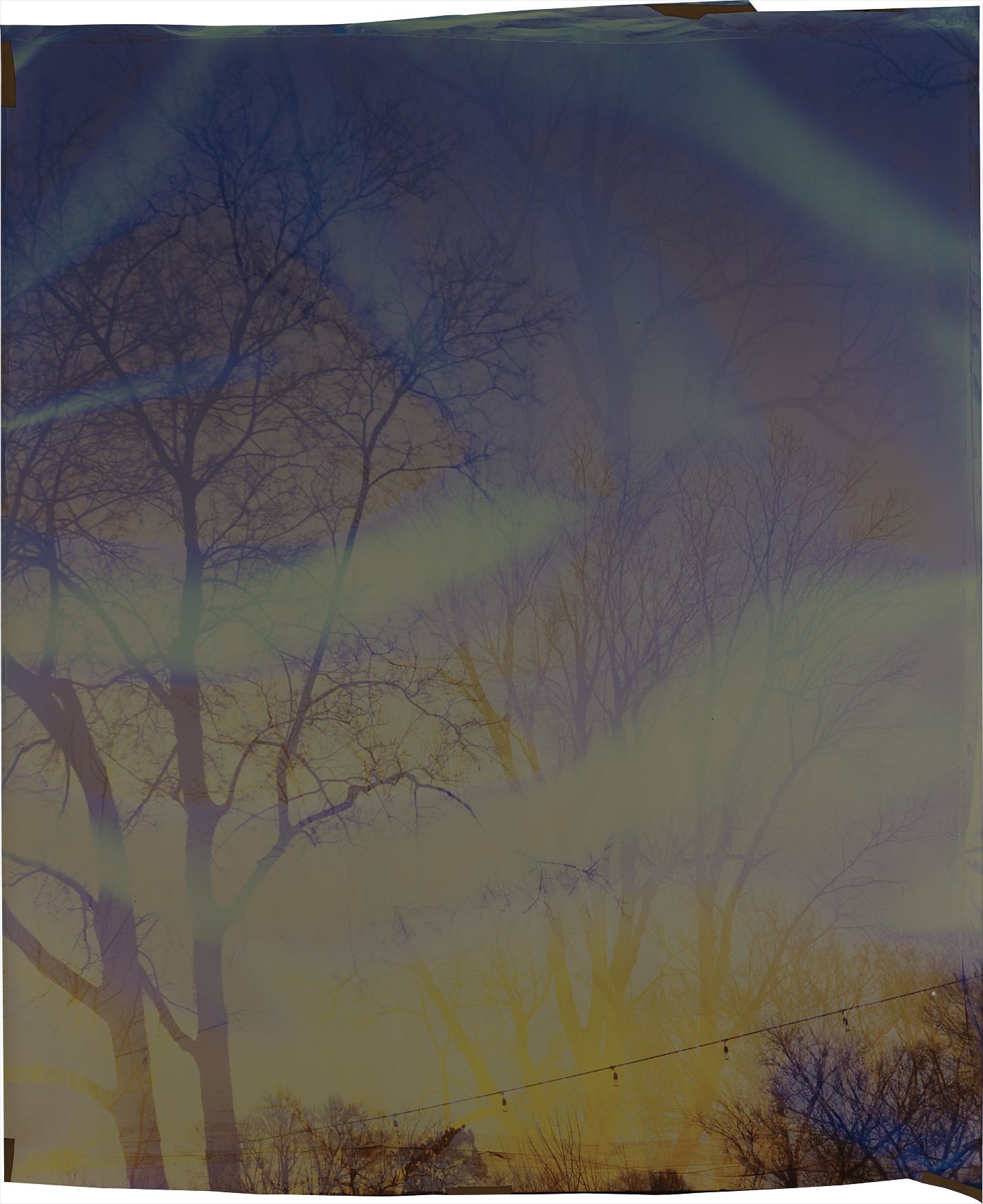
Old River Road at Seven Chimneys
Works like "Greenwich at Jay" and "Hunterbrook at Baptist" exemplify this sensibility, taking named intersections and roads as their titles in a way that honors the specificity of place while the images themselves transform that place into something luminous and slightly dream like. "Old River Road at Seven Chimneys" and "Wolcott at Craig House" carry that same documentary impulse married to a visual result that is anything but documentary. Chiara has also extended his practice beyond San Francisco through dedicated projects in other cities, most notably his Los Angeles Project, which produced a remarkable body of work responding to that city's very different light and geography. "Grand View: Park Row: Angels Point, from the Los Angeles Project" is among the works that demonstrate how adaptable his process is, and how sensitively attuned he is to the character of different urban environments.
Los Angeles, with its harder light, its sprawl, and its complicated relationship to the image, presented a different kind of challenge, and Chiara met it with the same methodical calm that defines his entire approach. The resulting works feel distinctly of that city without being predictable about it. From a collecting perspective, what makes Chiara's work exceptional is also what makes it genuinely rare. Because each work is a unique object produced by a one of a kind process, there is no edition, no second example, no alternative version.
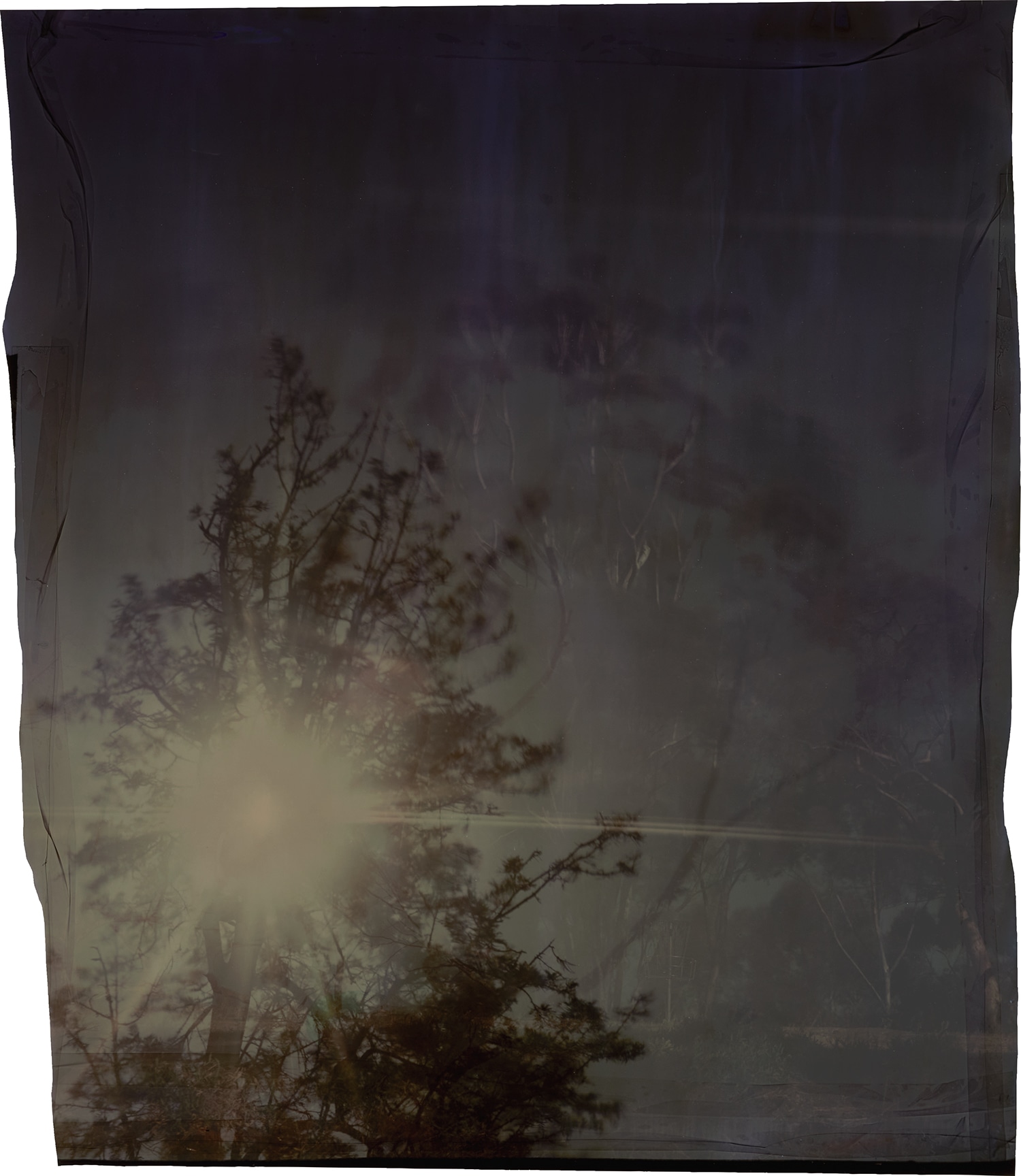
John Chiara
Grand View: Park Row: Angels Point, from the Los Angeles Project
A collector who acquires a Chiara acquires something that exists nowhere else in the world, a fact that carries both philosophical and practical weight. The works also reward sustained looking in a way that printed reproductions cannot adequately communicate. The color relationships, the surface quality of the paper, the slight topography of the curved image, these are qualities that only fully reveal themselves in person. Collectors drawn to artists who work at the intersection of photography and painting, or who are interested in the traditions of the unique photographic object, find Chiara's practice deeply compelling.
In the broader context of photographic art history, Chiara belongs to a lineage of artists who have questioned what a photograph is and what it can do. The tradition of the photogram, from Man Ray and László Moholy Nagy to the more recent work of artists like Floris Neusüss, established the idea of the camera less or camera altered image as a serious artistic mode. Closer to Chiara's own time and sensibility, artists like Sally Mann and Abelardo Morell have each explored how the physical and chemical conditions of image making can become part of the image's meaning. Morell in particular, with his long running series of camera obscura projections, offers an instructive parallel, though Chiara's approach produces objects rather than documentation, and his commitment to the unique print marks a distinct philosophical position.
What John Chiara is ultimately making is an argument about time and place, about what it means to be present somewhere and to record that presence with care. In an era of instant, effortless, and infinitely reproducible imagery, his slow, physical, irreducible process feels not like nostalgia but like a corrective. Each work required him to be somewhere, to wait, to commit. Each work carries that commitment in its surface.
For collectors, for institutions, and for anyone who cares about what photography can still become, that matters enormously.