John Baldessari
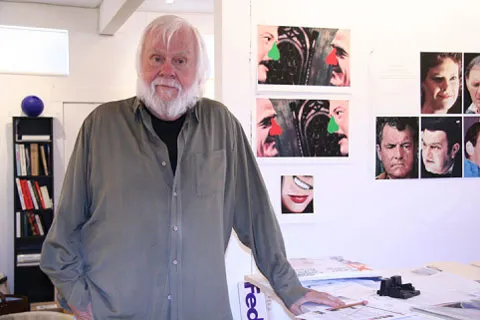
John Baldessari: The Art of Seeing Everything
Artist Spotlight · The Collection Editorial
“Art is not about itself but the attention we bring to it.”
John Baldessari
In the years since John Baldessari's passing in January 2020, the art world has continued to reckon with just how thoroughly he rewired our understanding of what images, words, and ideas can do together. Major retrospectives at institutions including the Tate Modern in London and the Museum of Contemporary Art in Los Angeles had already cemented his canonical status during his lifetime, but the ongoing auction activity surrounding his prints and mixed media works tells a vivid story of a market that shows no sign of cooling. His estate remains active, his influence radiates through generations of younger artists, and collectors who understood his vision early find themselves holding works of quietly extraordinary cultural weight. Baldessari was born in 1931 in National City, California, a working class border community just south of San Diego.
John Baldessari
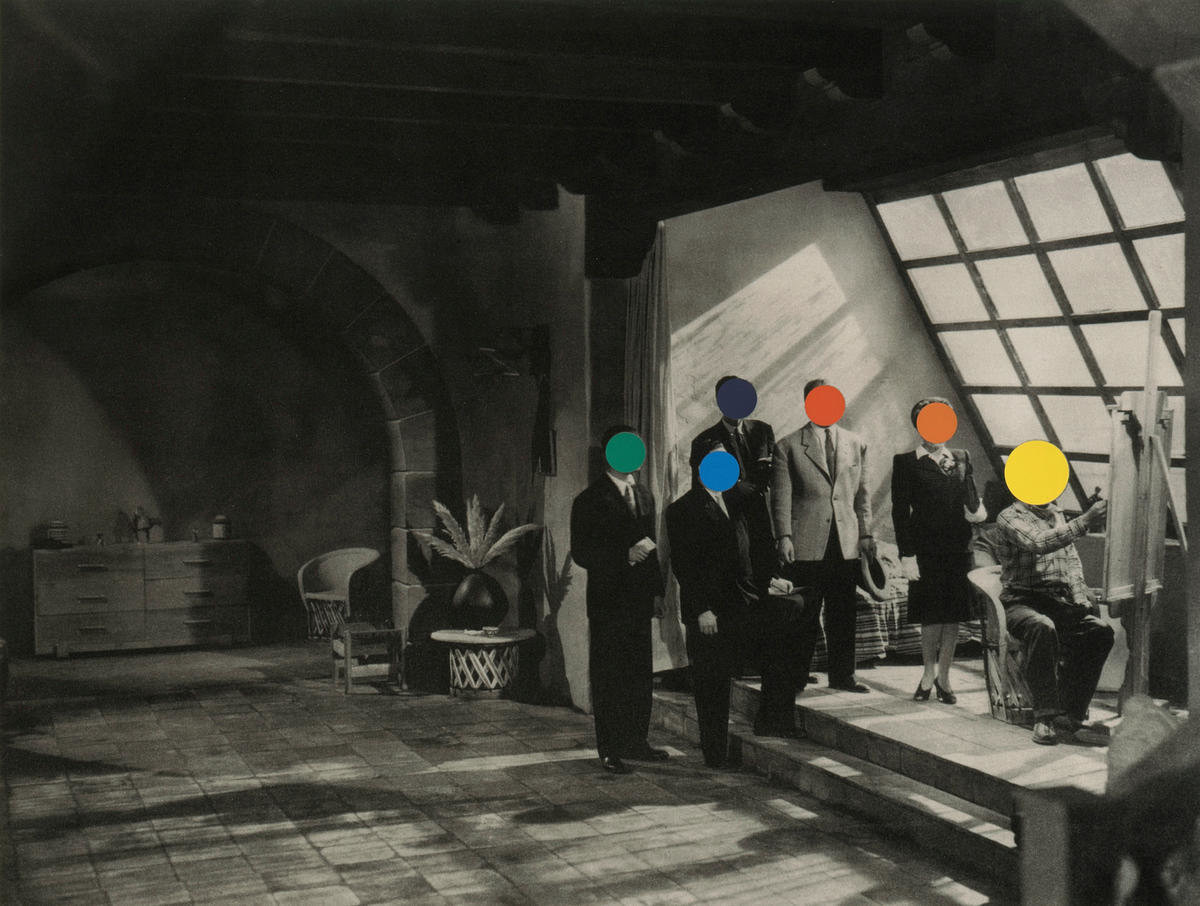
Studio, 1988
The geography mattered. Growing up at the edge of the American Southwest, between the tidiness of suburban aspiration and the raw openness of the landscape, gave him an instinct for the gap between what things look like and what they mean. He studied at San Diego State College and later at the University of California, Otis Art Institute, and the Chouinard Art Institute, moving through the established channels of postwar American art education while quietly developing a skepticism toward everything those channels took for granted. His early career as a painter was competent, earnest, and by his own admission insufficient.
What changed everything was language. In the early 1960s, Baldessari began incorporating text directly into painted canvases, commissioning sign painters to render banal phrases and instructional statements alongside ordinary photographic imagery. This move, seemingly simple, was philosophically detonating. It placed fine art in direct conversation with advertising, with instruction manuals, with the entire visual vernacular of American commercial culture.
John Baldessari
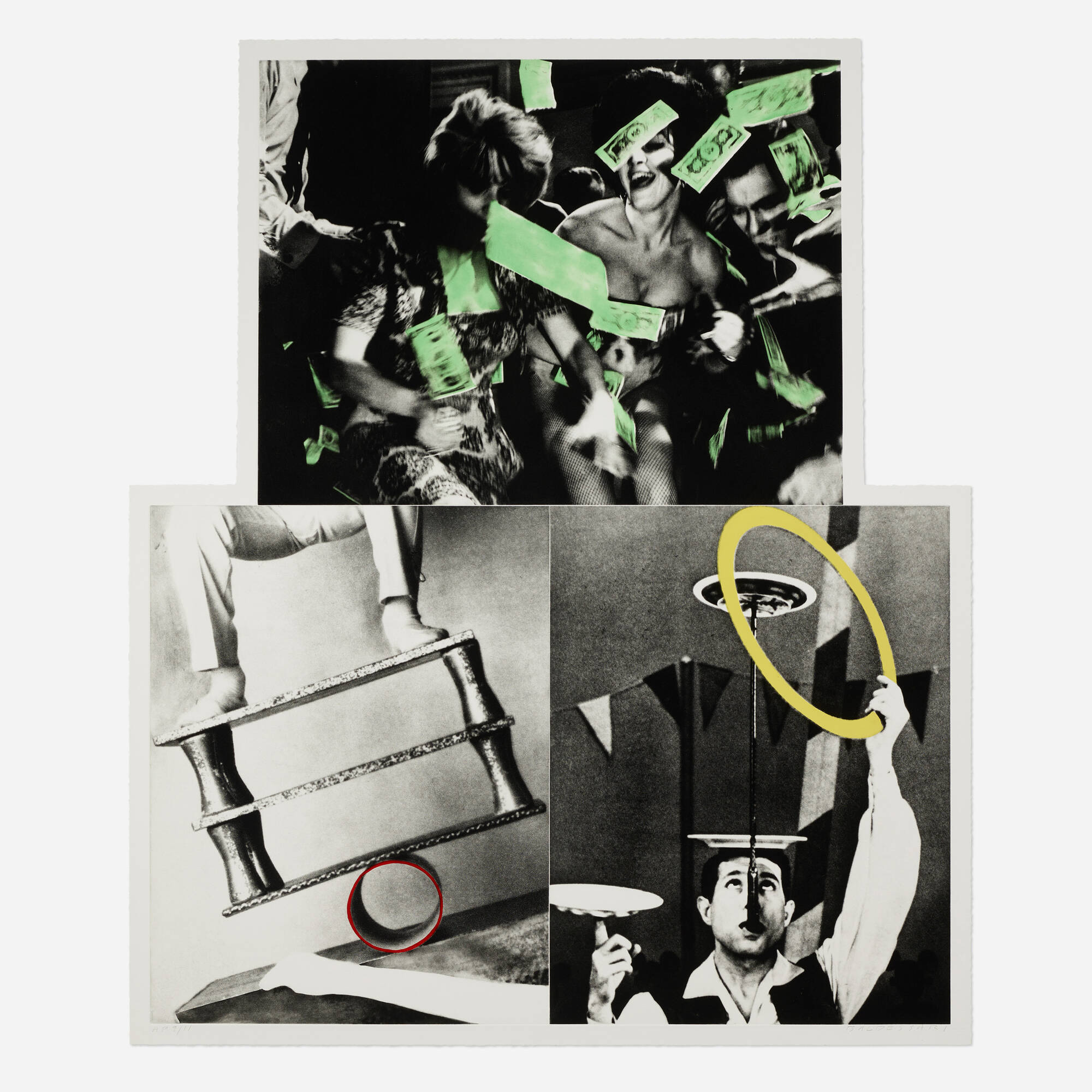
Life Balance with Money, 1989
He was asking, with characteristic deadpan wit, why a painted brushstroke should carry more meaning than a printed sentence. The act that defined his legend came in 1970. Baldessari gathered every painting he had made between 1953 and 1966, cremated them in a mortuary in San Diego, and pressed the remaining ash into cookie shaped wafers. He called it The Cremation Project and registered it as a conceptual artwork.
“I will not make any more boring art.”
John Baldessari, 1971
It was not nihilism. It was a declaration of intent, a clearing of ground so that something genuinely new could be built. From that moment forward, Baldessari worked almost entirely with found photography, appropriated film stills, text, and print based media. He had decided that the world already contained more than enough images and that the artist's job was to find them, disrupt them, and make them think.
John Baldessari
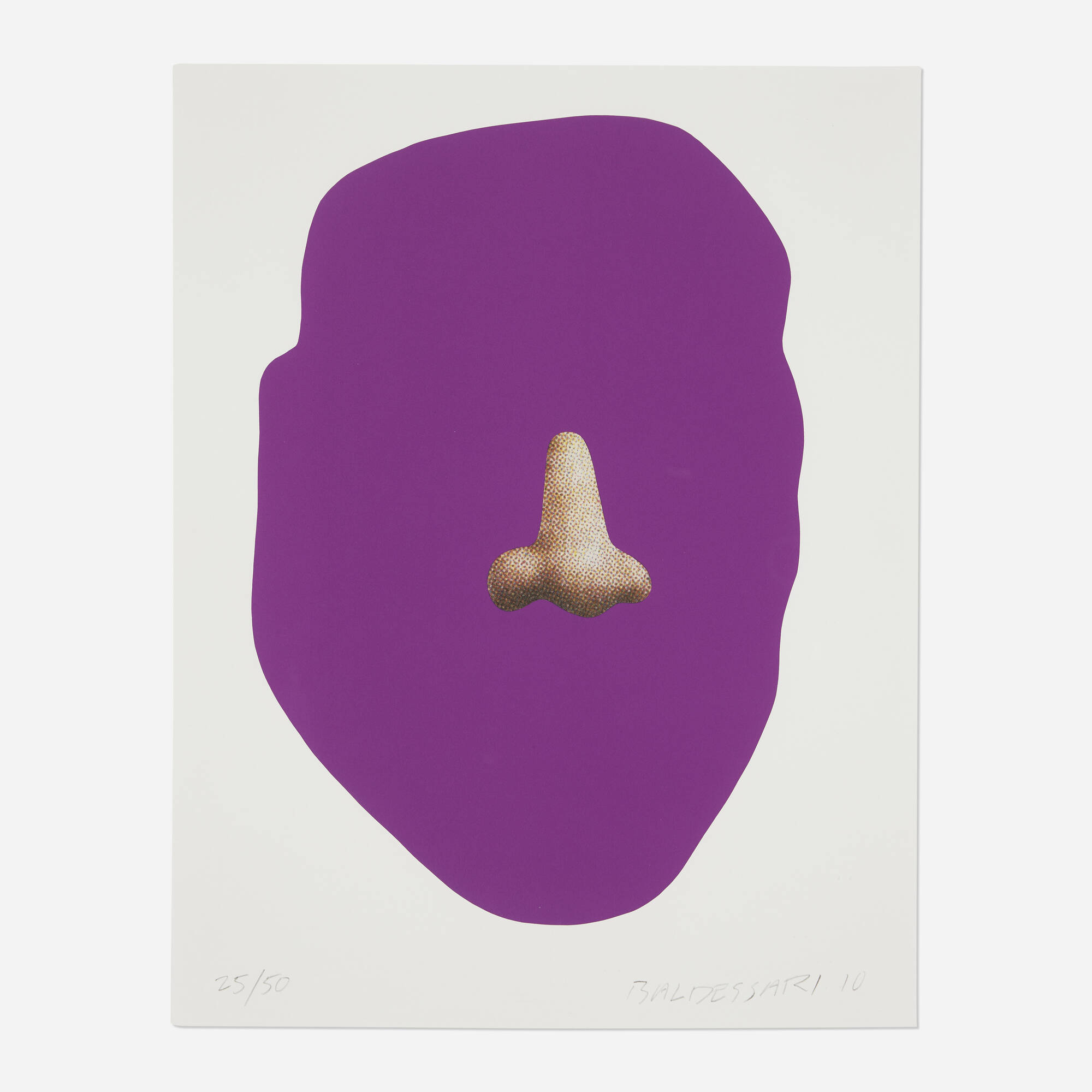
Nose/Silhouette: Violet, 2010
His signature vocabulary emerged fully in the late 1970s and through the 1980s: cropped film stills in which faces are obscured by solid colored dots, pairs of images placed in productive and often comic tension, text fragments that comment on and contradict the photographs they accompany. Works from this period, including large scale photographic and print based pieces, demonstrate his gift for making the viewer feel simultaneously amused and genuinely unsettled. The colored dot that hides a face is not just a formal device. It is a meditation on identity, on cinema's power to manufacture emotion, and on the ethics of looking.
Collectors who live with these works report that they never quite stop asking questions. The print works available through The Collection offer a particularly accessible entry point into Baldessari's world, and they reward close attention. Studio from 1988, rendered in lithograph and screenprint on Arches 88 paper, captures the wry self awareness he brought to every act of art making. Life Balance with Money from 1989, a photogravure with aquatint, places the language of finance in quiet collision with the language of desire.
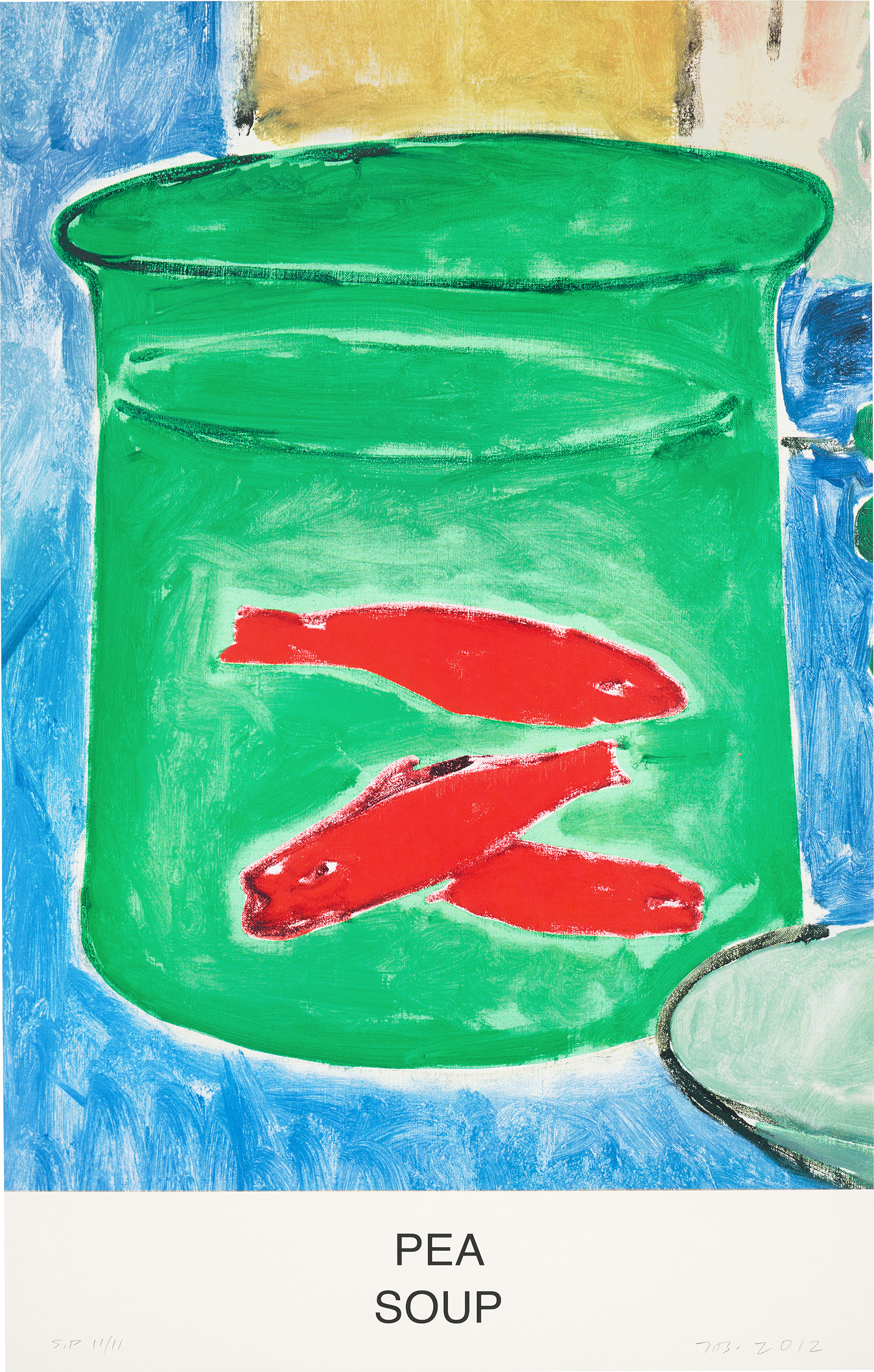
John Baldessari
Pea Soup, from Eight Soups
The Nose and Silhouette series from 2010 revisits his longtime fascination with the fragment, the partial face, the body reduced to a single recognizable feature. Works from his Noses and Ears series, produced in collaboration with Gemini G.E.L.
, one of the great American print workshops, are exemplary demonstrations of how seriously he took the print medium as a vehicle for ideas rather than simply a vehicle for reproduction. Within the broader landscape of postwar and contemporary art, Baldessari stands as a crucial bridge figure. He shares territory with Ed Ruscha in the deployment of text and image, with Cindy Sherman in the interrogation of photographic identity, and with Barbara Kruger in the use of found visual culture as critical raw material. He was also a towering presence in art education, teaching at the California Institute of the Arts from 1970 onward and shaping the practice of artists including David Salle, Eric Fischl, and Mike Kelley.
His classroom was an extension of his studio: a space where received ideas were cheerfully dismantled and rebuilt. For collectors, Baldessari's works on paper and print multiples represent one of the most intellectually rewarding areas of the contemporary market. His print collaborations with Gemini G.E.
L. and other leading publishers are meticulously documented and benefit from clear provenance. The market for his work has remained stable and appreciating over the past two decades, supported by consistent institutional interest and a broad base of serious collectors across the United States, Europe, and Asia. Works from the 1980s and 1990s in particular carry strong critical consensus, but the later series exploring noses, ears, and silhouettes have attracted growing attention as collectors recognize them as fully realized statements rather than late career footnotes.
Baldessari's legacy is not simply a matter of influence, though the influence is immense. It is a matter of permission. He demonstrated, with rigor and with great good humor, that art could be made from anything the world had already made, that meaning lived in the space between images rather than inside them, and that the most penetrating questions about seeing and knowing could be asked with a straight face and a dot of colored paint. The works he left behind continue to do exactly what he intended: they make you stop, look again, and wonder what you thought you were looking at.
Explore books about John Baldessari
John Baldessari
Robert Storr
John Baldessari: National City
Dan Cameron
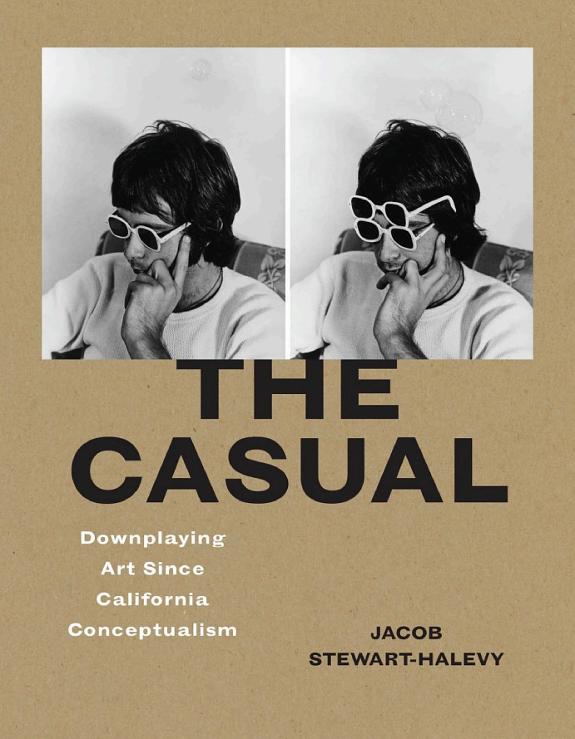
John Baldessari: Catalog Raisonné, Volume 1
Coosje van Bruggen

Baldessari: Print Works
Ruth E. Fine
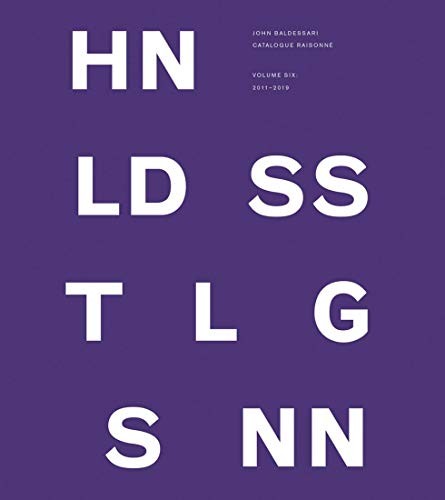
John Baldessari
Michael Auping
John Baldessari: Pure Beauty
Ann Temkin

John Baldessari: A Catalogue Raisonné
Keith Seward