Joel Shapiro
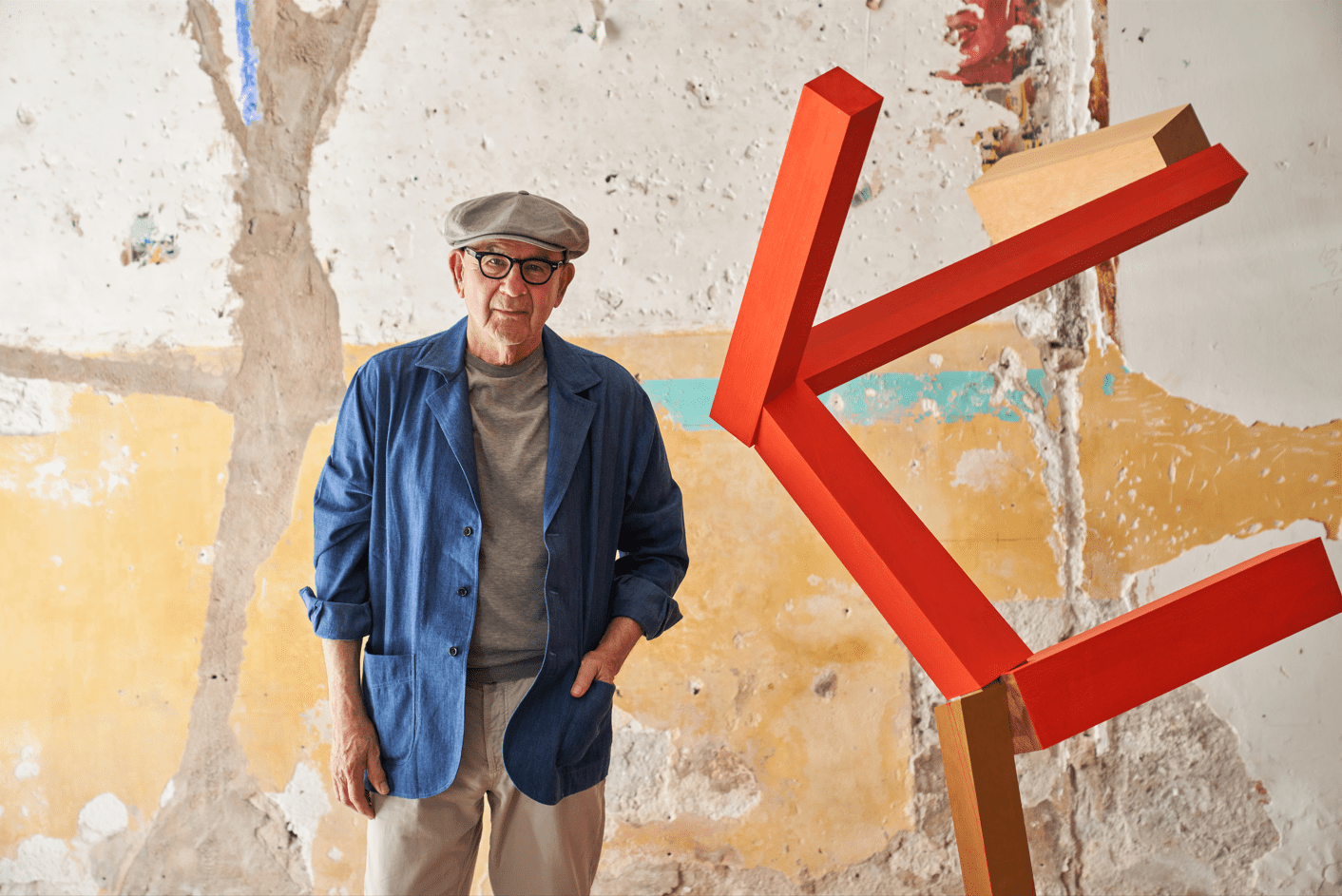
Joel Shapiro: Sculpture That Moves You
Artist Spotlight · The Collection Editorial
“The opportunity to try to project all one's thoughts into a condensed form is irresistible. That is what sculpture is.”
Joel Shapiro, 1995
When the Whitney Museum of American Art presented a major survey of Joel Shapiro's work, visitors found themselves doing something unusual in a gallery devoted to abstract sculpture: they leaned in. They circled the pieces. They felt, almost physically, the torque and tension of bronze limbs arrested mid flight, as though the figures might complete their gesture the moment no one was watching. That quality, the sense of perpetual imminence, is what has kept Shapiro at the center of serious collecting conversations for five decades.
Joel Shapiro
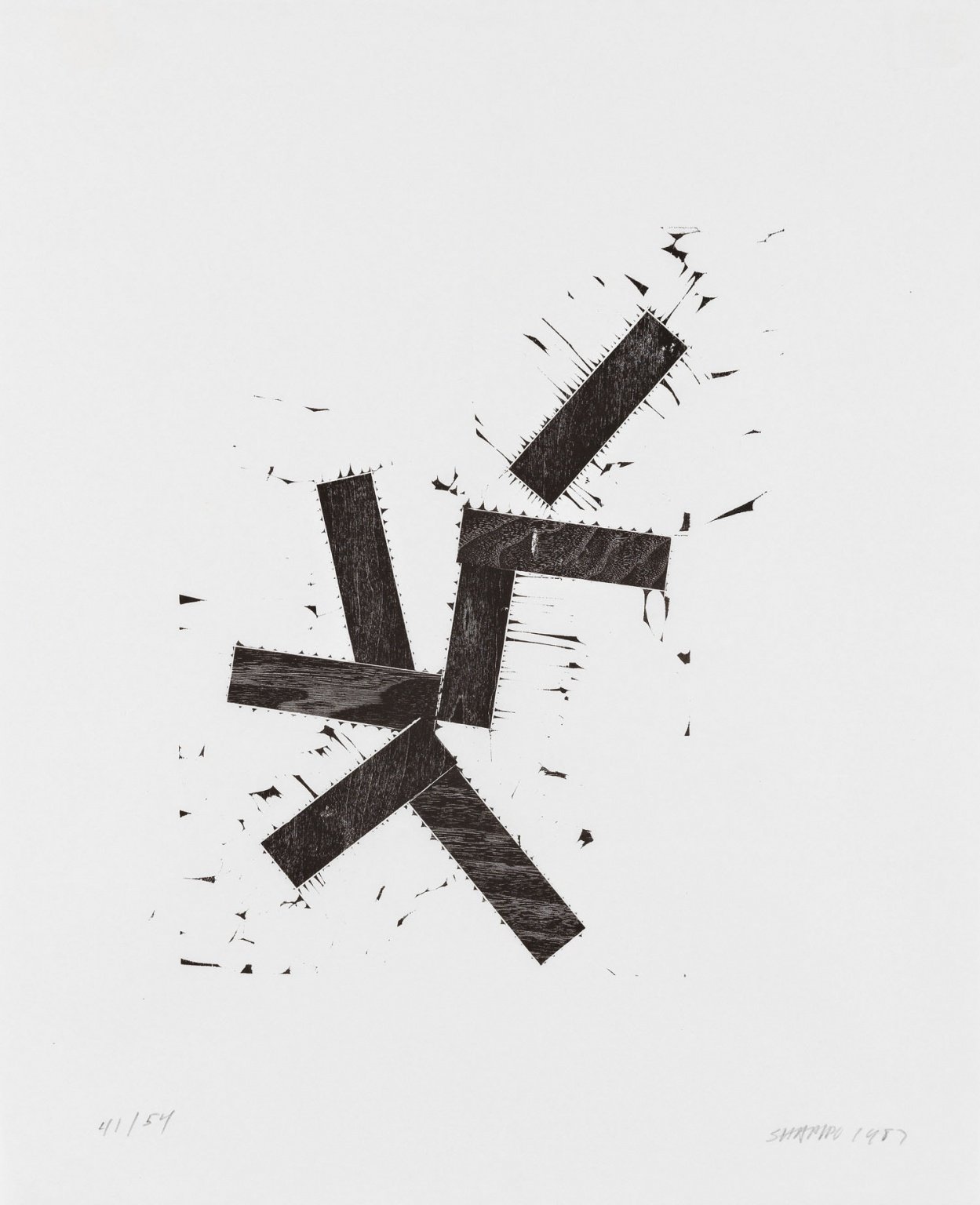
5748 (For Jewish Museum), 1987
Now in his eighties and still working with extraordinary rigor from his New York studio, he remains one of the most vital and intellectually rewarding sculptors of the postwar American canon. Shapiro was born in New York City in 1941, and the city's restless energy seems to have entered his sensibility at a cellular level. He studied at New York University, earning his BA and then his MA, and came of age artistically during one of the most turbulent and generative periods in the history of American art. The 1960s and early 1970s in New York were defined by the stern geometries of Minimalism, by Donald Judd's stacks and Carl Andre's floor plates, by the insistence that sculpture declare nothing beyond its own physical presence.
Shapiro absorbed all of this with genuine seriousness. He was never dismissive of Minimalism's rigor, but he was restless inside it, drawn toward a residue of feeling that pure formalism seemed determined to expel. His early breakthrough came in the mid 1970s, when he began making small cast iron and bronze objects, tiny houses, chairs, bridges, forms so modest in scale they seemed almost to whisper against the white cube of the gallery. These works were shown at Paula Cooper Gallery in New York, with whom Shapiro has maintained a long and artistically fruitful relationship, and they caused an immediate stir.
Joel Shapiro
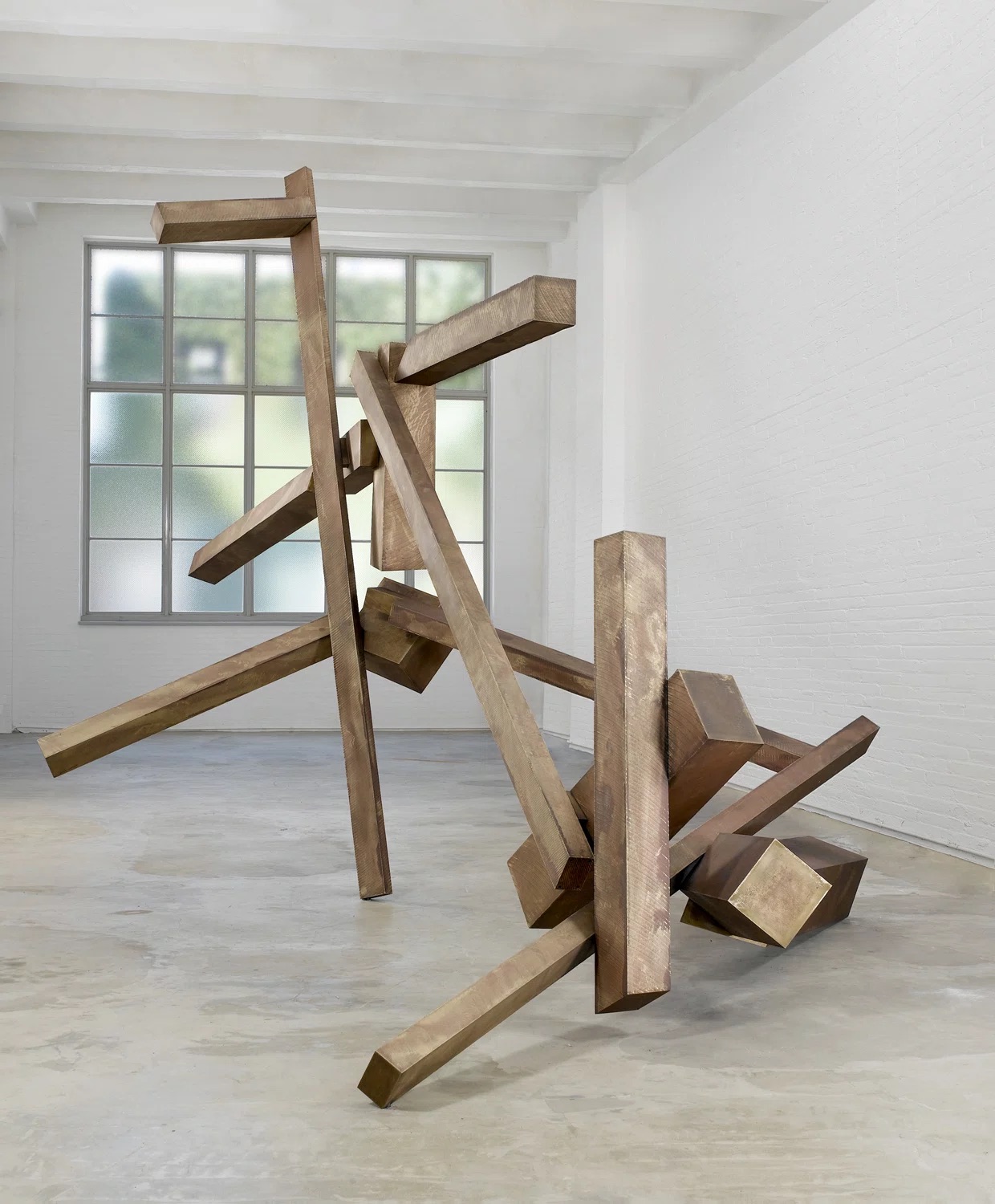
Untitled
Critics recognized that Shapiro had found a way to smuggle meaning, memory, and emotional resonance back into post Minimal sculpture without abandoning formal discipline. A small iron house placed on a gallery floor was still an object, still a thing, but it was also a stand in for shelter, for childhood, for the enormity of the domestic imagination. The scale was a provocation and a gift. Through the late 1970s and into the 1980s, Shapiro's forms began to grow, and they began to move.
The blocky, angular constructions of interlocking limbs that would become his signature emerged as he explored the ways that simple geometric volumes, beams and rectangles assembled in seemingly precarious configurations, could evoke the human figure in motion without depicting it. These works in bronze, and later in painted wood, achieved something philosophically audacious: they were simultaneously abstract and viscerally bodily. A viewer could not look at them without feeling something in their own spine, their own shoulders. The 1986 bronze incised with the artist's signature, held in distinguished private collections today, exemplifies this period perfectly, its interlocked forms carrying the weight and athleticism that made Shapiro's mature work so immediately recognizable.
Joel Shapiro
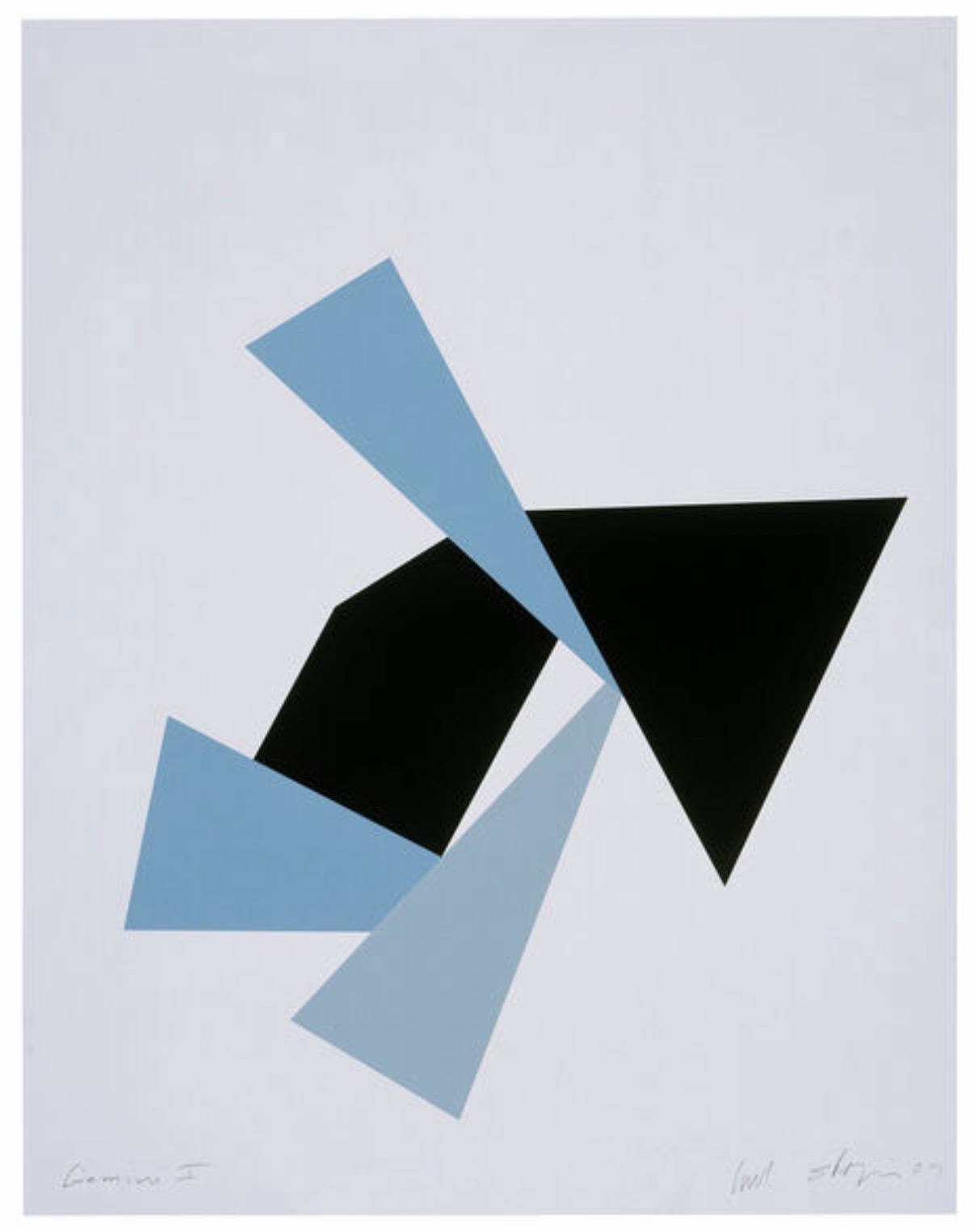
Boat, Bird, Mother and Child (f), 2009
The depth and range of Shapiro's practice extends well beyond sculpture into printmaking and works on paper that reward close attention from collectors. His 1987 woodcut "5748 (For Jewish Museum)" is a significant work, its title referencing the Hebrew calendar year and reflecting a thread of cultural and historical consciousness that runs quietly but persistently through his output. His screenprints, including the richly layered "Boat, Bird, Mother and Child" from 2009, demonstrate that his graphic sensibility is as sophisticated as his three dimensional thinking. Works on paper by Shapiro offer collectors an accessible entry point into a practice whose monumental bronzes command the highest prices at auction, and they carry the same formal intelligence that defines the sculpture.
For collectors, Shapiro represents a particularly compelling proposition. He occupies a genuinely rare position in postwar American art history, acknowledged by institutions from the Museum of Modern Art to the Guggenheim, represented in public collections across the United States and Europe, and yet still producing work that feels alive and unresolved in the best possible sense. His bronzes from the 1980s and 1990s have performed consistently well at auction, with major works passing through Christie's and Sotheby's New York at significant prices. Painted wood constructions such as the "Untitled (JS 1279)" from 1997 offer a different register of his practice, warmer in material presence, sometimes more overtly joyful in their color and assembly.
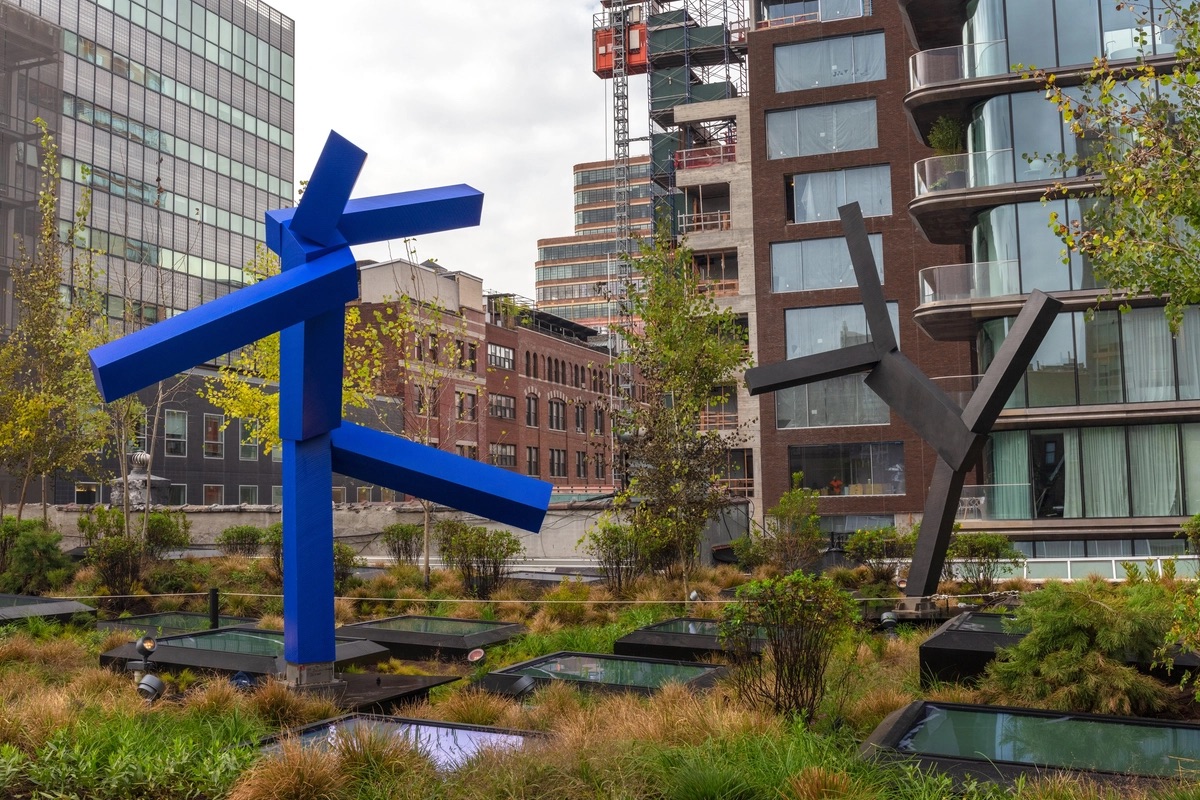
Joel Shapiro
Untitled
Collectors who engage seriously with Shapiro tend to find that owning a single work opens a desire to understand the full arc of the practice, which speaks to the depth and coherence of what he has built over a career of more than five decades. To understand Shapiro fully is to understand him in context, and that context is rich. He is a natural companion to Richard Serra in the conversation about how sculpture can claim and reshape space, though where Serra is monolithic and environmental, Shapiro is intimate and kinetic. He shares with Nancy Graves and Bruce Nauman a commitment to process and a willingness to let materials speak on their own terms.
Internationally, his conversation with artists like Georg Baselitz and the German Expressionist tradition is productive: both are concerned with the body, with its instability and its persistence as a carrier of meaning. Shapiro is also frequently and rightly discussed alongside Anthony Caro, whose own transformation of welded steel into figurative energy shares a philosophical family resemblance with Shapiro's bronze constructions. Shapiro's legacy is secure, but it is not static. What makes him matter today is precisely what has always made him matter: he refuses the easy comfort of either pure formalism or easy figuration, insisting instead on the difficult, fertile territory between them.
His sculptures ask viewers to bring their own bodies to the encounter, to feel the work rather than simply read it. In a cultural moment when the relationship between abstraction and human experience is being renegotiated across every discipline, Shapiro's lifelong negotiation of that boundary feels not like history but like a living argument. His work reminds us, with patience and with grace, that sculpture at its best is never merely an object. It is a proposition about what it means to be present in a body, in a room, in a world that is always already in motion.