Joel-Peter Witkin
Joel-Peter Witkin: Beauty Forged From Darkness
Artist Spotlight · The Collection Editorial
“I photograph what I fear. Everything I fear in life I try to confront and resolve through the work.”
Joel-Peter Witkin, interview
Few photographers working today command the kind of sustained, reverent attention that Joel Peter Witkin has earned across five decades of relentless, visionary practice. His gelatin silver prints, with their scratched and manipulated surfaces, their painterly toning, and their unflinching subjects, have migrated from the fringes of the art world to the permanent collections of the Metropolitan Museum of Art, the Bibliothèque Nationale de France, and the San Francisco Museum of Modern Art. A major survey of his work at the Musée de l'Elysée in Lausanne helped cement his standing in Europe as one of the most consequential image makers of the postwar era, and auction houses from Christie's to Phillips have seen consistent, growing demand for his prints at every level of the market. When collectors and curators speak of photography that genuinely transforms its viewer, Witkin's name arrives quickly and without equivocation.
Joel-Peter Witkin
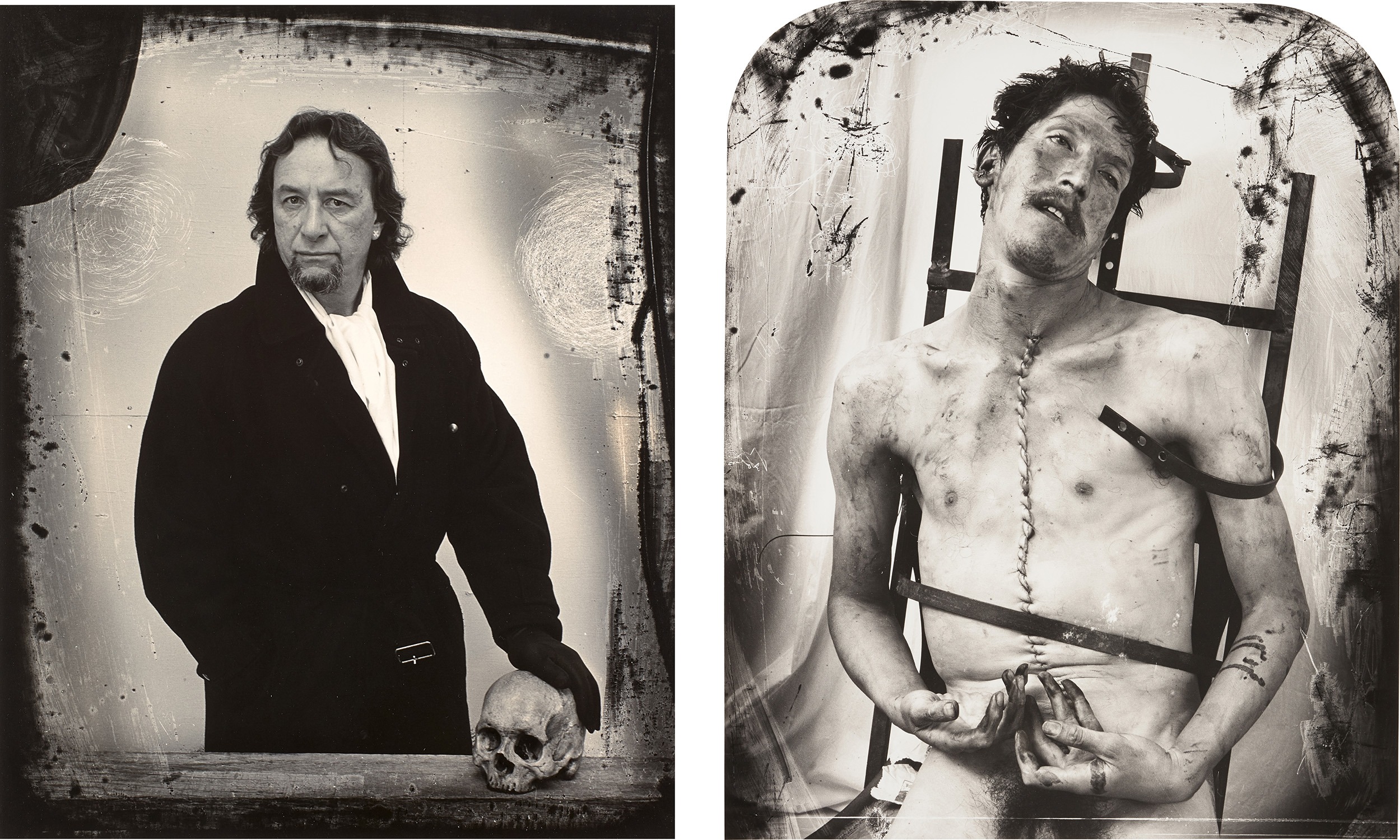
Glassman, Mexico; Self-Portrait, Reminiscent of ‘Portrait as a Vanité, New Mexico
Witkin was born in Brooklyn, New York, into a household divided in the most literal sense: his parents, one Catholic and one Jewish, separated early, and Witkin and his twin brother Jerome grew up navigating two distinct spiritual worlds. A formative encounter at the scene of a car accident near his home, which he witnessed as a young child and which he has described in interviews many times over the years, lodged itself permanently in his imagination and became something close to a founding myth for his entire practice. Whether or not the story carries the full weight of biography, it points accurately toward an artist who has spent his career at the threshold between life and its cessation, between the body as living presence and the body as object of wonder. He studied sculpture at Cooper Union in New York before serving as a military photographer during the Vietnam era, an experience that deepened his relationship to the camera as a tool for witnessing extremity.
He later earned his MFA from the University of New Mexico in Albuquerque, a city he has long called home and whose desert light and proximity to both Mexican folk Catholic tradition and the American Southwest's particular strangeness have saturated his work. His academic formation gave him not only technical rigor but also an unusually literate relationship to the history of Western art, one that would become the structural spine of everything he made afterward. The work that brought Witkin to international attention in the 1980s announced a vision entirely unlike anything photography had produced before. Working in his Albuquerque studio, he began constructing elaborately staged tableaux that drew directly on canonical paintings: Velázquez's Las Meninas, Courbet's allegorical studio compositions, the mythological scenes of Rubens, the grotesque splendor of Goya.
Joel-Peter Witkin
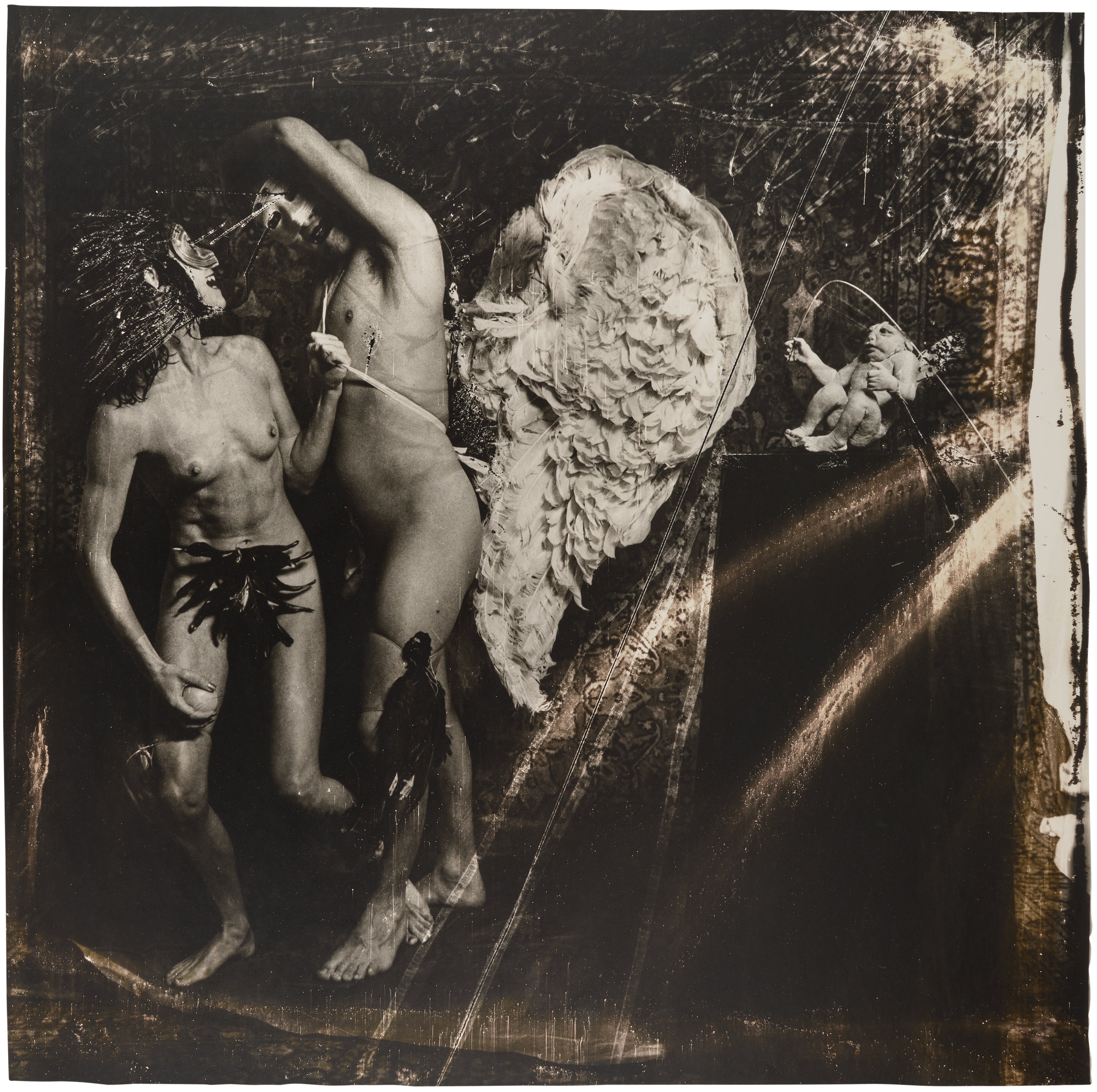
The Expulsion from Paradise of Adam and Eve, New Mexico
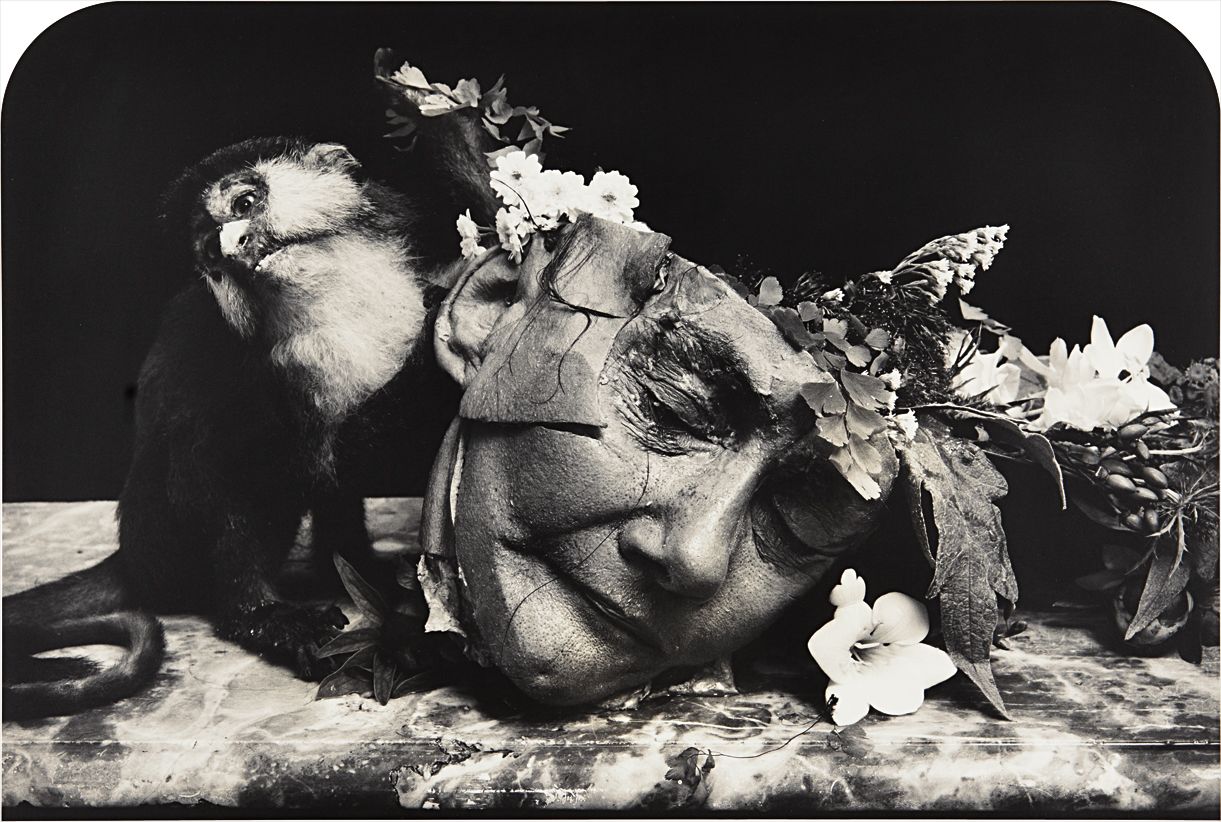
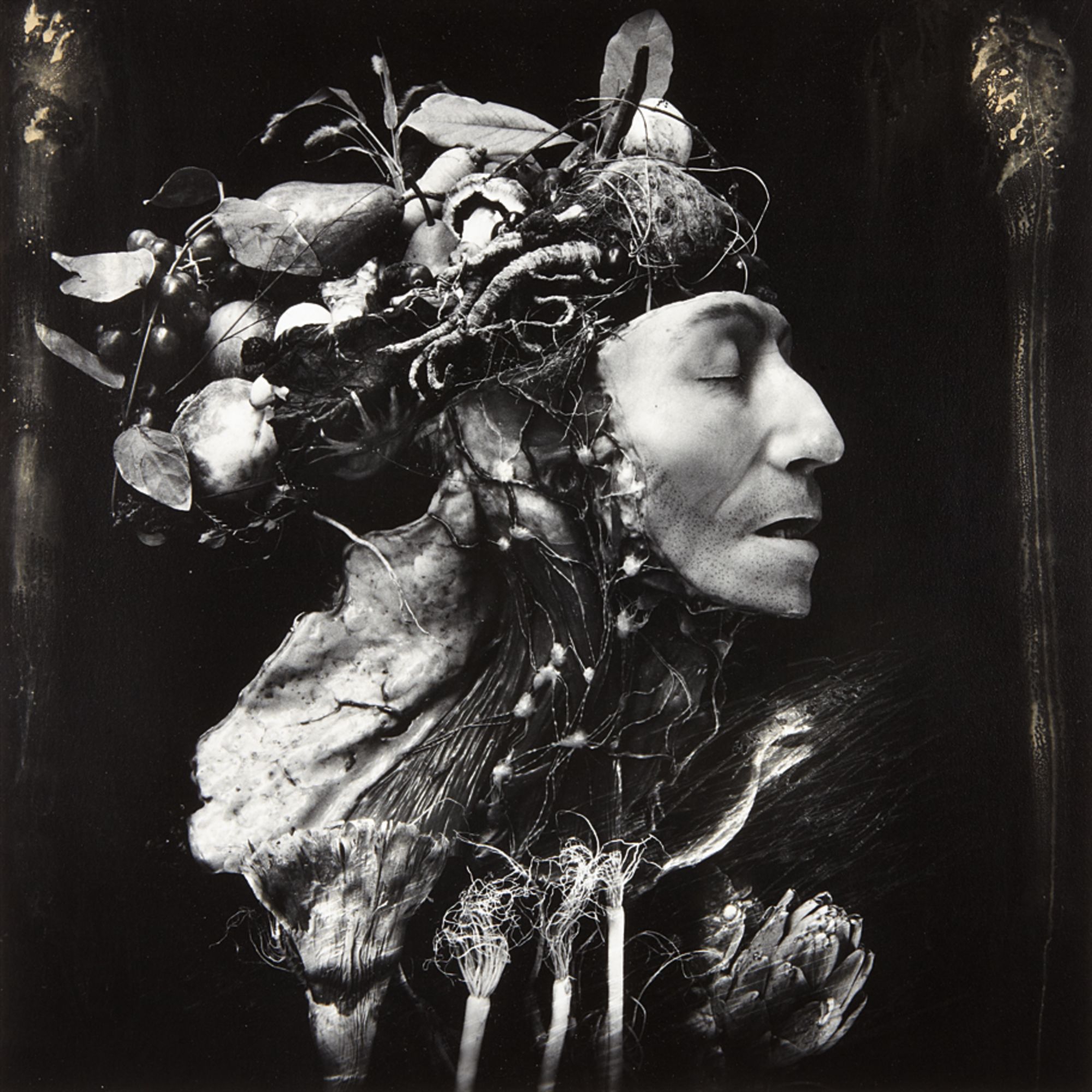
Into these art historical frameworks he introduced subjects that challenged every convention of acceptable representation: people with physical differences and disabilities, individuals from communities that mainstream photography had either ignored or exploited, and, most notoriously, cadavers and body parts obtained through legal and documented channels, often from medical institutions and morgues. The resulting images were not acts of provocation for its own sake. They were, and remain, deeply considered meditations on the dignity and strangeness of embodied existence. His process itself is inseparable from the meaning of his prints.
“My work is about love. It is about the preciousness of life and the beauty of what it is to be human.”
Joel-Peter Witkin
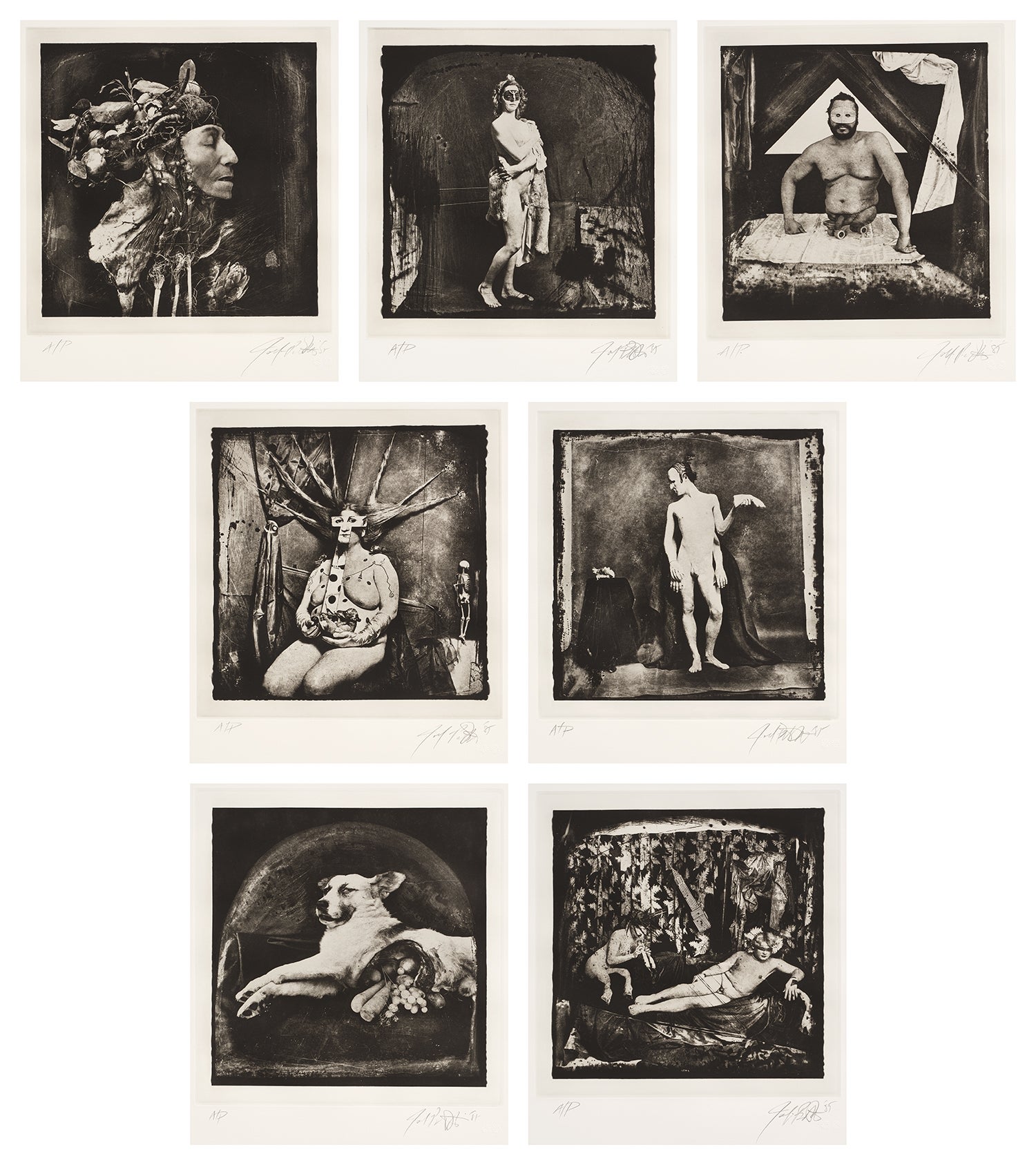
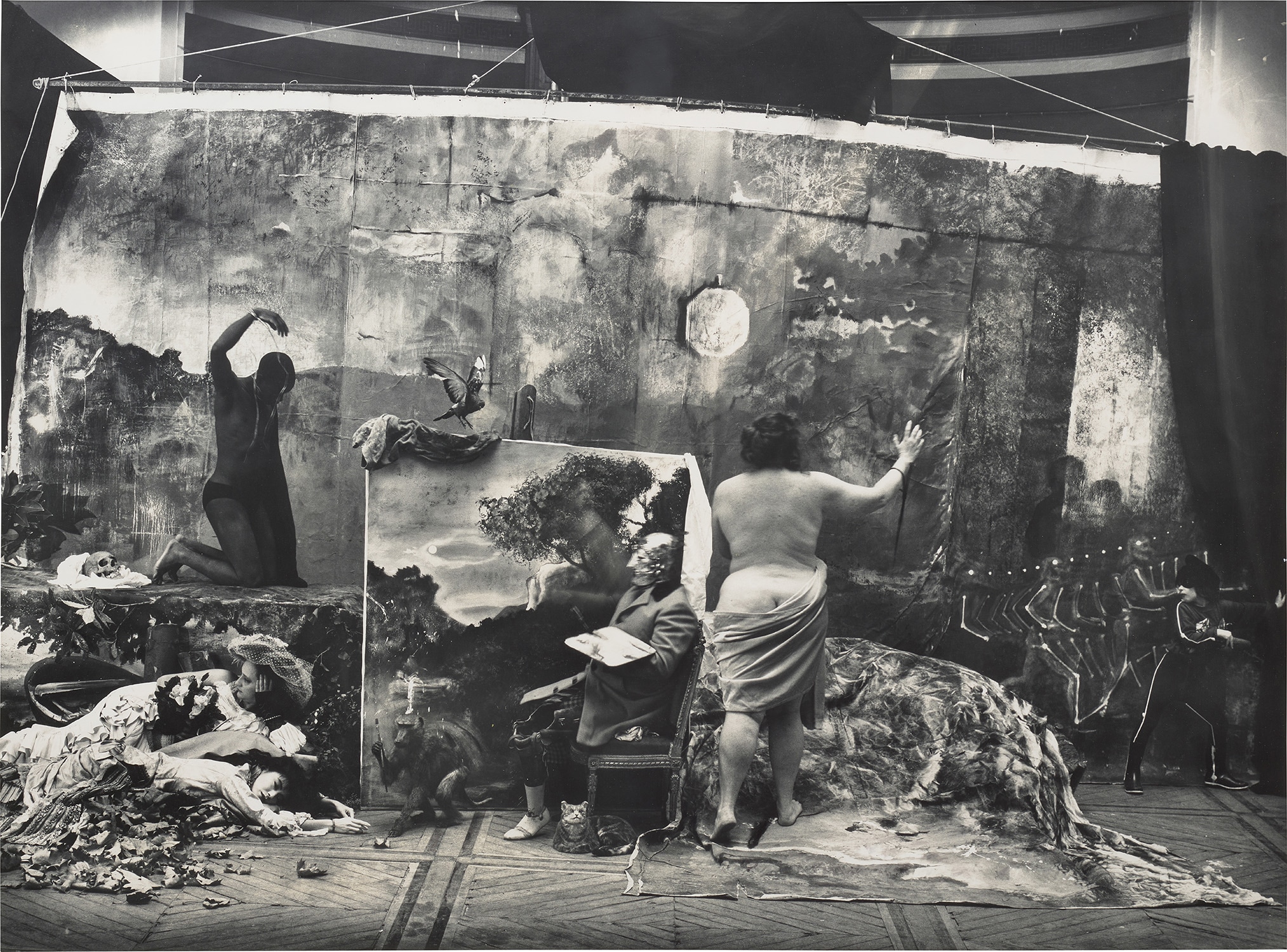
Witkin works with large format film and then intervenes extensively in the darkroom and on the negative itself, scratching, bleaching, and toning his prints to produce surfaces that look simultaneously ancient and immediate, like daguerreotypes discovered in a ruined chapel or devotional images rescued from some unrecorded tradition. The gelatin silver print and the toned gelatin silver print are his preferred formats, and the physical presence of his works at their original scale carries an authority that reproduction consistently undersells. Works such as Las Meninas New Mexico, Laokoön New Mexico, and Studio of the Painter Courbet Paris demonstrate how fully he integrates specific art historical sources into images that are entirely, unmistakably his own. The Graphicstudio editions produced at the University of South Florida in Tampa, a suite that includes major titles such as Harvest, Helena Fourment, Man Without Legs, and Venus Pan and Time, represent some of the most important print collaborations of his career, produced to the highest technical standards and documented with the institution's blindstamp and inkstamp.
Joel-Peter Witkin
Studio of the Painter (Courbet), Paris
For collectors, the range of entry points into Witkin's market is genuinely appealing. His prints have appeared regularly at major international auction houses, and works from the Graphicstudio suite carry particular weight given the rigorous documentation of their production. Artist's proofs, such as the annotated A/P examples from the Graphicstudio collaboration, are especially prized because the editions to which they belong were never fully realized, making these proofs the definitive and in many cases the only existing examples of those images in edition form. Condition and provenance are paramount with Witkin: his manipulated surfaces are intentional and desirable, but original printing quality and the integrity of the toning are what separate exceptional examples from merely good ones.
Works from the 1980s and early 1990s represent the core of collector interest, though his output has remained consistent and significant across every subsequent decade. Within the broader history of art photography, Witkin occupies a position that invites comparison with several distinct traditions. His debt to the Pictorialists, and specifically to the manipulated printing techniques of the late nineteenth century, is evident and acknowledged. His relationship to Surrealism, and to the Surrealist tradition of bringing the uncanny and the transgressive into dialogue with beauty, connects him to figures like Hans Bellmer and Claude Cahun.
Joel-Peter Witkin
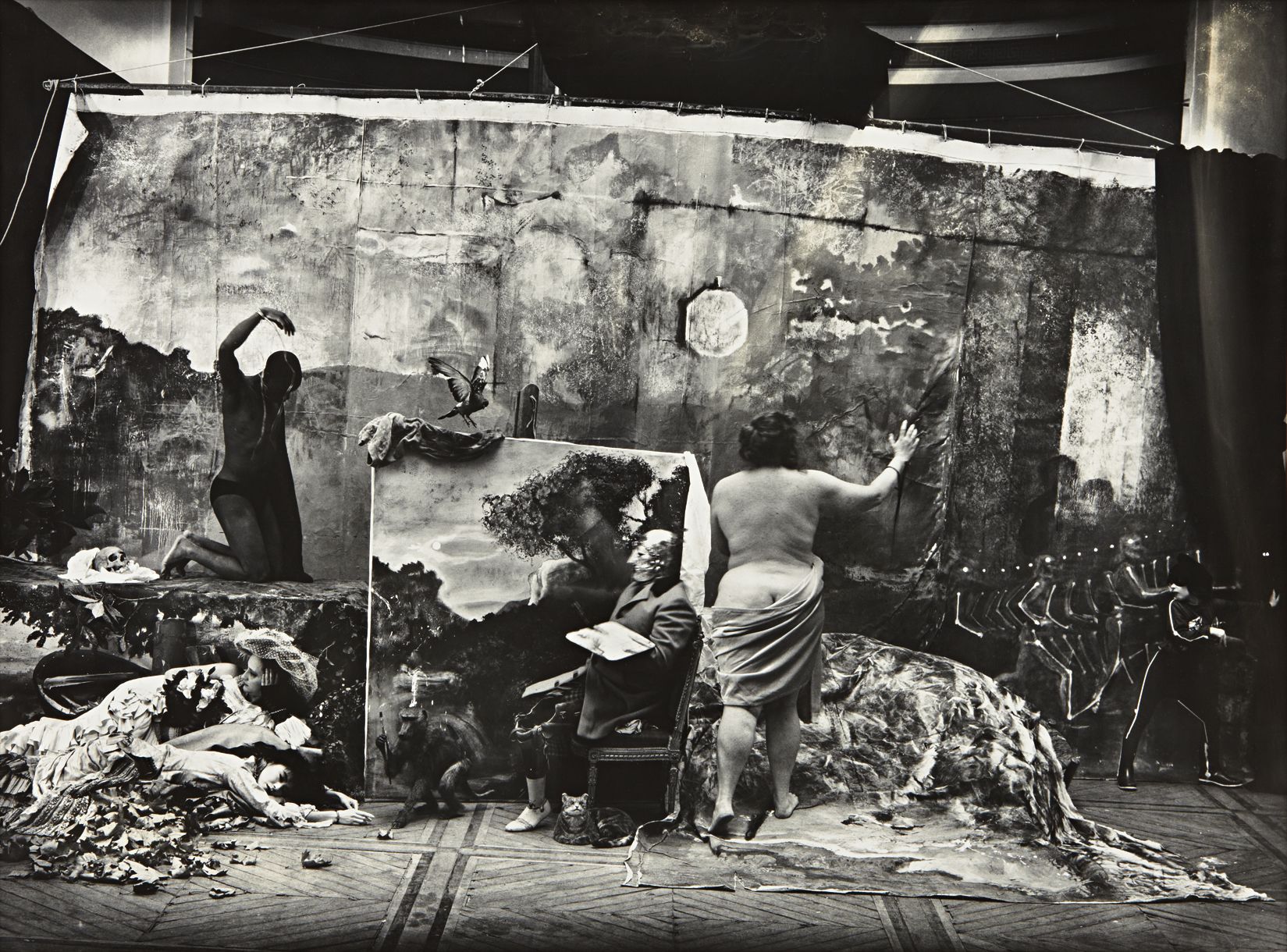
Studio of the Painter, Courbet, Paris
His rigorous engagement with Old Master painting as both source and subject places him alongside photographers such as Cindy Sherman and Gregory Crewdson, artists who treat the history of representation as living material rather than inert archive. And his commitment to portraying subjects who exist at the margins of conventional visibility carries a genuine ethical weight that separates him from mere aestheticians of the extreme. Witkin's legacy is already secure, and it continues to deepen. His work appears in the syllabi of photography programs worldwide and in the collections of institutions that define the canon of the medium.
More importantly, his images do what only the greatest art manages: they change the viewer's relationship to their own body, their own mortality, and their own capacity for beauty. To own a Witkin print is to live with a work that repays sustained attention indefinitely, one that grows stranger and more luminous the longer it is known.
Featured Works
Explore books about Joel-Peter Witkin