Jiro Takamatsu
Jiro Takamatsu: Where Light Becomes Philosophy
Artist Spotlight · The Collection Editorial
In the spring of 2023, the National Museum of Modern Art in Tokyo mounted a landmark survey of postwar Japanese art that placed Jiro Takamatsu at its conceptual center, a positioning that felt both overdue and entirely right. For decades, Takamatsu occupied a curious place in the international art conversation revered by scholars and serious collectors, yet still waiting for the full global recognition that his visionary practice demands. That moment of reckoning has arrived, and the art world is now catching up to what a devoted few have long understood: Takamatsu was among the most rigorous and poetic minds that twentieth century Japan produced. Jiro Takamatsu was born in Tokyo in 1936, coming of age in a city rebuilding itself from the rubble of the Second World War.
Jiro Takamatsu
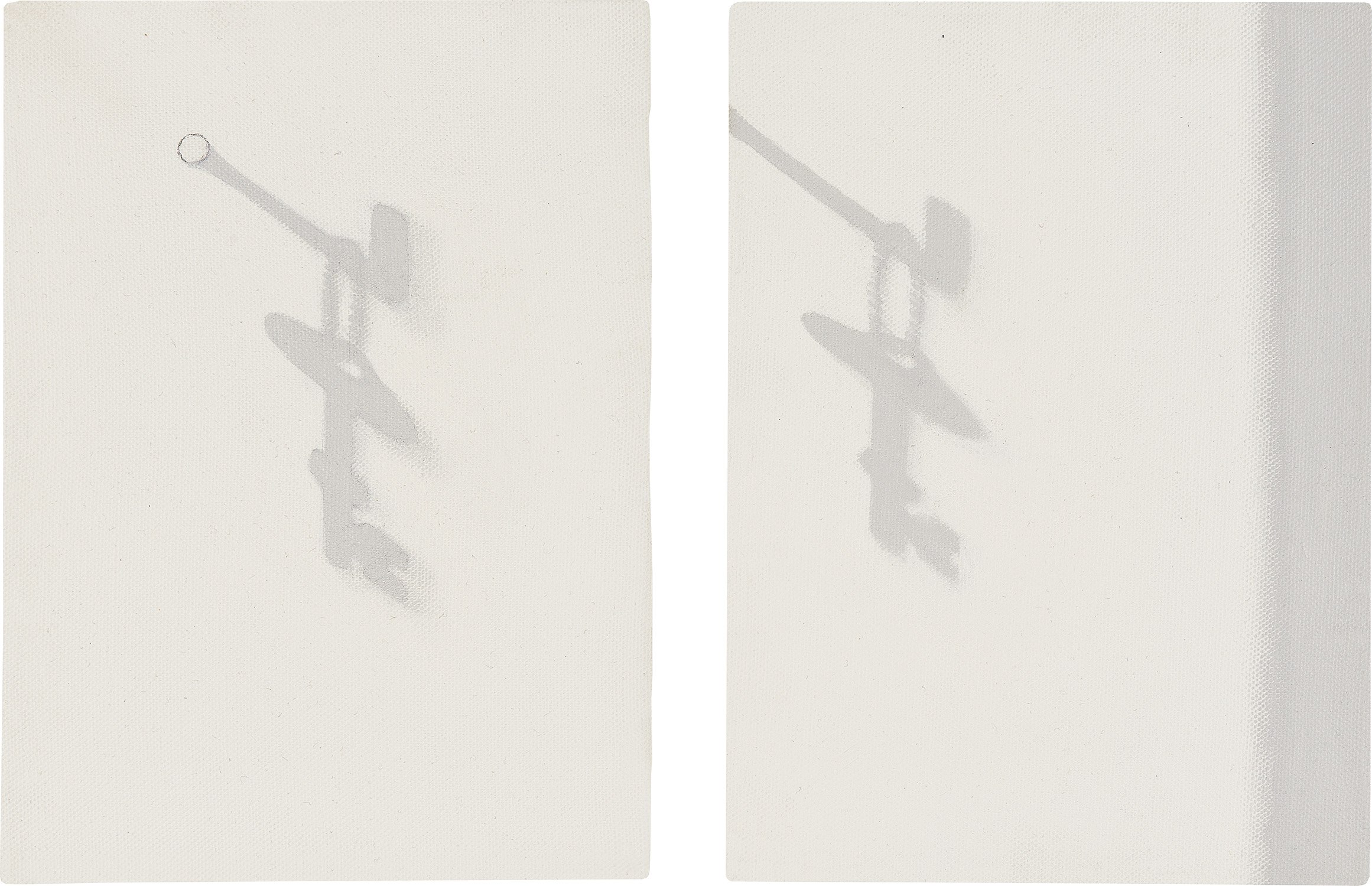
Two works: (i), 1984
That experience of absence, of forms defined by what is missing rather than what is present, would prove foundational to his artistic sensibility. He studied at the Tokyo University of the Arts, graduating in 1958, and immersed himself in the intellectual ferment of a generation determined to rethink what Japanese art could be in a postwar, increasingly internationalized world. The tension between tradition and modernity, between Eastern philosophical inquiry and Western avant garde provocation, animated everything he would go on to create. In 1963, Takamatsu became a co founder of Hi Red Center alongside Genpei Akasegawa and Natsuyuki Nakanishi.
The collective became one of the most electrifying forces in Japanese art of the decade, staging absurdist and confrontational happenings across Tokyo that drew on the energy of Fluxus while maintaining a distinctly Japanese critical edge. Their actions, including meticulous public street cleaning performed in white coats and gloves in the Ginza district, used irony and ceremony to interrogate authority, cleanliness, and social conformity in the rapidly modernizing city. These performances established Takamatsu as a conceptual artist of the highest order, someone for whom art was a mode of philosophical inquiry carried out in public space. Yet it was in his studio practice that Takamatsu found his deepest subject, and that subject was shadow.
Jiro Takamatsu
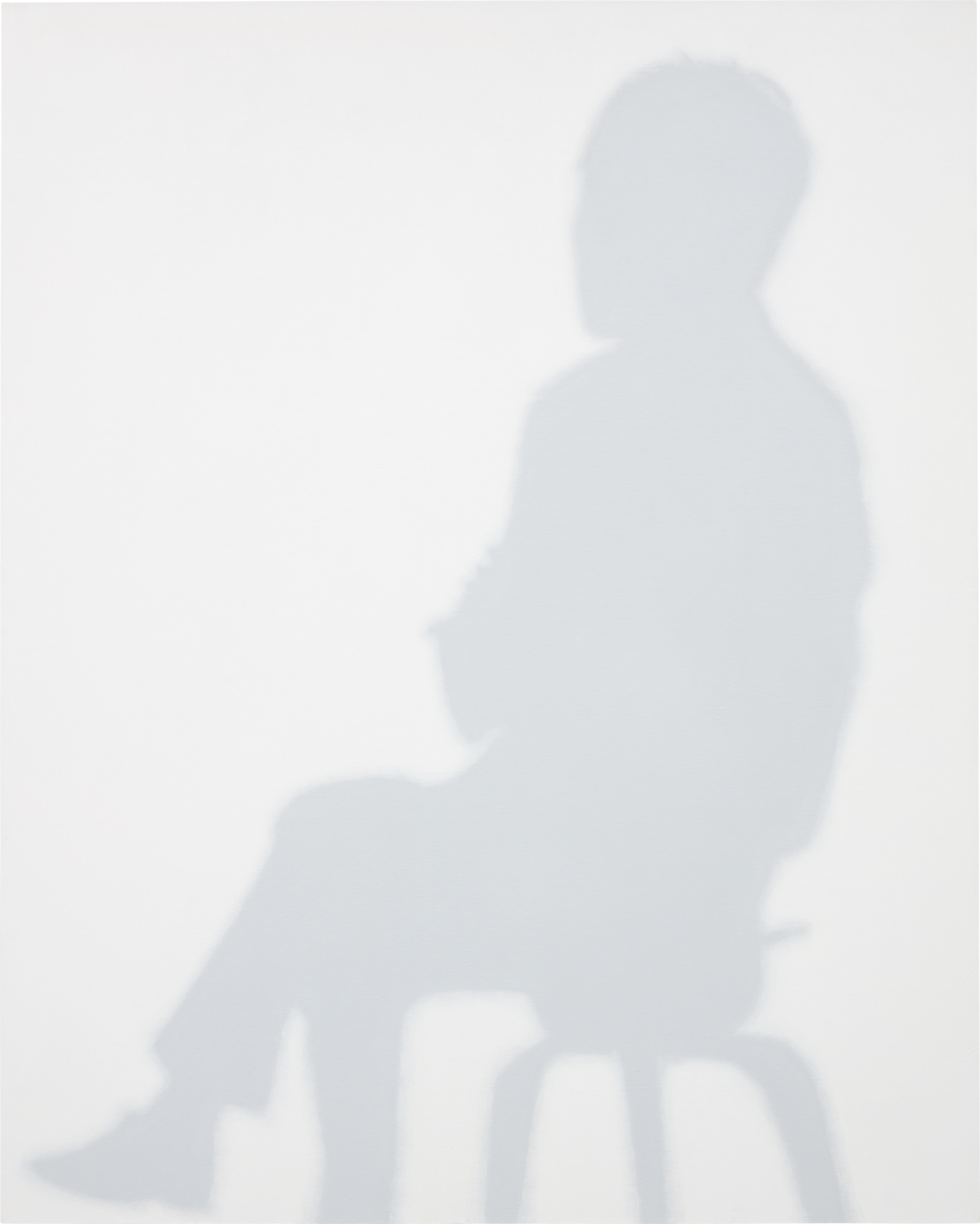
Shadow No. 1439, 1997
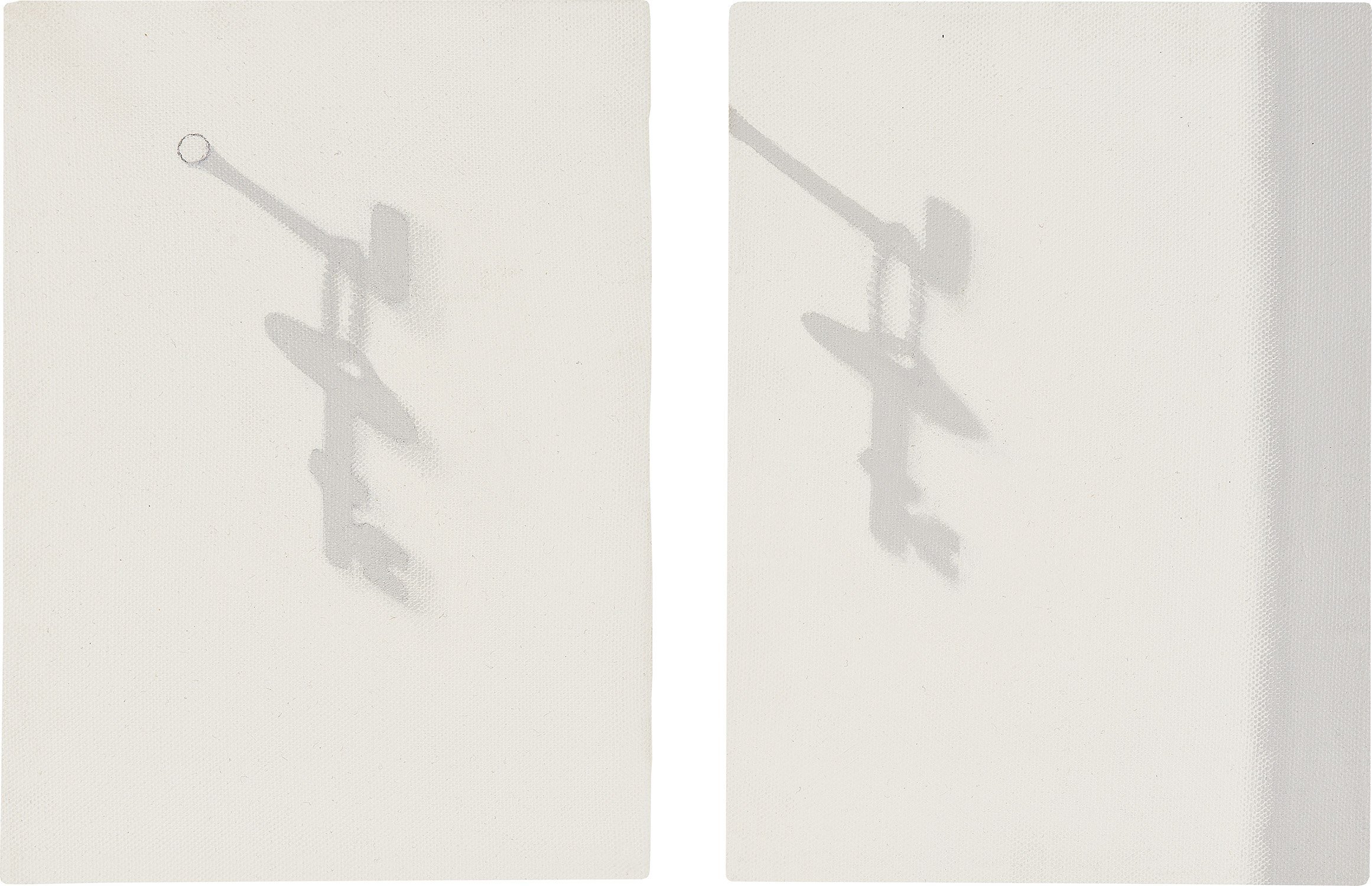
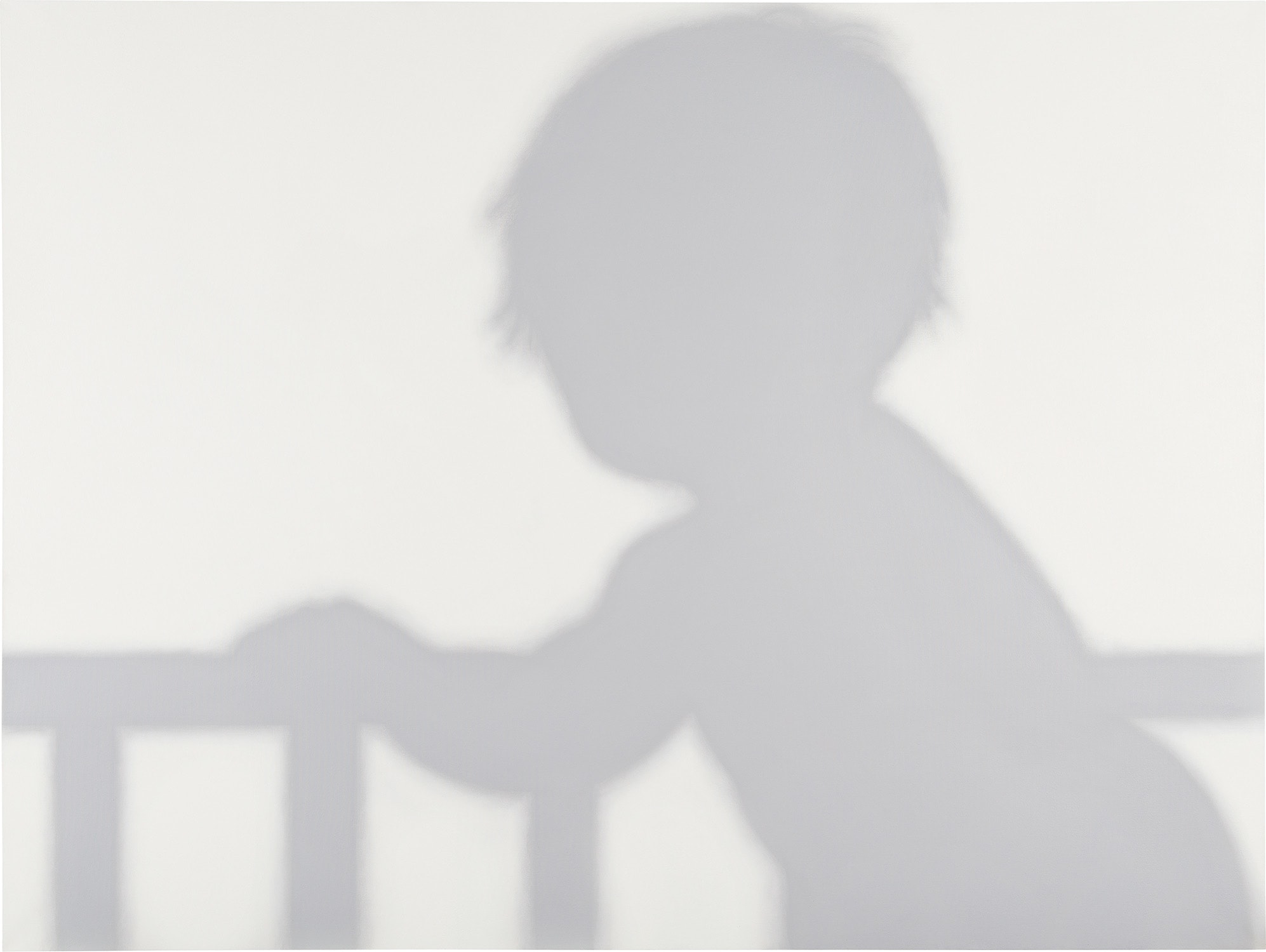
Beginning in the mid 1960s and continuing with extraordinary dedication until his death in 1998, the Shadow series became one of the most sustained and meditative bodies of work in all of postwar art. These are not shadows as we typically encounter them, incidental, fleeting, the byproduct of light striking an object. In Takamatsu's hands, shadow becomes an autonomous presence, a form with philosophical weight and perceptual strangeness. Painted in acrylic on canvas with meticulous precision, the shadows in works like Shadow No.
1439 from 1997 and the earlier Shadow No. 1400 from 1980 appear to belong to figures or objects that exist just outside the frame, presences implied but withheld. The viewer is left in a state of productive uncertainty, confronting representation stripped of its referent. The numbering of the Shadow works, stretching across decades and into the fourteen hundreds, is itself a statement.
Jiro Takamatsu
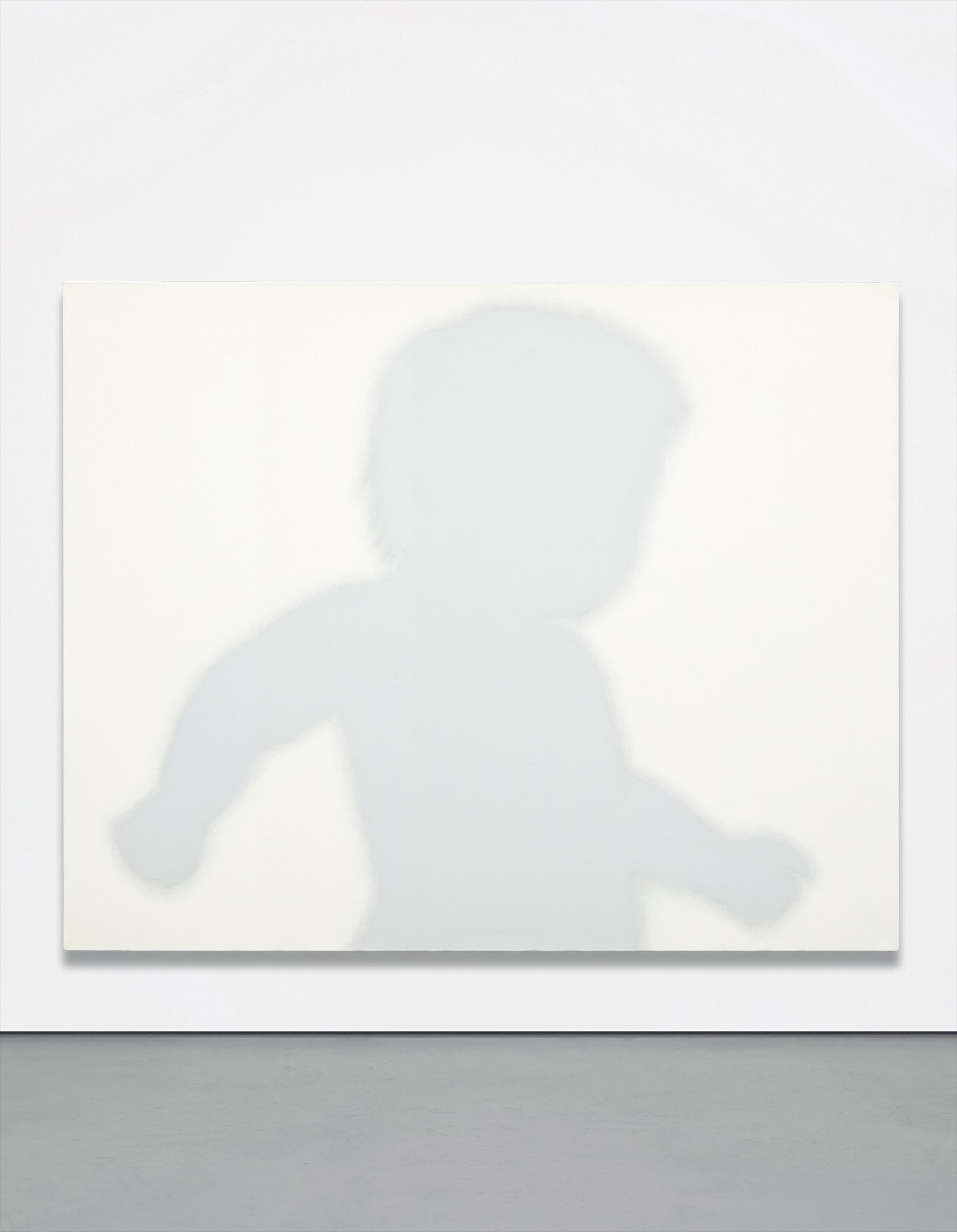
Shadow No. 1432, 1997
It speaks of a practice that was systematic, committed, and genuinely philosophical rather than decorative or market driven. Each canvas is a fresh investigation of the same question: what is the relationship between a thing and its trace, between presence and absence, between the visible and the implied? The works from 1997, created in the final year of his life, show no diminishment of rigor or wonder. Shadow No.
1451 and Shadow No. 1459 are among the most refined expressions of a lifelong inquiry, their cool, precise surfaces vibrating with quiet metaphysical intensity. Beyond the Shadow series, Takamatsu's practice encompassed his String works of the 1960s, in which lengths of string were used to create spatial relationships that played with perspective and the viewer's perception of depth, as well as his Oneness series, which examined the philosophical concept of unity through painted forms. The 1968 work No.
Jiro Takamatsu
Shadow (No. 1400), 1980
234, executed in acrylic on wood, reflects his early structural investigations into form, surface, and the fundamental conditions of painting. His Two Works piece from 1984, combining acrylic and graphite on canvas, demonstrates his ongoing engagement with the layered possibilities of mark making and material. Taken together, these varied bodies of work reveal an artist who was never content to repeat a formula, always pressing further into the conceptual territory he had staked out. For collectors, Takamatsu represents a genuinely compelling opportunity within the postwar Japanese canon.
His work sits in distinguished company: alongside Yayoi Kusama, whose obsessive serial practice has clear affinities with his own, and Mono ha artists such as Kishio Suga and Lee Ufan, who shared his interest in presence, materiality, and phenomenological experience. Takamatsu predates and in many ways anticipates the Mono ha movement's concerns, which gives his practice a particular historical significance. Works from the Shadow series appear at auction periodically through the major international houses, and examples in strong condition from across the series command serious attention from institutional buyers as well as private collectors. The consistency and sheer scale of the Shadow series means that collectors can engage with the work across multiple decades and price points, finding entry at different moments in the artist's development.
Takamatsu died in Tokyo in 1998, just as global interest in postwar Japanese art was beginning to accelerate in earnest. His legacy has been shaped by major institutions including the National Museum of Modern Art in Tokyo, which holds significant examples of his work, and by the dedicated scholarship of curators who have worked to position him properly within international art history. He belongs to that rare category of artists whose work rewards sustained looking: the more time one spends with a Takamatsu Shadow, the more the image seems to open outward into questions about perception, existence, and the nature of representation itself. In an art world that increasingly prizes spectacle, Takamatsu's quiet insistence on philosophical depth feels not like a limitation but a gift.
His canvases ask us to slow down, to look again, and to sit with uncertainty as though it were a form of wisdom. That invitation feels as vital and as necessary today as it did when he first extended it.