Jenny Holzer
Jenny Holzer: Words That Change the World
Artist Spotlight · The Collection Editorial
“I started using language because I wanted to communicate with everyone, not just specialists.”
Jenny Holzer, interview with David Joselit, 1998
In the spring of 2023, the Guggenheim Bilbao mounted a sweeping survey of Jenny Holzer's five decades of practice, filling the Frank Gehry building's spiraling atrium with cascading LED text that pulsed and scrolled like a living nervous system. Visitors stood in silence, necks craned, reading words that felt simultaneously urgent and ancient, personal and political, intimate and vast. It was a reminder, if one were needed, that Holzer remains among the most consequential artists working today, a figure whose chosen medium, language itself, has only grown more charged and more necessary as the world around it has grown louder and more confused. Jenny Holzer was born in 1950 in Gallipolis, Ohio, a small river town on the banks of the Ohio River.
Jenny Holzer
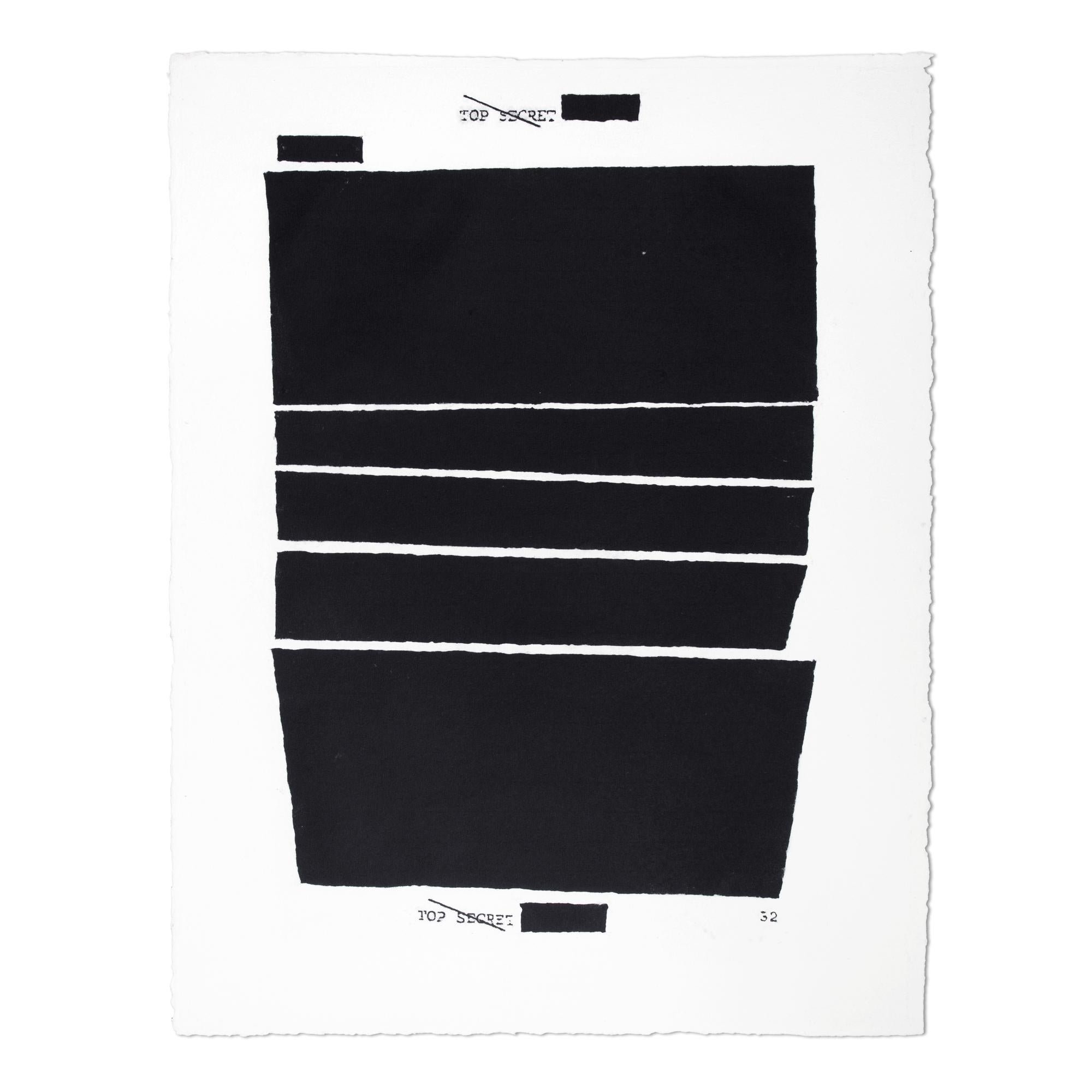
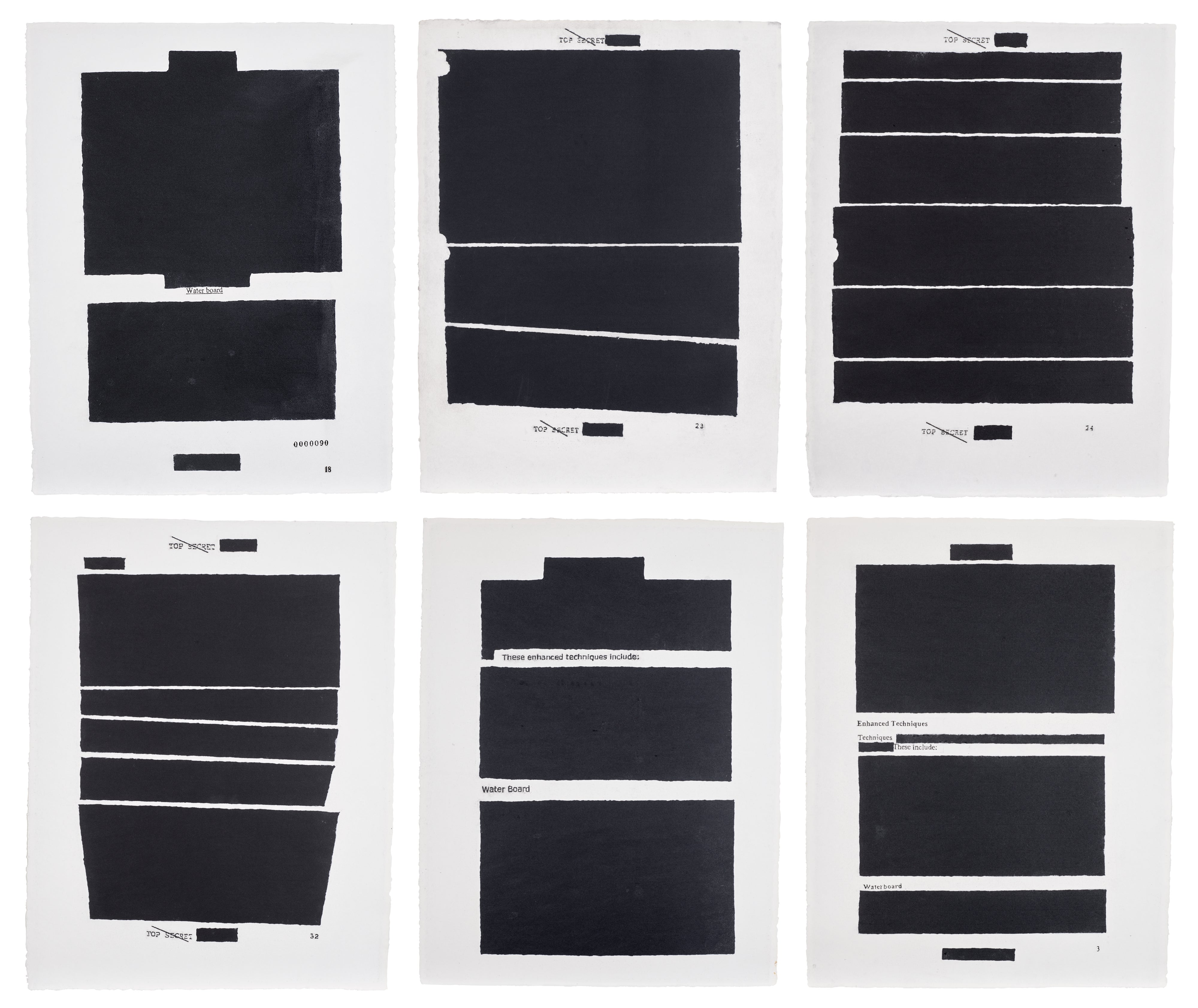
Top Secret 23 (from Water Boarding), 2012
Raised in a mid century American landscape of gas stations and diners, she studied at Ohio University before transferring to the Rhode Island School of Design and later participating in the Whitney Museum's prestigious Independent Study Program in New York in 1977. It was this program, with its rigorous grounding in critical theory, Marxist analysis, and the writing of thinkers like Guy Debord, that catalyzed Holzer's transformation from a painter experimenting with abstraction into an artist who understood language as the most powerful visual material available to her. The Whitney program gave her permission to think seriously about how meaning is made and who controls it. New York in the late 1970s was a crucible.
Holzer arrived in Lower Manhattan at a moment when the streets themselves were galleries, when Jean Michel Basquiat was tagging walls and Barbra Kruger was reimagining the rhetoric of advertising. Holzer's response was characteristically precise and deceptively simple. Beginning in 1977, she began wheat pasting printed posters around SoHo and Tribeca, anonymous broadsides carrying what she called her Truisms. These were short declarative sentences, aphoristic and deliberately unattributed, that refused to deliver a single stable point of view.
Jenny Holzer
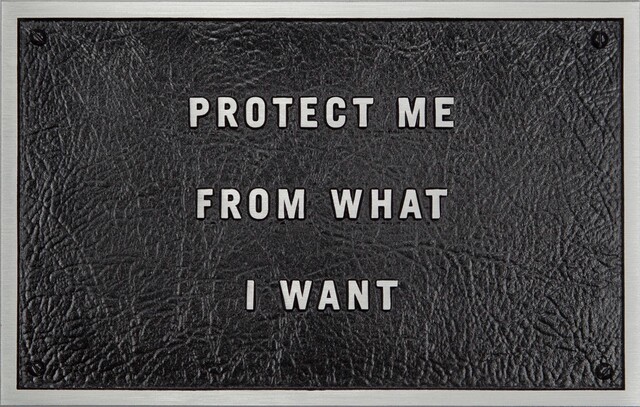
Survival : Protect Me From What I Want (Artist's Proof), 1984
Statements like "Abuse of power comes as no surprise" and "Protect me from what I want" appeared alongside "A little knowledge can go a long way" and contradictory observations that undercut each other, forcing readers to confront the arbitrariness of received wisdom. The work was free, public, and signed by no one. It was radical in the most elegant sense. The evolution of Holzer's practice through the 1980s tracked the expanding possibilities of her core idea.
“The content matters, it always has. You can have a beautiful object that says something meaningless or terrible.”
Jenny Holzer
She moved from the street into gallery contexts with the Inflammatory Essays, printed texts drawing on the rhetoric of revolutionary manifestos and religious tracts, xeroxed in bright colors and pasted in grids. Then came the Survival Series, where her sentences migrated onto bronze plaques, marble benches, and the electronic LED signs she would make definitively her own. The LED sign, with its scrolling text in glowing diodes, was the perfect vehicle. It borrowed the visual authority of Times Square advertising and the urgency of a news ticker while delivering content that was searching, contradictory, and deeply human.
Jenny Holzer
Water Boarding (Griffelkunst)
By 1989, when she represented the United States at the Venice Biennale and became the first woman to win the Golden Lion for an individual artist, it was clear that Holzer had built something genuinely new in the history of art. Among the works that define her achievement, the Survival Series occupies a central place. "Protect Me From What I Want," rendered on cast aluminum plaques and later on LED signs and marble surfaces, distills the entire project into a single devastating sentence: a prayer, a joke, a political statement, and a love poem simultaneously. Her Truisms, first printed on paper and later inscribed in stone and broadcast in light, represent one of the most sustained and formally rigorous explorations of democratic speech in postwar art.
The Water Boarding series, begun in 2004 in response to declassified government documents about the treatment of detainees, introduced redacted and reproduced official texts into her practice, making the violence of bureaucratic language visible. These works, sober and furious and formally beautiful, confirm that Holzer's practice has never been content with elegance alone. The content matters. It always has.
Jenny Holzer
Selection from, 1980
For collectors, Holzer's work offers something relatively rare in the contemporary market: a practice that is formally consistent across five decades while remaining intellectually and politically alive. Her multiples and editions, including the cast bronze plaques, the marble footstools and benches bearing inscribed Truisms, and the smaller LED signs, represent accessible entry points into a body of work that commands significant prices at auction. The marble works in particular, carved in Danby Imperial white stone with texts from the Truisms and Survival series, have long attracted serious collectors drawn to the uncanny tension between the permanence of the material and the provisionality of the language it carries. Works from the Inflammatory Essays and the Living Series appear regularly at the major auction houses and have demonstrated sustained demand across market cycles.
Holzer is represented by Sprüth Magers, with whom she has worked for many years, and her market is anchored by institutional holdings at MoMA, the Tate, the Guggenheim, and the Whitney, which lend her auction results a stability that speaks to long term confidence. Holzer's position in art history is clarified by the company she keeps. She emerged alongside Barbara Kruger, whose text and image works share a feminist critique of power, and Lawrence Weiner, whose language based Conceptualism informed a generation. She has affinities with the institutional critique of Hans Haacke and the public interventions of Felix Gonzalez Torres.
But Holzer's project is distinguished by its refusal of a single ideological signature. Her sentences do not tell you what to think. They demonstrate, over and over, that thought itself is contested terrain, and that clarity is a form of courage. What makes Holzer matter so urgently now is precisely this: in an age of information overload, of language weaponized and attention fragmented, she insists on the power of a single sentence to stop a person in their tracks.
Her practice began before the internet and has survived and absorbed everything the digital age has thrown at culture. The projections she began creating in the 1990s, throwing text across the facades of the Reichstag, the Arno River in Florence, and buildings across the globe, anticipate the scale at which language now moves through the world. She understood before almost anyone that text is image, that words are architecture, that the sentence is a political act. Seventy five years into a life and fifty years into a practice, Jenny Holzer remains essential: a conscience rendered in light.
Explore books about Jenny Holzer