Jeff Koons
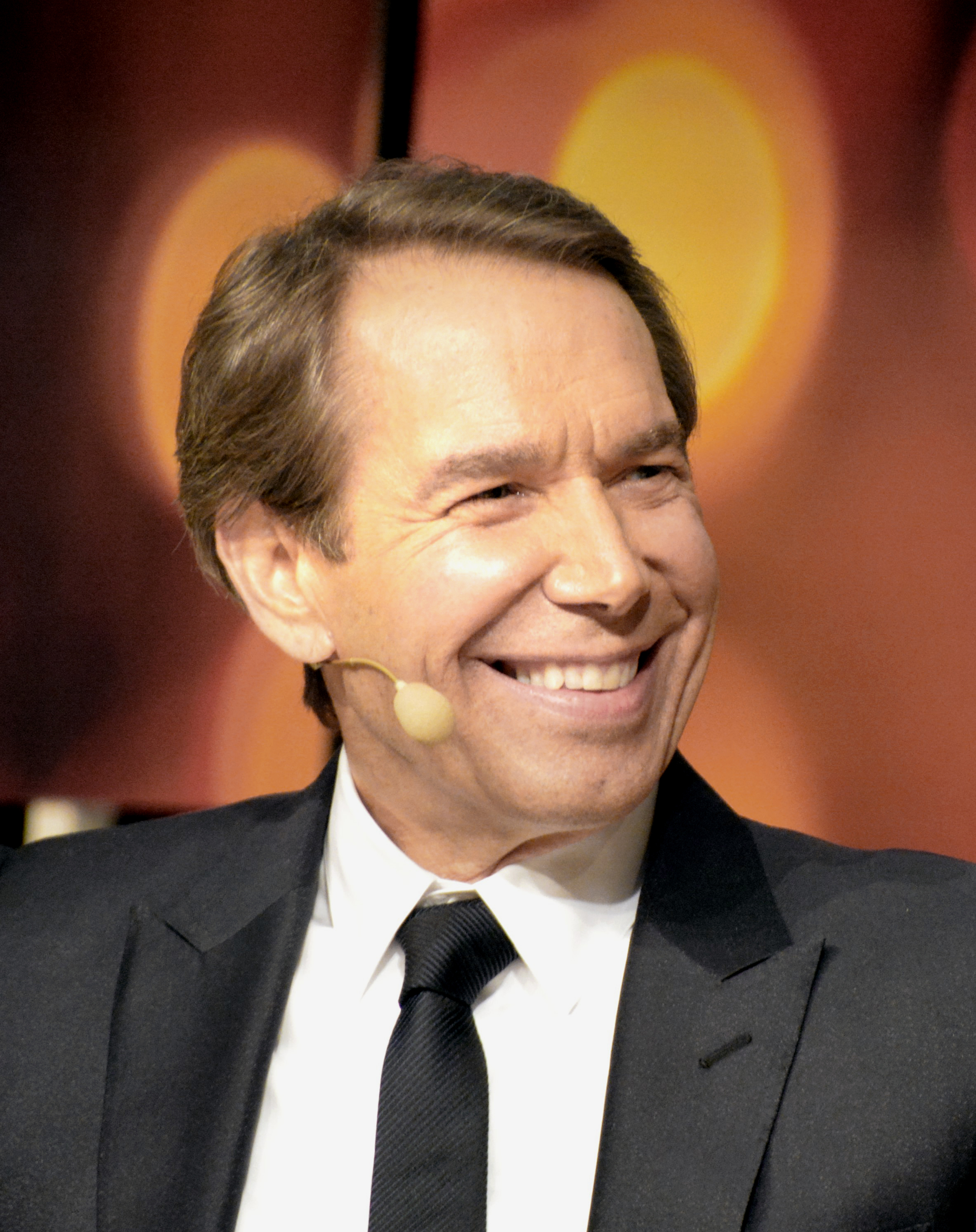
Jeff Koons: America's Most Joyful Art Visionary
Artist Spotlight · The Collection Editorial
“I believe in advertisement and media completely. My art and my personal life are based on it.”
Jeff Koons
When Sotheby's New York brought down the hammer on Jeff Koons's Rabbit in May 2019, the stainless steel bunny sold for 91.1 million dollars, setting a new auction record for a living artist. The room, by all accounts, was electric. It was a moment that crystallized something essential about Koons: that his work operates simultaneously as aesthetic experience, cultural provocation, and extraordinary financial phenomenon.
Jeff Koons
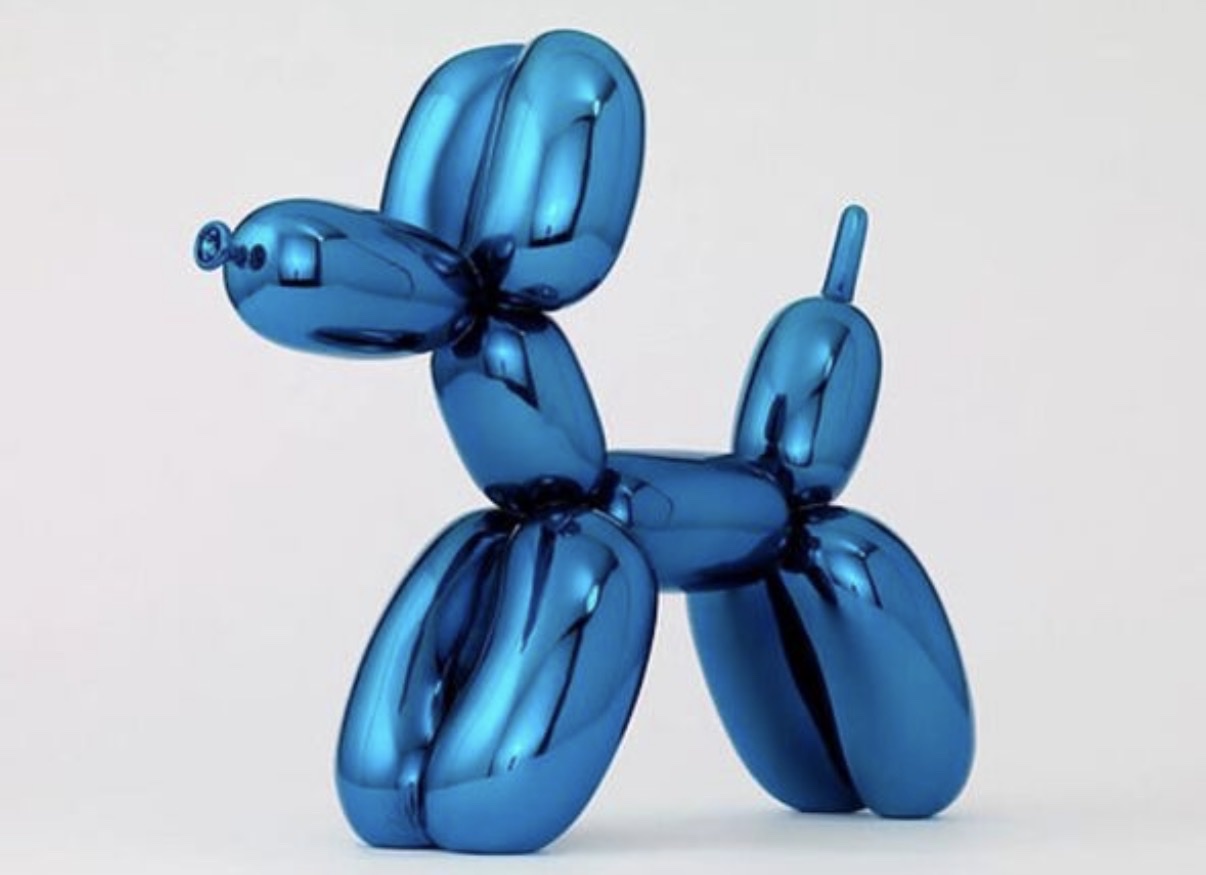
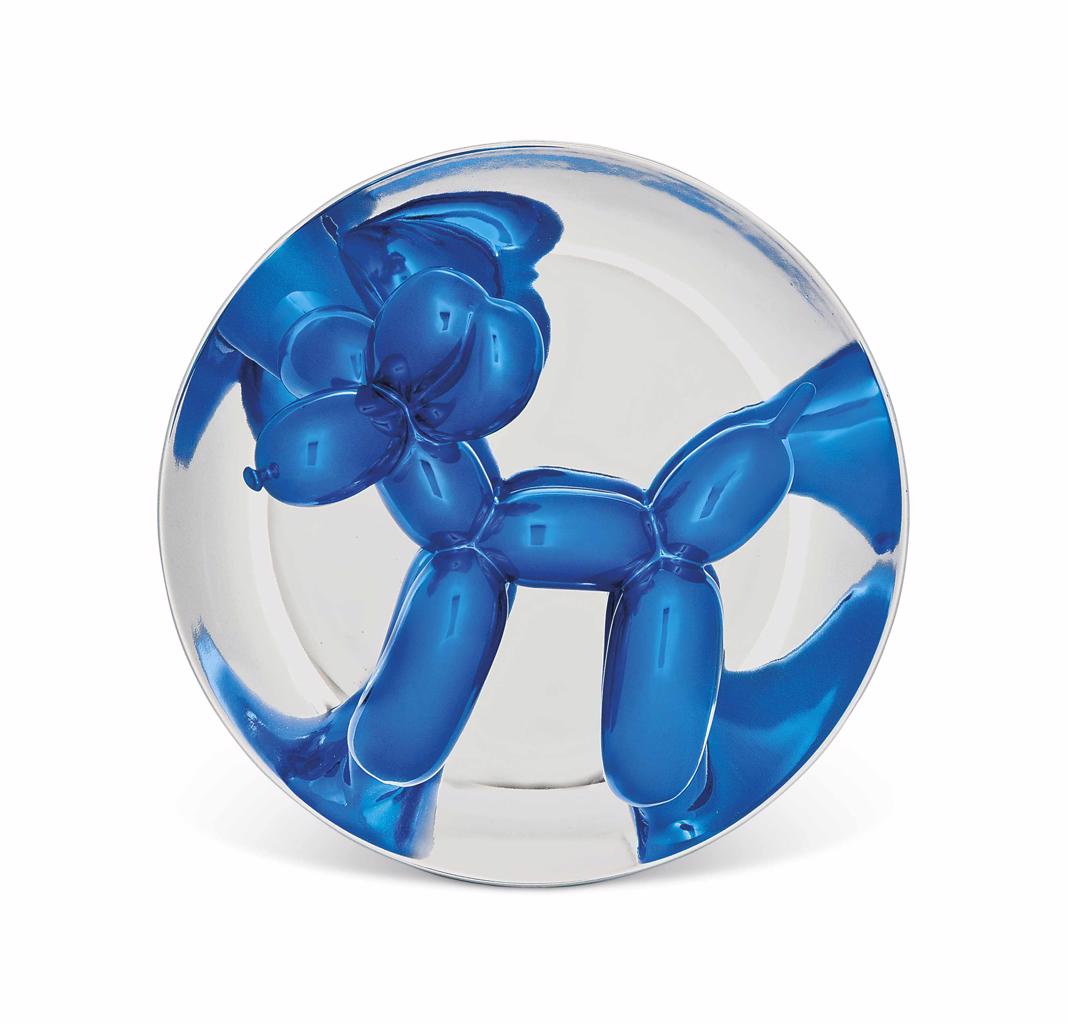
Balloon Dog (Blue), 2021
Few artists in the history of contemporary art have managed to hold all three of those registers at once, and fewer still have done so with such sustained energy across four decades of practice. Jeff Koons was born in 1955 in York, Pennsylvania, a modest mid Atlantic city whose Main Street storefronts and window displays would leave a lasting impression on his visual imagination. From an early age he demonstrated both a gift for salesmanship and an instinct for the seductive power of objects. He studied at the Maryland Institute College of Art in Baltimore before completing his education at the School of the Art Institute of Chicago, where he encountered the full breadth of art history and began developing the intellectual framework that would define his mature work.
After moving to New York in the late 1970s, he supported himself as a commodities broker on Wall Street, a period that sharpened his understanding of desire, value, and the theater of transaction. New York in the late 1970s and early 1980s was a city crackling with artistic energy, and Koons arrived precisely at the moment when artists were interrogating the relationship between art and commerce with new urgency. He found his first significant audience in 1980 when he began exhibiting the New Hoover Convertibles and Shelton Wet and Dry vacuum cleaners encased in illuminated Plexiglas vitrines, works that transformed household appliances into pristine objects of veneration. His 1981 piece New Hoover Convertibles, New Shelton Wet and Dry 10 Gallon Doubledecker remains one of the definitive works of its era, placing vacuum cleaners in fluorescent light as if they were sacred relics awaiting discovery.
Jeff Koons
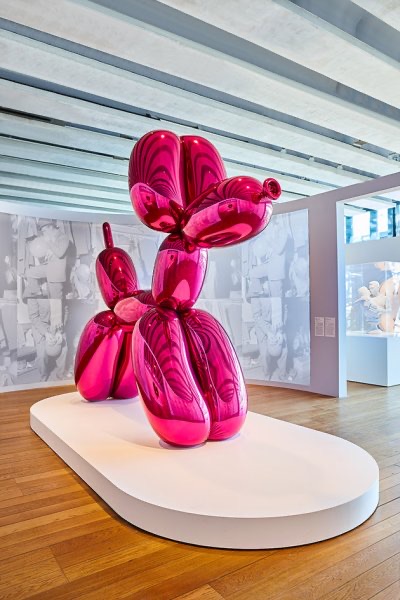
Balloon Dog Pink, 2002
These early works announced a sensibility that was simultaneously deadpan and deeply sincere, a combination that has confounded critics and captivated collectors ever since. The trajectory of Koons's career can be understood as a series of escalating interventions into the borderlands between taste categories. His Banality series of 1988, which included large ceramic and wood sculptures of Michael Jackson with his pet chimpanzee Bubbles and a bear hugging a policeman, generated fierce debate about the legitimacy of kitsch as an artistic strategy. His Made in Heaven series of 1991, featuring explicit imagery of Koons alongside his then wife Ilona Staller, pushed questions of desire and transgression to their limit.
“Art to me is a humanitarian act and I believe that there is a responsibility that art should have some kind of positive social value.”
Jeff Koons
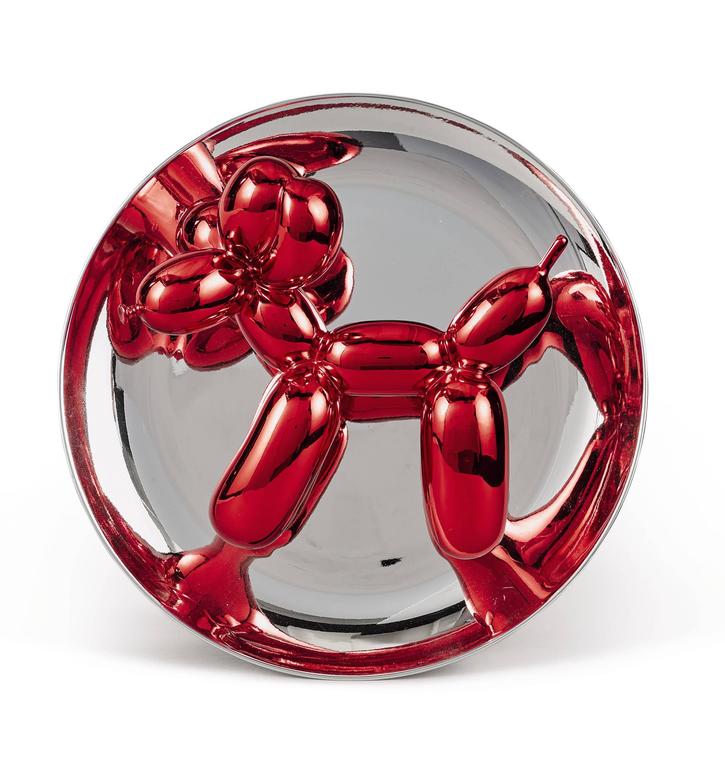
Through all of these provocations, Koons maintained a position of radical affirmation, insisting that there is no hierarchy of imagery worth preserving and that sincerity, not irony, is the engine of his practice. His Celebration series, begun in the mid 1990s and spanning years of technical development, brought that sincerity to its fullest expression. It is the Balloon Dog that has become the defining emblem of Koons's achievement, and the platform holds a remarkable range of these works across multiple years, editions, and materials. Executed in mirror polished stainless steel with transparent color coating at monumental scale, or rendered in metallized porcelain and Limoges porcelain at more intimate dimensions, the Balloon Dog distills the entire Koons project into a single form.
Jeff Koons
Red Balloon Dog, 1995
It is recognizable to a child, technically astonishing to an engineer, and philosophically inexhaustible to a critic. The surface reflects the viewer back at themselves while simultaneously suggesting the ephemeral party balloon frozen into permanence, an object that holds memory and mortality in perfect, gleaming tension. The range available here, from the Pink of 2002 to the Blue editions that span nearly two decades, offers collectors an opportunity to engage with this iconography across its full chromatic and material range. For collectors approaching Koons's market, understanding the distinction between his major fabricated sculptures and his works on paper or multiples is essential.
“Whatever I've done, I've always tried to make sure the viewer feels good about themselves.”
Jeff Koons
His prints and editions, including the Dolphin Saddle lithograph and the extraordinary Paddle Ball Game edition produced for the Deutsche Guggenheim, offer genuine points of entry into one of the most recognized visual languages in contemporary art. These works carry the full intellectual weight of Koons's practice while existing at a scale and price point accessible to a broader range of collectors. His large sculpture market remains dominated by institutional buyers and a handful of major private collections, with blue chip galleries including Gagosian representing his work globally. The consistency of demand across market cycles speaks to the durability of his cultural position.
Jeff Koons
Blue Balloon Dog, 2002
Koons belongs to a generation of American artists who absorbed the lessons of Andy Warhol and Roy Lichtenstein while pushing the logic of Pop Art into new territory. Where Warhol celebrated the celebrity image with cool remove, Koons embraces consumer culture with an almost evangelical warmth. His dialogue with artists like Damien Hirst around questions of luxury and mortality, and his shared preoccupations with Takashi Murakami around the permeability of high and low culture, place him at the center of the most important conversations in postwar and contemporary art. Art historically, his work sits at the intersection of conceptual art's intellectual rigor and pop art's democratic embrace, a position he has occupied with remarkable consistency.
What Koons ultimately offers is a sustained argument that beauty, joy, and accessibility are not compromises but achievements. In an art world that has often privileged difficulty and negation, his insistence on pleasure as a serious category feels increasingly prescient. Museums from the Whitney to the Pompidou to the Guggenheim Bilbao have devoted major retrospectives to his work, and each one confirms that the experience of standing before these objects is irreducible to theory alone. They ask to be felt as much as thought about, and that combination of sensation and idea is the hallmark of the greatest art.
For collectors, for institutions, and for anyone who believes that contemporary art should reach beyond the initiated, Jeff Koons remains one of the essential voices of our time.
Explore books about Jeff Koons
Jeff Koons
Anthony d'Offay
Jeff Koons: A Retrospective
Paul Schimmel
Jeff Koons: Easyfun-Ethereal
Jeffrey Deitch
Jeff Koons: Split-Rocker
Serpentine Gallery
Jeff Koons: The Dakis Joannou Collection
Jeffrey Deitch and Dakis Joannou
Jeff Koons: New Paintings
Lisa Liebmann