Jean Messagier
Jean Messagier, Nature's Most Radiant Painter
Artist Spotlight · The Collection Editorial
There are artists who paint the landscape, and then there are artists who seem to become it. Jean Messagier belonged decisively to the second category. When the Musée des Beaux Arts de Besançon, the city most closely associated with his life and legacy, has presented his work to new generations of visitors, the reaction is invariably the same: a kind of joyful disorientation, as though the walls themselves have begun to breathe. Nearly a quarter century after his death in 1999, Messagier continues to reward discovery, and for collectors attuned to the great flowering of postwar French painting, his canvases remain among the most alive and generous works one can encounter.
Jean Messagier
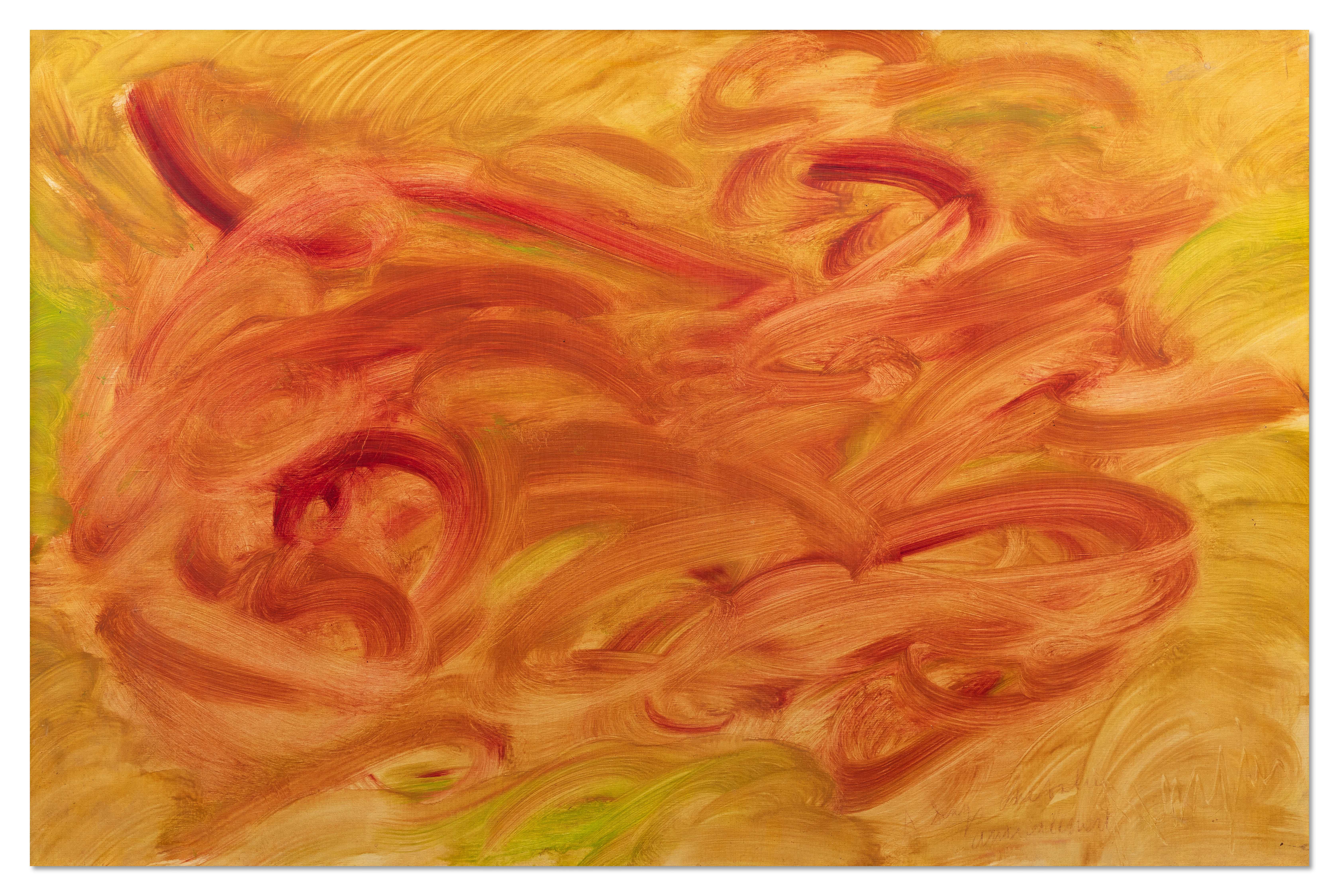
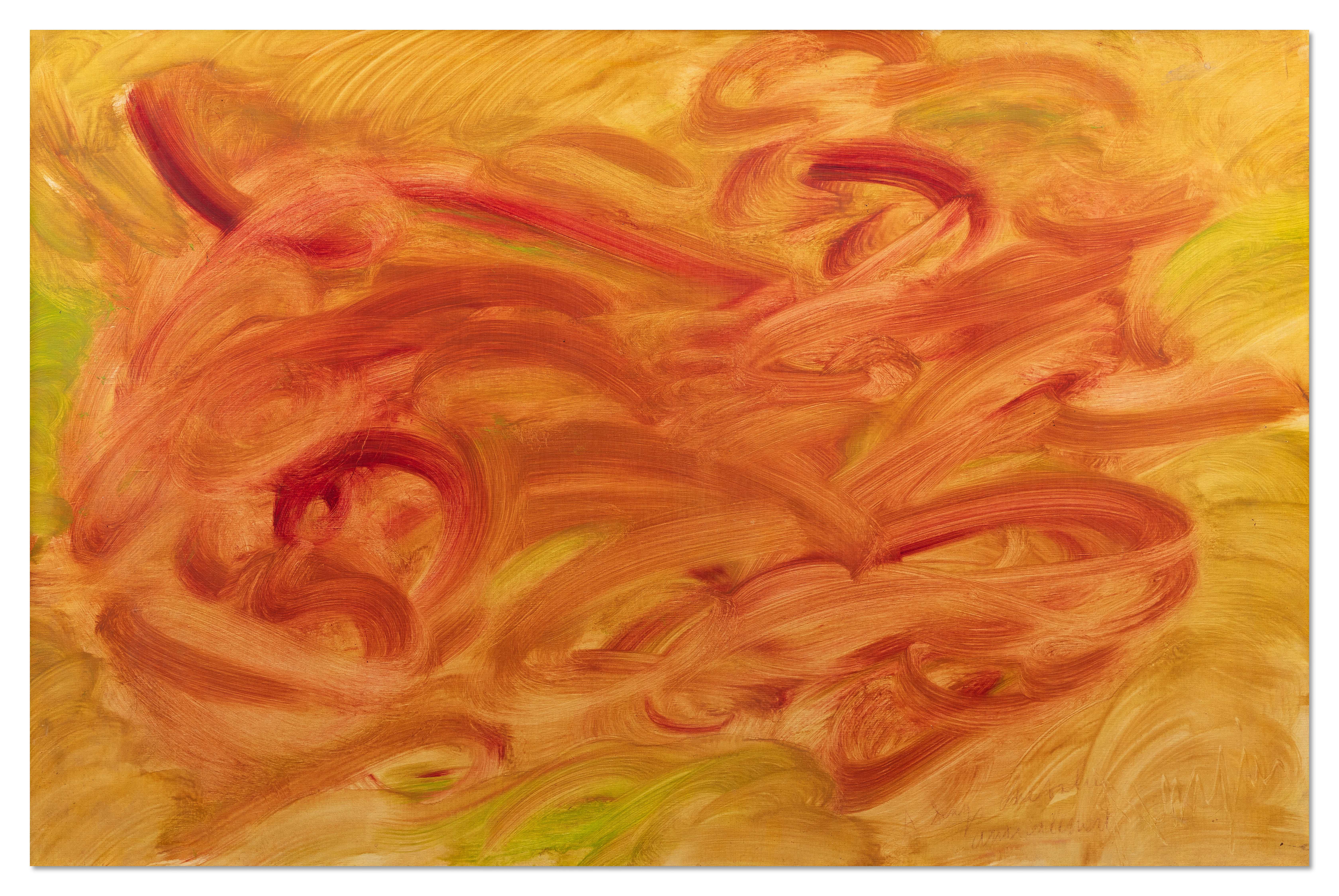
Paysage A Transformations, 1960
Jean Messagier was born in Paris in 1920, and his formation as an artist unfolded against the turbulent backdrop of mid century France. He studied at the École Nationale Supérieure des Arts Décoratifs in Paris, where he absorbed the technical discipline that would later underpin his remarkable freedom of gesture. His early career brought him into contact with the vibrant constellation of artists working in and around Paris during the 1940s and 1950s, a period when French painting was simultaneously defending its classical inheritance and reaching toward something wilder and more spontaneous. Messagier found his own path through this tension with unusual grace and conviction.
The crucial turn in Messagier's development came when he left the capital and rooted himself in the Franche Comté region of eastern France, a landscape of forests, rivers, meadows, and shifting seasonal light that would become the true subject of his entire mature practice. This was not a retreat from the contemporary art world but a deepening of his commitment to direct sensory experience. Where many of his peers in the lyrical abstraction and Informel movements drew their energy from urban anxiety or philosophical abstraction, Messagier drew his from mud, chlorophyll, the smell of rain on plowed earth, and the electric green of a French spring. The landscape did not merely inspire him; it spoke through him.
Jean Messagier
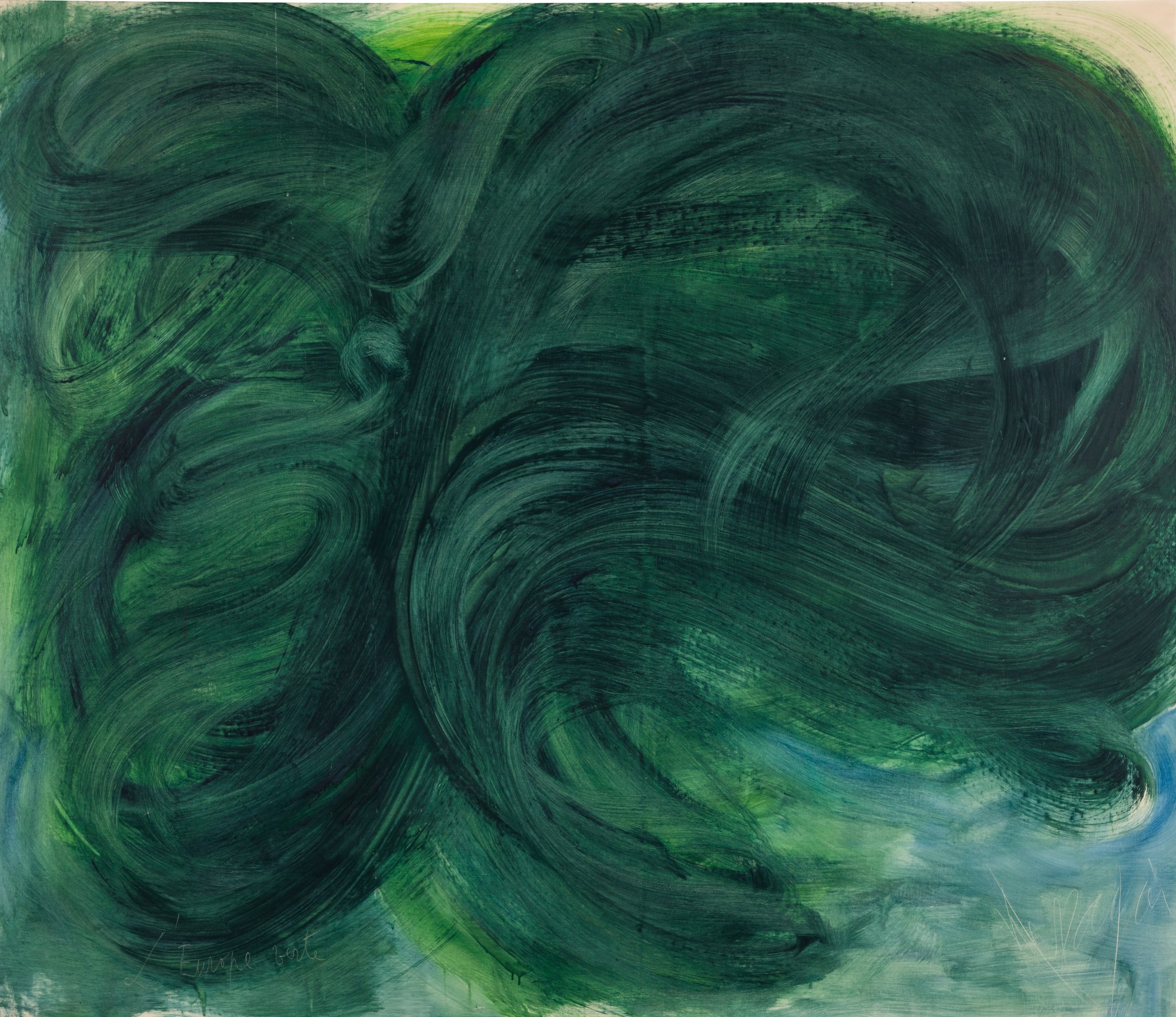
L'Europe verte
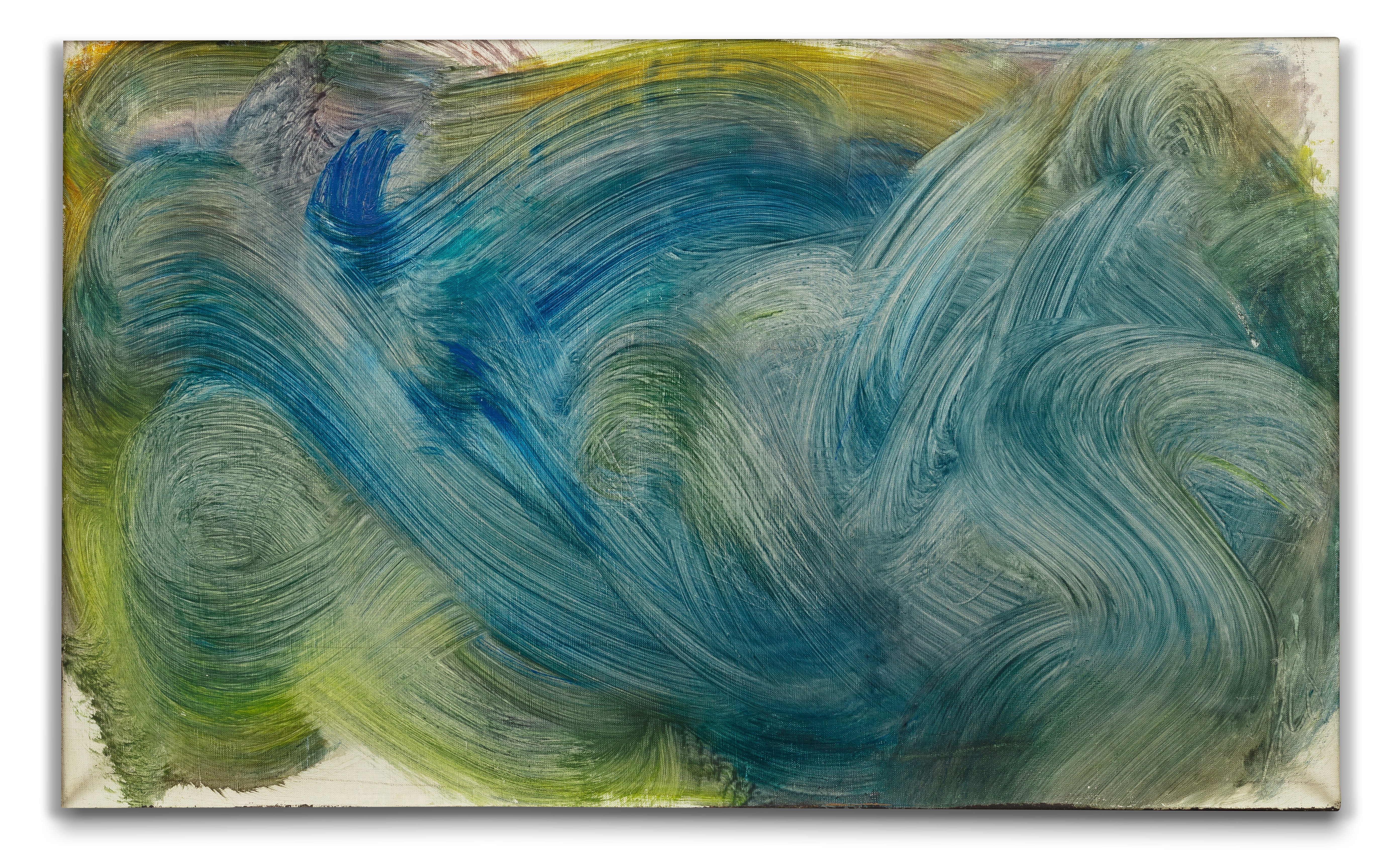
By the late 1950s and through the 1960s, Messagier had developed the signature vocabulary that makes his work so immediately recognizable and so endlessly revisitable. His canvases are dense with layered, looping, cascading marks that suggest grass bending in wind, water catching light, or the canopy of a forest seen from below. The palette ranges from deep earthy ochres and burnt siennas to the most astonishing luminous greens and blues, colors that seem lit from within rather than applied from without. Works such as Paysage A Transformations from 1960 and Les grands attrapeurs from 1961 demonstrate the full confidence of this approach: gestural and exuberant on the surface, yet structurally coherent, with a spatial intelligence that rewards sustained looking.
These are not decorative paintings. They are immersive environments. The paintings of the 1960s are widely considered the heart of his achievement, and works like Les Martin pêcheurs from 1964, Chiens de septembre from 1962, and the untitled canvas also from 1964 show Messagier at the height of his expressive power. The titles themselves are telling.
Jean Messagier
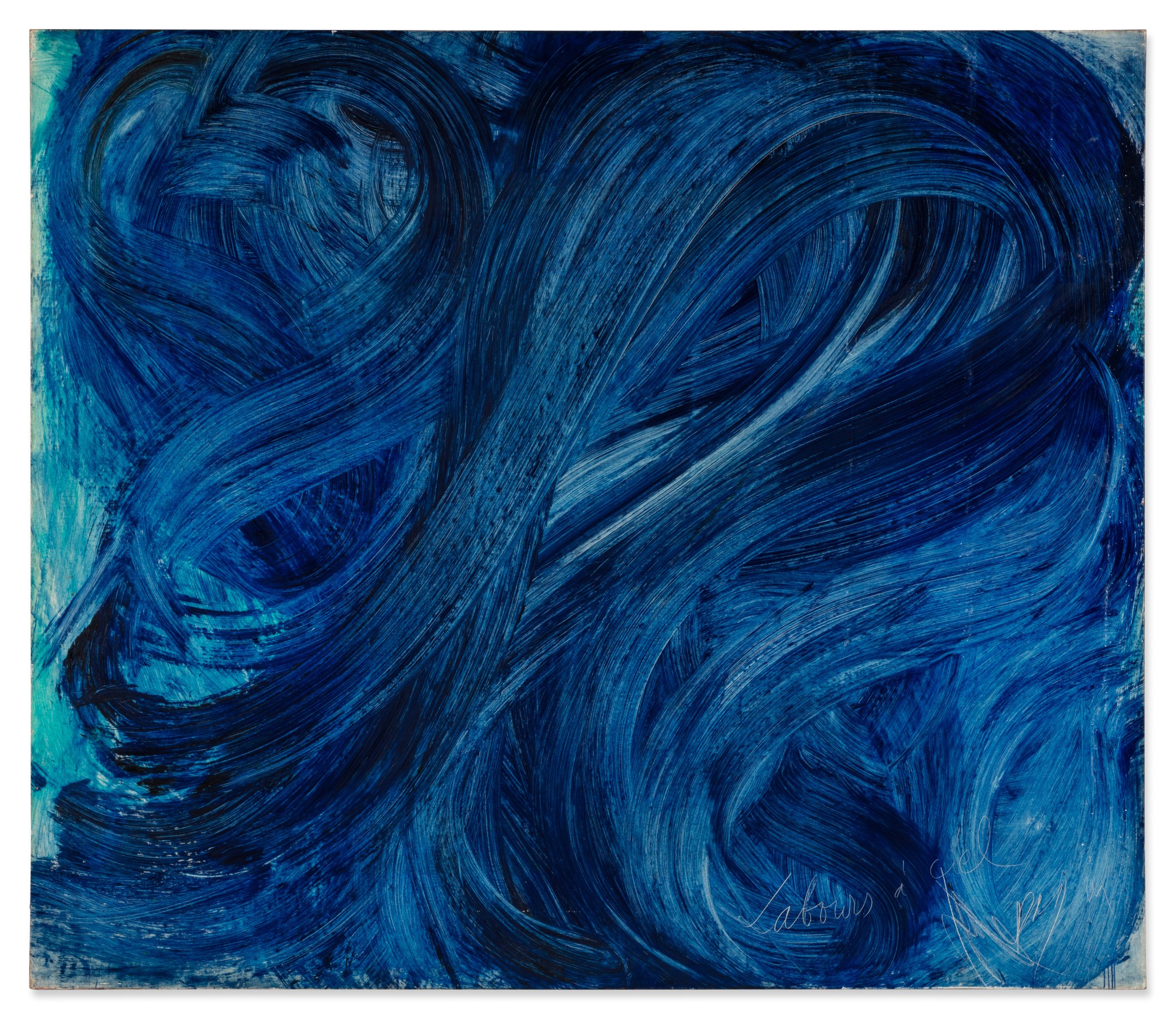
Labours à ciel, 1969
Kingfishers, September dogs, green Europe, plowing under open sky: these are not metaphors borrowed from literature but observations drawn from the actual world of fields and seasons and creatures. Labours à ciel from 1969 exemplifies this quality perfectly, its surface a record of physical engagement with both the canvas and the land it evokes, the brushwork scoring and swelling like turned earth catching early light. Messagier gave his paintings titles the way a farmer names his fields, with possessive tenderness and practical knowledge. Within the broader story of postwar European art, Messagier occupies a position that has sometimes been undervalued simply because his sensibility was too lyrical, too rooted in the natural world, to fit neatly into the dominant critical narratives of the era.
He is most naturally understood alongside figures such as Pierre Tal Coat, André Marfaing, and Jean Paul Riopelle, artists who shared his commitment to gestural mark making while insisting on an organic rather than purely formal relationship with their imagery. He is also productively compared to Hans Hartung and Roger Bissière, painters who found in abstraction not a rejection of the visible world but a more intimate way of registering it. Messagier was exhibiting regularly in Paris throughout his career, and his work entered significant French public and private collections during his lifetime. For collectors today, Messagier presents an opportunity that is both aesthetically thrilling and historically significant.
Jean Messagier
Les Martin-pêcheurs, 1964
His works appear at auction with satisfying regularity, particularly through the major French houses, and the market reflects a quiet but steady appreciation for the quality and distinctiveness of his vision. The paintings from the 1960s command the strongest interest, and rightly so, though the full arc of his career rewards exploration. Collectors drawn to postwar European abstraction, to the grand French tradition of painting as a physical encounter with nature, and to works that bring genuine warmth and vitality into a living space, will find in Messagier a painter who delivers on every count. The brushwork is confident without being aggressive, the color is generous without being sentimental, and the underlying intelligence is always present, anchoring the exuberance.
Jean Messagier died in 1999, leaving behind a body of work that feels more necessary with each passing year. As contemporary culture grows increasingly mediated and screen bound, the directness of his engagement with the physical world, his insistence on painting as a form of intimate knowledge, reads not as nostalgia but as challenge and invitation. His canvases ask us to slow down, to look at the way light moves through a landscape, to remember that the world is made of texture and season and change. That is a profound gift from any artist, and from Messagier it arrives with extraordinary beauty and hard won joy.