Jean Degottex
Jean Degottex, Where Gesture Becomes Spirit
Artist Spotlight · The Collection Editorial
Picture Paris in the early 1950s, a city rebuilding itself not only in brick and steel but in ideas. In the studios and galleries clustered around Saint Germain des Prés, a new generation of painters was wrestling with what abstraction could mean in the aftermath of catastrophe. Among them was Jean Degottex, a quietly intense figure whose canvases seemed to breathe with a force that was simultaneously physical and contemplative. He was not the loudest voice in that room, but he may have been among the most searching.
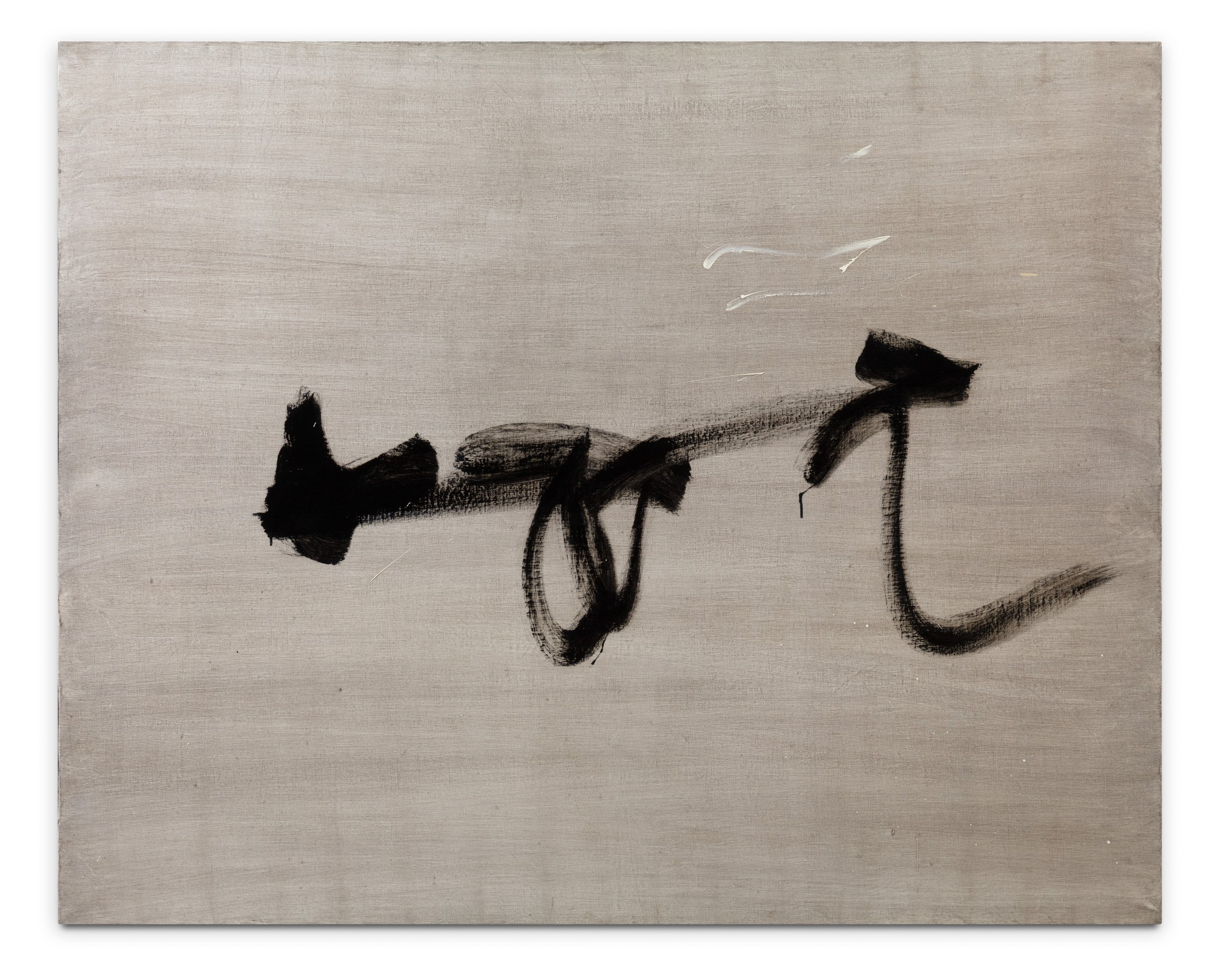
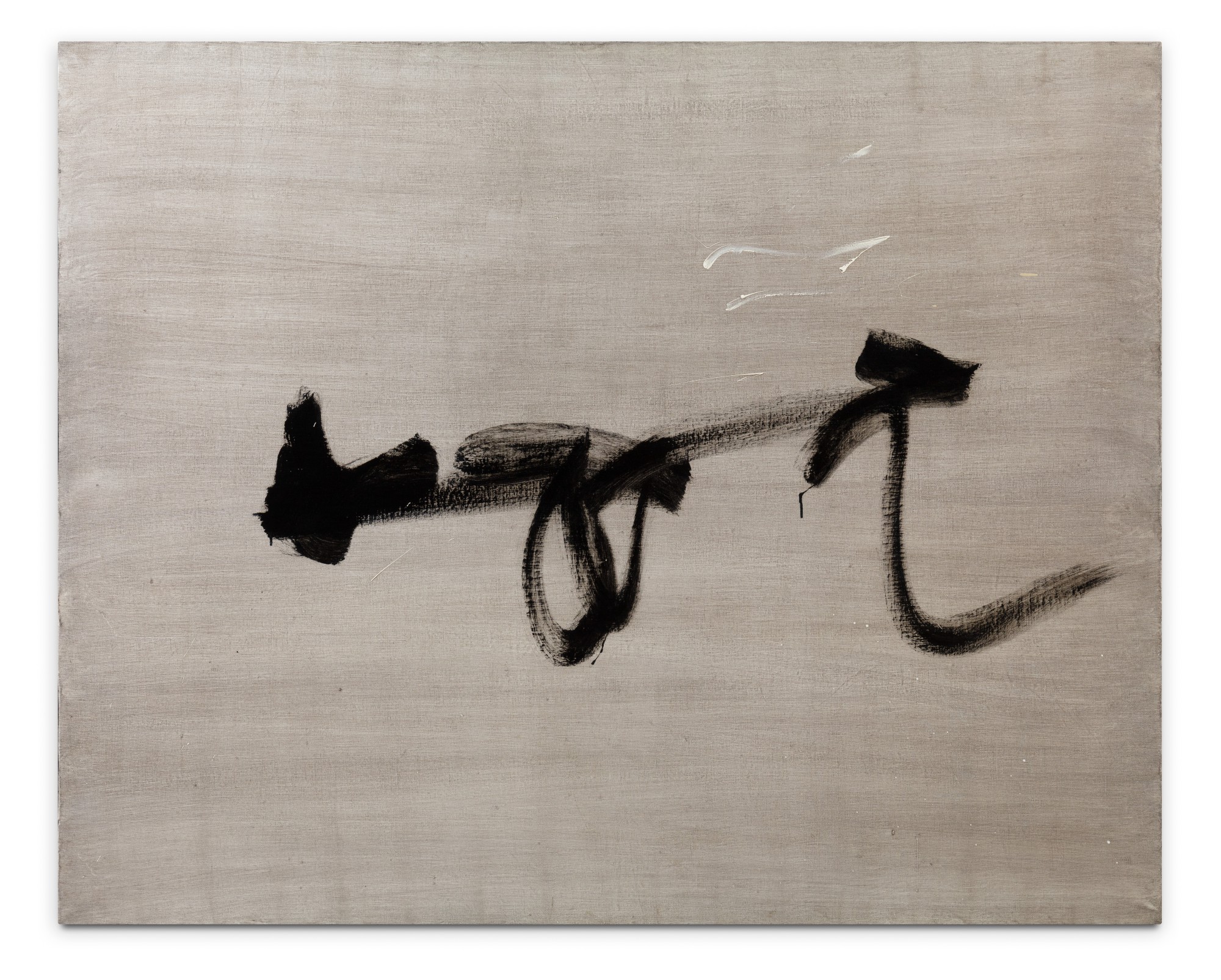
Jean Degottex
Untitled, 1958
Degottex was born in 1918 in Sète, the Mediterranean port town that also gave France the poet Paul Valéry, a coincidence that feels almost too apt. The south of France instilled in him an early sensitivity to light and to the natural world, qualities that would never fully leave his work even as it grew increasingly abstract. He came to painting without the benefit of a traditional academic formation at the École des Beaux Arts, and that distance from orthodoxy proved to be one of the most generative facts of his career. He arrived in Paris and found his footing through direct encounter with the art being made around him, absorbing influences with an openness that formal training might have narrowed.
The decisive turn in Degottex's development came through his encounter with Zen philosophy and East Asian calligraphy in the early 1950s. Where many Western artists looked eastward and borrowed superficially, Degottex absorbed something more fundamental: the idea that a mark on a surface could carry the entire weight of a moment, that the gesture of making was inseparable from the meaning made. This was not decoration or exoticism. It was a rethinking of what a painting could do.
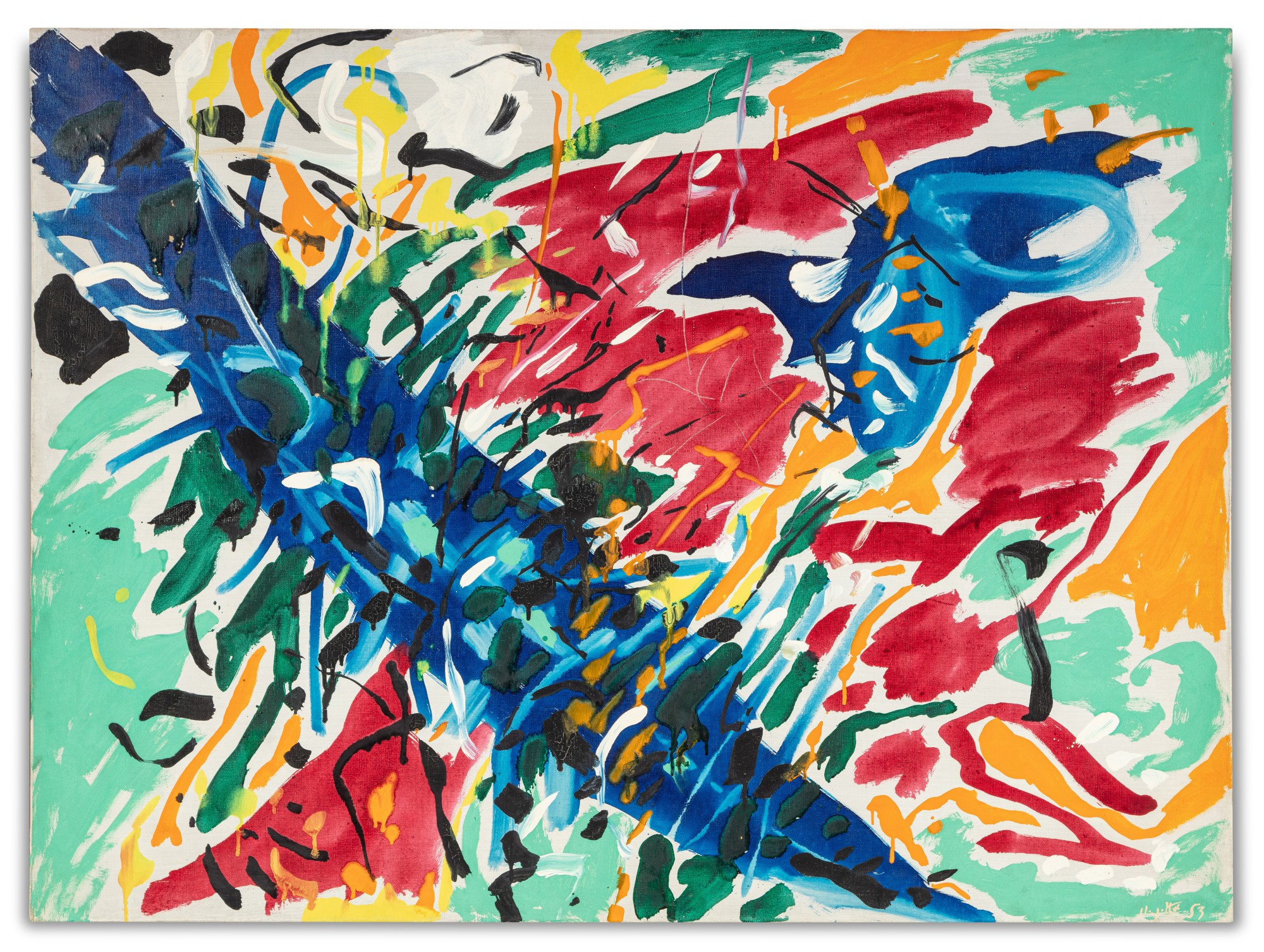
Jean Degottex
Vents, 1953
André Breton, who recognized Degottex's gifts early, awarded him the Prix de la Peinture at the Salon de Mai in 1955, a moment that brought him wider attention and affirmed his standing within the Parisian avant garde. Through the mid to late 1950s, Degottex developed the visual language that would define him: broad, decisive strokes moving across large fields of color, marks that felt simultaneously inevitable and unrepeatable. His involvement with Art Informel placed him alongside figures such as Georges Mathieu, Hans Hartung, and Pierre Soulages, yet his work retained its own atmosphere. Where Mathieu performed with theatrical velocity and Soulages pursued the luminous density of black, Degottex was drawn toward a kind of suspended energy, a moment held just before resolution.
Works from this period, including the oils on canvas from 1953 and 1955 in The Collection, such as Vents and Plein vol, demonstrate this quality with exceptional clarity. The titles themselves, words evoking wind and flight, point to a painter for whom abstraction was never purely formal but always reaching toward something felt in the body and the atmosphere. The paintings Degottex produced around 1958 and 1959, among them the Untitled oil on canvas of 1958 and the luminous Bleu of 1959 painted on board, represent a high point in his engagement with gestural mark making. In these works the surface is alive with decision: a loaded brush dragged across an expanse, a field of color broken by a single arc of movement.
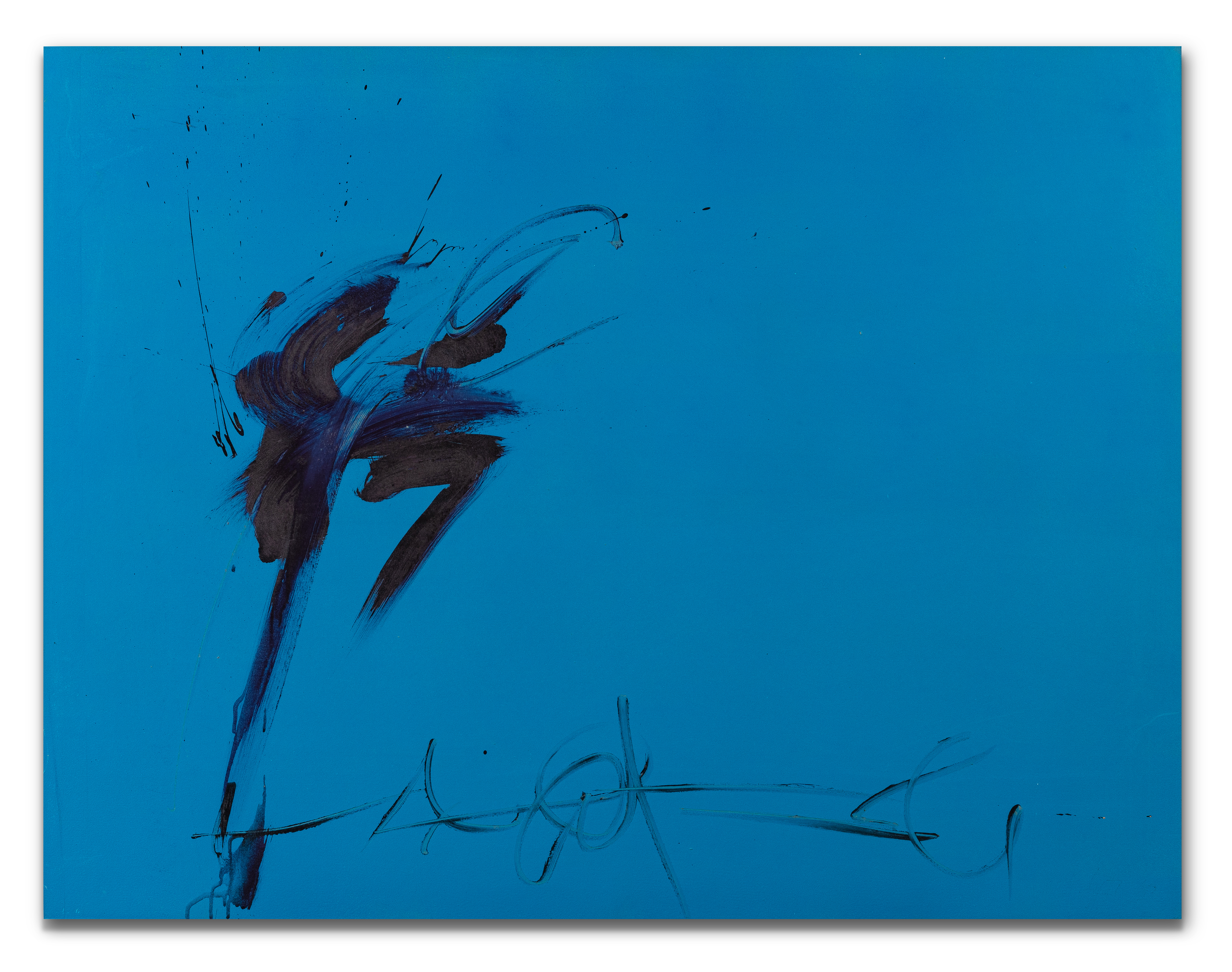
Jean Degottex
Bleu, 1959
They reward close looking in a way that reproductions cannot fully convey. The physical presence of the paint, the evidence of the artist's body in the work, is part of the meaning. Linga from 1961 extends this inquiry into territory that feels more overtly symbolic, the title invoking a form with deep roots in Hindu spiritual thought, confirming that Degottex's abstraction was always in dialogue with something beyond the purely visual. By the mid 1960s, as seen in Suite Rose Noir (XVII) from 1964, Degottex was moving toward a more rigorous reduction, pairing his gestural instincts with a stricter investigation of the painted surface itself.
He would continue to evolve through subsequent decades, eventually embracing cut and torn paper as well as more process driven approaches, but the works of the 1950s and early 1960s remain the period that draws the most sustained attention from collectors and institutions alike. These are paintings made at the intersection of action and contemplation, and they have lost none of their vitality. For collectors, Degottex represents one of the more rewarding areas within postwar European abstraction. His work appears with relative regularity at auction in Paris, where houses including Artcurial and Sotheby's Paris have handled important examples, and prices for strong period works from the 1950s and early 1960s have reflected growing institutional recognition of his place in the canon.
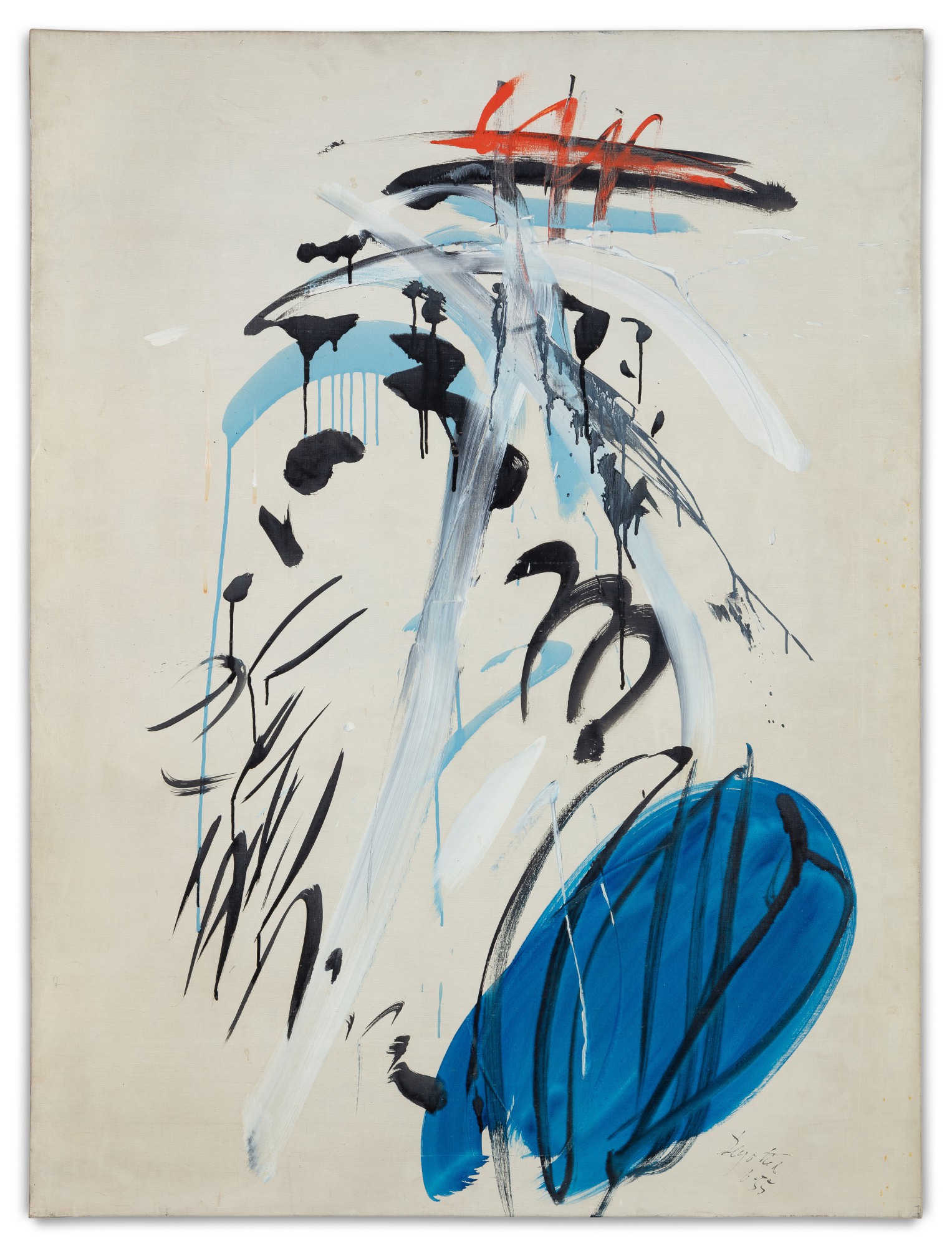
Jean Degottex
Plein vol, 1955
The qualities to prioritize are those that distinguish his best work from his more routine output: clarity of gesture, the relationship between the mark and the ground, and the sense that the painting holds a particular unrepeatable moment. Works on canvas from the core decade of 1953 to 1964 tend to be the most sought after, though works on board and cardboard from the same period, such as Bleu and Suite Rose Noir (XVII), offer accessible entry points without sacrificing quality. In terms of art historical context, Degottex belongs to a constellation of European painters who pursued gestural abstraction along a path distinct from their American counterparts. Where Abstract Expressionism in New York was inflected by existential drama and monumental scale, the French and broader European tendency that Degottex inhabited drew more heavily on lyrical intuition, on the trace of the hand rather than the declaration of the self.
Soulages and Hartung are natural comparisons, as is the German painter K.O. Götz, but Degottex's spiritual dimension also invites comparison with Mark Tobey, the American who similarly found in East Asian brush traditions a way to expand what Western painting could hold. The legacy of Jean Degottex is that of an artist who trusted the single mark, who believed that a gesture carried out with full attention and full commitment was sufficient to make a painting matter.
In a contemporary moment saturated with image and spectacle, that belief feels not dated but urgently relevant. His canvases ask the viewer to slow down, to enter the logic of a single stroke, to find in that entry something that resembles, however briefly, the clarity he was always seeking. The Collection is proud to present his work to a new generation of collectors who understand that the best abstract painting is never merely about form. It is about presence.
Explore books about Jean Degottex
Jean Degottex
François Marquet
Degottex
Pierre Restany
Jean Degottex: Catalogue Raisonné
Francine Marquet
Degottex: L'Écriture et le Geste
Bernard Noël
Jean Degottex: Retrospective
Museum curators