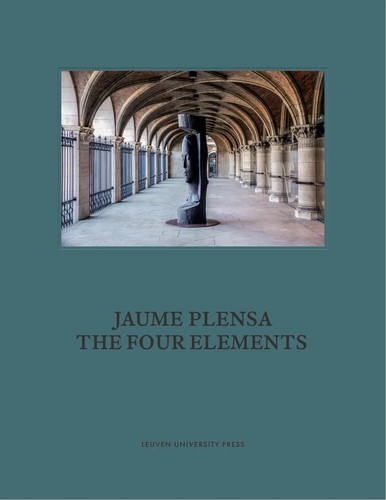
Jaume Plensa
Jaume Plensa: Sculptor of the Human Soul
Artist Spotlight · The Collection Editorial
“The body is like a landscape. I am always trying to find the soul inside the body, the inner world.”
Jaume Plensa, interview with The Guardian
In the spring of 2023, visitors to the grounds of the Yorkshire Sculpture Park stood quietly before one of Jaume Plensa's towering white heads, its surface etched with interlocking letters from alphabets spanning continents and centuries. No one rushed. That is the particular power of Plensa's work: it stops people, draws them into a silence that feels earned rather than imposed. At a moment when public art is under intense scrutiny for its relevance, its honesty, and its capacity to genuinely move people, Plensa's sculptures continue to do something rare.
Jaume Plensa
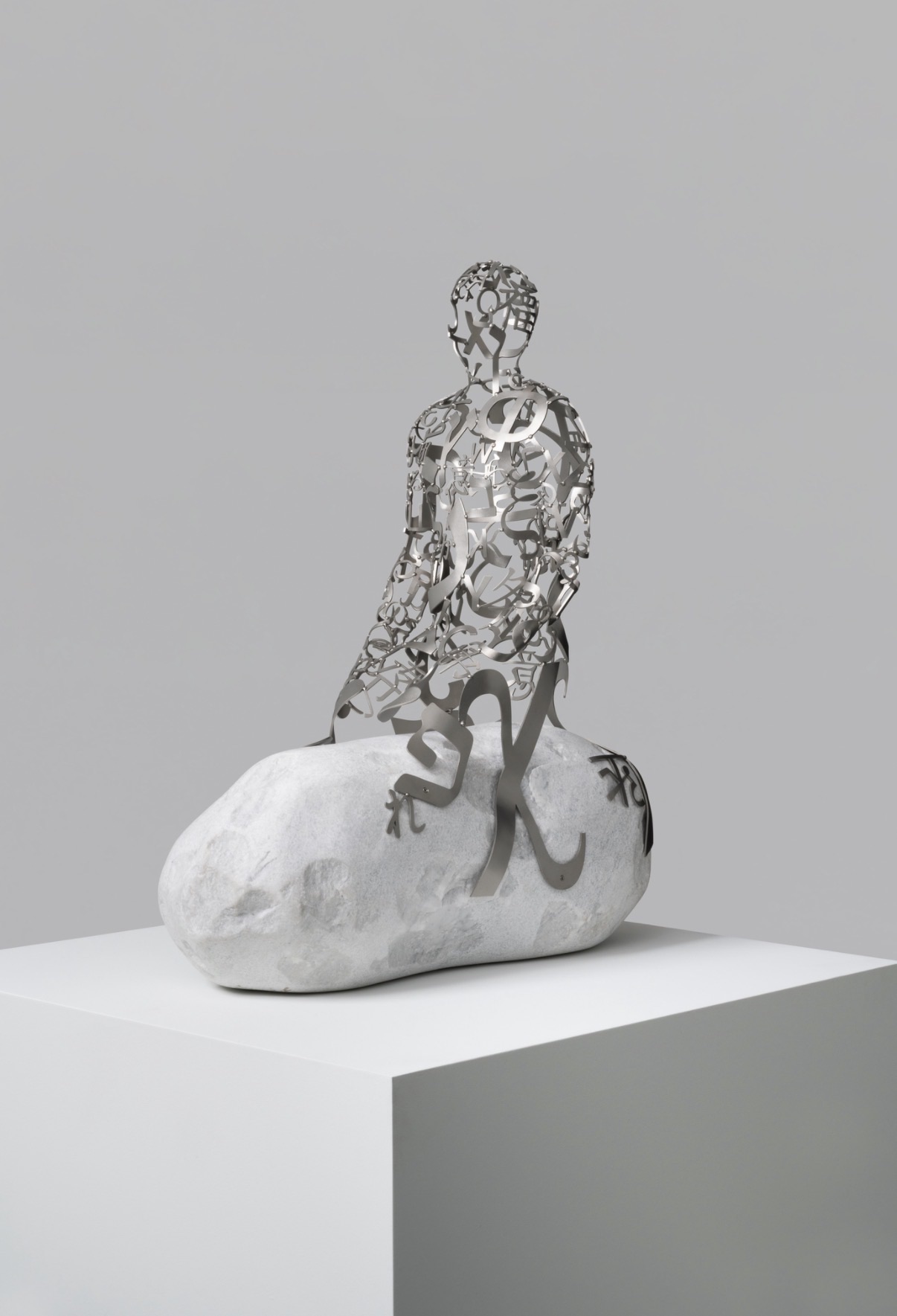
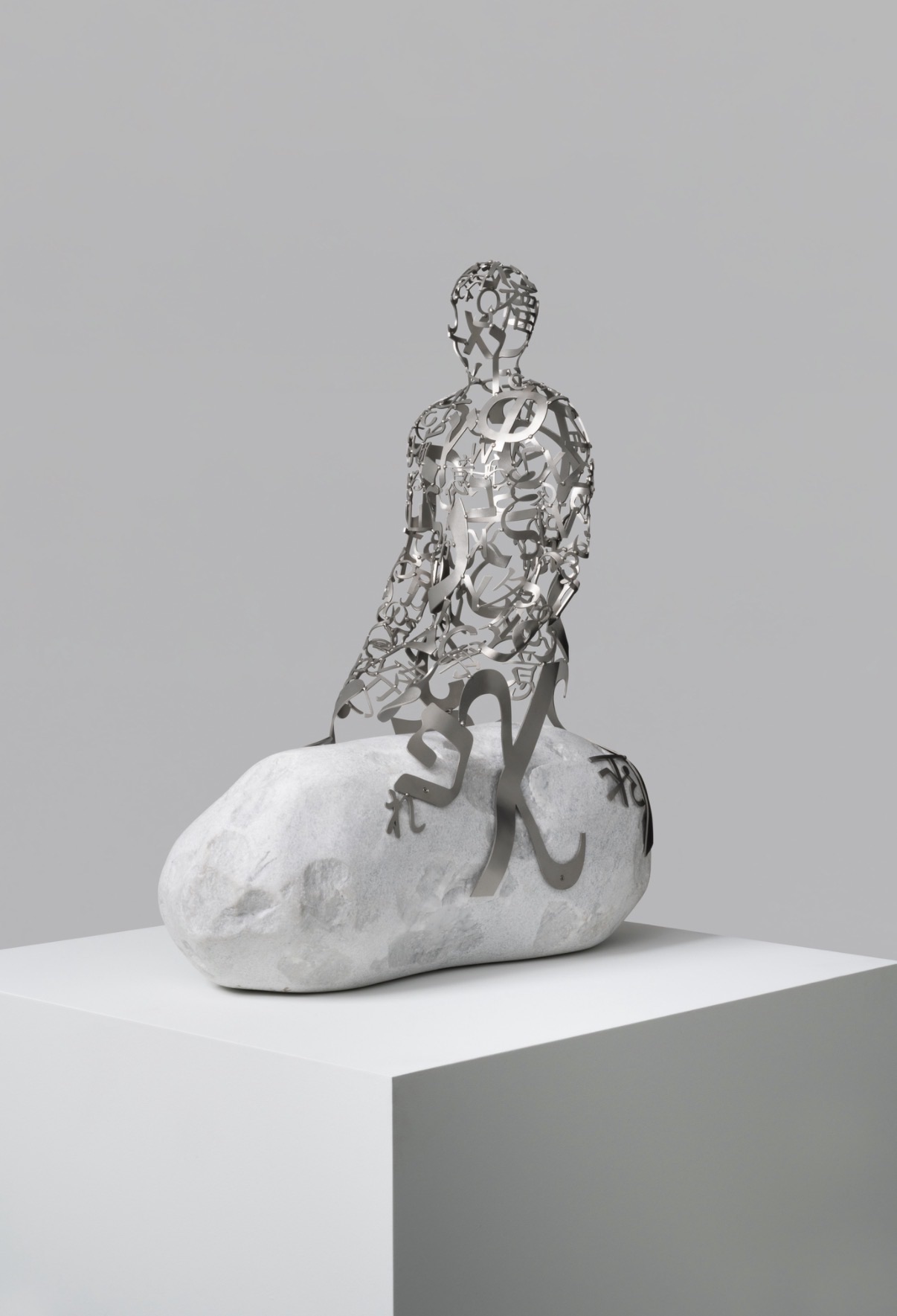
White Hermit VI, 2019
They speak to every person who stands before them while somehow remaining entirely private. Plensa was born in Barcelona in 1955, into a city still exhaling from decades of Francoist cultural suppression. Barcelona in the late 1950s and 1960s was a place of tension between a deeply rooted Catalan identity and the weight of enforced conformity, and that friction would leave a permanent mark on an artist who would spend his career asking what it means to belong to a body, a language, and a community. He studied at the Llotja School of Art and Design, one of Barcelona's oldest and most rigorous creative institutions, before continuing at the Escola Superior de Belles Arts de Sant Jordi.
His formation was classical in its foundations, grounded in drawing and material discipline, but his imagination was always pulling toward something more expansive. The early phase of Plensa's career drew significant attention in Europe through his engagement with raw, industrial materials. Iron, steel, and cast elements dominated his work through the 1980s, and he developed a language that felt simultaneously ancient and urgently contemporary. He began showing internationally in the late 1980s and found a receptive audience in Germany and France, where the tradition of monumental sculpture carried enormous cultural weight.
Jaume Plensa
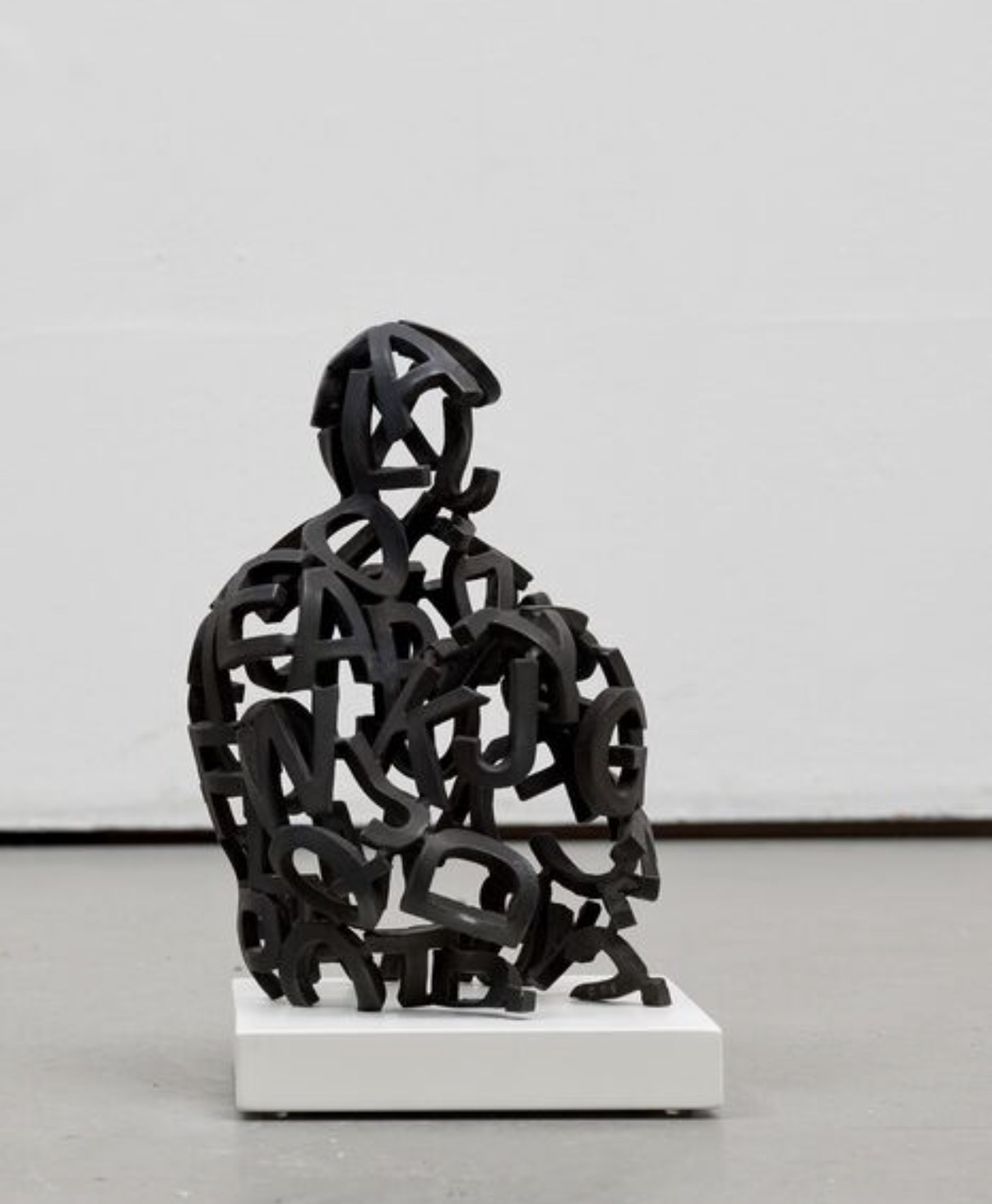
To R.M. Rilke, 2010
His relationship with Galerie Lelong in Paris became a cornerstone of his career, giving him both institutional backing and a platform to reach collectors of serious ambition. Through the 1990s his work began its decisive shift toward the figurative, toward the human body as both subject and structure. The breakthrough that introduced Plensa to a truly global audience came with Crown Fountain, completed in 2004 in Millennium Park in Chicago. The work paired two fifty foot glass block towers displaying video projections of the faces of Chicago residents, with water cascading over their surfaces into a shallow reflective pool.
“Words are the skin of my sculptures. Language is not just communication. It is the material of thought itself.”
Jaume Plensa, Tate interview
It was participatory, democratic, and deeply joyful, a public artwork that refused to be monumental in the alienating sense and instead invited children to splash and strangers to linger. The commission cemented Plensa's reputation as one of the defining sculptors of his generation and opened the door to major institutional relationships across North America, Europe, and Asia. Since then, permanent and temporary installations have appeared from Edinburgh to Seoul, from Barcelona's waterfront to the gardens of private estates across the world. What distinguishes Plensa's mature practice is his insistence on the relationship between language, the body, and inner life.
Jaume Plensa
Alegria I, 2009
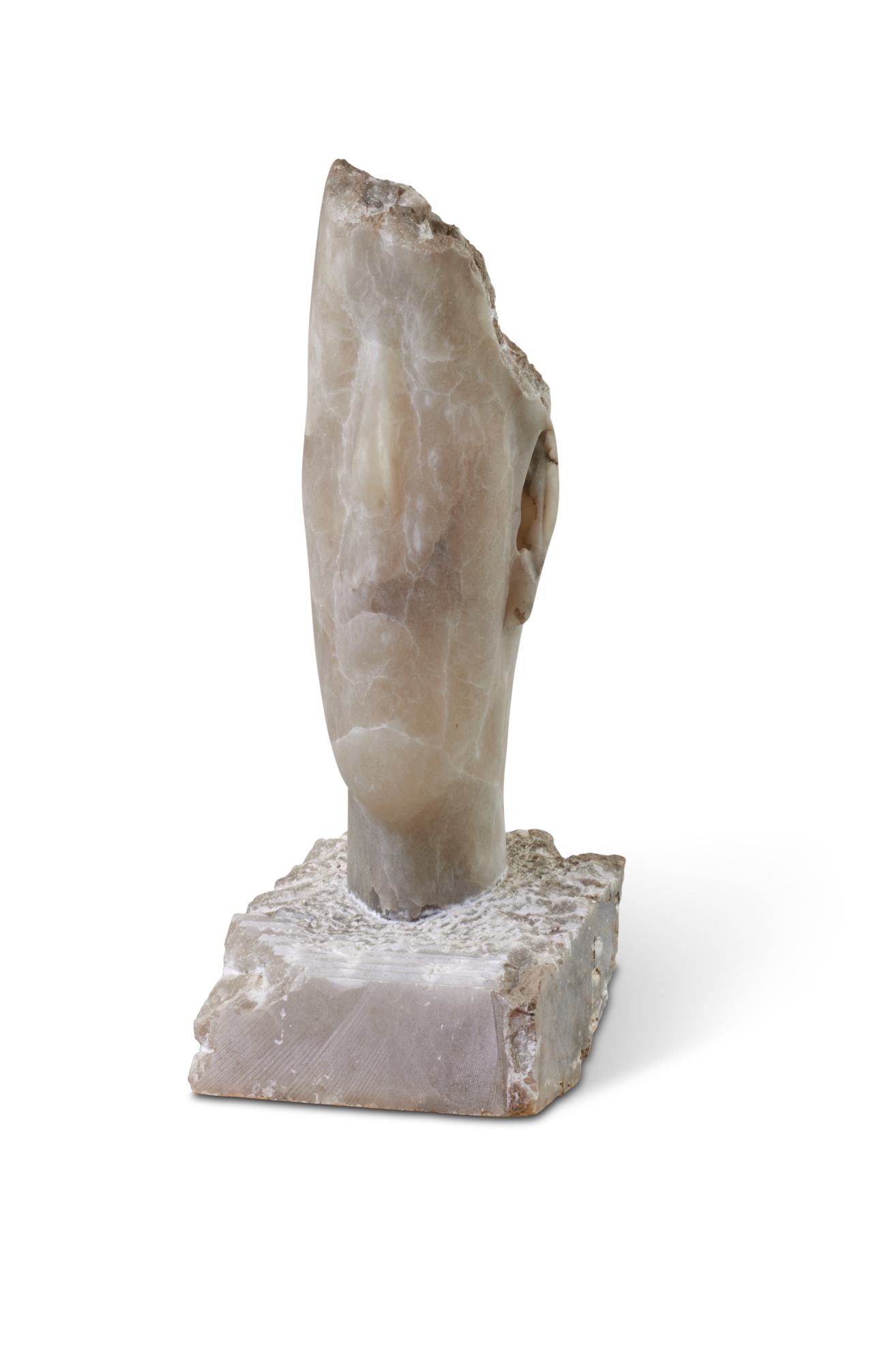
His large figurative heads, which appear in materials ranging from white polyester resin to stainless steel to cast iron covered in lattice arrangements of alphabetic characters, propose that the self is not simply contained within the skin but constructed through words, through the accumulation of languages and stories we absorb across a lifetime. Works such as the Tel Aviv Man series and the Julia sculptures distill a face to its most essential geometry, removing individual identity in order to reveal something universal. The closed eyes of these figures suggest not absence but interiority, a meditation in progress. His marble works, including the quietly luminous Rui Rui's World from 2013, carry an additional warmth, the stone surface breathing with a softness that seems to contradict its hardness.
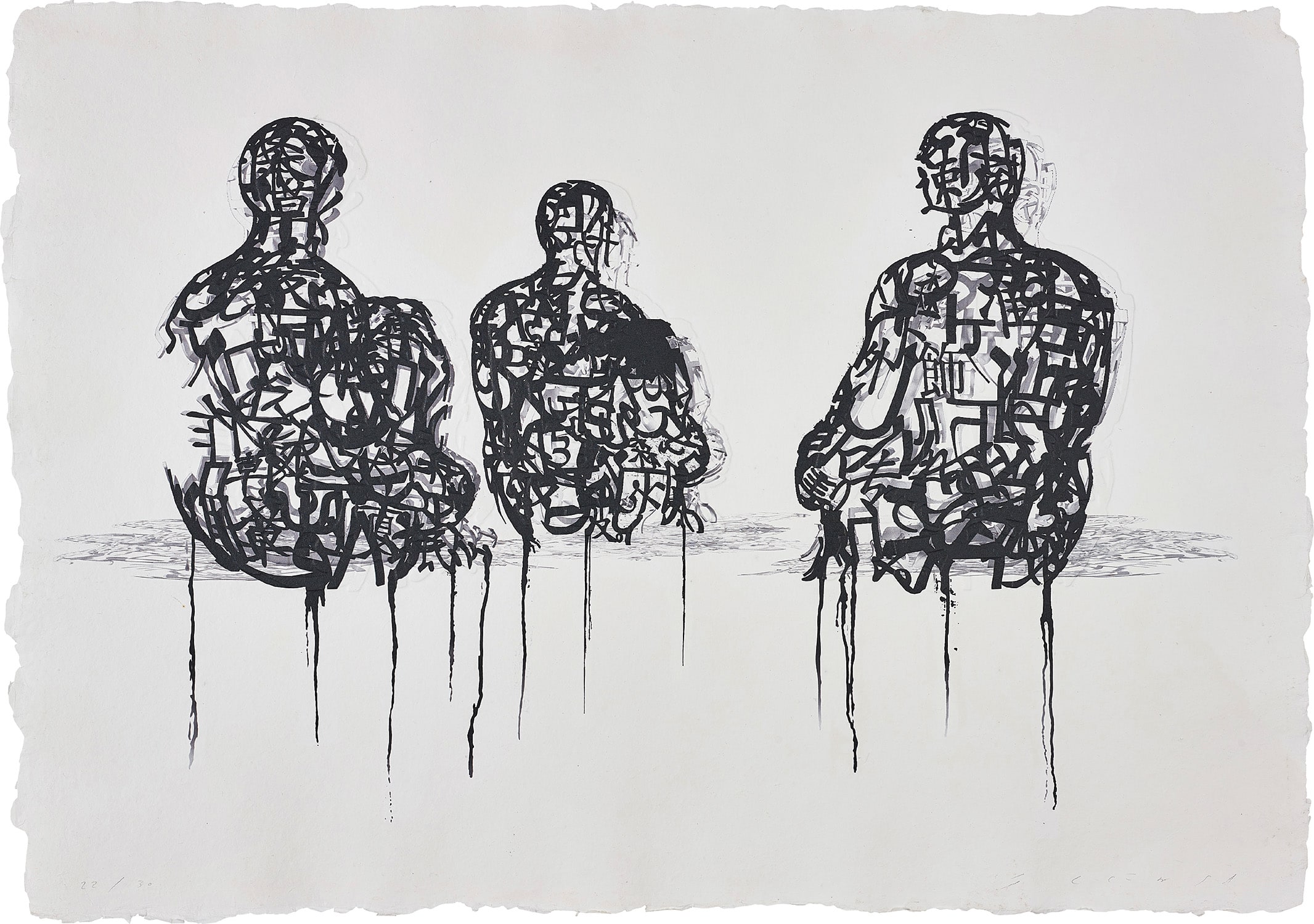
For collectors, Plensa offers an extraordinary range of entry points. His works on paper and his printmaking practice, including signed and numbered editions such as Les Trois Graces published by Galerie Lelong in Paris, allow collectors at many levels to live with his vision. These works translate his sculptural intelligence into two dimensions without losing any of their meditative quality. Among his three dimensional works, editions in bronze, resin, and stainless steel represent some of the most coherent and collected bodies of work in contemporary sculpture.
Jaume Plensa
Les Trois Graces (The Three Graces)
Study for Julia from 2017 in bronze is a particularly compelling example of how Plensa's smaller scale works carry the same philosophical gravity as his monumental pieces. The To R.M. Rilke bronze from 2010, which honors the poet Rainer Maria Rilke, reveals the deep literary current that runs beneath all of his sculpture.
Collectors drawn to Plensa tend to be those who want art that rewards sustained attention, work that changes as the light changes and as the viewer changes. Plensa occupies a distinctive position in the landscape of contemporary sculpture. His closest aesthetic neighbors include Antony Gormley, whose explorations of the body in space share Plensa's interest in absence and presence, and Anish Kapoor, whose engagement with reflective surfaces and the threshold between the visible and the invisible resonates with Plensa's own concerns. Yet Plensa's work is warmer than much of the conceptual sculpture that surrounds it, more openly emotional, more willing to be beautiful.
He belongs to a tradition that stretches from Rodin's meditations on the human form through the spiritual abstraction of Constantin Brancusi, but he brings those inheritances into a world of global cities, digital text, and restless migration. The question of legacy, for an artist still actively working and still surprising his audience, is always provisional. But it seems clear that Plensa has done something lasting: he has made sculpture that people do not merely admire but return to, physically and mentally, across years and decades. His work reminds us that the interior life is worth honoring in public space, that silence is a form of generosity, and that art made with genuine philosophical commitment can also be genuinely beautiful.
For collectors and institutions who carry his work, there is the particular satisfaction of knowing they are not simply holding an object of value but a continuing conversation about what it means to be human.
Explore books about Jaume Plensa