Jannis Kounellis
Jannis Kounellis: Life, Matter, and Poetry
Artist Spotlight · The Collection Editorial
“I am a painter. I have always been a painter. The problem is to find a new form for painting.”
Jannis Kounellis, interview with Germano Celant
In the winter of 1969, twelve live horses stood tethered inside L'Attico gallery in Rome. No paintings hung on the walls. No sculptures occupied pedestals. There was only the warm breath of the animals, the smell of hay and earth, and the sound of hooves on stone floors.
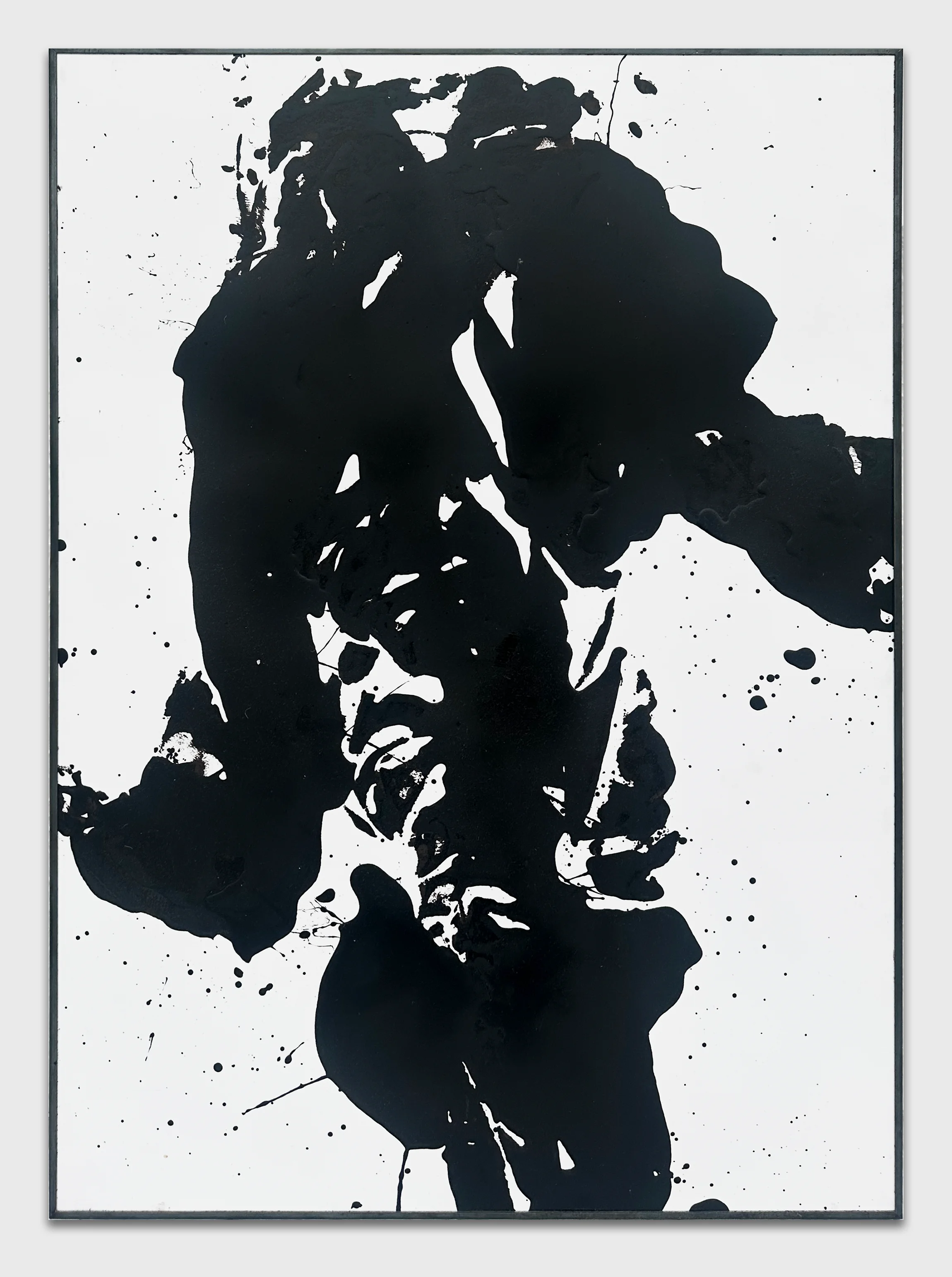
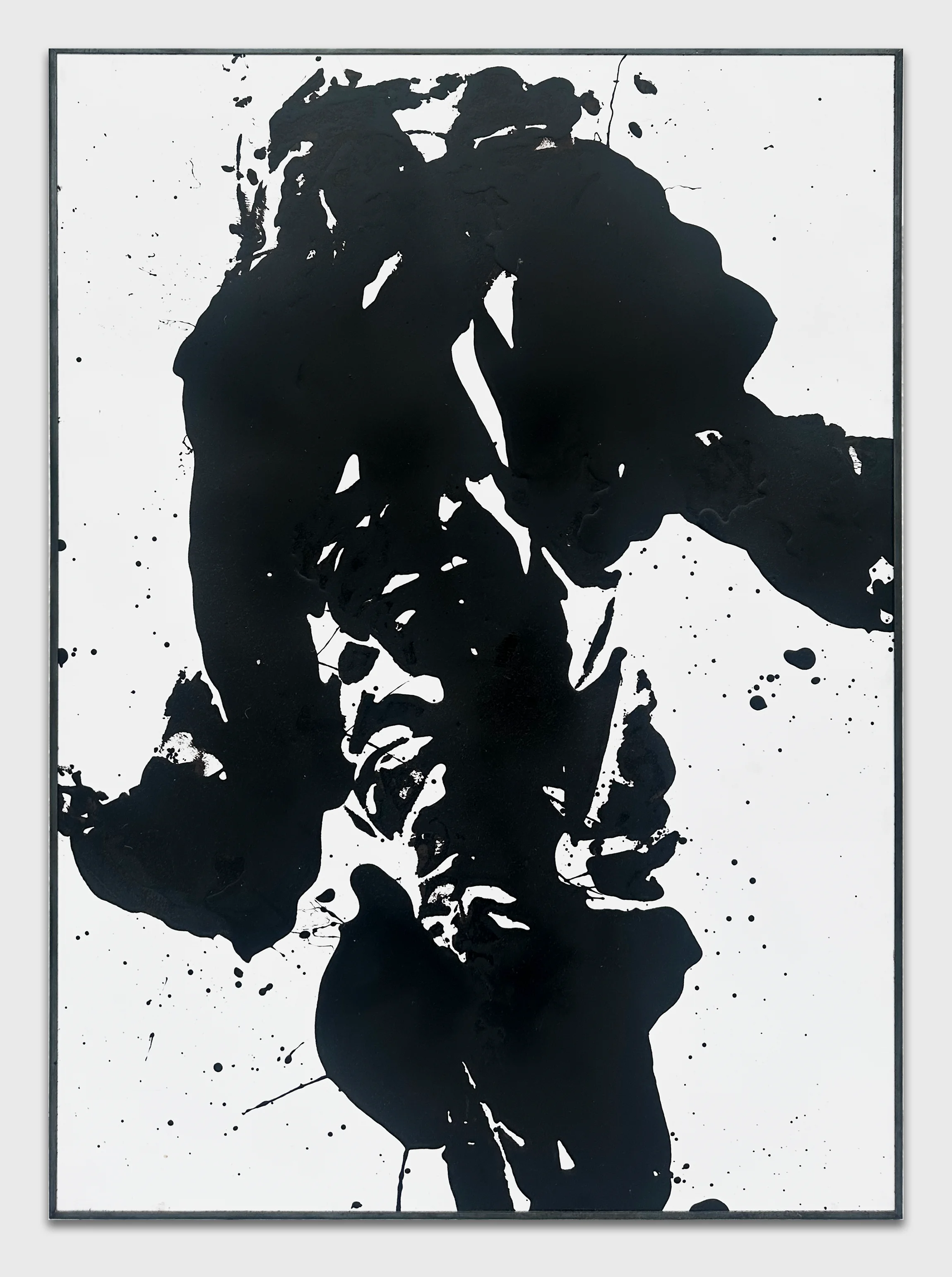
Jannis Kounellis
Untitled, 2014
That single gesture by Jannis Kounellis changed the way the art world understood what a gallery could be, what art could contain, and what presence itself might mean as a sculptural force. More than five decades later, that installation continues to reverberate through contemporary art practice in ways both obvious and profound. Kounellis was born in Piraeus, Greece in 1936, the port city that shaped his earliest sense of the world as a place of movement, exchange, and material weight. He arrived in Rome in 1956 to study at the Accademia di Belle Arti, and the city became his permanent home, the landscape against which his entire artistic vision took form.
Rome gave him ancient walls, industrial edges, the layered density of a civilization that had never fully cleared away its own past. These qualities seeped into his work from the very beginning and never left. His early paintings of the late 1950s and early 1960s drew on letters, numbers, and fragmented language stenciled directly onto canvas, work that positioned him close to the energy of American Neo Dada and Jasper Johns while remaining rooted in a distinctly European sensibility. But it was his embrace of raw, unprocessed materials in the mid 1960s that announced the full range of his ambitions.
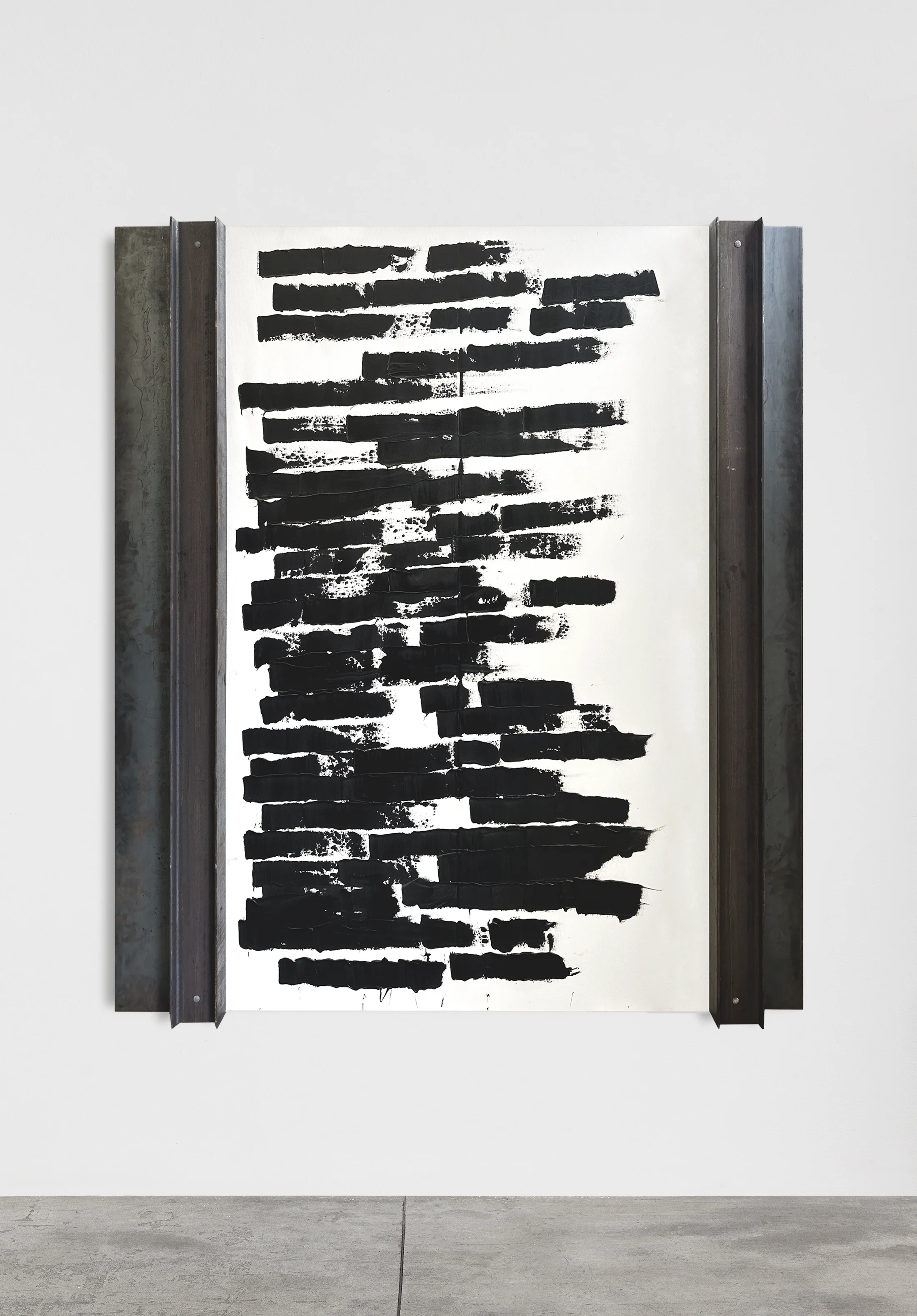
Jannis Kounellis
Untitled, 2010
Kounellis became one of the central figures of Arte Povera, the movement named by critic Germano Celant in 1967 that gathered artists including Mario Merz, Michelangelo Pistoletto, Giuseppe Penone, and Giovanni Anselmo around a shared impulse to work with humble, often industrial or organic materials as a rebuke to the slickness of consumer culture and the commodity logic of the art market. What distinguished Kounellis within this extraordinary generation was the theatrical and almost mythological dimension of his installations. Where some Arte Povera artists pursued quiet, contemplative encounters with nature and process, Kounellis worked with fire, steel, coal, burlap sacks, fragments of classical sculpture, and living creatures in ways that felt operatic in scale and ancient in resonance. He was deeply influenced by theater, by Greek tragedy, and by the idea that art could create conditions rather than objects, that a room transformed by an artist's hand was as legitimate a form of expression as any painting.
His installations often staged a kind of collision between the industrial and the mythic, between the weight of iron and the fragility of a candle flame. Throughout the 1970s and 1980s, Kounellis developed an increasingly sophisticated visual language built around steel panels, iron elements, and materials like tar, coal, and burlap applied in ways that felt both elemental and rigorously composed. Works from this period demonstrate how deeply he understood the relationship between surface and depth, between the specific gravity of a material and the emotional atmosphere it generates in a given space. A steel panel bearing a fragment of burlap and a few coal sacks is not decoration but confrontation, a demand that the viewer slow down and attend to the stubborn reality of things.
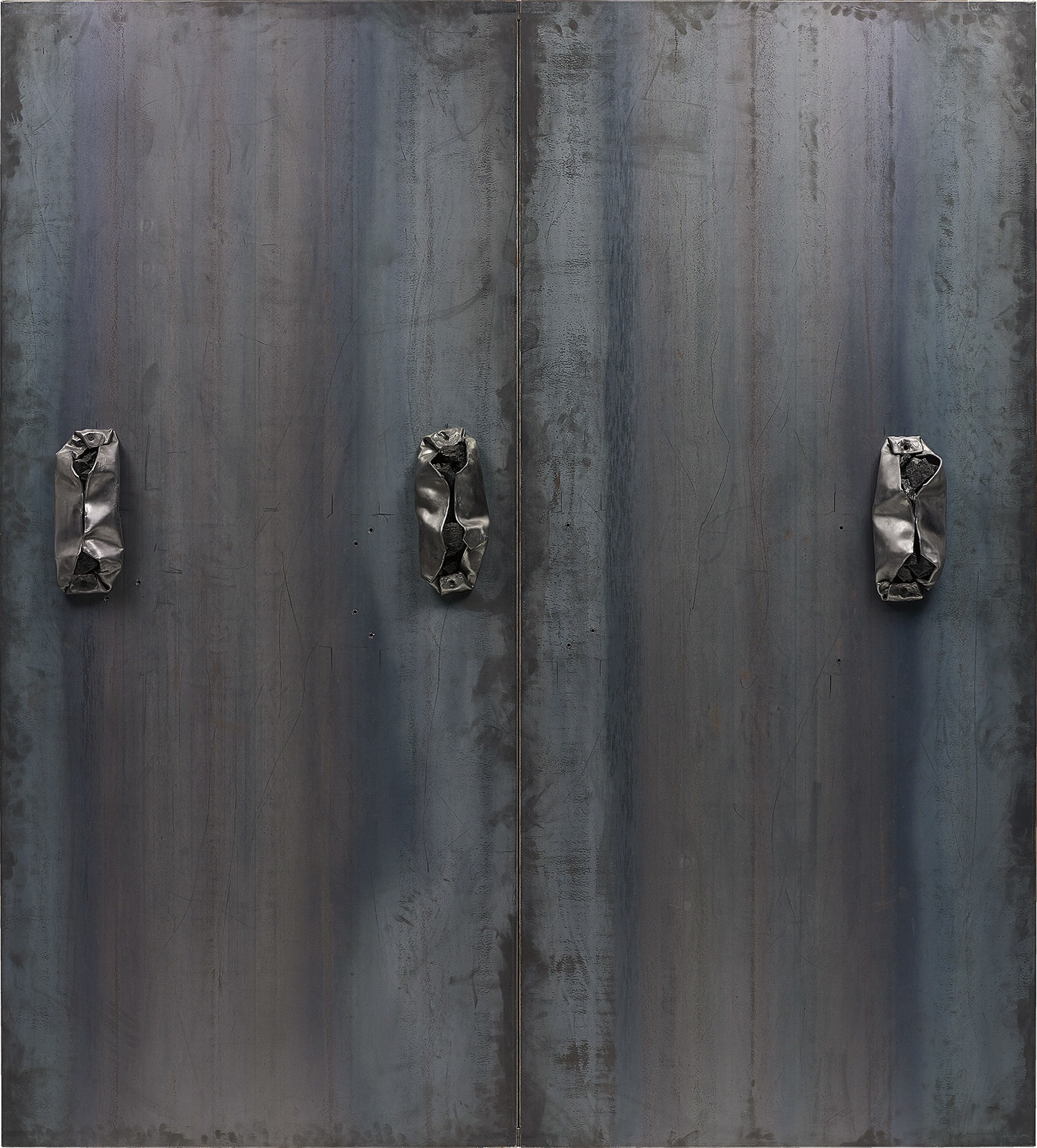
Jannis Kounellis
coal and lead on iron, 1989
His 1989 work incorporating coal and lead on iron is a vivid example of this approach, a piece where the visual vocabulary is stripped to essentials and the result is something almost unbearably direct. The works available through The Collection span several decades of his practice and offer a rare opportunity to trace the continuity and the evolution of his visual thinking. The 2014 untitled work in iron and acrylic on canvas sits alongside earlier pieces on paper from 2010, works on steel panel from 2012, and bitumen on canvas from 2013, forming a picture of a late practice that never became repetitive or decorative. A complete set of eight screenprints with oil base and relief titled The Minotaur, printed on Arches paper, is particularly significant: it speaks to his sustained engagement with classical mythology and to his belief that ancient forms of storytelling retained urgent contemporary relevance.
The 1984 Senza titolo and the 2002 Sans Titre further demonstrate the geographic breadth of his reception, with institutions and collectors across Europe recognizing the power of his work throughout his career. From a collecting perspective, Kounellis occupies a position that remains remarkably solid. His work is held by the Guggenheim Museum in New York, the Dia Art Foundation, and major European institutions, which provides the kind of institutional validation that underpins long term value. Works on paper and mixed media pieces offer a more accessible entry point into a practice that is primarily associated with large scale installation, and they carry genuine art historical weight.
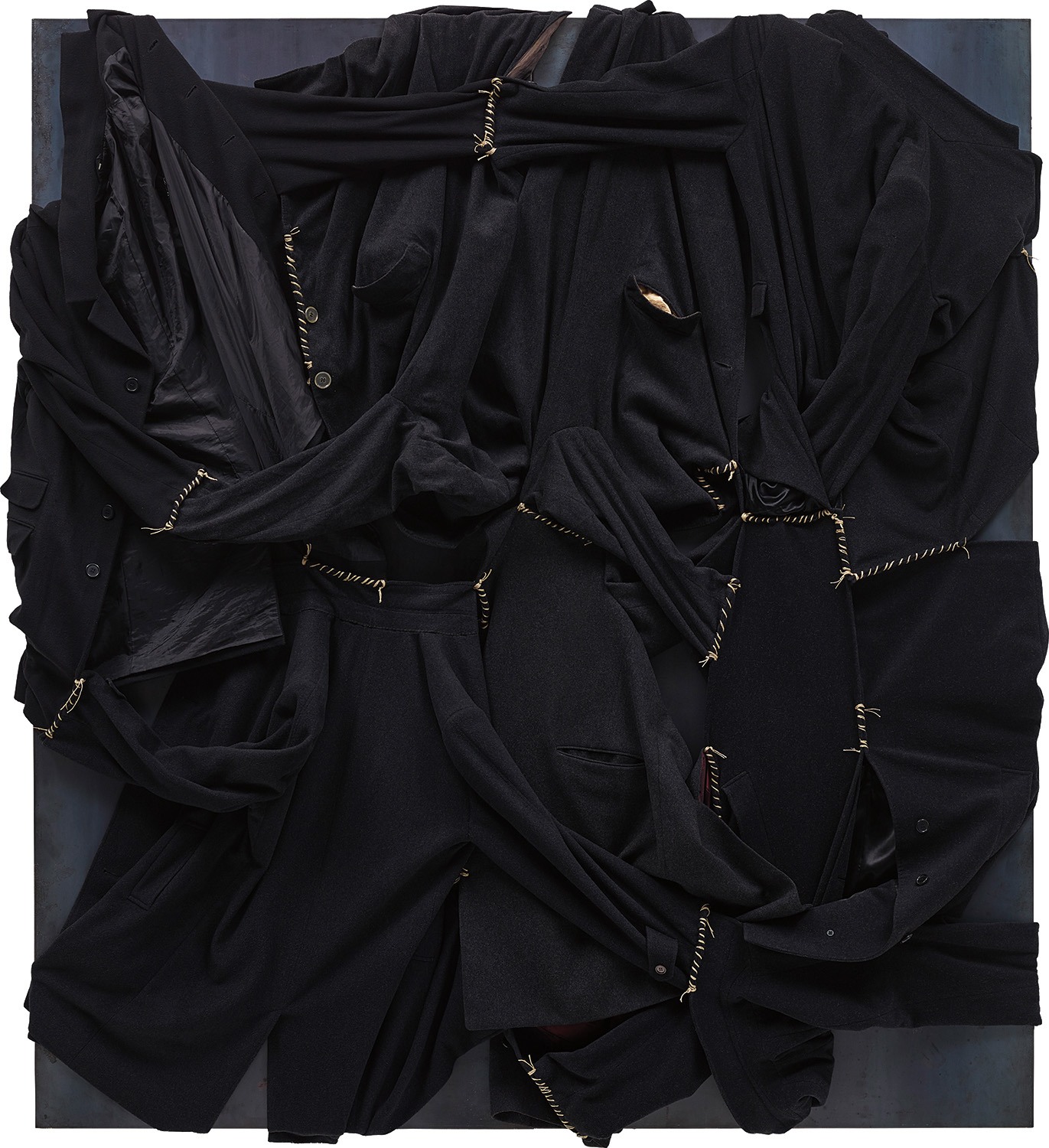
Jannis Kounellis
fabric, buttons and string on steel panel, 2012
Collectors are drawn to the coherence of his vision, to the fact that even a modest work on paper communicates the same philosophical seriousness as his most monumental room sized installations. His pieces reward sustained attention and tend to anchor a collection rather than simply populate it. The artists with whom Kounellis is most naturally grouped, Merz, Pistoletto, Penone, Anselmo, and at a certain distance figures like Joseph Beuys and Richard Serra, form one of the most intellectually rigorous networks in postwar art history. Like Beuys, Kounellis understood materials as bearers of cultural memory.
Like Serra, he grasped the way that weight and physical presence could generate psychological states in the viewer. But his Mediterranean sensibility, his love of fire and myth and theatrical gesture, gave his work a warmth and a humanity that set him apart from the cooler registers of much Minimalist and Conceptual practice. Kounellis died in Rome in February 2017, and the tributes that followed made clear how widely and deeply his influence had spread. A major retrospective organized at the Macro museum in Rome shortly after his death brought together decades of work and reminded audiences of the extraordinary consistency of his vision.
His legacy lives in the work of countless artists who understood from him that a gallery is a stage, that materials carry stories, and that art made with coal and fire and living breath can speak to the most enduring questions human beings ask about their place in the world. To live with a work by Kounellis is to live with that question held permanently open.
Explore books about Jannis Kounellis

Jannis Kounellis
Germano Celant
Jannis Kounellis: A Retrospective
Carolyn Christov-Bakargiev
Jannis Kounellis: Works and Writings
Jannis Kounellis
Kounellis
Pierre Restany
Jannis Kounellis: Paintings and Drawings
Italo Tomassoni
Jannis Kounellis
Mark Dion
Jannis Kounellis: Catalogue Raisonné
Luciano Caramel