James Mcneill Whistler
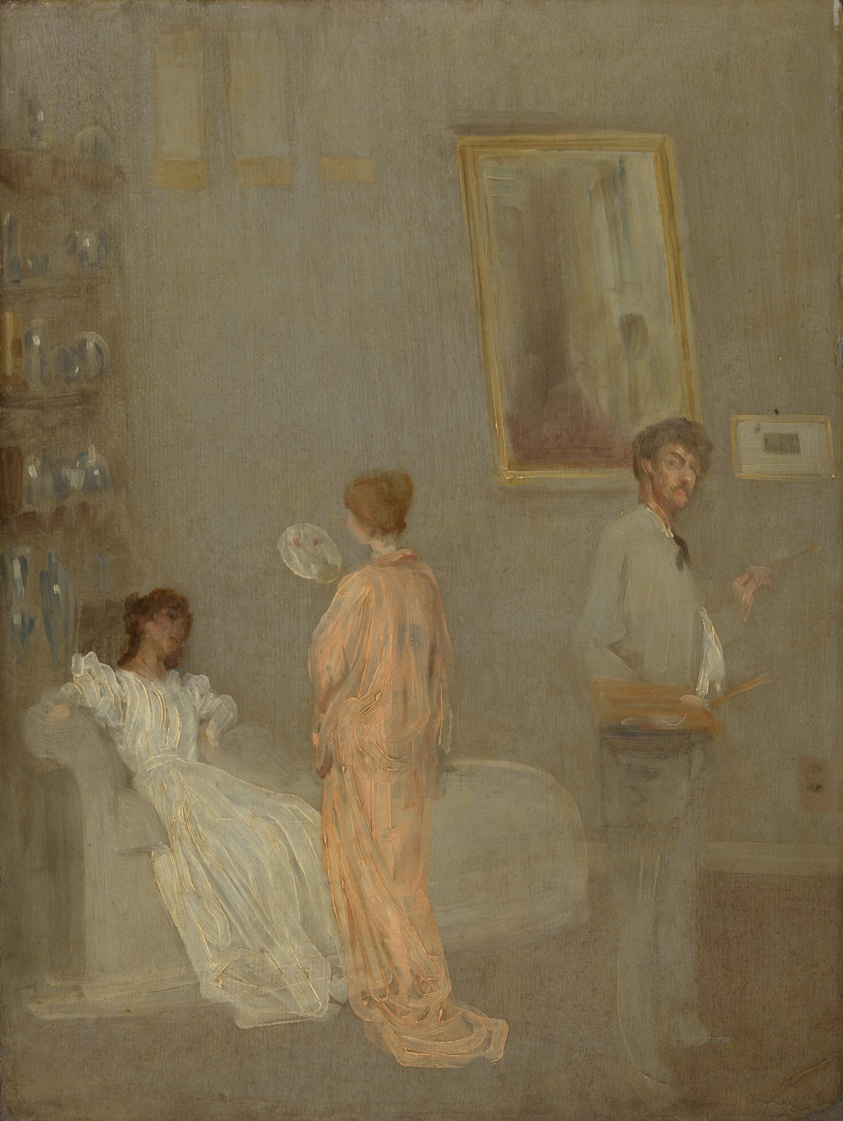
Whistler's World, Luminous and Eternally Modern
Artist Spotlight · The Collection Editorial
“Art should be independent of all clap-trap, should stand alone, and appeal to the artistic sense of eye or ear.”
The Gentle Art of Making Enemies, 1890
There is a particular kind of magic that happens when a painting stops trying to tell you something and simply asks you to feel. Few artists in the Western tradition understood this more profoundly than James McNeill Whistler, and few pursued it with such defiant, joyful conviction. When the Musée d'Orsay in Paris devoted sustained attention to Whistler's nocturnes and portraits in recent years, placing them in conversation with Courbet and the Symbolists, a new generation of visitors found themselves standing in front of canvases that felt startlingly contemporary, works that seemed to belong as much to the twenty first century as to the nineteenth. The experience is not surprising.
James Mcneill Whistler
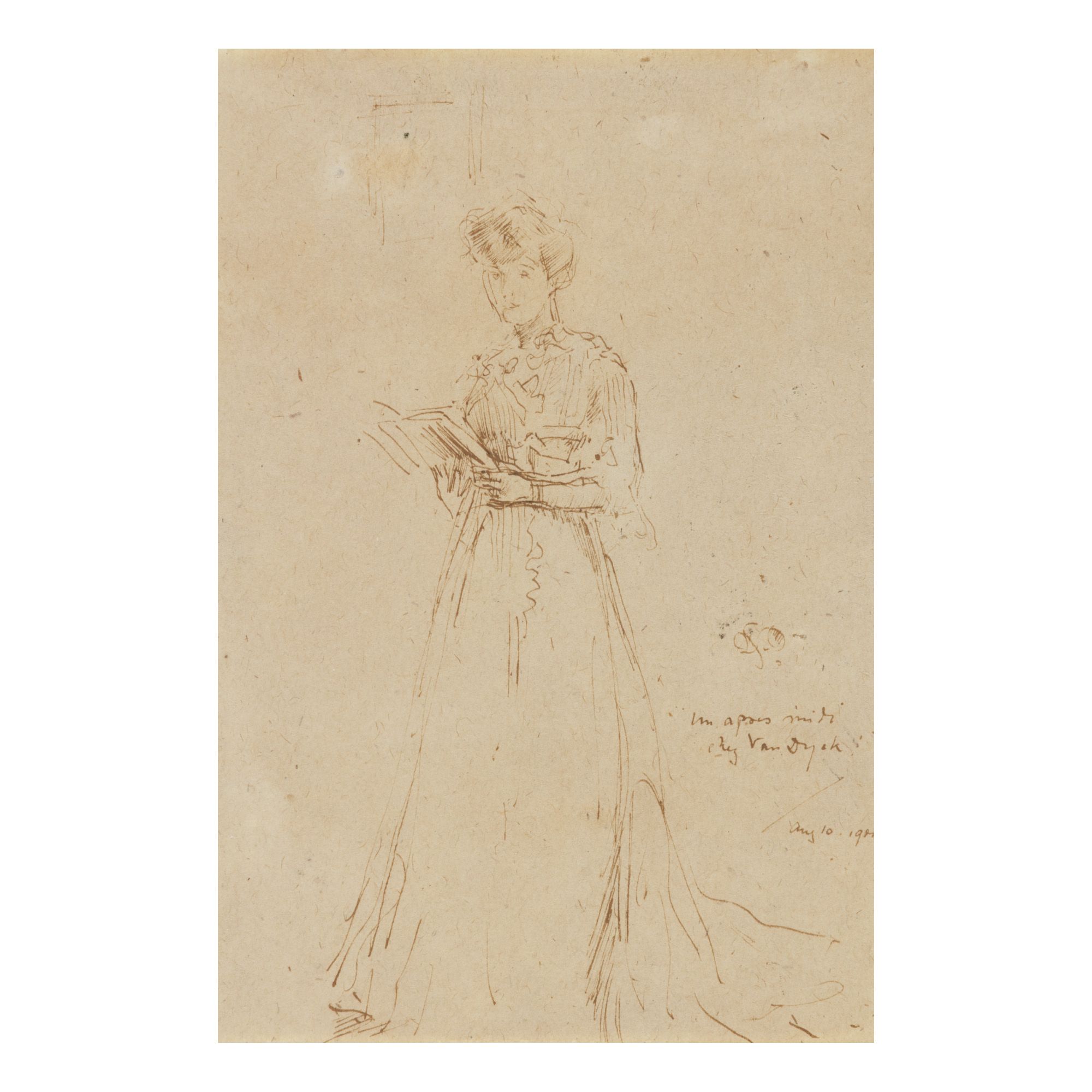
Un Après Midi Chez Van Dyck
Whistler was always ahead of where he stood. James McNeill Whistler was born on July 11, 1834, in Lowell, Massachusetts, into a family of engineers and ambition. His father, George Washington Whistler, was a railway engineer whose work took the family to St. Petersburg, Russia, when James was a boy, and those early years in imperial Russia left a lasting impression.
The grandeur, the grey Baltic light, the formality of Russian academic culture all filtered into a sensibility that would later find its truest expression in silvery mist and tonal restraint. After his father's death, Whistler returned to the United States and briefly attended West Point Military Academy, where he showed more talent for drawing than for military discipline. His instructor's report on his sketching ability was apparently the only bright note in an otherwise undistinguished record. He was discharged in 1854, and by 1855 he had left for Paris, never to live in America again.
Paris in the 1850s was the crucible of modern art, and Whistler arrived precisely when the arguments that would define painting for the next century were being fought in studios and cafés. He studied under Charles Gleyre alongside future Impressionists including Claude Monet and Pierre Auguste Renoir, and he fell in with Gustave Courbet, whose earthy realism provided one pole of influence. But Whistler was also drawn to Japanese woodblock prints, which were flooding into Paris through dealers like Madame Desoye's shop on the Rue de Rivoli, and the flattened planes, asymmetrical compositions, and elegant simplicity of Hiroshige and Hokusai would become a permanent thread in his visual thinking. He absorbed everything and remained beholden to nothing, which is precisely what made him so difficult for his contemporaries to categorize and so irresistible to later generations.
“I am not arguing with you, I am telling you.”
The Gentle Art of Making Enemies, 1890
By the time Whistler settled more permanently in London in the 1860s, his practice was developing into something genuinely singular. He began calling his paintings arrangements, harmonies, and nocturnes, borrowing the language of music deliberately and provocatively. The most celebrated of these works is almost certainly Arrangement in Grey and Black No. 1, completed in 1871 and now housed in the Musée d'Orsay, a portrait of his mother that the world insists on reading as a sentimental tribute but which Whistler himself always described in purely formal terms: a study in tonal relationship, in the geometry of a figure against a wall.
The nocturnes came from the same impulse. Works like Nocturne in Blue and Gold: Old Battersea Bridge dissolved the Thames into fields of luminous blue, reducing the city to atmosphere and suggestion. When John Ruskin attacked one of these nocturnes in print in 1877, accusing Whistler of flinging a pot of paint in the public's face, Whistler sued him for libel. Whistler won, though the court awarded him only a farthing in damages.
“To say to the painter that Nature is to be taken as she is, is to say to the player that he may sit on the piano.”
Ten O'Clock Lecture, 1885
He wore the verdict like a medal. The printmaking practice that ran parallel to his painting reveals yet another dimension of his genius. Whistler was one of the finest etchers of the nineteenth century, producing delicate, nervously alive plates that captured the working waterfronts of the Thames and the canals of Venice with a directness and economy that anticipate much of what we now associate with modern drawing. His two Venice campaigns in the early 1880s produced etchings and pastels of extraordinary intimacy, finding the beauty in peeling plaster, gondoliers at rest, and the particular quality of Venetian winter light.
The work on paper and the work on canvas spoke to each other constantly, each feeding the other's appetite for refinement. It is in this context that a work such as Un Après Midi Chez Van Dyck, rendered in ink on paper and available through The Collection, offers a fascinating window into Whistler's graphic sensibility. The very title invokes his deep engagement with the Old Masters, and specifically with the Flemish tradition of portraiture, filtered now through his own irreducibly modern touch. For collectors, Whistler presents one of the most compelling and nuanced opportunities in the field of nineteenth century art.
His work spans a remarkable range of media and scale, from monumental portraits that hang in national museums to intimate etchings and drawings that reward close, private looking. Works on paper by Whistler carry particular appeal because they capture the spontaneity and intelligence behind the more finished canvases. Drawings and prints that show his line at its most unguarded are the pieces that collectors who truly understand his practice tend to prize most deeply. The market for his prints has remained consistently strong at auction, with major houses including Christie's and Sotheby's regularly presenting his etchings to serious buyers.
As interest in the Aesthetic Movement has grown among younger collectors drawn to questions of design, beauty, and the relationship between fine art and decorative art, Whistler's position as the movement's most articulate champion has only become more valuable. To understand Whistler fully, it helps to place him among his contemporaries and to see the way his ideas radiated outward. His friendship with Edgar Degas was one of genuine mutual respect between two artists who shared a commitment to formal intelligence and an impatience with sentiment. His influence on Walter Sickert, who worked in his studio, is well documented, and through Sickert one can draw a line forward to the Camden Town Group and to certain strands of British figurative painting that persist to this day.
His impact on American artists was equally significant: John Singer Sargent absorbed something of his tonal sophistication, and the painters who gathered around him at various points carried his ideas about aestheticism into new contexts. Whistler's legacy is, in the end, the legacy of an idea: that beauty is sufficient justification for art, that form and tone and atmosphere have their own moral weight and their own claim on the human attention. In an era when art is again asked constantly to justify itself through content, through politics, through statement, his insistence on the autonomy of the aesthetic experience feels not like a retreat but like a radical act. His canvases are quiet in the way that only deeply confident things can be quiet.
They ask nothing of you except that you look, and then they give you everything.
Explore books about James Mcneill Whistler

James McNeill Whistler: A Life
Andrew McLaren Young
Whistler: A Life
Leo Stein
James McNeill Whistler
Frederick Sweet

The Gentle Art of Making Enemies
James McNeill Whistler
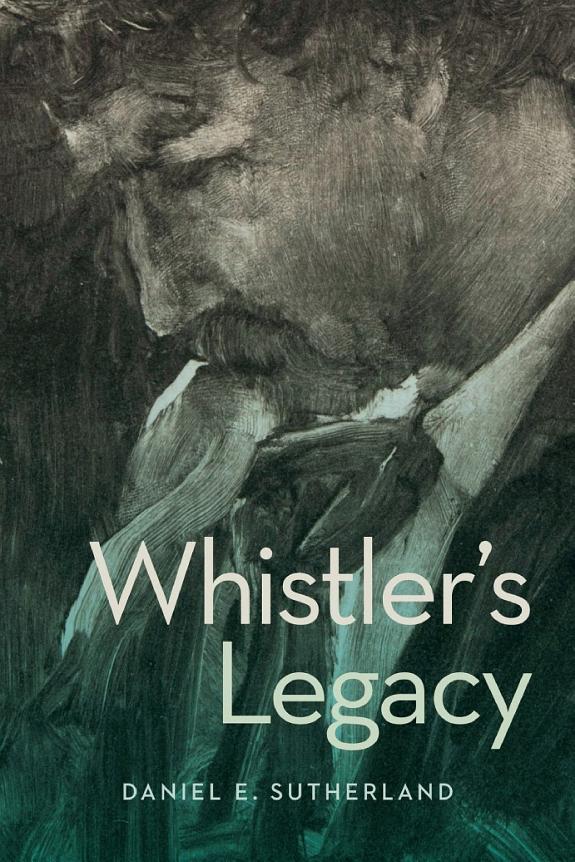
Whistler: A Life
Linda Merrill
James McNeill Whistler: Etchings
Edward G. Kennedy
Whistler and Montesquiou: The Butterfly and the Bat
Elizabeth Prettejohn
James McNeill Whistler: Paintings, Etchings, Pastels
Andrew McLaren Young and Margaret F. MacDonald