Ivan Albright
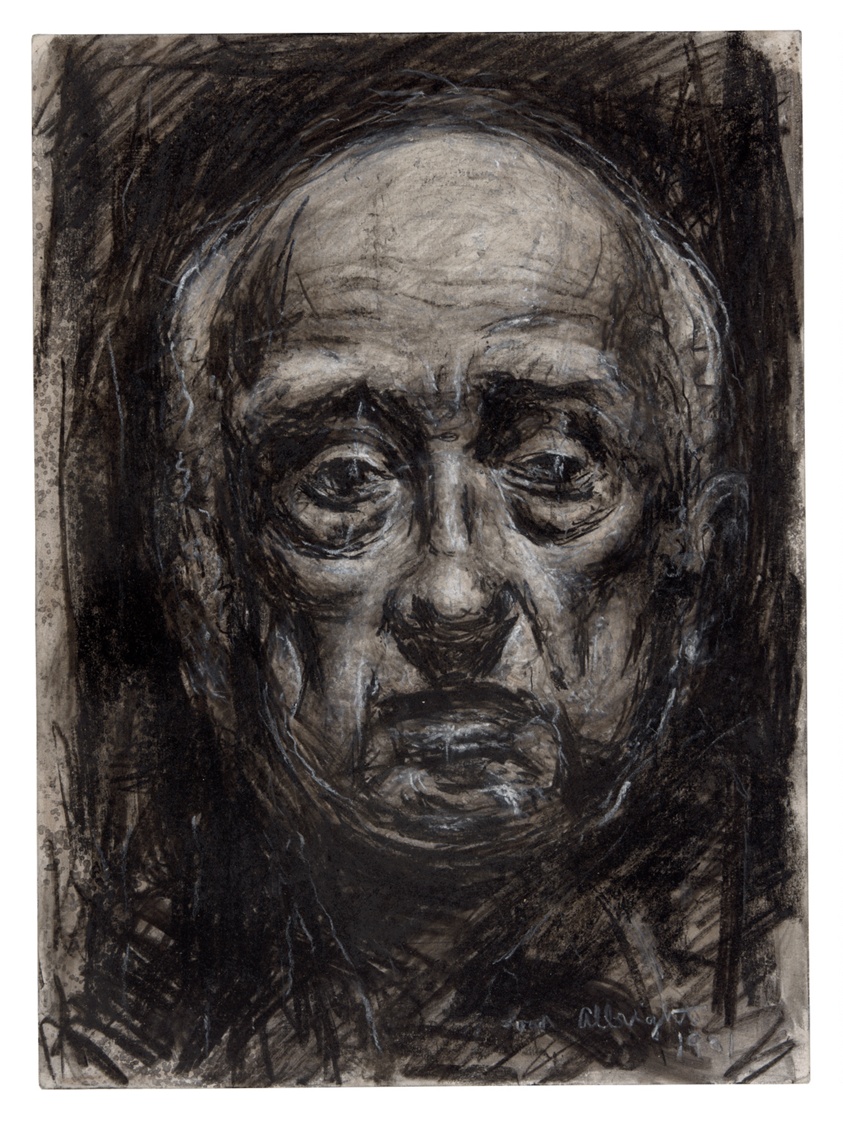
Ivan Albright: Master of Time's Tender Cruelty
Artist Spotlight · The Collection Editorial
“I paint not the flatness of things but the fullness of time upon them.”
Ivan Albright
There is a moment, standing before an Ivan Albright canvas, when the eye refuses to believe what it is seeing. The surfaces seem to breathe. The flesh appears to shift. The accumulation of detail is so total, so obsessive, so achingly present, that the painting ceases to feel like representation and becomes something closer to testimony.
Ivan Albright
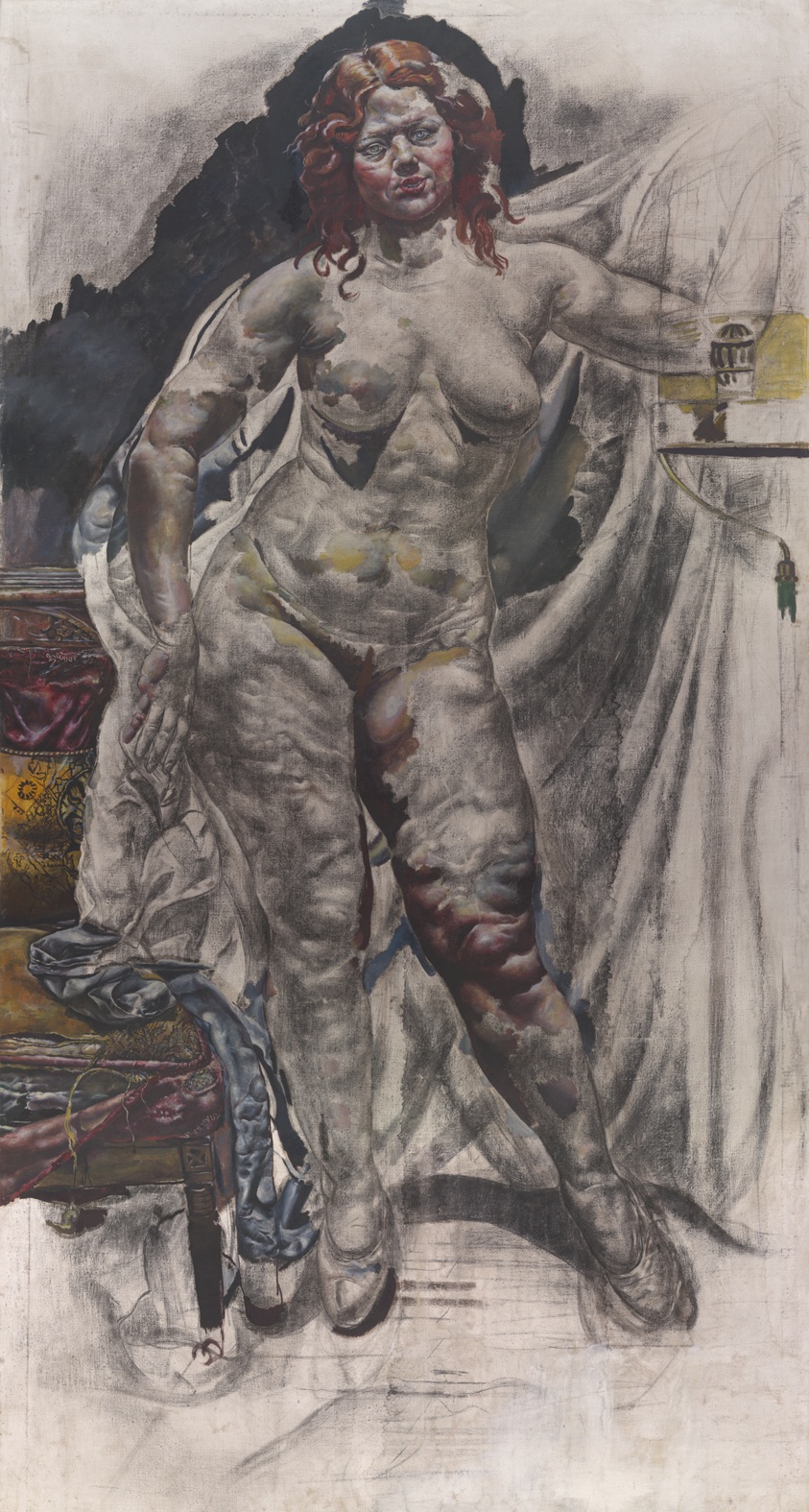
Three Love Birds, 1930
It is this quality, at once unsettling and deeply humane, that has secured Albright's place among the most singular figures in American art history and that continues to draw new generations of collectors and scholars to his extraordinary body of work. Ivan Le Lorraine Albright was born in 1897 in North Harvey, Illinois, into a family for whom art was simply the air one breathed. His father, Adam Emory Albright, was a painter of note, a student of Thomas Eakins, and the twin sons he raised, Ivan and Malvin, would both pursue careers as artists. That lineage matters.
From Eakins, filtered through his father's practice, Ivan inherited a commitment to observed truth and an unflinching attention to the physical world that would define everything he made. His early education took him through the École des Beaux Arts in Nantes, the Art Institute of Chicago, the Pennsylvania Academy of the Fine Arts, and the National Academy of Design in New York, an unusually wide formation that gave him both classical discipline and a restless hunger for his own vision. The experience that most profoundly shaped Albright's artistic imagination came not from a classroom but from the battlefields of the First World War. Serving as a medical draftsman in Nantes, France, he was tasked with rendering wounds and surgical procedures with clinical precision for military medical records.
Ivan Albright
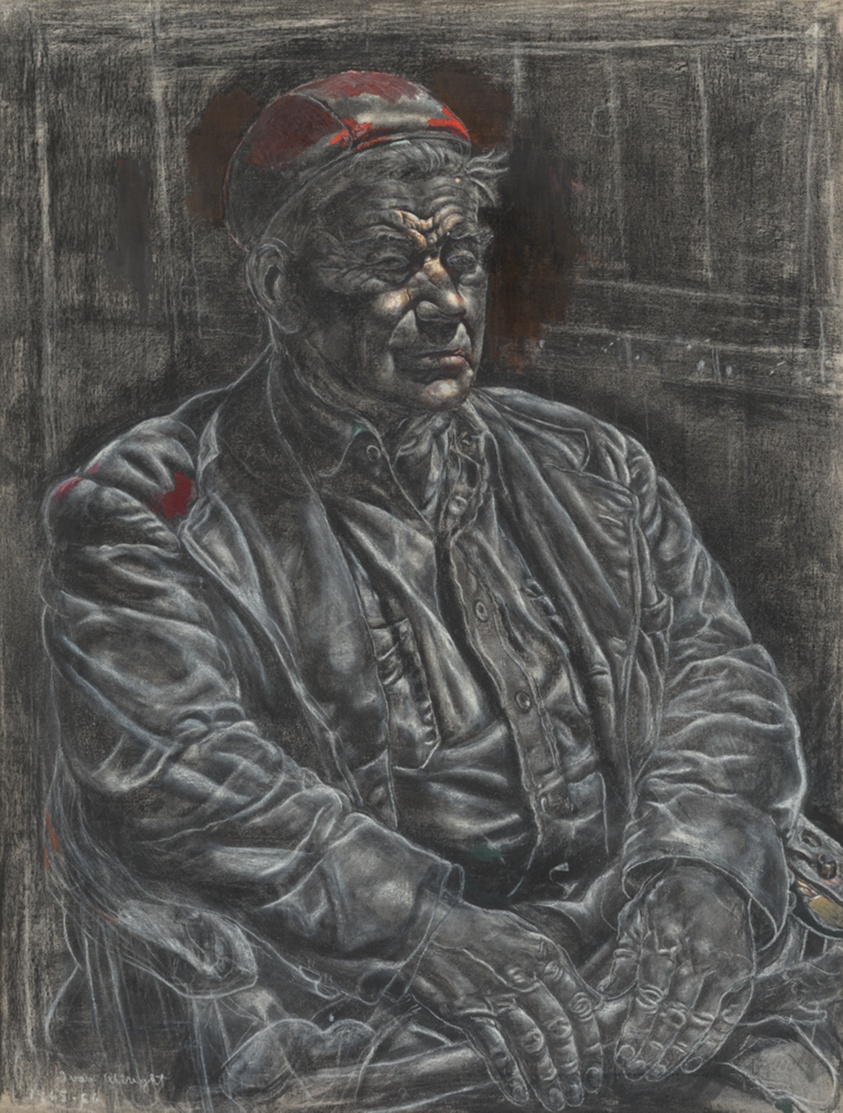
Study for "The Vermonter", 1965
Day after day he documented the damaged human body, its textures, its ruptures, its insistent particularity. Far from producing trauma or revulsion in his work, this experience seems to have awakened in Albright a profound tenderness toward mortal flesh, a desire to honor the body in all its fragility and complexity. The war gave him his subject, and it gave him his method. Returning to the United States, Albright developed a practice of extraordinary patience and intensity.
He worked slowly, sometimes spending years on a single canvas, building up surfaces of almost hallucinatory density. His palette gravitated toward the purples, greens, and ochres of bruised skin and dried earth. His technique involved the layering of paint in ways that dissolved conventional distinctions between foreground and background, figure and ground, making every inch of a canvas equally insistent, equally alive. Works from the early 1930s such as Showcase Doll and Three Love Birds, both rendered in charcoal and oil, already demonstrate this capacity to transform the mundane and the discarded into objects of profound contemplative weight.
Ivan Albright
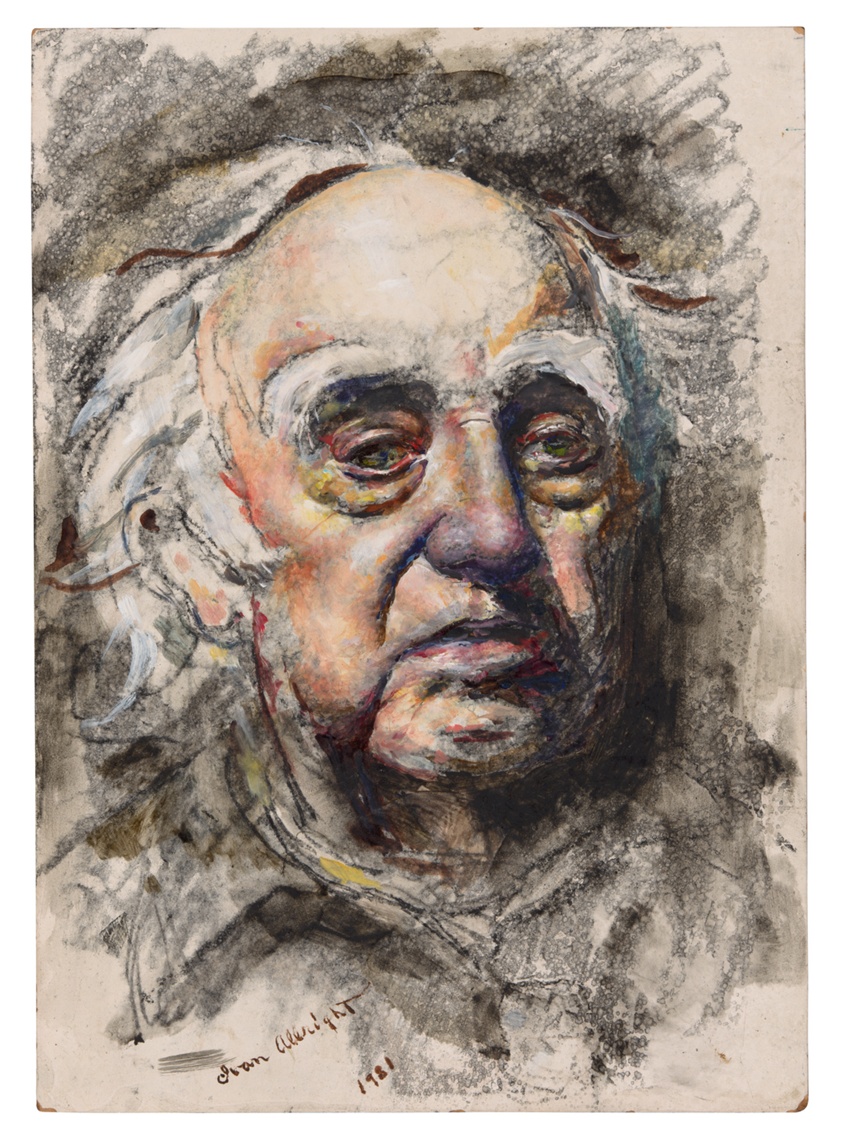
Self-Portrait (No. 1), 1981
These are not simply paintings of things. They are meditations on the passage of time made visible through the surfaces of things. The work that brought Albright his widest public recognition came through an unlikely collaboration with Hollywood. In 1943 and 1944, he was commissioned to create the aging portrait of Dorian Gray for the MGM film adaptation of Oscar Wilde's novel, a work that required him to visualize the accumulated moral corruption of a life lived in secret.
The resulting painting is a masterpiece of controlled horror, a face that seems to have absorbed every sin it has witnessed. It was a perfect assignment for an artist who had spent decades thinking about how time leaves its marks on surfaces. The film brought his name to a vast audience, though collectors and museum curators had already been paying close attention for years. Among the most celebrated works available to collectors engaging with Albright's legacy is the monumental oil on canvas titled Poor Room, completed in 1942, a work whose full title alone, There Is No Time, No End, No Today, No Yesterday, No Tomorrow, Only the Forever, and Forever, and Forever without End, announces the scale of its ambitions.
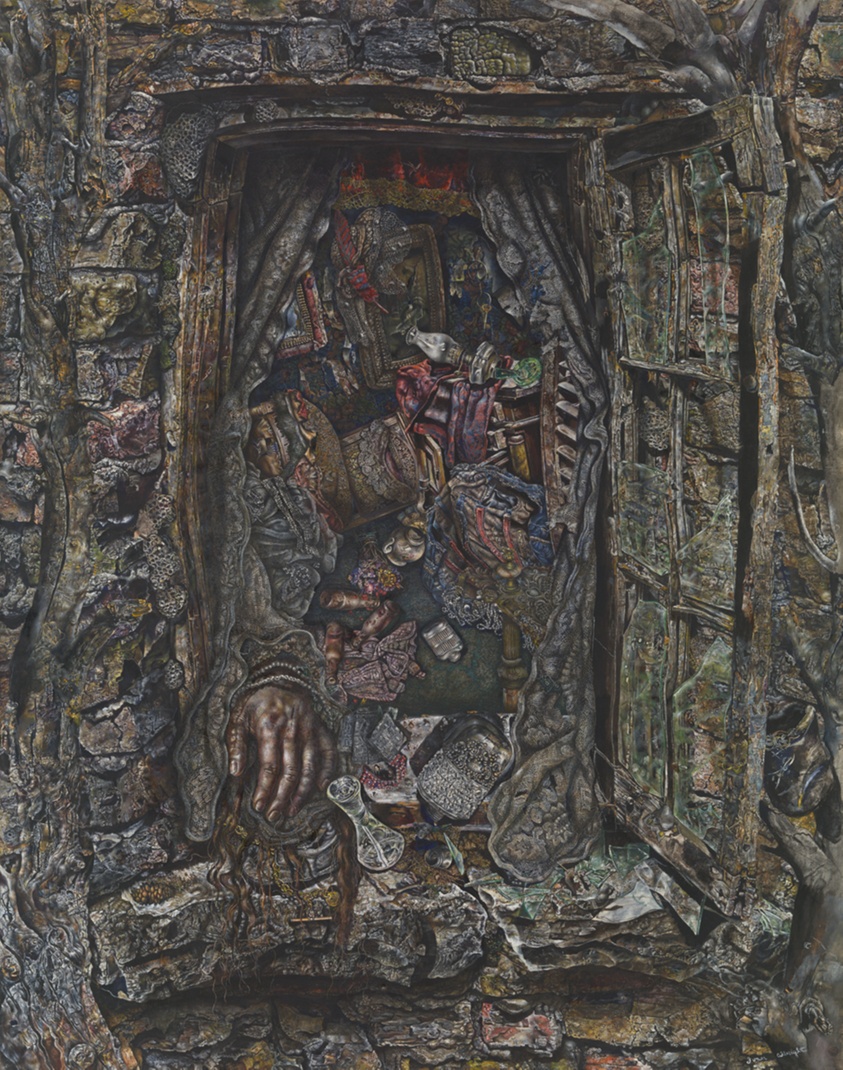
Ivan Albright
Poor Room—There Is No Time, No End, No Today, No Yesterday, No Tomorrow, Only the Forever, and Forever, and Forever without End, 1942
The composition presents the interior of a room with an attention to worn surfaces and accumulated objects that borders on the archaeological. Every detail is rendered with the same insistent care, a democracy of attention that refuses to rank the significant above the incidental. It is one of the great American paintings of the twentieth century and a key reference point for understanding everything Albright made before and after it. The market for Albright's work reflects the depth and seriousness of his reputation.
Major institutions including the Art Institute of Chicago, which holds significant examples of his practice, have long treated him as a cornerstone of American modernism. Collectors drawn to Albright tend to be those with patience for complexity, for work that does not yield its rewards quickly but rewards sustained looking with remarkable richness. His works on paper and mixed media pieces, including the remarkable series of self portraits executed in charcoal and oil and in colored pencil on hardboard in the early 1980s, offer points of entry that carry all the conceptual and technical intensity of his larger canvases. The self portraits in particular, made in the final years of his life, are extraordinary documents of an artist turning his lifelong obsession with mortal surfaces upon his own face with complete honesty and complete artistry.
In placing Albright within the broader landscape of twentieth century art, it is useful to consider artists who shared his commitment to the observed world rendered with extreme fidelity: Francis Bacon in his insistence on the vulnerability of flesh, Lucian Freud in his refusal to flatter, the German Neue Sachlichkeit painters such as Otto Dix and Georg Grosz in their unsentimental attention to the body social. Albright belongs to this international conversation even as he remains distinctly American in his vernacular subjects and his midwestern moral seriousness. He is also a crucial forebear of the photorealist movement that would emerge in American art during the 1960s and 1970s, though his surfaces are richer and stranger than any photorealist achieved. What makes Ivan Albright matter today is precisely what has always made him matter: his absolute refusal of comfort, paired with an absolute seriousness about beauty.
His canvases insist that the worn, the aged, the deteriorating, and the forgotten are as worthy of devoted attention as the ideal, the young, and the celebrated. In an era increasingly obsessed with surface and speed, his slow, dense, uncompromising paintings feel not like relics but like urgent arguments. To collect Albright is to commit to a particular kind of looking, one that finds abundance in detail and dignity in the overlooked. It is a commitment that the finest collections in any era have always been willing to make.
Explore books about Ivan Albright
Ivan Albright
Cortissoz, Royal
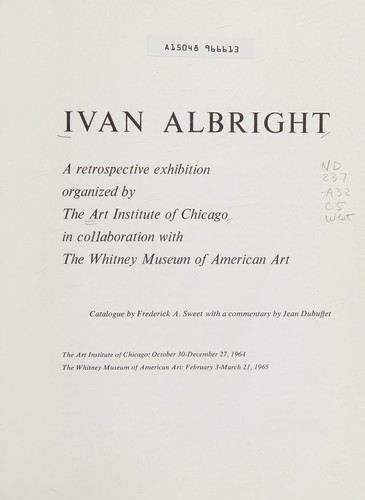
Ivan Albright: A Retrospective Exhibition
Chicago Art Institute
Ivan Albright: His Search for the Real and the Good
Gealt, Adelheid M.
Ivan Albright Paintings at the Art Institute of Chicago
Art Institute of Chicago
Ivan Albright: American Master
Gealt, Adelheid M.