Igor Mitoraj
Igor Mitoraj: Beauty Born From Beautiful Fragments
Artist Spotlight · The Collection Editorial
When the ancient city of Pompeii opened its gates in 2016 for a landmark installation of bronze sculptures by Igor Mitoraj, the effect was nothing short of revelatory. The works, monumental and serene, seemed to have always belonged among the ruins, as though they had been unearthed rather than placed. That exhibition, which drew visitors from across the world, crystallized something collectors and curators had understood for decades: Mitoraj did not simply reference antiquity, he entered into genuine dialogue with it, producing work that felt simultaneously of its moment and outside of time entirely. Igor Mitoraj was born in 1944 in Oederan, Germany, to a Polish mother and a French father, a circumstance that lent his identity a complex, layered quality that would echo throughout his work.
Igor Mitoraj
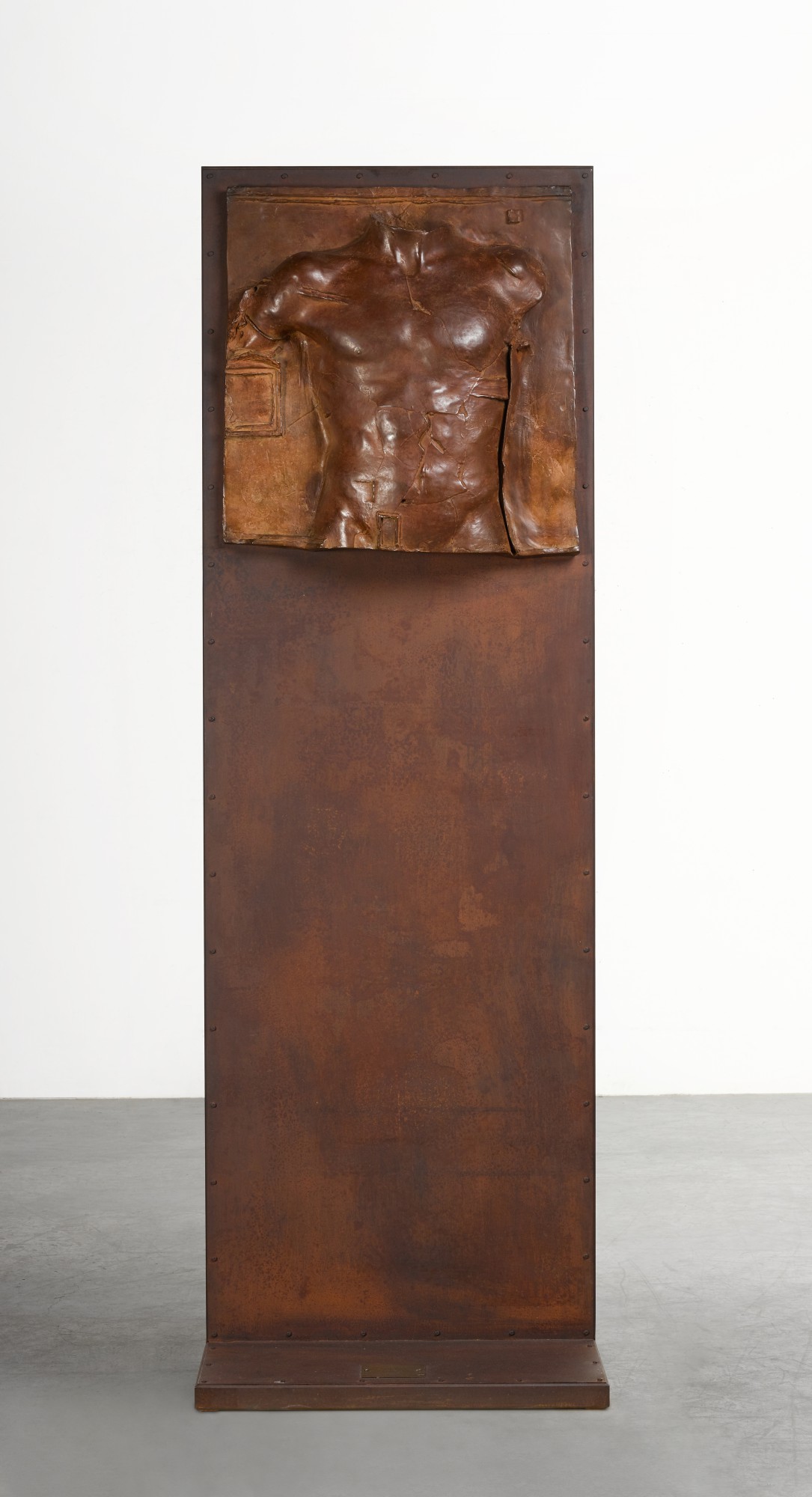
Torso Ferito, 1982
He grew up in Poland during the postwar years, a period of reconstruction and cultural renegotiation that left its mark on his generation of artists. He studied painting at the Academy of Fine Arts in Krakow under the celebrated artist Tadeusz Kantor, whose theatrical and emotionally charged approach to form offered an early framework for thinking about the human figure not merely as subject but as symbol. That foundational education in Krakow gave Mitoraj a rigorous grounding in European art history, one he would carry with him through every subsequent transformation of his practice. In 1968, Mitoraj relocated to Paris, a move that proved decisive.
The city offered exposure to a broader conversation about modernism, figuration, and the body, and Mitoraj absorbed it all while still searching for a language that was authentically his own. The pivotal moment arrived during a journey to Mexico in 1973, where his encounter with pre Columbian sculpture and the physical drama of ancient monumental form seems to have unlocked something essential in his imagination. He turned decisively toward sculpture, and within a few years had established a studio practice and a distinctive vision rooted in classical form, fragmentation, and the emotional resonance of incompleteness. By the late 1970s he had settled in Pietrasanta, the storied Tuscan town long associated with marble carving and bronze casting, where he would spend the rest of his working life.
Igor Mitoraj
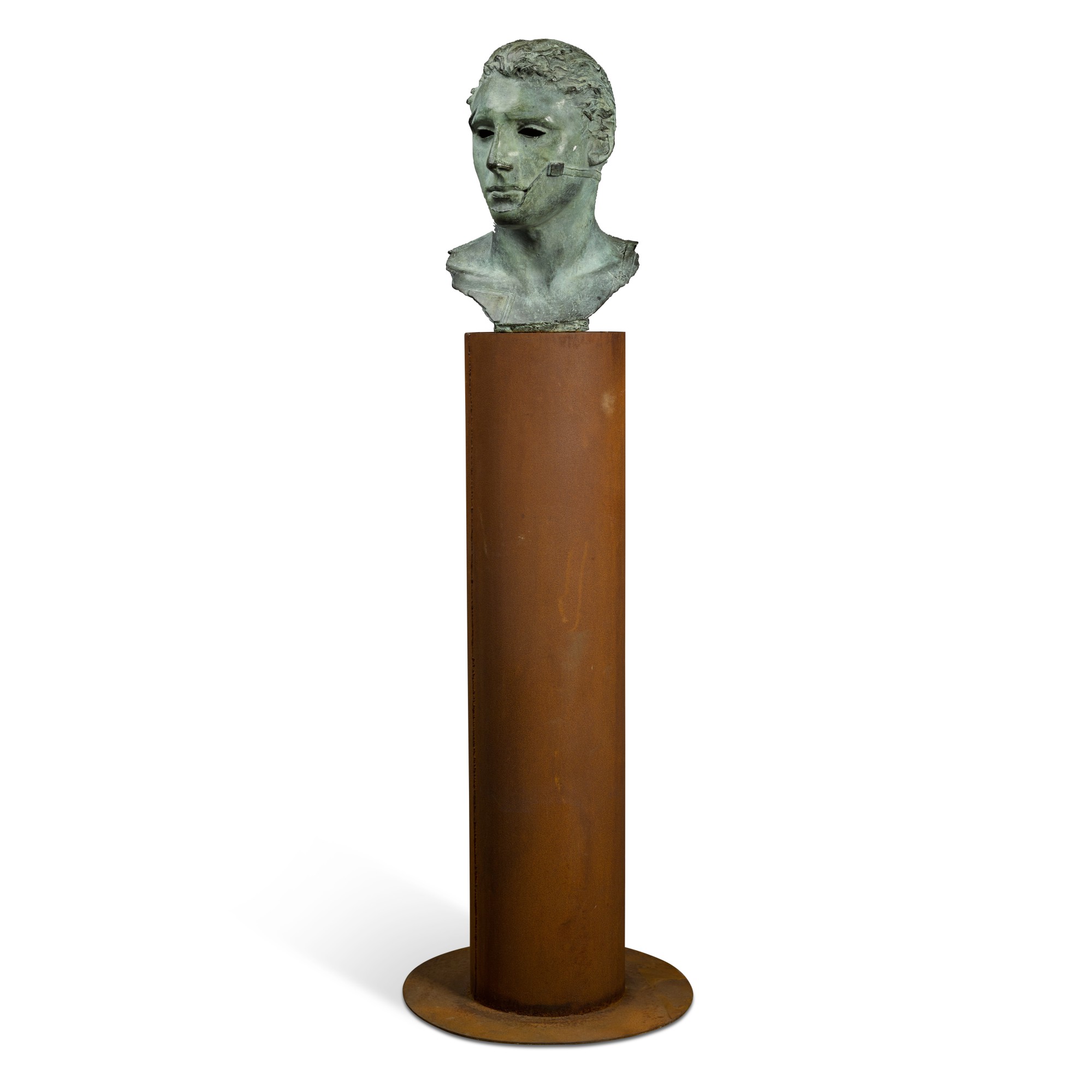
Homme, 1985
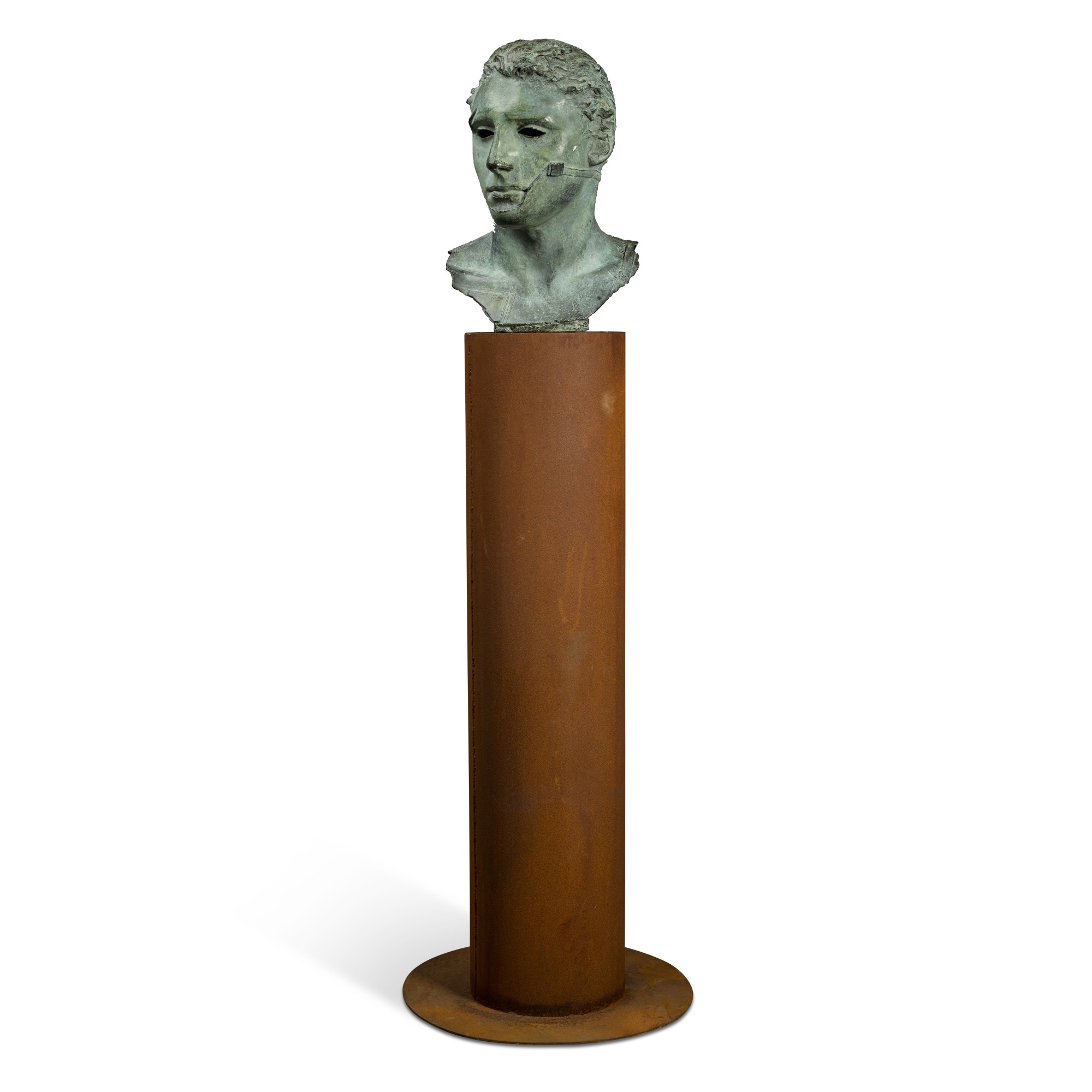
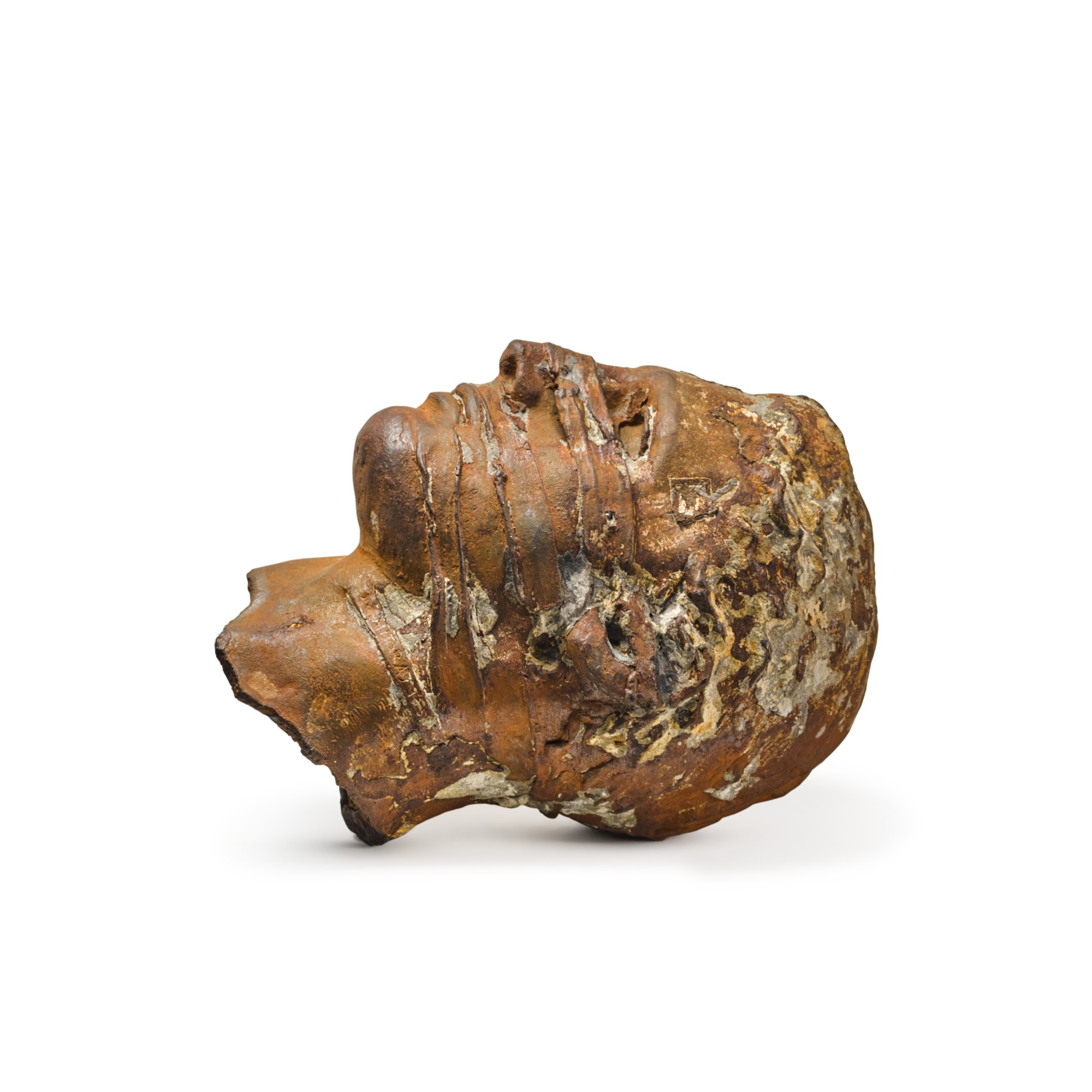
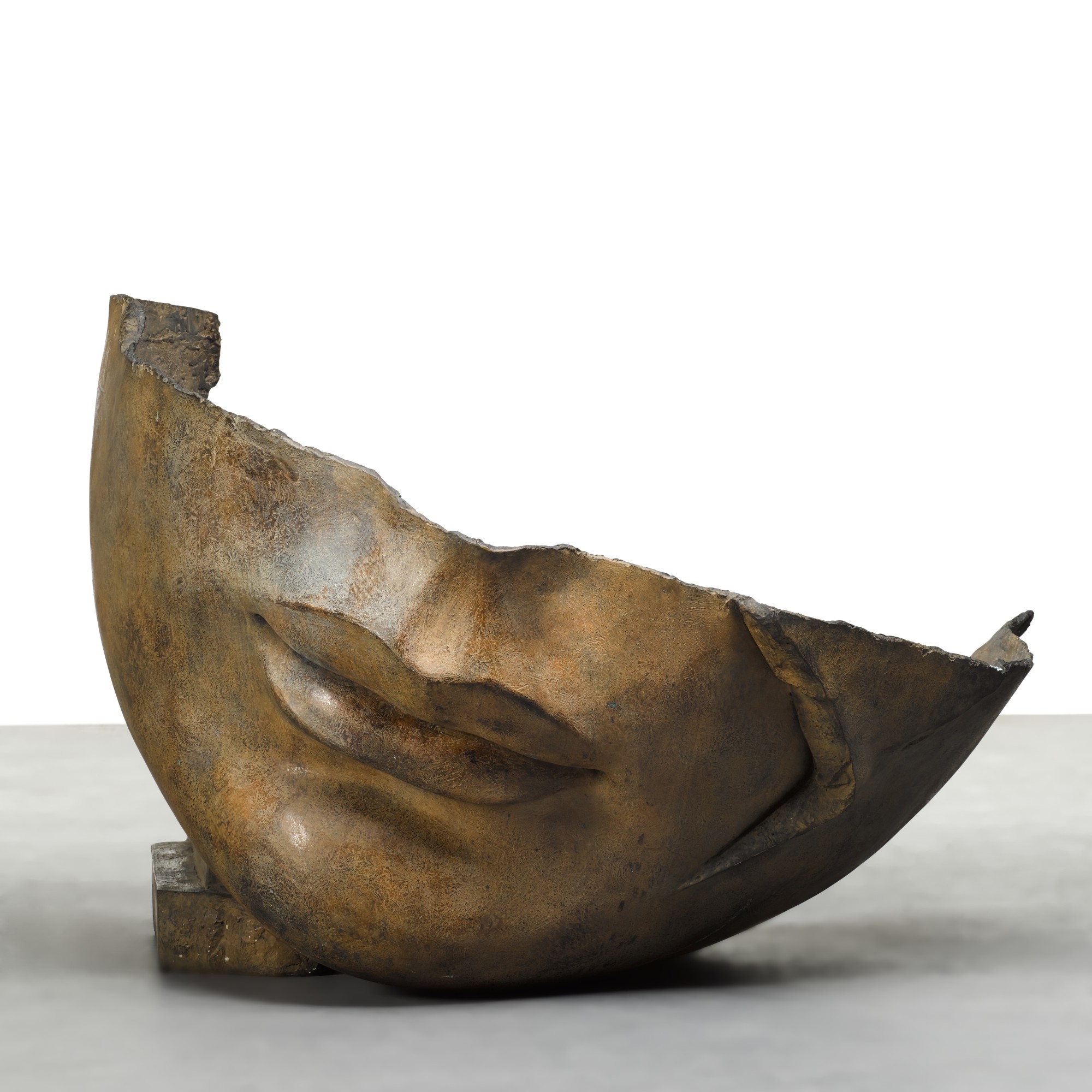
The vocabulary Mitoraj developed across the 1980s and 1990s became one of the most recognizable in contemporary sculpture. His figures, drawn from the Greek and Roman canon, appear as though recovered from catastrophe: limbs are severed at unexpected angles, faces are wrapped in bandages or fractured open, torsos rise magnificently from their bases only to end in clean, deliberate breaks. Works such as Torso Ferito from 1982 and Bocca from 1984 established this grammar early, offering surfaces that carry the weight of centuries while remaining wholly contemporary in their emotional directness. Tybris from 1986 and Testa Iberica from 1989 extended the range, demonstrating that Mitoraj could work across scales and materials while maintaining a singular, meditative presence.
His bronzes, often finished with rich dark patinas, possess a physical authority that rewards extended looking, the surfaces shifting subtly with changes in light and atmosphere. The monumental public commissions that came with international recognition placed Mitoraj in rare company. His large scale bronzes have stood in the Piazza della Repubblica in Florence, before the Madeleine in Paris, in Trafalgar Square in London, and in the historic centers of numerous Italian cities, each placement generating a conversation between his fragmented classicism and the living architecture surrounding it. Grande Notturno I from 2008 and Sonno Grande from 2004 exemplify the contemplative register he achieved in his later career, figures in repose that carry a hushed, almost sacred quality.
Igor Mitoraj
Tybris, 1986
Porta Italica from 1998 demonstrates his capacity for architectural scale, a threshold form that transforms passage itself into a meditation on presence and absence. These works brought Mitoraj to the attention of major institutions and public bodies worldwide, cementing a reputation that crossed the conventional boundaries between gallery art and civic life. For collectors, Mitoraj represents an unusually compelling proposition. His work sits at the intersection of several powerful collecting traditions: the long European engagement with classical figuration, the postwar interest in the human condition as artistic subject, and the market appetite for monumental bronze with established public presence.
His career tags across Neo Expressionism, figurative sculpture, and public art place him in conversation with artists such as Antony Gormley, Mimmo Paladino, and Georg Baselitz, figures who share his investment in the body as a site of meaning and memory. Collectors drawn to the emotionally direct work of the Transavanguardia movement or the meditative figuration of artists working in the classical European tradition will find in Mitoraj a natural point of connection and depth. Editions from the 1980s, including works such as Homme from 1985, are particularly prized for their early statement of the mature language and the relative intimacy of their scale relative to his public commissions. The critical legacy of Igor Mitoraj is still coming into focus, partly because his work resisted easy categorization during his lifetime.
Igor Mitoraj
Bocca, 1984
He was too devoted to beauty and to the human figure to be absorbed comfortably into the dominant currents of conceptual art that shaped institutional taste through the 1980s and 1990s, yet he was never merely a conservative classicist, his fragmentation and his frank engagement with loss and time gave his practice an unmistakably modern intelligence. What critics and collectors increasingly recognize is that his choice to work with broken forms was not an aesthetic maneuver but a genuinely philosophical one: the incomplete figure is also the resilient figure, the one that persists after catastrophe and still communicates beauty, dignity, and something indestructibly human. Mitoraj died in Rome in 2014, but the works he left behind continue to accumulate meaning and audience in equal measure. For those who have not yet encountered him in depth, the opportunity is a genuine one.
Explore books about Igor Mitoraj
Igor Mitoraj
François Marquet
Igor Mitoraj: Sculptures and Drawings
Pierre Restany
Mitoraj
Jean-Luc Chalumeau
Igor Mitoraj: L'Oeuvre Complète
Maurizio Fagiolo dell'Arco
Igor Mitoraj: Bronze and Stone
Dominique Bozo