Henry Wessel, Jr.
Henry Wessel Finds the Poetry in Everything
Artist Spotlight · The Collection Editorial
“I am not making a comment. I am not trying to say anything. I am trying to see.”
Henry Wessel, Jr.
There is a particular quality of West Coast afternoon light that most people simply drive through without a second thought. Henry Wessel, Jr. spent a lifetime stopping for it. When the Museum of Modern Art in New York presented a substantial survey of his work, it confirmed what photographers and collectors had understood for decades: that Wessel had accomplished something genuinely rare, transforming the unremarkable surfaces of American life into images of startling beauty and quiet humor.
Henry Wessel, Jr.
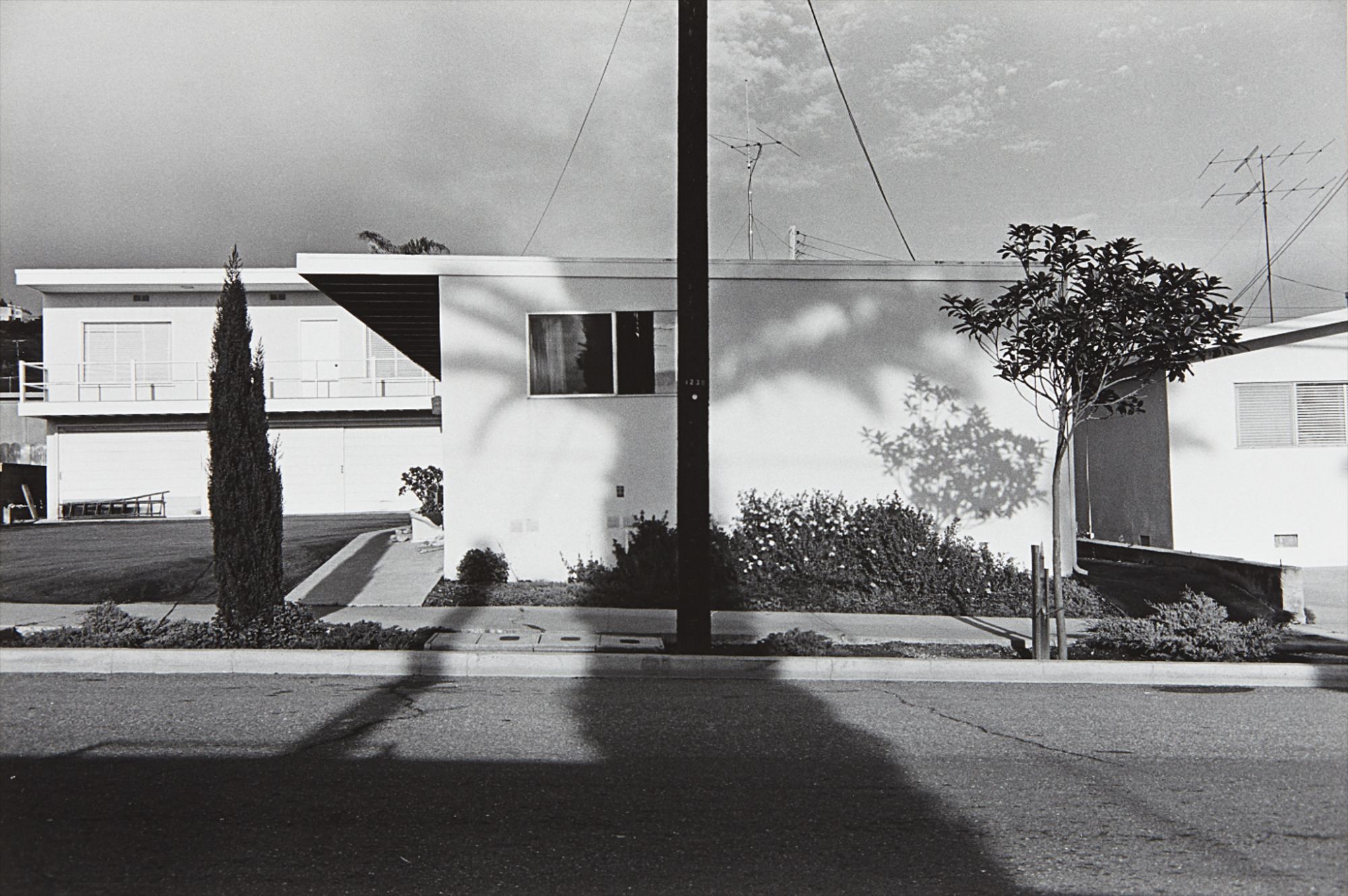
Pismo Beach, California
His gelatin silver prints, made across California, Nevada, Arizona, and the broader American West, remain among the most distinctly pleasurable bodies of work in postwar photography. Wessel was born in 1942 in Teaneck, New Jersey, a fact that carries its own gentle irony given that he would become so thoroughly identified with the light and landscape of the American West. He studied at Pennsylvania State University before relocating to California, and it was in that relocation that his artistic identity crystallized. The West offered Wessel something that felt genuinely open: wide skies, strong shadows, the particular geometry of suburban streets and roadside architecture that had not yet been fully claimed by art history.
He recognized its potential immediately and spent the rest of his career working within it. His early development was shaped by an encounter with the photography of Robert Frank and by the broader tradition of street photography that ran from Henri Cartier Bresson through Garry Winogrand and Lee Friedlander. Wessel absorbed these influences without becoming beholden to them. Where Winogrand pursued a kind of energetic visual chaos and Friedlander built intricate self reflexive compositions, Wessel cultivated stillness and wit.
Henry Wessel, Jr.
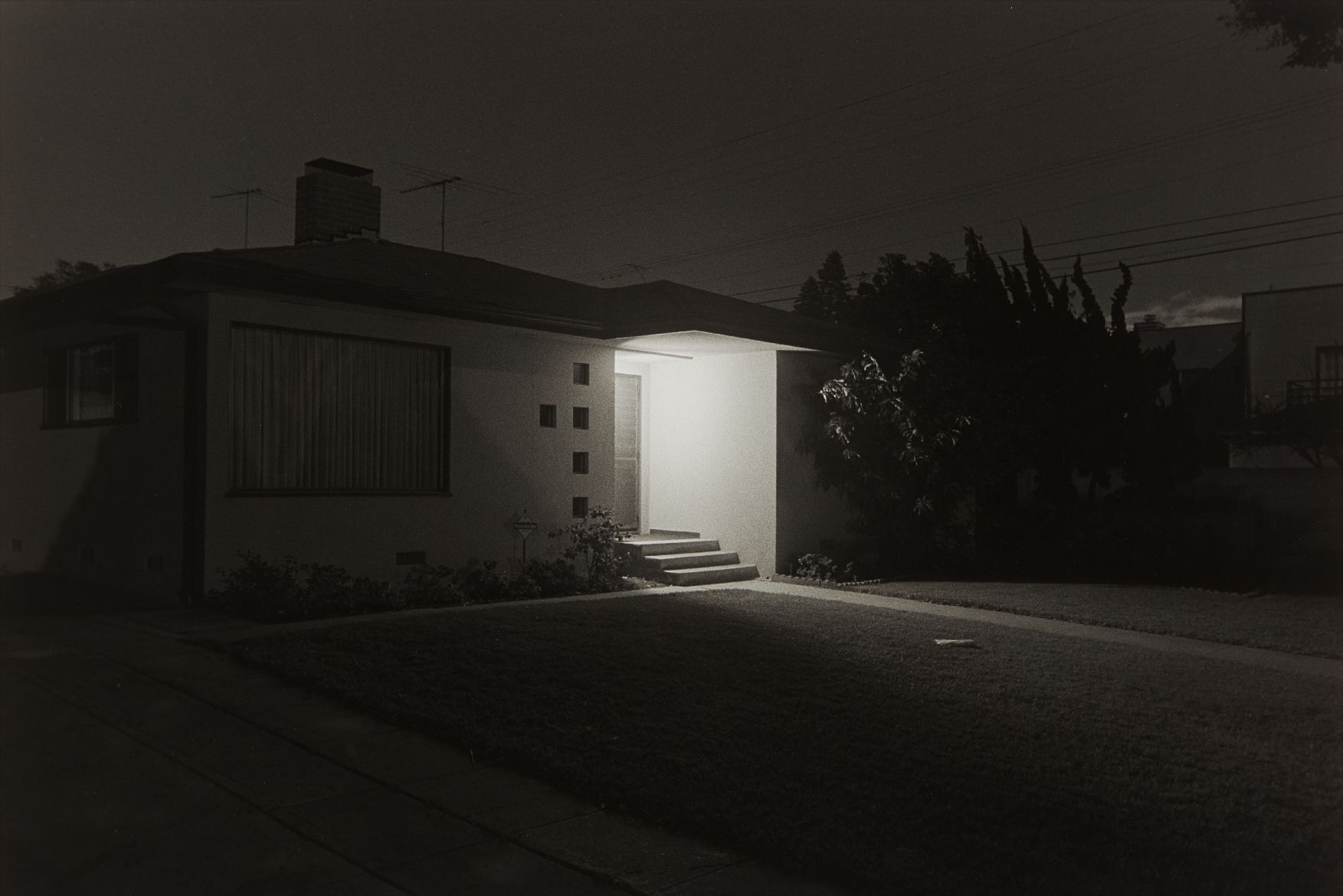
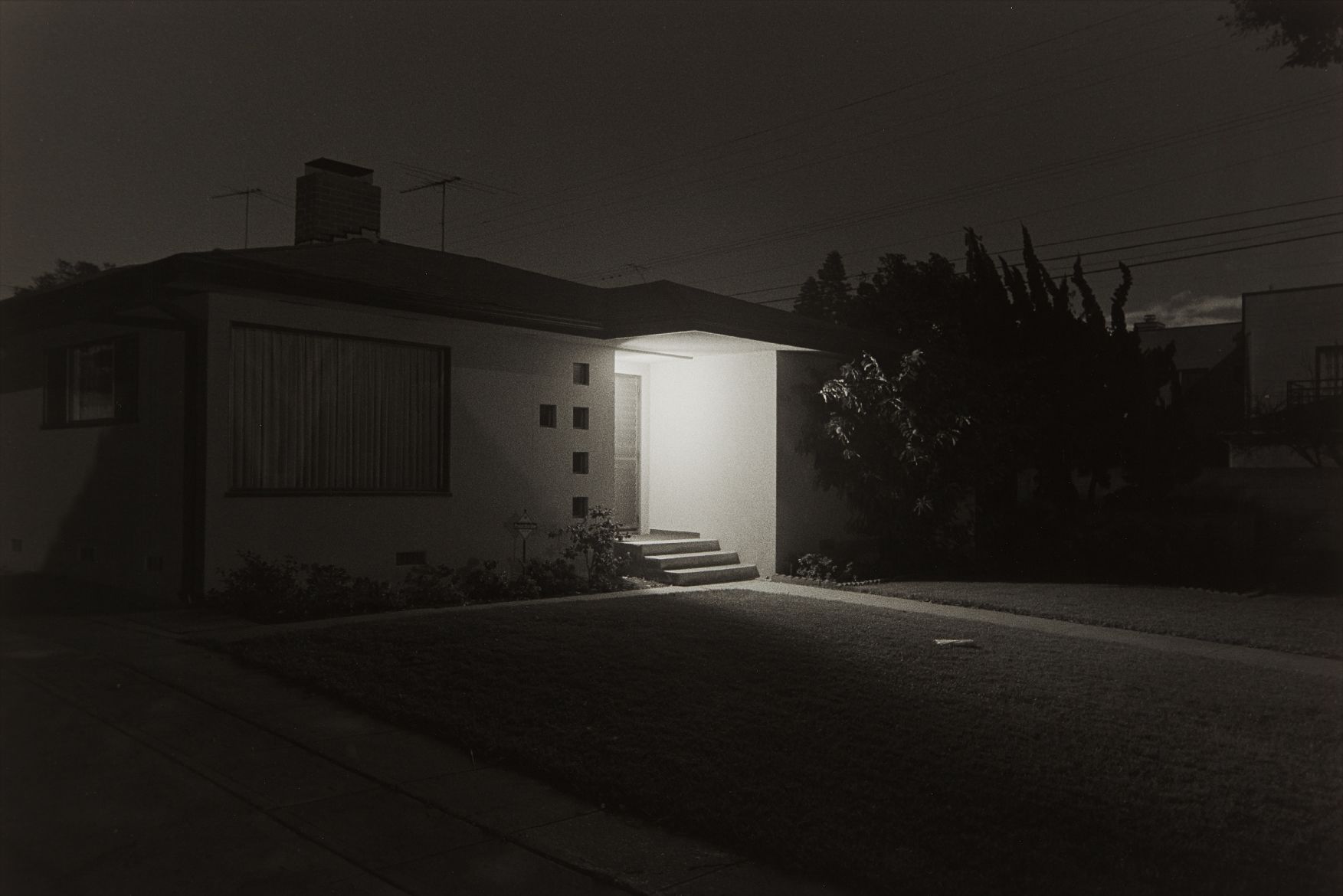
Night Walk, Los Angeles, No. 28
He worked with a wide angle lens and natural light, often shooting in the brilliant midday sun that other photographers avoided. The harshness that sun produces, the crisp shadows and bleached surfaces, became his signature. The pivotal moment in his public recognition came in 1975 with his inclusion in New Topographics: Photographs of a Man Altered Landscape, the landmark exhibition organized by William Jenkins at the International Museum of Photography at George Eastman House in Rochester, New York. The show gathered Wessel alongside Robert Adams, Lewis Baltz, Bernd and Hilla Becher, Joe Deal, Frank Gohlke, Nicholas Nixon, John Schott, and Stephen Shore.
It was a generation defining event, proposing that the built environment and the overlooked American landscape deserved the same serious photographic attention previously reserved for wilderness and human drama. Wessel fit within that framework while also exceeding it: his images carried warmth and humor that distinguished them from the more austere documentary impulse of some of his peers. Looking closely at works like Pismo Beach, California or Santa Monica, California, one encounters the full range of what Wessel could do within a seemingly simple frame. A figure leans against a car.
Henry Wessel, Jr.
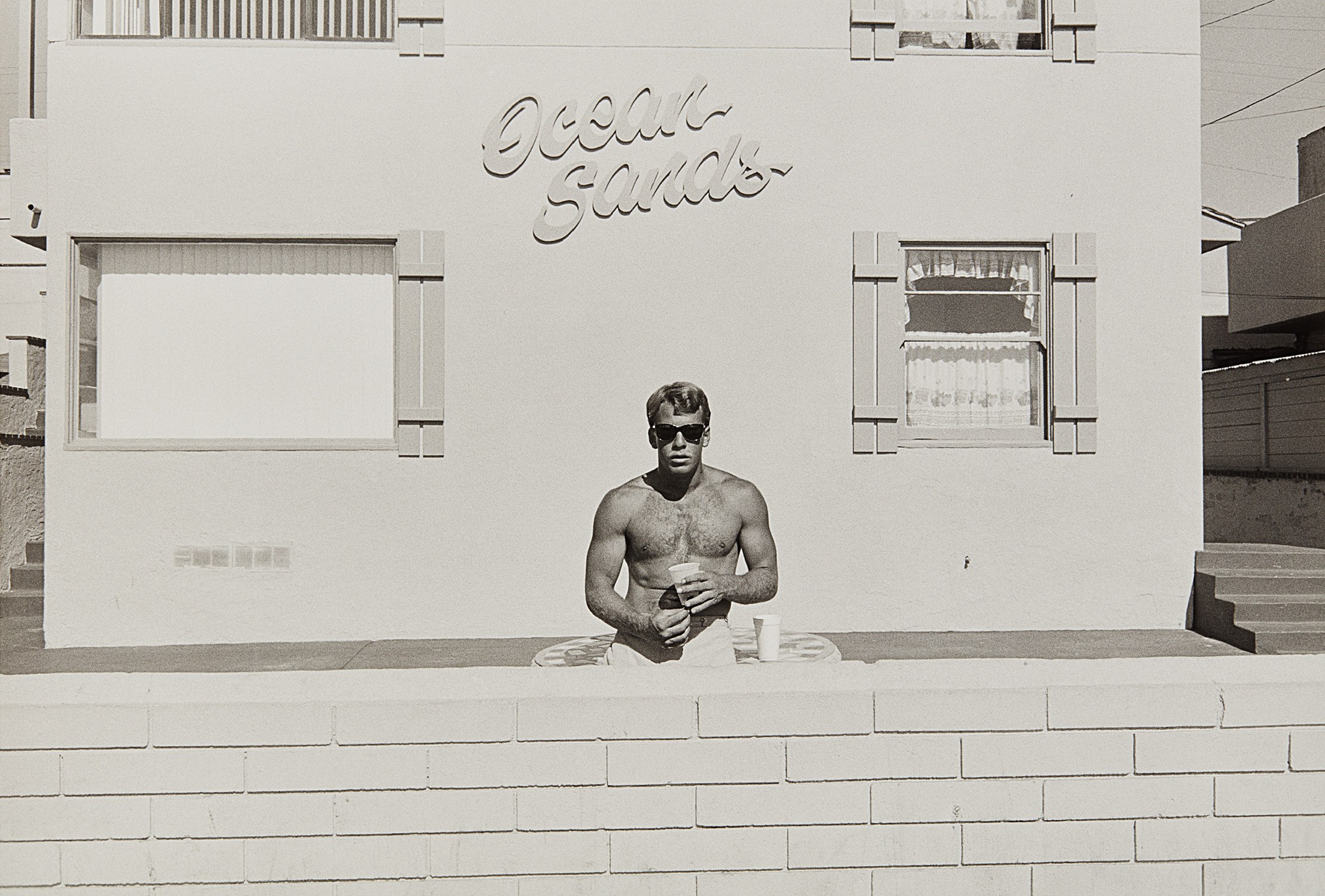
Southern California
A palm tree bends improbably against a white wall. A man walks a dog past a house that seems to be quietly smiling at the viewer. These are not ironic images in the cold, distancing sense. They are generous observations, made by someone who genuinely loved what he was looking at.
His Night Walk series, represented on The Collection by works including Night Walk, Los Angeles, No. 28 and Night Walk, Los Angeles, No. 43, extends that generosity into darkness, finding in the nocturnal city a dream logic and a gentleness that feels entirely his own. For collectors, Wessel's work presents an unusually coherent and satisfying body of material.
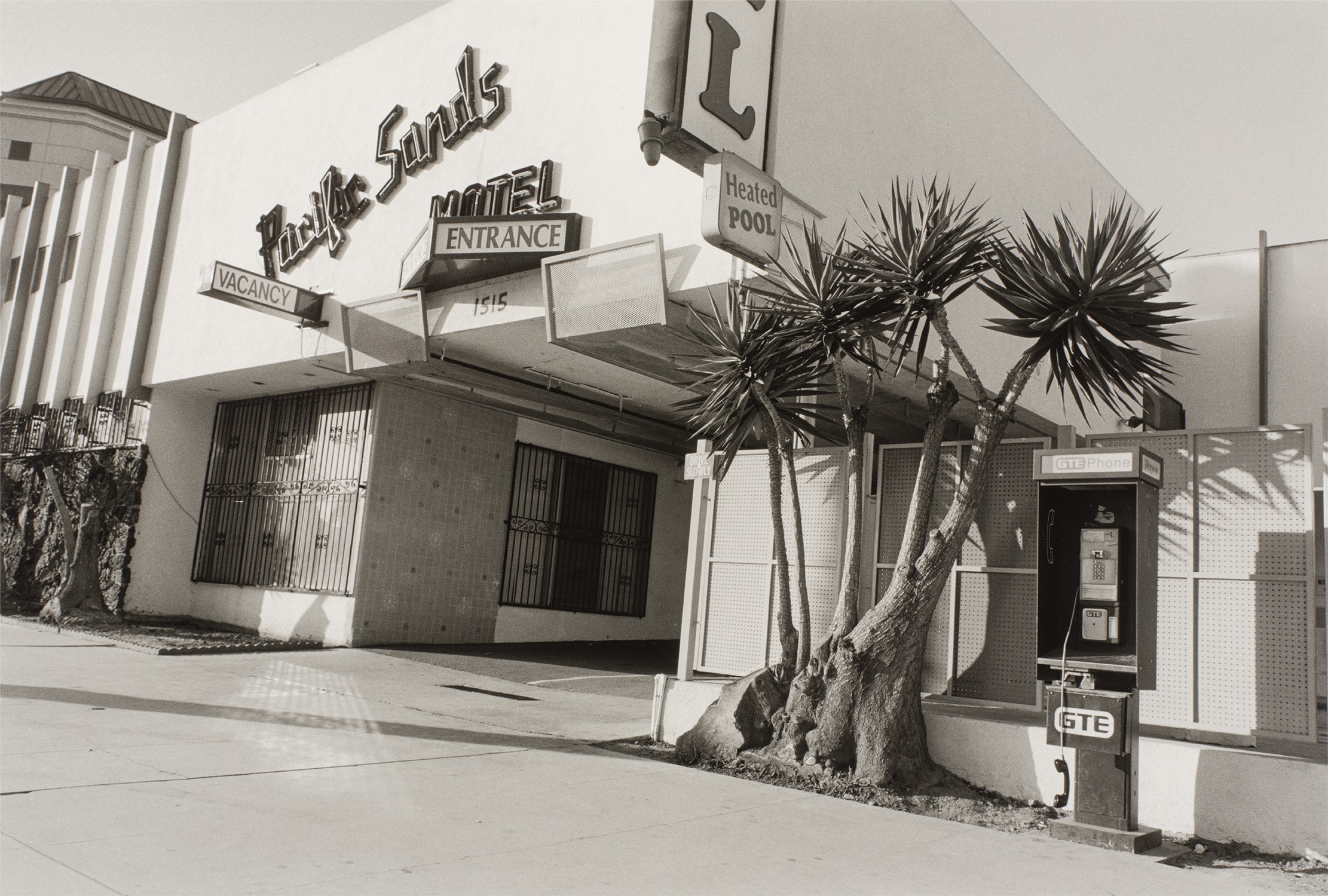
Henry Wessel, Jr.
Santa Monica, California
His prints are predominantly gelatin silver, made with exceptional technical care, and they reward close attention in ways that reproductions cannot fully convey. The tonal range he achieved, the way deep shadow and bright highlight coexist without either dominating, speaks to a mastery of the medium that is immediately apparent when standing before an original print. Works on The Collection spanning locations including Buena Vista, Colorado, Walapai, Arizona, Tucson, Arizona, and Nevada demonstrate his geographical range and the consistency of his eye across very different environments. Collectors drawn to the New Topographics generation frequently find that Wessel rewards sustained engagement more than almost any of his contemporaries, precisely because his work invites pleasure rather than demanding difficulty.
Within art history, Wessel occupies a position that connects multiple lineages. He shares with Robert Adams a love of the western American landscape and a belief in photography's capacity for lyrical observation. He shares with Lee Friedlander a delight in the vernacular and the overlooked. He anticipates certain qualities found in later photographers like Alec Soth, who also found narrative and feeling in the quieter corners of American life.
Yet Wessel's voice remains irreducibly his own. The humor is never cruel. The distance is never cold. He was a photographer who liked people and liked places and allowed that affection to show.
Wessel taught for many years at the California College of Arts in San Francisco, and his influence on subsequent generations of photographers is substantial and ongoing. He passed away in 2018, leaving behind a body of work that continues to grow in critical and market esteem. In a period when photography collecting has matured considerably and the postwar American tradition is being reexamined with fresh appreciation, Wessel stands as one of the figures most deserving of sustained attention. His prints are held in major museum collections including MoMA and the San Francisco Museum of Modern Art.
For those encountering his work for the first time, the experience tends to be quietly revelatory: here is an artist who looked at the ordinary world and found it endlessly, generously alive.
Explore books about Henry Wessel, Jr.