Helmut Middendorf
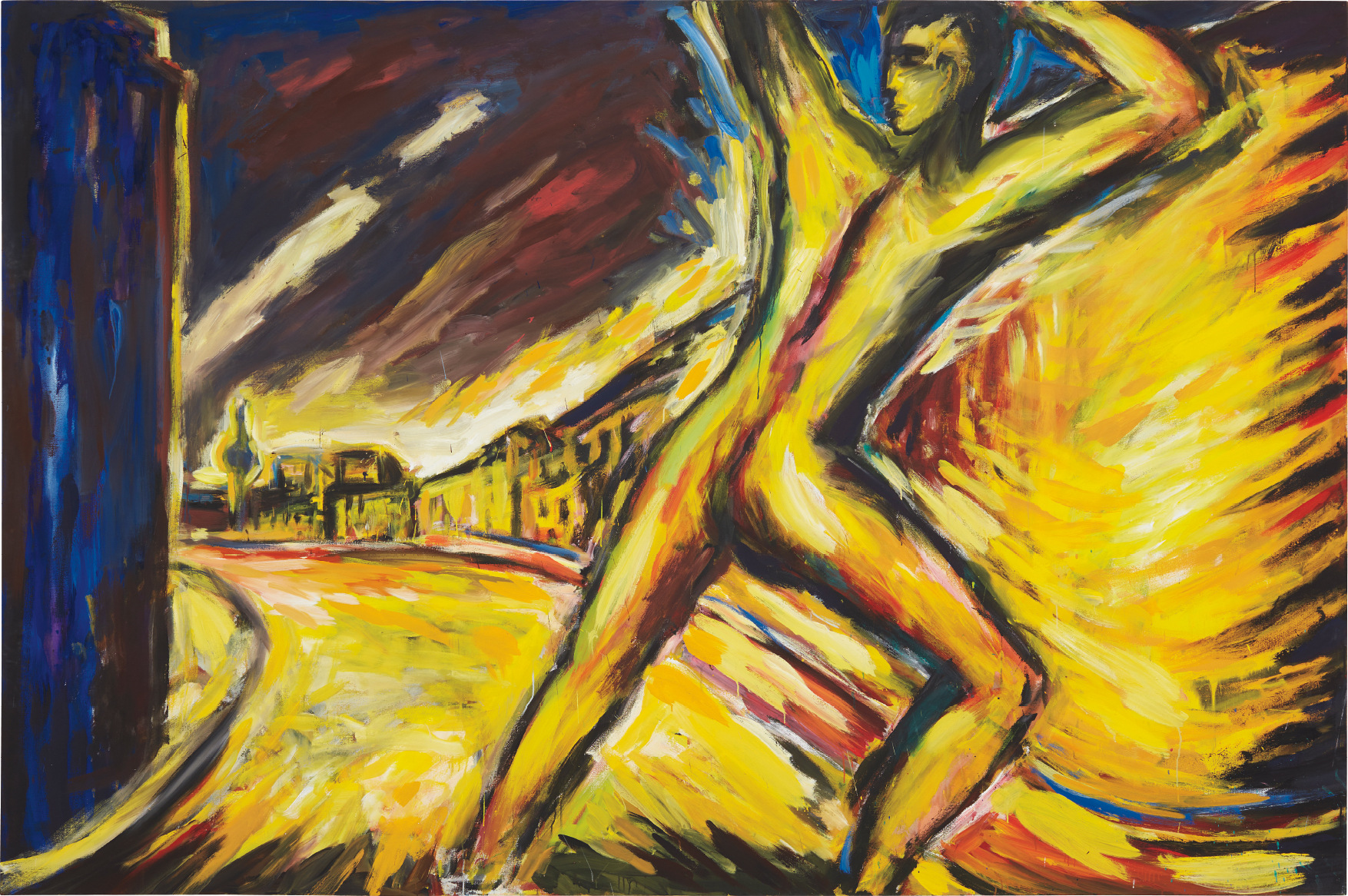
Helmut Middendorf, Berlin's Blazing Expressionist Voice
Artist Spotlight · The Collection Editorial
There are artists who document their era and there are artists who embody it, who seem to metabolize the anxieties and electricity of a particular moment so completely that looking at their canvases is like pressing your ear against the wall of history and hearing the city breathe. Helmut Middendorf is emphatically the latter. As Berlin prepares renewed institutional attention to the generation that detonated the Neue Wilde movement across West Germany in the late 1970s and early 1980s, Middendorf's name has returned with force to the conversations of curators, collectors, and critics who understand that his contribution to postwar painting was not merely significant but essential. His work captures a city in transformation with a visceral honesty that few painters of any generation have managed.
Helmut Middendorf
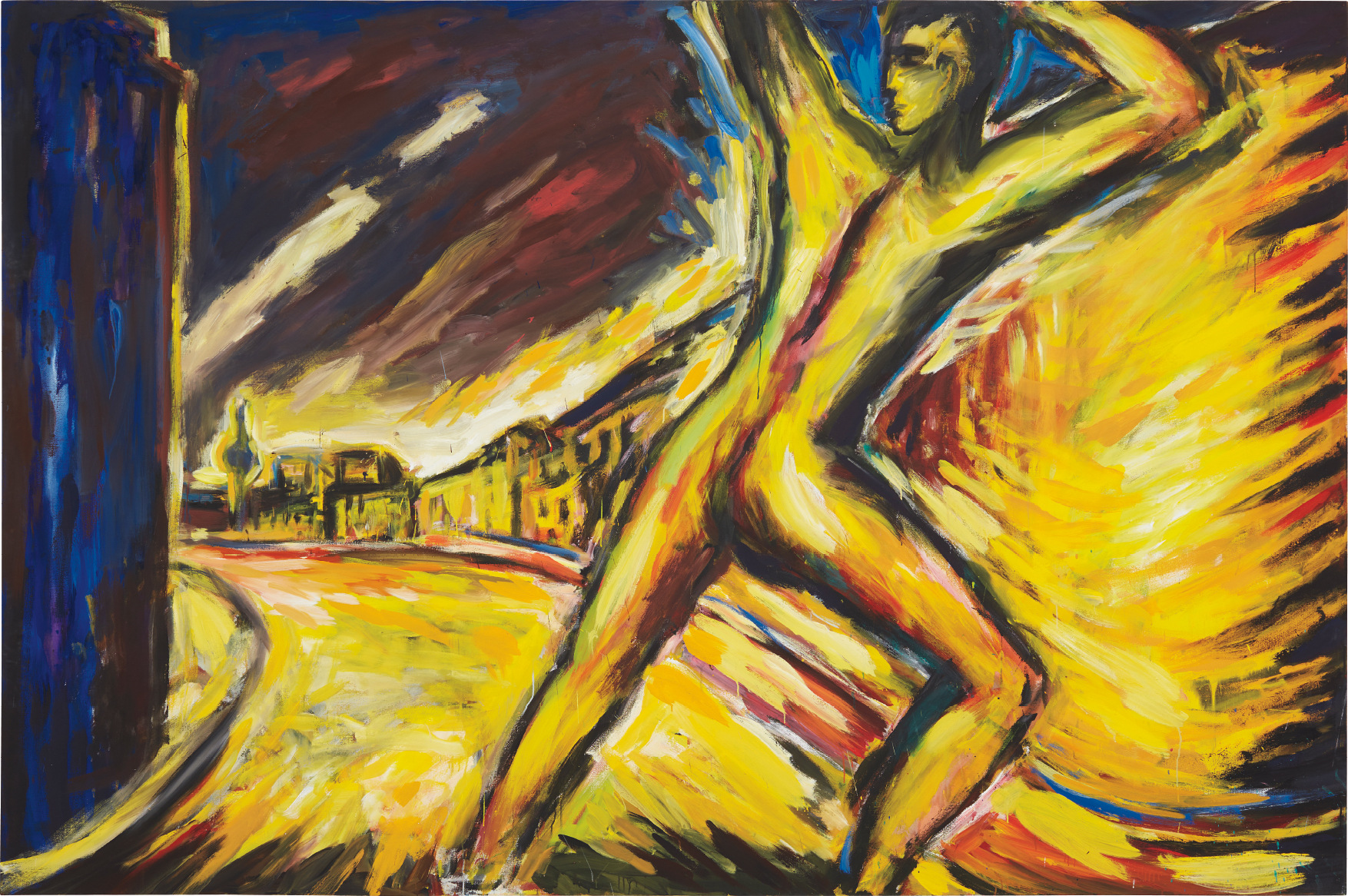
The Street, 1984
Middendorf was born in 1953 in Dinklage, a small town in Lower Saxony, and came of age in a Germany still negotiating the psychological rubble of the Second World War alongside the cultural ferment of the 1960s and early 1970s. He moved to Berlin to study at the Hochschule für Bildende Künste, where he encountered the teachers and fellow students who would help define one of the most explosive moments in contemporary German painting. Berlin in the late 1970s was unlike any other city in the world: geographically isolated, politically charged, and culturally ravenous. It attracted artists, musicians, and outcasts who thrived in the particular freedom that came from living in a place that felt simultaneously besieged and liberated.
For a young painter of Middendorf's sensibility, it was the precise environment needed. Alongside fellow painters Salomé, Rainer Fetting, and Bernd Zimmer, Middendorf co founded the Galerie am Moritzplatz in Kreuzberg in 1977. This self organized exhibition space became a crucible for what would come to be known as the Neue Wilde or, in its broader international framing, Neo Expressionism. The group showed work rapidly, rawly, and without institutional gatekeeping.
Helmut Middendorf
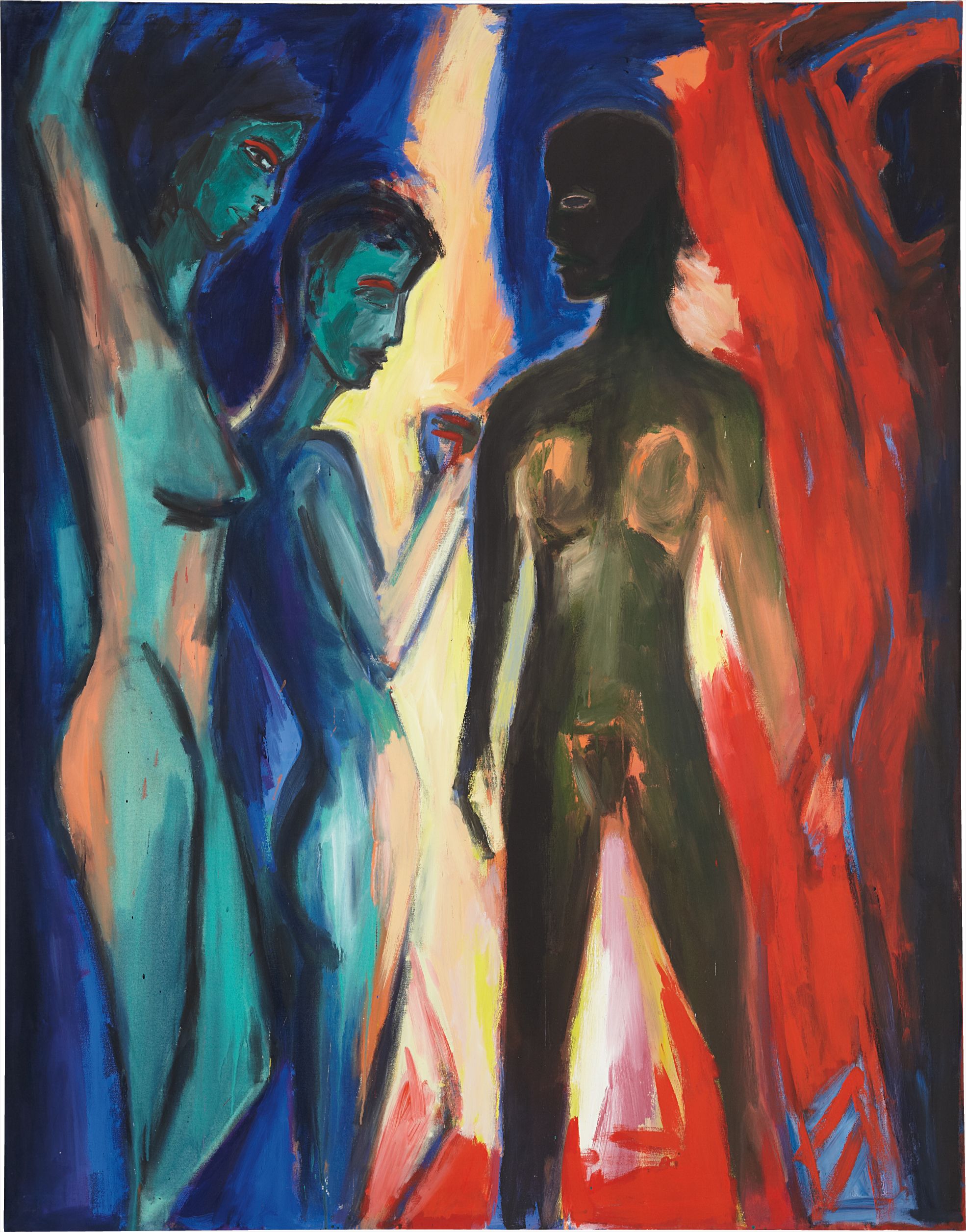
Three Women
They painted large, they painted fast, and they painted from the gut. Middendorf's particular contribution was a charged attention to urban nightlife, to figures dissolved in artificial light, to the street as stage and the human body as an instrument of pure sensation. His canvases from this period pulse with the energy of clubs, concerts, and the charged anonymity of city crowds after dark. The early 1980s marked the peak of international recognition for Middendorf's generation.
The 1981 exhibition Heftige Malerei at the Haus am Waldsee in Berlin brought sustained critical attention to his circle, and the momentum carried into major gallery representation in New York, where dealers like Mary Boone and others were actively seeking European painters whose work offered a counterpoint to American Minimalism and Conceptualism. Middendorf exhibited internationally throughout this period, and his work entered important collections in Europe and the United States. His painting The Street from 1984, executed in oil on canvas, stands as one of the defining images of this era: a nocturnal urban scene rendered in streaks of luminous color, figures caught mid movement, the canvas itself seeming to vibrate with forward momentum. It is the kind of work that makes you feel the pavement under your feet and the bass in your chest simultaneously.
Helmut Middendorf
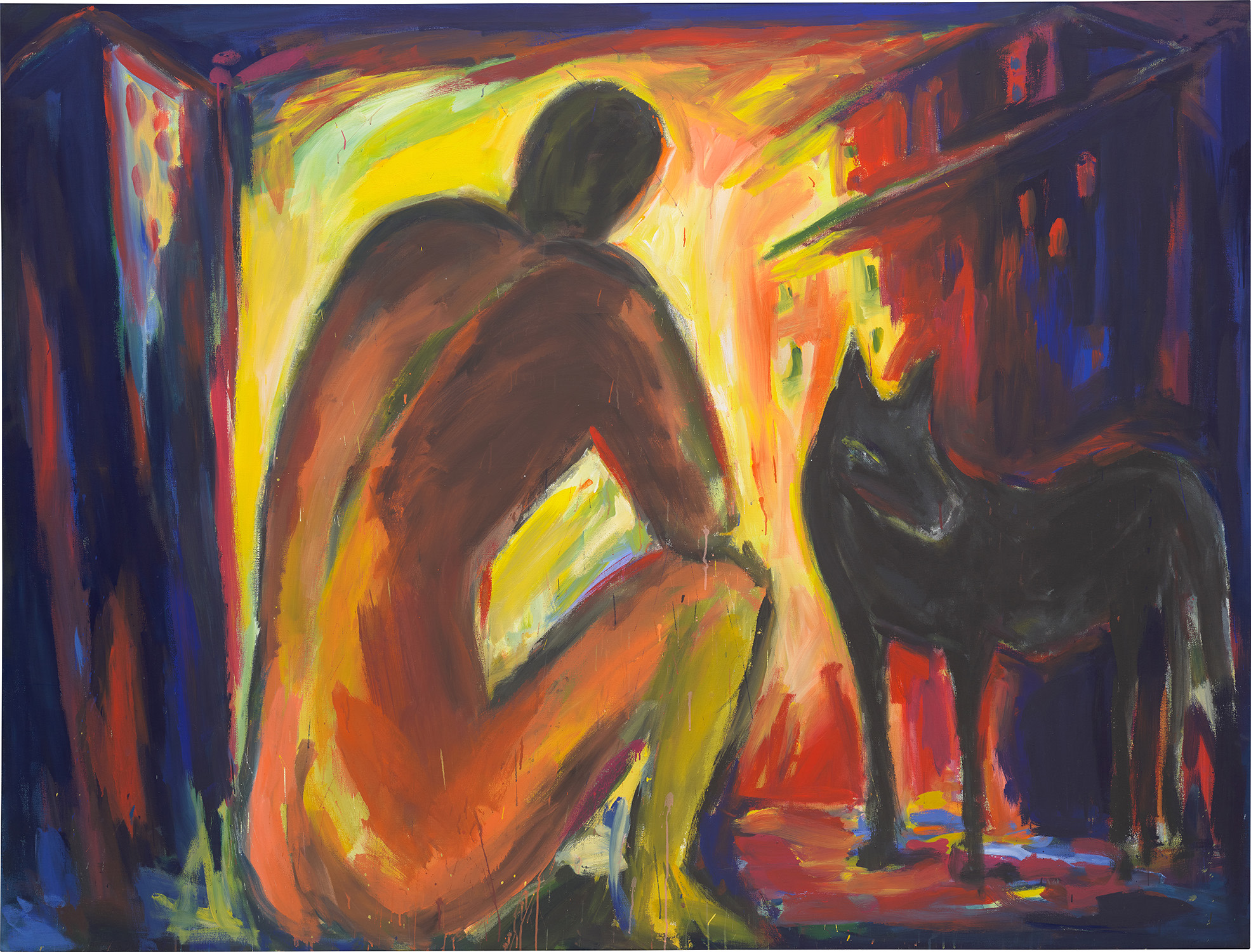
Das Hundebild II, 1983
Das Hundebild II from 1983, painted on linen, demonstrates another register of Middendorf's practice: a more enigmatic, slightly unsettling territory where figuration tilts toward the symbolic without fully surrendering the immediate. The linen support gives the work a warmth and texture that oil on canvas does not always provide, and Middendorf was always attentive to the physical properties of his materials as carriers of meaning. Three Women, another major oil on canvas, shows his ability to hold multiple figures in dynamic tension within a single pictorial space, the paint applied with a confidence that reads as both improvised and deeply considered. And then there is Aldi, the acrylic on canvas work whose title lifts a name from the everyday commercial landscape of German life and places it into a painterly context that asks quiet but persistent questions about consumer culture, identity, and the aesthetics of the ordinary.
Each of these works repays sustained looking, revealing more of their internal logic the longer one spends with them. For collectors approaching Middendorf's work today, the context is genuinely favorable. The sustained museum and critical reassessment of Neo Expressionism that has been building over the past decade has lifted the market standing of his entire generation, and works by Middendorf from the canonical early 1980s period are increasingly sought after. His paintings occupy a fascinating position: they are recognizable products of a specific historical moment, yet they do not feel dated in the way that purely topical art can.
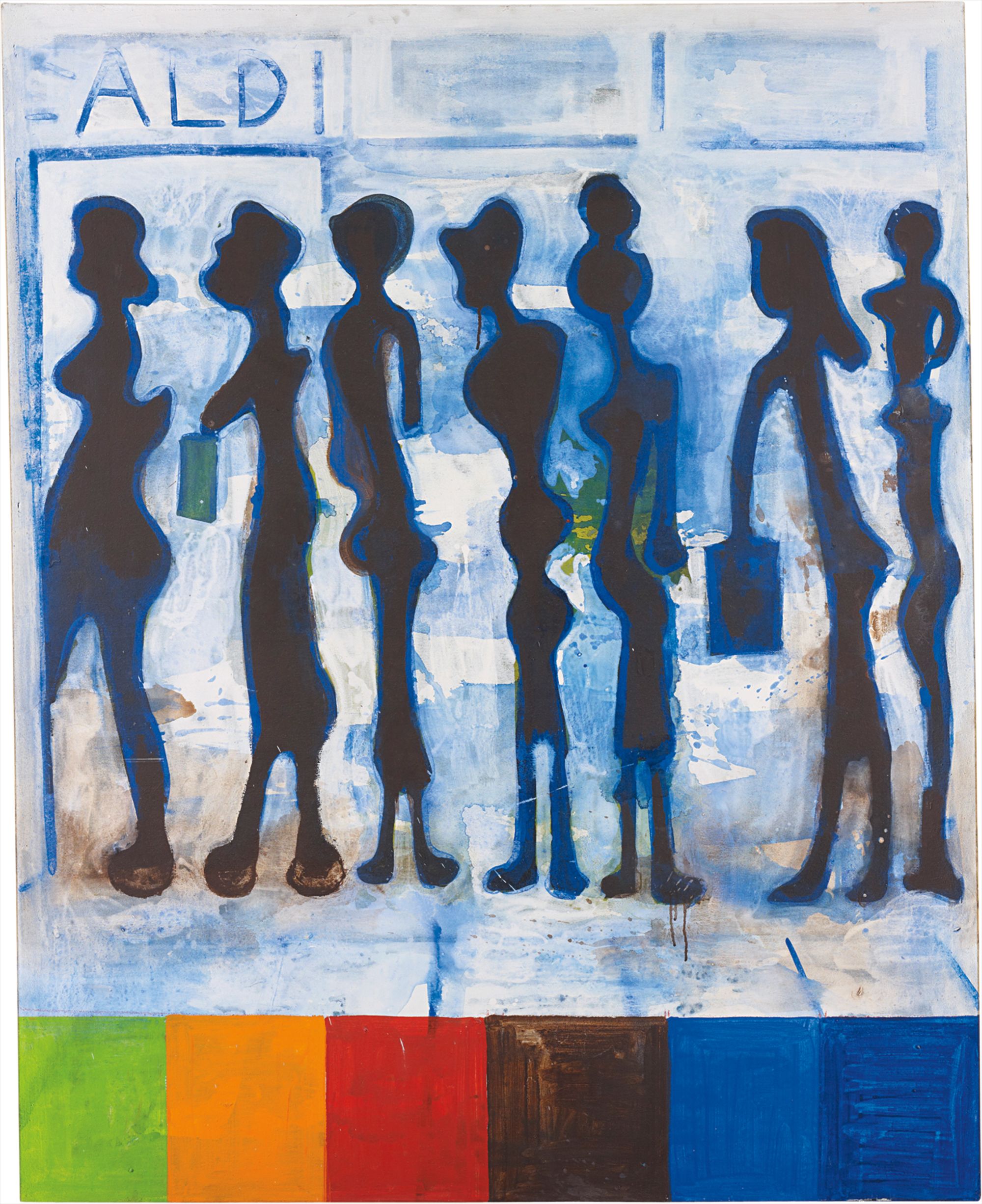
Helmut Middendorf
Aldi
The urgency is timeless even when the imagery is period specific. Collectors with holdings in Georg Baselitz, A.R. Penck, or Markus Lüpertz will find that Middendorf's work converses productively with those painters while occupying its own distinct emotional frequency.
Those drawn to the American Neo Expressionists, including Jean Michel Basquiat and Julian Schnabel, will recognize in Middendorf a transatlantic kindred spirit who arrived at similar conclusions from a very different set of cultural circumstances. What makes Middendorf matter now, beyond the market and the art historical footnotes, is something harder to quantify but easy to feel when you stand in front of one of his canvases. He painted the city as a living organism, as a place that does things to people, that shapes desire and fear and longing in ways that polite representation cannot capture. In an era when urban experience has become both more mediated and more intense, his images feel newly relevant.
The street he painted in 1984 is not the same street we walk today, but the sensation of moving through it, anonymous and alert and alive, is one that his work transmits across the decades with undiminished force. To collect Middendorf is to hold a piece of one of the most charged chapters in postwar painting, and more than that, to keep company with an artist who trusted the canvas to tell the truth about what it felt like to be alive in a city at the edge of history.