Harold Eugene Edgerton
Doc Edgerton Froze Time Beautifully
Artist Spotlight · The Collection Editorial
“Don't make sharp images of fuzzy concepts.”
Harold Edgerton
Picture a single drop of milk falling into a shallow dish. In the fraction of a second before the human eye can register what has happened, a perfect coronet of white liquid rises, its scalloped crown frozen in mid air with the geometry of a cathedral. This is the world Harold Eugene Edgerton revealed to us: a hidden universe of grace and violence and wonder existing just beyond the threshold of ordinary perception. That image, the Milk Drop Coronet, has become one of the most reproduced scientific photographs in history, and yet it belongs just as completely to the canon of twentieth century art as it does to the annals of physics.
Harold Eugene Edgerton
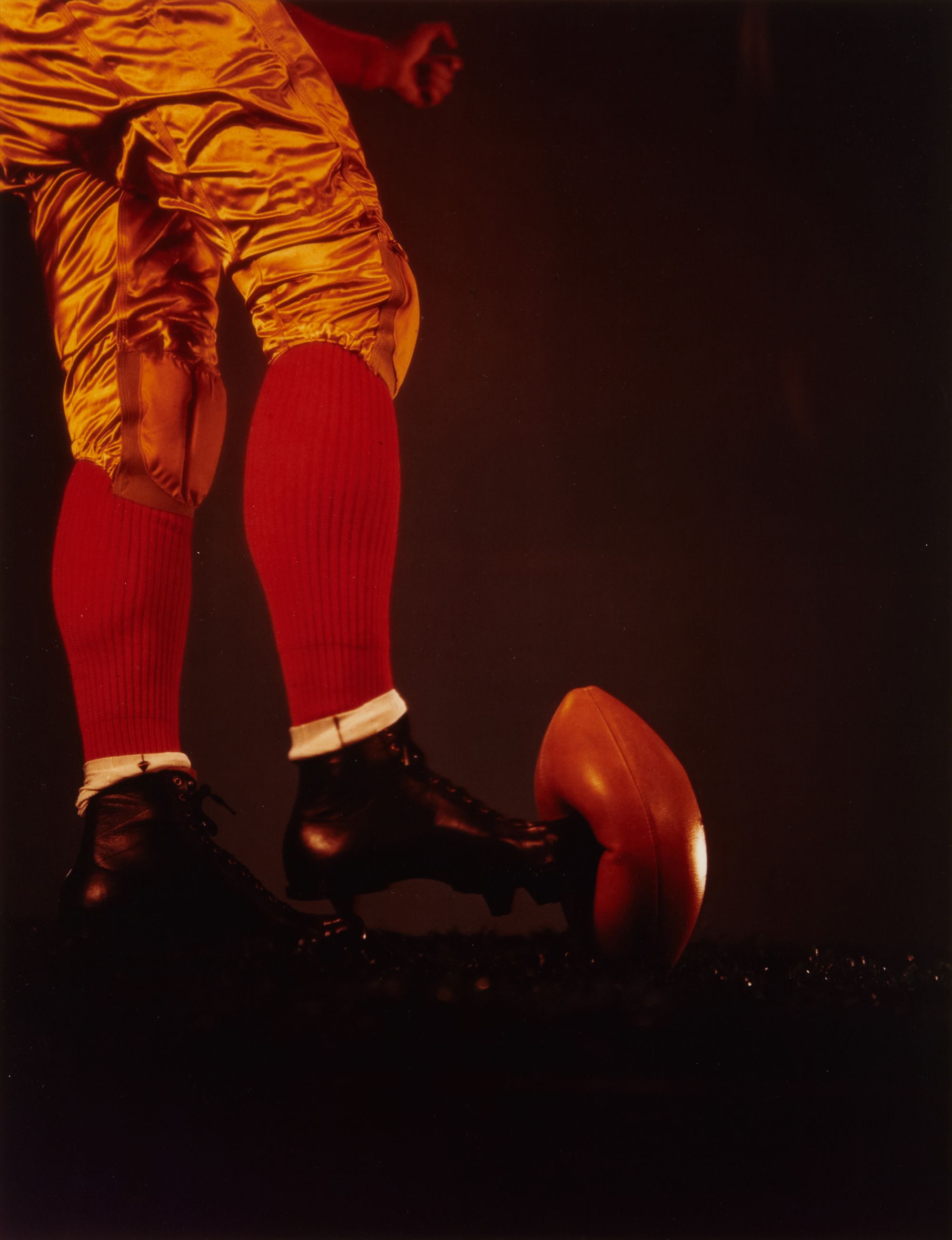
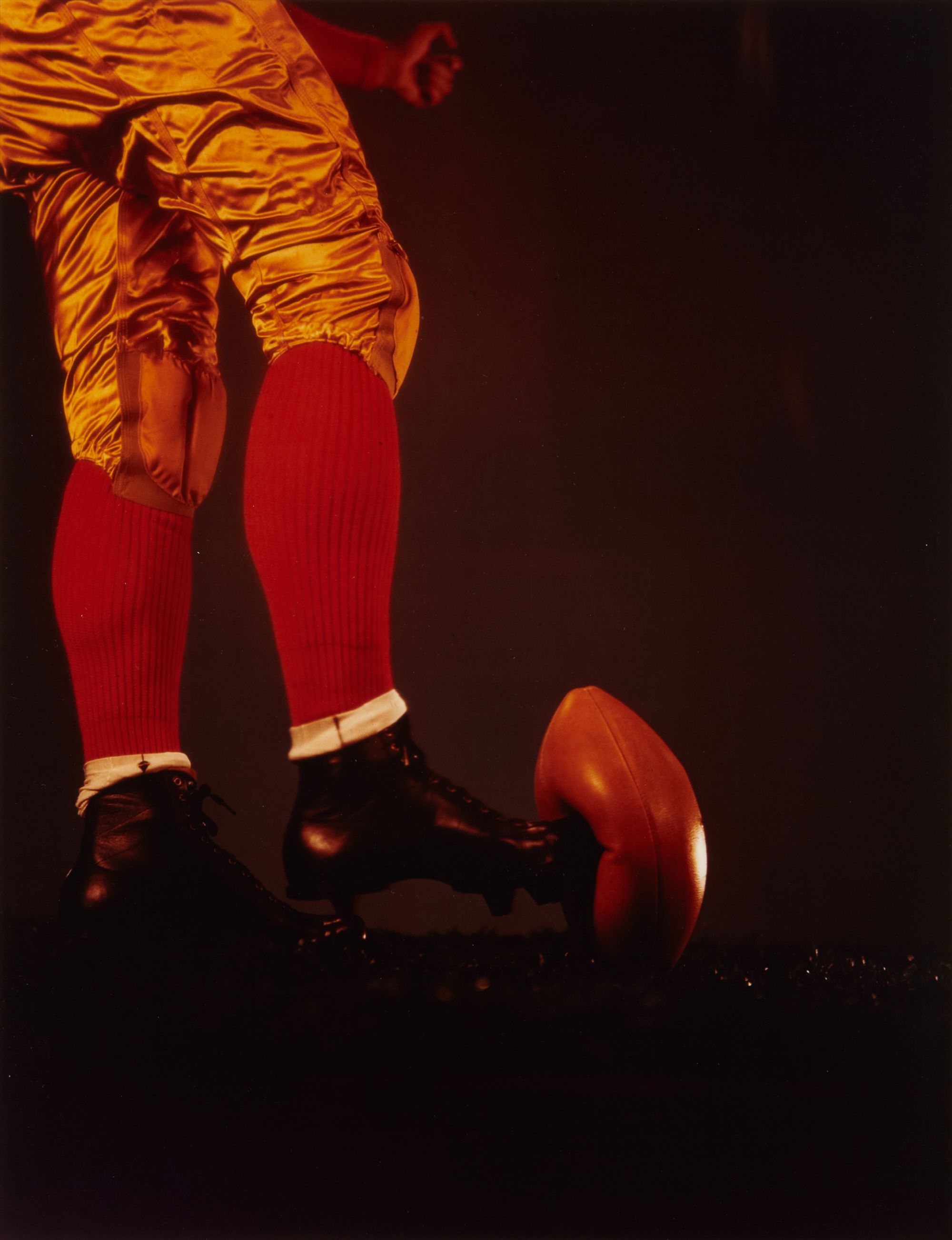
Football Kick
Edgerton was born in 1903 in Fremont, Nebraska, a small Midwestern city that offered little in the way of artistic or scientific precedent. His curiosity was self generated, shaped early by a fascination with electricity and mechanical systems. He went on to study electrical engineering at the University of Nebraska before completing his graduate work and ultimately his entire academic career at the Massachusetts Institute of Technology, where he joined the faculty and remained for the rest of his life. It was at MIT in the late 1920s and early 1930s that he began developing the stroboscopic flash unit that would transform both science and photography forever.
The electronic flash that Edgerton perfected was not merely a technical improvement on existing tools. It was an epistemological breakthrough. By generating pulses of light at durations measured in microseconds, he could illuminate subjects moving far too quickly for any conventional shutter or lighting system to capture. What began as an engineering problem, how to study the rotation of electric motors, quickly opened onto an entirely new visual vocabulary.
Harold Eugene Edgerton
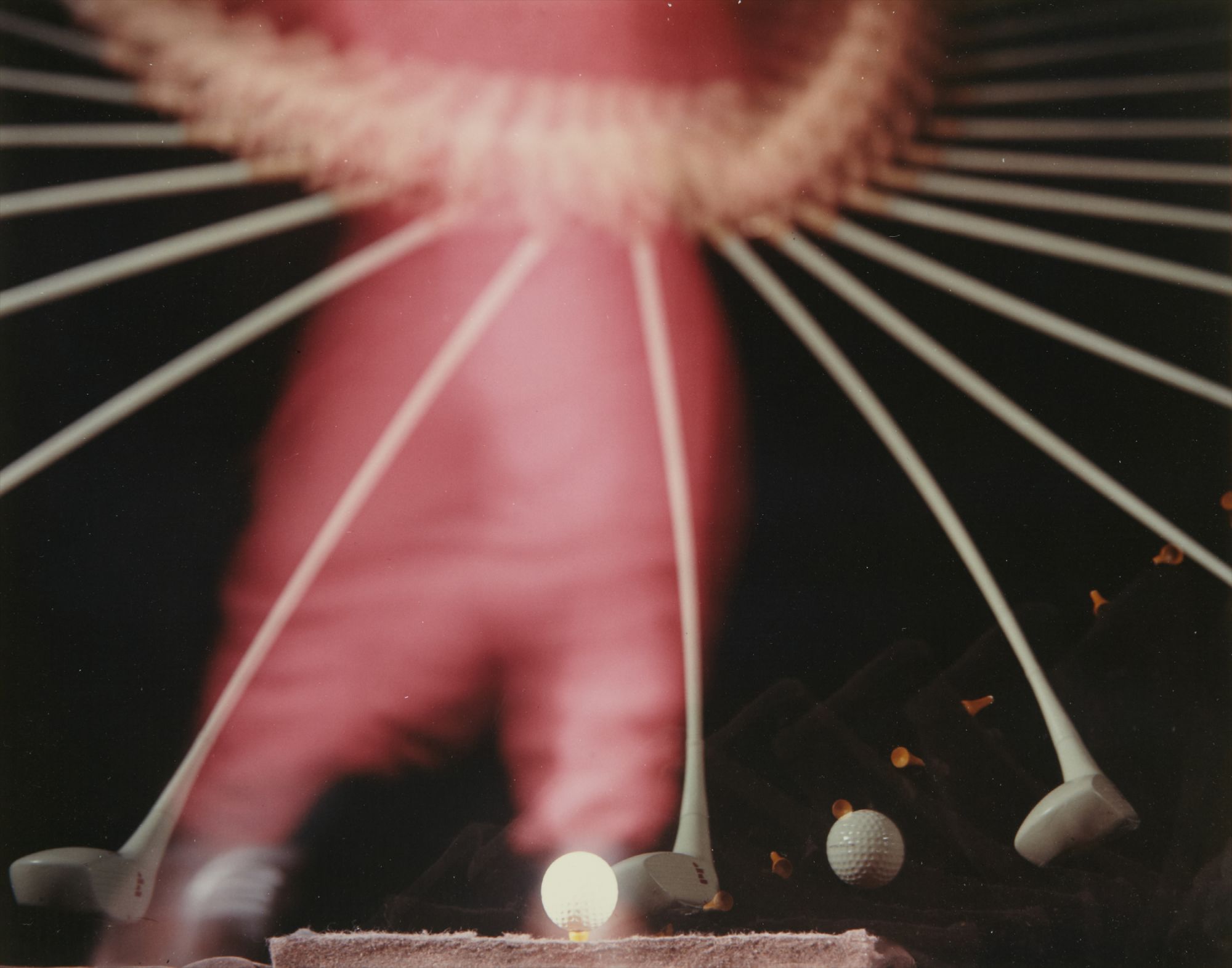
Golf Tee-Off
Edgerton began pointing his camera at hummingbirds, at athletes in motion, at bullets traveling through playing cards and light bulbs and apples. Each image was both a data point and a revelation. The period from the 1930s through the 1950s represents the richest and most consequential phase of Edgerton's image making. His photographs from these decades demonstrate not just technical virtuosity but a genuine compositional intelligence.
“Work hard. Tell everyone everything you know. Close a deal with a handshake. Have fun.”
Harold Edgerton, personal motto
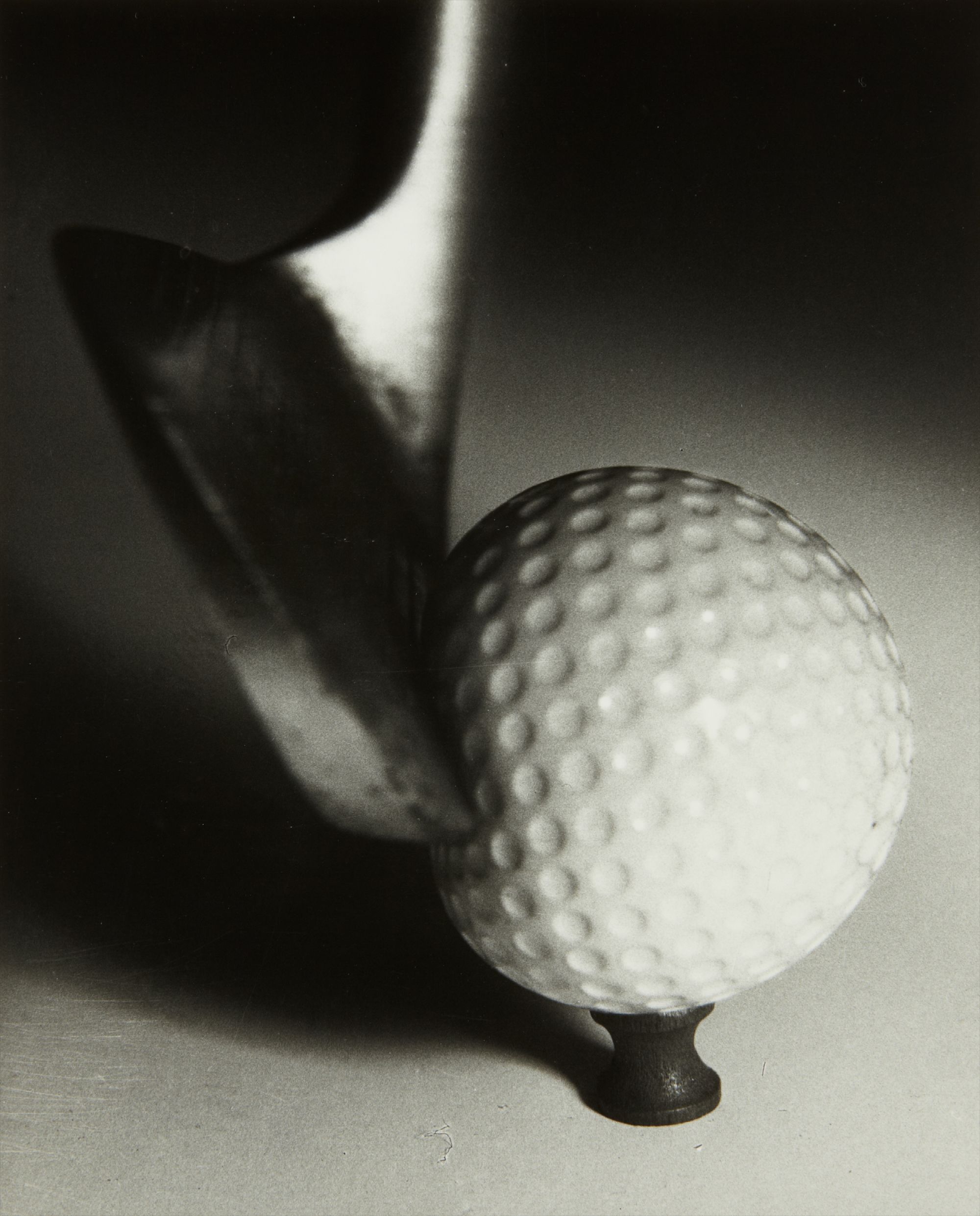
Works such as Football Kick and Golf Tee Off use the stroboscopic technique to trace the arc of athletic motion across a single frame, producing images that feel simultaneously like scientific diagrams and abstract sculpture. The figure multiplies across the picture plane, each ghost of the body marking a discrete moment in a continuous action. These images bear comparison to the chronophotographic experiments of Eadweard Muybridge and Etienne Jules Marey from the previous century, but Edgerton brought a warmth and physical poetry that his predecessors rarely achieved. His subjects feel alive rather than clinical.
Harold Eugene Edgerton
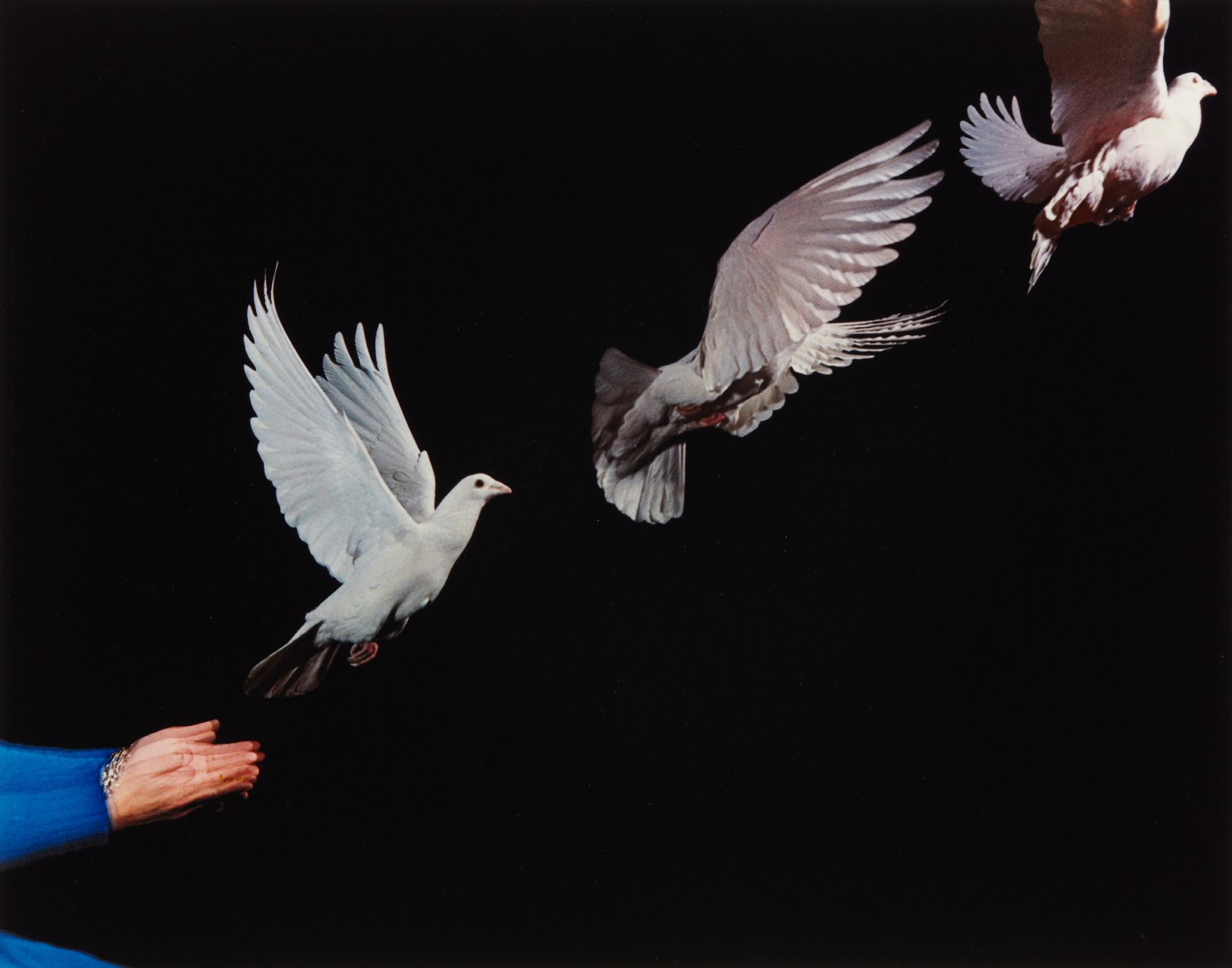
Pigeon in flight
Among his most celebrated individual works, Bullet Through Bulb and the series of bullet impact photographs stand in a category of their own. The image of a .30 calibre bullet piercing a Queen of Hearts playing card, captured at the precise moment of puncture, manages to be simultaneously terrifying and exquisite. The card bows outward, petals of torn paper blooming around the entry point, the bullet a silver blur already departing the frame.
Edgerton created these images not for shock value but out of a genuine desire to understand and communicate the physical forces at work in the world around us. That the results were beautiful was, to him, simply confirmation that nature itself tends toward elegance. His Pigeon in Flight photographs similarly reveal the hidden architecture of avian movement, each wingbeat resolved into something approaching calligraphy. The collecting market for Edgerton's work reflects the dual identity that defined his practice.
Harold Eugene Edgerton
Driving the Golf Ball
His prints have been acquired by natural history museums and science institutions as readily as by art galleries and private collectors, and this breadth of institutional interest has given his market unusual stability and breadth. Gelatin silver prints made during or close to his active years command strong attention, though the chromogenic and dye transfer prints produced as later editions also carry considerable appeal for collectors who value the visual richness of the color work. The portfolio Seeing the Unseen, published in Boston in 1977 by Gus Kayafas and issued in an edition of 60 plus 10 artist's proofs, is among the most sought after collectible objects associated with Edgerton's practice. Each portfolio contains both gelatin silver and dye transfer prints, and examples signed and numbered in pencil by Edgerton himself represent a particularly meaningful point of entry into his legacy.
In the broader context of photographic history, Edgerton occupies a position near those artists who forced the medium to account for time in radically new ways. His intellectual kinship with Muybridge is the most obvious comparison, but there are also meaningful connections to the work of Man Ray and Laszlo Moholy Nagy, both of whom explored photography as a tool for making visible the invisible forces of the modern world. Unlike the Surrealists who sometimes used the camera to destabilize reality, Edgerton sought always to clarify it, to give the viewer more information rather than less. His legacy also anticipates later practitioners such as Andreas Gursky and Hiroshi Sugimoto, artists who use technically demanding processes to arrive at images that transcend their own methodology.
Edgerton passed away in 1990, but the relevance of his work has only deepened with time. In an era when high speed digital photography and slow motion video have made frozen motion accessible to anyone with a smartphone, his pioneering images remind us what it meant to see these things for the very first time. The Milk Drop Coronet, the bullet piercing an apple, the hummingbird suspended in a single wingbeat: these were not merely demonstrations of a clever apparatus. They were acts of visual generosity, a scientist and an artist offering the world a way of seeing it had never possessed before.
For collectors, Edgerton's prints are documents of that original wonder, objects that carry the excitement of discovery as palpably today as they did when the flash first fired.
Explore books about Harold Eugene Edgerton
Flash!: A Career of High-Speed Photography
Harold E. Edgerton
Electronic Flash Photography
Harold E. Edgerton
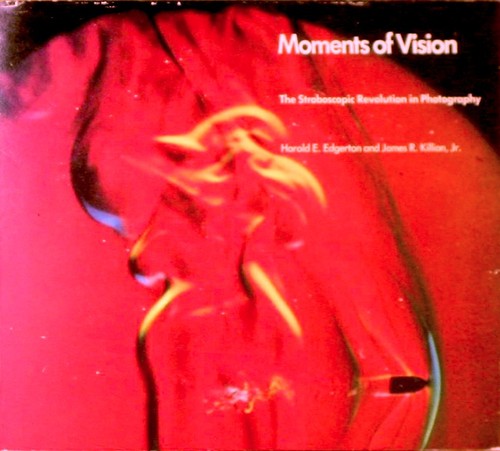
Moments of Vision: The Stroboscopic Revolution
Gail Buckland
Seeing the Unseen: Dr. Harold E. Edgerton and the Birth of High-Speed Photography
Katherine A. Ott