Hans Bellmer
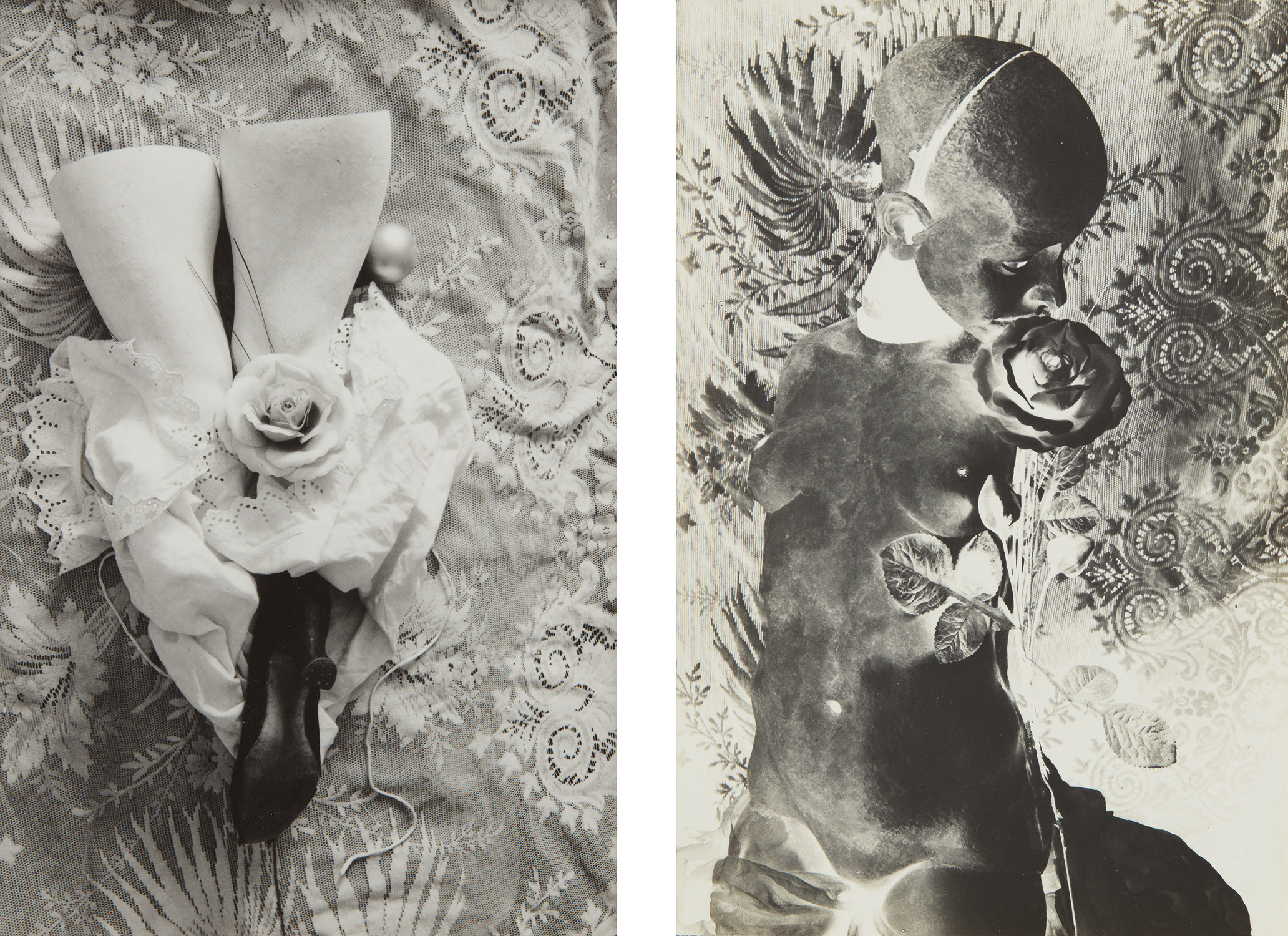
Hans Bellmer: The Visionary Who Reimagined the Body
Artist Spotlight · The Collection Editorial
“The body is like a sentence that invites us to rearrange it, so that its true content is revealed.”
Hans Bellmer, writing on the doll, circa 1934
In the spring of 2023, the Centre Pompidou in Paris drew renewed attention to its holdings of Surrealist work, placing Hans Bellmer's uncanny constructions and photographs in dialogue with contemporaries who had long orbited his singular vision. That renewed curatorial interest reflects something broader: across major institutions from the Museum of Modern Art in New York to the Tate Modern in London, Bellmer's work has never felt more urgently discussed, more carefully theorised, or more passionately collected. For an artist whose practice was forged in deliberate opposition to the machinery of fascism and the sterility of bourgeois convention, there is a profound rightness to the fact that his legacy continues to expand and deepen decades after his death in Paris in 1975. Hans Bellmer was born on March 13, 1902, in Kattowitz, then part of the German Empire and now the Polish city of Katowice.
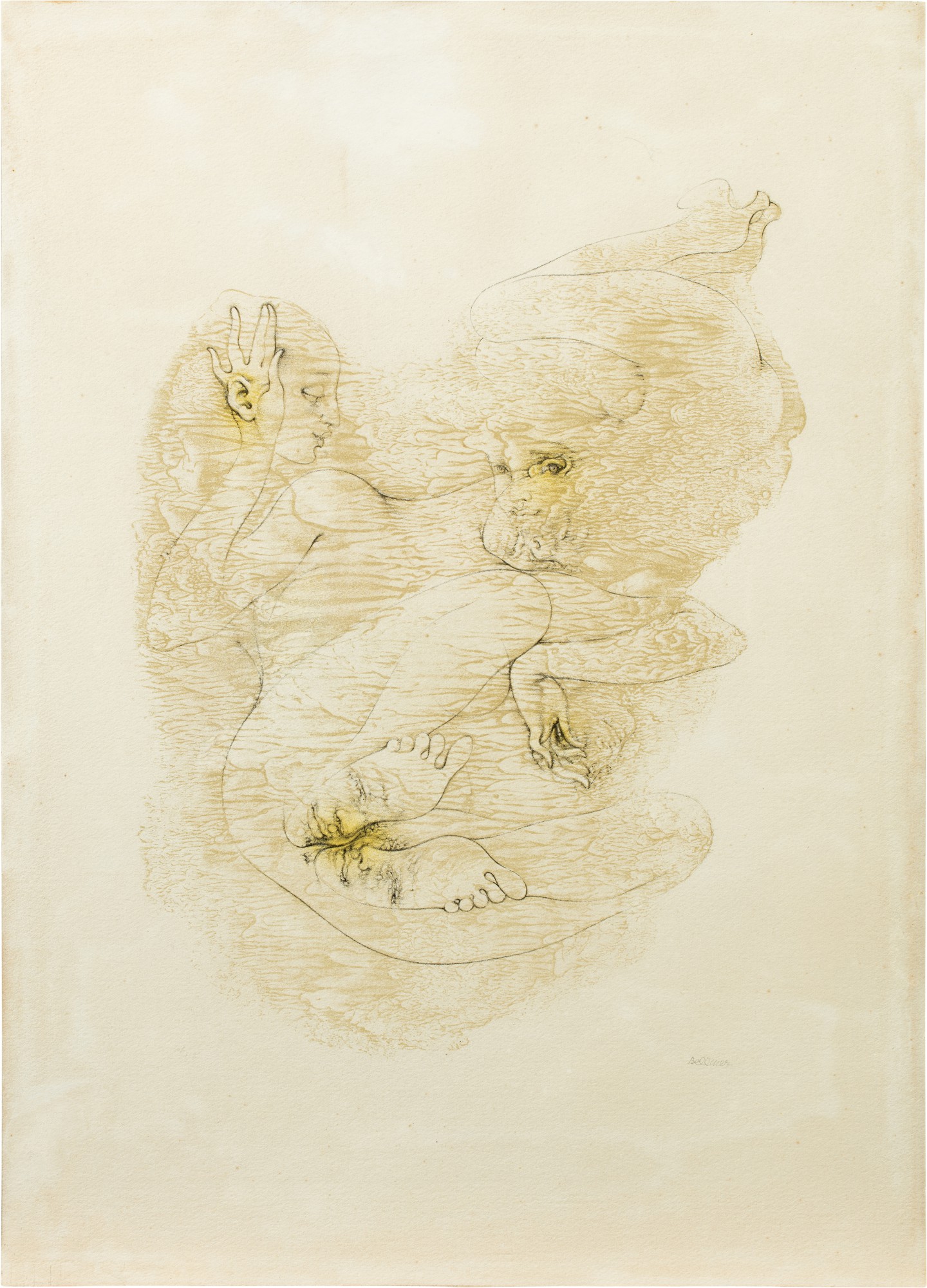
Hans Bellmer
La permutation des sens, 1950
His early years were shaped by an authoritarian father, a civil engineer with rigid expectations, and a domestic atmosphere that the young Bellmer would spend a lifetime transmuting into art. He studied at the Technische Hochschule in Berlin and worked briefly in typography and advertising, skills that would later lend his compositions their precise, almost architectural quality. The rise of National Socialism in Germany proved to be the catalyst that redirected everything. In a conscious act of resistance, Bellmer resolved to dedicate himself entirely to work that the Nazi regime would find useless and subversive.
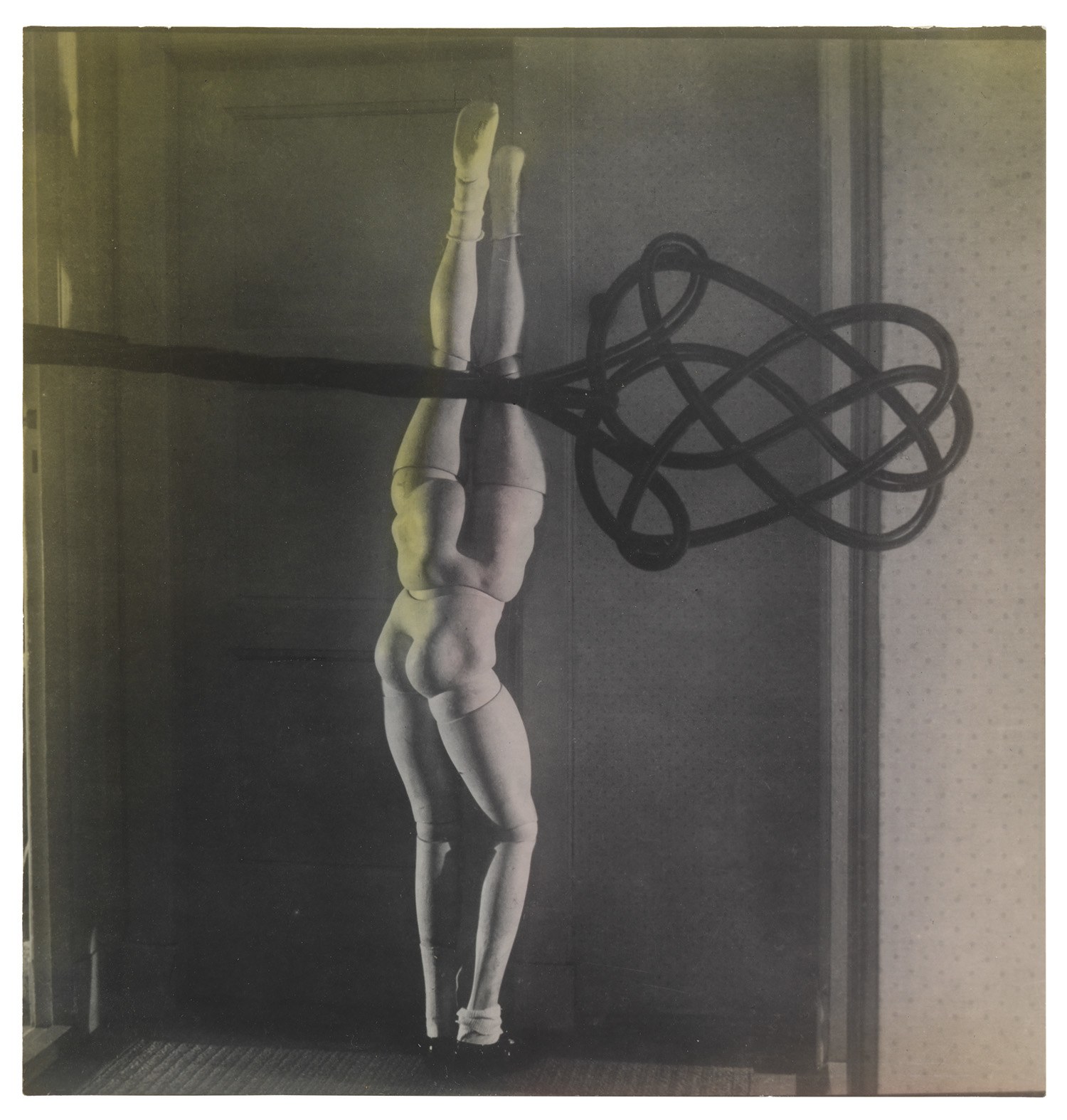
The result was one of the most radical artistic projects of the twentieth century. In 1933, in Berlin, Bellmer began constructing his now legendary figure: a life sized articulated doll assembled from wood, metal, and papier mâché, inspired in part by a childhood memory of a tin soldier and by a performance of Jacques Offenbach's opera The Tales of Hoffmann, with its automaton Olympia. The doll was not made to be loved in any conventional sense. It was made to be disassembled, repositioned, and photographed in configurations that destabilised every assumption about the body, desire, and the way images control meaning.
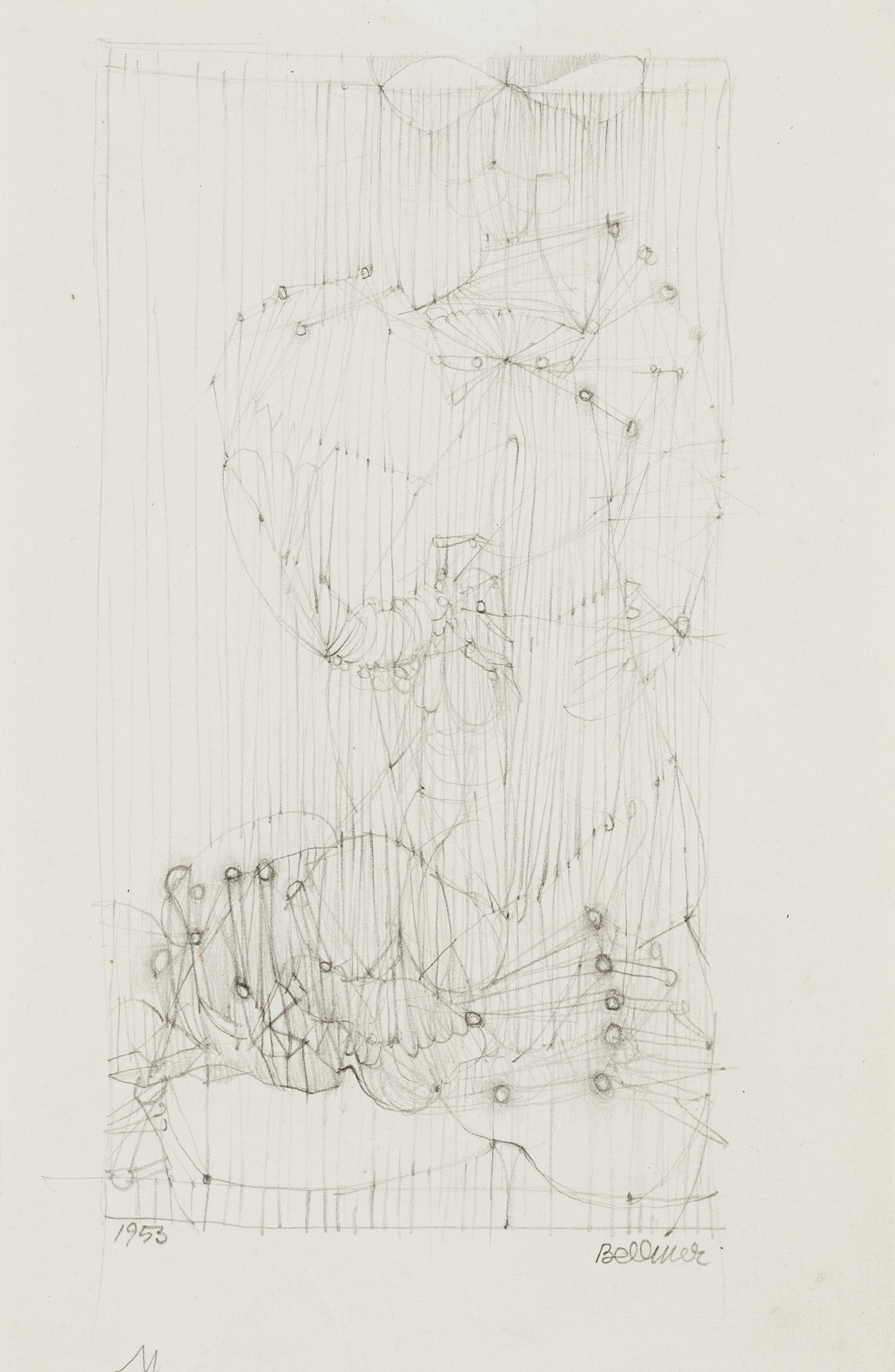
Hans Bellmer
Dame musicienne, 1953
Bellmer sent a series of photographs documenting the doll to the Surrealist journal Minotaure in Paris in 1934, and their publication sent ripples through the European avant garde. André Breton and Paul Éluard were among those electrified by what they saw, and Bellmer was rapidly embraced as a kindred spirit by the Surrealist movement. Bellmer relocated to Paris in 1938, and the city became his home and his crucible for the remainder of his life. During the Second World War he was interned briefly at a camp in the south of France alongside Max Ernst, an experience that, like so much else in his biography, he absorbed and processed through his practice.
After the war his output broadened magnificently. He continued to develop the doll as subject and sculptural form, producing the second version with its doubled torso and multiplied joints, an object that seemed to embody the body as grammar, a system of possible meanings rather than a fixed form. He also deepened his engagement with drawing and printmaking, producing densely worked pencil and gouache compositions of extraordinary technical refinement, as well as etchings and lithographs that placed him among the most accomplished graphic artists of his generation. The works available through The Collection offer a genuinely representative survey of Bellmer's achievement across media and decades.
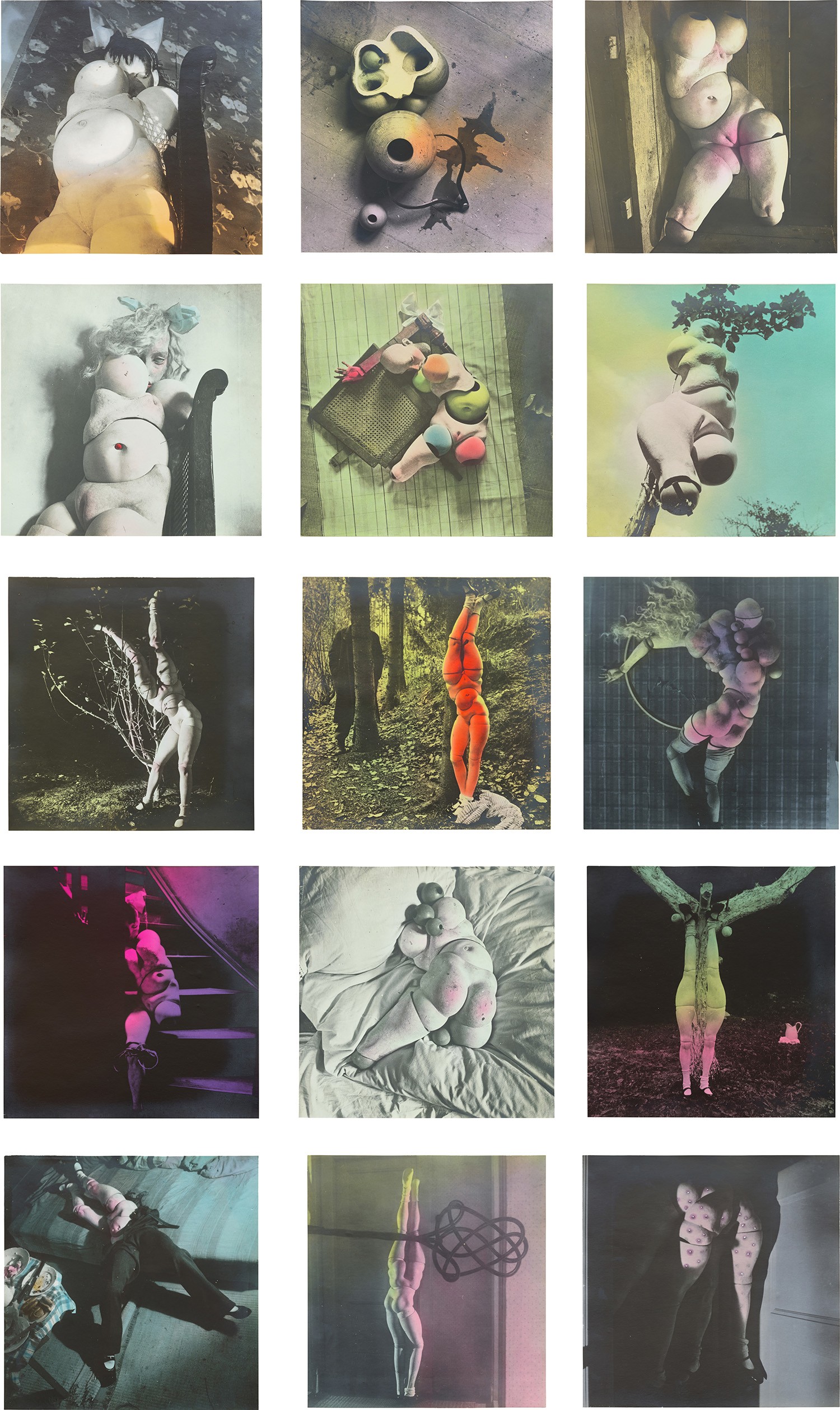
Hans Bellmer
Les Jeux de la poupée
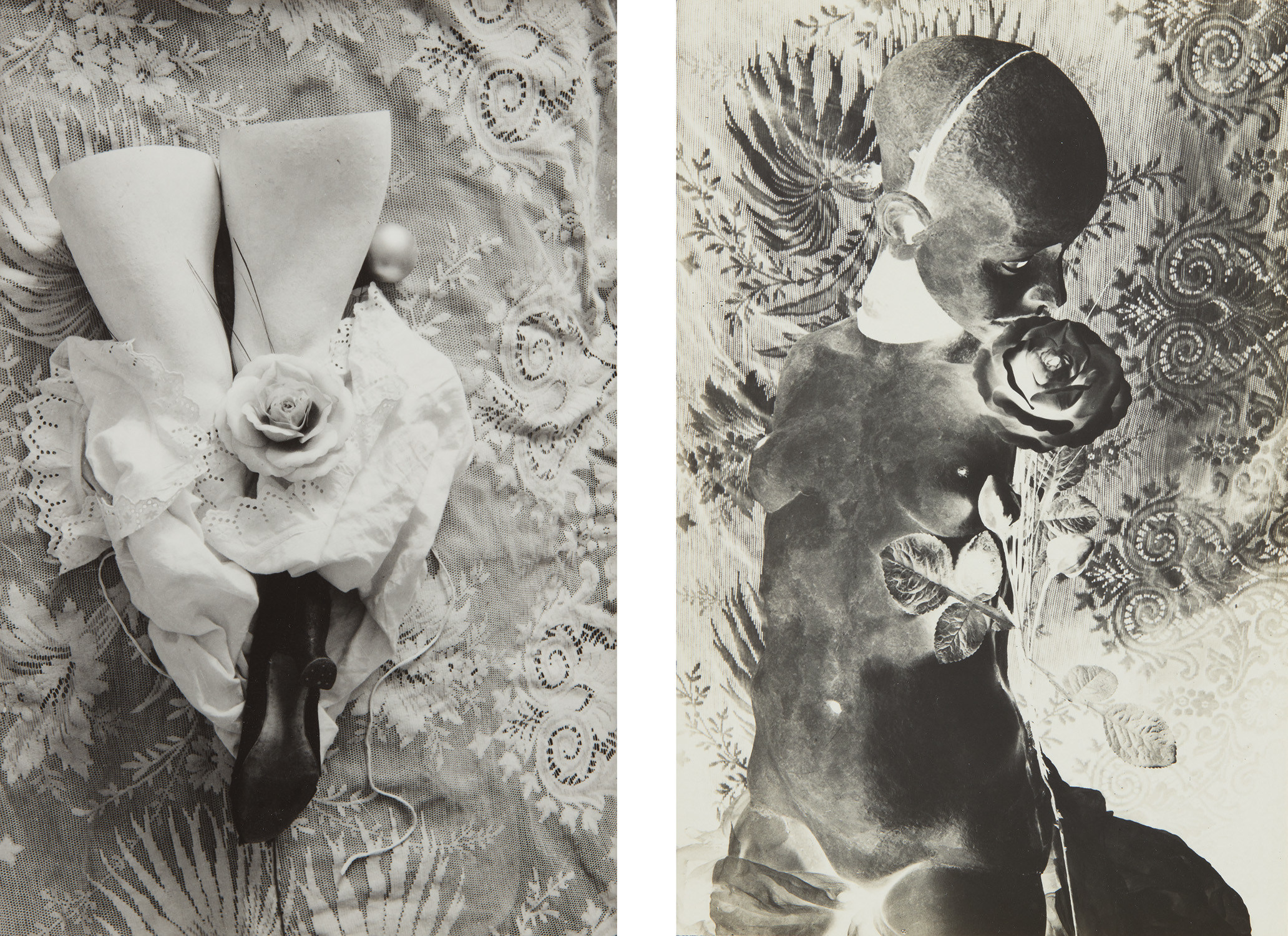
La permutation des sens from 1950 is a superb example of his mature draftsmanship, its pencil and gouache surfaces humming with that characteristic interplay of precision and dream logic. The gelatin silver prints from La Poupée, including the vintage 1935 print with its pencil annotations on the verso, are primary documents of one of the great photographic projects of the twentieth century, and the hand coloured versions carry an additional charge, as if the colouring insists on the warmth and presence that the doll's artificiality seems to deny. Les Jeux de la poupée, the 1949 Paris publication with fifteen mounted hand coloured gelatin silver prints and text by Paul Éluard, is among the most coveted artist's books of the Surrealist period. Bellmer's collaboration with Éluard was a genuine meeting of minds, the poet's language of erotic displacement finding its perfect visual counterpart.
The complete set Oeillades ciselées en branche, with poems by Georges Hugnet and the remarkable binding by Paul Bonet, represents Bellmer at the intersection of fine art and the livre d'artiste tradition at its most opulent and considered. For collectors, the appeal of Bellmer resides in several converging qualities. His work sits at the absolute centre of Surrealism while remaining unmistakably personal, so that acquiring a Bellmer is simultaneously acquiring a piece of one of art history's most fertile movements and the vision of an irreducibly individual sensibility. The photographs from La Poupée carry extraordinary art historical weight: they are among the most reproduced and written about images in twentieth century photography, and original prints, particularly those with hand colouring or significant provenance, are genuinely rare.
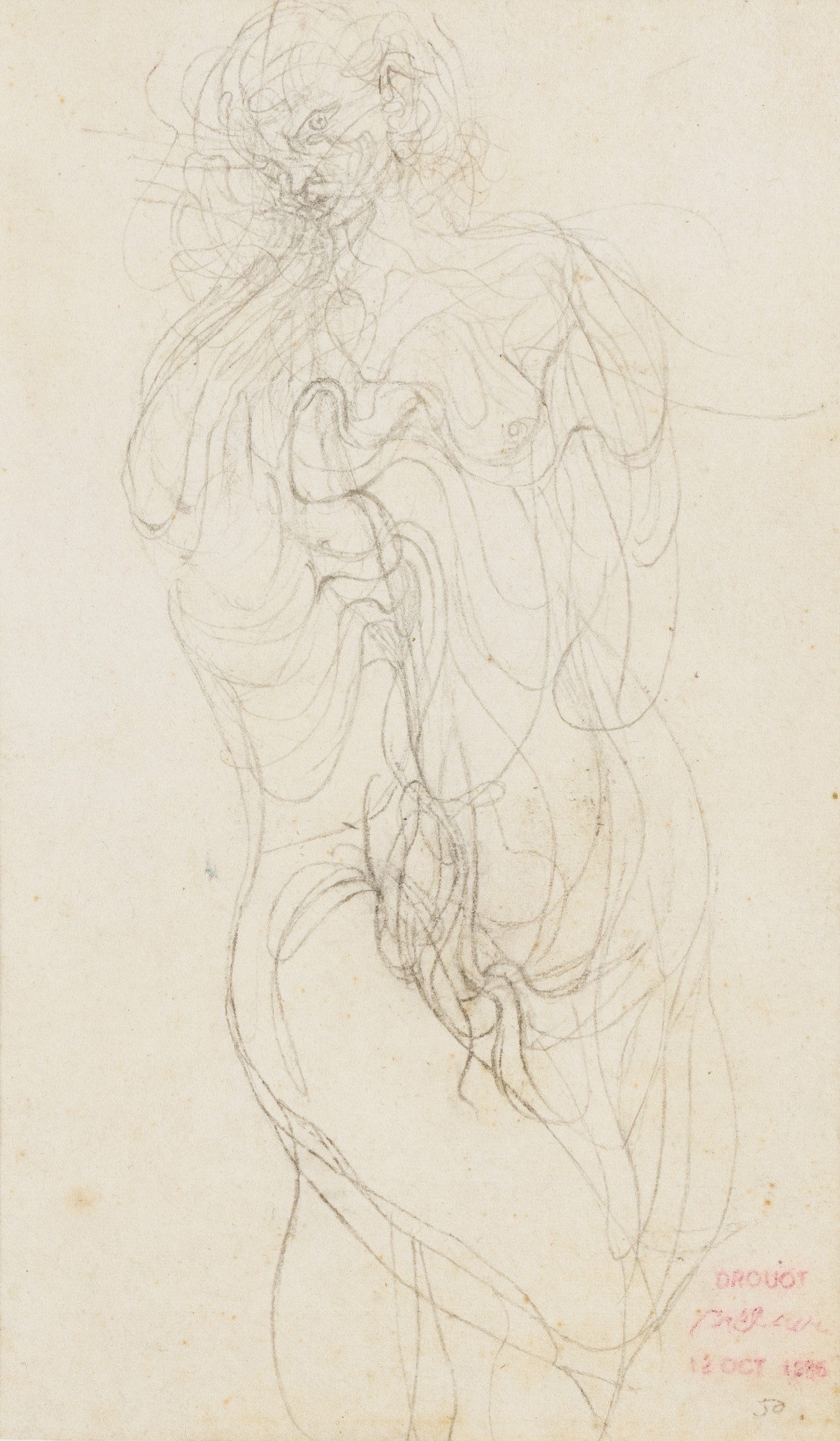
Hans Bellmer
Femme debout
The prints and multiples, including the engravings from Les Mystères du confessionnal and the Paysage 1700 lithograph, offer entry points that are both more accessible in terms of edition structure and deeply satisfying as representations of his graphic intelligence. Bellmer's work has performed consistently well at auction, with major institutions continuing to acquire and his critical literature continuing to expand, which together provide strong foundations for long term collecting confidence. To understand Bellmer fully it helps to place him within a constellation of artists whose work shares his preoccupations or his methods. The obvious comparisons are with fellow Surrealists: Man Ray, whose own photographic experiments with the female form share Bellmer's interest in the constructed image; Meret Oppenheim, whose objects carry a similar charge of displaced desire; and Max Ernst, whose collage novels contain something of the same narrative of bodily fragmentation and reassembly.
Later artists including Cindy Sherman, Louise Bourgeois, and Kiki Smith have all been discussed in relation to Bellmer's legacy, each engaging in their own way with questions of the body as site of representation and resistance. The German context also matters: Bellmer belongs to a lineage of German artists working between the wars whose response to political catastrophe was to turn inward and make work of extreme psychological intensity. What makes Bellmer's achievement so enduring is precisely the seriousness and the freedom with which he pursued his central question: what does it mean to make an image of a body, and what does that act reveal about the maker, the viewer, and the culture that surrounds them both. His work refuses easy resolution and insists on the complexity of looking.
Institutions, scholars, and collectors continue to return to it because it rewards that return, offering new readings with each encounter. In a moment when questions of representation, desire, and the politics of the image are at the very centre of cultural conversation, Bellmer feels not like a historical figure to be assessed from a distance but like a living interlocutor whose work is still asking the questions we most need to sit with.
Featured Works
Explore books about Hans Bellmer

Hans Bellmer: The Anatomy of Anxiety
Peter Webb
Hans Bellmer: Catalogue Raisonné of His Graphic Works
Alain Jouffroy
Hans Bellmer: The Doll
Hans Bellmer
Hans Bellmer: Zeichnungen Druckgraphik
Louise Bourgeois and others
Hans Bellmer: Polaroids
Hans Bellmer

Hans Bellmer: An Anatomical Game
Peter Webb

Bellmer: La Poupée and Variations
Hans Bellmer