Hagar Vardimon
Hagar Vardimon Weaves Emotion Into Existence
Artist Spotlight · The Collection Editorial
When Hagar Vardimon's work appeared at the Schneider Museum of Art in Oregon, visitors found themselves slowing down in front of her pieces in the particular way that only truly affecting art demands. Her layered compositions of thread and paper, built over found photographs and imagery, seemed at once deeply intimate and arrestingly universal. That combination, of the personal and the expansive, has come to define one of the most quietly compelling practices in contemporary figurative art. For collectors and curators who have encountered her work across Europe, North America, and Asia, the experience tends to be the same: you stop, and then you look again, and then you start asking questions.
Hagar Vardimon
Which Way the Wind Blows
Vardimon trained as a fine artist, earning her BFA and bringing with her the deep cultural inheritance of Israeli contemporary art, a scene shaped by questions of identity, displacement, memory, and resilience. Israeli artists of her generation have navigated a particularly rich and demanding artistic environment, one in which the personal is never entirely separable from the political, and in which the body, the face, and the figure carry enormous symbolic weight. Vardimon absorbed these pressures and found in them not a burden but a source of tremendous creative energy. Her formation as an artist is inseparable from that context, even as her work speaks far beyond any single national tradition.
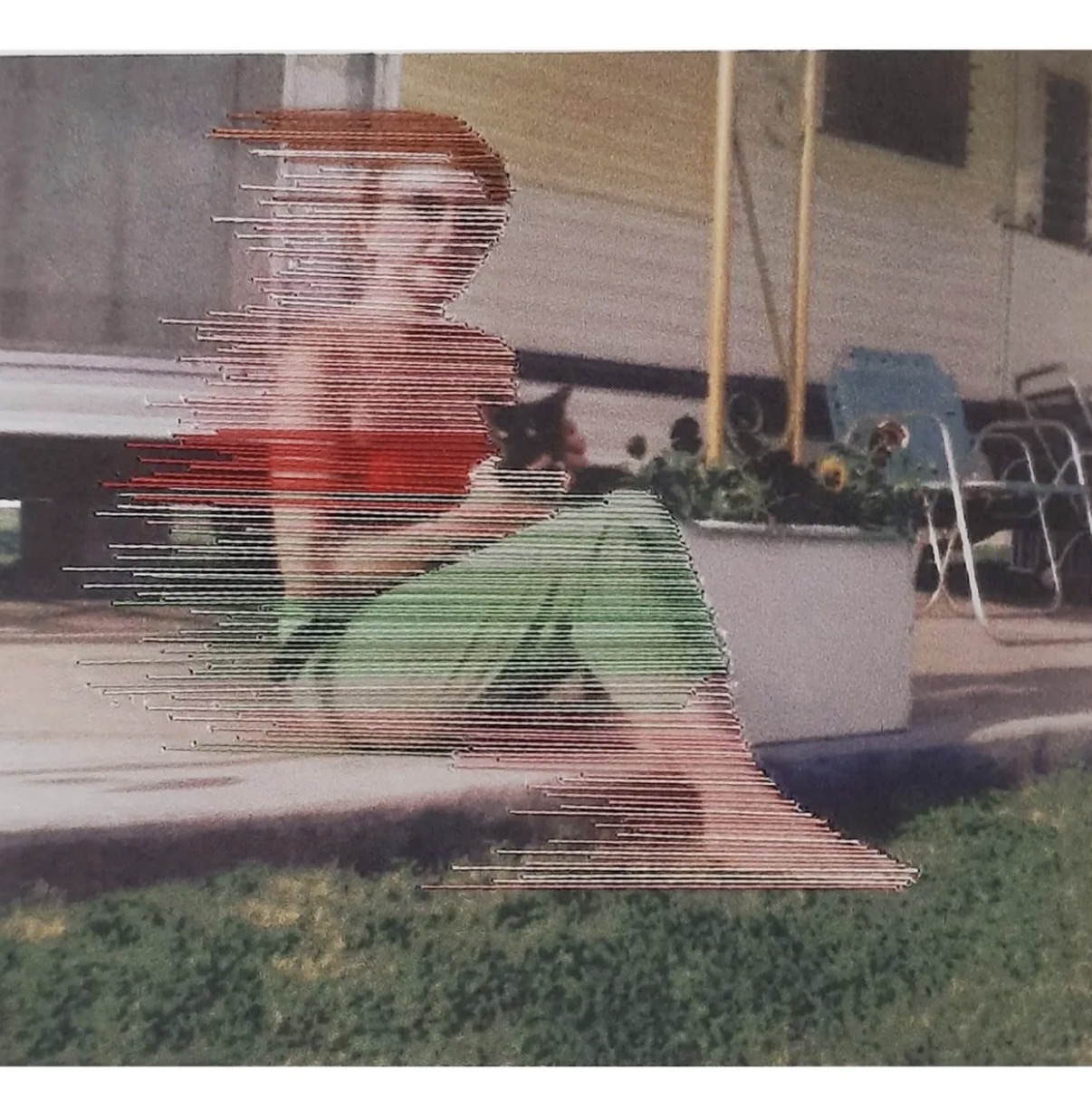
Her practice centers on a deceptively simple but technically demanding approach: the application of thread and paper onto found imagery, most often photographs. What sounds modest in description is, in execution, a form of transformation that feels almost alchemical. She selects found photographs with evident care, drawn to images that already carry latent emotional charge, and then she builds upon them, obscuring some passages and illuminating others, using thread almost as a painter uses a loaded brush. The result is a body of work that sits comfortably within the tradition of Neo Expressionism while also feeling entirely its own.
Hagar Vardimon
New Jersey XV, 2016
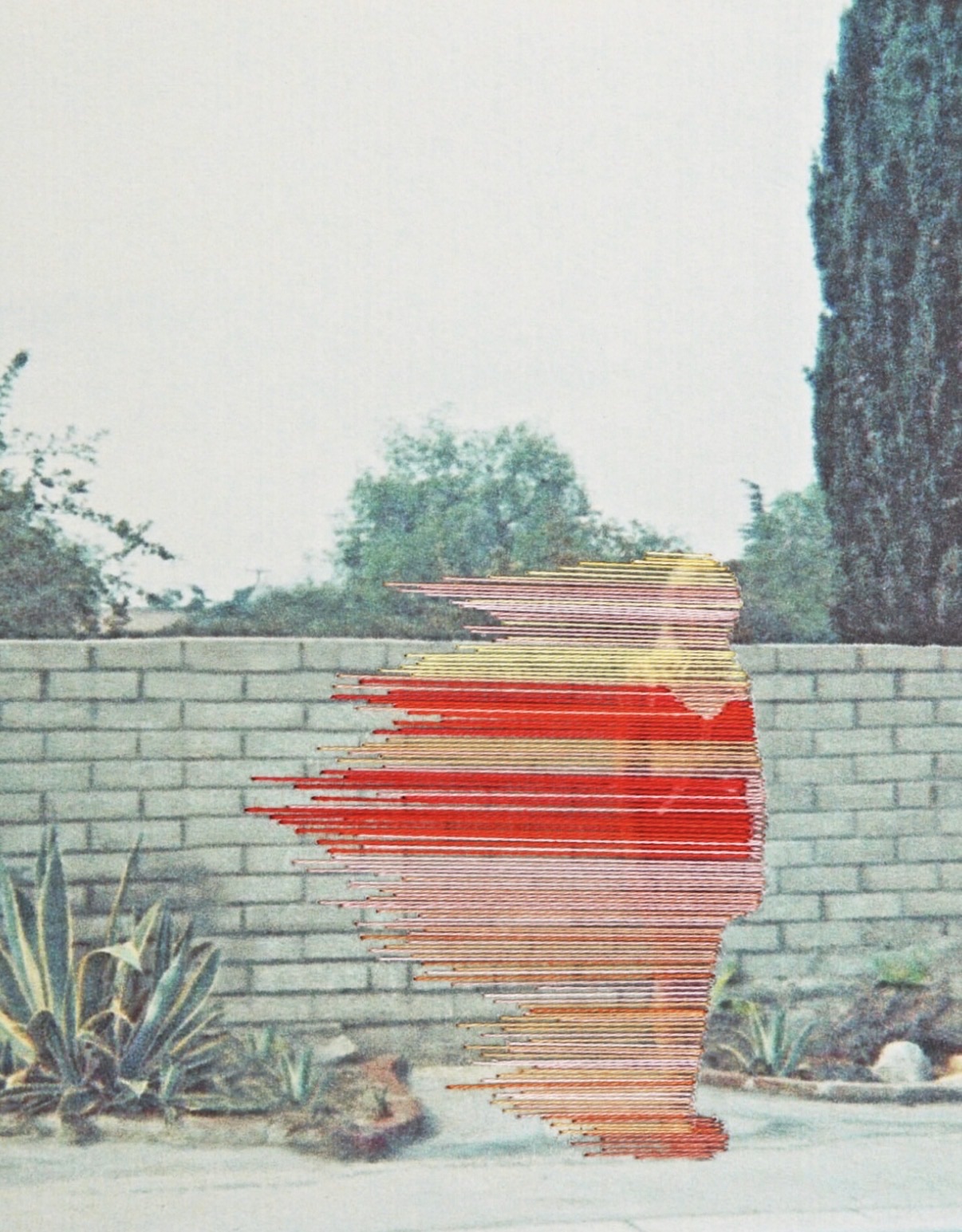
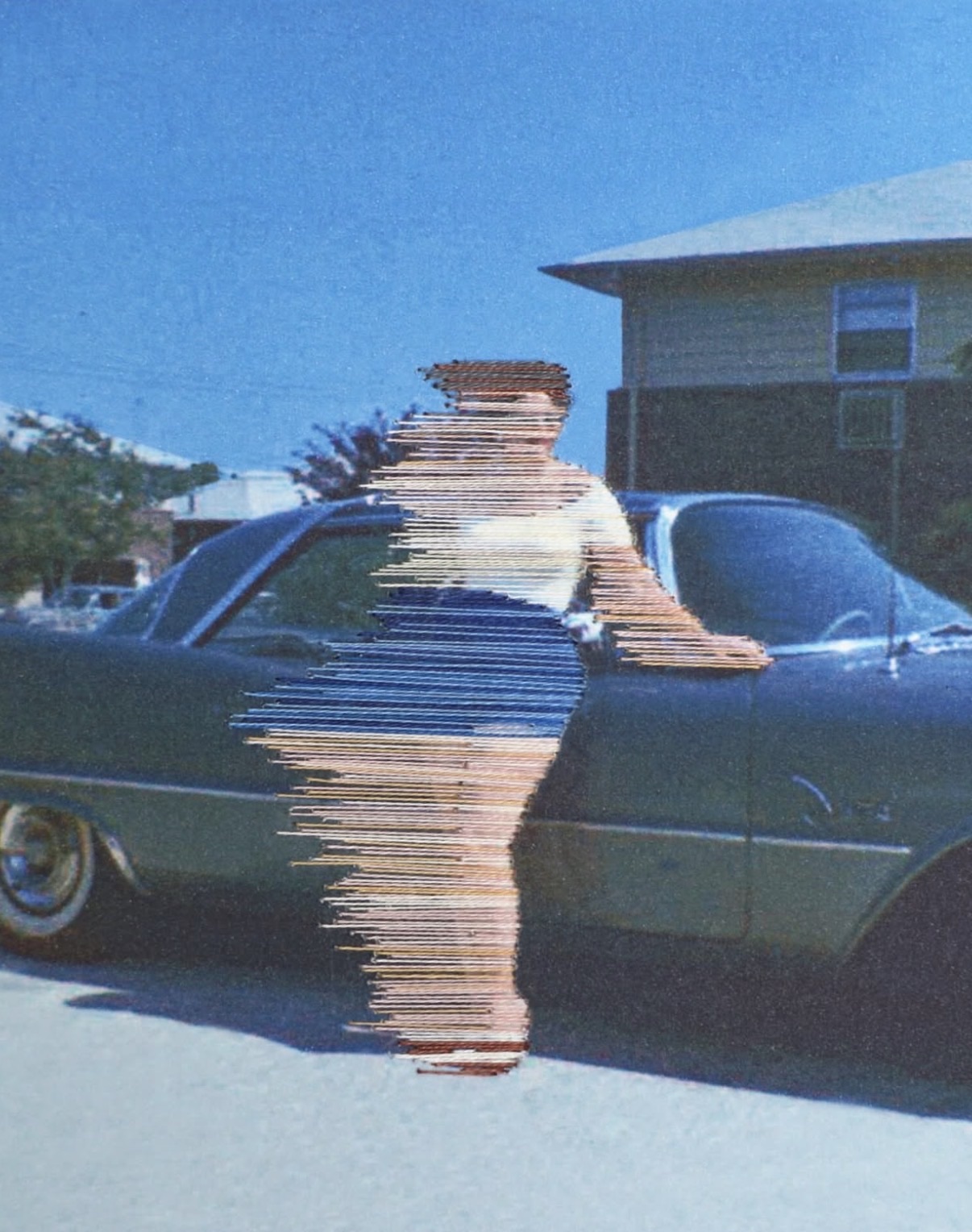
There is gestural energy in how the thread moves across a surface, and there is figurative clarity in how the human face or form emerges through the layering. Among her most celebrated works are those in the series known as "Which Way the Wind Blows," a title that captures something essential about her artistic sensibility. These pieces, executed in thread on found photographs, use the filament almost as a drawing instrument, tracing lines of force and feeling across faces and forms that were fixed in a single frozen moment by the original camera. Vardimon effectively animates what was still, introduces contingency where there was certainty, and in doing so asks a genuinely philosophical question about how we understand a person, a moment, or a life.
Her "New Jersey XV" from 2016 belongs to a sustained body of work exploring place and identity through the same layered methodology, and it demonstrates how confidently she has applied her approach across different emotional registers. Together these works establish her as an artist with genuine range and intellectual depth. The international footprint of her exhibition history is impressive and speaks to the broad appeal of her work across very different cultural contexts. She has shown at Robert Mann Gallery in New York, one of the most respected platforms for photography and works on paper in the United States.
Hagar Vardimon
Which Way the Wind Blows
Her presence at Scope Art Miami placed her work alongside some of the most talked about emerging and mid career artists on the fair circuit. Bedford Gallery in California and the Schneider Museum of Art in Oregon gave American audiences extended opportunities to encounter her practice in institutional settings. Internationally, she has exhibited at the Photo Biennial in Ireland, at MK Gallery in the United Kingdom, at the Musée de Sant Cugat in Catalonia, Spain, and at Fresh in Hong Kong, demonstrating a genuinely global reach that few mid career artists achieve. Fresh stART in Los Angeles added yet another chapter to what has become a remarkably peripatetic and celebrated exhibition career.
For collectors, Vardimon represents precisely the kind of opportunity that serious advisors spend years trying to identify. She is a mid career artist with proven institutional validation, an internationally recognizable body of work, and a signature technique that is genuinely difficult to replicate and immediately identifiable. Works on paper and thread occupy a fascinating position in the current market, valued for their intimacy, their tactile presence, and the extraordinary craft they embody. Collectors who have been drawn to the emotional directness of artists like Jenny Saville, the layered conceptualism of Kiki Smith, or the way artists such as Chantal Joffe use portraiture to excavate interior life will find in Vardimon a natural and deeply rewarding point of connection.
Her work rewards close attention and extended ownership in equal measure, the kind of art that changes slightly with the light and with the viewer's own life experience. Within the broader arc of contemporary art history, Vardimon's practice connects meaningfully to several important threads. The tradition of using found and archival photography as a substrate for new artistic intervention has a distinguished lineage, from the conceptual provocations of Christian Boltanski to the more painterly interventions of artists working in the wake of Sigmar Polke and Gerhard Richter. Her use of thread as a primary medium also situates her within a lively ongoing conversation about textile and fiber as serious fine art materials, a conversation that has accelerated significantly in recent years as institutions have revisited the hierarchies that once separated craft from fine art.
In this context, Vardimon's work feels not only timely but genuinely forward looking. What ultimately makes Hagar Vardimon matter, and matter now, is the quality of feeling her work generates. In an era when visual culture is saturated with images produced and consumed at extraordinary speed, she asks us to slow down, to look at a face, to consider what a photograph cannot tell us and what a thread, carefully placed, might begin to say. Her practice is an act of attention and of empathy, and it produces objects that carry both with them into whatever room they inhabit.
For collectors, for institutions, and for anyone who believes that art's highest purpose is to make us more fully alive to ourselves and to each other, her work is among the most compelling invitations currently on offer.