Gustave Le Gray
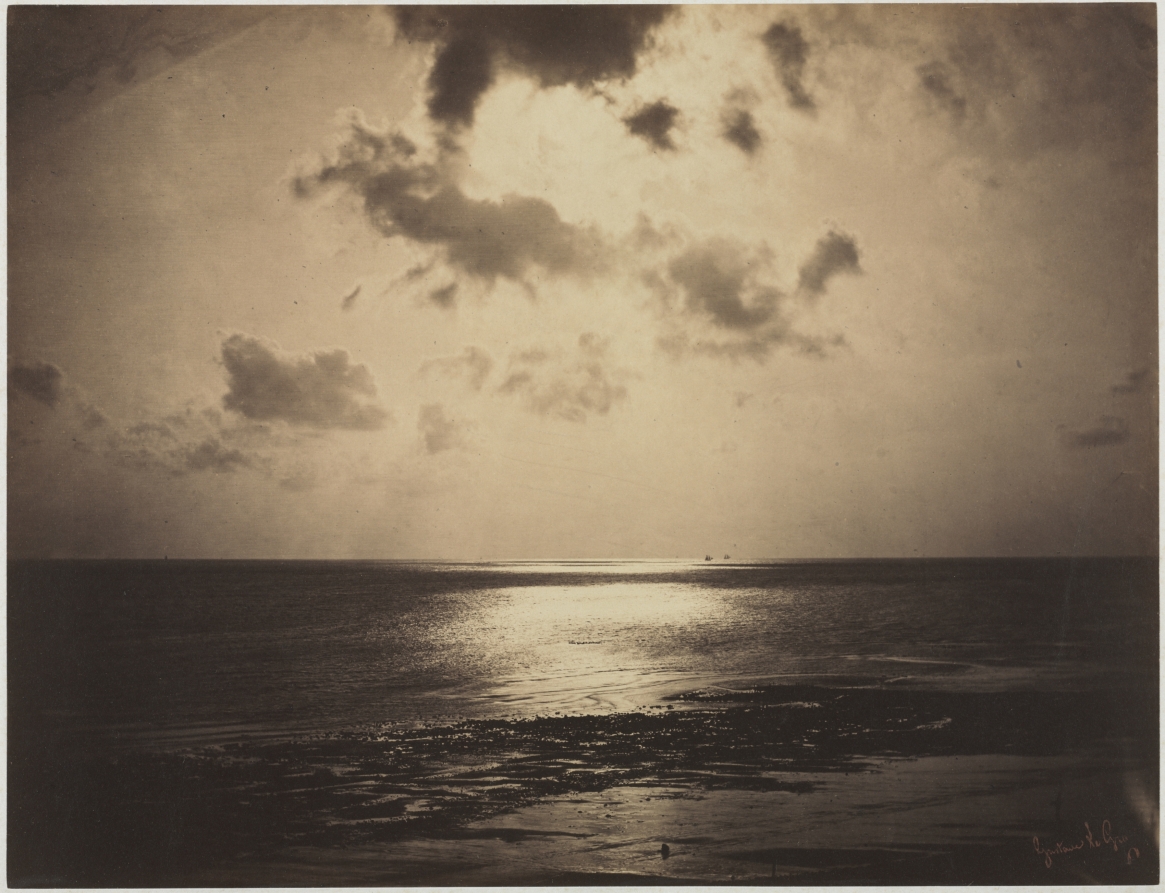
Gustave Le Gray: Light Made Permanent and Sublime
Artist Spotlight · The Collection Editorial
Stand before one of Gustave Le Gray's seascapes and something extraordinary happens. The horizon dissolves into a luminous band of silver and grey, clouds billow with a drama that rivals any Romantic painting, and the sea below pulses with a life that seems impossible for a fixed image to contain. These photographs, made in the 1850s along the coasts of Normandy and the Mediterranean, still stop visitors in their tracks at the Victoria and Albert Museum in London, the Getty in Los Angeles, and the Musée d'Orsay in Paris, where his work is held in permanent collections as foundational documents of both photographic history and nineteenth century visual culture. That Le Gray accomplished this using chemistry, glass, and light rather than oil and canvas is the central miracle of his career.
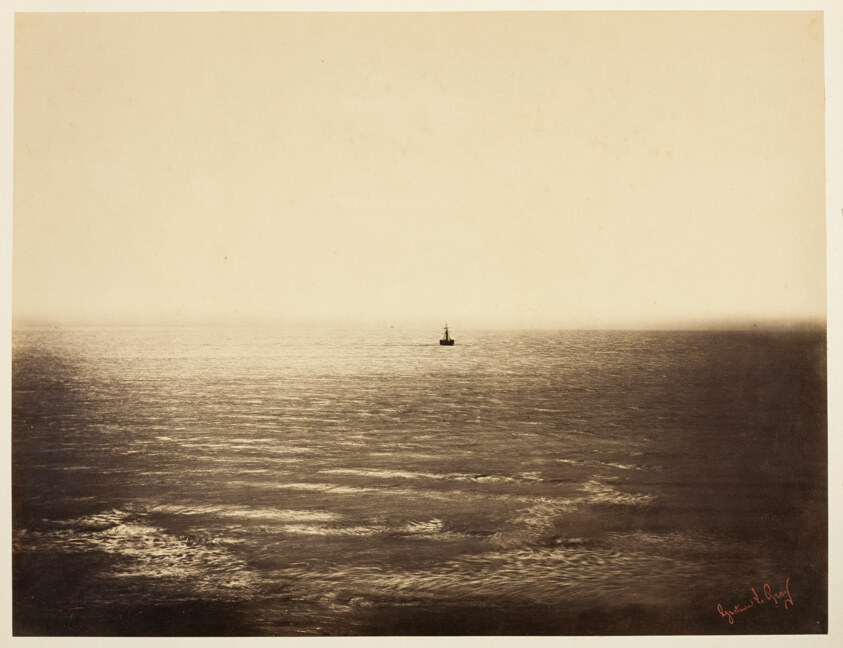
Gustave Le Gray
The Steamboat, 1856
Jean Baptiste Gustave Le Gray was born in Villiers le Bel, near Paris, in 1820, into a family of modest means. He showed early aptitude for drawing and made his way into the prestigious studio of the painter Paul Delaroche, one of the most celebrated academic painters of his generation. Delaroche's studio proved to be a crucible of artistic ambition and technical inquiry, and it was there that Le Gray absorbed a painter's understanding of composition, tonal balance, and the emotional weight of light. He trained alongside other young artists who would later become significant figures, and the experience instilled in him a belief that visual art could aspire to the condition of the sublime.
It was Delaroche himself who famously responded to the announcement of the daguerreotype in 1839 with the remark that painting was dead, a declaration that paradoxically pointed his student toward photography as a territory wide open for serious artistic exploration. By the late 1840s, Le Gray had made the decisive turn toward photography, opening a teaching studio in Paris that attracted a remarkable cohort of students and collaborators. Among those who passed through his doors were Henri Le Secq, Charles Nègre, and Maxime Du Camp, names that would become central to the story of early French photography. Le Gray was both a teacher and a relentless experimenter, and his greatest technical contribution came in the form of his refinement of the waxed paper negative process, which he published in 1851.
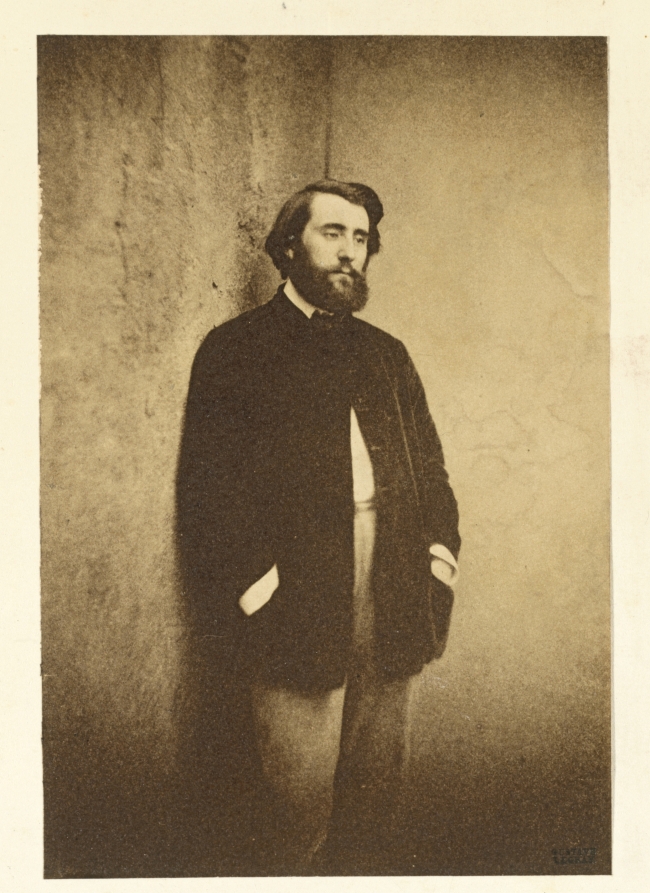
Gustave Le Gray
Portrait of Edmond Cottinet (1824-1895), 1848
By treating paper negatives with wax before sensitising them, he achieved a smoothness and translucency that dramatically improved tonal gradation and allowed negatives to be prepared days in advance, a practical and aesthetic revolution. His subsequent mastery of the wet collodion process on glass gave him even finer detail and sensitivity to light, and he moved between these methods with the confidence of an artist who understood that technique was always in service of vision. The seascapes and forest studies that Le Gray produced in the 1850s represent his most celebrated achievements. Works such as "Seascape, Normandy" from 1856 and "An Effect of the Sun, Normandy" demonstrate his pioneering use of combination printing, in which he joined a negative exposed for the sea with a separate negative exposed for the sky, solving the fundamental problem of orthochromatic emulsions that rendered either water or clouds correctly but rarely both.
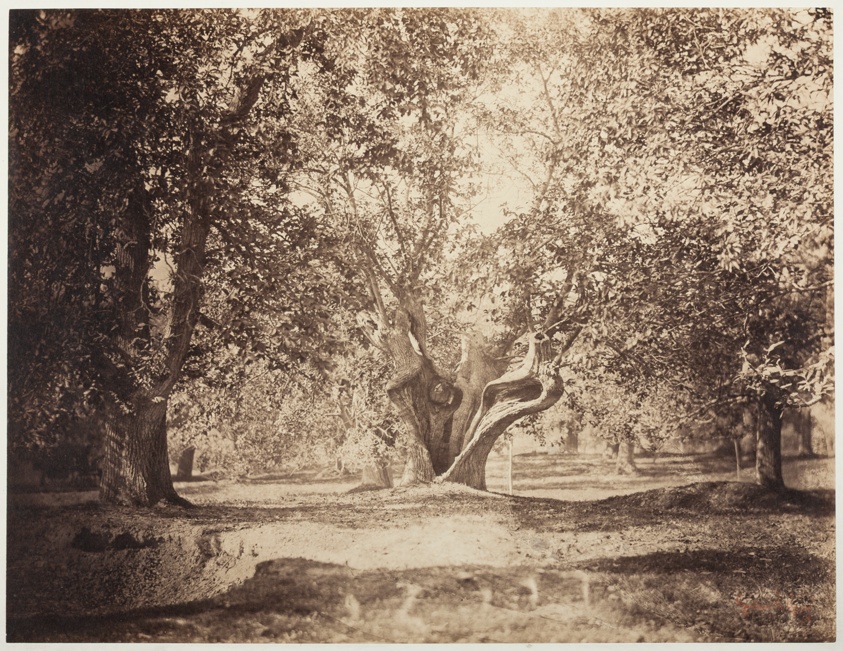
The result is photographs of astonishing atmospheric power, images that rivalled the ambitions of Eugène Delacroix and Caspar David Friedrich in their evocation of nature's grandeur. His forest studies made at Fontainebleau, including works such as "Tree, Forest of Fontainebleau" and the intimate "Sous bois au Bas Bréau," bring a painter's sensitivity to the dappled light and ancient forms of that beloved woodland, a space that the Barbizon painters had already made sacred to French artistic sensibility. Le Gray's photographs feel like quiet conversations with those painters, made in the same spirit but through an entirely new means. His work for the French imperial court and military added another dimension to his practice.
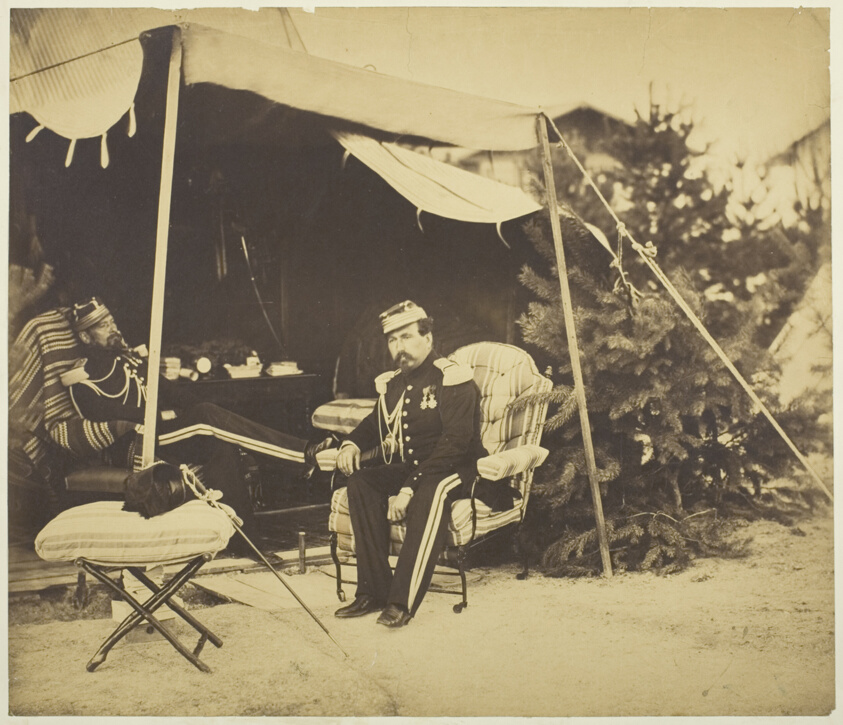
Gustave Le Gray
Officers Seated at a Tent, Camp de Châlons, 1857
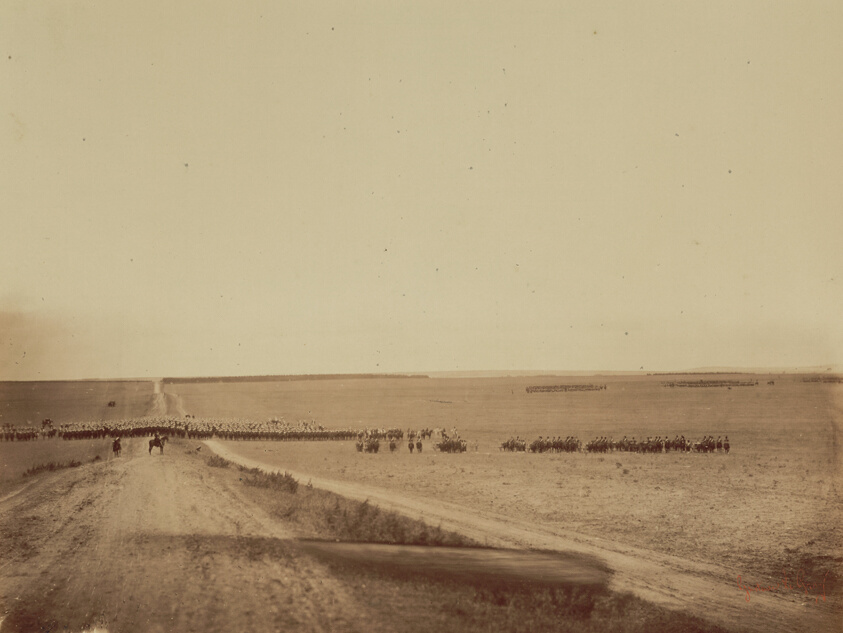
The "Souvenirs du Camp de Châlons" album, created in 1857 during Napoleon III's military manoeuvres, is a remarkable document: sixty six albumen prints capturing both the spectacle of imperial pageantry and the intimate human reality of camp life. Portraits of officers, images of regimental flags, and views of the encampment combine to form something that transcends reportage and becomes a coherent artistic statement about power, community, and the theatre of military ceremony. Works from this series, including "The Raised Flag of the Zouave Regiment" and "Officers Seated at a Tent," carry a compositional intelligence and a sensitivity to light that marks them as the work of an artist thinking always in aesthetic terms, even within the constraints of a documentary commission. His harbour views, including the celebrated "Bateaux quittant le port du Havre," carry the same quality: a freezing of transient light and movement that feels like a gift stolen from time itself.
For collectors, Le Gray's work occupies a position of particular significance and scarcity. Significant individual prints and rare albums appear at auction at Christie's, Sotheby's, and Phillips, where they consistently attract serious attention from institutions and private collectors alike. The waxed paper prints from the early 1850s, such as "The Bridge of Palalda" from 1851, are among the most sought after for their warm, painterly quality and their relative rarity, as the paper process was superseded by glass collodion relatively quickly. Albumen prints from the mid to late 1850s, particularly the seascapes and the Camp de Châlons material, are more frequently encountered but no less desirable.
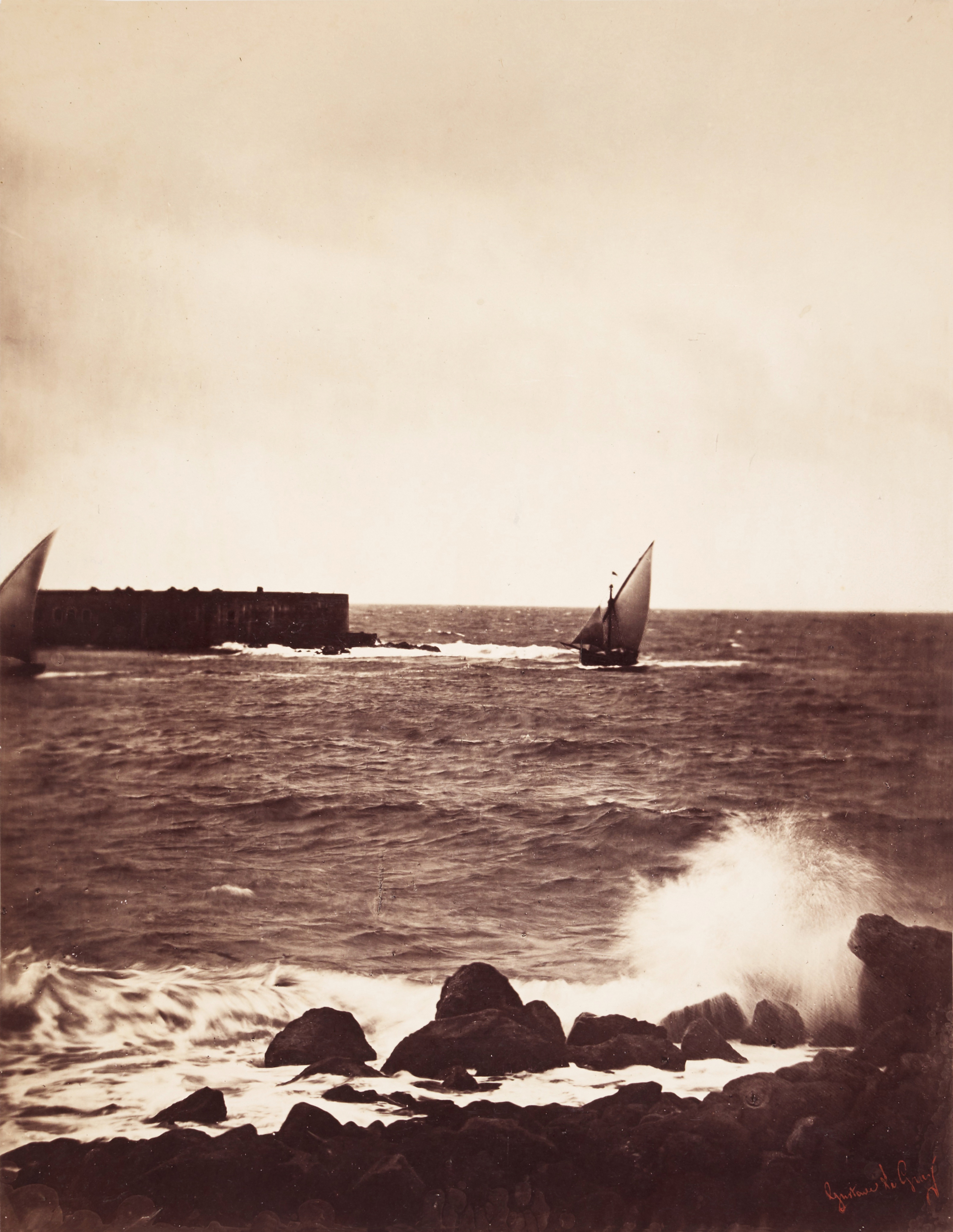
Gustave Le Gray
'La Vague Brisée, Mer Méditeranée No 15', (The Breaking Wave), 1857
Collectors are advised to prioritise prints with clear provenance, original mounts, and the characteristic stamps and blindstamps that authenticate Le Gray's own printings. The presence of his facsimile signature stamps or credit blindstamps, as seen on many of the finest surviving examples, adds both historical and market value. Albums, especially complete or near complete examples, represent the most significant collecting opportunity, as they offer both the depth of a sustained artistic project and the integrity of a unified historical object. Le Gray belongs to a generation that transformed what photography could mean as a cultural practice.
His peers and contemporaries include Roger Fenton in England, who brought comparable painterly ambitions to landscape and documentary photography, and Nadar in France, who elevated portraiture to a form of psychological penetration. The Barbizon painters with whom he shared a devotion to Fontainebleau, among them Théodore Rousseau and Jean Baptiste Camille Corot, provide the broader artistic context within which his forest studies resonate most deeply. He anticipates the pictorialist movement of the late nineteenth century, which would take up his argument that photography was a fine art, and he casts a long shadow over twentieth century masters of large format landscape photography such as Ansel Adams, who pursued with different tools the same ambition to make landscape photography a vehicle for the sublime. Le Gray spent his final years in Cairo, where he lived from around 1860 until his death in 1884, teaching drawing and photography and continuing to work in a city that offered him both a new subject and a new light.
His later years have sometimes been treated as a coda to the brilliant decade of the 1850s, but they speak also to the restlessness and independence of a genuinely original mind. His legacy is secure, his place in the history of art no longer in any doubt, and for those fortunate enough to live with his work, the experience of watching light move across one of his seascapes or settle into the bark of an ancient Fontainebleau oak is a daily reminder of what photography, at its highest ambition, has always been capable of.
Featured Works
Explore books about Gustave Le Gray
Gustave Le Gray: A Visionary Photographer
Anne McCauley
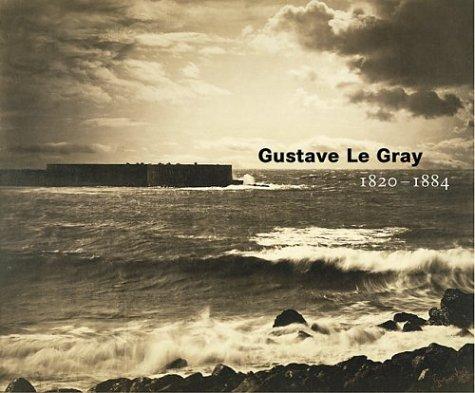
Gustave Le Gray: 1820-1884
Philippe Néagu
In the Shadow of the Daguerreotype: Gustave Le Gray and the Medium of Photography
Kelsey Peirce
Gustave Le Gray: The Man Who Invented Seascapes
Michael Ware
Le Gray: Master of Light and Shadow
Peter Geimer
Gustave Le Gray and the Medium of Landscape Photography
Quentin Bajac