Grace Hartigan
Grace Hartigan: Boldness, Color, and Lasting Joy
Artist Spotlight · The Collection Editorial
“I want to be a great painter. I want to paint the great paintings that have not been done yet.”
Grace Hartigan, journal entry, early 1950s
In the winter of 1958, the Museum of Modern Art sent a landmark exhibition called The New American Painting on a tour of eight European countries. It was a statement of confidence in a generation of American artists who had remade painting on their own terms, and Grace Hartigan was among them. She was the only woman whose work traveled with that show in its full international iteration, a fact that speaks to both the singular force of her canvases and the particular kind of courage it took to hold your ground in a world that was not always ready to make room for you. More than six decades on, her paintings feel not like historical documents but like living things, restless and generous and full of heat.
Grace Hartigan
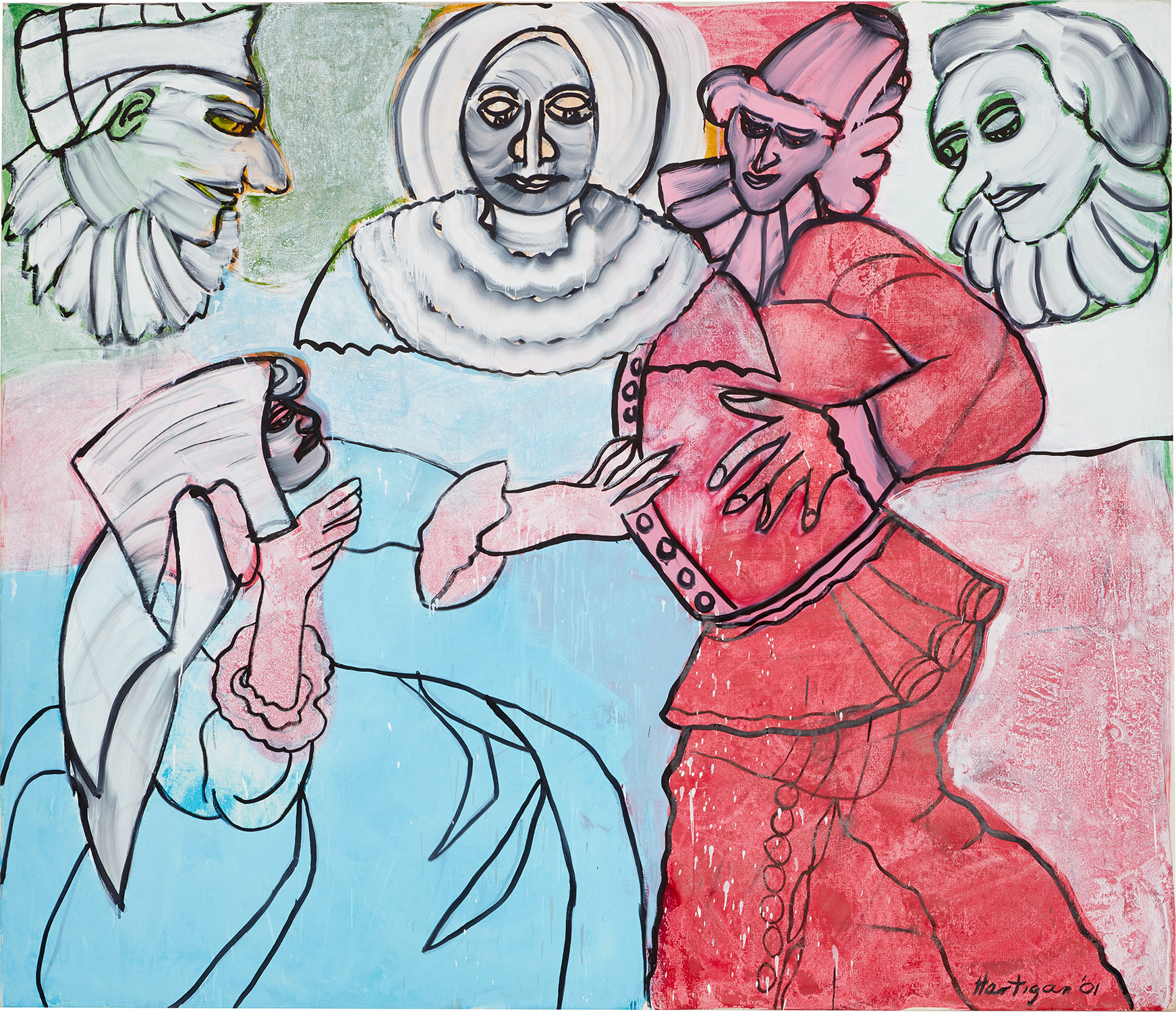
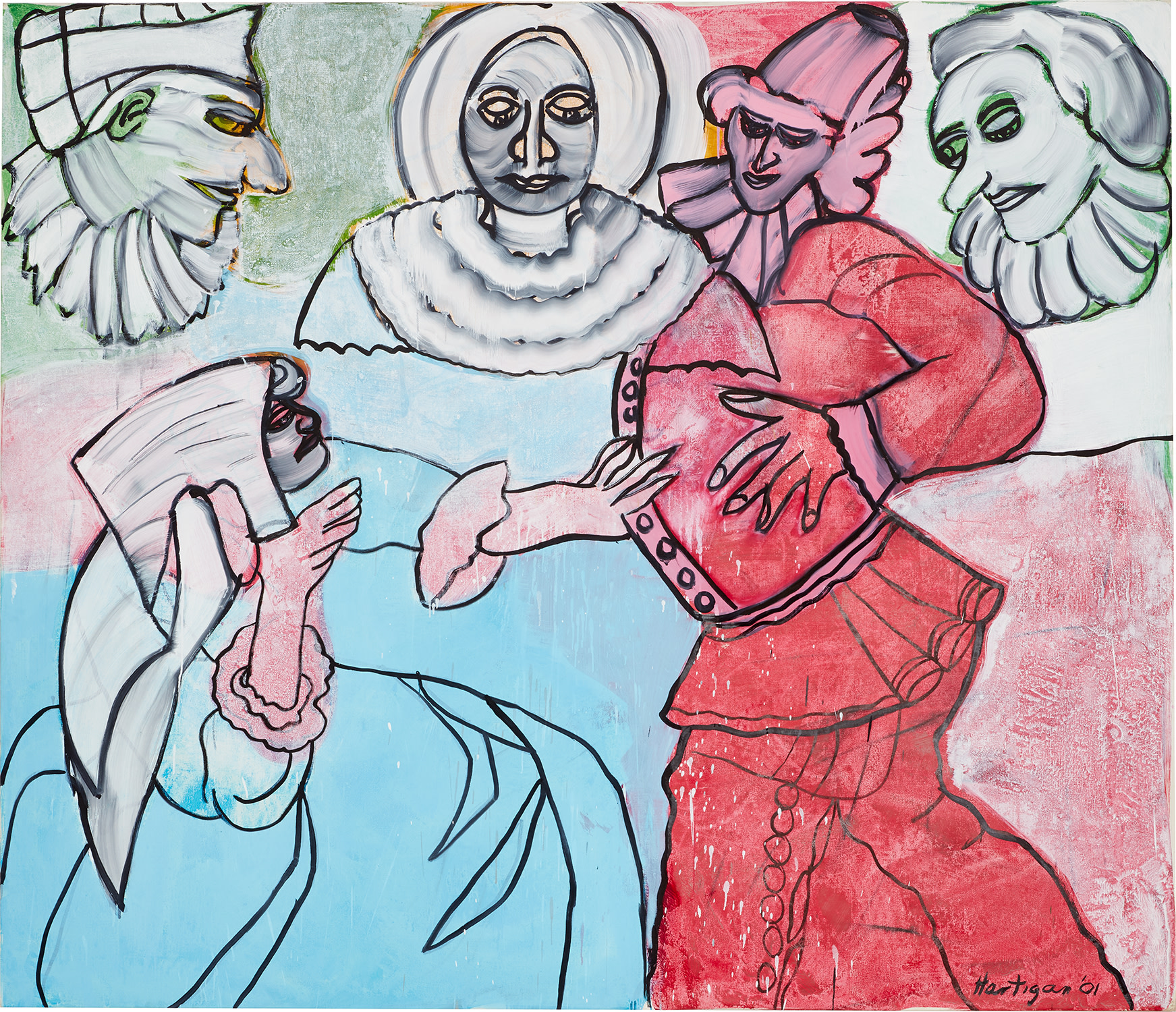
Italian Comedy, 2001
Grace Hartigan was born in Newark, New Jersey in 1922, and her early years gave little outward indication of the artist she would become. She came to painting relatively late, beginning serious study only in her early twenties after settling in New York and finding her way into the orbit of the city's most electrically charged creative community. She studied briefly with Isaac Lane Muse, but her real education came through proximity, conversation, and the mutual pressure of a group of painters who were collectively inventing something new. She absorbed the lessons of the Abstract Expressionists not as doctrine but as permission, a license to treat the canvas as a site of genuine risk.
By the early 1950s Hartigan was fully embedded in the New York School, showing at the Tibor de Nagy Gallery alongside painters like Frank O'Hara, with whom she maintained a close and sustaining friendship, and figures including Larry Rivers and Jane Freilicher. The poets and painters of that downtown world fed one another constantly, and Hartigan's work shows it: her paintings think in images and cadences, in the sudden arrival of a human figure or a swath of patterned fabric against fields of gestural paint. She briefly showed under the name George Hartigan, a decision she later set aside, and by the mid decade her own name was inseparable from the most serious conversation in American art. The work she made across the 1950s established the terms of everything that followed.
Grace Hartigan
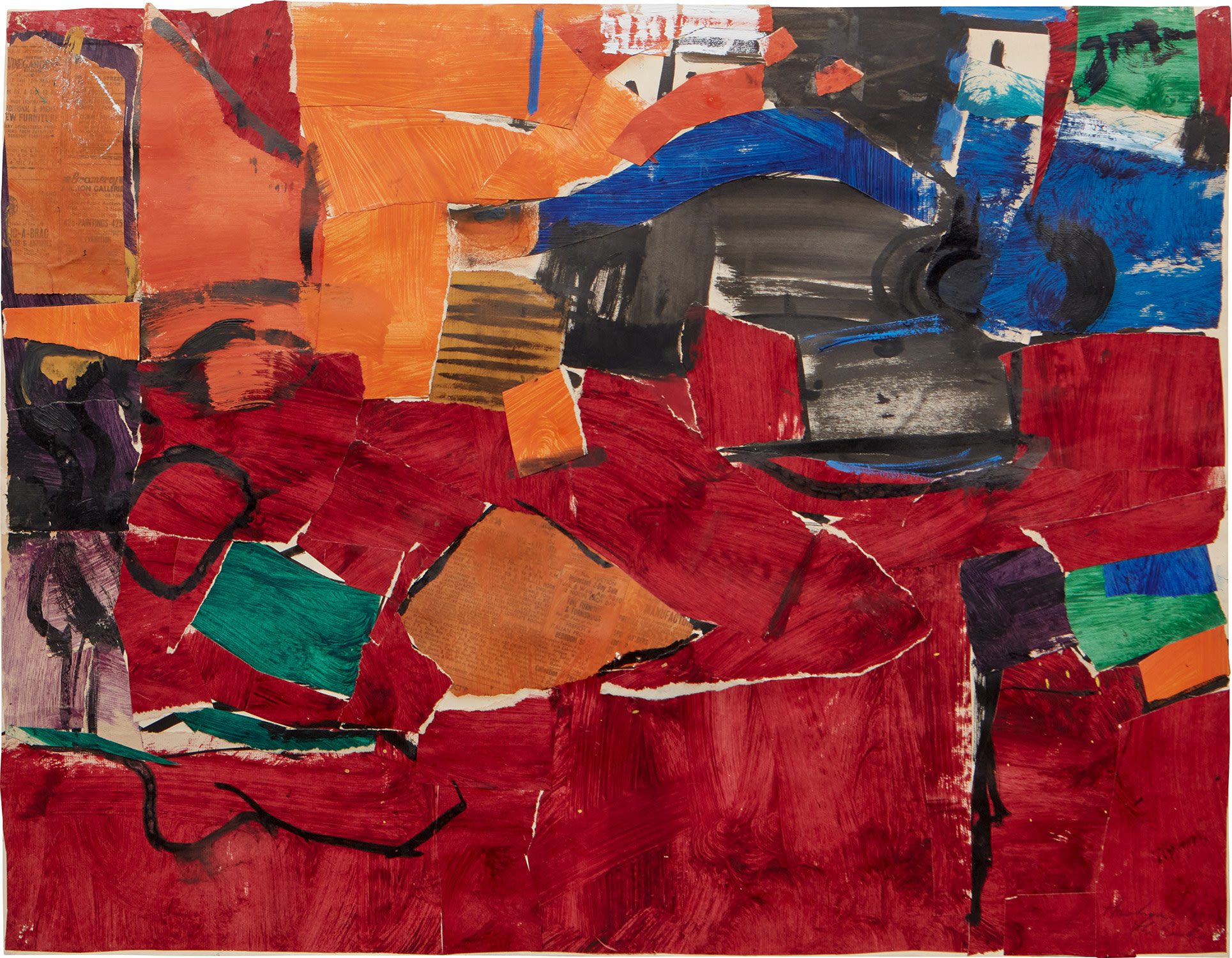
The Creeks, 1957
Grand Street Brides, completed in 1954 and now held in the collection of the Whitney Museum of American Art, is perhaps her most celebrated canvas from this period. It takes its energy from the wedding dress displays Hartigan observed in the shop windows of the Lower East Side, translating that collision of longing and commerce into a painting of spectacular chromatic force. Figures appear and dissolve within the paint, not quite representational and not quite abstract, occupying a threshold that became Hartigan's particular territory. Her 1957 painting Montauk Highway, available through The Collection, shows this instinct operating at full stretch: landscape and gesture merge into something that feels simultaneously urgent and atmospheric, grounded in a specific place and yet entirely its own world.
In 1960 Hartigan made a decision that surprised many of her New York colleagues. She relocated to Baltimore, where she would spend the remainder of her long life, eventually becoming the director of the Hoffberger School of Painting at the Maryland Institute College of Art. This move has sometimes been framed as a retreat, but that reading misses something important. Baltimore gave Hartigan space, students, and the freedom to develop her practice without the social pressures and competitive noise of the New York art world.
Grace Hartigan
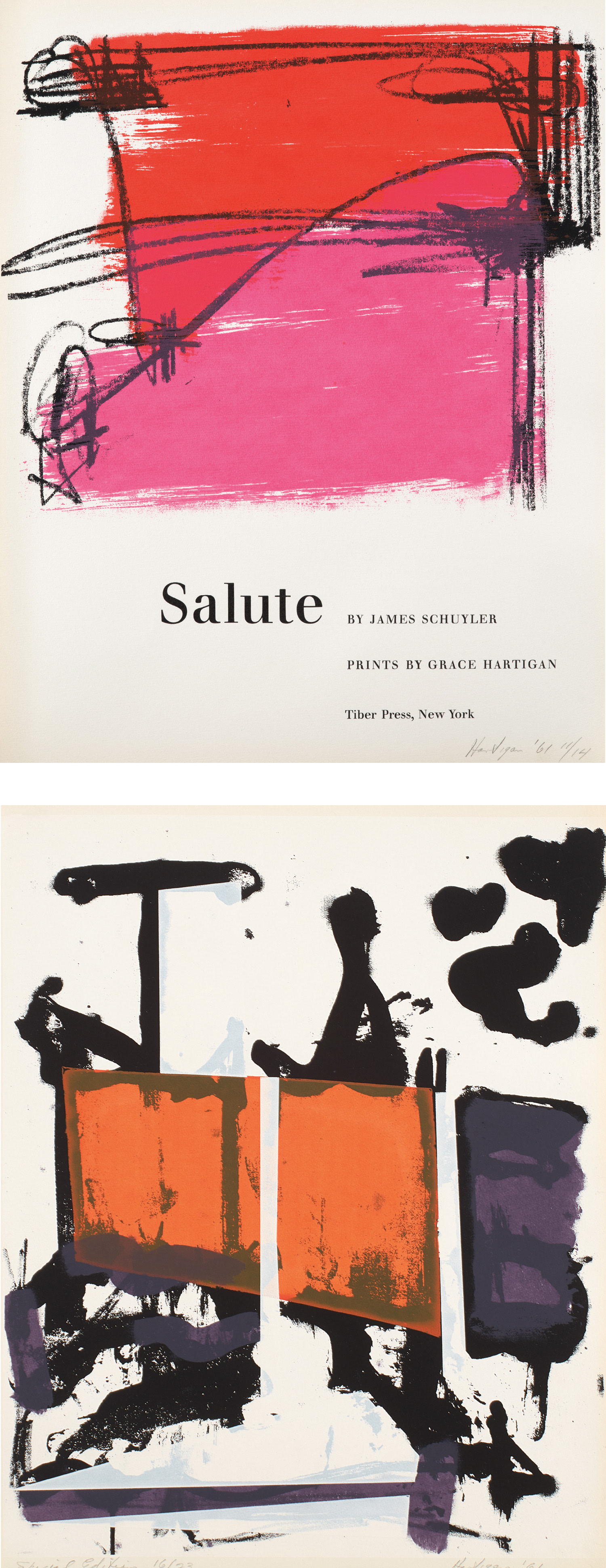
Salute: two plates
Her work grew richer and more varied across the following decades, moving through periods of intense figuration, mythological reference, and vivid personal iconography. Works like The Creeks from 1957, a lyrical combination of acrylic, gouache, and paper collage, reveal her appetite for experimentation with material and surface. Her later canvases, including Italian Comedy from 2001 and Trick or Treat in oil, demonstrate that she never stopped pushing, that the desire to find out what a painting could do remained entirely intact into her final years. For collectors, Hartigan's work offers something rare: a body of practice that spans printmaking, works on paper, large scale oil painting, and mixed media collage, each area pursued with equal seriousness.
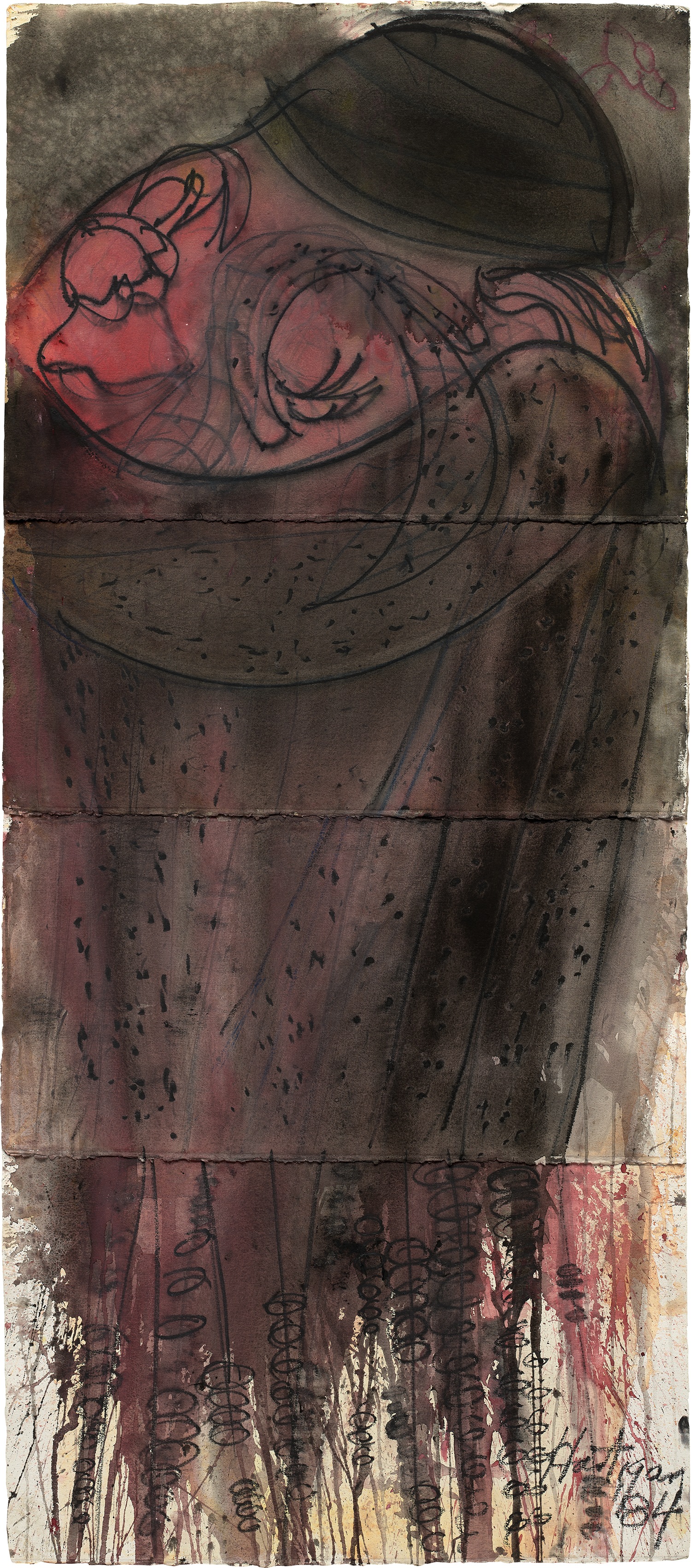
Her prints, including the Salute plates and the Butterfly Woman lithograph, show her command of the medium and her ability to translate her painterly instincts into the structures and constraints of printmaking. Chapeau de Castella from 1984, in watercolor and oilstick on paper, is the kind of work that reminds you how extraordinary her draftsmanship was beneath the gestural surface of her larger canvases. The Archaics, produced in collaboration with Universal Limited Art Editions in West Islip, New York, places her within a tradition of artist printmaking that includes some of the most celebrated names of the postwar era. Works on paper and prints represent an accessible point of entry, while her major oils, when they appear at auction or through private sale, command serious attention and reflect her standing as one of the defining painters of her generation.
Grace Hartigan
Chapeau de Castella, 1984
Contextually, Hartigan sits at a fascinating intersection. She shares the gestural ambition of Willem de Kooning and the figuration of Larry Rivers, but her sensibility is distinctly her own, warmer in its relationship to the observed world, more openly delighted by pattern and color and the visual texture of everyday life. She has been compared to Joan Mitchell in terms of her commitment to abstraction inflected by personal vision, and to Jane Freilicher in her willingness to look at the world with genuine tenderness. But the comparisons only go so far.
The quality of light in a Hartigan painting, the way a figure can emerge from a field of marks and then recede back into it, is something you encounter nowhere else. Grace Hartigan died in Baltimore in 2008, leaving behind a body of work that the Metropolitan Museum of Art, the Museum of Modern Art, and the Whitney have all recognized as essential to the story of American painting. What is striking now, as the art world continues to reassess the full range of contributions made by women artists in the postwar period, is how clearly her paintings have always spoken for themselves. They do not ask to be recovered or rediscovered.
They simply stand there, bold and alive, color doing what Hartigan always trusted it to do: telling the truth about what it feels like to be present in the world.
Explore books about Grace Hartigan
Grace Hartigan: A Retrospective
Irving Sandler
Grace Hartigan: Painting and Prints
Joan Marter
Grace Hartigan: A Life in Color
Grace Hartigan with Judith C. Stein
New York School: Abstract Expressionism in the 1950s
Michael Auping