Gary Hume
Gary Hume: Beauty Shining on Every Surface
Artist Spotlight · The Collection Editorial
“I want to make something beautiful. That is my motivation. I want to make something that is pleasurable to be with.”
Gary Hume, interview with The Guardian
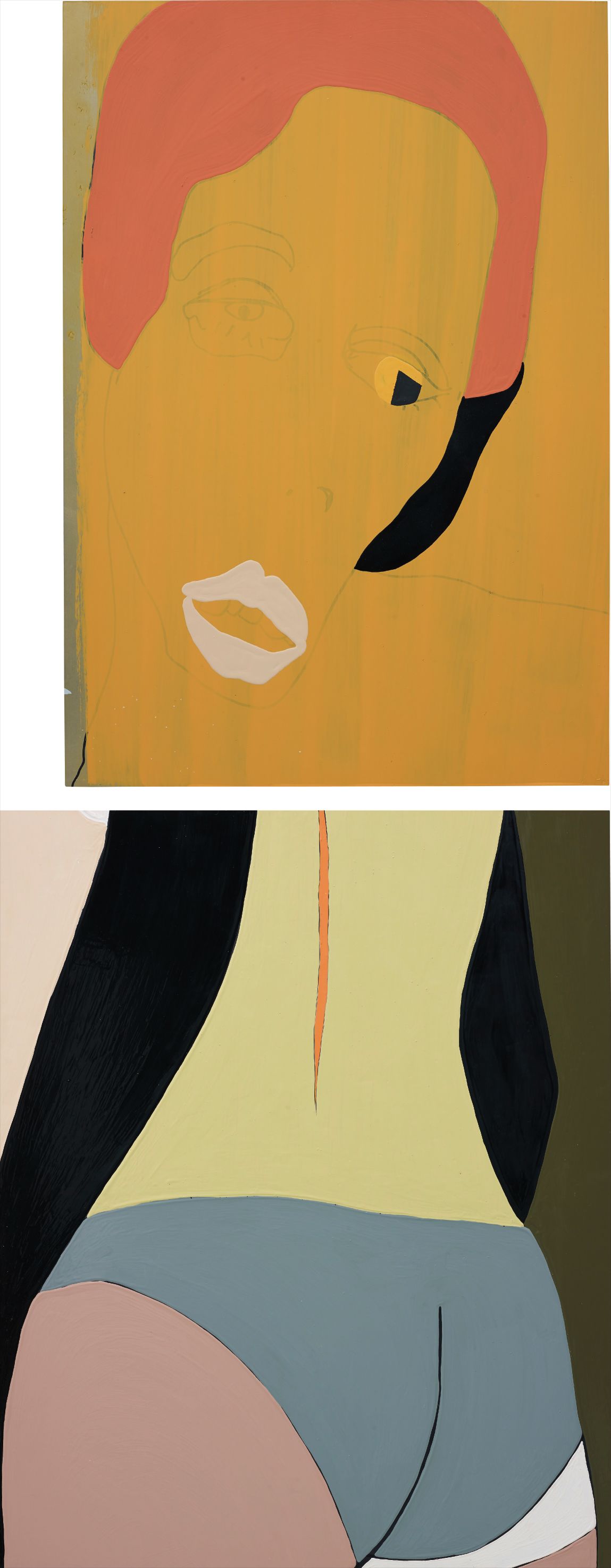
In the spring of 2023, Tate Britain mounted a sweeping survey of painting in Britain that returned sustained attention to the generation of artists who reshaped the country's cultural identity in the 1990s. Gary Hume's work stood out then as it always does: immediate, disarming, and quietly radical. His large aluminum panels catch the light of whatever room they inhabit, pulling viewers toward them before they have quite decided to move. That magnetic quality, at once decorative and deeply considered, is the hallmark of one of the most distinctive painters working in Britain today.
Gary Hume
Untitled, 2012
Hume was born in 1962 in Tenterden, Kent, a small market town in the Weald of England, and grew up at some distance from the metropolitan art world he would later come to define. He studied at Goldsmiths College in London, graduating in 1988, at a moment when that institution was producing an extraordinary cohort of young artists. His contemporaries at Goldsmiths included Damien Hirst, Sarah Lucas, and Michael Landy, and the atmosphere of the school under Norman Rosenthal and the influence of tutors such as Michael Craig Martin encouraged a conceptual boldness that was inseparable from a fierce engagement with the physical and visual world. Hume absorbed all of this, but from the beginning he was drawn toward painting with a commitment that set him apart.
His breakthrough came almost immediately after graduation, with a series of works that depicted the swing doors of hospital corridors, painted in household gloss on aluminum panels. These Door paintings, begun around 1988 and continuing into the early 1990s, were arresting in their simplicity. The doors were rendered as flat, interlocking planes of color, stripped of perspective, shadow, and narrative. They were simultaneously objects and images, paintings and things.
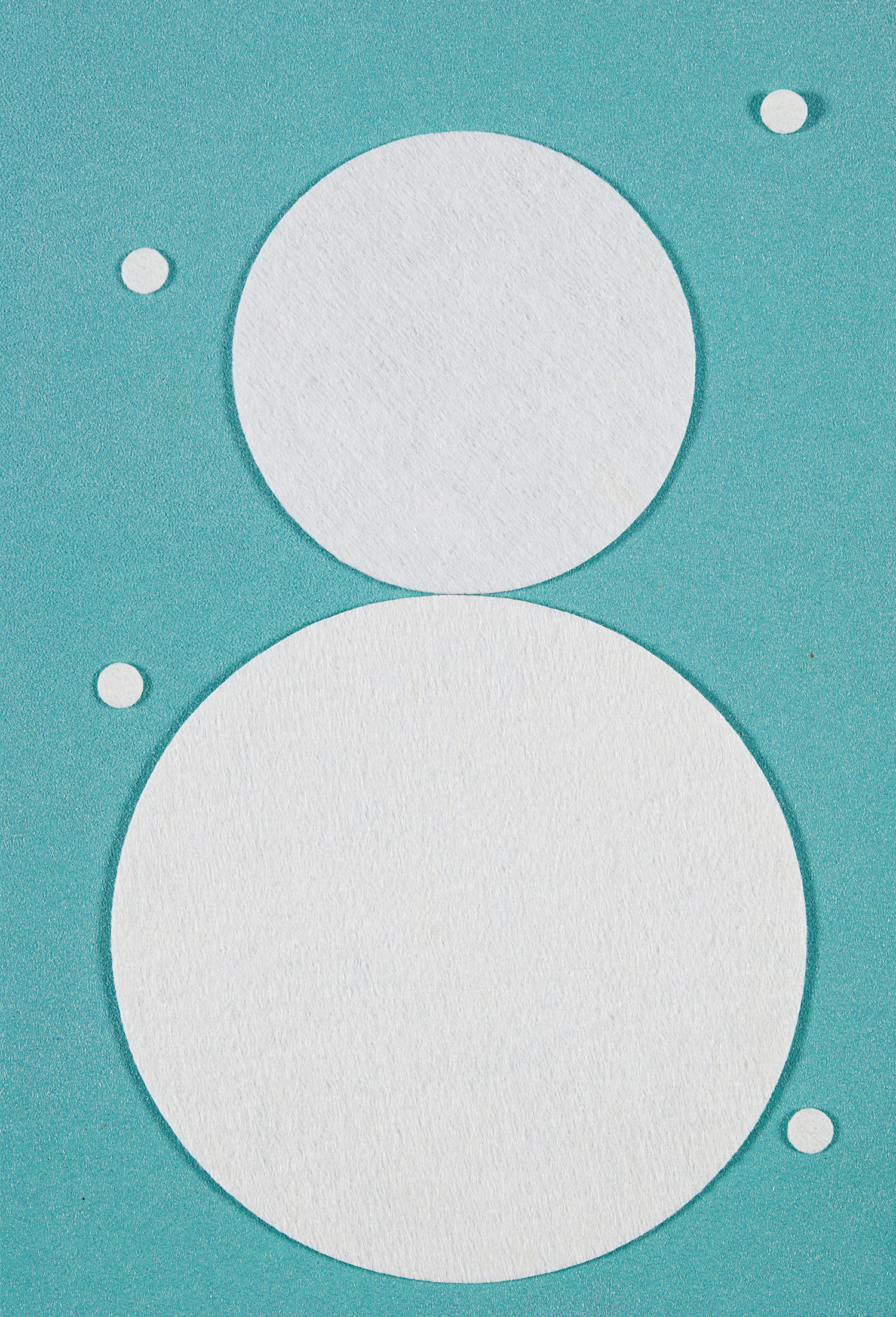
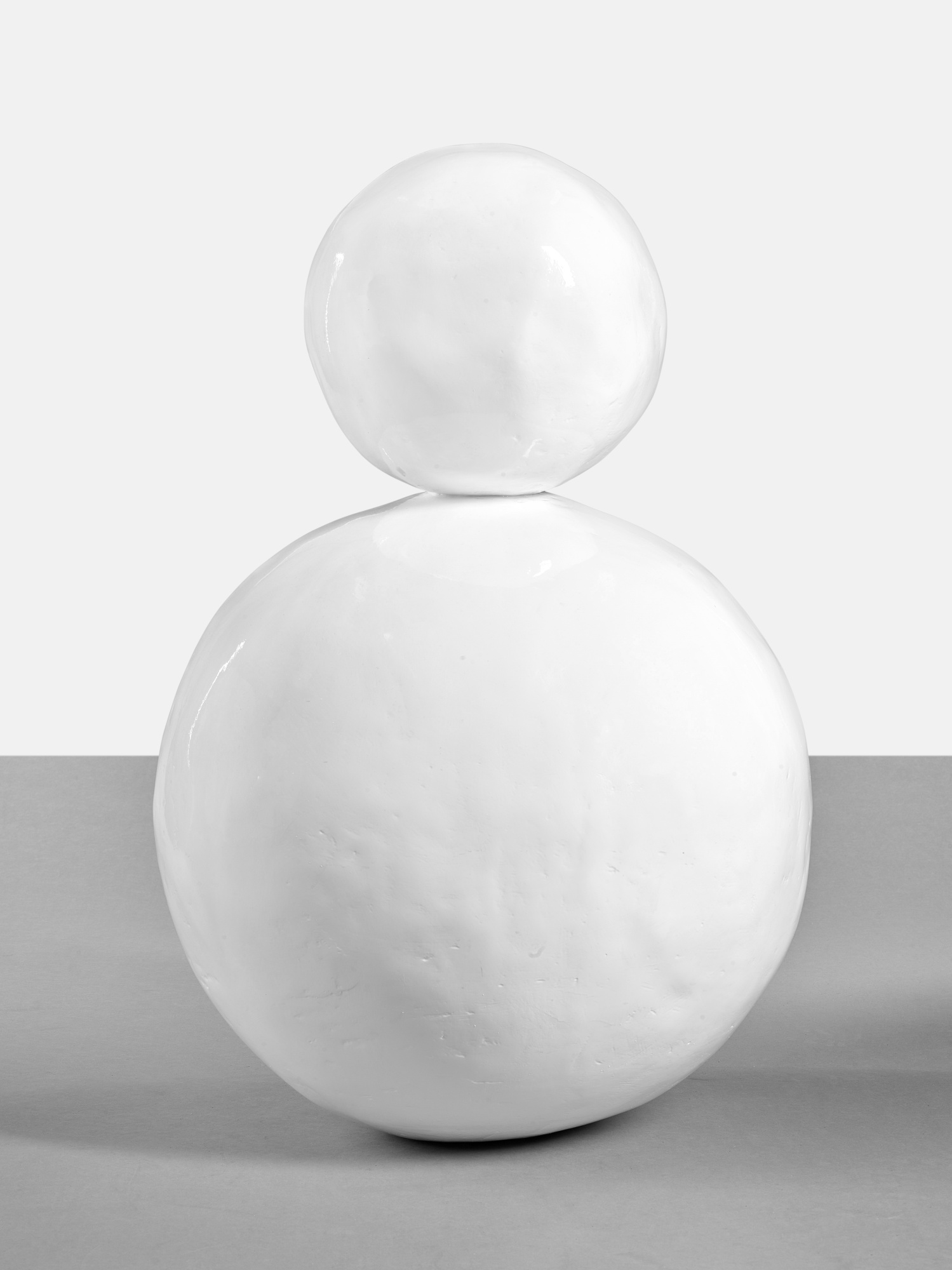
Gary Hume
Fuzzy Snowman
When Charles Saatchi acquired several of these works and included Hume in the landmark Freeze and subsequent Young British Artists exhibitions at the Saatchi Gallery, the art world took notice. The door had become a philosophical proposition about what painting could be. The YBA moment of the 1990s brought enormous visibility to Hume and his peers, and he represented Britain at the Venice Biennale in 1999, a signal honor that confirmed his standing as one of the leading figures of his generation. Yet Hume was never entirely comfortable with the provocateur image that attended many YBA narratives.
His work moved steadily toward beauty, toward flowers, birds, human figures, and faces, rendered in the same smooth gloss medium but with a growing warmth and lyrical sensibility. Works such as Red Tree, dating from 2000, and the tender portrait paintings that emerged through that decade revealed an artist who had always been more interested in feeling than in shock. The reflective surface of the aluminum does not distance the viewer from emotion; it seems instead to concentrate it, to make each image shimmer with a kind of interior light. Hume's signature technique deserves close attention from anyone who wants to understand what makes his work so singular.
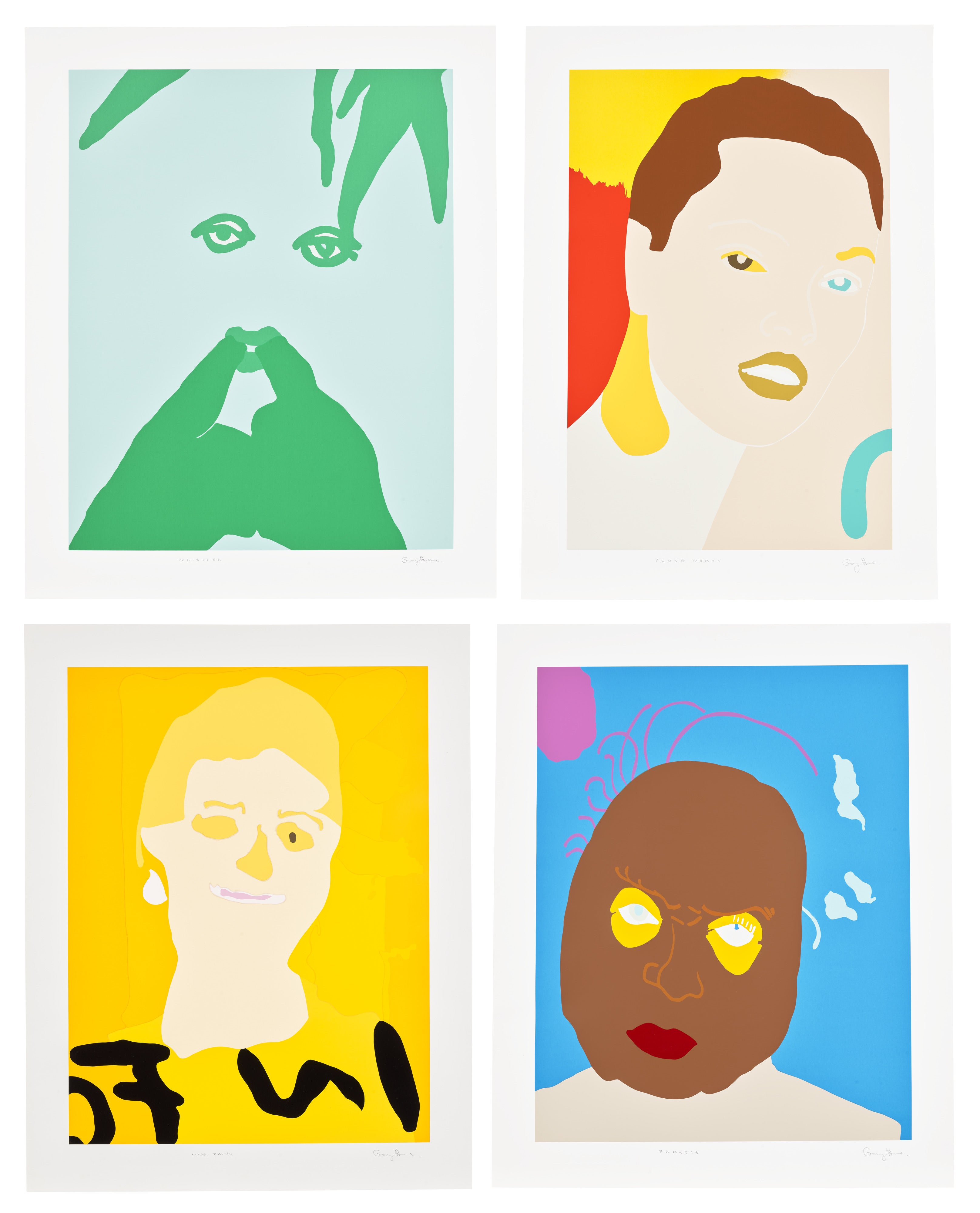
Gary Hume
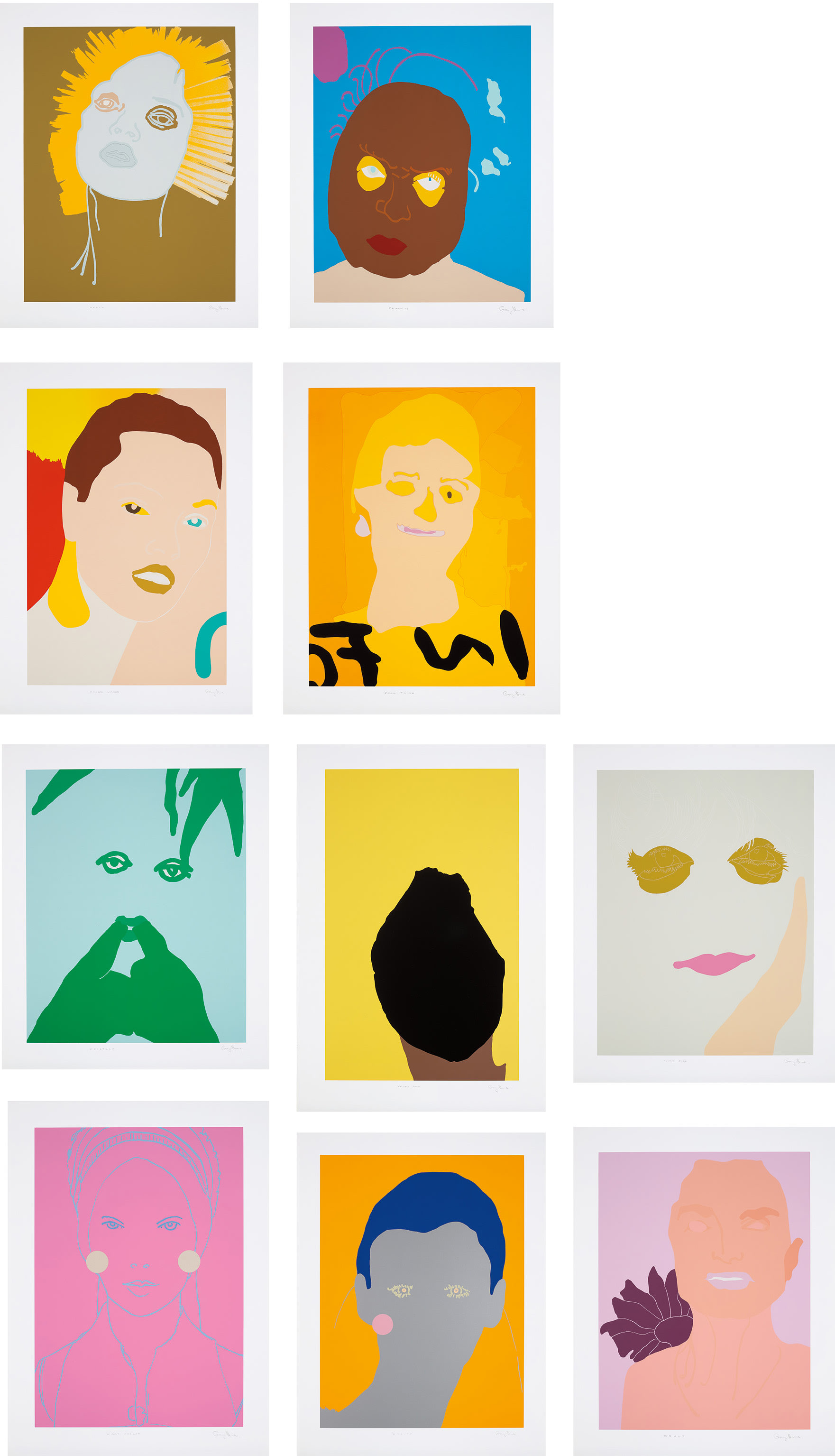
Portraits: four prints
He paints in enamel on aluminum panels, using the kind of gloss paint associated with domestic interiors, and the result is a surface that is utterly unlike the textured, worked quality of most oil painting. Forms are built up through a process closer to drawing than to traditional painterly construction, with contours placed with great care and colors chosen for their relational qualities rather than their descriptive accuracy. A flower in a Hume painting is not quite a flower you could name; it is a distillation of floral ness, simplified to the point where it becomes a vehicle for color and feeling. Works such as The Iris and Ellen demonstrate this approach with particular clarity, each piece finding a point of balance between representation and pure abstraction that keeps the eye in a state of productive uncertainty.
For collectors, Hume's prints and works on paper offer a compelling entry point into a practice that spans three decades of sustained invention. The editions published by The Paragon Press in London, including the celebrated Portraits series, are among the finest artist's prints made in Britain during the 1990s, combining screenprint and other techniques with the same graphic precision that animates his panel paintings. Door 1, published by CF Editions, carries the conceptual weight of his earliest signature works in a format accessible to a wide range of collectors. The Fuzzy Snowman, published by Momart, shows his gift for finding the mythic in the apparently mundane.
Gary Hume
Portraits
His market has remained robust and thoughtful, attracting collectors who value intellectual seriousness alongside genuine visual pleasure, a combination that never goes out of fashion. To understand Hume fully, it helps to place him within a broader lineage of painters who have used radical simplification as a means of emotional amplification. The influence of Matisse is often cited, and rightly so: the flat planes of color, the decorative boldness, the insistence that a simplified image can carry more feeling than a detailed one. One also thinks of Alex Katz, whose flat portraits share something of Hume's cool glamour and psychological directness, and of Patrick Caulfield, the great British painter of domestic interiors, whose deadpan sophistication runs through British art like a quiet river.
Among his contemporaries, artists such as Peter Doig and Cecily Brown have also navigated the space between figuration and abstraction with comparable ambition, though each in a very different visual register. What Hume offers, in the end, is something that art history has always prized but rarely produced in such concentrated form: a completely personal visual language that is also immediately legible to anyone who encounters it. His surfaces reflect the world back at us with a warmth and a kind of generosity that feels, in the current moment, genuinely necessary. Institutions from Tate to the Museum of Modern Art hold his work, and new generations of collectors and painters continue to find in it a permission to take beauty seriously, to treat pleasure as a category of meaning rather than a retreat from it.
Gary Hume has been making paintings for more than thirty years, and they have not dated by a single day.