Gardar Eide Einarsson
Gardar Eide Einarsson: Power, Rebellion, Pure Vision
Artist Spotlight · The Collection Editorial
There is a particular electricity in a gallery when Gardar Eide Einarsson's work lines the walls. His canvases and aluminum panels hum with an almost confrontational energy, pulled from the margins of culture and reframed with the cool precision of a conceptual artist who understands exactly what language can do to a room. Over the past two decades, Einarsson has built one of the most intellectually rigorous and visually arresting practices in contemporary art, earning the attention of major institutions from New York to Tokyo and a devoted following among collectors who prize work that rewards both the eye and the mind. Born in Norway in 1976, Einarsson came of age in a period when global youth culture was negotiating its relationship with authority in very loud, very visible ways.
Gardar Eide Einarsson
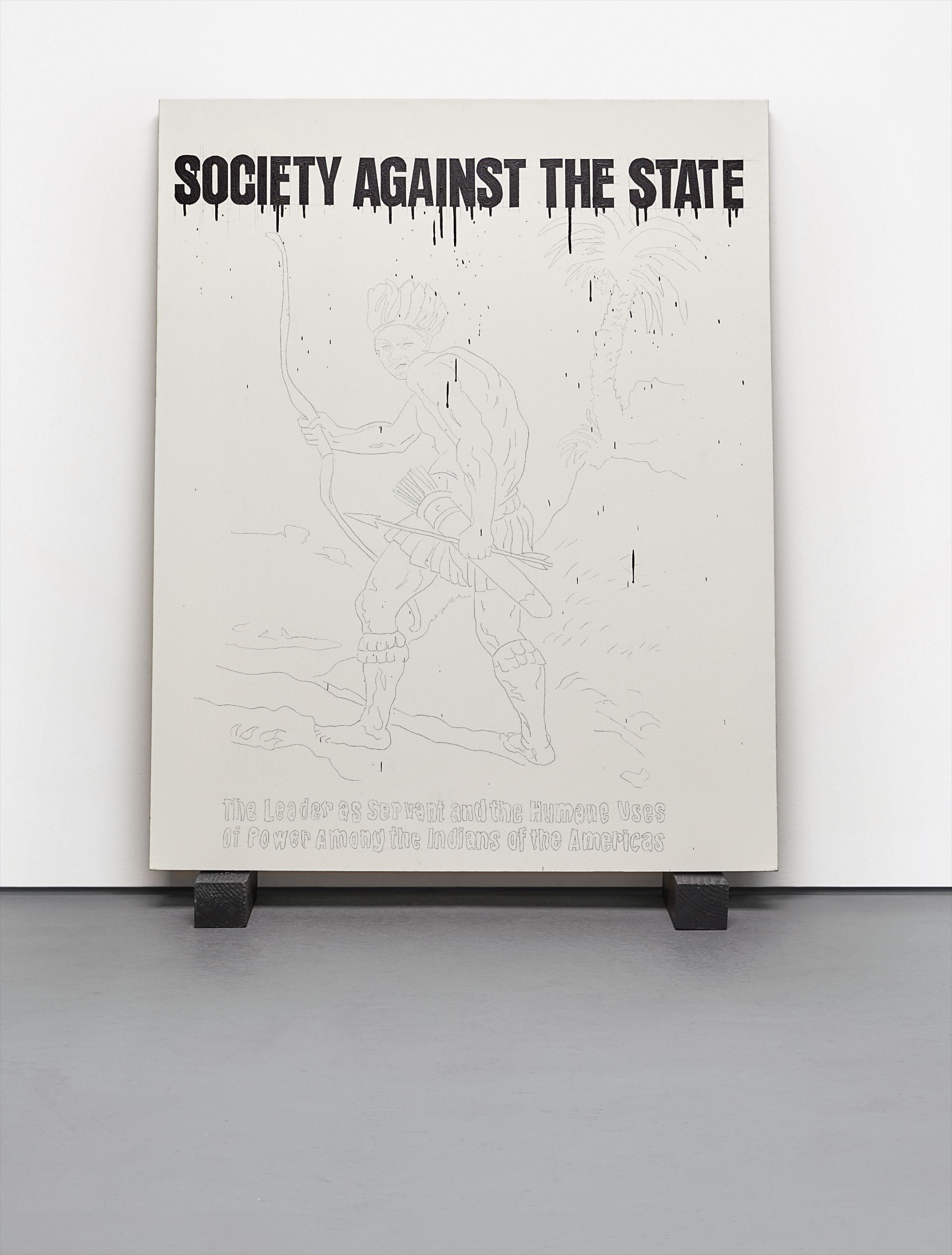
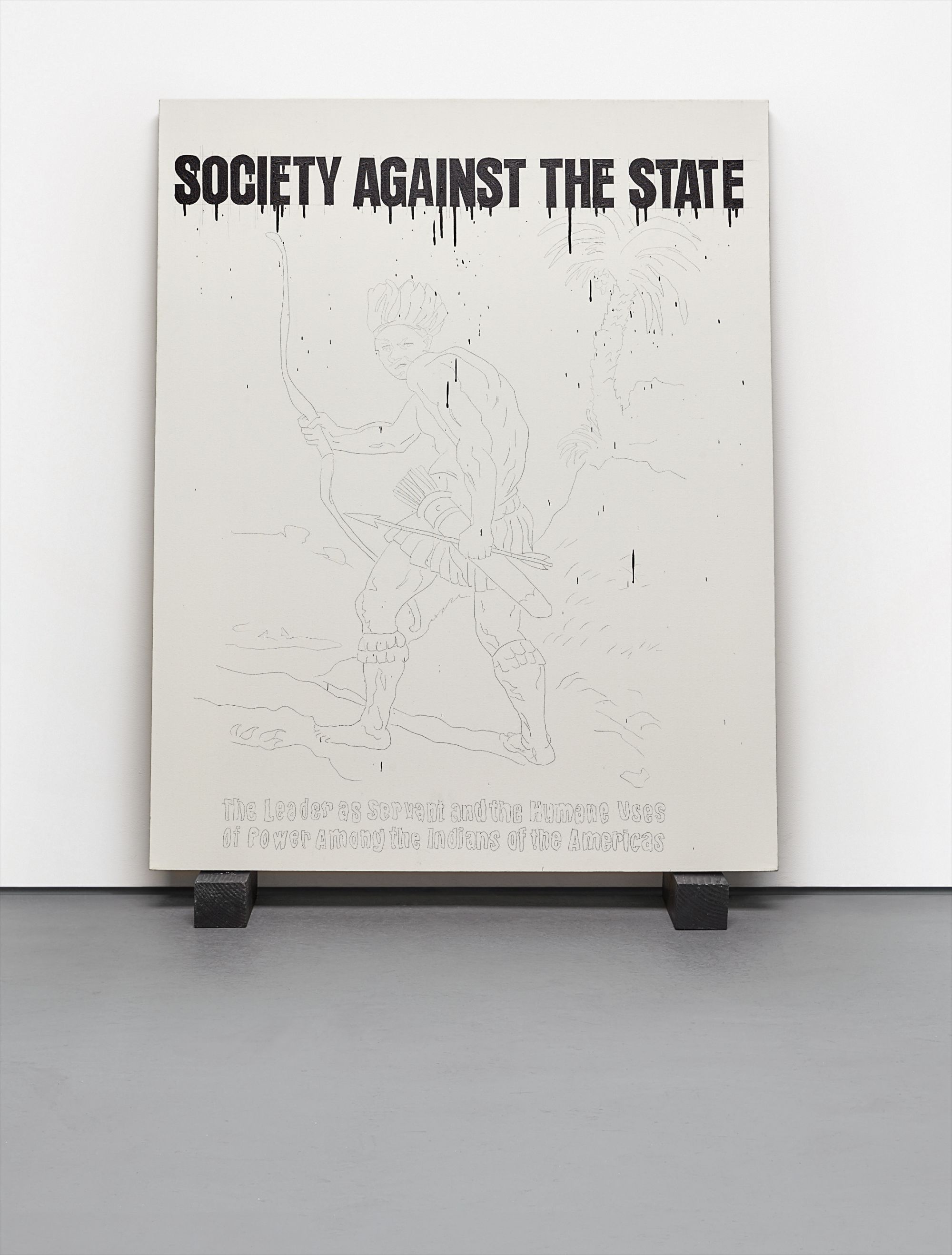
Society Against the State
The aesthetics of punk, anarchism, and American counterculture reached Scandinavia with particular force in the late 1980s and 1990s, and Einarsson absorbed these influences with the seriousness of someone who recognized them not merely as style but as systems of meaning. He later pursued his education at the prestigious Goldsmiths College in London, an institution synonymous with the conceptual rigour that would define his mature practice, before spending formative years in New York, a city whose graffiti traditions, subcultural density, and political volatility left a permanent imprint on his work. New York proved to be more than a backdrop. It was a laboratory.
Living and working there in the early 2000s, Einarsson began developing the visual and textual vocabulary that would come to define him: stark, often monochromatic compositions in which words, slogans, and found language are treated as both formal elements and ideological objects. He became associated with a generation of artists thinking seriously about how power announces itself, how resistance gets codified, and how the symbols of rebellion are absorbed, neutralised, or occasionally preserved by the cultures that produce them. His work found a natural home at positions art fair and in group exhibitions that placed him alongside some of the most important conceptual voices of his generation. The signature works that collectors and curators return to again and again demonstrate the full range of what Einarsson can do within his chosen territory.
Gardar Eide Einarsson
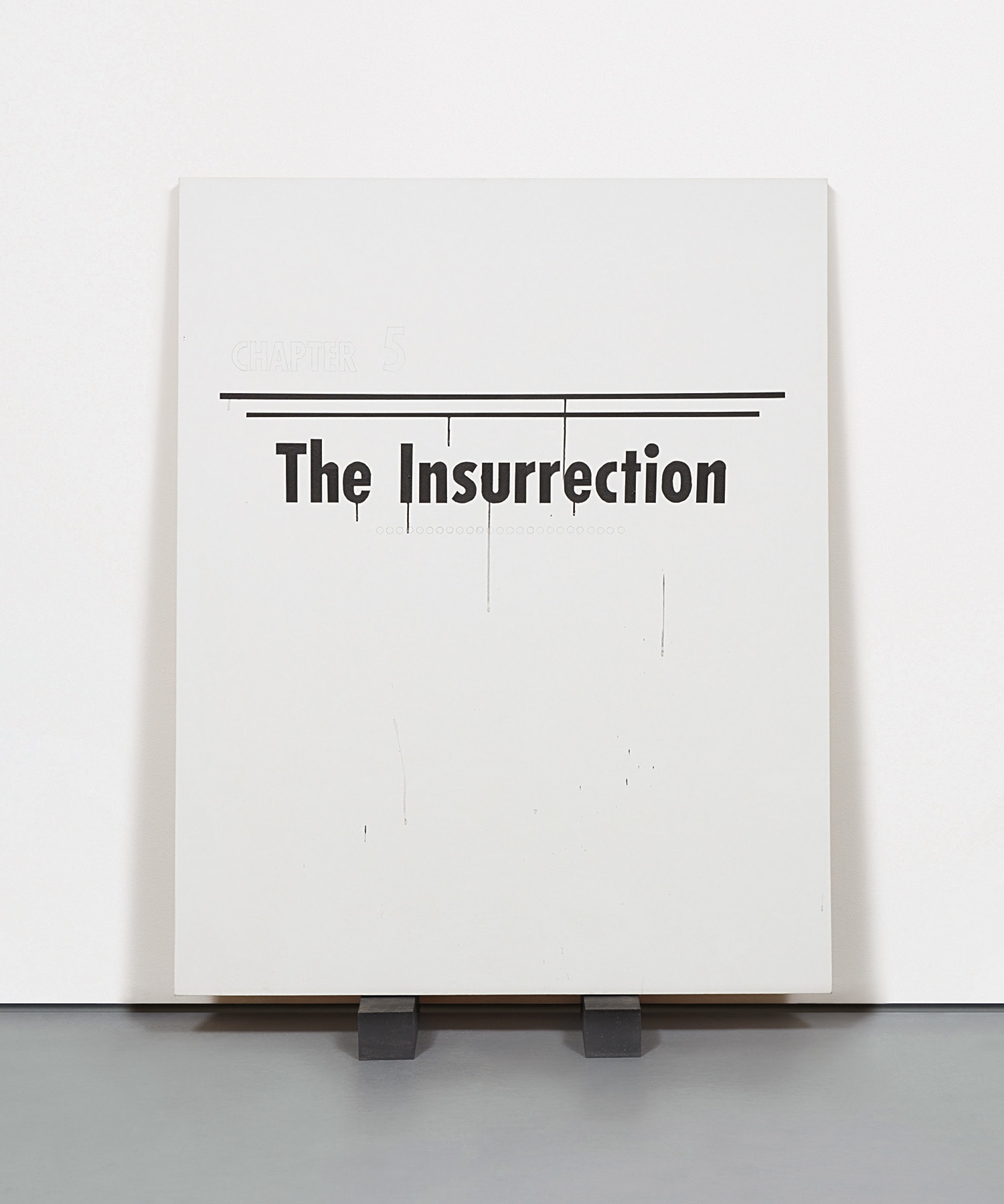
Los Angeles (The Insurrection), 2007
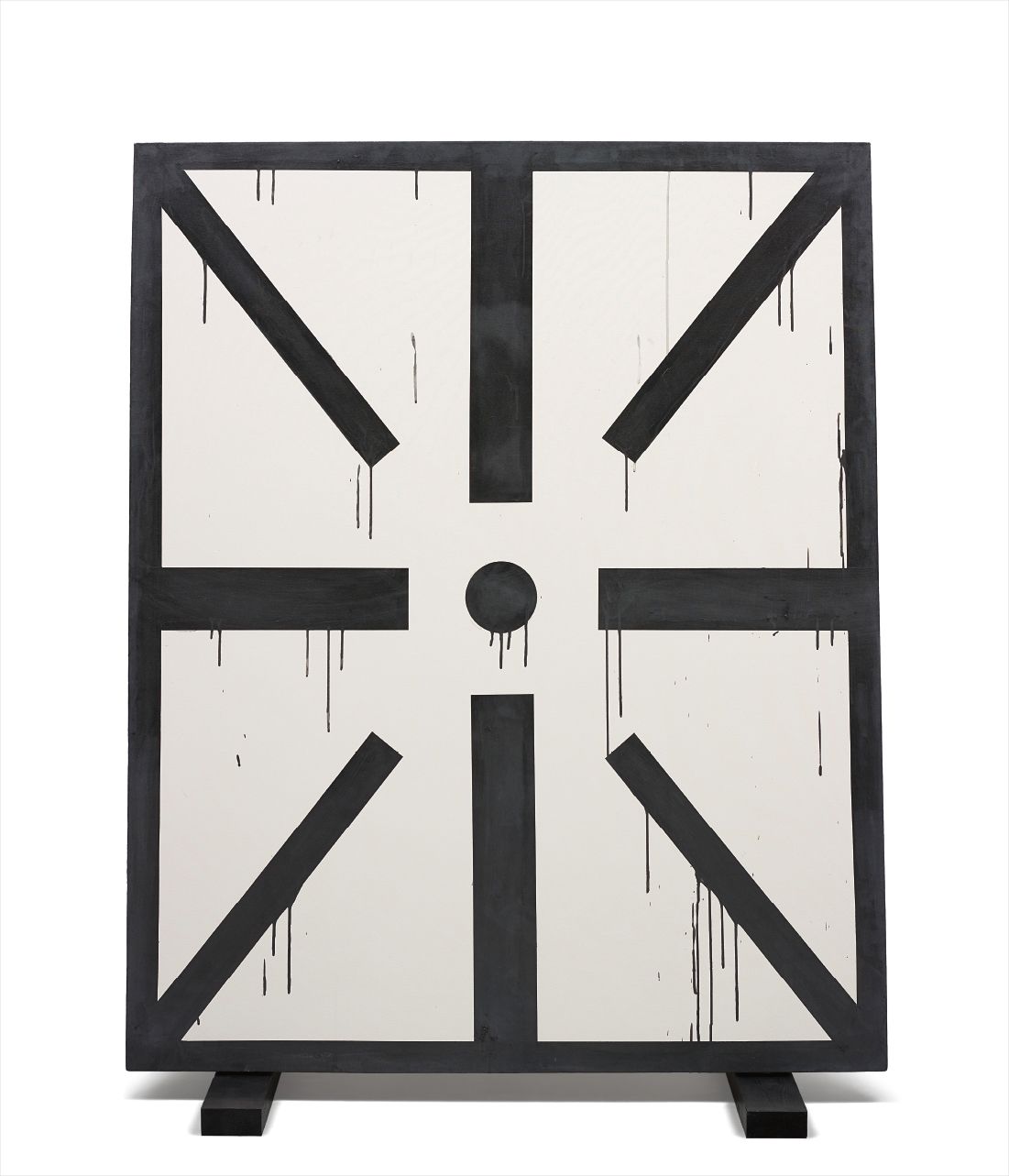
"Society Against the State" is perhaps the most emblematic title in his catalogue, a work rendered in acrylic and graphite on canvas with painted wood blocks that encapsulates his core preoccupation: the relationship between the individual, the collective, and the apparatus that governs both. The painted wood blocks that accompany several of his canvas works are a recurring formal device, functioning almost as pedestals for ideas, lifting the painted surface into physical, sculptural space and insisting that the work be encountered as an object as much as an image. "Los Angeles (The Insurrection)" from 2007 channels the charged history of that city, a place where counterculture and catastrophe have long been neighbors, into a composition of acrylic on canvas and painted wooden blocks that feels simultaneously like a monument and a warning. "All Alone Among Friends" from 2006 carries an almost poetic weight in its title alone, and the work delivers on that promise with characteristic economy.
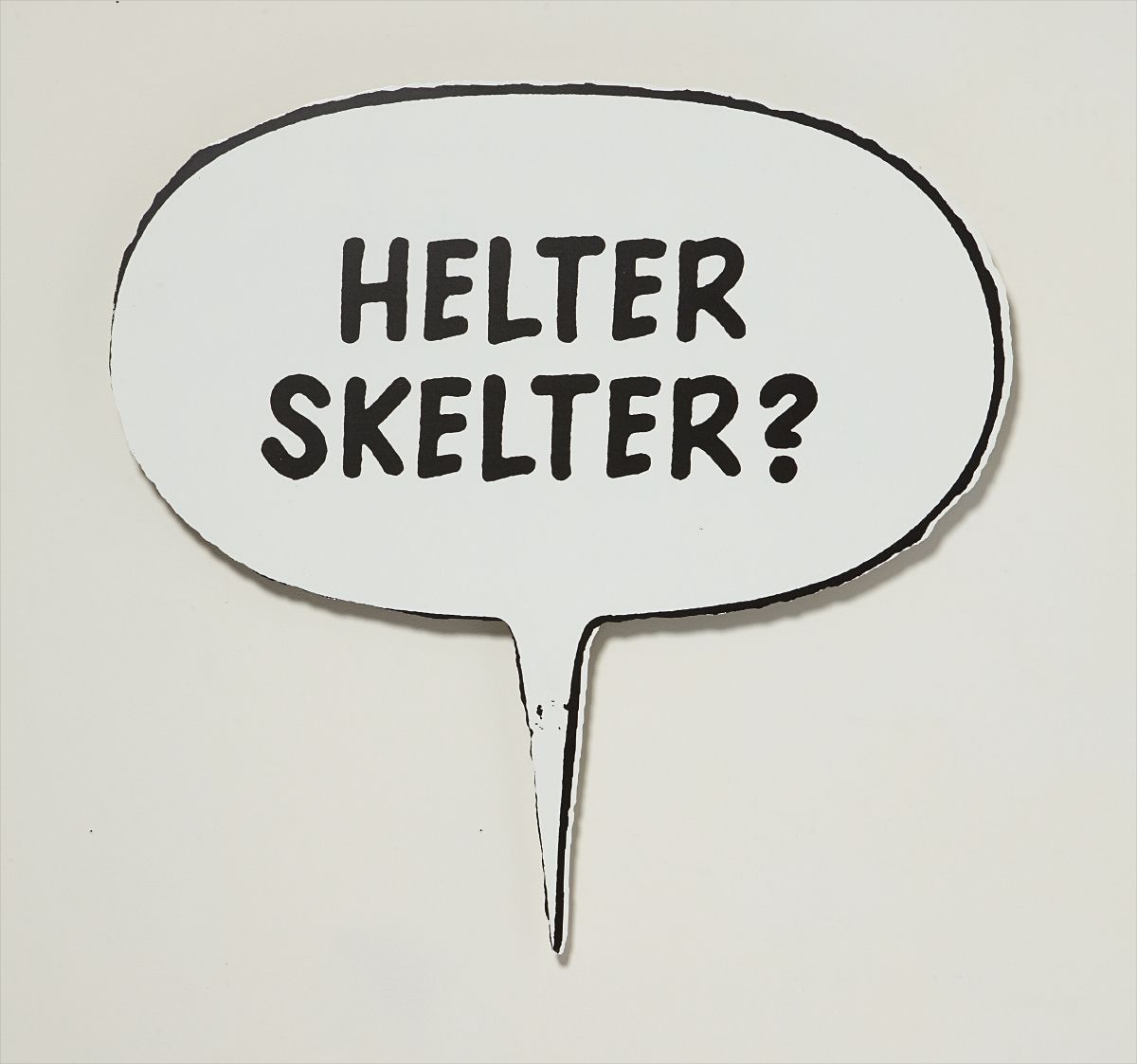
Einarsson's silkscreen works on aluminum represent another dimension of his practice, and they are among the most formally striking objects he has produced. "Helter Skelter?" from 2006 and "His Badge Says Death, Ma!" both deploy the sleek, industrial surface of aluminum as a kind of cultural mirror, the reflective material rhyming with the borrowed, mediated nature of the imagery and language printed on it.
Gardar Eide Einarsson
All Alone Among Friends, 2006
There is a knowing quality to these works: they understand that the rhetoric of danger and transgression has its own aesthetics, and they hold that aesthetic up for examination without either celebrating or condemning it. The question mark in "Helter Skelter?" is one of the most quietly devastating punctuation choices in recent conceptual art. "Rammellzee (Pay the Rent)" pays tribute to the legendary New York artist and theorist Rammellzee, whose ideas about language as armament and the politics of street iconography resonate deeply with Einarsson's own concerns.
The work, rendered in acrylic on canvas in six parts alongside a paper sheet, has the feeling of an homage that is also an argument. "Caligula (Resonances)" extends his reach into the longer history of power and its performance, finding continuities between ancient excess and contemporary political theatrics. From a collecting perspective, Einarsson's work occupies a particularly compelling position. His output is deliberately restrained in scale and production, which means that strong examples enter the market infrequently and tend to be held by collectors who understand their significance.
Gardar Eide Einarsson
Helter Skelter?, 2006
The works on aluminum are especially sought after for their formal distinctiveness and their ability to command a wall with unusual authority. Collectors drawn to the legacies of American conceptualism, to artists like Christopher Wool or Wade Guyton who have explored the intersection of text, image, and industrial production, will find in Einarsson a rigorous and original counterpart working from a distinctly European and subcultural vantage point. His connection to the visual languages of graffiti and anarchist graphics also places him in productive dialogue with artists such as Rita Ackermann and Adam McEwen, figures who share his interest in the aesthetics of resistance and the politics of how culture gets made and unmade. What makes Einarsson genuinely important, and what will secure his place in the longer arc of conceptual art history, is his refusal to be merely illustrative.
He does not simply picture counterculture; he interrogates the conditions that make counterculture legible, the way its symbols travel, transform, and sometimes get captured by the very systems they set out to oppose. In an era when political aesthetics are more contested and consequential than ever, his practice feels not like historical commentary but like live thinking. Institutions and collections that hold his work are holding something that continues to ask questions, and that quality, rarer than it sounds, is precisely what distinguished collecting is for.
Explore books about Gardar Eide Einarsson