Francesco Clemente
Francesco Clemente, Wanderer of the Soul
Artist Spotlight · The Collection Editorial
“I think of the body as a place where opposites meet. It is neither male nor female, neither Eastern nor Western.”
Francesco Clemente, interview with Rainer Crone
In the spring of 2024, the art world turned its gaze once again toward Francesco Clemente, whose sustained presence across five decades of international collecting and exhibition continues to feel not merely relevant but urgent. Museums from New York to Naples hold his work in their permanent collections, and auction rooms in London and New York regularly see his watercolors and paintings pass between devoted collectors who understand that Clemente occupies a singular position in the story of postwar art. His is a practice built on restless movement, philosophical curiosity, and a kind of luminous openness to experience that few artists of his generation have matched. To collect Clemente is to invite into your home a consciousness that refuses easy categorization.
Francesco Clemente
Tale, 2001
Clemente was born in Naples in 1952, into a city saturated with history, beauty, and a culture that has always lived close to the boundary between the sacred and the sensual. He studied architecture briefly in Rome before abandoning formal training to pursue art on his own terms, a decision that would prove formative in the most fundamental sense. Rome in the early 1970s was alive with conceptual experiment and political ferment, and the young Clemente absorbed it all while simultaneously looking outward, beyond Europe, toward traditions that Western modernism had largely ignored. He traveled to Afghanistan and India for the first time in 1973, and those journeys reoriented everything.
It was India above all that became his second home and his deepest creative resource. Clemente first arrived in Madras, now Chennai, and was immediately drawn into collaboration with local artisans and miniature painters, absorbing the visual grammar of Indian devotional art with a seriousness and humility that set him apart from artists who merely borrowed from non Western traditions. He eventually established a studio in Madras and spent significant portions of each year there throughout the 1970s and 1980s, working alongside craftspeople whose techniques and materials became inseparable from his own evolving language. This sustained engagement was not exoticism but genuine exchange, and it gave his work a depth of cross cultural fluency that remains rare in contemporary art.
Francesco Clemente
Jodhpur XII
By the early 1980s, Clemente had emerged as one of the central figures of the Transavanguardia, the Italian movement theorized by critic Achille Bonito Oliva that championed a return to painting, myth, and subjective experience at a moment when conceptual and minimal art had dominated the preceding decade. Alongside Sandro Chia, Enzo Cucchi, and Mimmo Paladino, Clemente helped define a Neo Expressionist sensibility that was European in its intellectual ambitions but deeply personal in its imagery. His work drew immediate international attention, and he was included in landmark exhibitions across Europe and the United States that established painting as a vital and contested space once again. When he relocated to New York in 1982, he brought with him the full range of his cosmopolitan formation, and the city responded with enthusiasm.
“Painting is the space where I can be contradictory, where I can be everything at once.”
Francesco Clemente
New York in the early 1980s was an extraordinary creative environment, and Clemente moved through it with characteristic openness. He collaborated with Jean Michel Basquiat and Andy Warhol on a celebrated series of paintings in 1984, works that crackled with the energy of three very different imaginations in conversation. He developed lasting friendships with poets including Allen Ginsberg and Gregory Corso, and his work with the Beat writers produced a body of illuminated texts and artist books that stand as some of the most beautiful collaborations between visual art and poetry in the late twentieth century. Clemente has always understood that art exists in dialogue, not in isolation, and his career is punctuated by these generative encounters.
Francesco Clemente
Alcuni Telefonini
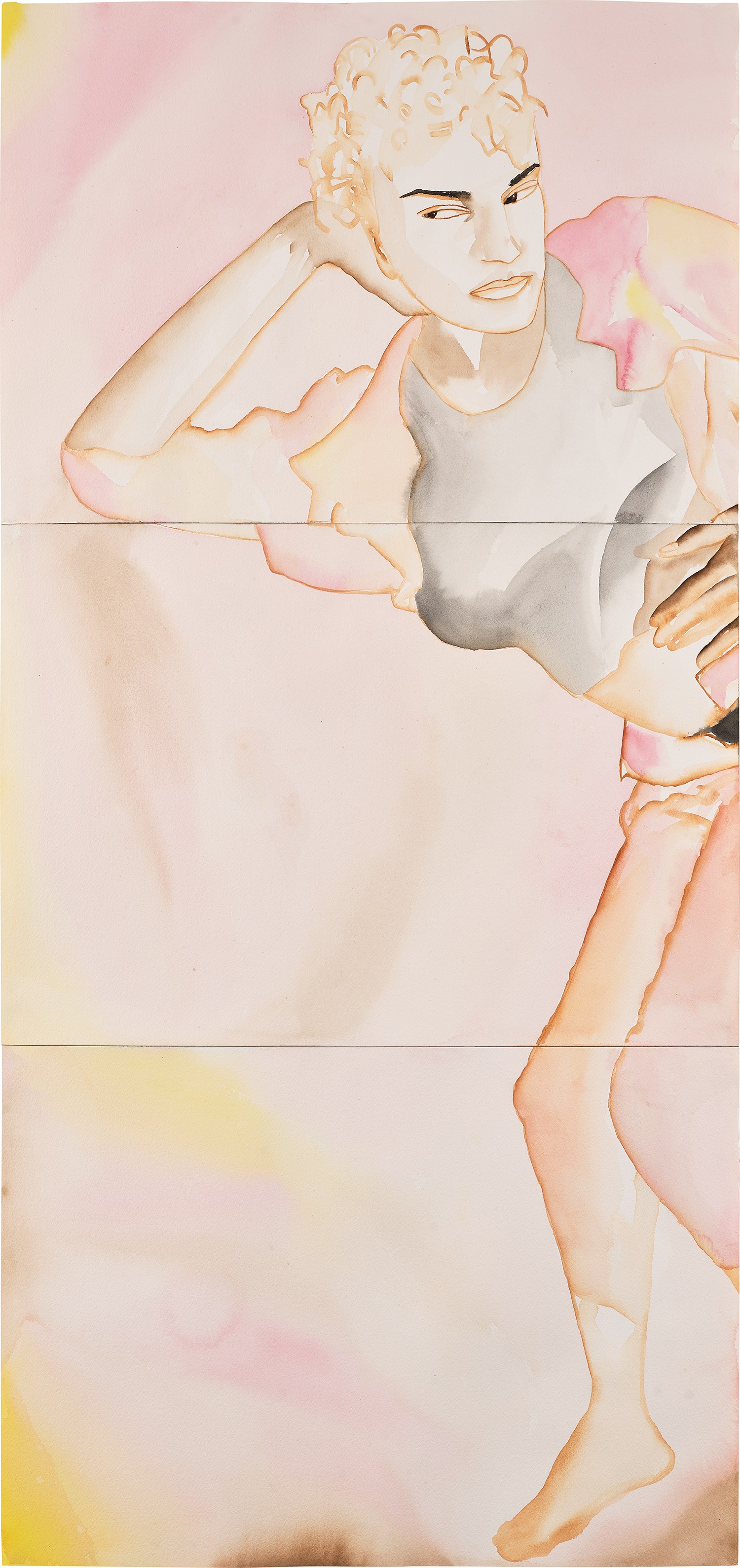
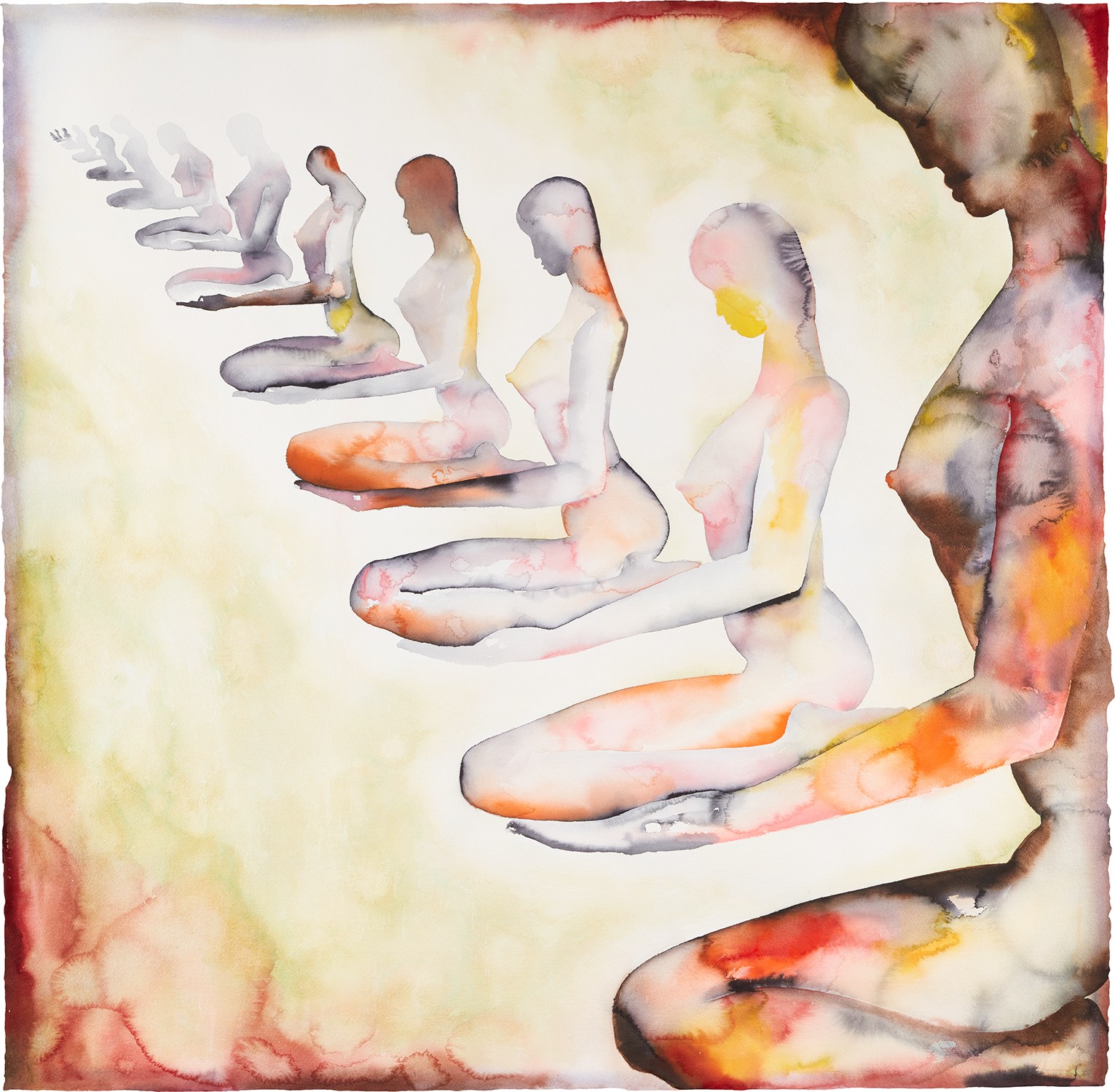
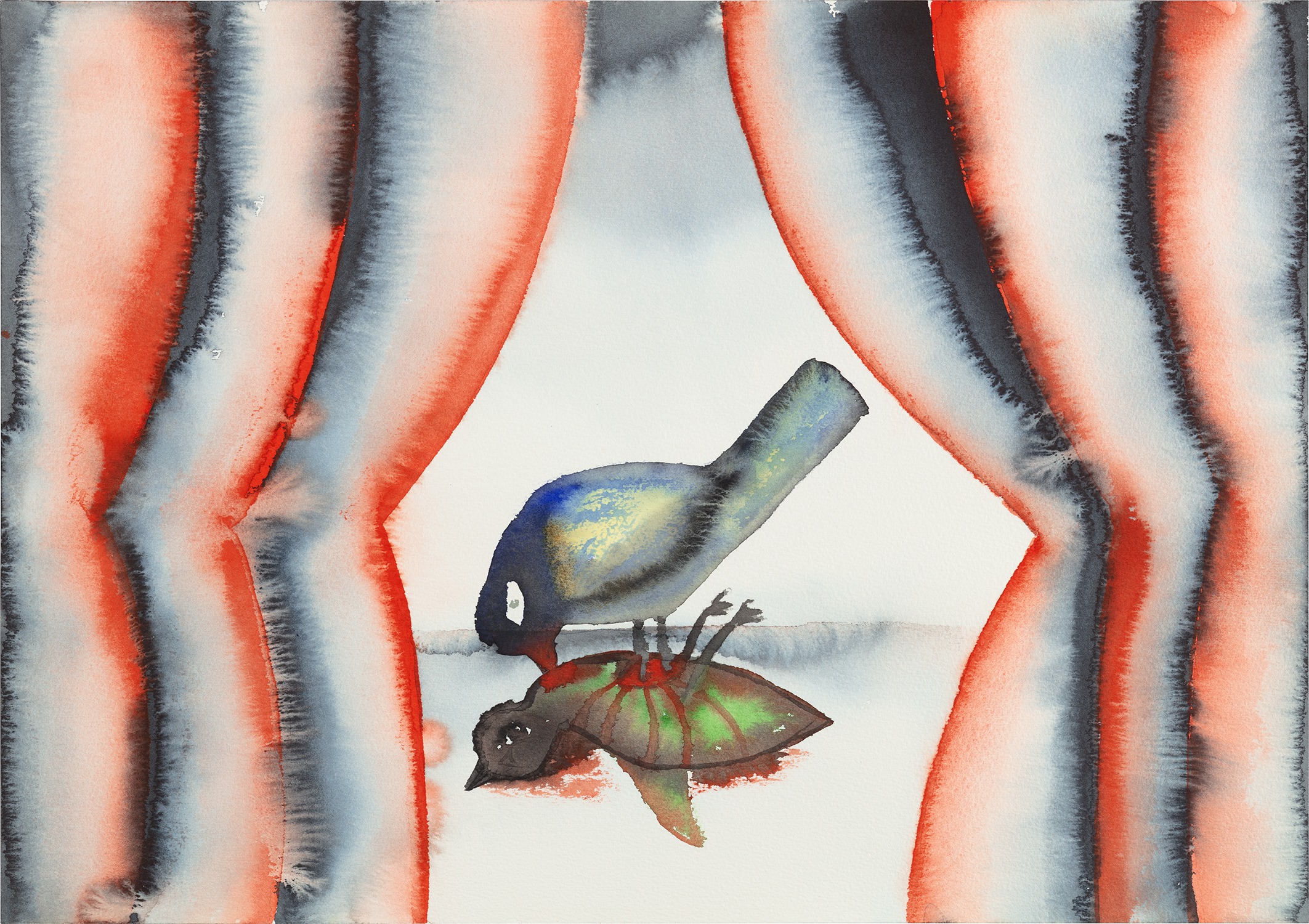
The works available through The Collection offer a remarkable window into the full range of Clemente's practice. His watercolors, including the elegant "Women and Men" series executed on joined sheets of wove paper, demonstrate the extraordinary delicacy he brings to works on paper, where his line is simultaneously precise and dreamlike. "Tale" from 2001 shows his sustained engagement with narrative and symbolism, while "Jodhpur XII" carries the particular light and color of Rajasthan in a way that only someone who has spent real time in that landscape could achieve. The "Self Portrait" of 1978 in gouache, ink, and collaged paper on canvas is an early document of what would become one of the most sustained and psychologically rich traditions of self portraiture in contemporary art.
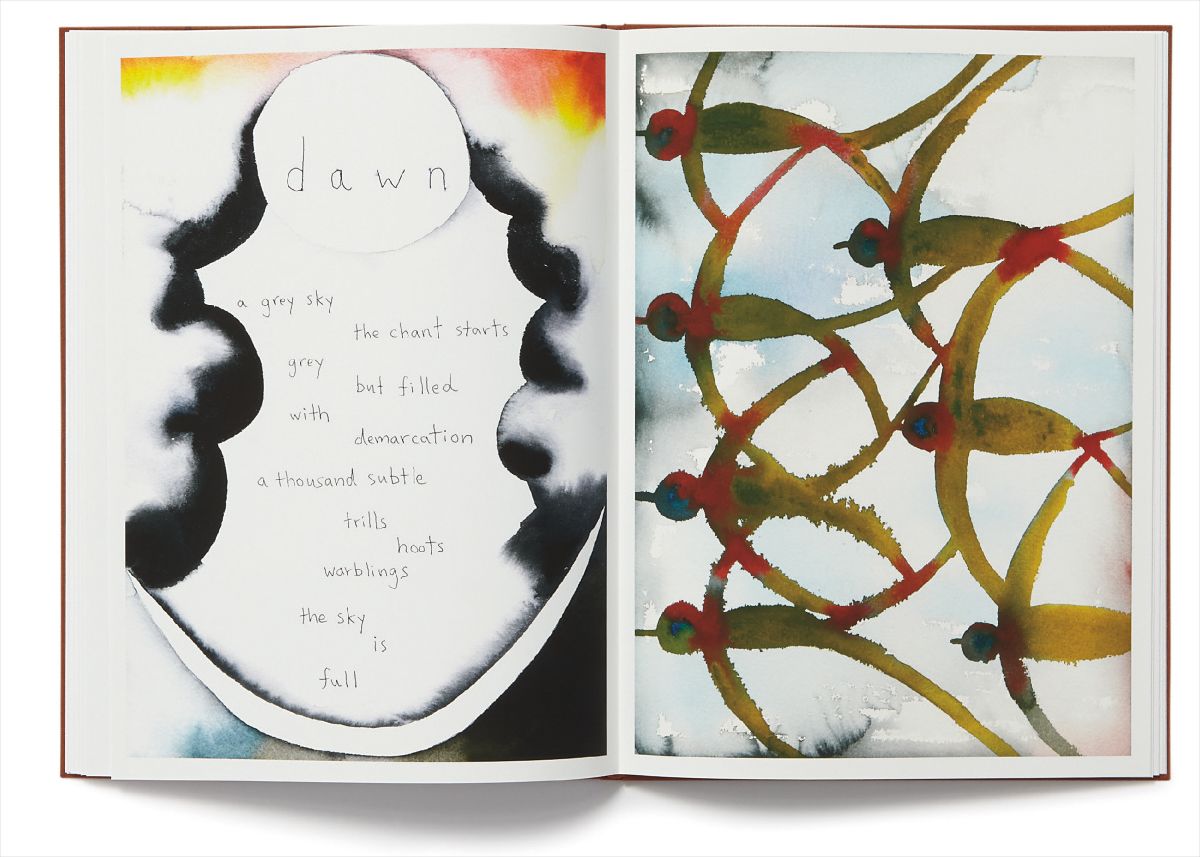
Works like "Desert Song IV" from 1995, in oil on canvas, and the "Saffron Women" pastel reveal the breadth of his material command, moving between mediums with a fluency that collectors find endlessly rewarding to live with. For collectors, Clemente represents a genuinely compelling proposition at multiple price points and across multiple categories of work. His prints, including the complete set of "Alcuni Telefonini," the nineteen offset lithographs on Hahnemühle paper with text by Vincent Katz, offer access to his imagery in editions that were produced with the same care and intention he brings to unique works. Auction records for his paintings have been strong and consistent, with major watercolors and oils achieving significant results at Christie's and Sotheby's over the past two decades, reflecting a collector base that is genuinely international and spans generations.
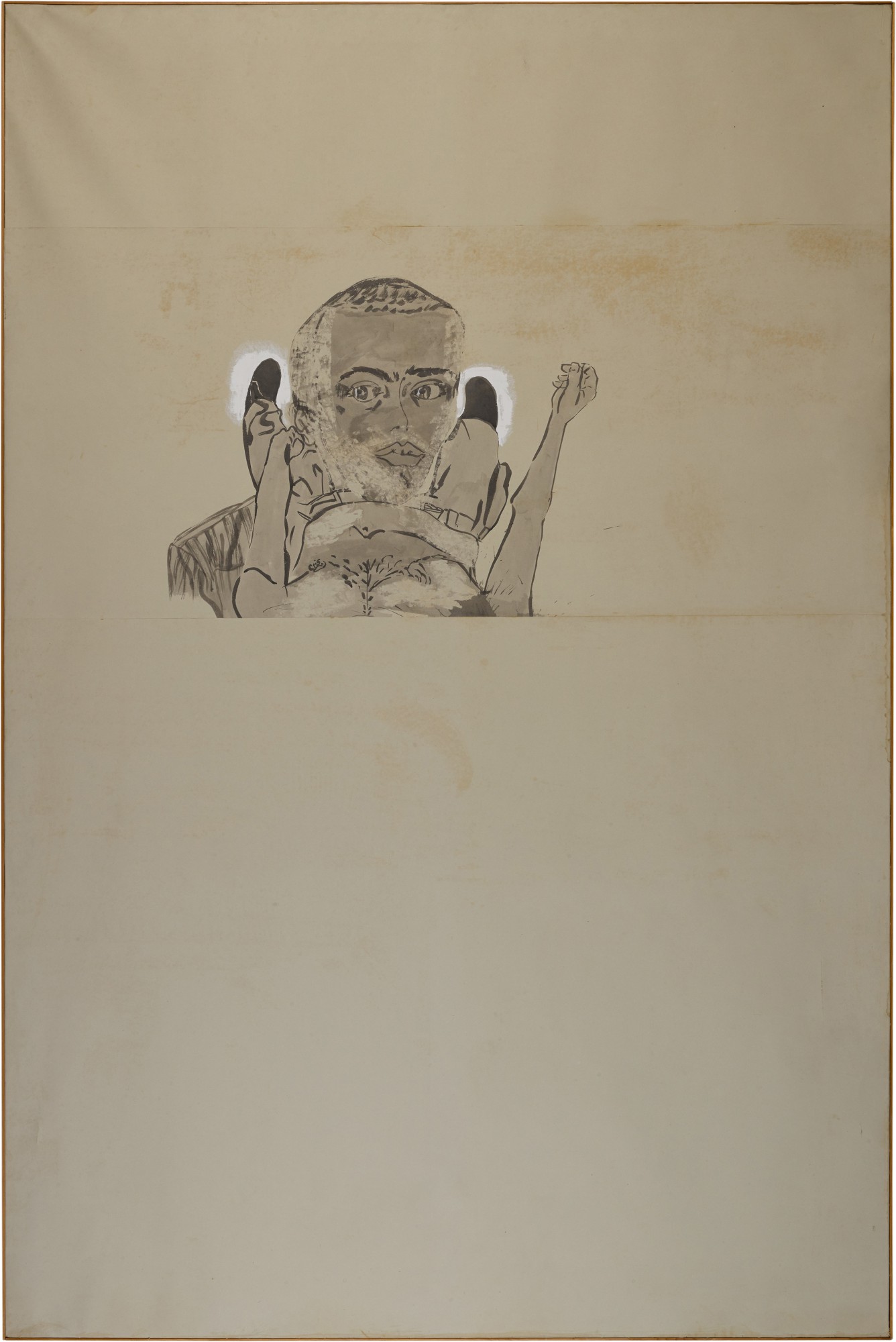
Francesco Clemente
Self-Portrait, 1978
Works on paper in particular have seen renewed interest from younger collectors who respond to the intimacy and directness of his draftsmanship. The "Semen" etching and aquatint in colors with silver collage on Fabriano Rosaspina paper is an example of how powerfully his erotic and mystical imagery translates into the print medium. Within the broader context of art history, Clemente belongs to a generation that includes Anselm Kiefer, Georg Baselitz, and Julian Schnabel, all of whom reasserted the importance of painting at a pivotal cultural moment. But his practice is perhaps most distinguished by its refusal of nationalist or regional identity: where Kiefer is deeply and consciously German, Clemente is resolutely and productively nowhere in particular, or rather, he is everywhere at once.
He moves between Naples, New York, Jodhpur, and wherever his curiosity leads, and that mobility is not biographical accident but artistic philosophy. His influences range from William Blake to Tantric imagery, from Cy Twombly to the great traditions of fresco painting, and he holds all of these references with a lightness that makes his work feel alive rather than burdened. The legacy of Francesco Clemente is still being written, which is itself a testament to the vitality of his practice. He continues to work with the same appetite for experience and the same commitment to the inner life that has animated his art since those first journeys to India half a century ago.
His work held in the permanent collections of the Museum of Modern Art and the Solomon R. Guggenheim Museum in New York, among many others worldwide, ensures that future generations will encounter him in the company of the greatest artists of his time. For those who have the opportunity to acquire his work now, the invitation is to join a community of collectors who have understood something important: that art which travels this far into the human interior never goes out of date.
Explore books about Francesco Clemente

Francesco Clemente
Rudi Fuchs
Francesco Clemente: Paintings and Drawings 1976-1986
Various
Francesco Clemente: Three Worlds
David Salle
Francesco Clemente: Watercolors
Various
Francesco Clemente: The Mutt
Various