Fausto Melotti
Fausto Melotti, Sculptor of Pure Poetry
Artist Spotlight · The Collection Editorial
There is a particular kind of reverence that settles over a room when Fausto Melotti's work is present. It happened at the major retrospective mounted by the Fondazione Prada in Milan, and it has happened again in recent years as institutions across Europe have returned to his sculptures with fresh urgency, recognizing in their trembling brass wires and glazed ceramic figures something that feels not merely historical but acutely necessary. In an era saturated with monumental, declarative art, Melotti's whispering constructions ask us to slow down, to lean in, to listen as though to music played just at the edge of hearing. That quality, so singular and so difficult to name, is precisely why collectors and curators alike continue to seek his work with such devotion.
Fausto Melotti
L'indeciso
Fausto Melotti was born in 1901 in Rovereto, a city in the Trentino region of northern Italy with a proud intellectual tradition and a position poised between Italian and Central European cultural currents. He trained first as an engineer, earning a degree from the Politecnico di Milano, and this scientific grounding never left him. It gave him an understanding of tension, load, and structure that would eventually allow him to push sculpture to the very edge of physical possibility, creating works so delicate they seem to defy gravity itself. He then studied at the Accademia di Belle Arti di Brera in Milan, where he forged a friendship with Lucio Fontana that would prove formative for both artists and for the trajectory of Italian abstraction as a whole.
The 1930s were a period of radical ambition for Melotti. Working in Milan, he became one of the earliest and most committed advocates for abstract sculpture in Italy at a moment when the cultural establishment remained deeply attached to figurative traditions. His abstract plaster sculptures from this period, shown at the fifth Triennale di Milano in 1933, were pioneering works that placed him alongside the European avant garde. Yet Melotti was never a dogmatist.
Fausto Melotti
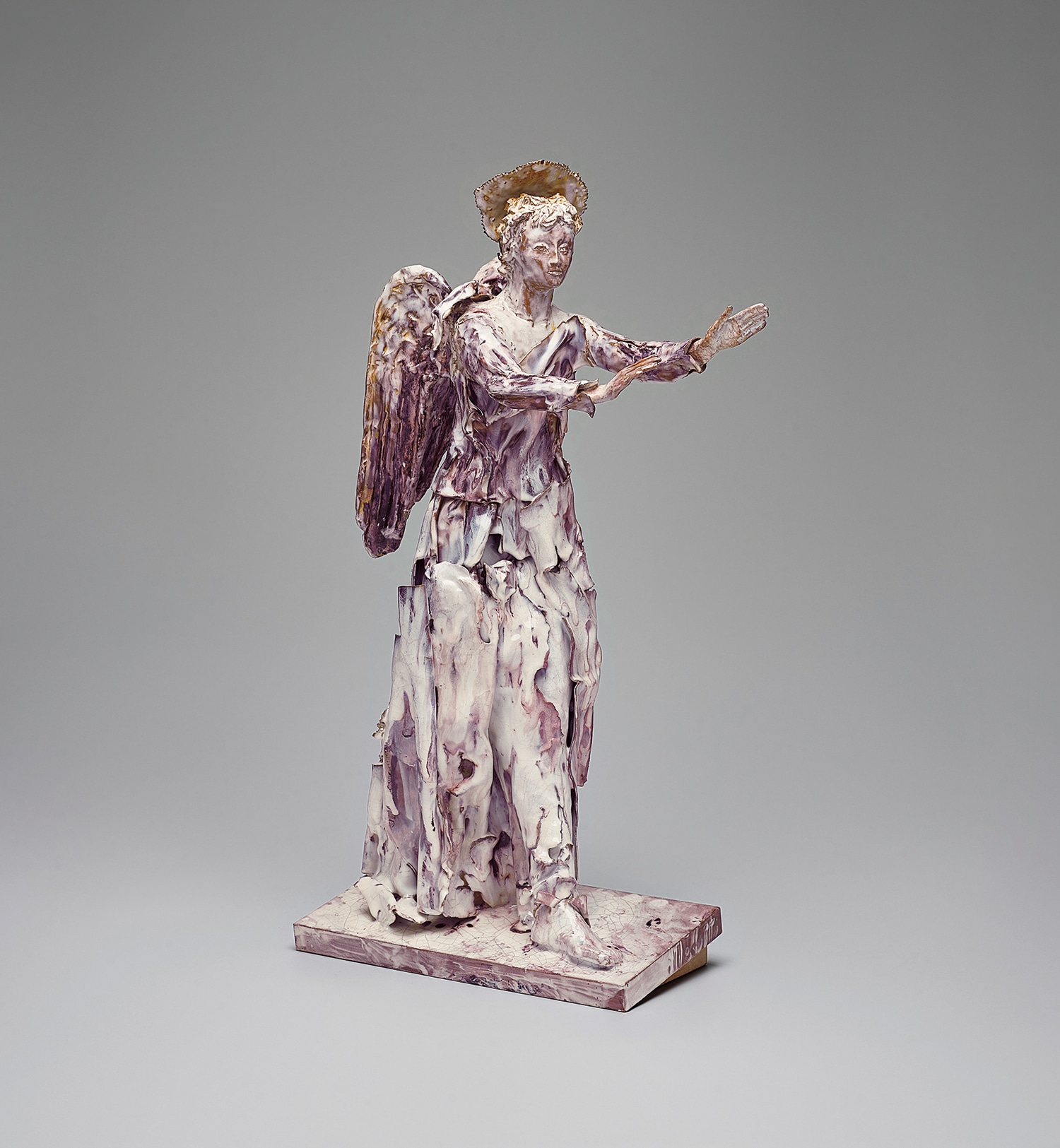
L'angelo dell'Apocalisse, 1949
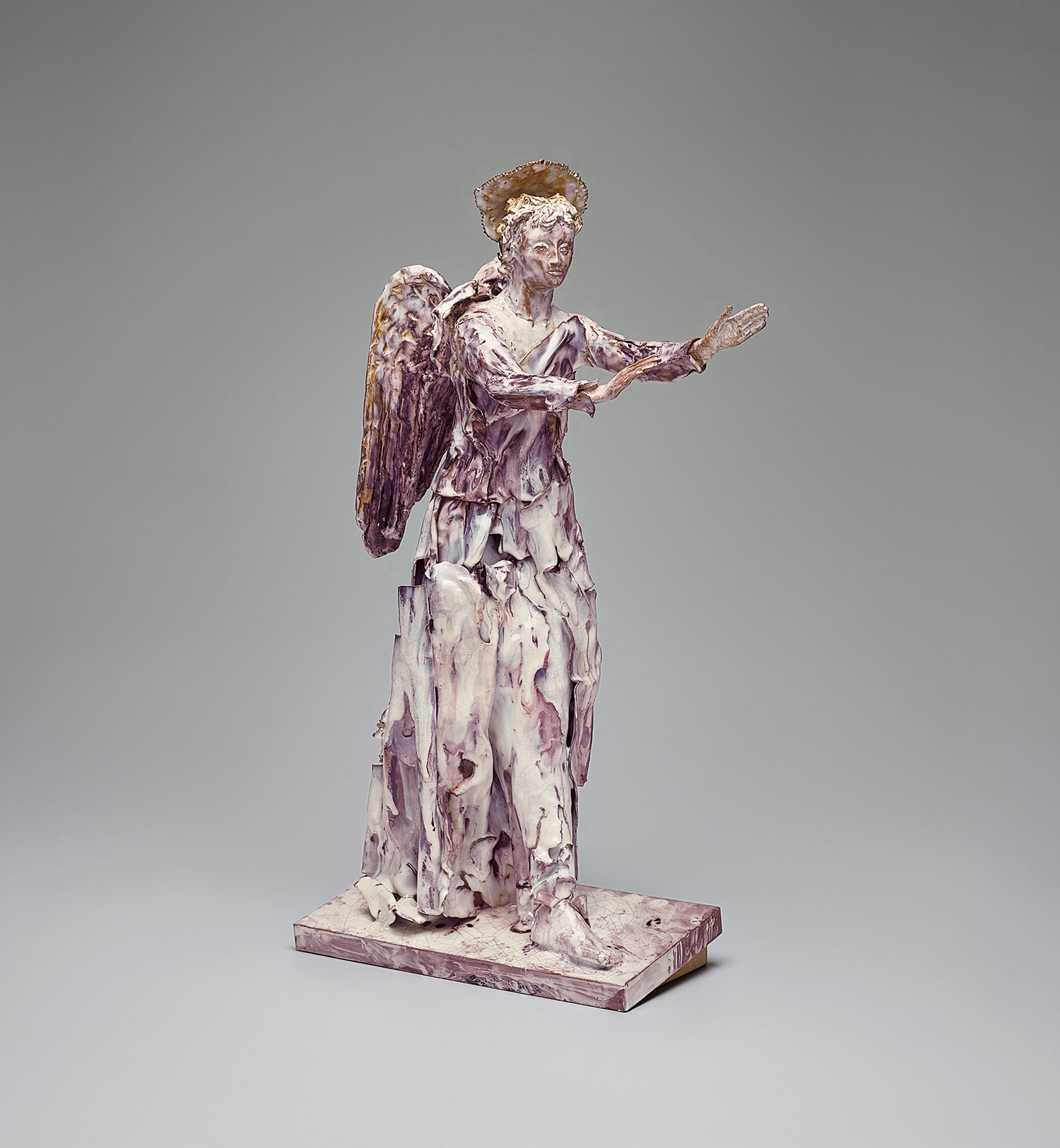
His abstraction was always inflected with metaphor, mythology, and a literary sensibility drawn from his deep reading of classical texts and his love of music. He played the piano seriously throughout his life, and that musicality, the sense of rhythm, interval, and counterpoint, became the animating principle of his three dimensional work. After the Second World War, Melotti turned increasingly to ceramics, producing an extraordinary body of glazed polychrome work that demonstrated his range and his comfort with the handmade and the intimate. "L'angelo dell'Apocalisse," completed in 1949, stands as one of the defining achievements of this period: a glazed polychrome ceramic figure of quiet authority, at once archaic and thoroughly modern in its formal simplicity.
"Dafne," another glazed polychrome ceramic, shows his ability to find in mythological subjects not heavy allegory but lightness and metamorphic grace, the very qualities Ovid himself prized. These ceramic works are among the most sought after by collectors today, offering a point of access to Melotti's universe that is both visually immediate and deeply considered. It was in the 1960s and 1970s, however, that Melotti's practice achieved its most celebrated and recognizable form. Working in brass, steel, and mixed materials, he created the series of lyrical constructions he called "teatrini" (little theaters) and the larger freestanding sculptures that brought him international recognition.
Fausto Melotti
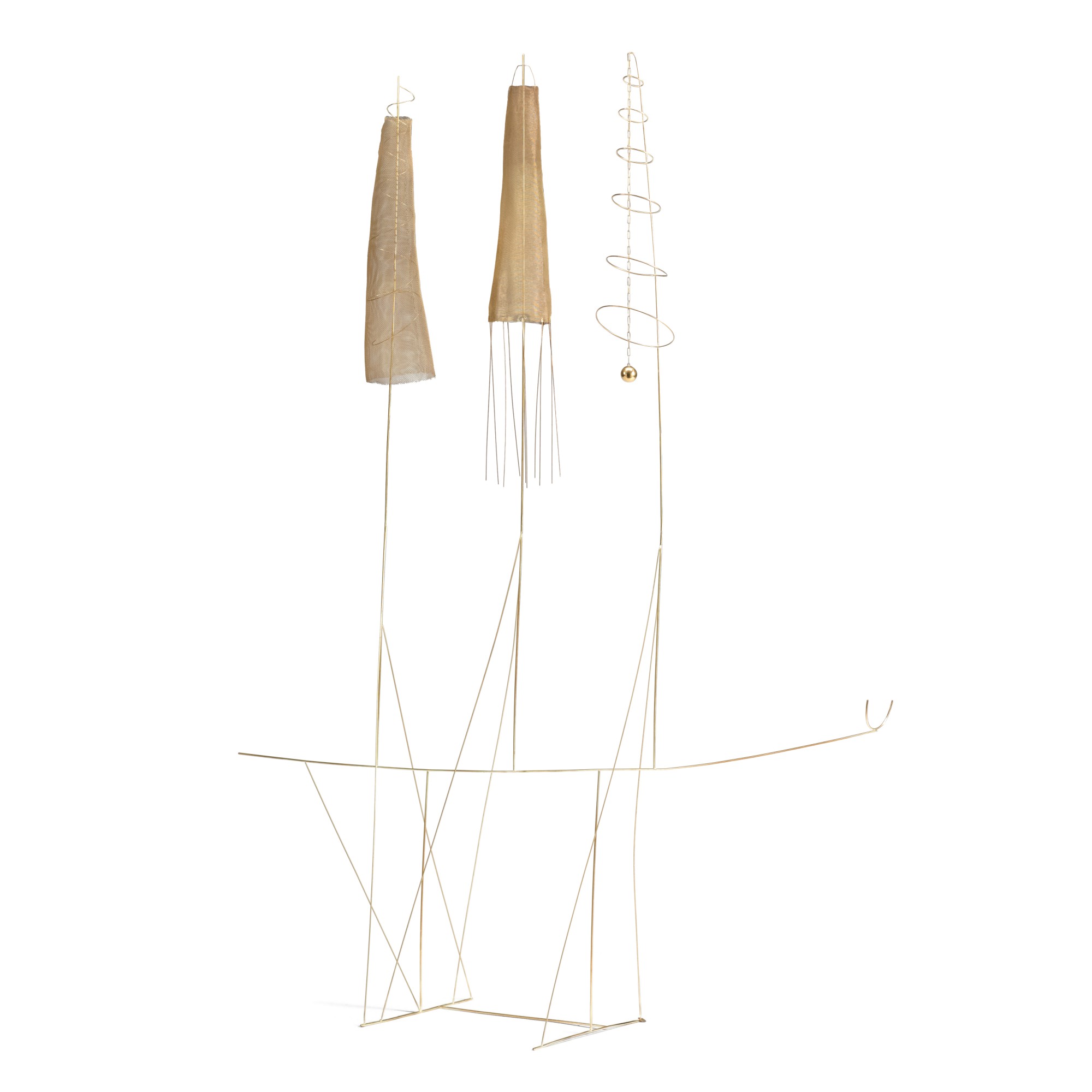
La bestia veliero, 1971
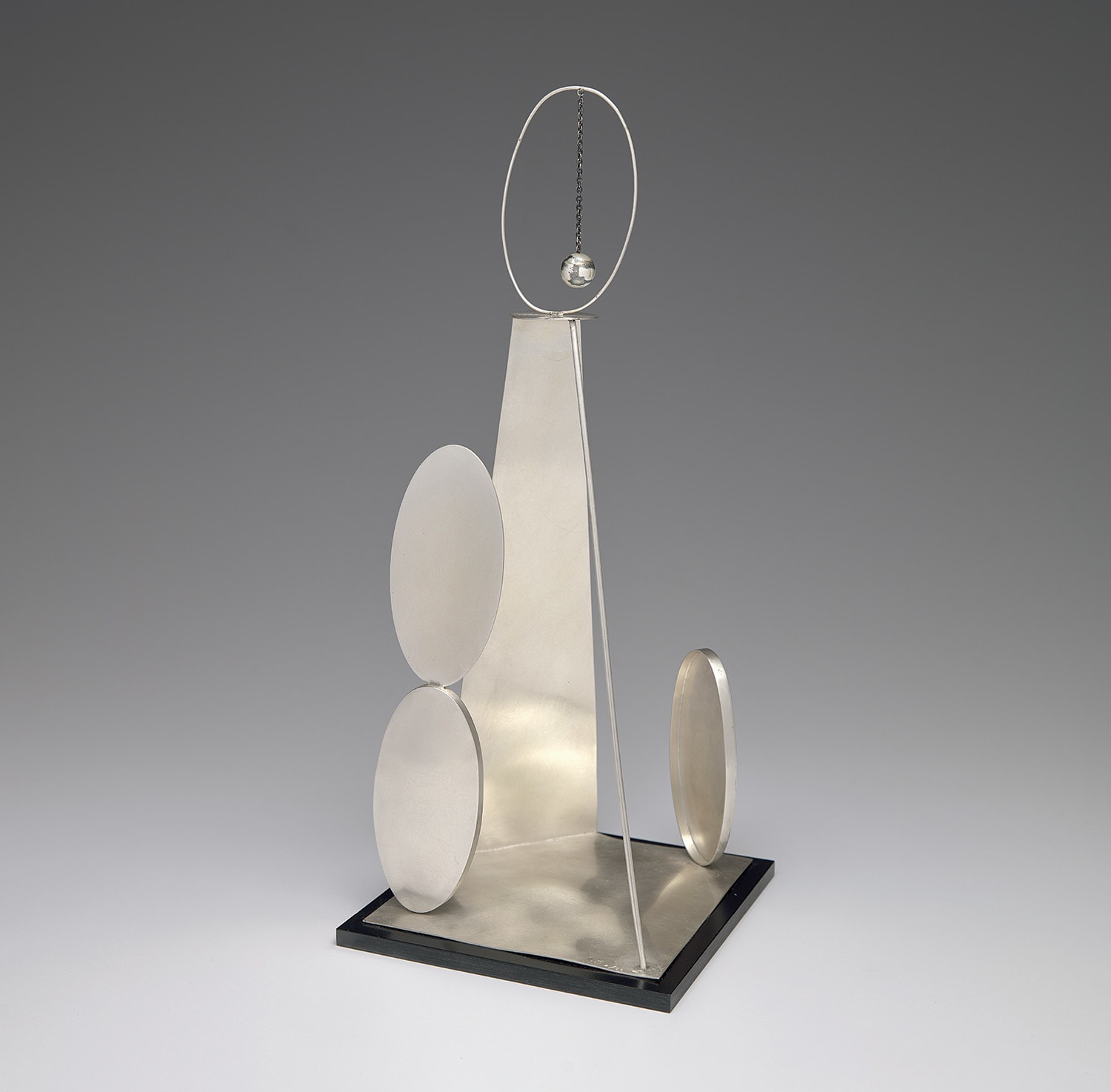
"Sculptura No. 17" from 1968, executed in stainless steel, exemplifies the precision and the apparent weightlessness he achieved during this decade. "La bestia veliero," created in 1971 in gold and golden bronze, carries the quality of a dream object, something between a vessel, a creature, and a piece of music made tangible. "Finta anarchia" from 1978 and "La Fuggitiva" from 1981 demonstrate that his inventive energy showed no sign of diminishing even as he entered his eighties, each work sustaining the tension between structure and freedom that defined his lifelong inquiry.
"L'indeciso" is perhaps the most poignant of his titled works, its very name capturing that hovering, unresolved quality he so brilliantly embodied in physical form. For collectors, Melotti represents one of the most compelling cases in postwar Italian art. His reputation, though always respected among specialists, underwent a significant reappraisal from the 1980s onward, and in the decades since his death in 1986 the market has reflected a growing international consensus about his importance. Works on paper, including pieces that have appeared in celebrated survey exhibitions tracing the lineage from Turner to Cézanne and beyond, reveal a draughtsman of real sensitivity.
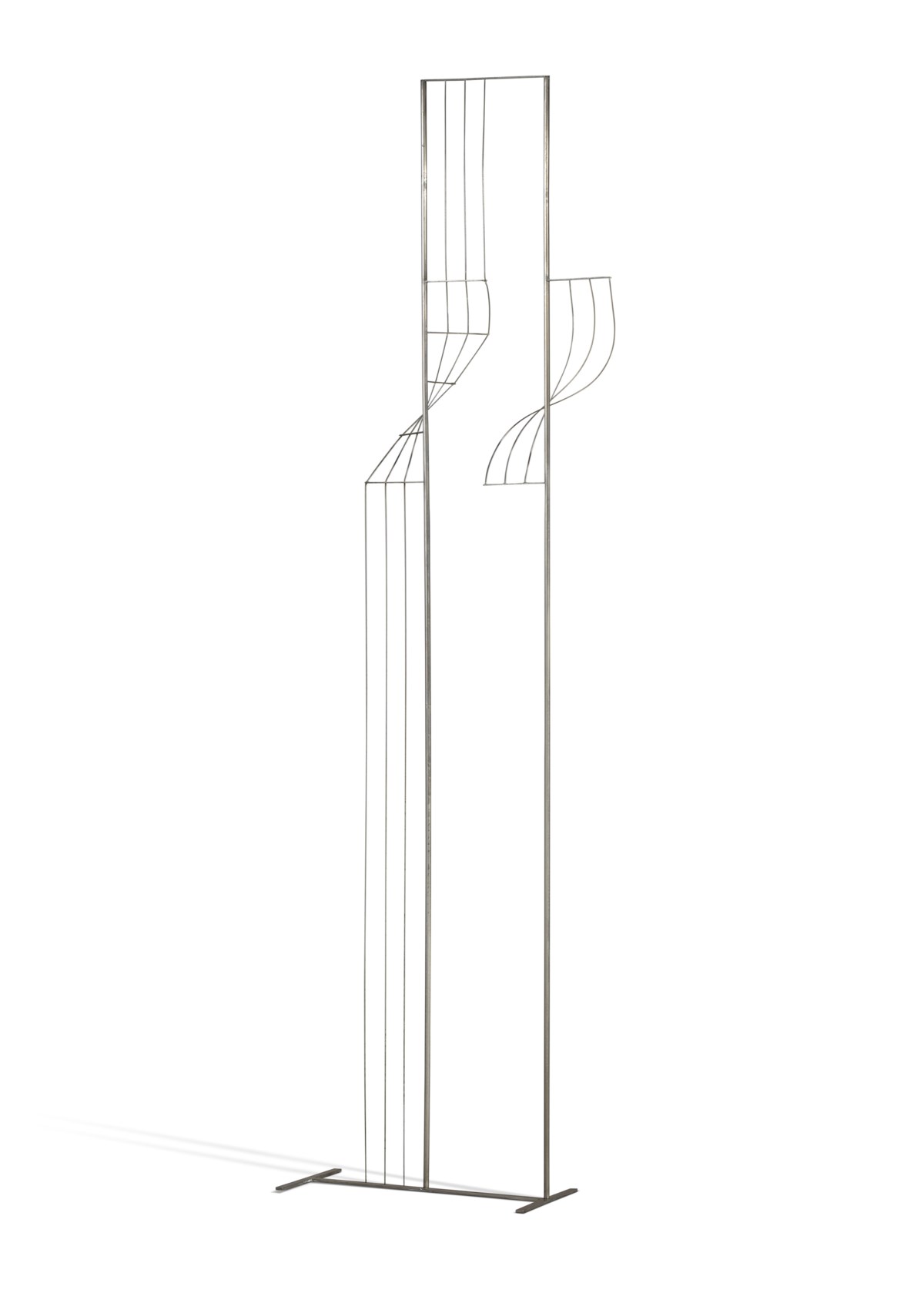
Fausto Melotti
Sculptura No. 17, 1968
Collectors are drawn not only to the prestige of his name but to the genuine quality of presence his works carry in domestic and institutional spaces alike. A Melotti sculpture commands a room without dominating it, which is a rare and valuable quality. Those entering the market should attend closely to provenance and to the condition of the delicate materials he favored, as fragility was always intrinsic to his aesthetic intent rather than a defect. In art historical terms, Melotti belongs to a lineage that connects the European constructivist tradition, particularly the work of artists such as Naum Gabo and Antoine Pevsner, with the more lyrical and poetic strain represented by Alexander Calder and Alberto Giacometti.
His long friendship and creative dialogue with Lucio Fontana situates him firmly within the most adventurous currents of Italian modernism, yet his sensibility is finally his own, irreducible to any single movement or influence. He wrote poetry throughout his life, and his texts, like his sculptures, move between precision and reverie with effortless fluency. The legacy of Fausto Melotti is one of extraordinary integrity and enduring beauty. At a moment when the art world returns repeatedly to questions of materiality, fragility, and the relationship between making and meaning, his work feels more resonant than ever.
He spent a career insisting that sculpture could be as subtle, as provisional, and as emotionally complex as a line of verse, and the world has spent the decades since his death gradually catching up to that vision. To live with a Melotti is to live with a kind of permanent, quiet music, and there are few gifts a work of art can offer more generous than that.
Explore books about Fausto Melotti
Fausto Melotti: Sculptor
Giovanni Carandente
Fausto Melotti
Arturo Carlo Quintavalle
Fausto Melotti: Opere 1930-1991
Paolo Fossati
Fausto Melotti: The Poetic Dimension
Germano Celant
Fausto Melotti: Retrospective
Flaminio Gualdoni
Melotti: Ceramics and Sculpture
Annamaria Iacono