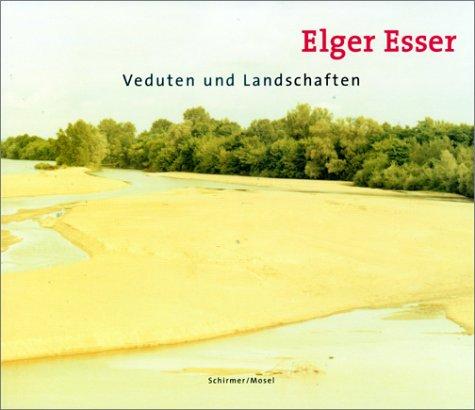
Elger Esser
Elger Esser's Luminous Vision of Timeless Landscapes
Artist Spotlight · The Collection Editorial
There is a particular quality of light in Elger Esser's photographs that stops collectors in their tracks, a silvery, diffuse radiance that seems to belong to no single hour of the day and no single decade of history. That quality has earned Esser a devoted international following and a secure place among the most significant photographers to emerge from Germany in the past thirty years. His large scale works, many of them exceeding a meter in width and presented behind gleaming Diasec or Plexiglas mounts, now hang in major private collections and public institutions across Europe and North America, and demand for his work continues to grow as new generations of collectors discover the contemplative depth he brings to the coastal and riverine landscapes of France, Italy, and the Middle East. Elger Esser was born in Stuttgart in 1967 and spent formative years in Rome and Beirut before returning to Germany to pursue his artistic education.
Elger Esser
75 Saint-Jean de Luz, 2004
That early immersion in Mediterranean light and the layered history of ancient cities left a permanent mark on his sensibility. Where other photographers seek the decisive moment, Esser has always been drawn to the suspended moment, the scene that feels as if it has existed this way for centuries and will continue to do so long after the shutter closes. He enrolled at the Kunstakademie Düsseldorf in the late 1980s and studied under Bernd and Hilla Becher, whose rigorous, conceptually grounded approach to photographic documentation had already transformed the way the world understood the medium. Alongside peers such as Andreas Gursky, Thomas Struth, Candida Höfer, and Thomas Ruff, Esser emerged from what became known as the Düsseldorf School of Photography, perhaps the most influential single formation in the history of the art form.
What distinguished Esser from the outset was his refusal to treat photography as a purely documentary enterprise. While the Bechers and many of their students worked with forensic precision and an interest in industrial or urban subject matter, Esser turned toward the romantic tradition in European landscape painting, finding his visual ancestors in Caspar David Friedrich, J.M.W.
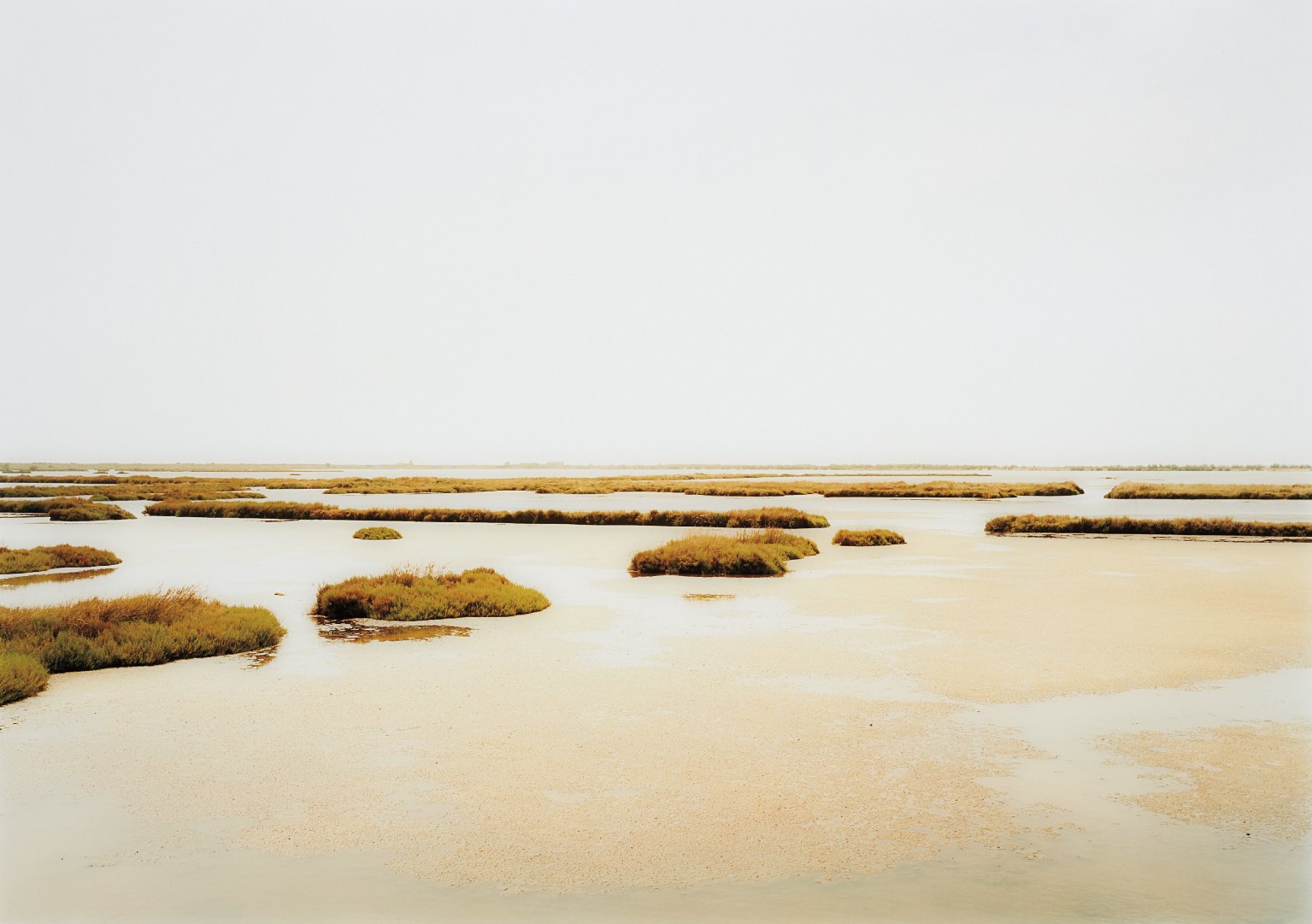
Elger Esser
Foci del Po, Italien
Turner, and the Barbizon painters of nineteenth century France. His technical approach supports this painterly ambition. He frequently works with long exposures that soften water into silk and dissolve atmospheric detail into haze, and he has employed hand tinting techniques that push the final image further still from the literalism of the documentary photograph. The result is a body of work that occupies a genuinely original position, neither painting nor conventional photography but something in productive dialogue with both.
Among his most celebrated works are the images made along the rivers and coastlines of France, a country whose light and landscape have captivated him across multiple extended series. Works such as Seudre, Frankreich and Fraisans, Frankreich exemplify his ability to find within a specific, named location a quality of timelessness that transcends geography. The Fécamp series, including the notable 39 Fécamp II from 2007, with its delicate hand tinting applied directly to a chromogenic print mounted on aluminium, demonstrates how Esser can use material process to amplify mood, giving a Norman harbor scene the feeling of a found nineteenth century photograph touched by an artist's hand. His images of the Po Delta, gathered under titles such as Foci del Po, Italien, carry the same hushed grandeur, the wide sky pressing down on still water in a way that recalls the great Dutch landscape tradition.
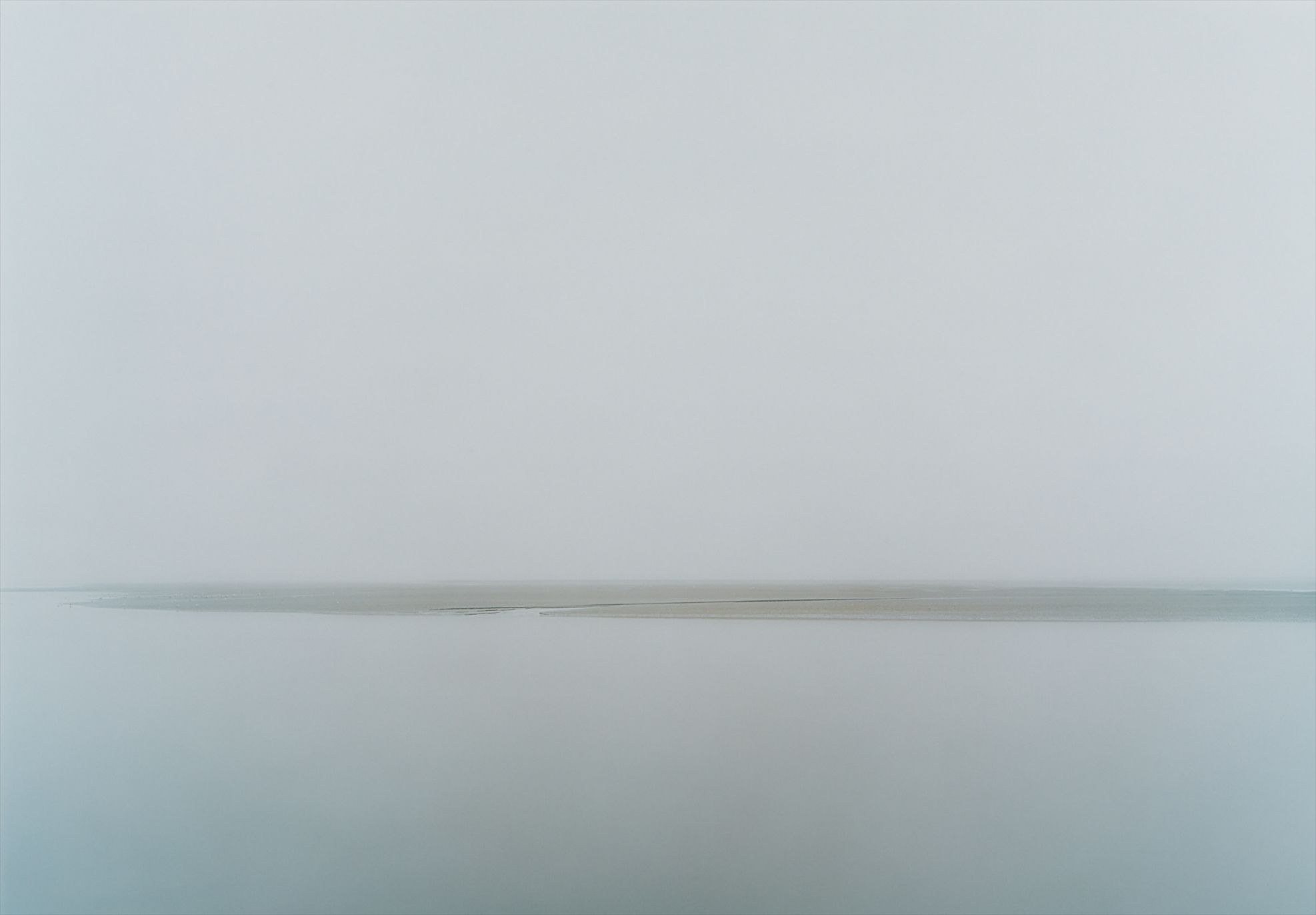
Elger Esser
Cap Hornu, Frankreich
Further afield, his work in Lebanon, including En Naqoura I, Libanon, brings his meditative eye to a coastline saturated with historical significance, producing images that are both deeply personal and quietly monumental. From a collecting perspective, Esser's work rewards close attention to the question of process and presentation. His chromogenic prints, many of them face mounted to Plexiglas or Diasec mounted for a seamless, luminous surface, are produced in carefully controlled editions, and condition is paramount given the sensitivity of the materials. The larger format works command the strongest prices and the greatest institutional interest, but smaller editions and works on aluminium offer collectors a more accessible entry point into a significant body of work.
Auction results at houses including Phillips and Sotheby's have confirmed sustained collector appetite, particularly for the French landscape series and the works made along the Lebanese coast. For those building a collection around photography with genuine art historical weight, Esser represents a category of investment that is both aesthetically and intellectually rewarding. To understand Esser's position within contemporary art history, it helps to hold him alongside his Düsseldorf contemporaries while also acknowledging the degree to which he has charted his own course. Where Gursky embraced scale and the spectacle of global capitalism, and where Struth brought a sociological intensity to his museum and family photographs, Esser has pursued a more inward path, one aligned with the European tradition of landscape as a vehicle for reflection on memory, time, and the relationship between the human and the natural world.
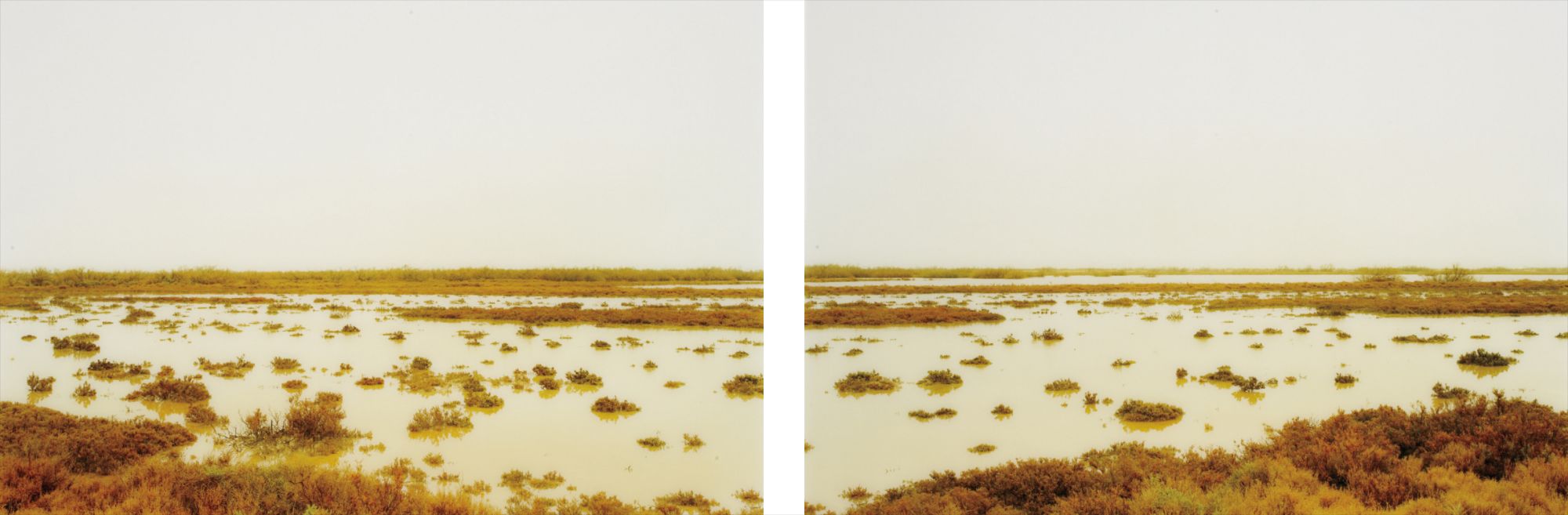
Elger Esser
Les Paradis I and II
Collectors who admire the work of Wolfgang Tillmans, Hiroshi Sugimoto, or Luigi Ghirri will find in Esser a kindred sensibility, though his visual language is entirely his own. He belongs to a lineage of artists for whom slowness is not a limitation but a form of intelligence. Elger Esser matters today because the questions his work asks have only grown more urgent. In an era of instantaneous image making and relentless visual noise, his photographs insist on duration, on the value of looking at a single scene long enough to feel its full weight.
The towns and waterways he photographs are not spectacular in any conventional sense. They are quiet, peripheral, and in many cases fading. That is precisely the point. His achievement is to have made those overlooked places luminous, to have found in them a beauty that is serious rather than decorative, and to have done so with a technical and conceptual rigour that places him firmly among the artists who have genuinely expanded what photography can be and do.
Explore books about Elger Esser