Douglas Gordon
Douglas Gordon: Time, Memory, and Infinite Wonder
Artist Spotlight · The Collection Editorial
“I am interested in the moment when a mirror becomes a window.”
Douglas Gordon
There is a particular kind of silence that falls over a gallery when Douglas Gordon's work is present. At a major retrospective survey staged at the Centre Pompidou in Paris, visitors stood transfixed before slowed, spectral images, their sense of duration quietly dismantled. Gordon, now in his late fifties and operating at the height of his powers, continues to attract the attention of institutions and collectors alike, his practice as urgent and philosophically rich today as it was when he first electrified the international art world in the mid 1990s. Few artists of his generation have so consistently found new ways to ask old questions about identity, mortality, and the strange machinery of human perception.
Douglas Gordon
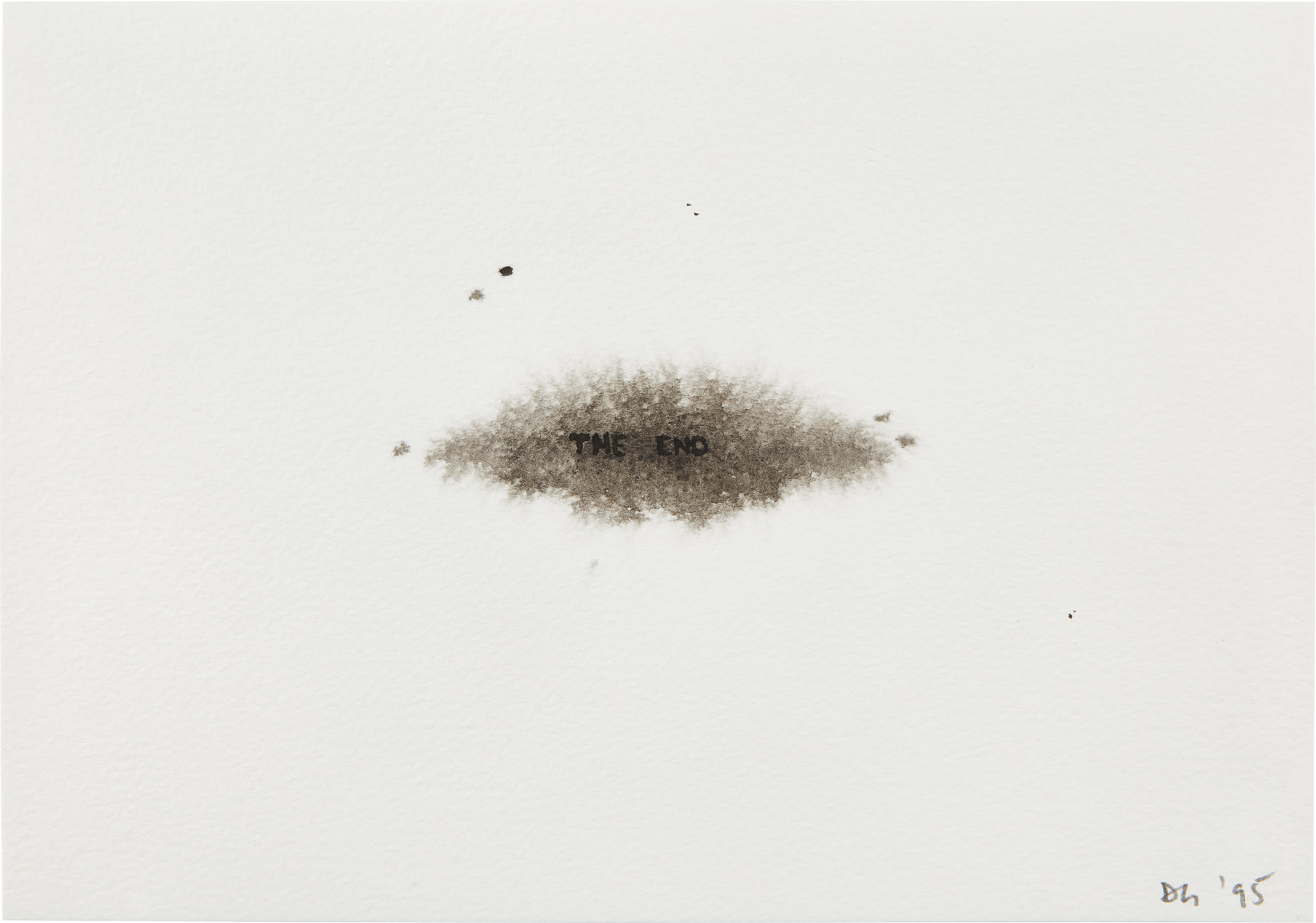
The End (Incredible Shrinking Man)
Gordon was born in Glasgow in 1966, coming of age in a city that was in the midst of a remarkable cultural renaissance. He studied at the Glasgow School of Art before moving to London to attend the Slade School of Fine Art, where he completed his postgraduate studies in the early 1990s. Glasgow in that era was producing an extraordinary cluster of artists, and Gordon was among the most restless and intellectually ambitious of them, drawn not to painting or sculpture in any conventional sense but to the vast archive of moving image culture that surrounded him. Cinema, television, and the collective memory embedded in popular visual media became the raw material of an entirely original artistic vision.
His breakthrough came swiftly and spectacularly. In 1993 Gordon began exhibiting work that announced a wholly formed sensibility, and by 1996 he had won the Turner Prize, one of the youngest recipients in the award's history at that time. That same recognition positioned him alongside a generation of British artists who were reshaping what contemporary art could be. But where many of his peers leaned into provocation for its own sake, Gordon pursued something more durational and philosophical.
Douglas Gordon
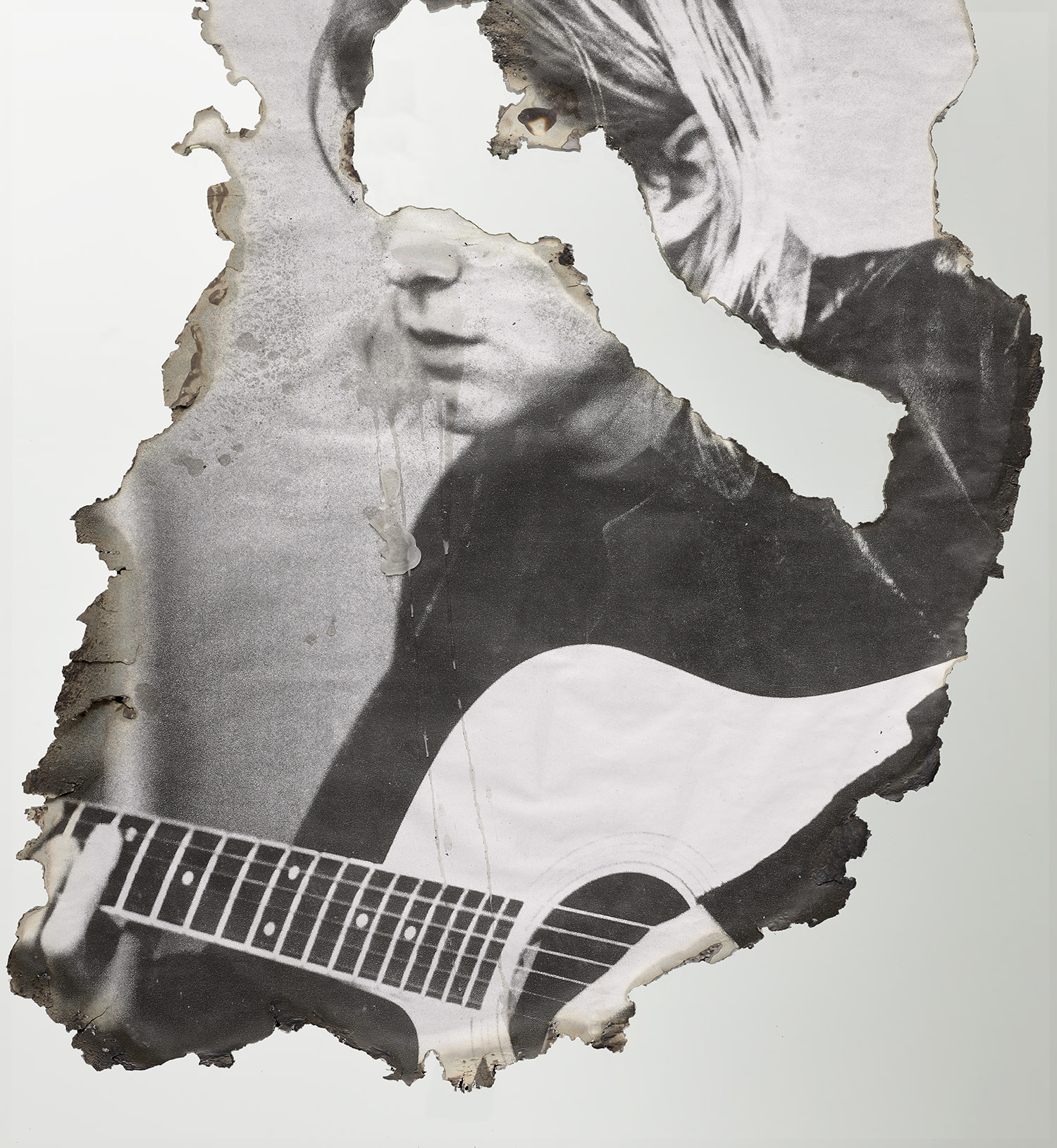
Self Portrait of You + Me (Kurt Cobain)
He was interested not in shock but in the slow revelation that comes when familiar things are made utterly strange. The work that defined his reputation and entered the permanent vocabulary of contemporary art is "24 Hour Psycho," first shown in 1993. By stretching Alfred Hitchcock's 1960 thriller "Psycho" to a running time of exactly twenty four hours through radical deceleration, Gordon transformed a known cultural object into something dreamlike and entirely new. Viewers who entered the space could never see the whole film.
They arrived in the middle of a gesture, a shadow, a half completed scream, and left before resolution came. The piece is a meditation on memory and expectation, on how deeply cinema has colonised our inner lives. It remains one of the most discussed and written about video installations of the twentieth century, held in the permanent collection of the Museum of Modern Art in New York among other major institutions. Beyond that landmark, Gordon's practice expanded across an impressive range of media and registers.
Douglas Gordon
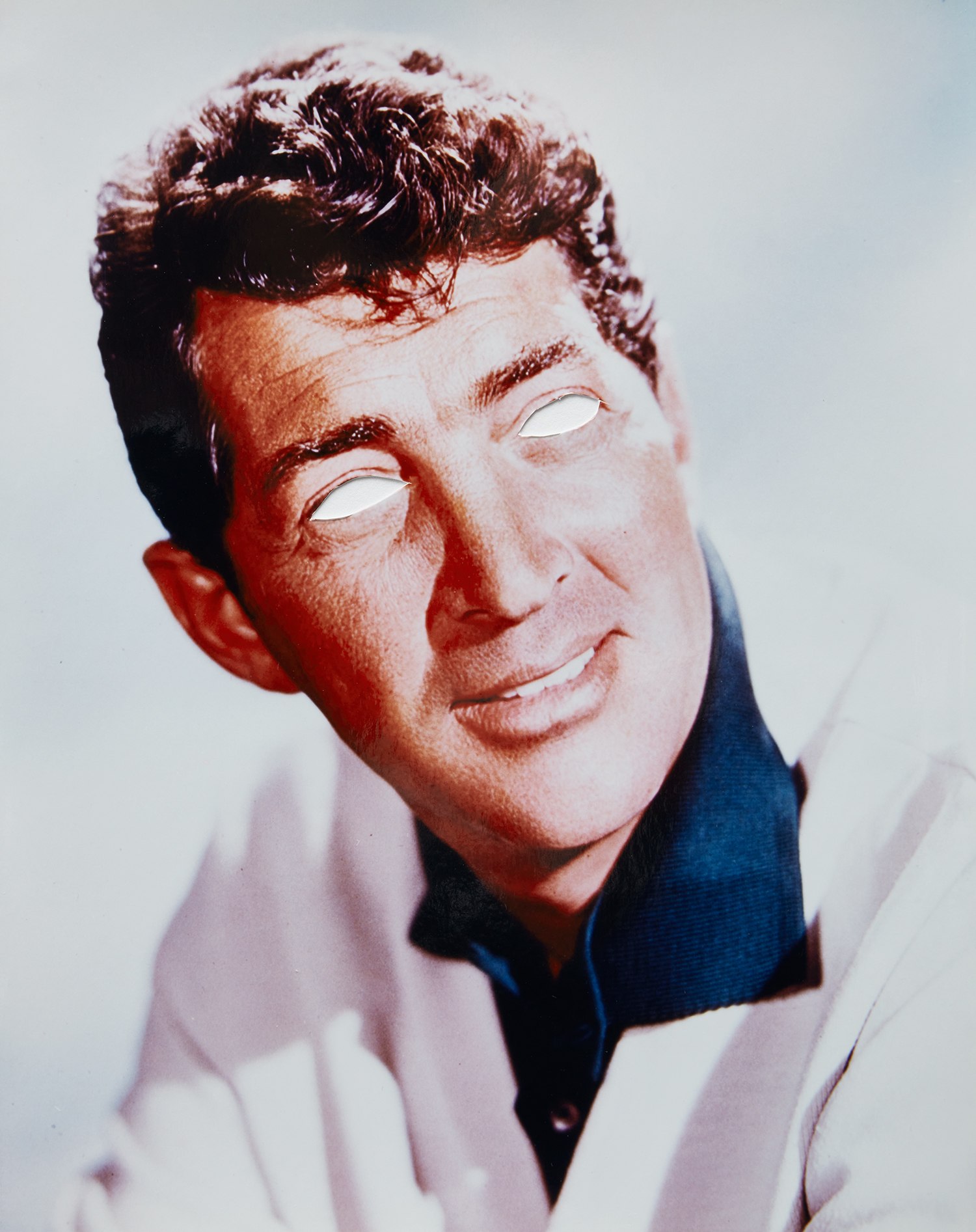
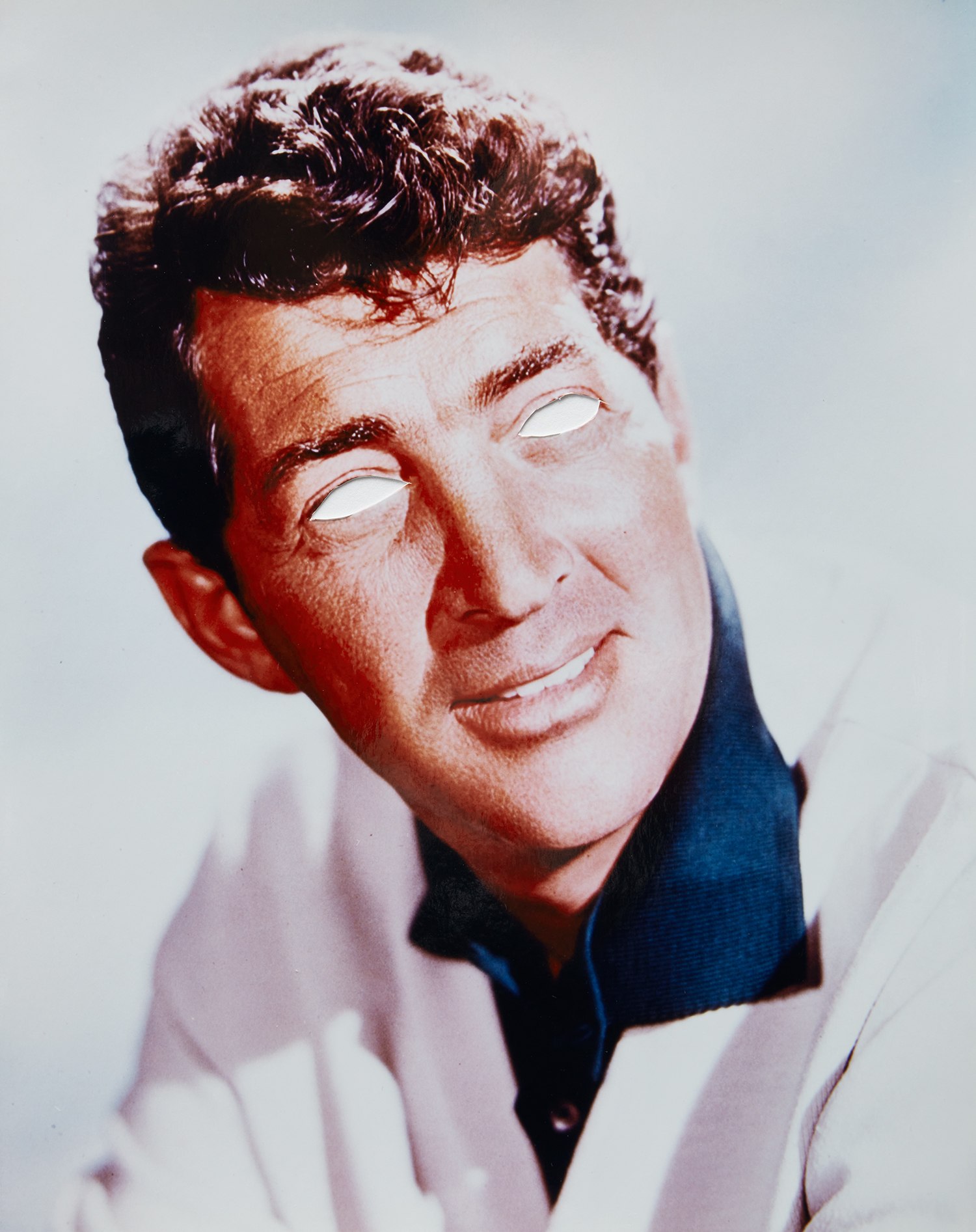
White Blind Dean from Hollywood Blind Star series
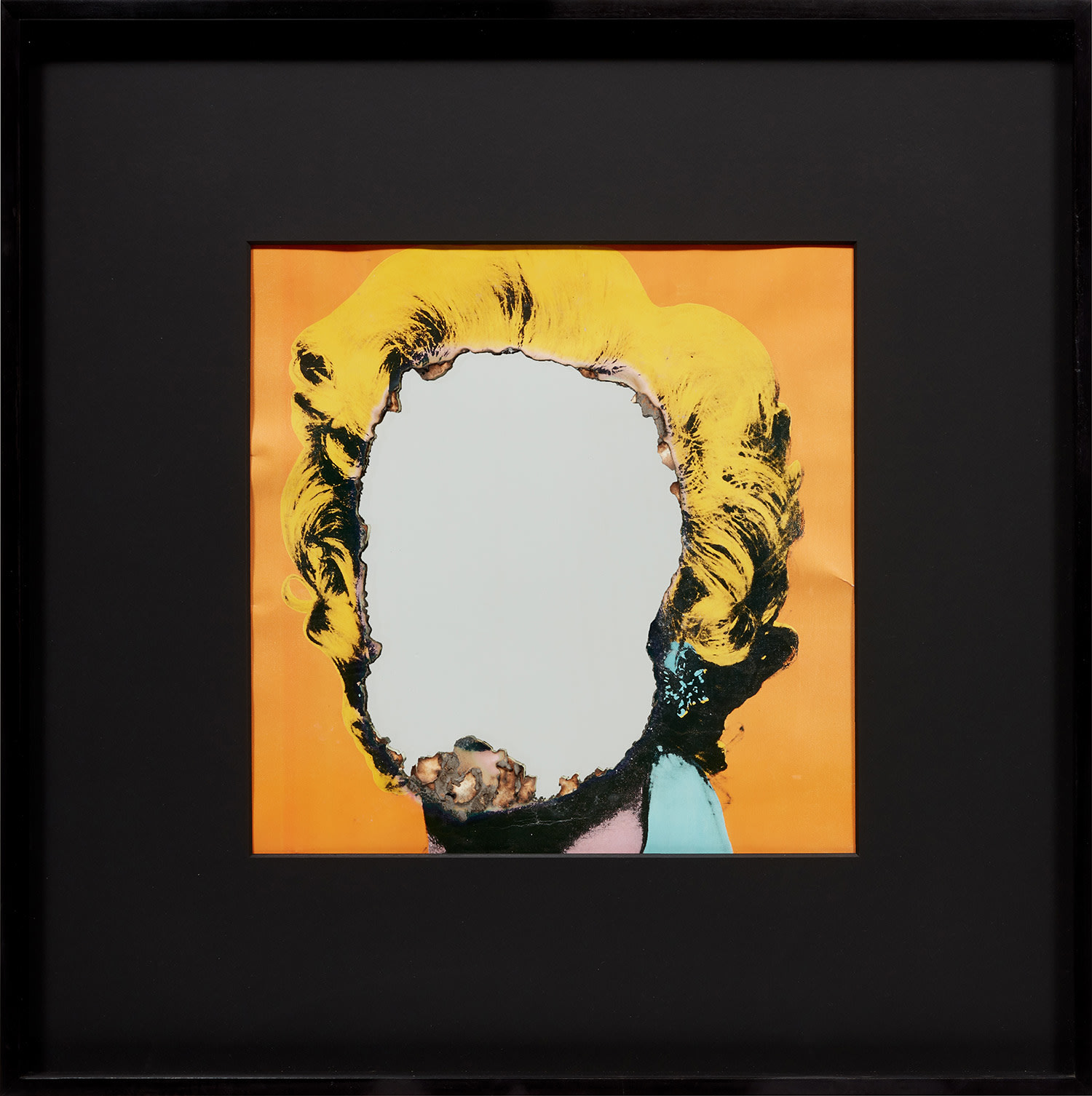
His "Self Portrait of You and Me" series, developed across the 2000s, is among the most quietly devastating bodies of work in his output. In these pieces Gordon takes photographs of iconic figures from the pantheon of twentieth century celebrity and myth, figures such as Bob Dylan, Kurt Cobain, Jimi Hendrix, Marilyn Monroe, Joan Crawford, and Humphrey Bogart, and burns them onto mirrored surfaces so that the viewer's own reflection merges with the image of the star. The effect is intimate, unsettling, and unexpectedly tender. The works ask what it means to be a fan, to project longing onto a famous face, to find something of yourself in someone who lived and died at a mythic distance from ordinary life.
The use of fire as a material process adds a charge of ritual and irreversibility that photographic reproduction alone could never achieve. Works from the "Self Portrait of You and Me" series are among the most sought after objects in Gordon's market, and with good reason. They are visually arresting, conceptually layered, and available in formats that translate well to private homes and institutional spaces alike. Gordon has also worked extensively with chromogenic prints, cut paper works, and ink drawings, among them pieces from the "Hollywood Blind Star" series in which cut out photographs create fragmented, ghostly presences.
Douglas Gordon
Self-Portrait of You + Me (Marylin), 2007
"Hand with Spot M" from 2001, a chromogenic print mounted to Plexiglas, is a fine example of his ability to find the monumental in the intimate, the philosophical in the plainly physical. Collectors who have followed his work over decades understand that each body of work, however different its surface, returns to the same deep questions: who are we, what do we remember, and what does it mean to see? In terms of market context, Gordon sits in a distinguished position among artists associated with the Glasgow scene and the broader generation of Conceptual artists who came to prominence in the 1990s. His work invites comparison with that of Rodney Graham, whose similarly cinematic and archival practice shares Gordon's interest in looping, duration, and the philosophy of perception.
The video and photography based work of artists such as Christian Marclay and Tacita Dean also offer useful points of reference, particularly in their shared concern with time as both medium and subject. Auction appearances of Gordon's editions and unique works at houses including Sotheby's and Christie's have confirmed sustained collector interest across Europe and North America, with institutions in Germany, France, the United Kingdom, and the United States all holding significant holdings of his work. What makes Gordon so enduringly compelling to collectors and curators is the combination of accessibility and depth his work offers. One does not need a specialist's vocabulary to feel the uncanny pull of a burnt celebrity portrait or the vertiginous patience required by his slowed films.
But the more one knows, the richer and more rewarding the experience becomes. His work rewards return visits, careful looking, and the kind of sustained attention that the best art always demands. In a cultural moment defined by speed and instant legibility, Gordon's insistence on slowness and ambiguity feels less like a stylistic position and more like an act of genuine resistance. The legacy Gordon has built over three decades is one of rigorous curiosity and formal daring.
He has represented Britain at the Venice Biennale, been honoured with the Turner Prize, and earned his place in the permanent collections of the world's most important museums. Yet his work never feels institutional or inert. It retains the quality of a question being asked in real time, directly to the person standing before it. For collectors drawn to work that operates at the intersection of art history, cinema, philosophy, and emotional experience, there is simply no one quite like him.
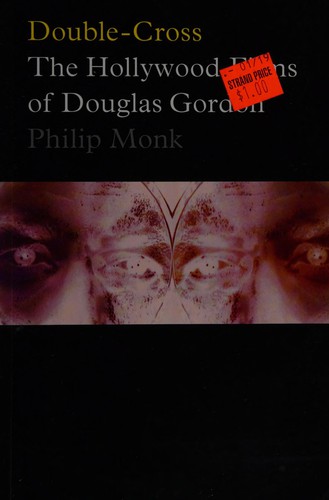
Explore books about Douglas Gordon