Dominique Fung
Dominique Fung Dreams Beautifully Into Being
Artist Spotlight · The Collection Editorial
Something is shifting in how the art world talks about beauty, desire, and who gets to inhabit a canvas as a fully realized subject. Dominique Fung, the Canadian painter based in New York, sits at the center of that conversation with a practice that feels both urgently contemporary and richly steeped in the textures of history. Her recent years have brought gallery shows, institutional attention, and a growing collector base that recognizes in her paintings a rare quality: the ability to be visually sumptuous and intellectually exacting at the same time. When her works appear in viewing rooms and at art fairs, they stop people in their tracks, not merely because they are beautiful, but because they seem to know something you have not yet been told.
Dominique Fung
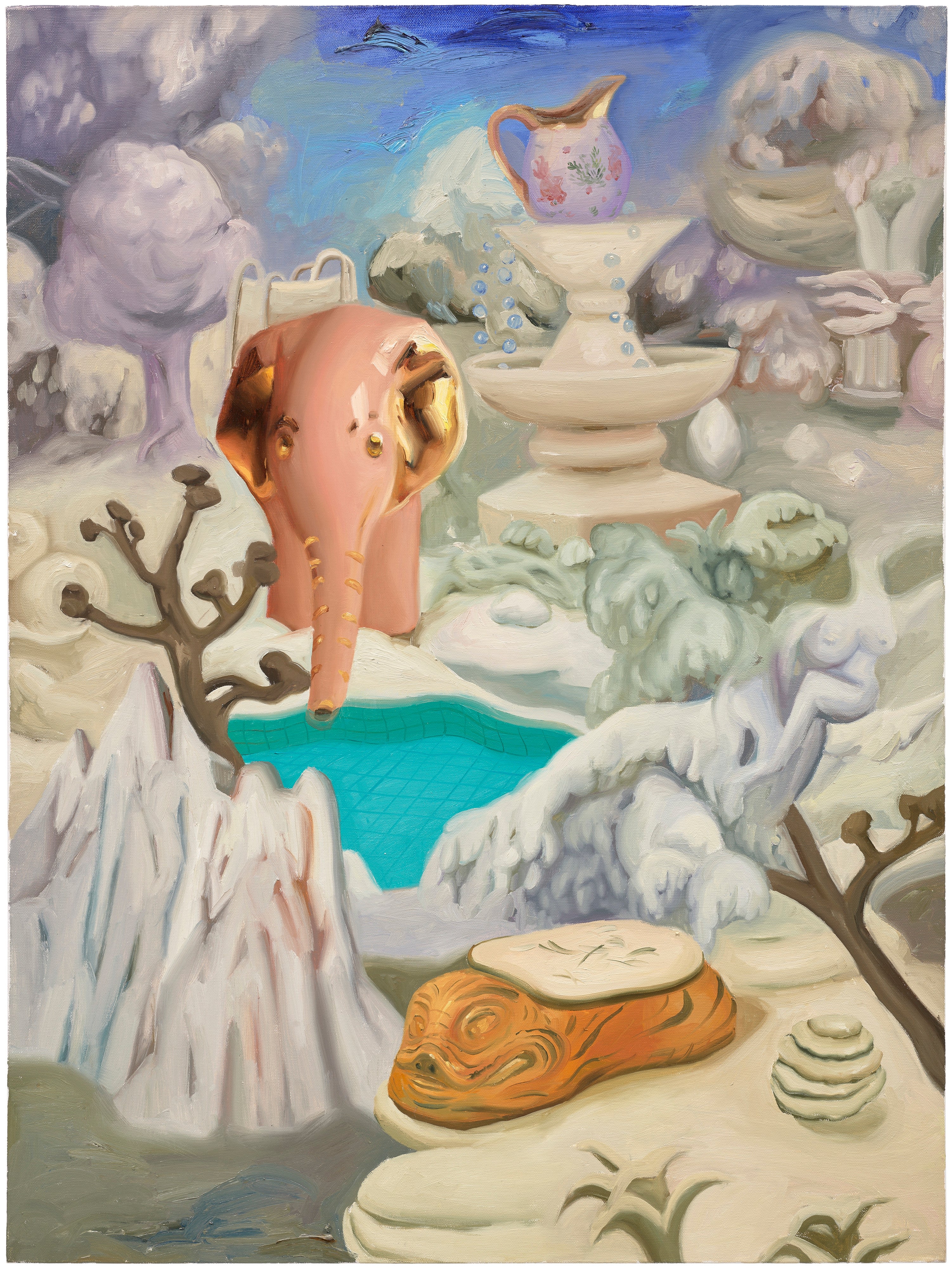
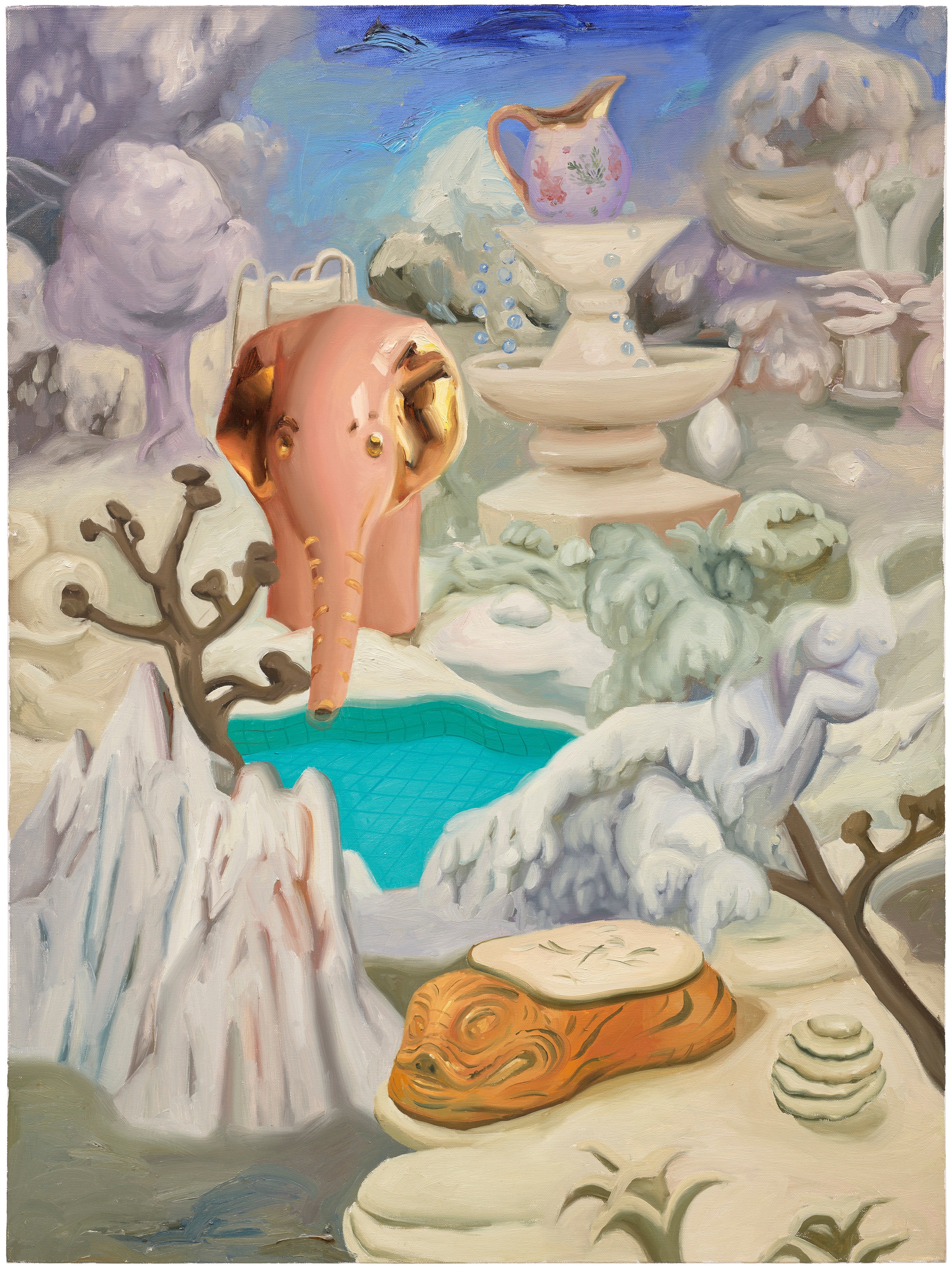
Snow at the Sanctuary, 2018
Fung was born in 1987 and grew up in Canada, coming of age as part of a generation of artists who inherited both the possibilities of postcolonial critique and the visual languages of Western art history. Her background as a Chinese Canadian woman gave her a particular vantage point on how Asian femininity has been constructed, distorted, and consumed by Western culture over centuries. That vantage point did not translate into rage on the canvas, however. Instead, Fung developed a more subversive and perhaps more lasting approach: she stepped inside the very traditions that had misrepresented her heritage and began rearranging the furniture from within.
The result is work that feels at once familiar and subtly, thrillingly wrong in the best possible sense. Fung studied fine arts and brought to her practice a deep engagement with art historical sources, including chinoiserie, Orientalist painting, and the decorative traditions of East Asian ceramics and lacquerwork. These references are not deployed as pastiche or as ironic quotation marks around received ideas. They are genuinely absorbed and then transformed, the way a skilled writer transforms the books they have read into something that could only have come from their own hand.
Dominique Fung
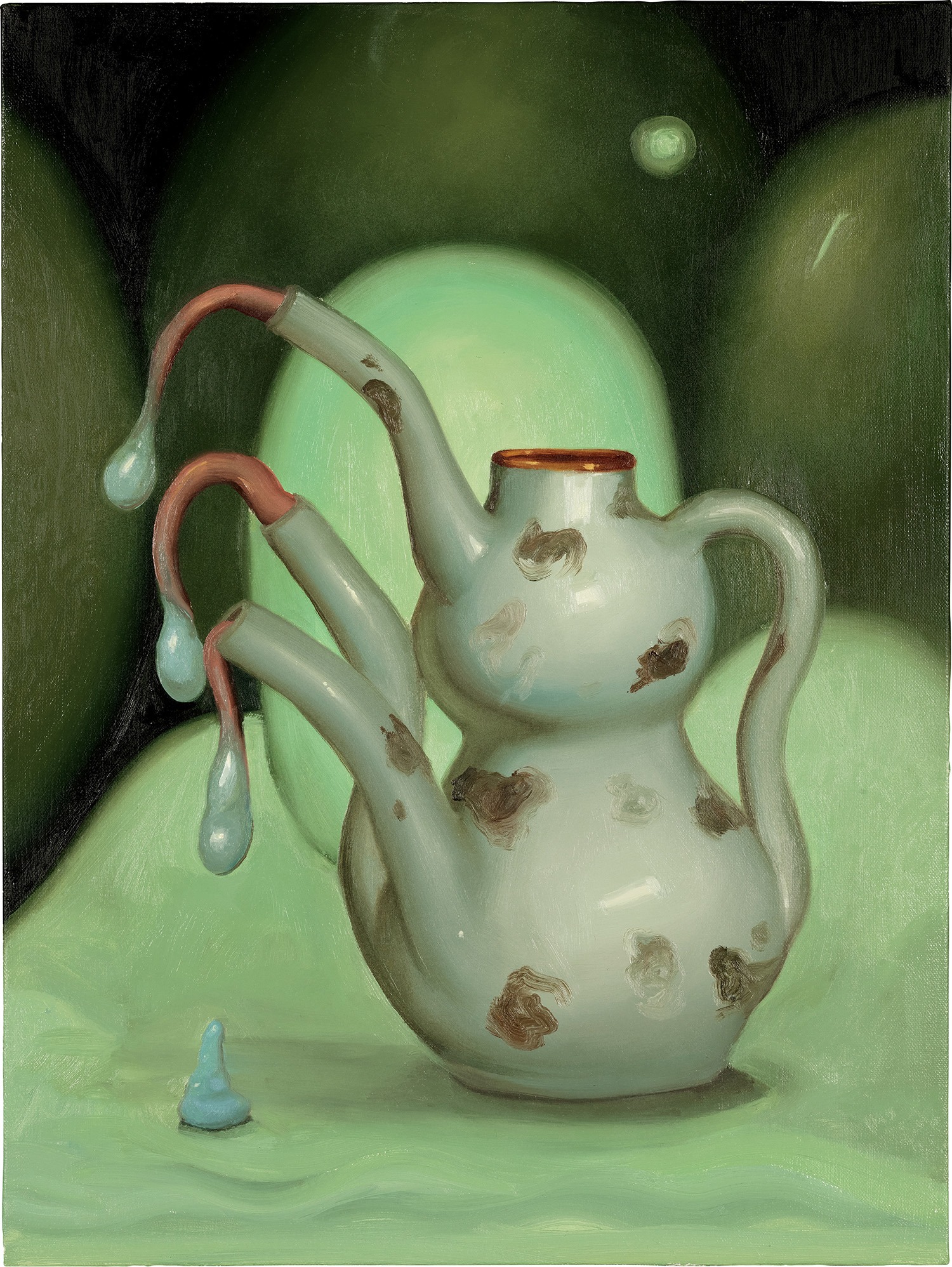
Greenly, 2019
Her compositions draw on the visual logic of Dutch still life, the jeweled interiors of Symbolist painting, and the floating world of ukiyo e, synthesizing these traditions into environments that follow their own internal dreamlike rules. The figures in her paintings, almost always Asian women, inhabit these spaces as sovereigns rather than objects, as agents of desire rather than its passive recipients. Among the works that have defined her reputation, "Snow at the Sanctuary" from 2018 stands as a particularly affecting example. Rendered in oil on canvas, the painting conjures a world that exists just outside legible geography, where stillness carries the weight of ritual and the female figure navigates her surroundings with quiet authority.
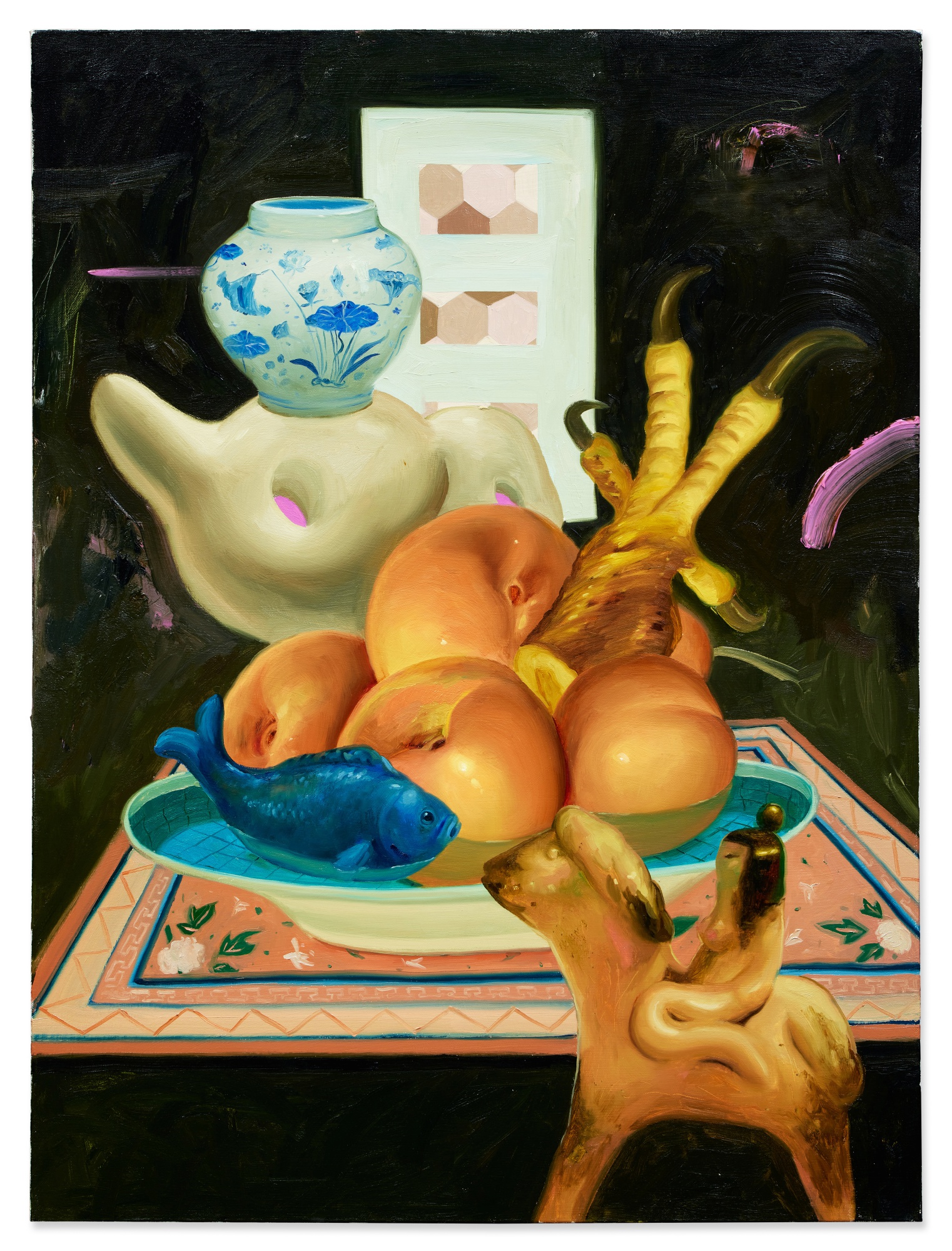
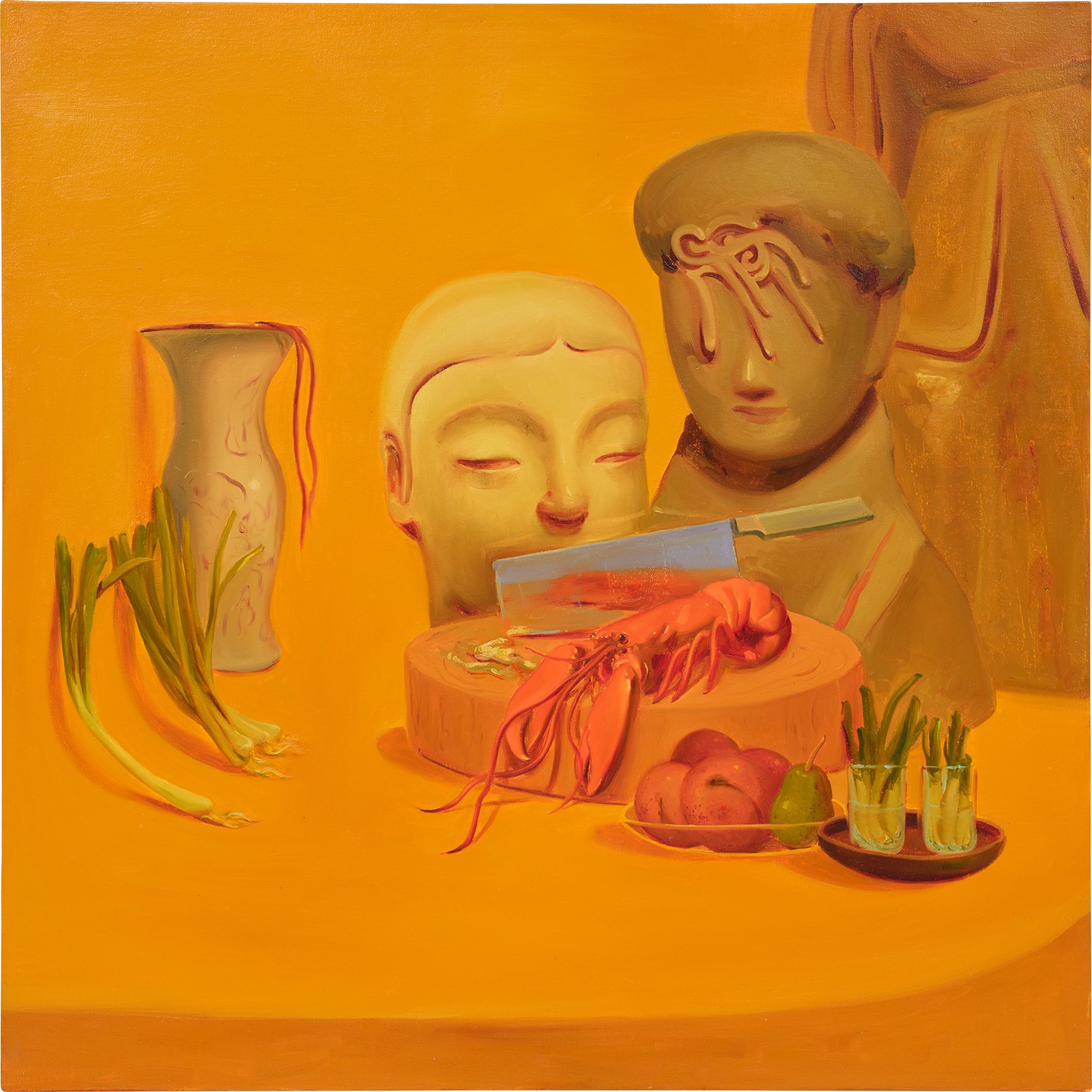
That same year, "Something Fishy Marinated in Phoenix Claw and Peaches" announced Fung's gift for titles that are as layered and playful as her images: the work weaves together culinary heritage, mythological symbolism, and a knowing wit that keeps the paintings from tipping into solemnity. "Greenly" from 2019 and "i spy" from that same year extended her visual vocabulary into increasingly confident compositional territory, while "Still Life with Lobster" from 2020 demonstrated her ability to bend the conventions of one of Western painting's most established genres toward her own expressive ends. Across these works, food, flora, water, and the human figure coexist in a logic that feels close to dream and close to memory simultaneously. From a collecting perspective, Fung represents precisely the kind of opportunity that experienced collectors have learned to recognize: an artist with a fully formed and distinctive visual language, a deepening critical profile, and a body of work that rewards sustained looking.
Dominique Fung
Something Fishy Marinated in Phoenix Claw and Peaches, 2018
Her paintings are not decorative in a passive sense; they are objects that change the rooms they inhabit and the conversations that happen around them. Collectors who have followed her career note that her canvases hold their quality across different scales and contexts, whether encountered in a domestic interior or an institutional setting. The works occupy a compelling position in the contemporary landscape, sitting alongside artists such as Flora Yukhnovich, Cecily Brown, and Christina Quarles, while maintaining a sensibility that is unmistakably Fung's own. As interest in artists who engage critically with art historical canon continues to grow both institutionally and at market, her work stands to only deepen in resonance and significance.
The broader art historical context for Fung's practice is rich and illuminating. She belongs to a generation of painters, many of them women and artists of color, who have undertaken a sustained renegotiation of what the painted surface can say about subjectivity, identity, and pleasure. Artists such as Cecily Brown brought female desire back to the center of painterly ambition; artists such as Kara Walker demonstrated that the most loaded visual traditions could be turned into instruments of critique and reclamation. Fung's contribution to this lineage is the particular texture of her dreamscapes, the specific weight she gives to Asian cultural materials, and her insistence that beauty and critical intelligence are not opposing forces but natural collaborators.
Dominique Fung
Still Life with Lobster, 2020
Her work asks what happens when the woman who was once only the object of the Orientalist gaze becomes its author, and it answers that question with paintings of astonishing lushness and precision. What Dominique Fung has built in a relatively short time is a practice that already feels indispensable to any honest account of painting in the twenty first century. She has demonstrated that the genres and traditions that once served to flatten and exoticize Asian feminine experience can be reclaimed, reinhabited, and made to sing a completely different song. The collectors, curators, and institutions gathering around her work are responding not only to its visual pleasure, which is considerable, but to its moral and intellectual seriousness.
Her paintings invite you into a world that is made entirely on the artist's own terms, a place where desire, heritage, and imagination coexist without apology. That is a rare thing in any era, and it is the quality that will keep her work speaking clearly and powerfully for a very long time to come.