David Ostrowski
David Ostrowski Makes Nothing Look Everything
Artist Spotlight · The Collection Editorial
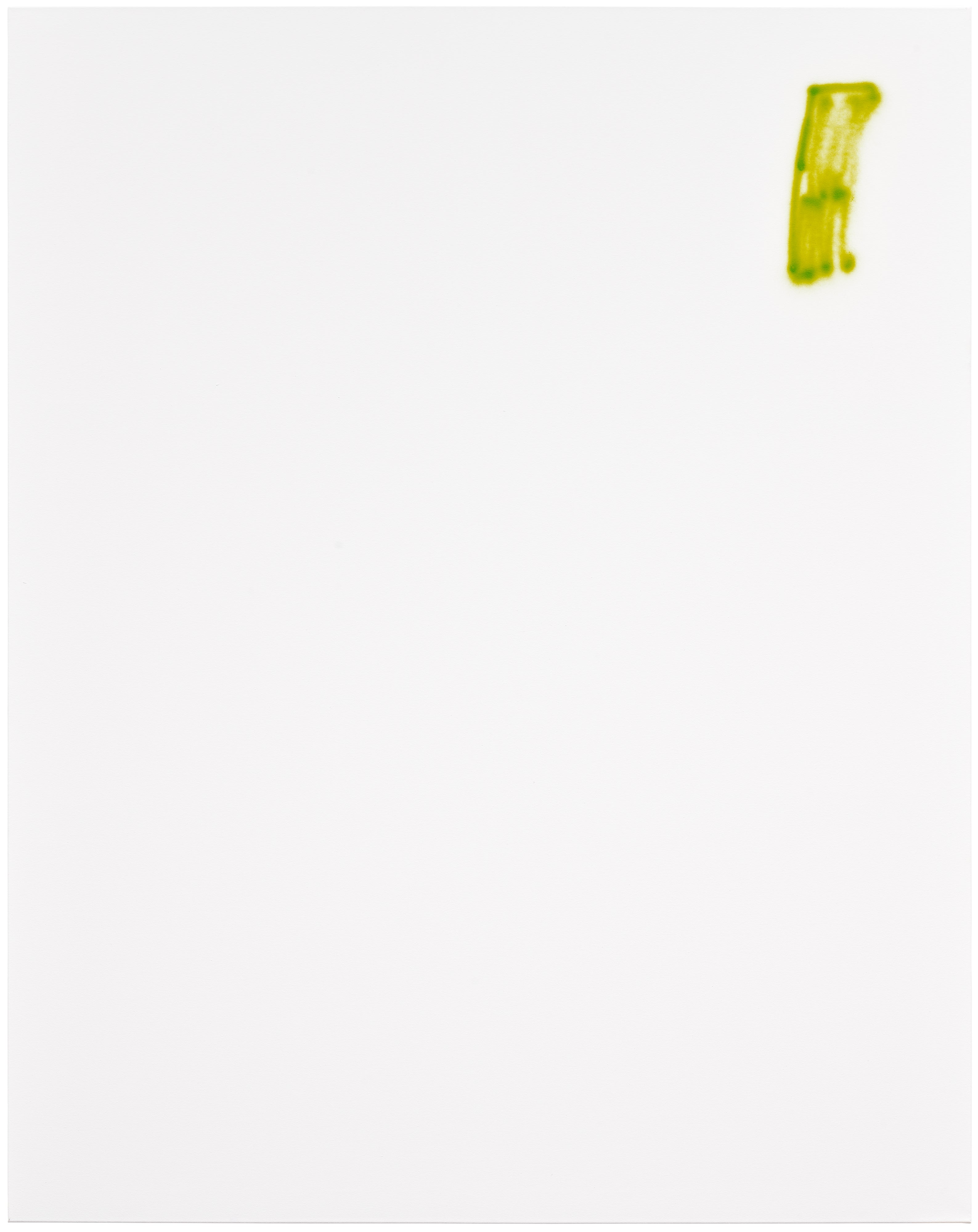
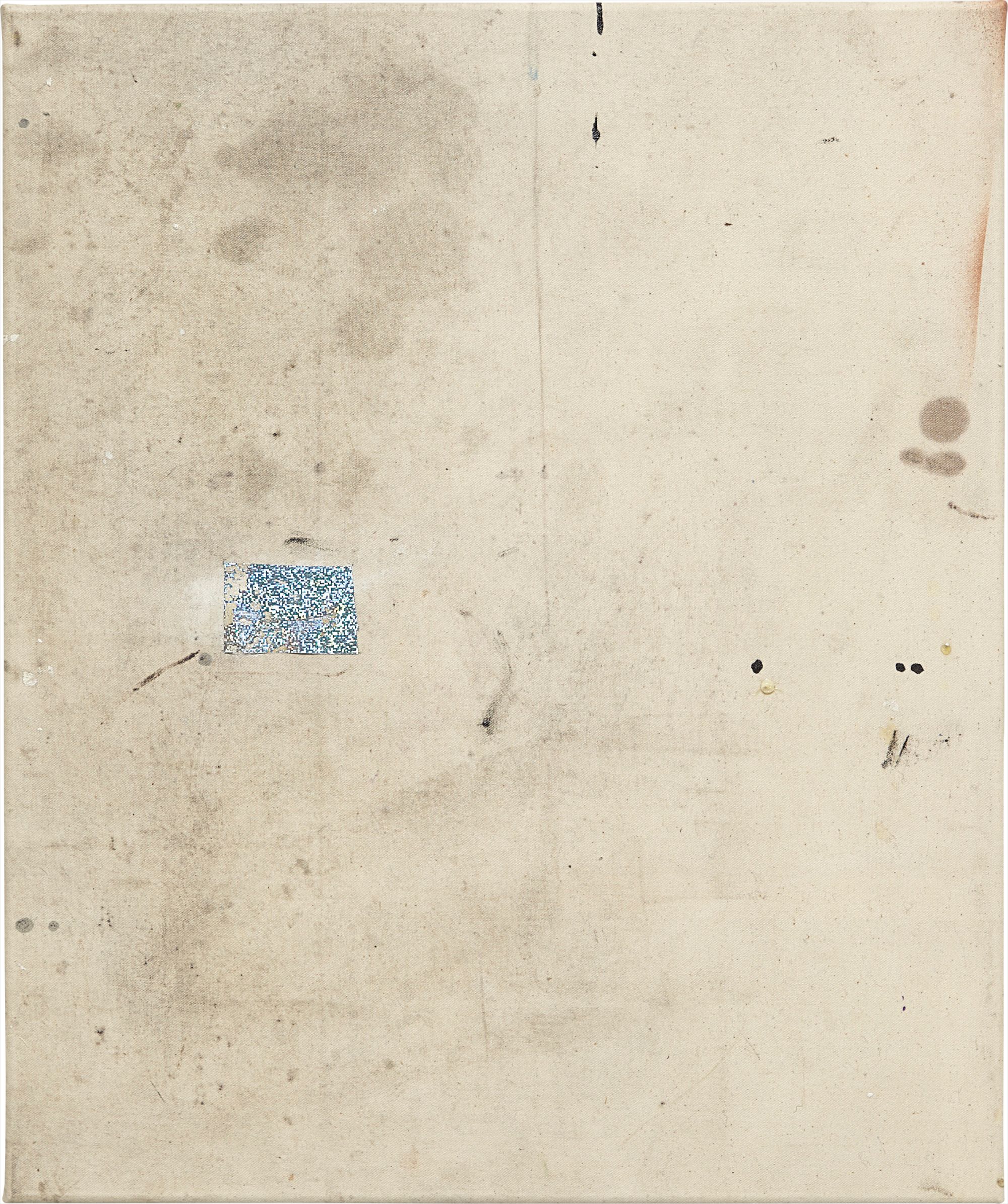
When David Ostrowski's paintings arrived at Sprüth Magers in a recent showing, visitors reportedly spent long minutes standing in front of canvases that contained, by most conventional measures, almost nothing. A single lacquer drip. A smear of acrylic that stops short of the edge. Raw linen that breathes and asserts itself as a presence rather than a void.
David Ostrowski
F (Dann lieber nein), 2012, 2012
That experience, of being held in place by apparent emptiness, is precisely the phenomenon that has made Ostrowski one of the most genuinely compelling painters working in Europe today, and one of the few artists of his generation to make the question of whether a painting is finished feel not like an academic puzzle but like an urgent, living concern. Ostrowski was born in Cologne in 1981, and the city's particular cultural atmosphere shaped him in ways that remain visible in his practice. Cologne has long occupied a unique position in the German art world, home to one of the most significant commercial gallery scenes in Europe and historically connected to the irreverent, concept aware energies that ran through German art from the postwar period onward. Growing up in that environment meant absorbing a certain skepticism toward received ideas about quality, completion, and effort.
Ostrowski studied at the Kunsthochschule für Medien Köln and later at the Kunstakademie Düsseldorf, where he encountered the legacy of painters and conceptualists who had spent decades interrogating exactly the assumptions he would eventually make his own subject matter. The Düsseldorf academy carries enormous weight in any account of postwar German art. Its alumni include figures who redefined photography, performance, and painting on an international scale, and studying there places a young artist in direct conversation with that inheritance. For Ostrowski, the academy seems to have functioned less as a place of stylistic formation and more as a permission structure, a context in which taking painting seriously while simultaneously refusing its conventions was not a contradiction but a coherent and even necessary position.
David Ostrowski
F (A thing is a thing in a whole which it’s not), 2014
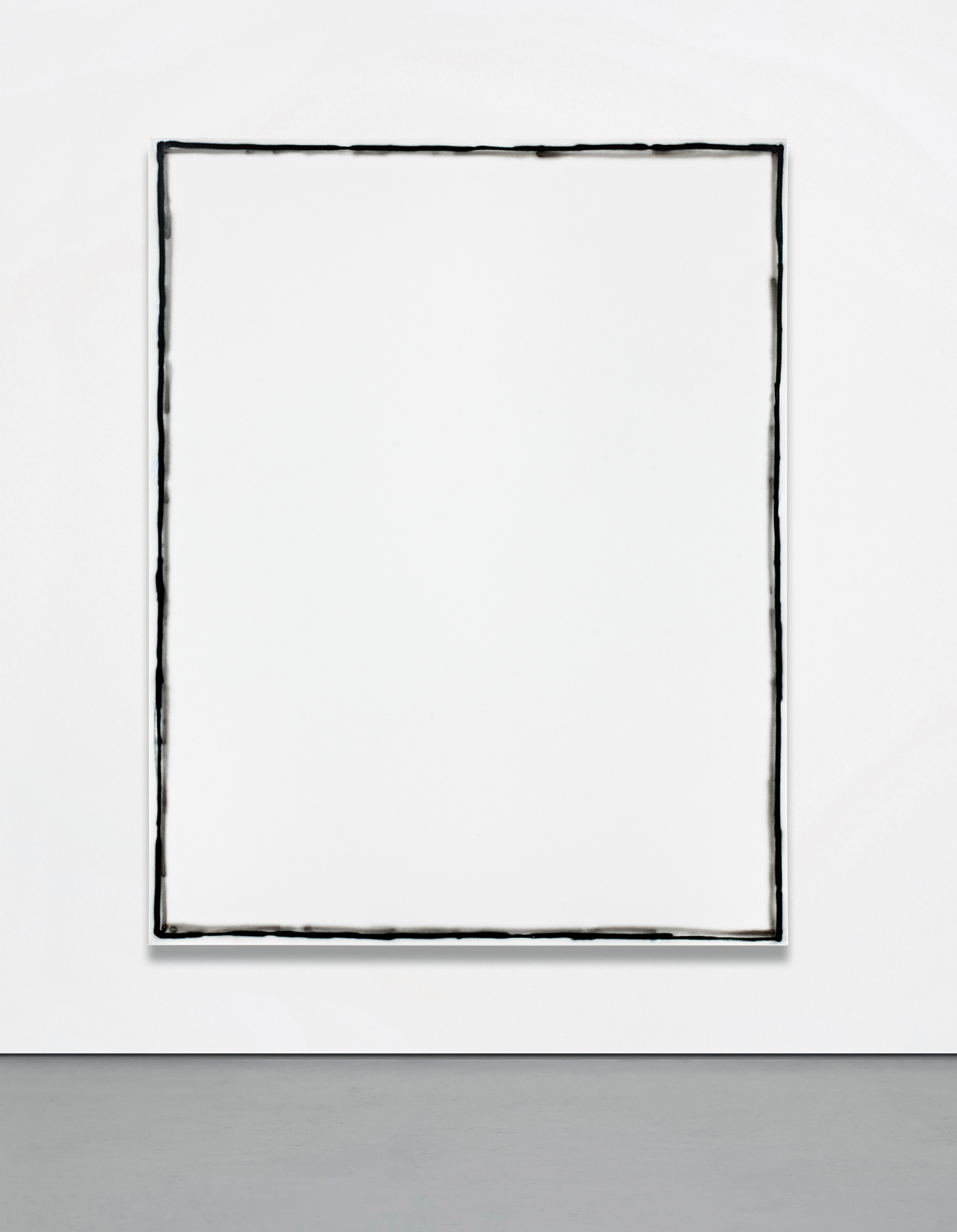
He emerged from his training with a practice already oriented toward reduction, toward the gesture that declines to explain itself, toward the canvas that offers just enough and withholds the rest. The works that brought Ostrowski to wider international attention, the ongoing series titled simply F, are among the most recognizable bodies of work in contemporary painting precisely because of how little they ask the viewer to process in a conventional sense. Titles like F (Musik ist Scheisse), dated 2014, and F (Dann lieber nein), from 2012, deploy a deadpan German wit that operates as a kind of counterweight to the paintings' visual restraint. The titles are funny, deflating, and occasionally self deprecating in ways that keep the work from tipping into the solemnity that often accompanies serious reduction in painting.
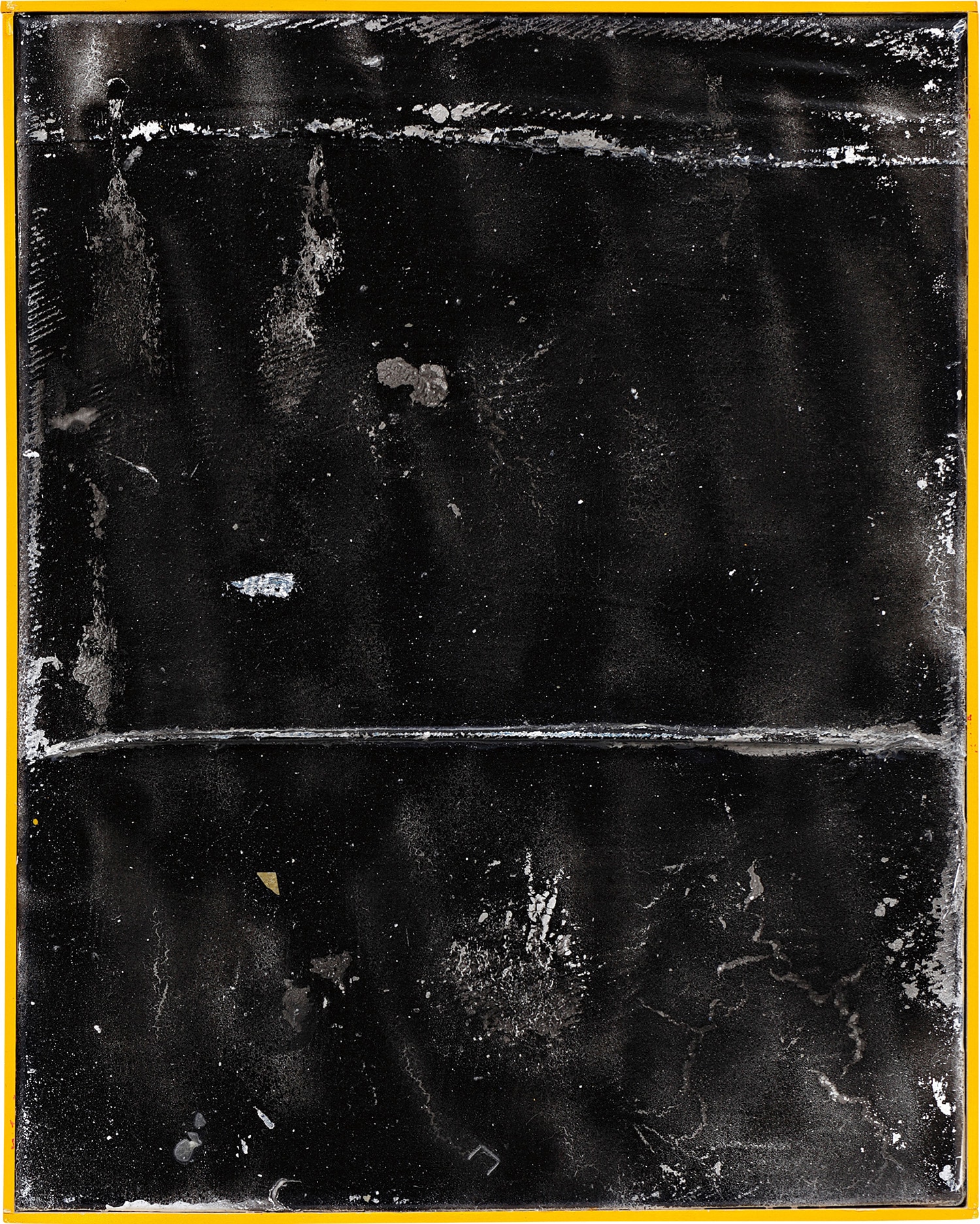
The materials Ostrowski uses, acrylic, lacquer, oil, paper, and occasionally newspaper or cardboard, are layered or withheld with a precision that disguises itself as carelessness. That disguise is part of the intelligence of the work. What distinguishes Ostrowski from painters who simply embrace the aesthetic of incompletion is the evident care that underlies each decision about what to leave out. A painting like F (Capture the Dream), from 2013, which incorporates oil, lacquer, paper, cardboard, and cotton on canvas and is presented in an artist made frame, demonstrates how much is actually happening within the spare visual field he constructs.
David Ostrowski
F
The artist's frame is itself a statement, a signal that the work's boundaries and context are as much a part of the meaning as any mark within them. Ostrowski understands that reduction is a form of pressure, that the less you put on a canvas, the more responsibility each element carries, and he meets that pressure with a consistency that is the opposite of laziness, even when the surface looks like it might have taken twenty minutes. In the art market, Ostrowski's work has found a passionate audience among collectors who are drawn to painting that rewards close looking over time rather than offering immediate visual impact. His works have appeared at auction through Phillips and other houses, and prices have reflected a genuine appreciation for the quality and rigor of the practice rather than speculative momentum alone.
Collectors who live with his paintings often describe a relationship that changes over months and years, the sparse mark revealing more as the eye becomes accustomed to looking at less. For a collector building a serious contemporary painting collection, an Ostrowski is the kind of work that tends to make other works around it better, sharpening the eye and raising the stakes of looking. In terms of artistic context, Ostrowski belongs to a lineage that includes the reductive gesturalism of Raoul De Keyser, the procedural openness of Charline von Heyl, and the genre questioning impulses of artists like Sergej Jensen and Michael Krebber. He shares with these painters an interest in what painting can refuse to do while still functioning as painting, and a conviction that the history of the medium is something to be engaged with and gently undermined rather than either reverently preserved or aggressively discarded.
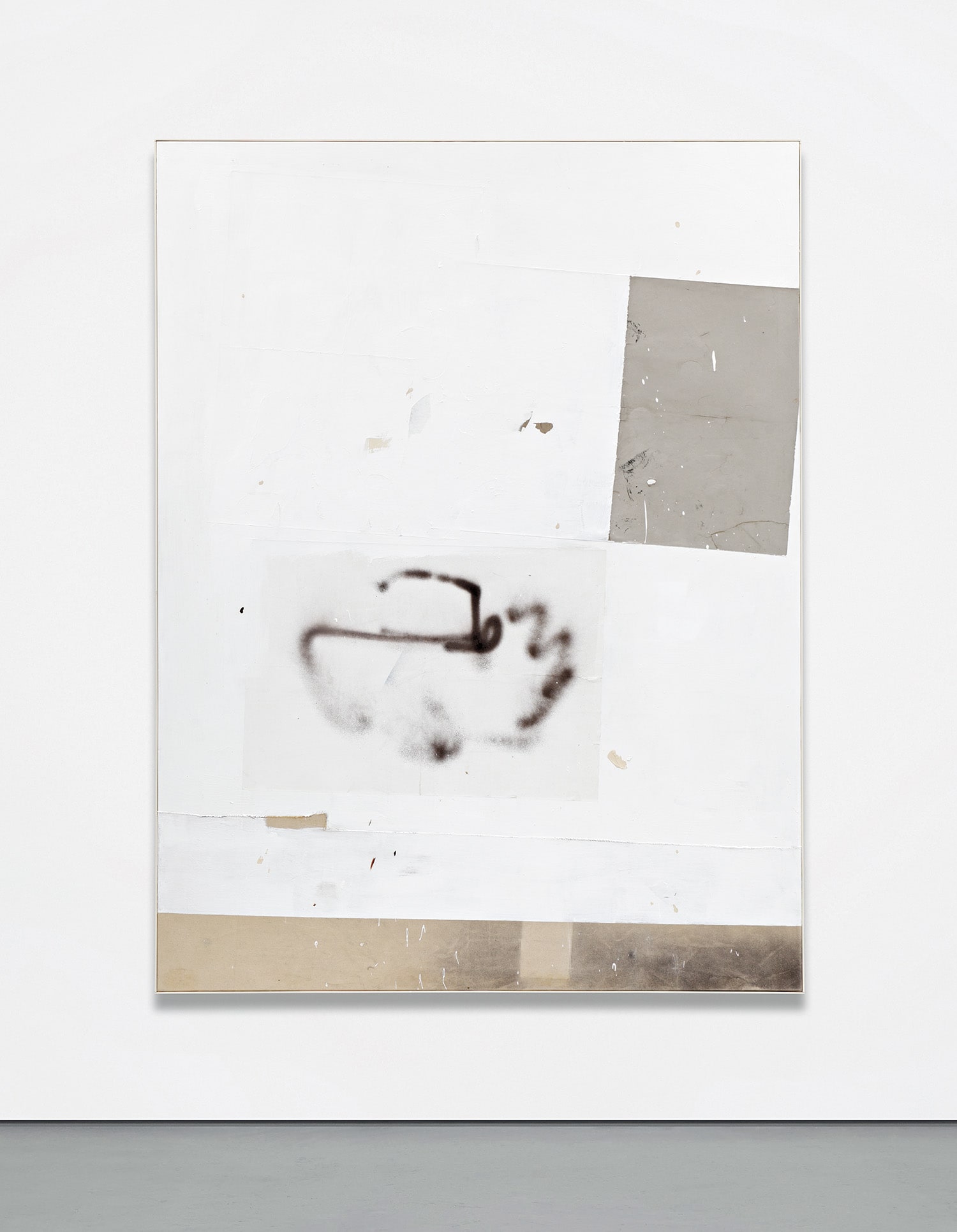
David Ostrowski
F (Capture the dream), 2013
His work also resonates with the American tradition of process painting, though filtered through a distinctly European, and specifically German, sensibility that brings irony and self awareness to bear on every decision. Ostrowski matters today because he is asking a question that never really goes away, which is the question of what is enough. In a cultural moment defined by excess, by the accumulation of images and information and stimulation, his paintings insist on the dignity of the withheld, the power of the mark that stops before it arrives, the canvas that trusts the viewer to complete what the painter chose not to. That is not a modest ambition dressed up as humility.
It is a demanding position, held with discipline and wit, and it produces paintings that are, in the best sense of the word, alive.