Dado's Visionary World Burns Beautifully Bright
Artist Spotlight · The Collection Editorial
In the winter of 1997, the Centre Georges Pompidou in Paris mounted a retrospective that stopped visitors in their tracks. Dado's canvases, dense with writhing figures and luminous, unsettling color, lined the walls with the authority of an artist who had spent four decades building a universe entirely his own. For those who encountered his work that season, the experience was transformative: here was a painter of ferocious originality, one whose name deserved to stand alongside the great visionary figurative artists of the twentieth century. Today, as collectors and institutions revisit the postwar European avant garde with renewed seriousness, Dado's reputation continues to grow, and the works that circulate in the private market carry with them an almost electric sense of discovery.
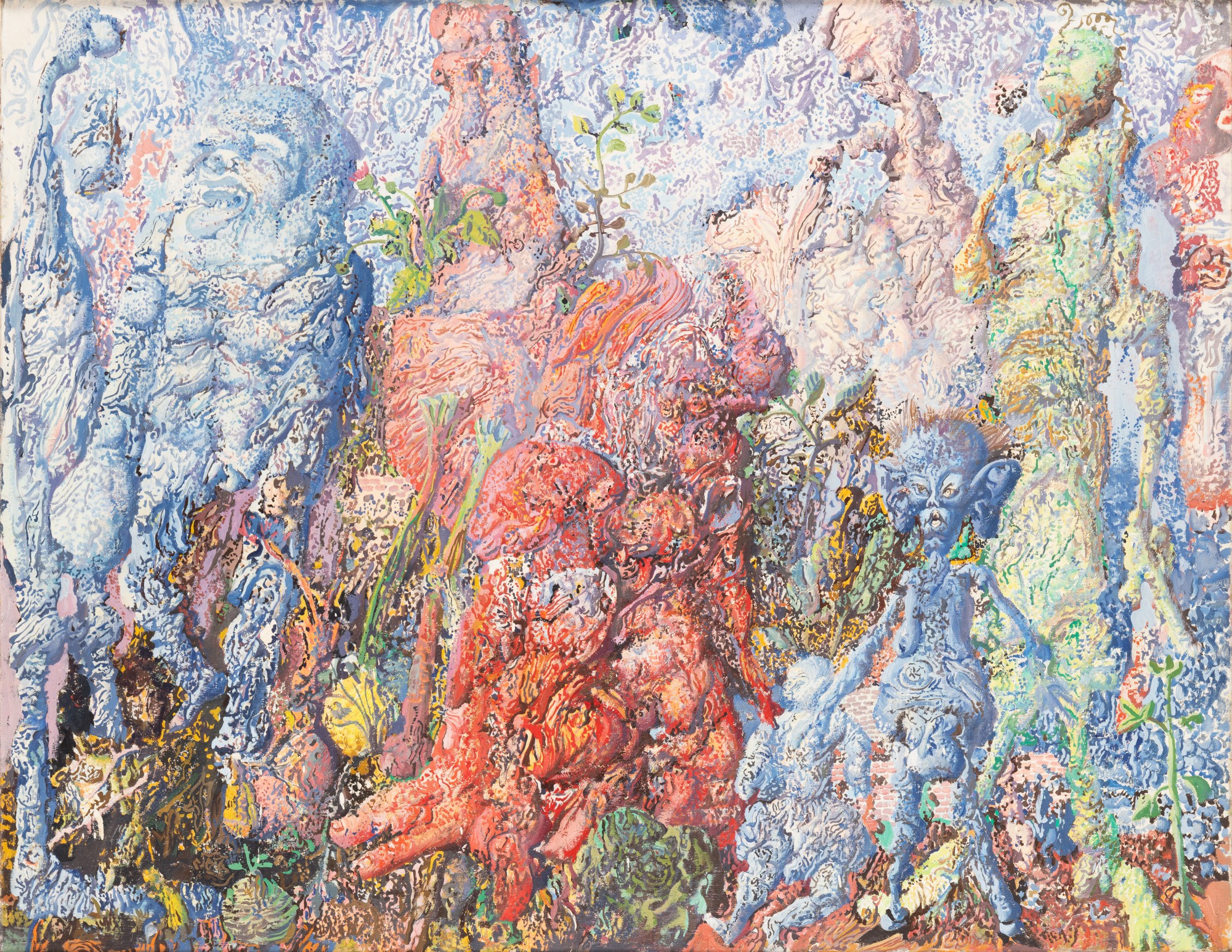
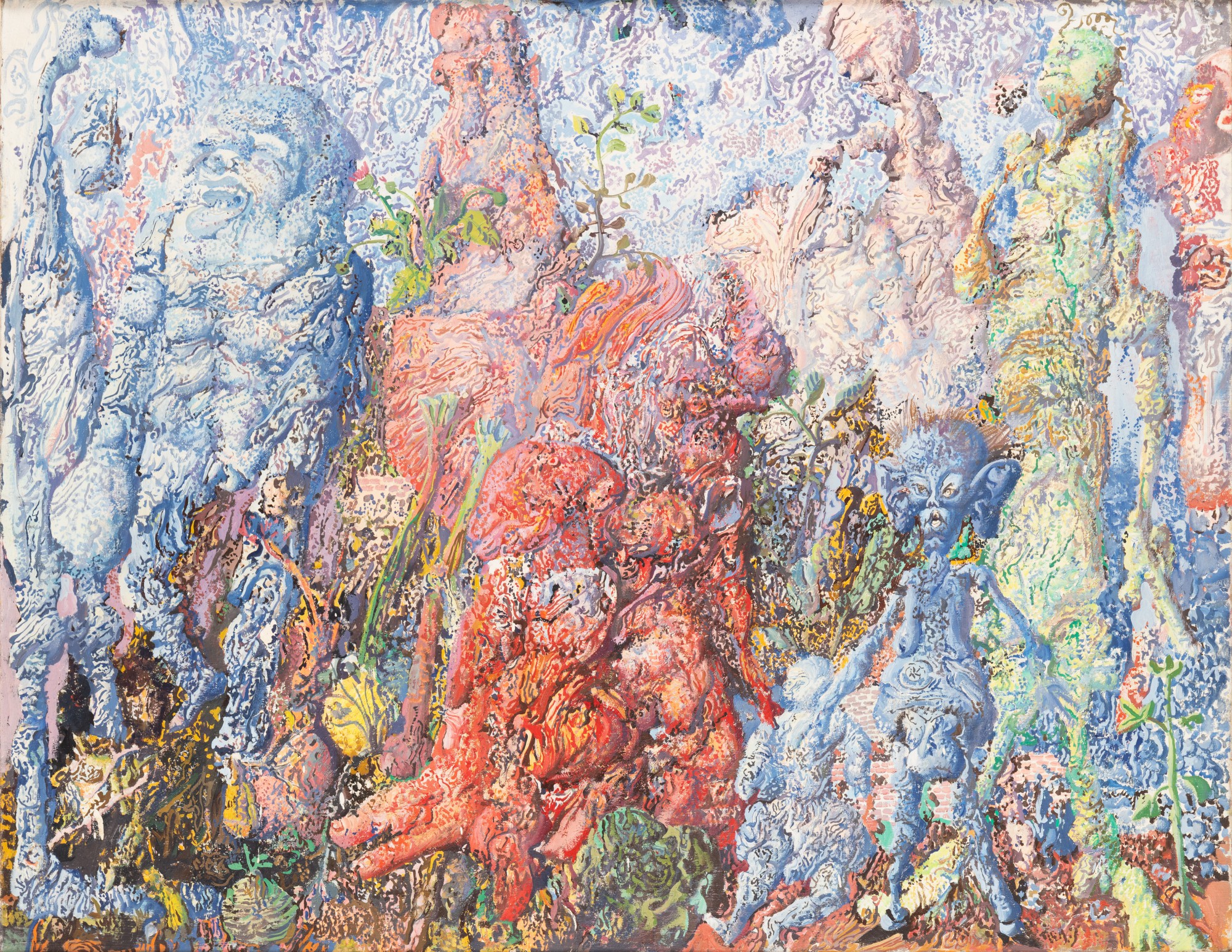
Dado
Untitled, 1965
Miodrag Đurić was born in 1933 in Cetinje, then the historic royal capital of Montenegro, a city of austere mountain beauty and deep cultural pride. His early years unfolded in a region shaped by conflict and resilience, and the Second World War left its mark on his imagination in ways that would surface persistently throughout his career. He studied at the School of Applied Arts in Belgrade during the late 1940s, where he absorbed both classical technique and the ideological tensions of postwar Yugoslavia. It was a formation that gave him rigorous draftsmanship and a restless desire to push far beyond it.
In 1956, Dado moved to Paris, and the city became the true crucible of his art. His arrival coincided with one of the most fertile periods in postwar French painting, and he quickly came to the attention of Jean Dubuffet, the influential gallerist and artist whose championing of Art Brut and raw, unmediated expression aligned powerfully with what Dado was already doing instinctively. Dubuffet introduced him to Daniel Cordier, the gallerist who gave Dado his first major Parisian exhibition in 1958. That show was a revelation, announcing an artist of uncommon psychological depth and visual daring.
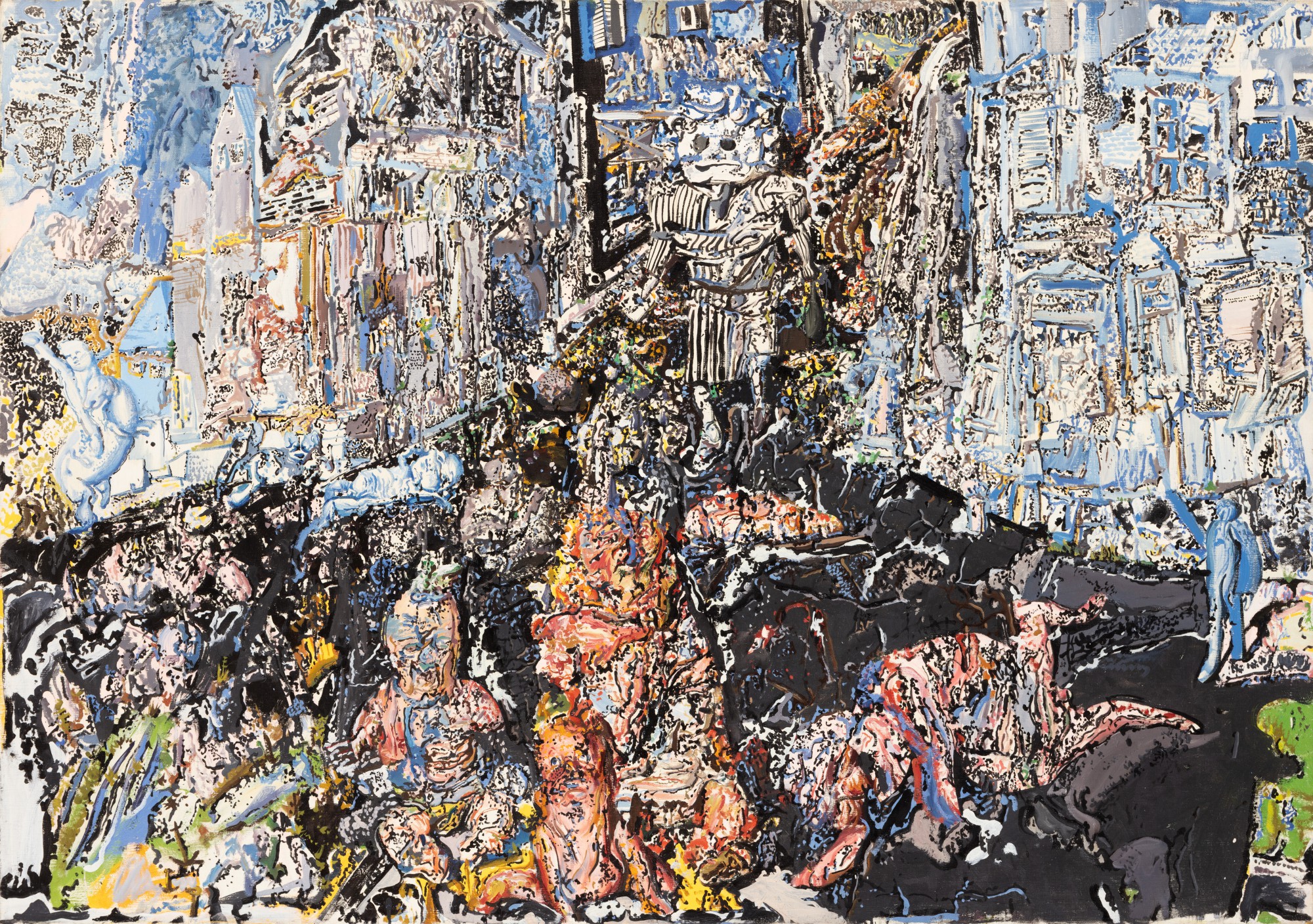
Dado
Les petits chats, 1961
The paintings he showed were unlike almost anything else in the room: they seemed to emerge from a place between folklore and nightmare, between medieval illumination and something altogether more visceral and modern. Dado settled eventually at the Hérouval estate in Normandy, a property that became both home and obsessive creative environment. He transformed the grounds and interiors into an extended artwork, painting walls, ceilings, and found objects with the same restless energy that filled his canvases. This integration of life and practice is essential to understanding Dado: for him, painting was not a professional activity with studio hours and market considerations, but a total way of inhabiting the world.
His works on canvas from the late 1950s through the 1970s represent the core of his achievement, and they reward sustained attention with layers of invention that few artists of any era can match. Among the works that best reveal his range and power, the 1961 canvas known as "Job" occupies a special place. Rooted in the Biblical figure of suffering and endurance, it channels Dado's lifelong preoccupation with the human body under duress, rendered not with pity but with a kind of fierce, almost devotional intensity. "Les petits chats" from the same year moves in a different emotional register, its subject matter deceptively tender but the execution charged with the artist's characteristic density of mark and form.
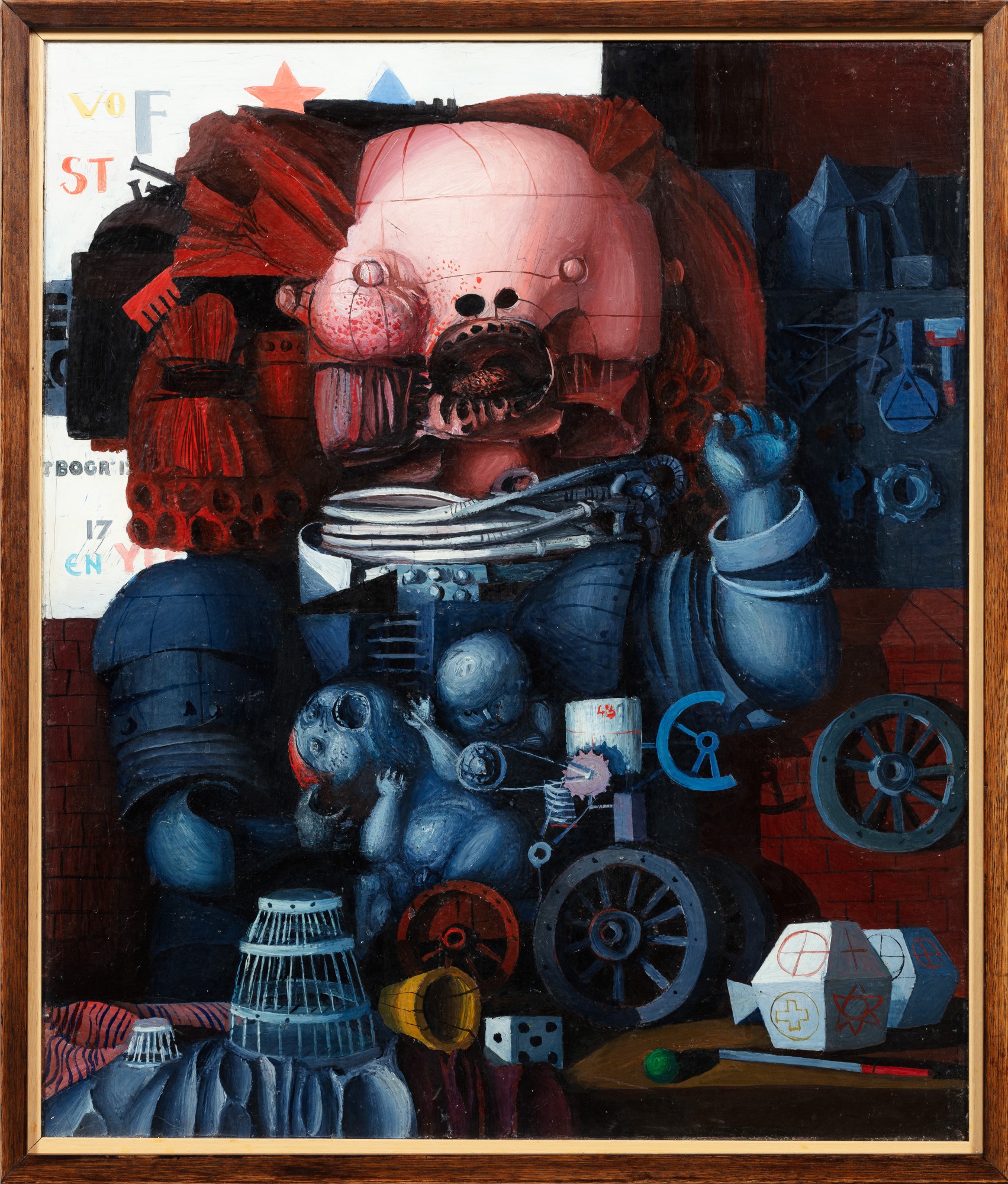
Dado
Sainte Vierge, 1955
"Triptyque de Saint Hubert" from 1973 demonstrates his command of larger compositional ambition, drawing on Christian iconography while transforming it into something entirely personal and strange. The works on paper, such as "Parmi des Corbaux" from 1970, combining ink, gouache and watercolor, show the intimacy and immediacy of his draftsmanship, which was as accomplished and expressive as his painting. For collectors, Dado presents a genuinely compelling proposition. His place in the canon of postwar European figurative art is secure, and yet his market has historically been more discreet than his critical reputation would suggest, meaning that works of real significance can still be acquired by those who know where to look.
The oil paintings from the late 1950s through the early 1970s represent the period of his most concentrated achievement, and condition, provenance, and the specific character of the figurative invention all bear on value. Works that passed through the Cordier gallery or that appeared in major European survey exhibitions carry particular weight. The works on paper offer a compelling alternative entry point, combining accessibility with the full force of his graphic imagination. In art historical terms, Dado occupies a fascinating position at the intersection of several traditions.
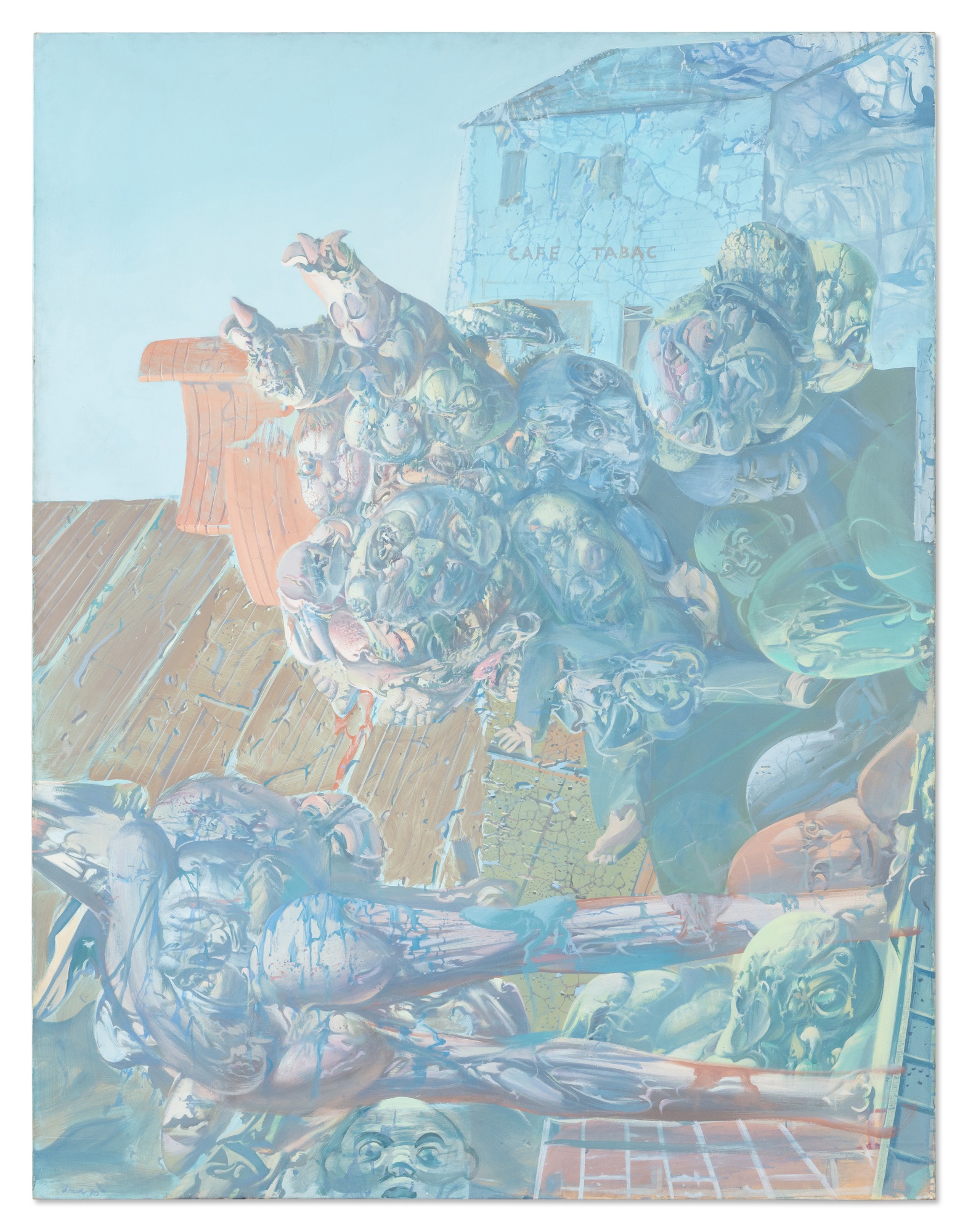
Dado
Café Tabac, 1970
His work draws comparisons with the Northern European tradition of Hieronymus Bosch and Pieter Bruegel, whose crowded, allegorical universes clearly resonated with him. Among his contemporaries, one finds affinities with Francis Bacon in the treatment of the figure as a site of existential drama, with Jean Dubuffet in the embrace of raw, unrefined visual energy, and with Leonora Carrington in the creation of a fully realized mythological world drawn from personal obsession. He also shares something with the great outsider tradition, though his technical sophistication places him firmly within the lineage of trained painters working at the edges of the acceptable. What makes Dado matter today, more than a decade after his death in 2010, is precisely the uncompromising singularity of his vision.
In an era when the art market has learned to celebrate artists who built private mythologies and refused the mainstream, Dado appears as a prescient figure, someone who was doing this long before it became a recognized mode of practice. His paintings do not offer comfort or decoration in any conventional sense, but they offer something rarer and more lasting: the sense of being admitted into a world of genuine imaginative consequence. To live with a Dado is to live with an artist who never made a single concession, and that integrity, across six decades of work, is its own form of beauty.
Explore books about Dado
Dado
Jean Leymarie
Dado: Catalogue Raisonné 1949-1972
Dado and collaborators
Dado: Paintings and Drawings
Pierre Restany
Dado: Œuvre Peint 1961-1990
François Marquet
Dado: Retrospective
Various curators
The World of Dado
Ionel Jianu