Corita Kent (Sister Mary Corita)
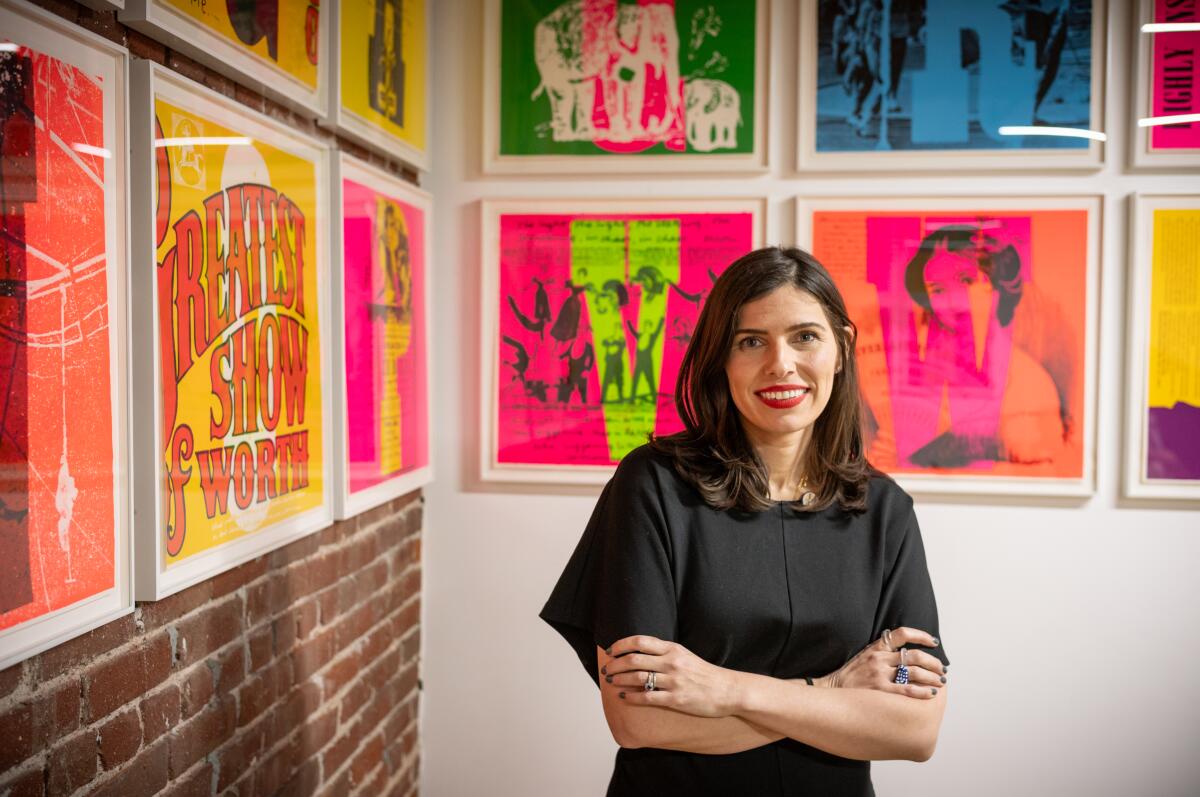
Corita Kent: Love, Color, and Revolution
Artist Spotlight · The Collection Editorial
“An artist is someone who makes art, not a special kind of person. Every person is a special kind of artist.”
Corita Kent, 'Learning by Heart: Teachings to Free the Creative Spirit'
In the spring of 2015, the Hammer Museum in Los Angeles mounted a landmark retrospective titled 'Corita Kent and the Language of Pop,' a show that drew extraordinary crowds and reintroduced this singular American artist to a new generation of admirers. The exhibition traveled to the de Young Museum in San Francisco and the Williams College Museum of Art, confirming what a devoted circle of collectors and cultural historians had long understood: that Corita Kent was one of the most original visual voices of the twentieth century, and that her joyful, urgent, color soaked prints deserved a permanent place at the center of American art history. That moment of institutional recognition arrived decades after her peak visibility, but for those who had been watching closely, it felt entirely overdue. Frances Elizabeth Kent was born in 1918 in Fort Dodge, Iowa, the fifth of six children in a devout Catholic family.
Corita Kent (Sister Mary Corita)
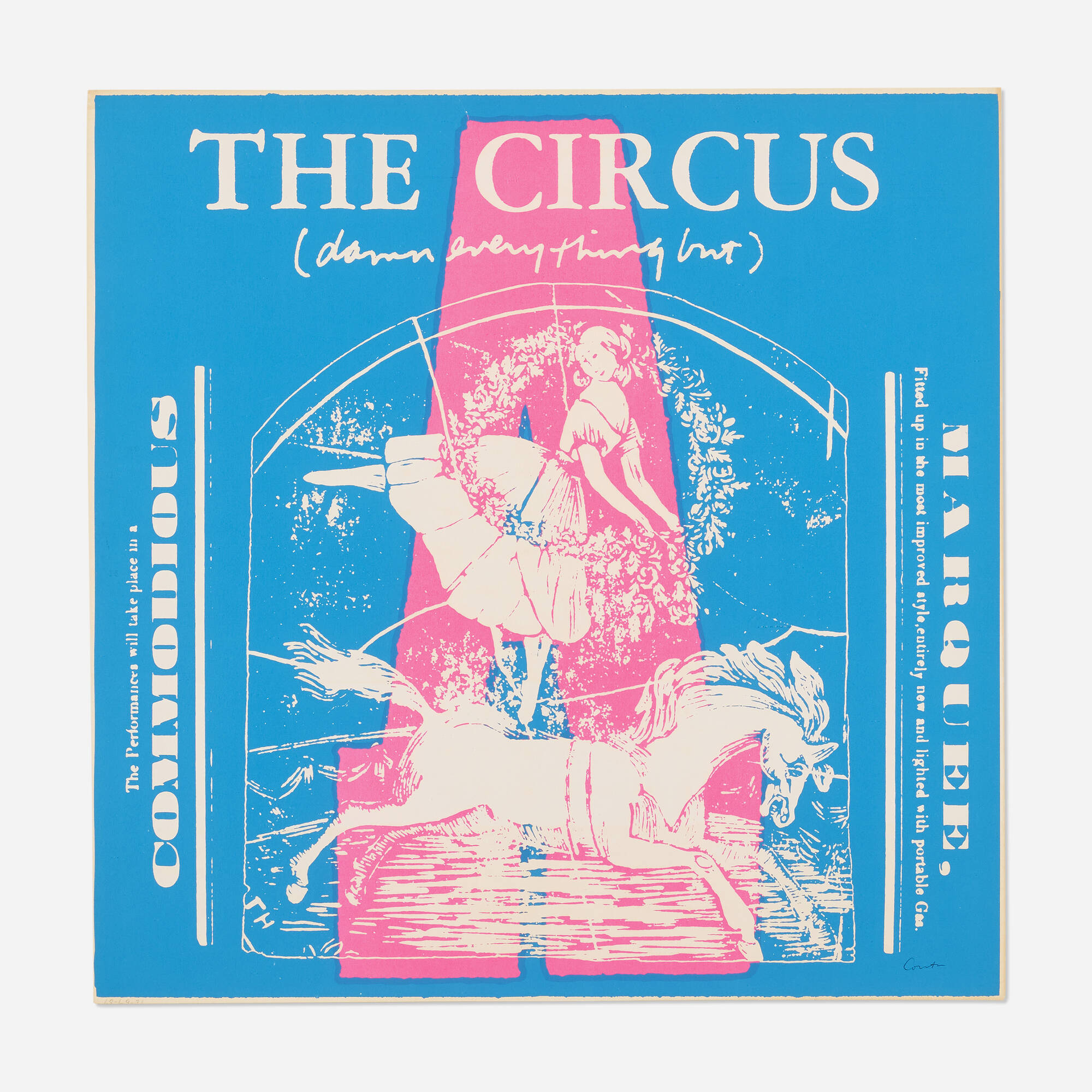
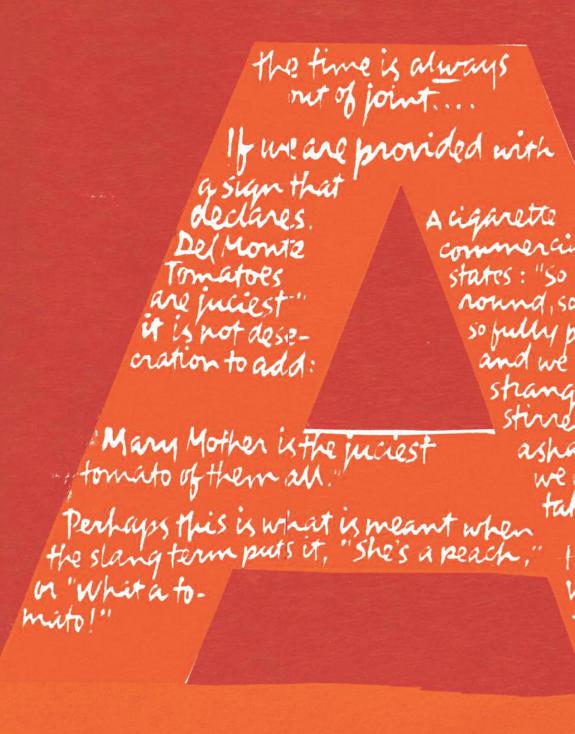
A i love that one (from the circus alphabet series), 1968
The Kents relocated to Los Angeles when Frances was still young, and it was there, in the warmth and sprawl of Southern California, that her sensibility began to take shape. At eighteen she entered the order of the Sisters of the Immaculate Heart of Mary, taking the name Sister Mary Corita, and within a few years she began studying art formally at Immaculate Heart College, eventually earning a master's degree in art history from the University of Southern California in 1951. Her path was unusual and genuinely brave: a vowed religious woman pursuing a rigorous fine arts education at a moment when neither the church nor the broader culture had much vocabulary for what she was becoming. Through the 1950s Corita taught art at Immaculate Heart College and steadily developed her practice as a printmaker, drawn above all to the medium of serigraph, or silkscreen printing.
The technique suited her perfectly. It was democratic, reproducible, and rooted in the same commercial printing processes that produced the billboards, cereal boxes, and magazine advertisements she began studying with obsessive curiosity. Her early prints drew on scripture and liturgical themes rendered in a visual language that was more medieval illumination than modernist experiment. But by the early 1960s something had shifted decisively.
Corita Kent (Sister Mary Corita)
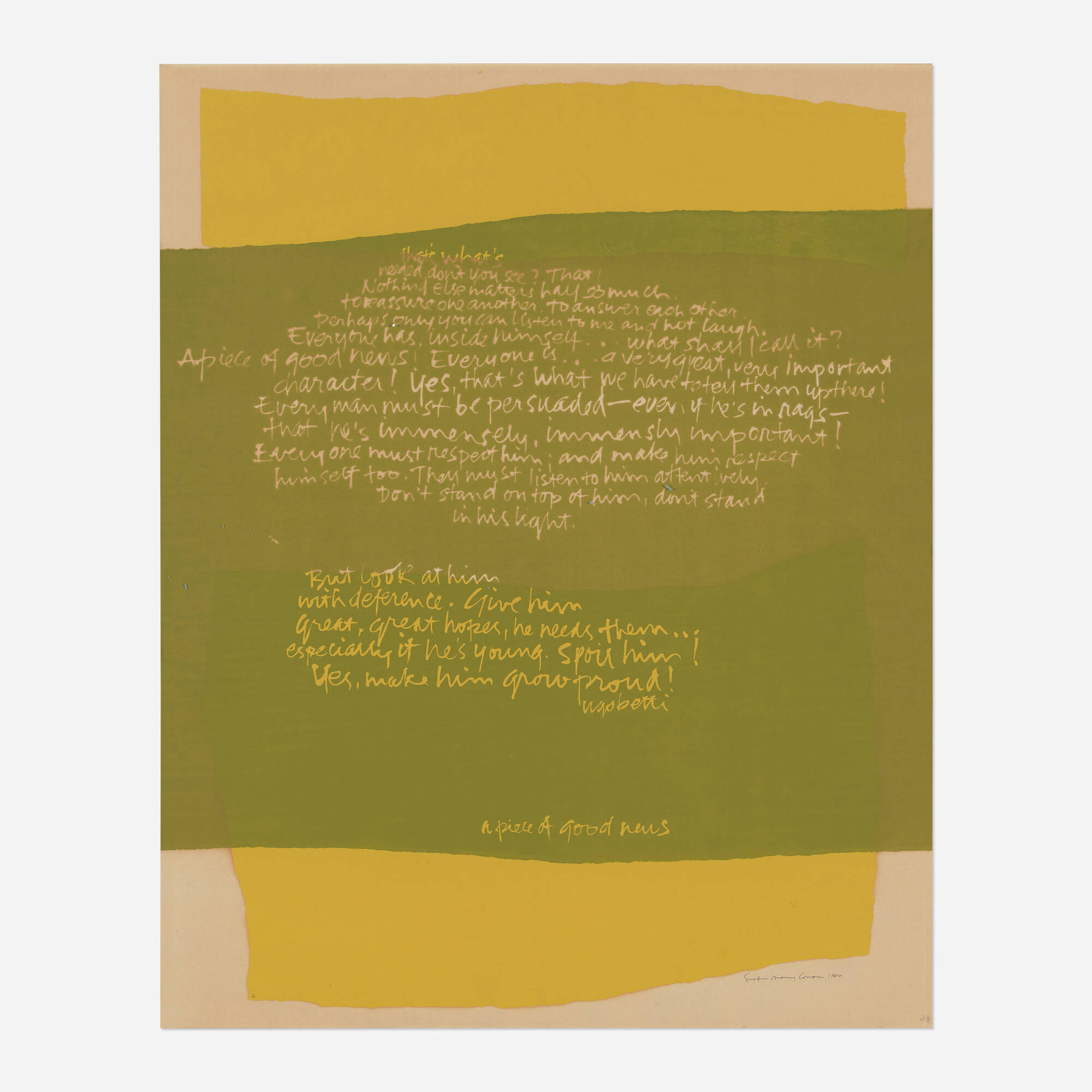
a piece of good news #2, 1963
She was absorbing the lessons of Pop Art, watching Warhol and Rauschenberg interrogate the surfaces of consumer culture, and she realized that those same surfaces were full of latent meaning waiting to be redirected. She began cutting and layering text fragments from grocery store signage, newspaper headlines, and packaging, weaving them together with scripture, poetry, and her own words into prints of startling energy. The works from her great middle period, roughly 1962 through 1968, are among the most extraordinary objects produced in American printmaking during that era. 'a piece of good news number 2' from 1963 pulses with a warmth that feels almost physical, its letters pressing toward the viewer with the insistence of a street preacher and the elegance of a calligrapher.
“We have all gone to the moon. We wander on the surface of the earth searching for what we have always known.”
Corita Kent
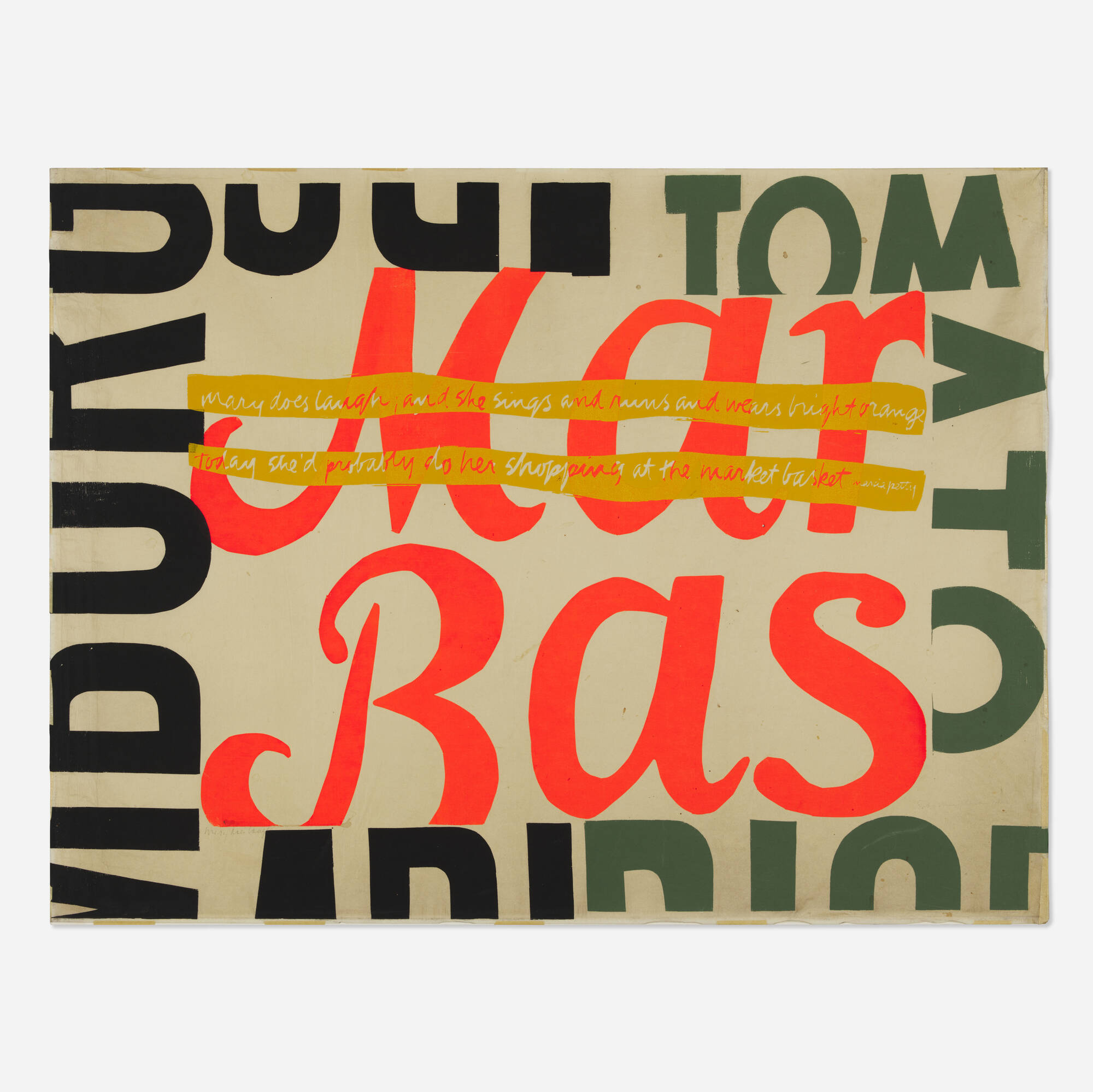
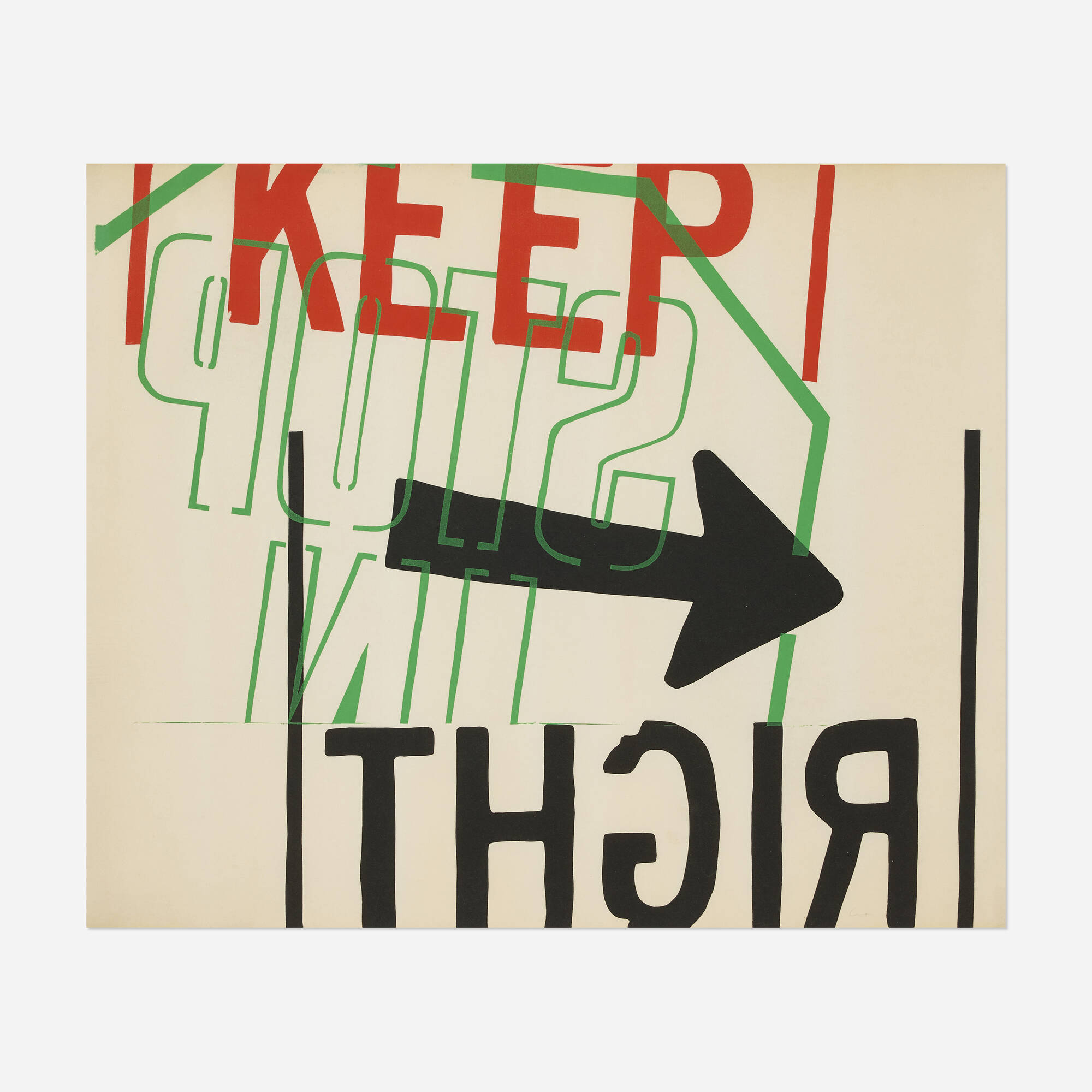
'mary does laugh' from 1964 is tender and subversive at once, reclaiming the figure of the Virgin from centuries of solemnity and returning her to something recognizably human. Then came the political works, which arrived with the gathering urgency of the civil rights movement and the Vietnam War. 'stop the bombing' from 1967 is as direct and unambiguous as anything produced during that convulsive decade. 'left' from the same year layers its political charge beneath gorgeous color and typographic play.
Corita Kent (Sister Mary Corita)
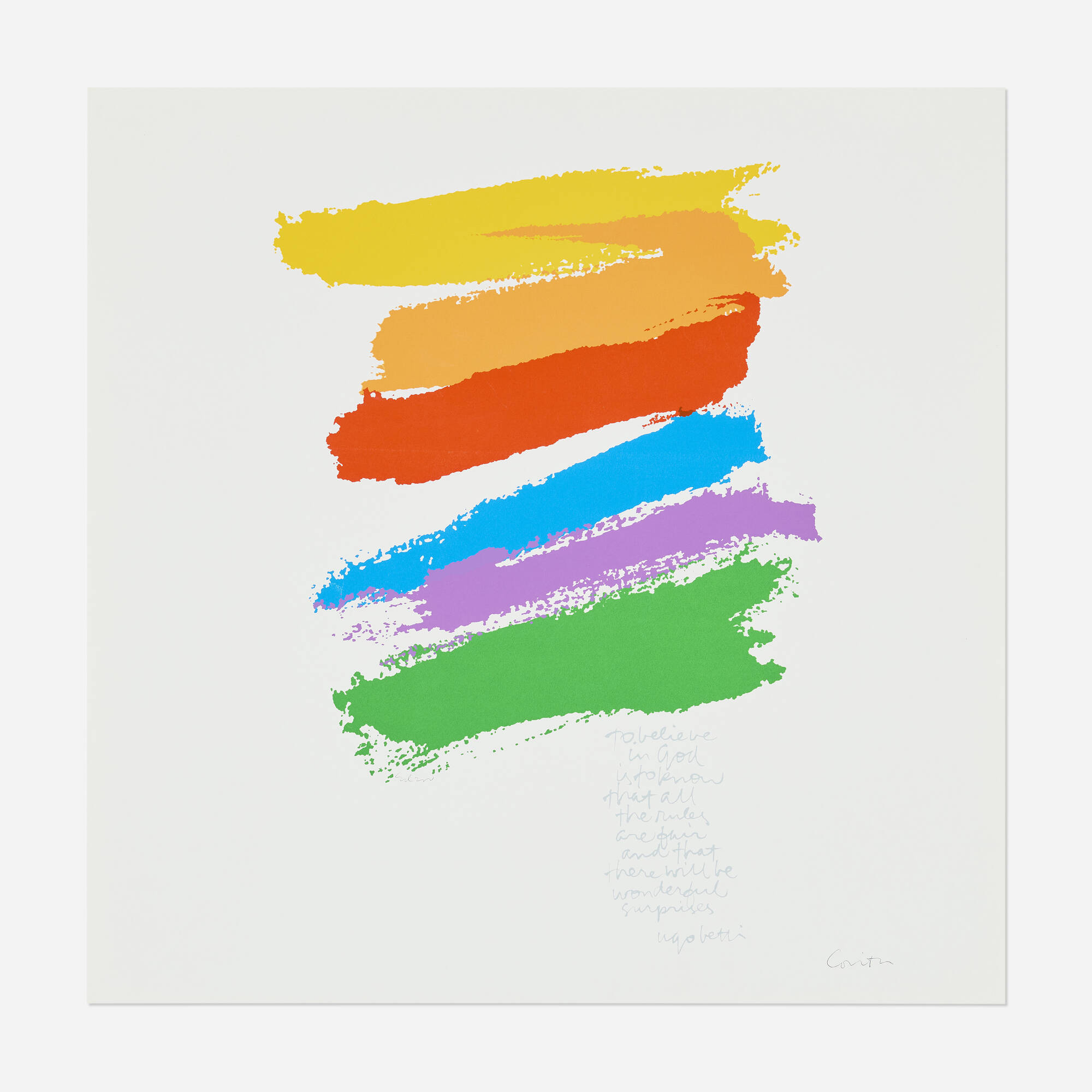
promise, 1978
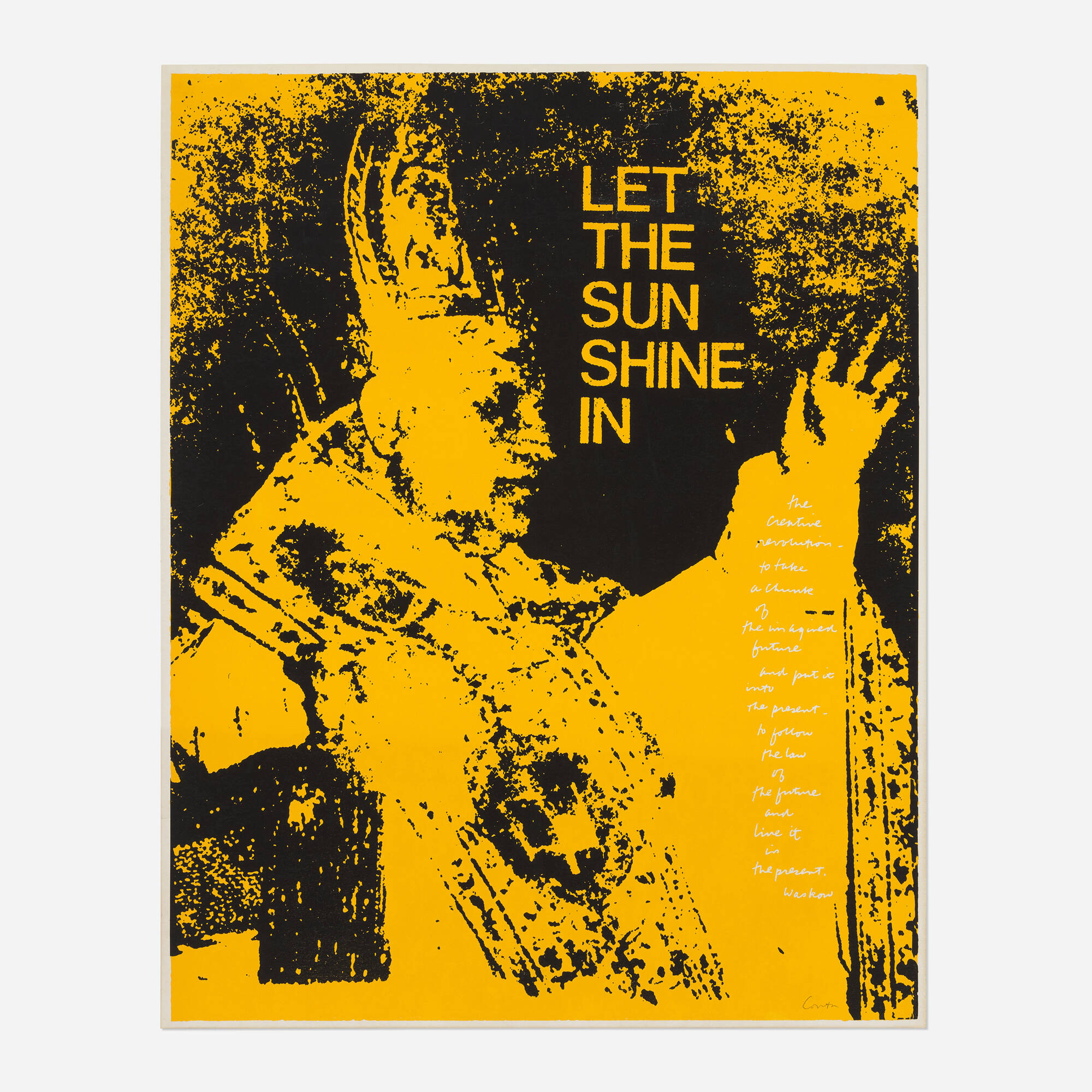
'chavez' from 1969, made in solidarity with Cesar Chavez and the United Farm Workers movement, demonstrates how fully Corita had integrated her spiritual commitments with her activism: for her, advocacy was not a departure from faith but an expression of it. The 1968 prints 'let the sun shine' and 'a i love that one' from her celebrated circus alphabet series show a mind at full creative velocity, playful and purposeful in the same breath. In 1968, after two decades of religious life and teaching, Corita made the difficult decision to leave the Immaculate Heart order. She moved to Boston, where she spent the remainder of her life working as an independent artist.
The transition brought quieter, more introspective work: prints like 'promise' from 1978 and 'only speak of hope' from 1965 reveal an artist whose sense of spiritual purpose survived every institutional boundary. One of her most visible public works was the rainbow swash design she created for a Boston Gas storage tank in 1971, a piece of civic art so beloved that it became a genuine landmark. She continued to work until illness, specifically ovarian cancer diagnosed in the 1970s, significantly reduced her output. She died in Boston in 1986, leaving behind a body of work of remarkable coherence and sustained moral seriousness.
Corita Kent (Sister Mary Corita)
mary does laugh, 1964
For collectors, Corita's prints offer something genuinely rare: the fusion of art historical significance with immediate visual pleasure. Her screenprints are warm and approachable on first encounter, but they reward sustained looking. The layering of text and image, the chromatic intelligence, the wit that coexists with genuine tenderness: these are qualities that deepen over time. Works from the pivotal years of 1963 to 1968 command the most consistent attention at auction, with strong examples appearing regularly through Swann Auction Galleries and Rago Arts, as well as in the print departments of the major houses.
Prices for significant works from this period have risen steadily as her institutional profile has grown, reflecting broader market recognition of her importance within both Pop Art and the history of American printmaking. Collectors new to her work are often advised to pay close attention to impression quality and color vibrancy, as her prints were sometimes produced in large editions and condition varies meaningfully. Corita's place in art history is rich and layered. She worked in genuine dialogue with the major Pop artists of her generation, sharing Warhol's fascination with commercial typography and Rauschenberg's appetite for found imagery, while insisting on a dimension of spiritual and political urgency that distinguished her practice from both.
She belongs equally to the history of American graphic design, influencing generations of designers who responded to her fearless use of type as image. She connects to a lineage of socially engaged women artists including Käthe Kollwitz and Corinne Jennings West, and her activist commitments place her alongside figures like Ben Shahn and Sister Mary Angelica. Increasingly she is also recognized as a crucial figure in feminist art history, a woman who exercised genuine creative authority within and eventually beyond a patriarchal institution. What makes Corita Kent matter so urgently today is precisely the quality that made her unusual in her own time: the refusal to separate beauty from conscience, or joy from moral seriousness.
In an era when art world discourse often prizes irony and detachment, her prints arrive like dispatches from a more courageous sensibility. To live with a Corita Kent is to be reminded daily that art can ask something of us, and still be gorgeous, and still make us laugh. That combination is rarer than it sounds, and it is what places her work among the most genuinely necessary of the twentieth century.
Featured Works
Explore books about Corita Kent (Sister Mary Corita)
Corita Kent: A Life of Art and Activism
Diane Apostolos-Cappadona
Corita Kent and Her Nuns: Serigraphs and Happenings
Various contributors
Corita: A Retrospective
Various curators

Learning by Heart: Teachings to Free the Creative Spirit
Corita Kent and Jan Steward

Corita Kent: Imagine That
Apostolos-Cappadona and others

The Art of Corita Kent
Hugo Munsterberg